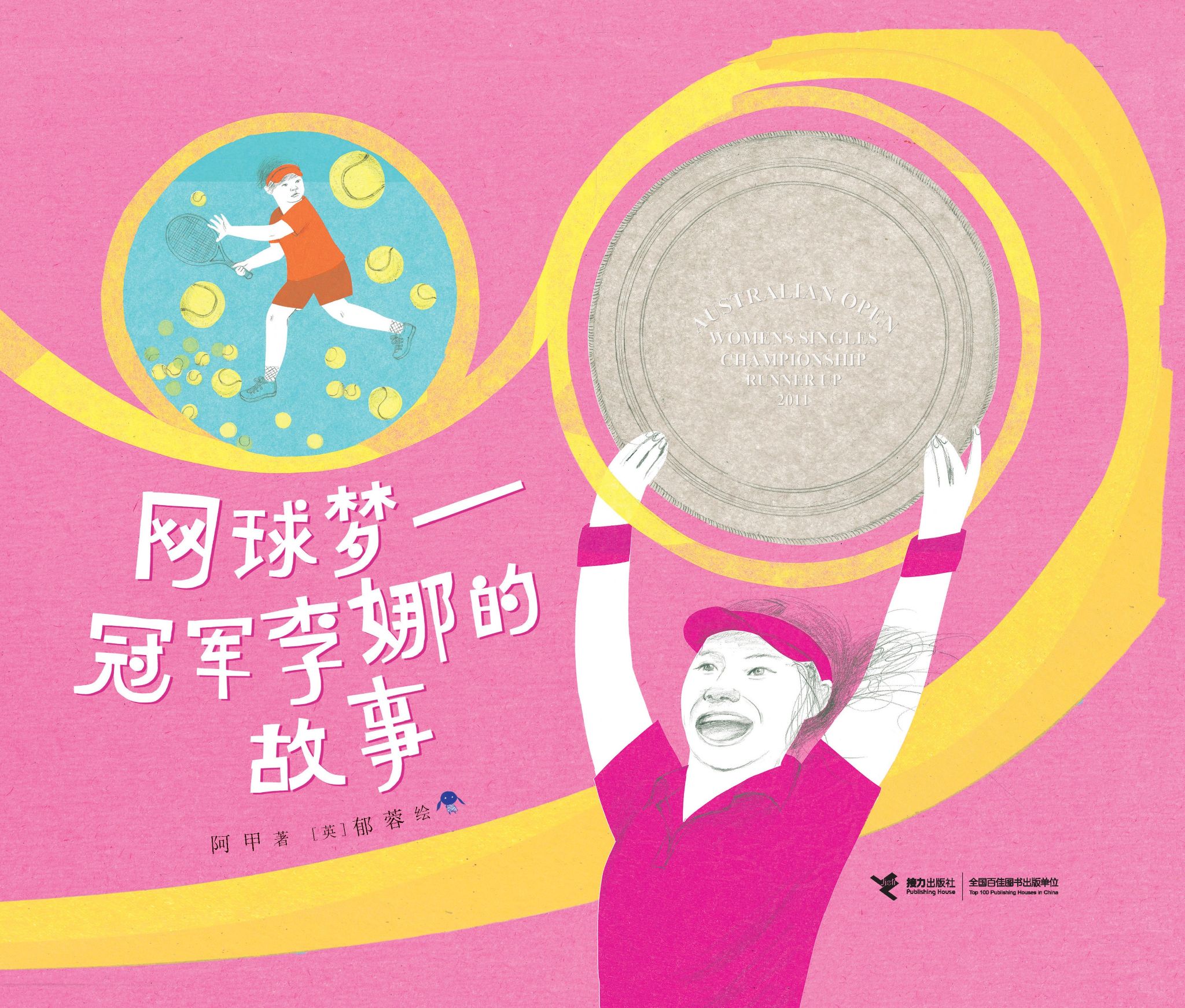
 New versionTennis Dream—The Story of Champion Li NaCover + Back Cover
Recently (this is a record of my 2020 lecture tour), while touring with this book, I met many readers, and their feedback gave me a lot of encouragement and inspiration. I’d like to share it below:
So far, the only book I know of is “Li Na: Be a Better You” (the new edition is renamed:Tennis Dream—The Story of Champion Li NaThe most interesting use is by a father in Wuhan who wanted to get his daughter to play basketball. They read it together at least once a day (mainly the father reading it to his daughter, of course), and apparently it really resonated with them, making their basketball games much more exciting…
Another little story a father in Shenzhen told me was about his eldest daughter. She wasn’t doing well before her high school entrance exam this year and lacked confidence. Unexpectedly, after reading this book, she was greatly encouraged and vowed to “become a better version of herself.” Later, through hard work, she got into her dream high school. I thought it sounded a bit like a made-up story, but the father told it so sincerely that I chose to believe him. ^_^
But what’s even more interesting is the interaction with readers of all ages—
Little Lamb, a young reader from Guangzhou: Why are there circles drawn all over this book?
A‑Jia: The book was originally titled “Dream Come True,” and the circles throughout might be related to that, representing the process of fulfilling dreams. Also, tennis balls are round, bicycle wheels are round, many things are round… There’s a book called “The Book of Circles,” where the author suggests that everything in the world can be expressed using circles.
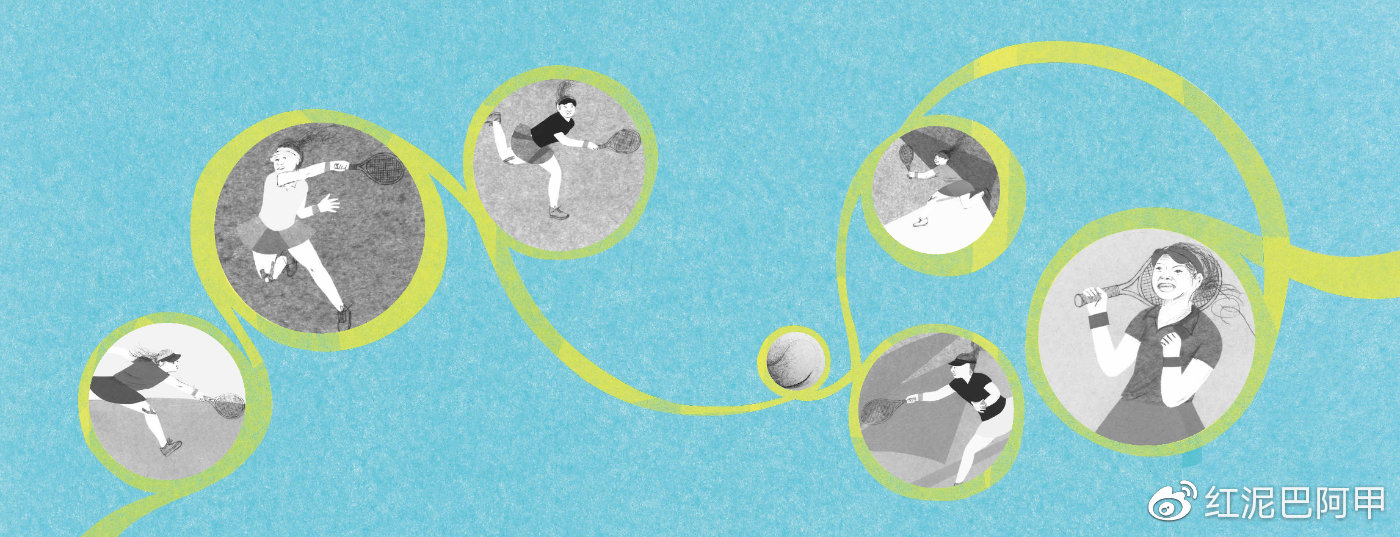 Front ring bushing
Little Lamb, a young reader from Guangzhou: Why is there a tennis ball on the front (front endpaper) and another ball on the back (back endpaper)?
A‑Jia: That’s one of the advantages of circles. Circles can roll and jump. The ball in front might jump and roll all the way to the back. Of course, this book was illustrated by Yu Rong, so we’ll have to ask her why she designed it this way.
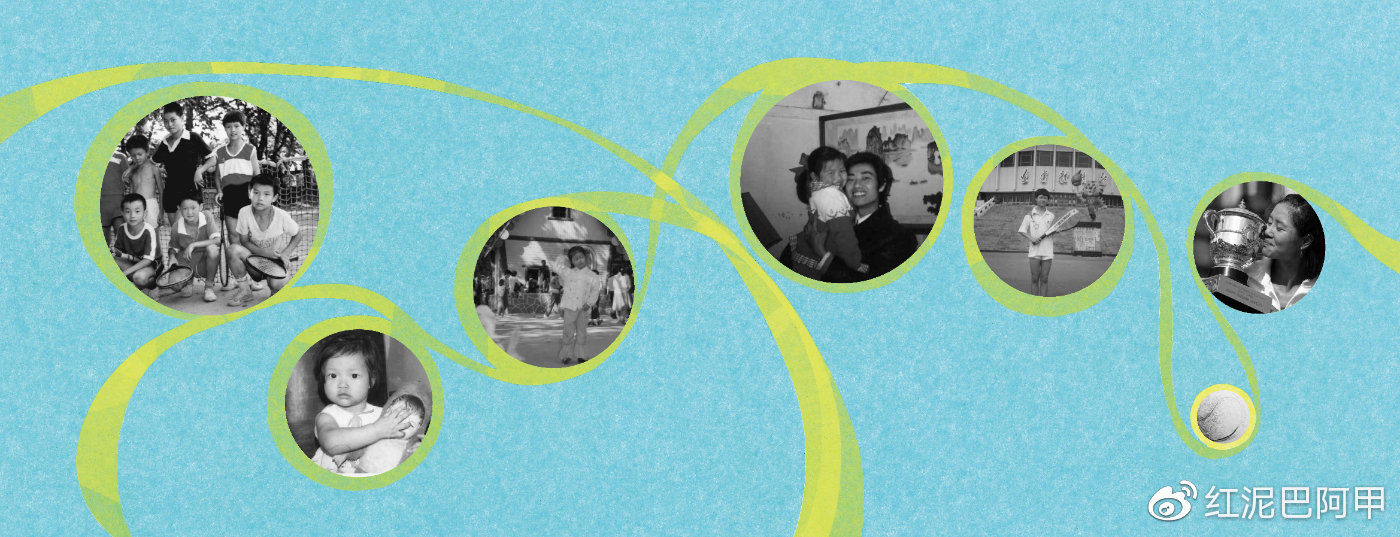 rear ring bushing
Guangzhou reader Little Lamb: Why is the child in the photo on the (back endpaper) side so small on one side and so big on the other, and why is there another photo of him holding a trophy?
A‑Jia: The following photos are from different periods of Li Na’s life. You can see her growth process. Even though she eventually won the trophy in a legendary way and became a hero, she was just like any other ordinary person when she was a child. And wasn’t she chubby in the childhood photos? She had a bit of baby fat, which is why her father would take her for morning runs.
Guangzhou reader Little Lamb: Why is there a child shirtless in this photo?
A‑Jia: Haha, that used to be quite common in Wuhan during the sweltering summers. Summers there were so hot that some little boys would get so sweaty from playing that they’d simply take off their clothes and continue playing shirtless. It’s not so common anymore.
Xia Tian, a young reader from Tangshan: Why did you write this book?
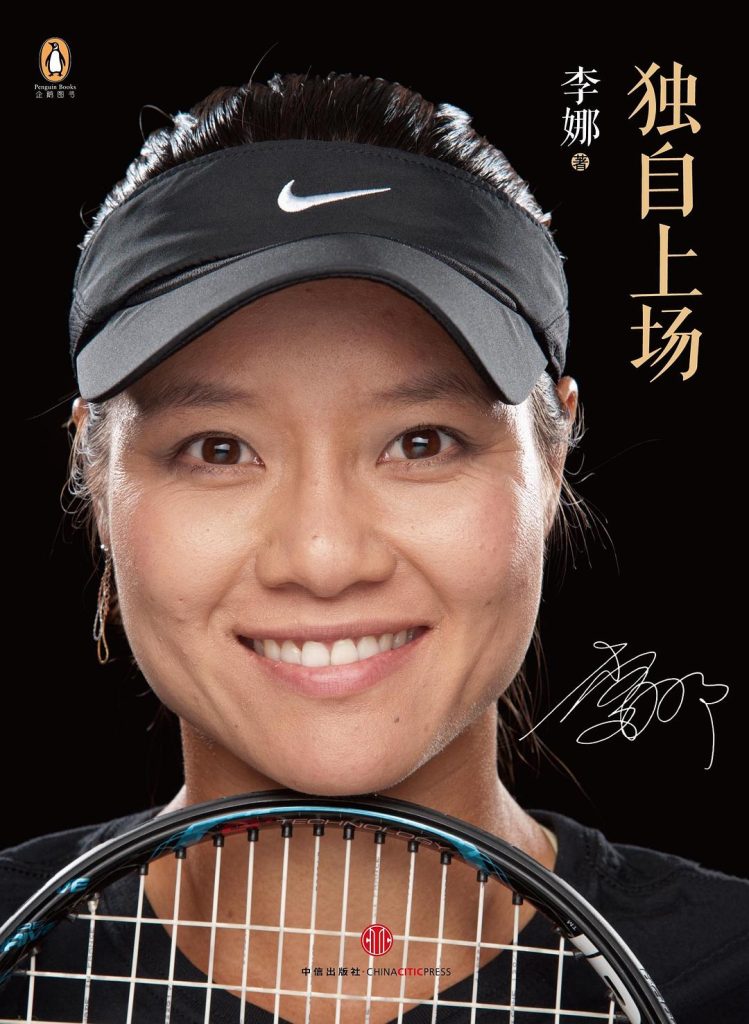
A‑Jia: This is a question that’s both simple and difficult. Simply put, this is a book I was commissioned to write. Miao Hui, the editor of Li Na’s autobiography, *Playing Alone*, wanted me to write the text for this illustrated biography. I spent over two months researching it before finally deciding to take on the task. The difficulty lies here: why did I ultimately decide to write this story? Looking back, there are two reasons: First, from Li Na’s life story, I saw not only a legendary athlete but also an ordinary person. Her story with her father reminded me of my daughter and me, and I wanted to write from that perspective. The other reason is that I believe writing is a form of expression, an exploration, not about giving others answers. Although I’m almost fifty, there are still many things I don’t understand, so I need to keep exploring.
The part of Li Na and her father’s story that makes me most uncertain is: is it really a good thing to instill the father’s dream in a child at such a young age and then have them strive to achieve that dream? Returning to the story, we can experience it for ourselves. Li Na is now a mother of two, and she prefers to give her children more freedom of choice in their upbringing. But when I visited her, I asked her this question: If your father hadn’t raised you that way, would you have achieved what you have today? Li Na thought for a moment and answered very firmly: No.
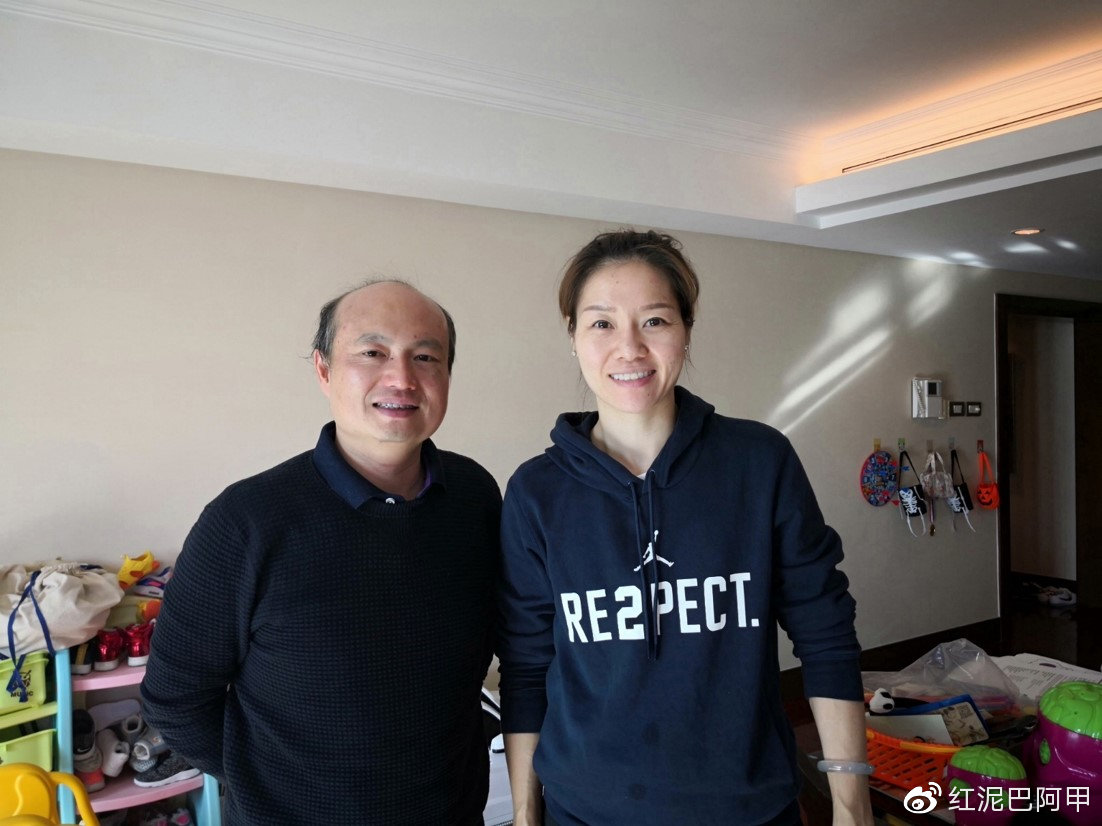 A photo taken during a visit to Li Na in January 2019.
In the process of writing this book, discussing how to present the story with the editors and illustrators, and engaging with an increasing number of readers, we discovered more and more questions than simple answers. The important thing is that through this shared questioning and exploration, we have the potential to become better versions of ourselves. This is perhaps one of the greatest joys of writing.
A mother from Taiyuan asked: Why isn’t Li Na’s mother mentioned in this book? Is it because the author is a father…?
A‑Jia: I am truly sorry for this! Please allow me to bow and apologize to all the mothers here! Li Na’s growth is certainly inseparable from her mother, but in this story, I focused on how her relationship with her father affected her growth. As a picture book, the space was simply too limited, so in the end, I had to leave the mother out.
In the several draft versions I will be showing you (soon), you’ll find that the story originally included a mother. She provided support during Li Na’s morning runs, and later, when Li Na was training at boarding school, she often spent time with her daughter after get off work. The family of three enjoyed happy meals together on weekends… However, after several revisions, we found that these became extraneous details outside the main story. Explaining them would be too verbose and unclear, but doing so would require adding extra space. Those who have read Li Na’s autobiography may know that her relationship with her mother was quite complex and subtle. Perhaps a female writer will rewrite Li Na’s childhood story in the future and explain this part more clearly. But in this book, we ultimately had to reluctantly abandon this effort.
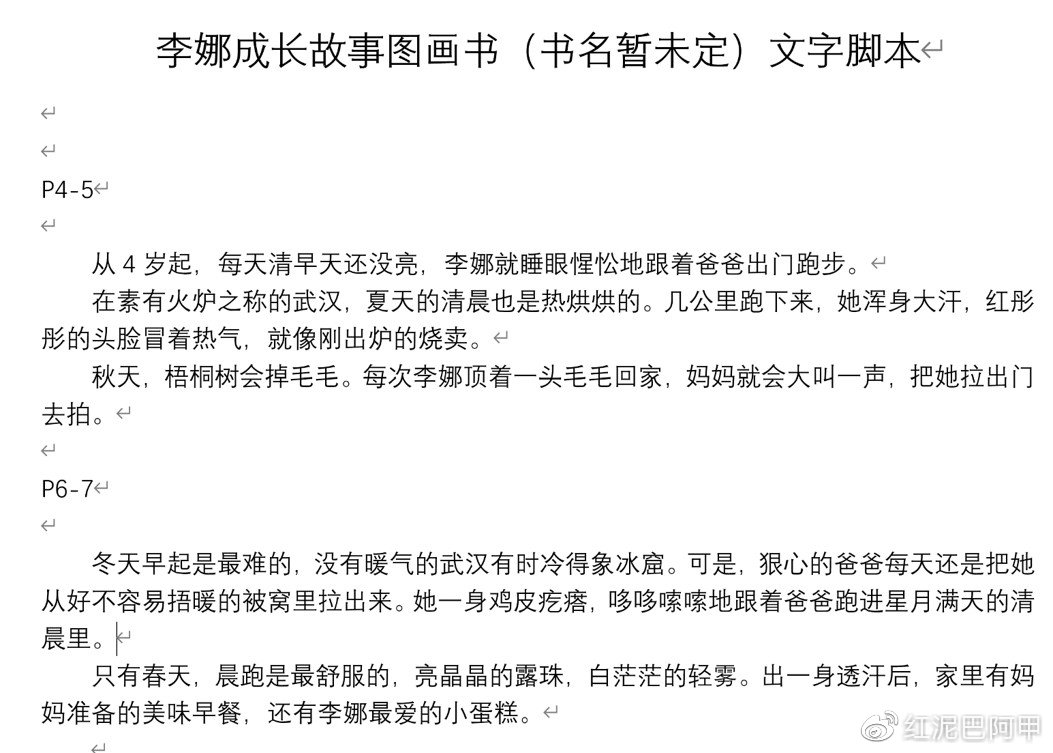 The earliest manuscript (the earliest story mentioned the mother).
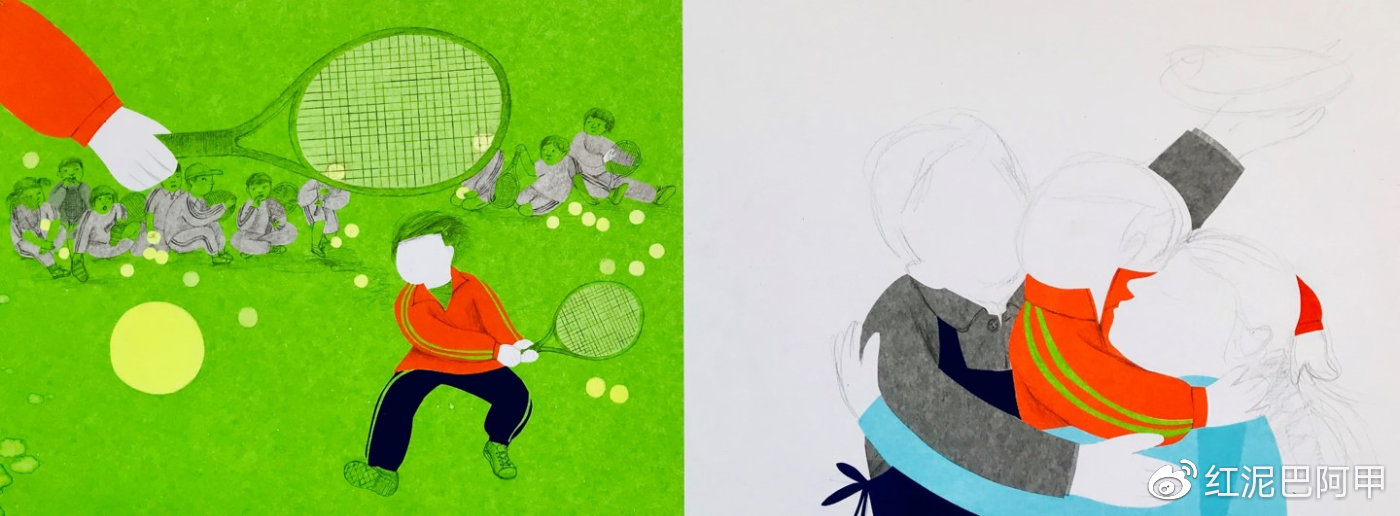 This is probably the fifth draft of the illustration, and the mother is also involved in the story.
Another significant omission in this book is of Li Na’s husband, Jiang Shan, who also made a tremendous contribution to Li Na’s rise to Grand Slam champion status. Unfortunately, due to space limitations, he has to be left out here. However, you might be able to spot him in the stands during the matches :)
A mother from Shenyang said: “When I first opened this book, I didn’t have a strong feeling, but when I turned to the last fold-out page and saw Li Na’s real photo, I was very shocked. I wondered if this kind of biographical picture book would be even better if the entire book was presented with photos?”
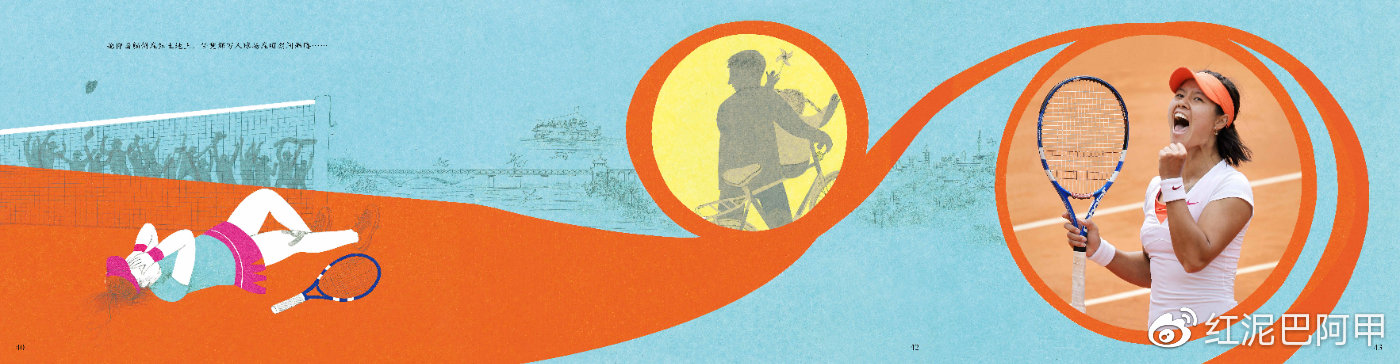 Unfolded brochure
A‑Jia: Thank you for agreeing with our idea of including a photo at the end! We actually searched for that photo for a long time. Initially, we wanted to find a picture of Li Na with the rising national flag, but unfortunately, we couldn’t find a suitable one (one that both fit the story’s expressiveness and was potentially copyrightable). Perhaps it was precisely because the photo “suddenly” appeared at the end that it restored a certain sense of reality, reminding the reader that this was not a fictional story, thus creating a powerful effect. Why couldn’t we present it entirely with photographs? Perhaps documentaries could, but picture books are unlikely to be so. Globally, picture books that tell a story entirely with photographs and achieve success are very rare. Moreover, we are going back to Li Na’s childhood and adolescence. Recreating the past through illustration carries more of the narrator’s emotions, feelings, and opinions. For example, if the narrator chooses to look back with joy and positivity, a successful image needs to leave the reader with that impression.
For example, when Li Na played tennis at the Zhongshan Park training court as a child, in the late 1980s and early 1990s, conditions were quite harsh. Children played on gravel courts, and every day they had to draw lines with white powder and always have mercurochrome and gentian violet on hand. They often cut their legs and feet, especially their knees. They would rinse the wounds under running water, apply medicine, and then continue training. If viewed through a fully realistic color photograph today, it might seem “horrible,” but in a painting, it could very well capture the feeling Yu Rong depicts. Furthermore, the childhood events described in the story certainly weren’t photographed at the time, and having actors pose for photos now is clearly less effective than depicting the story in a painting.
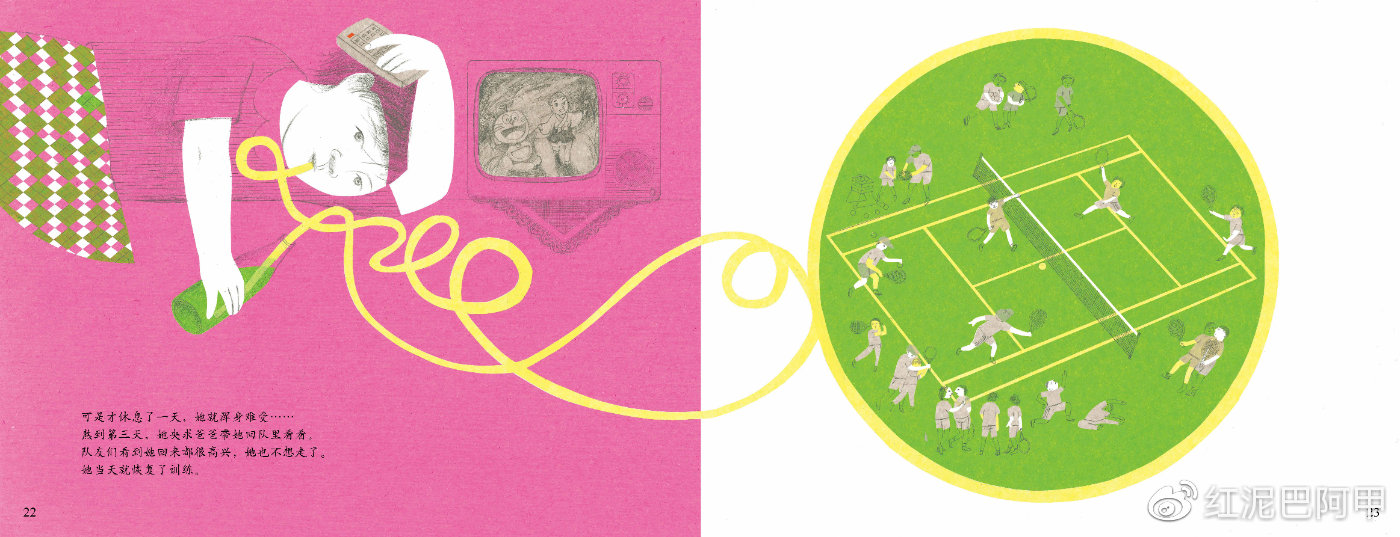 The illustrator’s favorite inner page
A mother from Shenyang wrote: “When I read this book, I felt that the Li Na in the illustrations was different from the Li Na I remembered. I prefer Yu Rong’s illustrations in ‘I Am Mulan,’ as those books seem to have more detail… Did she hold back a bit when she illustrated this book?”
A‑Jia: Haha, you’ve hit the nail on the head regarding the difficulties of non-fiction picture books! I bet Yu Rong put even more effort into illustrating *Li Na* than she did into *I Am Mulan*, because this book presented a greater challenge for her! As you said, the Li Na in the book is different from the “Li Na in your memory,” which is the biggest challenge in portraying a living person (especially a young athlete like Li Na), because everyone’s image of them is different! Fictional characters, on the other hand, exist only in the world of imagination, since no one has ever seen them, and the illustrator has much more freedom in interpretation; whatever the illustrator does, it has its own logic. Yu Rong faced this problem when she illustrated Li Na; no matter how she drew it, there would always be readers who were dissatisfied. Interestingly, when Li Na read the book to her children, the two little ones quite liked the 15-year-old Li Na in the book. They were curious, “Why was Mom’s hair green back then?”“
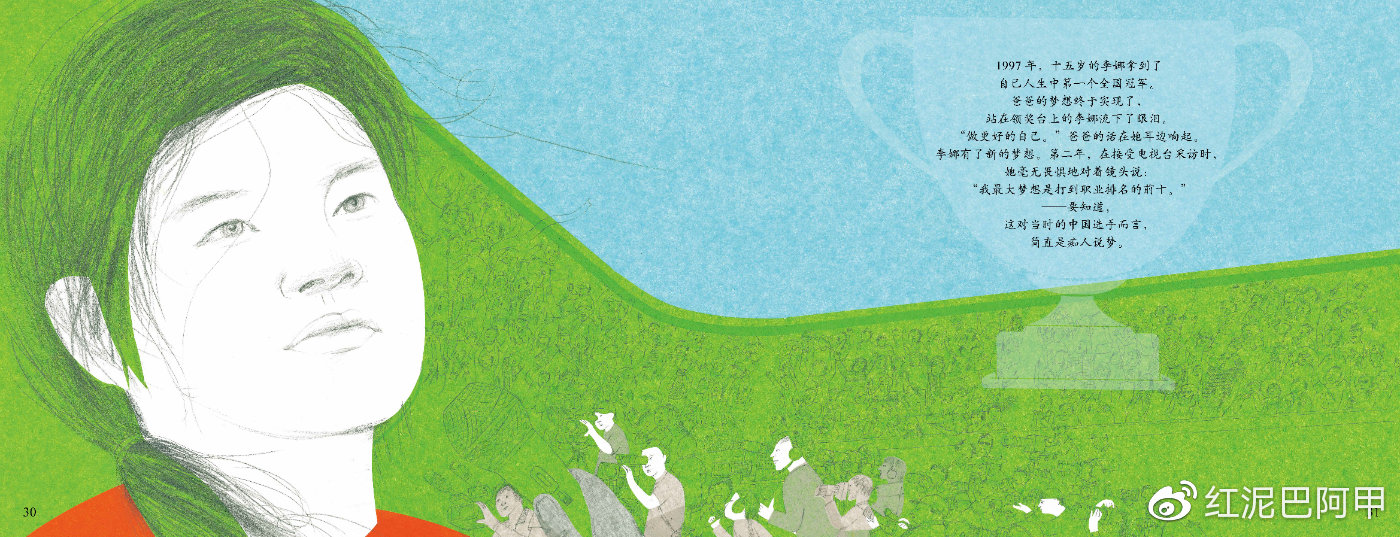 The book depicts Li Na at age 15 with “green hair.”“
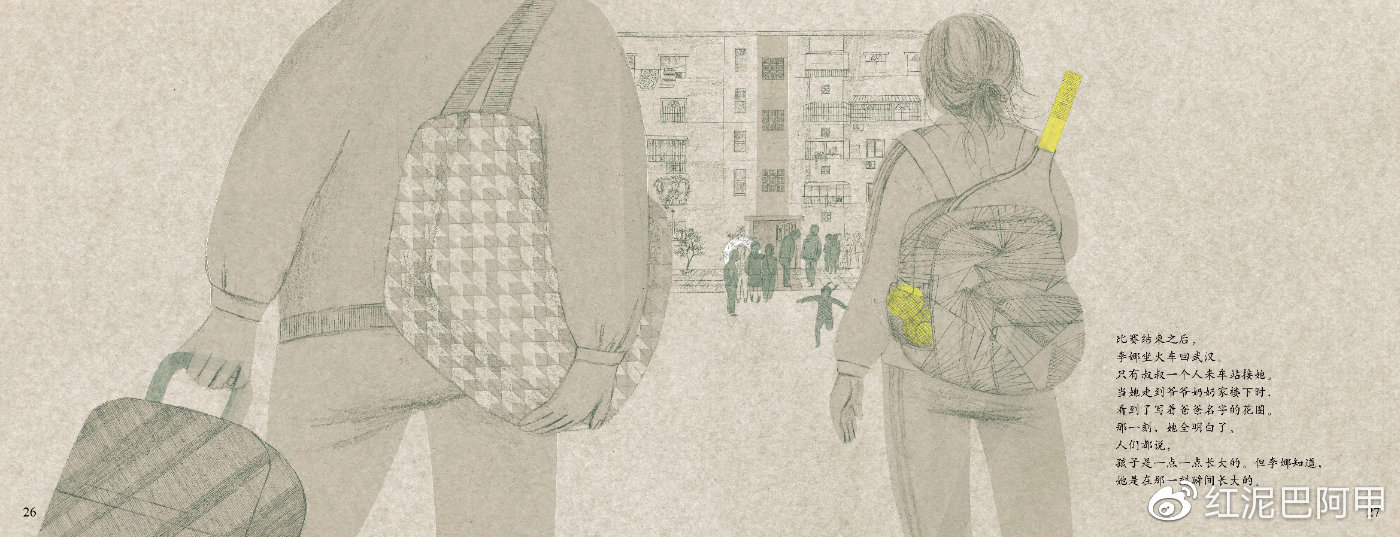 The dormitory building here is a building built in Wuhan in the 1980s, and the prototype is the building where the author lived when he was a child.
Furthermore, you can notice many small details hidden in the line drawings of this book. Unlike fictional stories, these realistic details are quite meticulously researched. For example, what was Wuhan like in the 1980s? The appearance of Wuhan’s bridges and ferries. There’s a small detail, like the dormitory building with wreaths placed below it, which is actually a very careful recreation of the building I lived in when I was a child (from elementary to junior high school)… These details couldn’t be arbitrary because this is a realistic story. However, the artist added her own interpretation in some places. For example, to remind the reader that Li Na and her father’s morning run was in Wuhan, there’s a Yellow Crane Tower in the background, and she drew an immortal riding a crane, which eventually flew to the Eiffel Tower; including the relationship between the Wuhan Yangtze River Bridge and the Eiffel Tower, and the recreation of the Ferris wheel in the amusement park from my childhood… These are all symbolic.
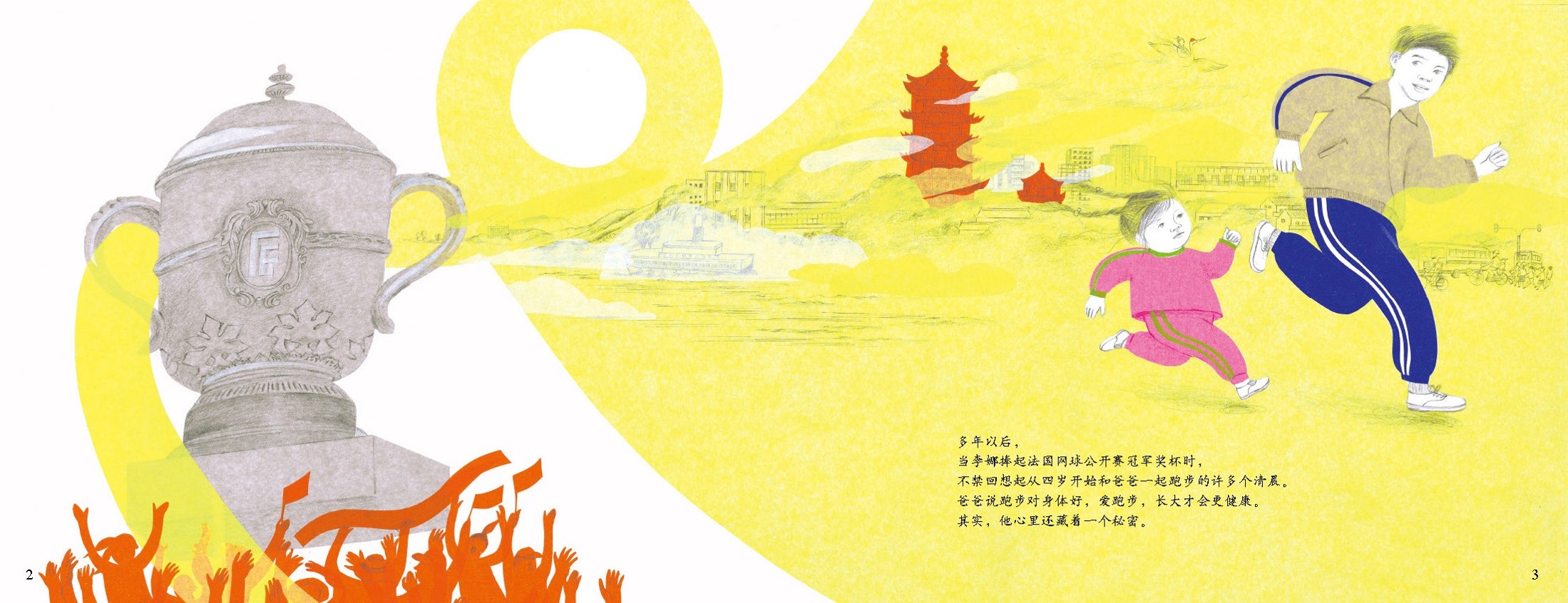
The first image on the inner page features an immortal riding a crane at the top.
As a book introducing tennis culture, the last few double-page spreads meticulously present a tennis match court, with every detail carefully researched. For the artist, the most arduous task was actually painting the spectators at the sidelines. We also earnestly requested Yu Rong to painstakingly depict those spectators to make the illustrations more believable and allow readers to better experience the atmosphere of the match. Frankly, this was incredibly time-consuming and laborious work, requiring meticulous attention to detail and avoiding mistakes. For example, could the national flag be unfurled, and how should it be unfurled? When Yu Rong became tired, she added some amusing little details, including an exaggerated portrayal of A‑Jia and the editor… Painting these details probably demanded even more comprehensive skill from the artist than painting the details in *I Am Mulan*.
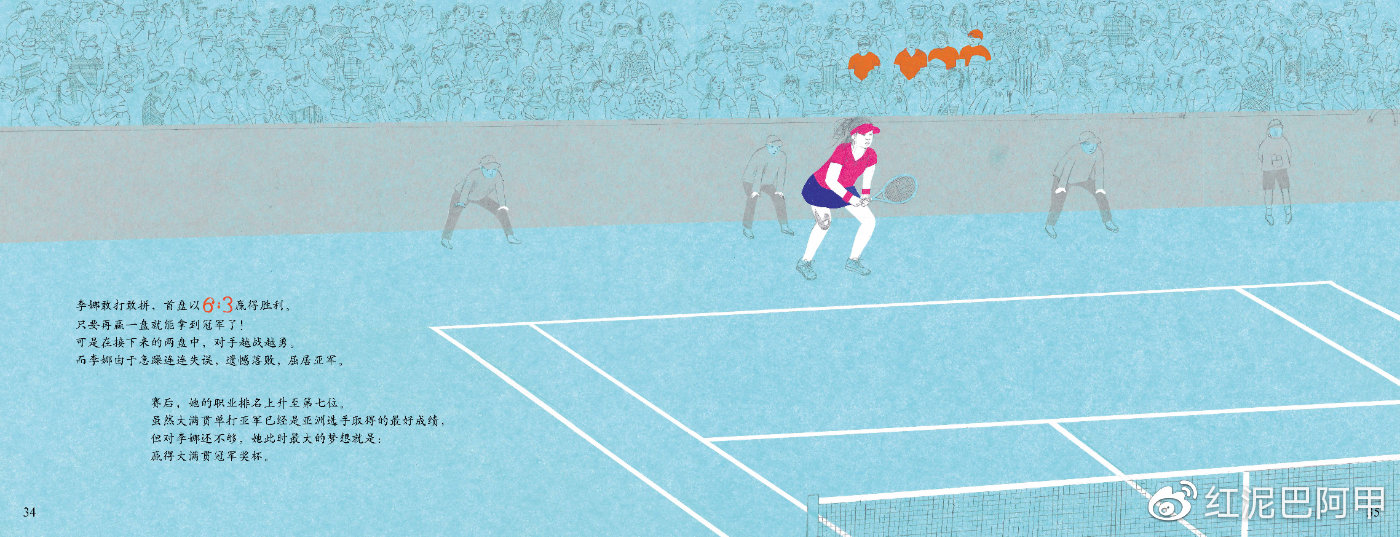 When presenting the inside pages of a match, pay special attention to the spectators on the sidelines.
A mother from Luoyang said: “The title of this book is what the father says to his daughter: ‘Be a better version of yourself.’ I think it’s wonderful, and I’m always deeply moved when I read it. But I still have some doubts: Did Li Na’s father really say those words to her?”
A‑Jia: That’s an excellent question! The book was originally titled *Realizing a Dream: Li Na’s Growth Story*, but after much discussion and deliberation, it was changed to *Li Na: Becoming a Better Self* (another alternative was *Li Na: Being the Best Version of Yourself*, which was finalized for the 2025 reprint).Tennis Dream—The Story of Champion Li Na The phrase “Be a better version of yourself” doesn’t appear in Li Na’s autobiography, but it does appear in a 7‑minute inspirational short film she co-directed with Peter Chan (starring Li Na herself), which also serves as the prelude to the sports blockbuster “Li Na.” Clearly, the credibility of this phrase comes from Li Na herself. But returning to the question: did her father really say that phrase verbatim? Frankly, I can’t be 100% certain, but I’m sure he used similar motivational methods in many ways, hoping his daughter would do better and demanding more of herself, which Li Na consistently practiced. Therefore, I’ve also included this phrase. It’s particularly important to note that Li Na herself is the author of this book; every event and every phrase used in the book has been repeatedly reviewed and approved by her, and these stories all originate from her own experience.
The book mentions her words during a TV interview when she was 16 years old: “My biggest dream is to reach the top ten in the professional rankings.” This quote is taken verbatim from her interview video, and you can still find the video of her interview with Beijing TV at that time.
Appendix 1: Reader Comments on Dangdang.com
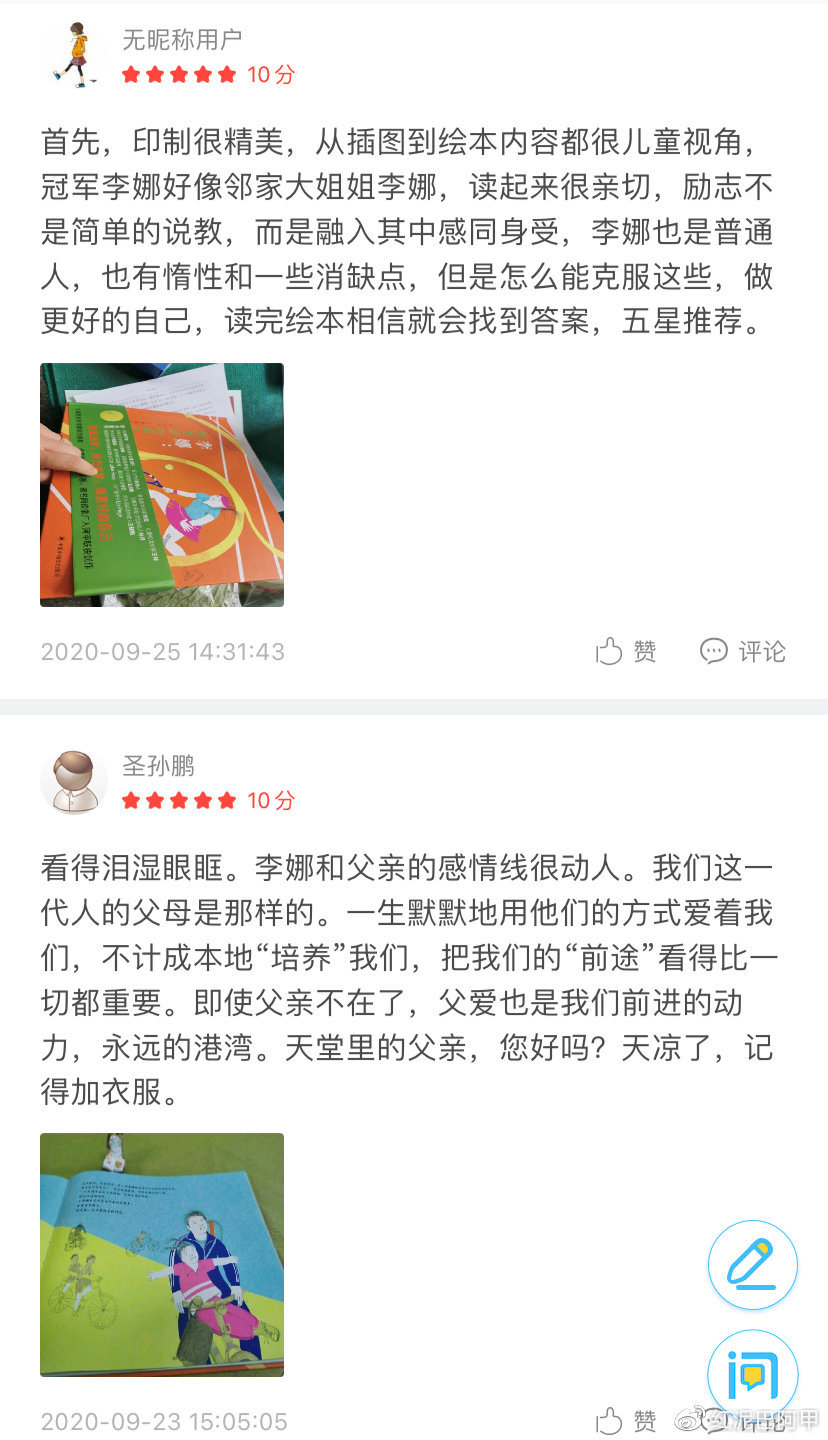
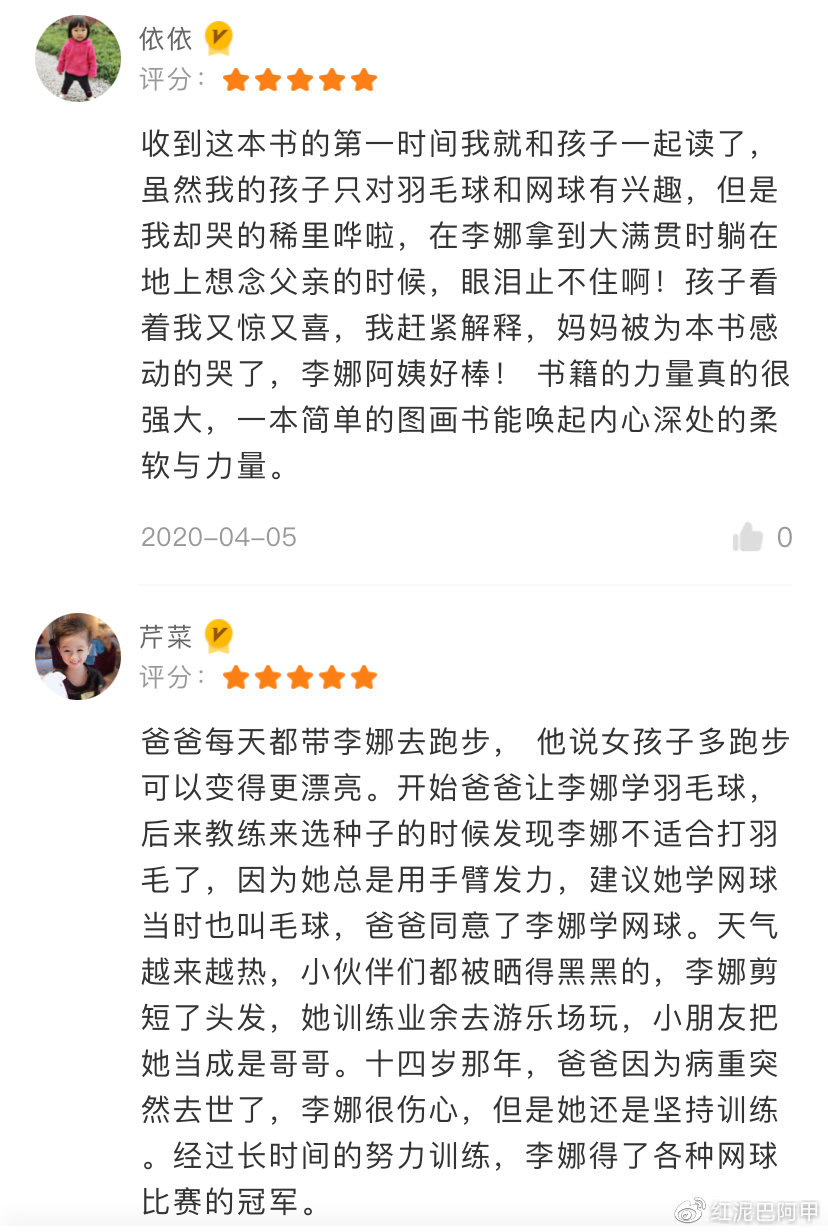
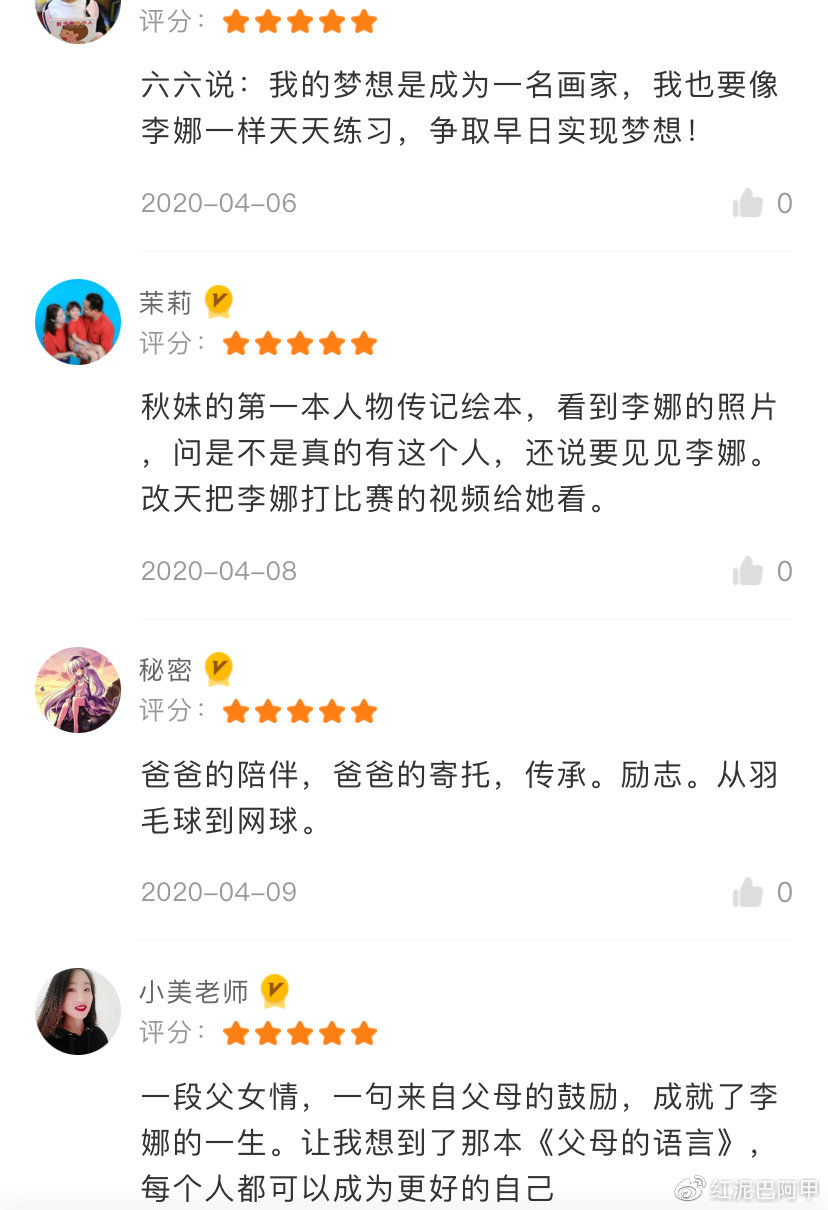
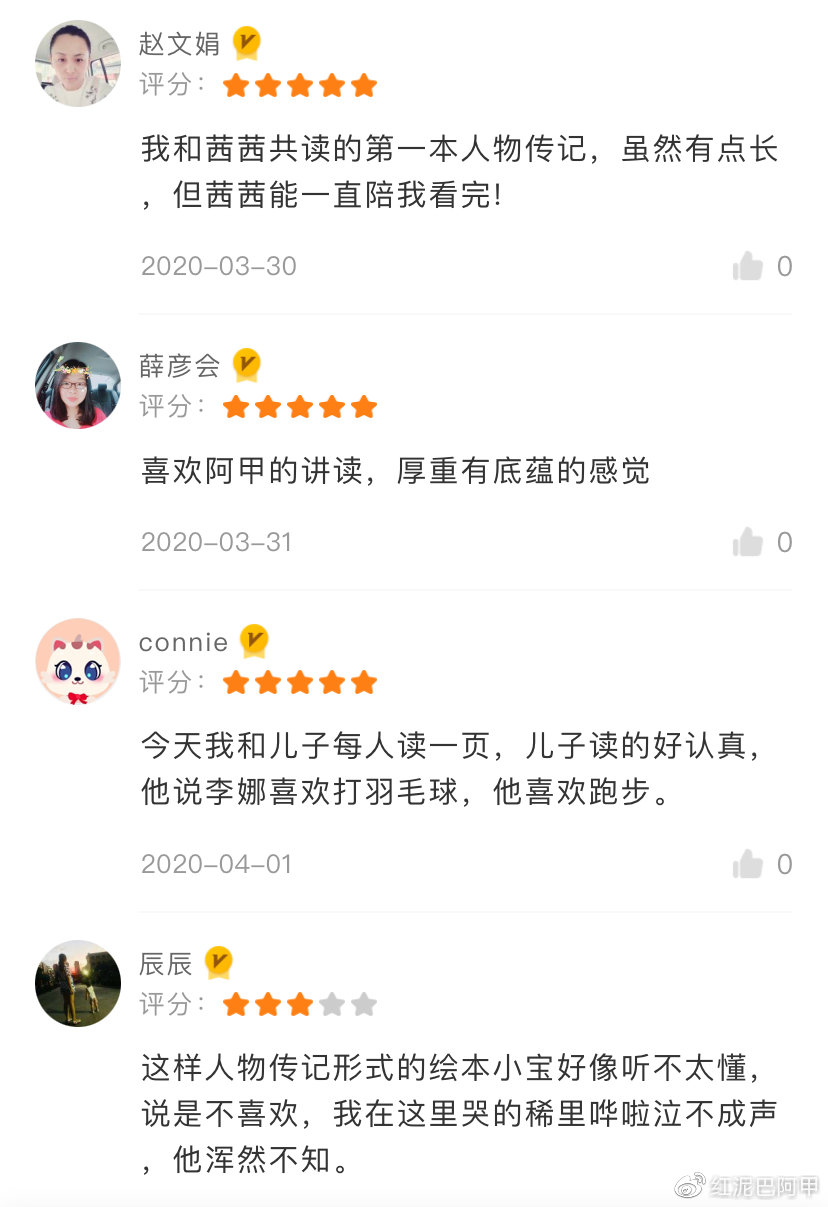
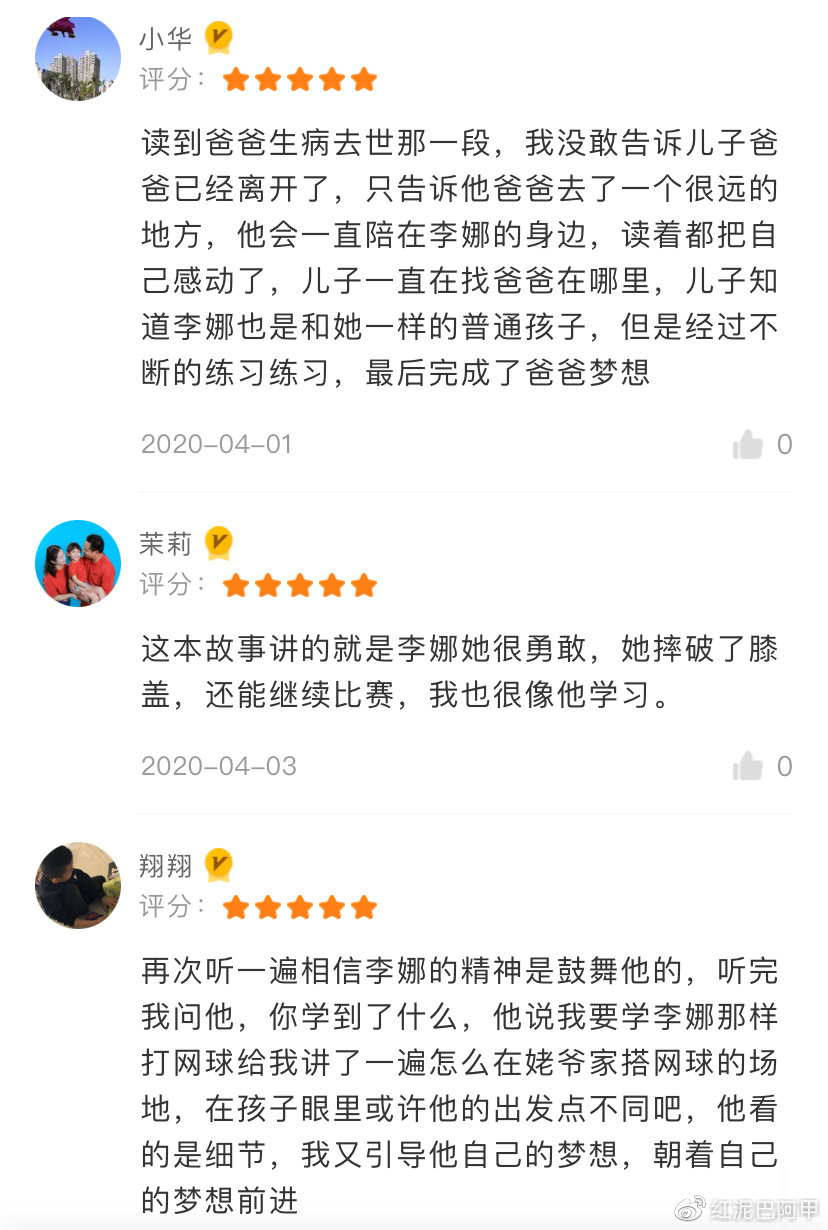
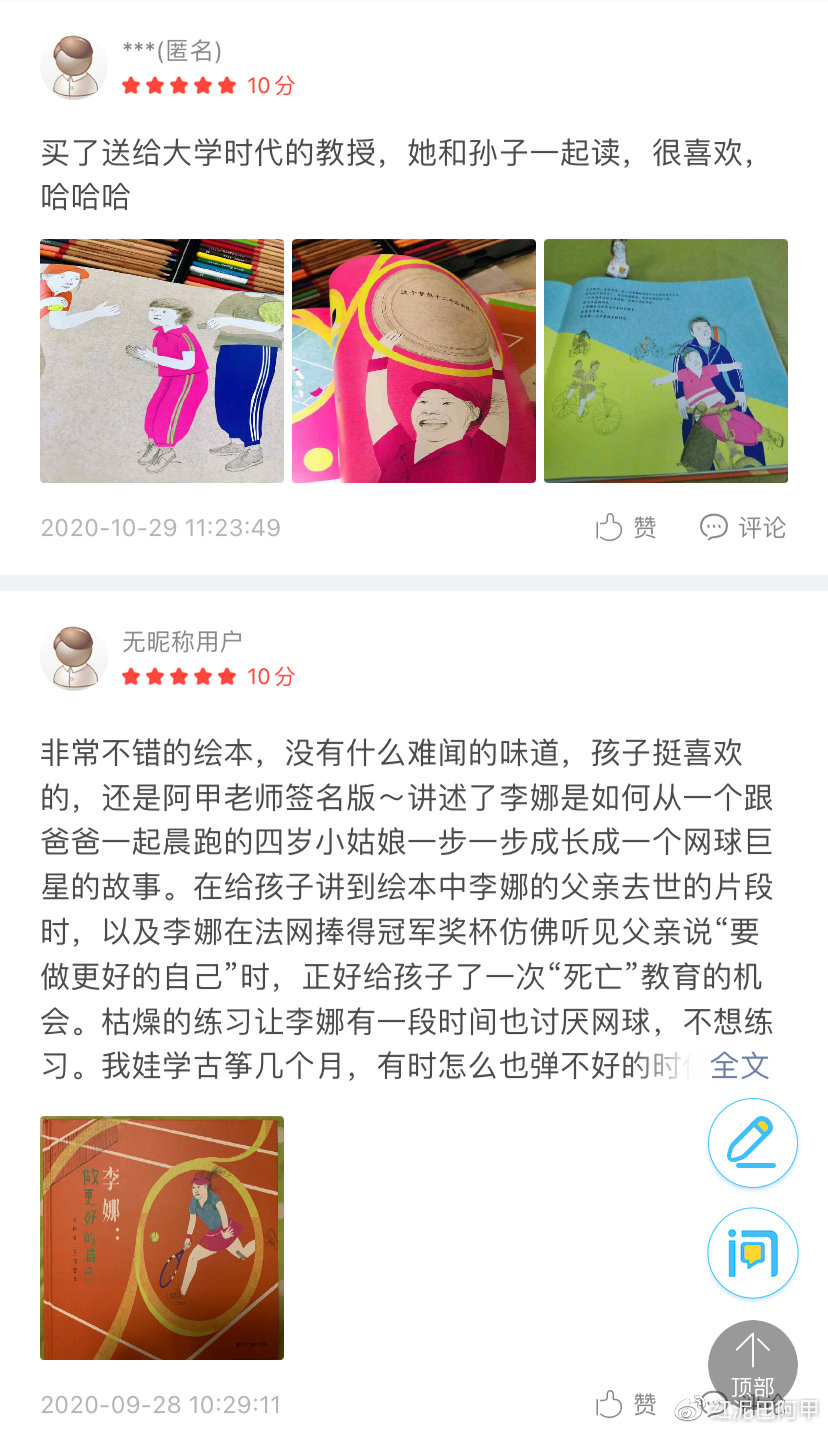 Excerpts from Dangdang.com reader comments
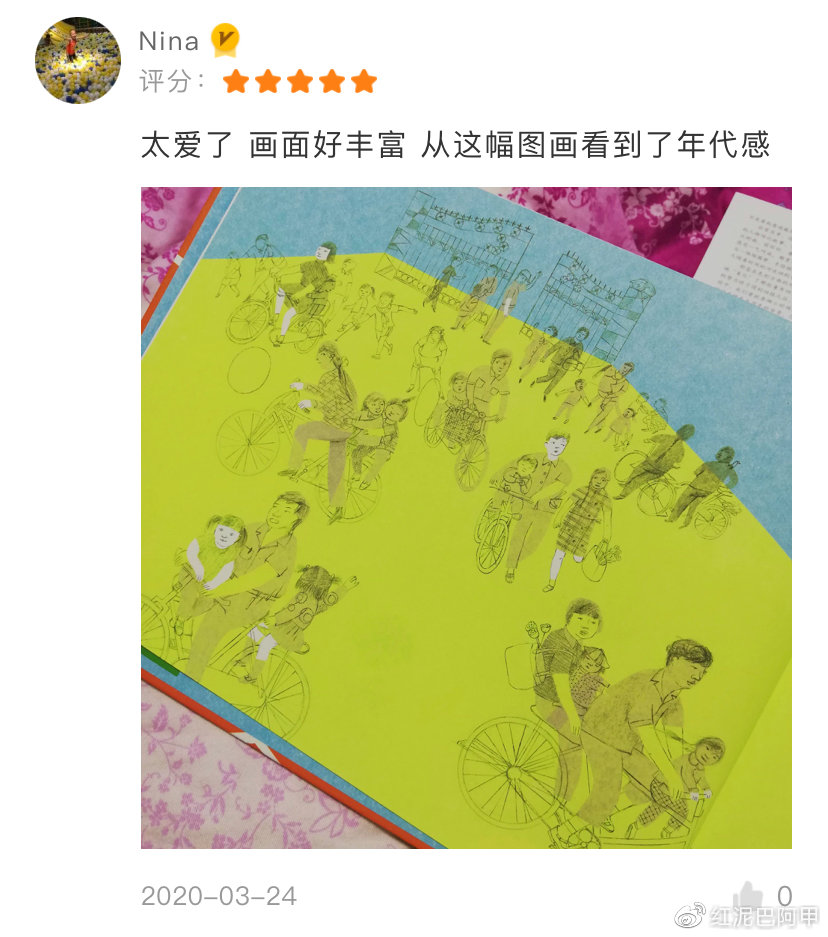
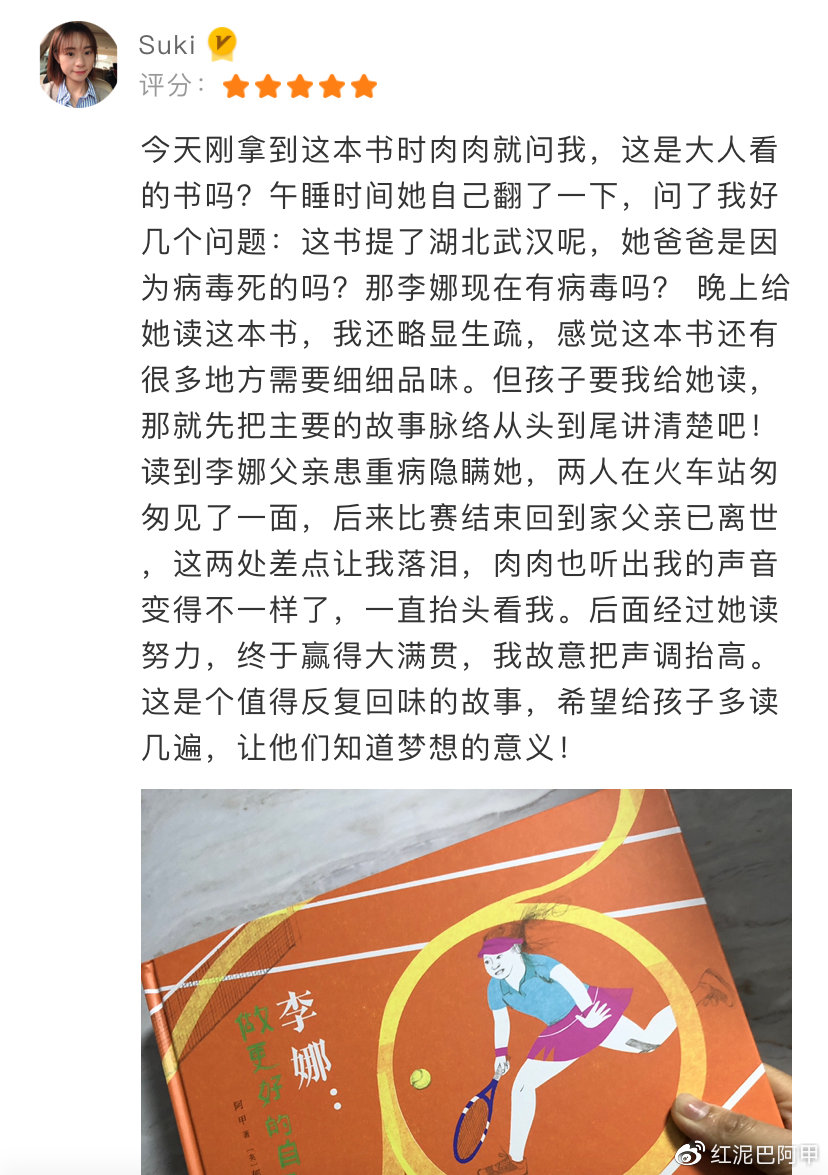
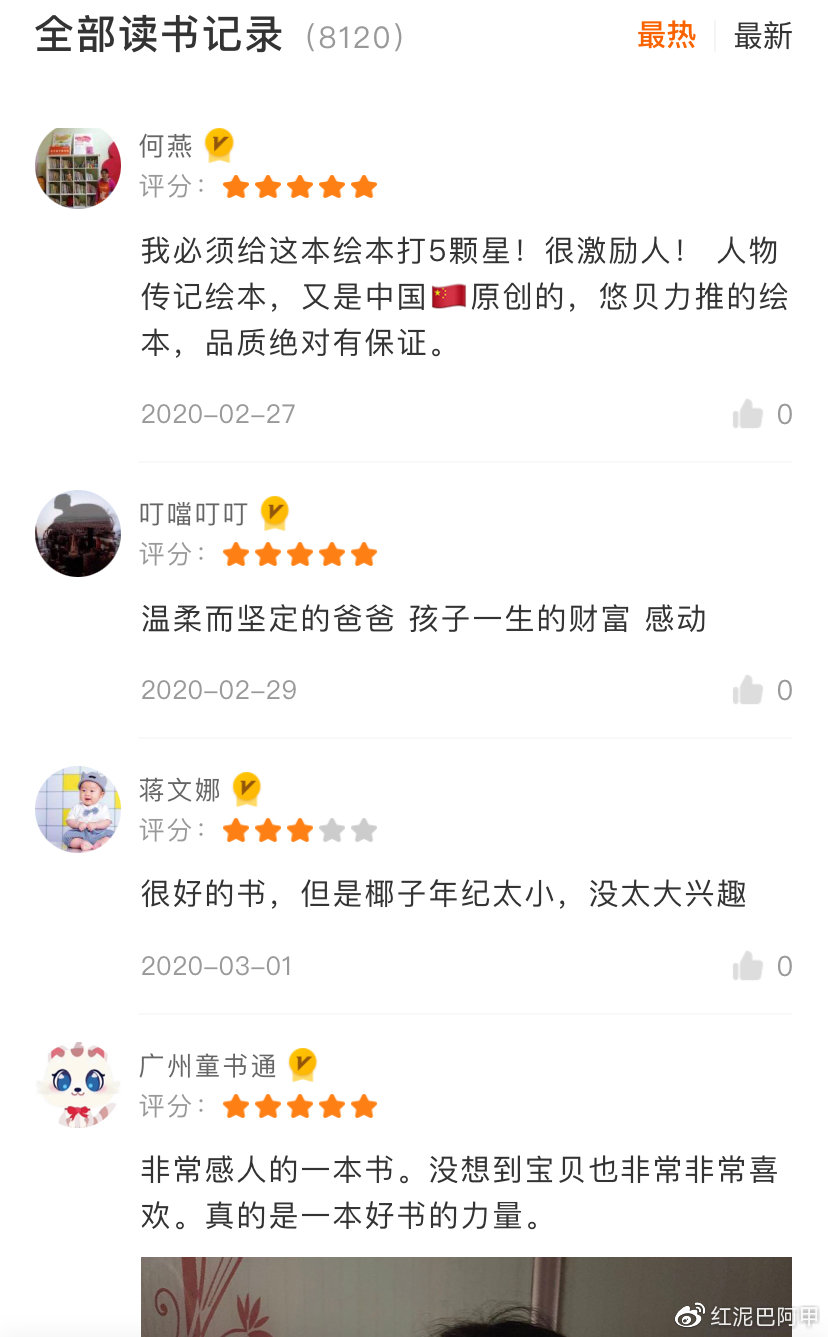
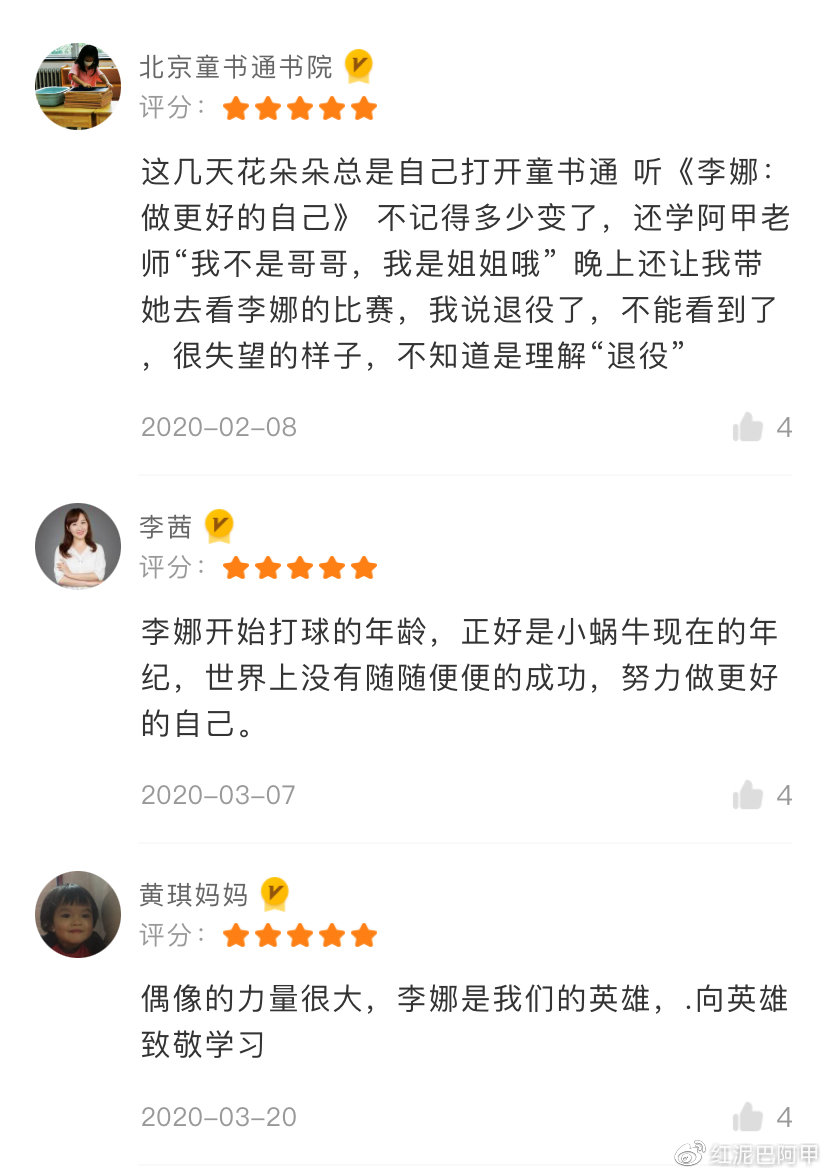
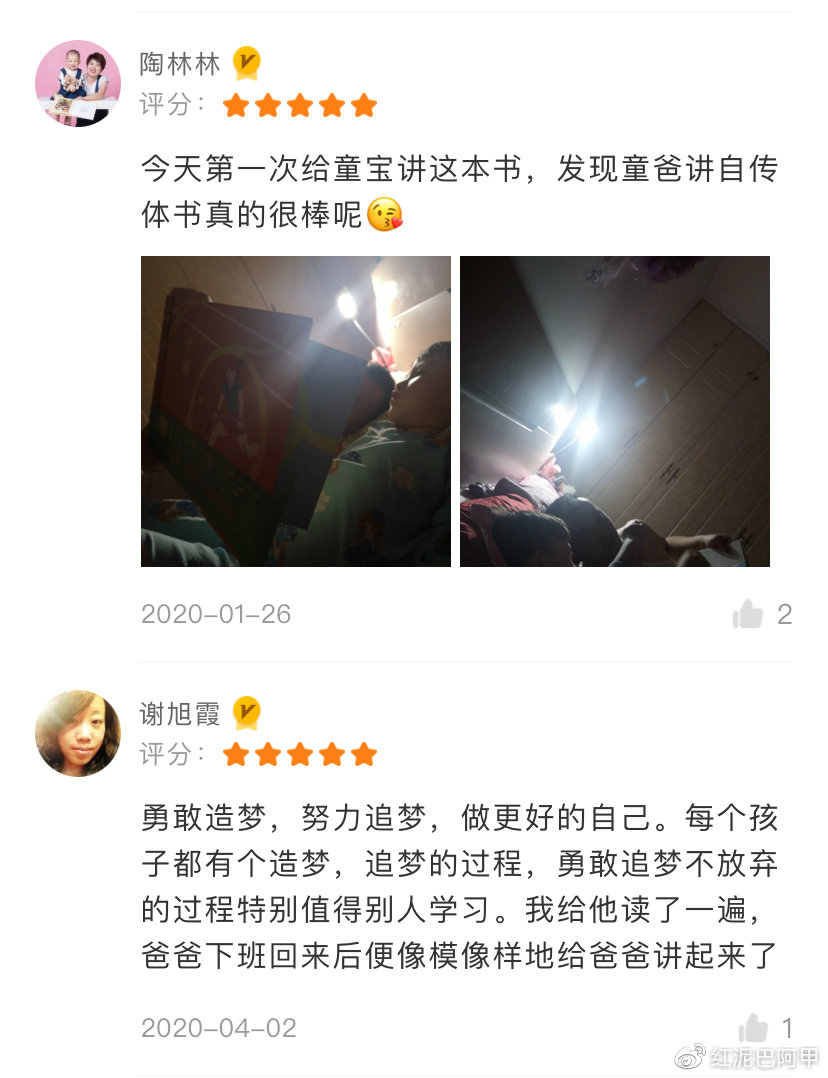
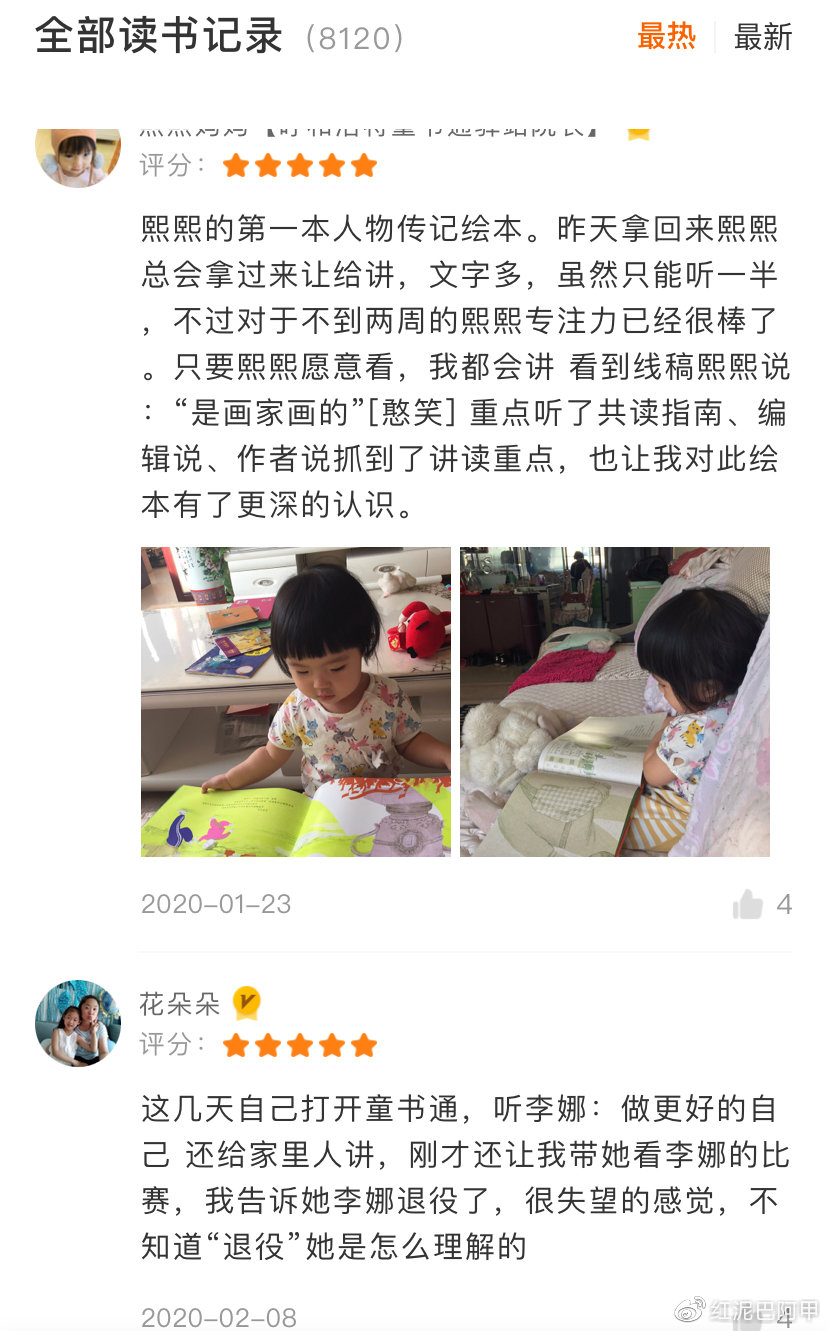
Appendix 2: Excerpts from Readers’ Reading Records in the Youbei Children’s Book App
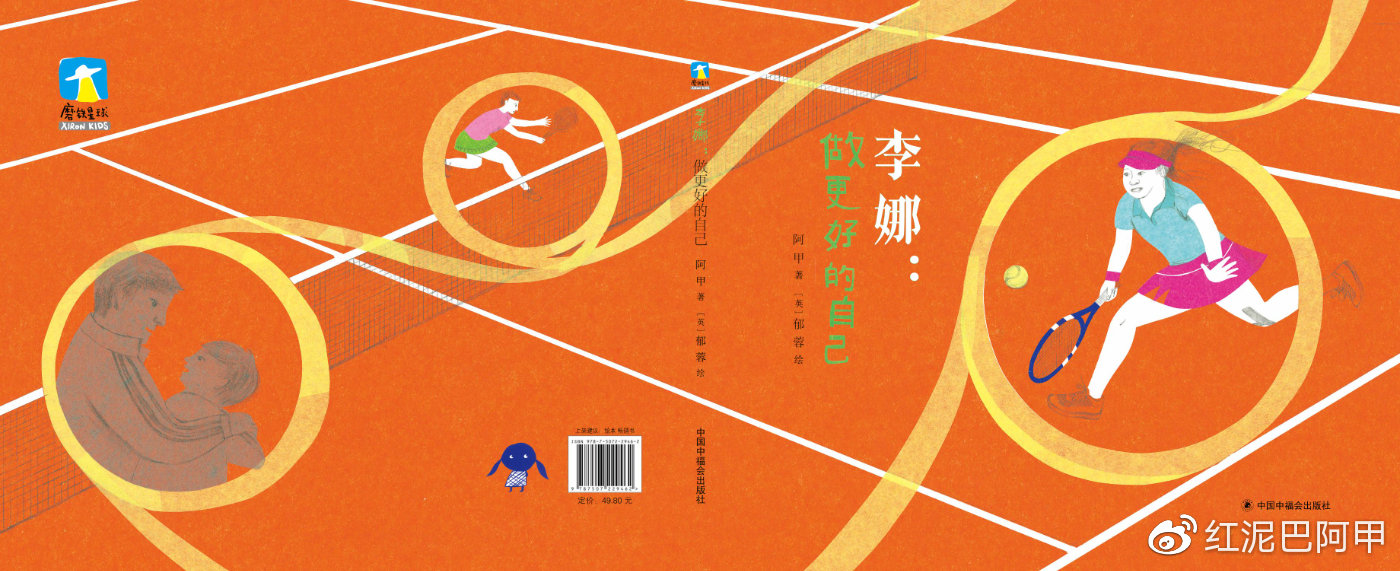
Cover and back cover of the first edition of “Li Na: Becoming a Better Self” in 2020