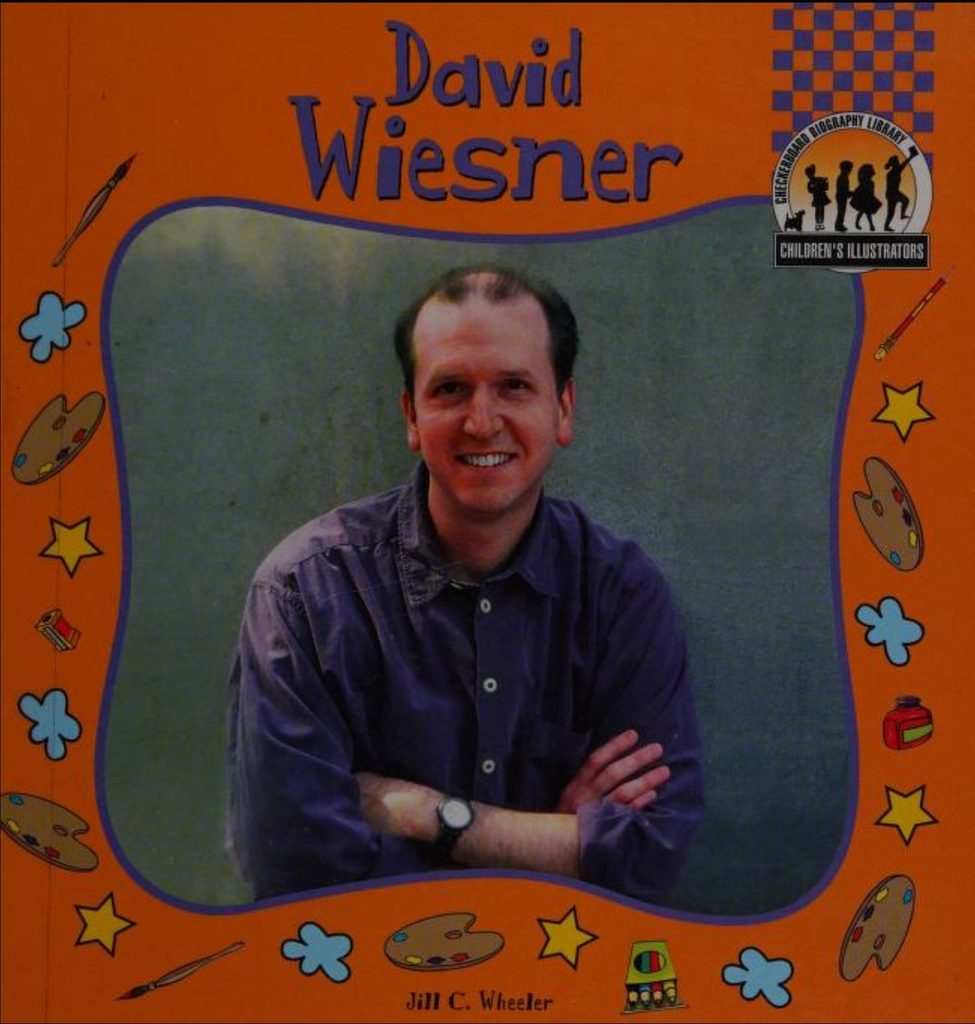
Today I’m going to talk about David Wiesner, a universally recognized master of wordless books. Let’s start with his upbringing.
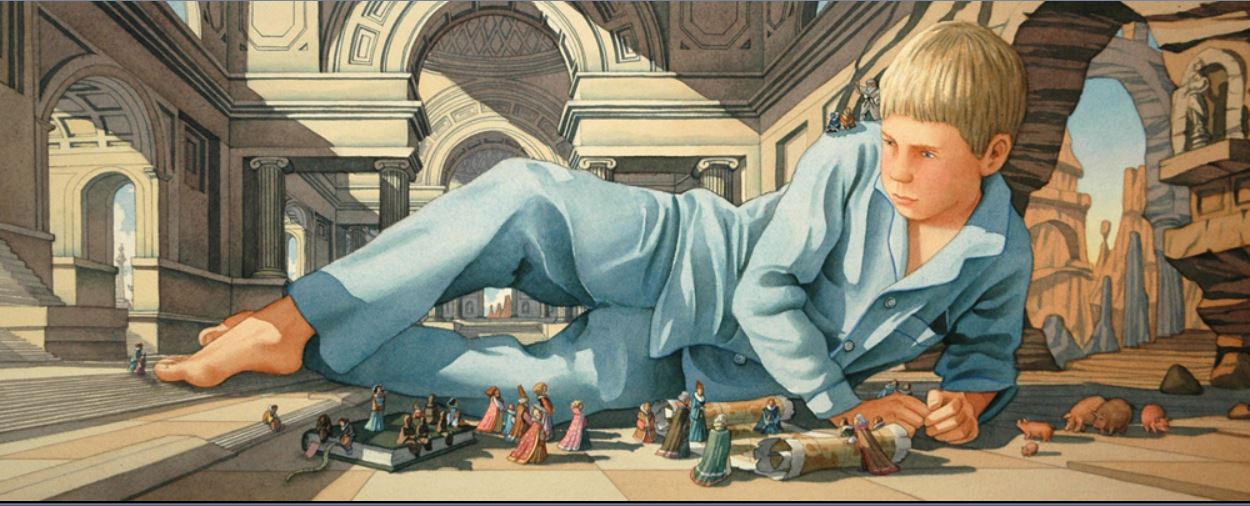
This American picture book master has many fans in China. His most popular work is probably *Tuesday*, and many people also love his *Secrets of the Sea*, *The Three Little Pigs*, and *Dream Factory No. 7*. What impresses people most about him is his exceptional ability to tell stories through illustrations. Half of his self-illustrated works either have no words at all or only a few simple words; you can basically understand the story just by looking at the pictures. This doesn’t mean his stories are simple; in fact, they are usually quite complex and mostly fantastical, often even science fiction. Therefore, to truly understand his stories, readers need to master certain techniques and have enough patience, generally reading them several times.
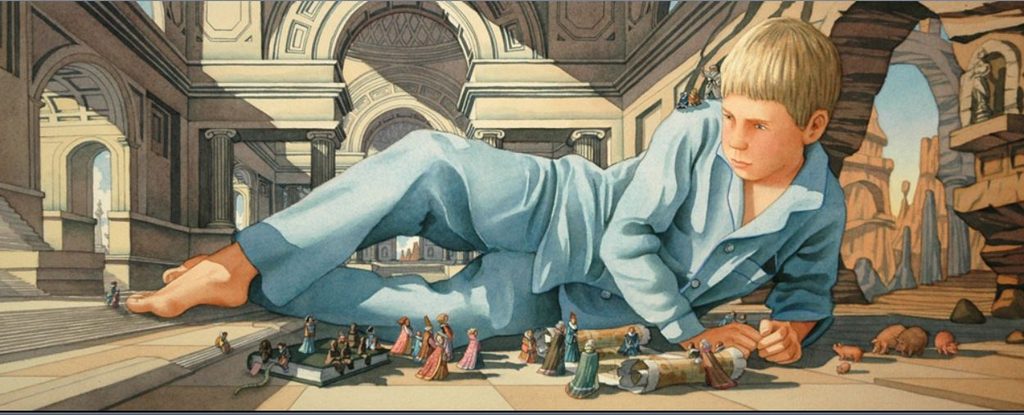
Because of his exceptionally rich imagination and challenging reading style, his works are beloved not only by children in the United States but also by teachers and librarians. From 1989 to 2014, a period of approximately 25 years, the American Library Association awarded him three Caldecott Medals and three Caldecott Honors. Before him, only another American picture book master, Marcia Brown, had received three Caldecott Medals before 1983. Marcia Brown passed away in 2015, meaning that currently, only David Wiesner has won three Caldecott Medals, and at only 70 years old (1956-), his creative output is still very high; perhaps he will even win a fourth medal!
David Wiesner visited mainland China in 2017 (and will be back in November 2026!), meeting with readers in Beijing. His several events were incredibly popular. People wanted to hear the stories behind his creations, and were also eager to learn about his upbringing, how he learned to draw, and how he developed such imaginative skills. Those who met him in person were likely particularly struck by his perhaps somewhat rigid and meticulous attitude. For example, when asked, “Why are you such a good artist? Is there a secret?” David Wiesner seemed a little perplexed by this question, saying, “I’ve loved drawing since I was a child, and I’ve just kept drawing and drawing. My work involves constantly drawing, that’s all.” Perhaps because he’s so immersed in the process, enjoying it so much, he can’t quite articulate the reasons. Perhaps it’s easier for us, as observers, to understand the secret to his success and good fortune.

David Wiesner was born in 1956 in Bridgewater, New Jersey, about 65 kilometers southwest of New York City and about 30 kilometers from the ocean. This small town has a population of just over 40,000, and its natural environment is well-preserved, surrounded by forests. A large lake lies to the west, and the Laritan River flows through it, emptying into the sea to the east. When David was born, Bridgewater had a population of less than 30,000, primarily agricultural. His father, George Wiesner, was an engineer at a large chemical company. His father left David a design toolkit, which David still uses; it looks like an antique but is still quite functional. David Wiesner is meticulous in his drawing and work, exhibiting a distinctly German style. Wiesner is a German surname, so the family is likely of German immigrant descent.
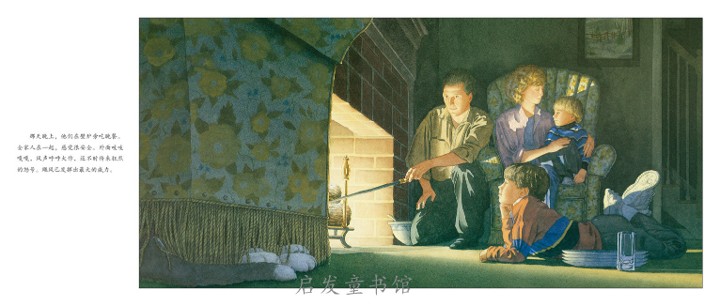
David Wiesner was born in the 1950s, during the post-World War II baby boom in the United States, a time when families were more open to having children. David was his parents’ fifth child within ten years, the youngest, with three older sisters and one older brother. That era was also a golden age for parenting. After experiencing two world wars and the Great Depression, many American intellectual families longed for a rural lifestyle and moved to more rural areas, hoping to bring their children closer to nature. They were also willing to invest heavily in their children’s intellectual and emotional well-being; toys and children’s books were abundant at that time, and American children born and raised in the 1950s and 60s were generally exposed to a large number of children’s books. As the youngest in the Wiesner family, David had access to all the good things his older siblings used, played with, and read. For example, his older sister and brother loved to draw, and he used their art supplies, continuing to use them even after they grew up and left home. Moreover, after they left home, the second-floor bedroom was his exclusive use. His father even brought home a very professional oak design and drawing table to his bedroom, turning the bedroom into his painting studio.
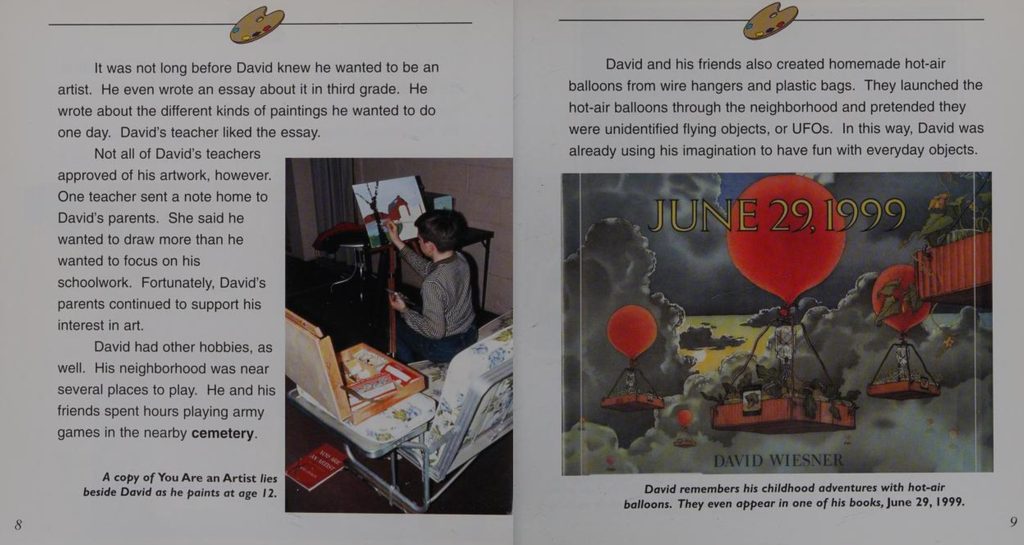
He loved drawing from a young age. Despite being an engineer’s family, their home had a distinctly artistic atmosphere. His older sister and brother loved to draw, and his second sister later studied opera; in that sense, the family was more like an artistic one. However, their learning to draw wasn’t entirely self-taught; in those days, they mainly learned from television. Back then, there was a fifteen-minute television program every Saturday morning where a cool-looking man named Jon Gnagy taught viewers how to draw. The Wiesner children would sit in front of the television, setting out their drawing paper and art supplies, and copying Jon Gnagy’s drawings. David Wiesner was the most diligent; he followed along for several years, faithfully completing every accompanying exercise. Jon Gnagy would casually narrate the stories that might unfold in his drawings, which must have had a profound influence on David Wiesner’s later fascination with storytelling through pictures.
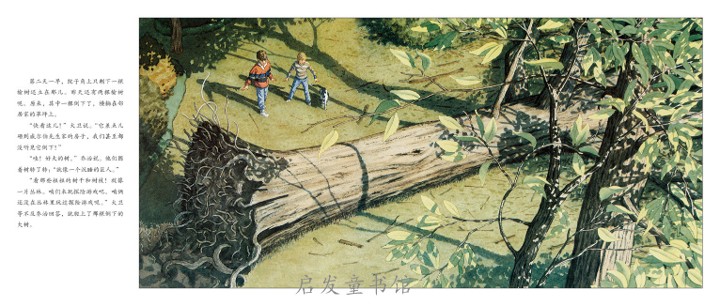
However, half of David Wiesner’s early art education can be attributed to his living environment. Everywhere he went, there were meadows, bushes, woods, streams, and swamps. The adults in the community encouraged children to play outdoors, and the children easily formed playmates. The younger children followed the older ones, and as they grew up, they began to lead the younger ones in play. Most of the games were invented by themselves, and the rules were set by themselves. They played freely in nature, fully enjoying their boundless imagination. Later, when a reader asked David Wiesner where the fantastical frog imaginings in *Tuesday* came from, he replied that if readers had the opportunity to experience his daily games in the woods and wetlands of New Jersey as a child, it wouldn’t be hard to understand; those imaginings were almost a natural and real part of his childhood.
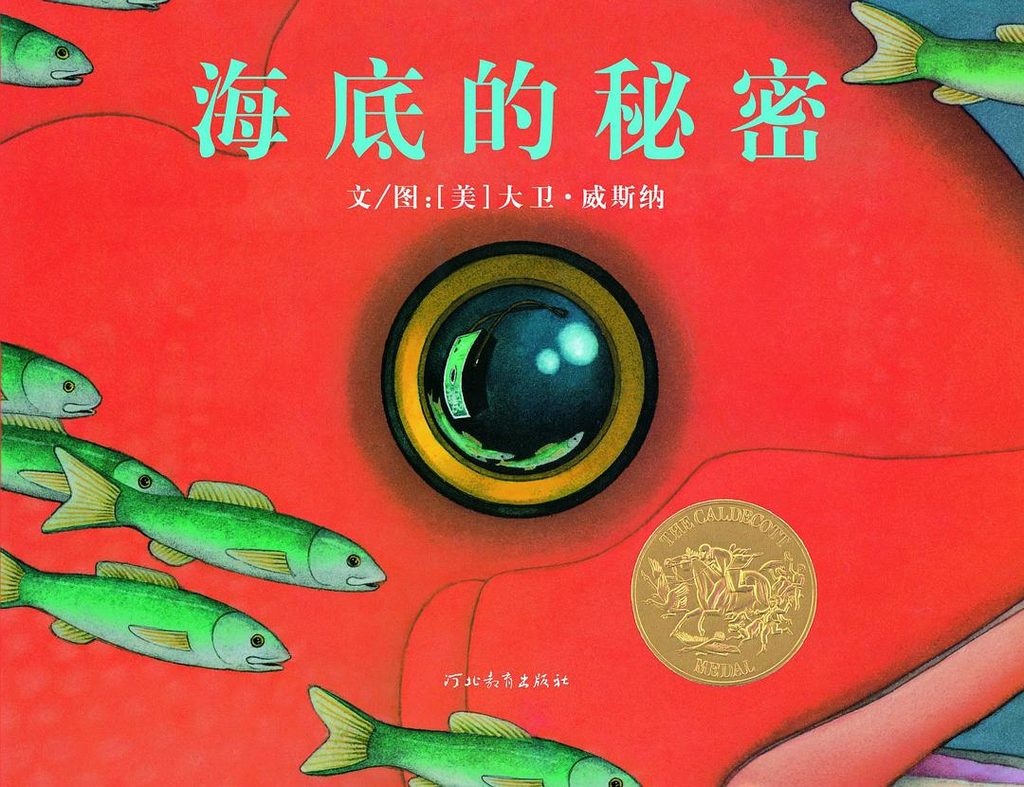
Those children were close to nature on one hand, and deeply influenced by popular science fiction culture on the other, with almost all of them fascinated by the imagination of aliens and UFOs. When David was about 13 years old, he saw Kubrick’s “2001: A Space Odyssey” in the cinema and was completely blown away. The film’s themes, imagination, and some classic scenes had a profound influence on him, and many of his later picture books pay homage to the film. For example, the most obvious example is the cover of “The Secret of the Sea,” which features the intelligent computer’s camera flashing red light from the movie!
As a child, David Wiesner was a quiet and reserved boy, seemingly lacking confidence, until high school when he gradually developed a stronger sense of self-confidence. This stemmed from two main factors: firstly, his athletic ability—he was a key player on the school’s basketball team, a skill particularly admired by girls in the US; and secondly, his talent for drawing—he was the class artist, and everyone called him “that kid who can draw.” He was a well-rounded individual, much like Anthony Browne. However, in the American high school culture, basketball players are often seen as very masculine and manly, while drawing is more of a girly activity. Well, David Wiesner loved both. But sometimes there were conflicts. For example, he had to train for a game, while also organizing a trip to the Museum of Modern Art (MoMA) in New York for an art exhibition. He couldn’t have it all. What to do? After much hesitation, David Wiesner finally chose to go to the exhibition. At MoMA, he was completely awestruck by Picasso’s *Guernica* and Dali’s *The Persistence of Memory*! This choice almost foreshadowed the course of his life.
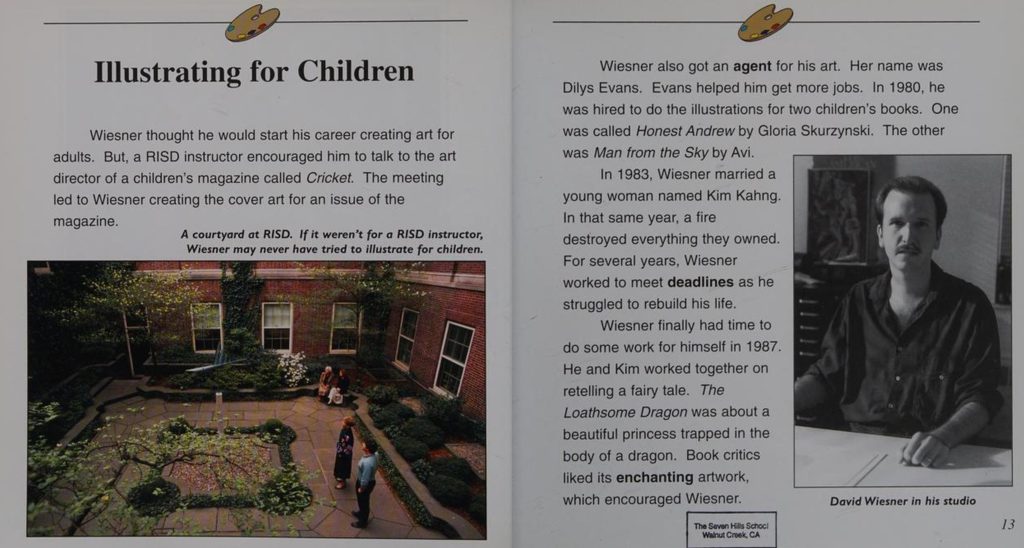
So when this boy from the countryside of New Jersey heard about the prestigious Rhode Island School of Design (RISD), he immediately decided it was his dream. In 1974, he enrolled at RISD, where he received tutelage from renowned teachers Tom Sculls and David Macaulay. David Macaulay, ten years his senior, was also a master children’s book illustrator and won the Caldecott Medal in 1991. At that time, another young man named Chris Van Allberg was also pursuing his master’s degree there; Allberg later won two Caldecott Medals and one Caldecott Honor. Just imagine how strong the Caldecott Medal atmosphere was at that school!
David Wiesner’s life trajectory can truly be described as incredibly fortunate. He was engrossed in drawing during his university years, not giving much thought to his future career. During his junior year, the art director of the renowned children’s magazine *The Cricket* visited the school. The art director admired David’s drawing style and commissioned him to create a cover for the magazine—a wild, futuristic, and imaginative illustration that told a story at a glance, instantly sparking the reader’s imagination. This successful experience helped David Wiesner find his future career path. So, after graduating from university in 1978, David Wiesner began working as a children’s book illustrator. Initially, he mainly illustrated other people’s works, including children’s science fiction novels by the famous director Steven Spielberg. He also collaborated on a picture book with his future wife, Kim Kahng (of Korean descent). However, it wasn’t until 1988, with the publication of his first independently created wordless book, *Dream Flight*, that he found his own unique style. This book won the Caldecott Honor in 1989.
Lady Luck smiled upon him again. The Cricket magazine commissioned him once more to draw a cover, and this time he created a fantastical world of frogs. Everyone who saw it was curious: what were the frogs doing? To answer this question, he created a nearly wordless book, *Tuesday*, which won the Caldecott Medal in 1992. One can’t help but think how incredibly fortunate this master of wordless books was!
——There are many more stories to come, we’ll discuss them in the next episode.