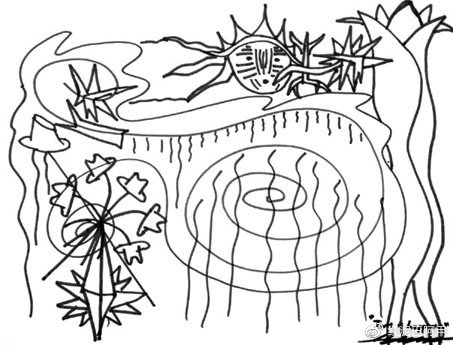
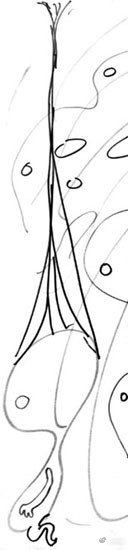
 Challenger Deep (Chinese version)
The deepest known trench on Earth is the Mariana Trench, with the Challenger Deep at its deepest point, nearly 7 miles (approximately 11,000 meters). Fifteen-year-old Caden Bosch is aboard a bizarre pirate ship heading towards the Challenger Deep. The captain and his parrot are both blind in one eye, and the crew members are either mentally unstable or acting strangely. They will battle vengeful banshees and abyssal serpents on the raging sea, but nothing can stop the ship from reaching its destination. The mission to plunge into the darkest abyss must be undertaken by Caden alone… This sounds like the plot of a fantasy novel—wild, fantastical, and bizarre—but it is actually a rather serious coming-of-age novel, only telling the unique experience of a high school student suffering from schizophrenia.
 Author: Neil Shusterman
Neil Shusterman’s *Challenger Deep* won the National Book Award for Young Adult Literature in 2015. While less well-known than the Newbery Medal to Chinese readers, this award is unique in its judging process—five renowned authors specializing in the genre serve as judges—and is often referred to as “an award for authors by authors,” making it arguably even more difficult to win. *Challenger Deep* won the award not only for its deeply moving story in a rarely explored genre, but also for its masterful writing technique, which brought a new breakthrough to young adult fiction in terms of narrative style.
Reading this book is challenging in itself. In fact, most readers will feel somewhat confused upon first reading it, firstly because of the anxiety and repression inherent in the topic of mental illness, and secondly because of the author’s somewhat ambiguous and chaotic narrative style. The novel begins by shuttling between two storylines: the real life of high school student Carden and the voyage on the pirate ship. However, both storylines are told in the first person, which may make readers feel that “something is wrong,” but they will be completely unaware of what is actually happening. The most difficult thing to understand is the connection between these two narrative lines. As if that’s not enough of the confusion, the author inserts two other narratives: one is Carden’s various memories and observations of life, and the other is Carden’s description of his dreams—okay, that means that the voyage on the pirate ship is not a dream adventure, so what is it? Even experienced and patient readers will only be able to roughly guess the connection between the two main narratives when they are almost halfway through the first reading.
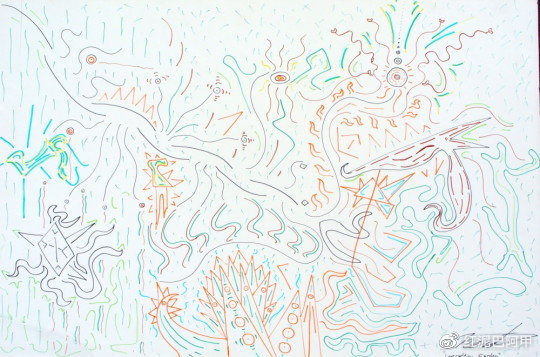
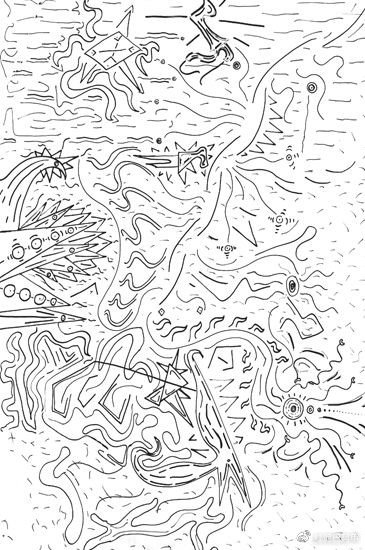
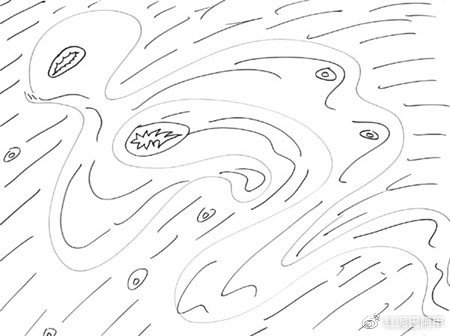
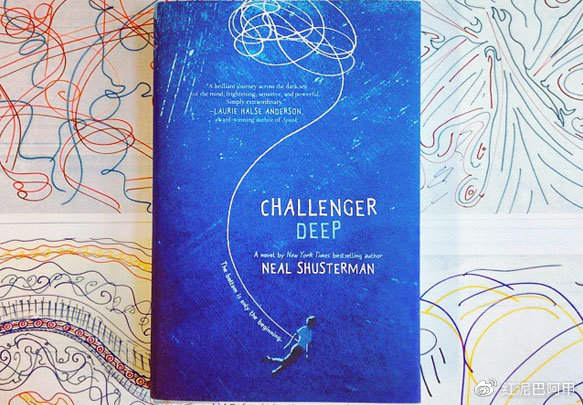 The original cover features a background of doodles made by the author’s son during a period of mental turmoil.
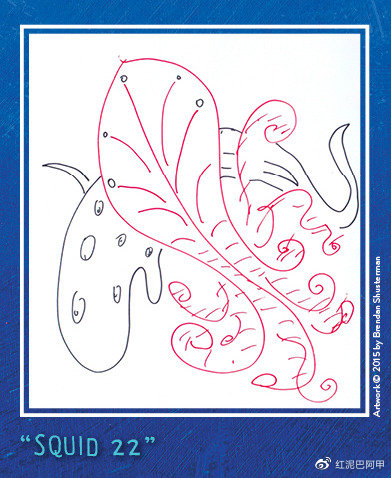
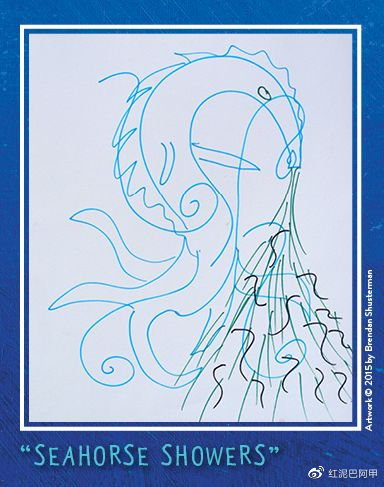
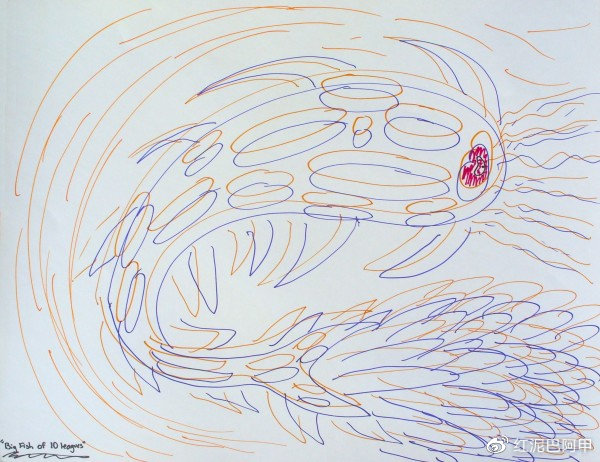
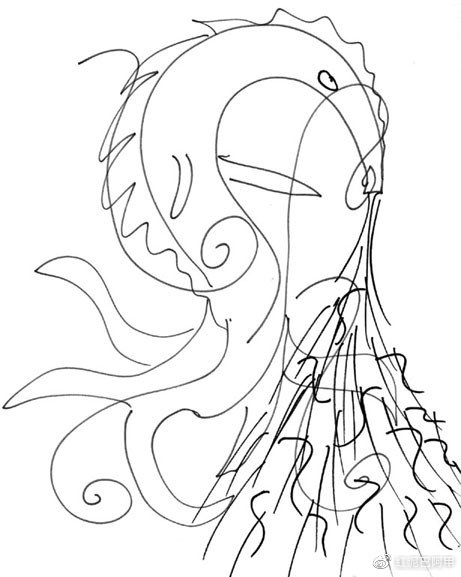
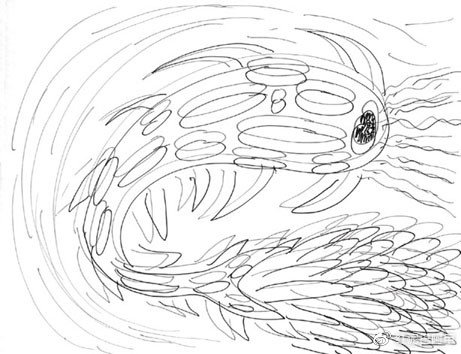
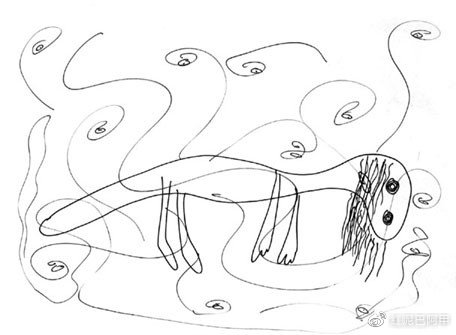
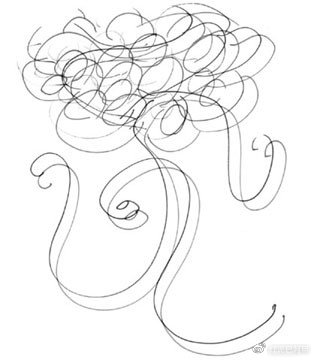
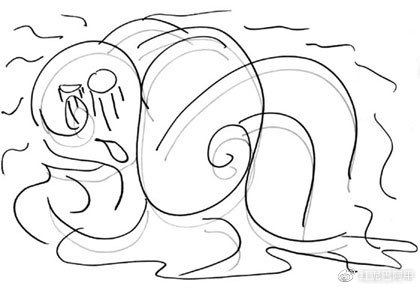
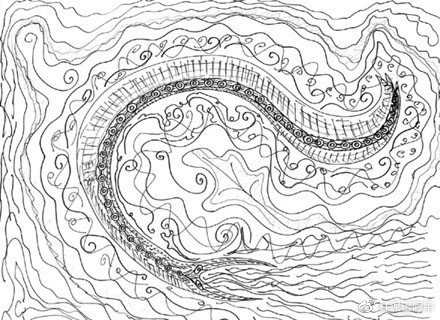
Neil Schusterman is a talented young adult novelist with approximately 30 popular works to his name (including some of his representative works that have been translated into Chinese).“Tomorrow’s Decomposition“But *Challenger Deep* is most special to him because it’s essentially based on his son Brendan’s real experiences, with the illustrations being Brendan’s scribbles from that period of struggle. In other words, the characters are fictional, but the core of the story is remarkably realistic. The choice of the Challenger Deep as the voyage’s destination stemmed from Brendan’s fascination with the sea and also from a science presentation he gave in school. Brendan’s teenage episodes, progressing from anxiety to delusions, paranoia, and hallucinations, were remarkably similar to Carden’s. Brendan eventually had to be hospitalized, at which point he told Neil, “Dad, I feel like I’m screaming my heart out underwater, but nobody can hear me.” It was from that moment that the writer father decided to write a novel for his son.
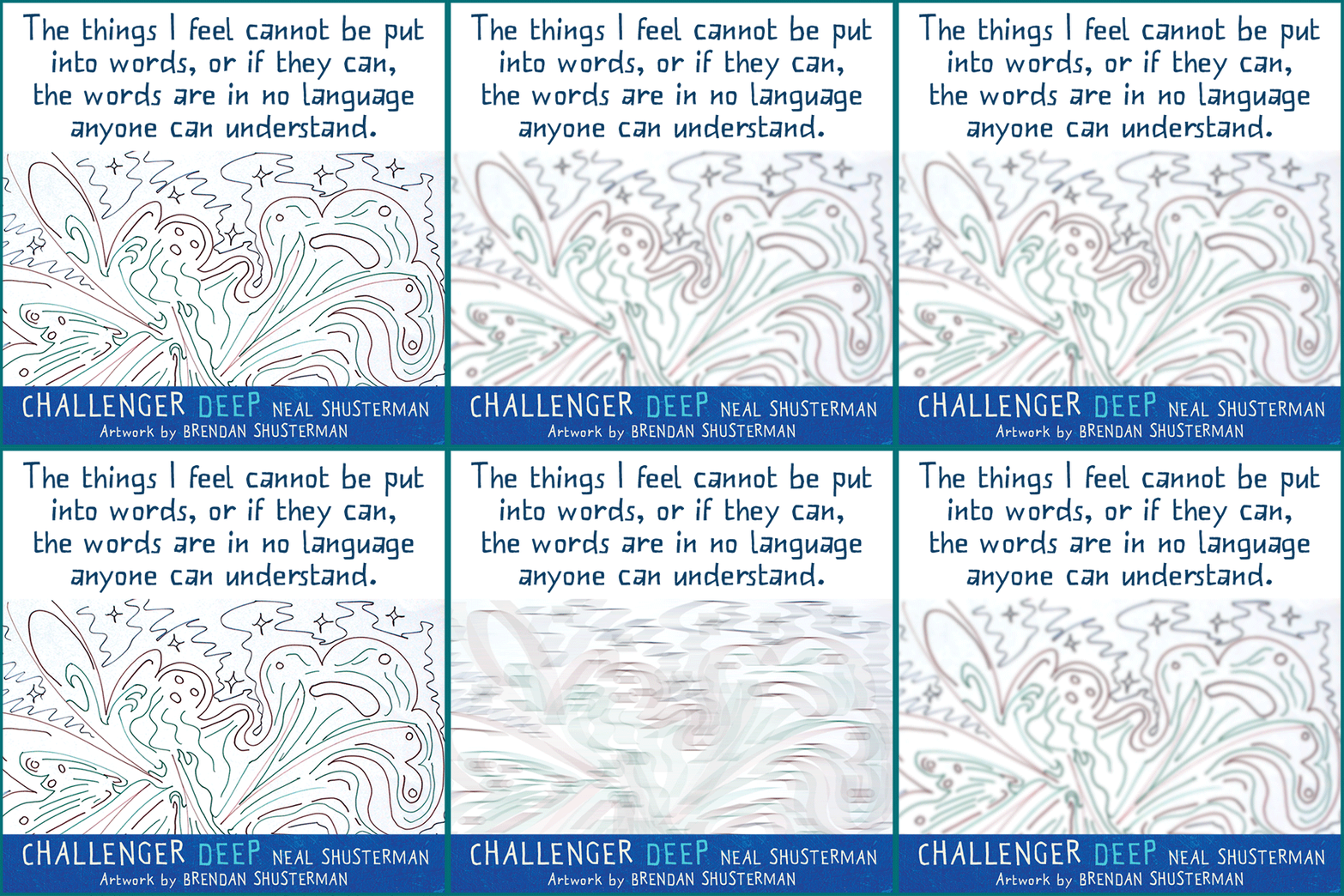 Doodles by the author’s son, Brendan, during a period of mental turmoil.
Unlike the somewhat bewildered accountant father in the novel, Neil has a greater understanding and empathy for his son. He attempts to use the story to recreate his son’s true mental state during episodes of his illness. The elements distorted by delusions and hallucinations are drawn from his son’s real-life experiences, his encyclopedic knowledge, and his beloved literary classics, such as *Pinocchio*, *Alice’s Adventures in Wonderland*, *Twenty Thousand Leagues Under the Sea*, and *Moby-Dick*. Neil clearly recognizes the scarcity of works depicting adolescent mental illness, and he decides to showcase the intertwining of reality and delusion. Therefore, he allows the protagonist to utter four different voices, freely unfolding and echoing each other.At first, even he had to use different colors to mark the four narrative texts, and then piece them together like a jigsaw puzzle.He wasn’t sure if the editor would accept such a manuscript.
I must admit that, as a reader, it took me three readings to truly grasp the whole story and understand Neil’s narrative intentions. Discerning readers, on their second reading, might try reading each voice’s individual narrative separately, such as skipping between the “Pirate Voyage” or “Carden in the Real World” sections. You’ll discover subtle or overt connections between the two storylines: the parrot and Dr. Poirot, Cariobe and Carly, the navigator and Howl, the blue-haired girl appointed “Treasurer” and Skye, the cocktails on the pirate ship and the happy paper cups of the hospital’s cocktail therapy… Once you understand that the delusional and realistic parts are actually telling the same story, just told by protagonists in different mental states, unraveling the mystery becomes much easier.
However, Neil added another obstacle to the timeline by not allowing the two narrative threads to run concurrently. If Carden boarding the pirate ship signifies a relapse of his illness, and encountering the parrot and the other crew members signifies hospitalization, then the parrot’s appearance begins in Chapter 4, while Carden’s hospitalization in the real world doesn’t begin until Chapter 75. In Chapter 9, Carden discovers a sign on the main hatch of the pirate ship that reads, “You’re not the first, and you won’t be the last.” Then, in Chapter 99, the real-world Carden sees a poster in Dr. Poirot’s office that reads, “You may not be first, you may not be last, but you will cross the finish line”—these two events clearly echo each other, yet they are separated by 90 chapters! On the Goodreads English book sharing website, some readers complained about the author’s chaotic structure, suggesting that a more logical readjustment would make the story clearer and less confusing. I deeply sympathize with this troubled reader, but we must understand the author’s good intentions. Imagine: if the protagonist’s narrative logic were so clear, would it still sound like the narration of a schizophrenic? The author intentionally invites readers to experience that psychological process with a touch of pain.
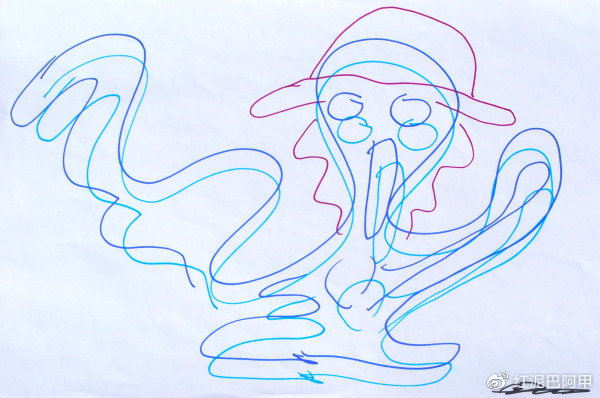 Interior illustrations, Brendan’s doodles
This reminds me of William Faulkner’s *The Sound and the Fury*, which is also a story told in four different voices. The first part is narrated by Benjy, the idiot, and its logic seems quite chaotic to ordinary people.“Unreliable” narrativesBut it is precisely through this kind of narration that people seem to see the unmasked true nature of humanity reflected in a mirror. In *The Challenger’s Abyss*, many details of Cardin’s narration also belong to the category of “unreliable” narratives; the author intertwines several narratives, requiring readers to painstakingly distinguish and analyze them. After clearing away the fog, we see a vibrant, young heart, endlessly struggling, endlessly questioning, endlessly sympathizing… Perhaps the most touching aspect of the story is Cardin’s compassion. As a teenager, he has a strong curiosity about the opposite sex, an immense desire for friendship, and absolute loyalty to his friends, but what truly sets him apart is his concern for others. His reason for not choosing suicide was that he didn’t want his sister to be ashamed in front of others. Even when he was in a mental hospital, he couldn’t help but lend a helping hand to his fellow patients. When Carly needed him most, he gave her warmth, but he was also able to suppress his own desires and always keep his distance… In Carden’s perhaps somewhat inexplicable narration, we see a particularly real person. Even in his darkest moments, the radiant light of humanity could not be concealed.
In his afterword, Neil Schusterman mentioned that one of the reasons for his writing was because he discovered…““One in three American families is haunted by the specter of mental illness.””His family was one of those who, through their combined efforts, weathered the most difficult times, and their son escaped the abyss and returned to a normal life. Through his novel, Neil hopes to share this experience, benefiting those in need and helping most people, even those not troubled, understand that these mentally ill patients are simply patients, not monsters; they are living, breathing human beings. A line in the book particularly reflects the public’s attitude towards the mentally ill:“Dead children are placed on altars and worshipped, while children with mental illnesses are hidden under carpets.”According to an investigative article published on People’s Daily Online on November 27, 2019Caring for people with mental illness requires a concerted effort from society.The reportIn recent years, the total number of people suffering from mental disorders in China has exceeded 100 million, among which the prevalence of schizophrenia is close to 11% of the total population, and more than 50% of them have not received effective and standardized treatment.It can be said that Schusterman’s efforts are also very meaningful to Chinese readers.
However, the author’s efforts did not stop at simply raising awareness or providing readers with a unique simulation experience; he also attempted to explore the causes and solutions. According to the World Health Organization’s official website, “Research has not yet confirmed any cause. It is suggested that interactions between genes and a range of environmental factors may lead to schizophrenia. Psychosocial factors may also be a cause.” The cases of Carly and Hal in the novel perhaps best illustrate this; the reactions of Carly’s parents and the state of Hal’s mother, to some extent, contributed to the children’s illness. Carden’s family environment was relatively normal, but it took his family a long time to understand and accept his condition. They provided necessary help, but the final stretch of the struggle to escape the abyss was ultimately Carden’s own to walk.
Describing Carden’s arduous journey, experienced alone, is clearly extremely difficult. The author employs numerous symbolic devices and draws upon imagery from mythology, fairy tales, and classic literature to depict Carden’s adventure into the Challenger’s Abyss. The journey is perilous yet magnificent, comparable to an epic Greek tale. The author’s skill lies in seamlessly integrating this legend with Carden’s spiritual journey, interspersed with moments of wisdom and humor. Readers participating in this thrilling journey can find meaning in the symbolism: what do the captain and the parrot represent? Why is the trust between Carden, the captain, and the parrot so complex? What does the white plastic galley represent? What does the navigator’s chart represent? Why is Skye always trying to piece together the puzzle but never succeeding? Why is it that small blue piece of the puzzle that leads Carden out of the abyss? Why does that small piece become the last glimmer of light in the abyss? Such reflection will certainly make the journey worthwhile.
The most unique and ideal character in the novel is Carlyle, the “only sensible person” on the pirate ship. In both narrative threads, Carlyle is also the only character who appears and plays a crucial role in both worlds. This is because Carlyle’s narration sometimes oscillates between delusion and reality; readers can even use Carlyle to bridge the gap between these two narratives. Carlyle’s later sharing of his true experiences with Caden is also quite powerful. You’ll find that a former mental patient can become an expert in this field, offering the deepest sympathy and greatest help to other patients. In the afterword, the author writes that his son…“He gloriously escaped the abyss, and in time became more like Carlyle…”Reading this is very comforting.
Having just escaped the abyss, Carden had this reflection:“We are extremely controlling creatures. We want to put everything in our lives into labelable boxes. But just because we have the ability to label doesn’t mean we actually know what’s in those boxes…”After reading it, I pondered it repeatedly for a long time. I would say that this is a book that every reader should read carefully.
Written by A‑Jia on January 18, 2021 in Beijing
【MoreBrendan SchustermanGraffiti