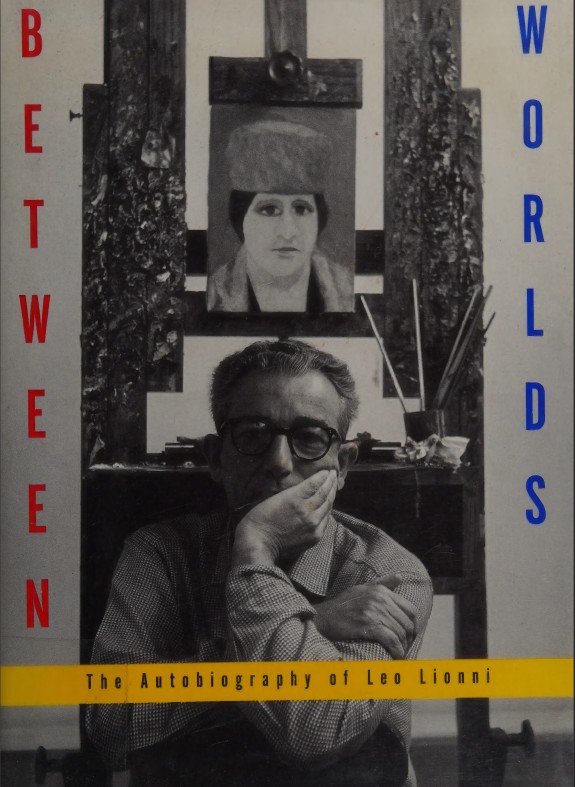
This story is adapted from the autobiography of Leo Lionni (1910–1999). Between Worlds(Between Different Worlds).
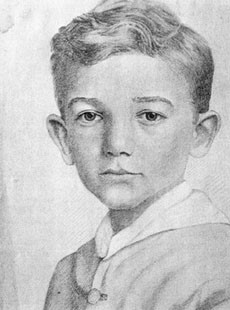
1. Lily: “My First True Love“My first real love)
In the summer of 1923, thirteen-year-old Leo Lionni accompanied his grandparents to Marienbad, a popular Czech spa resort at the time. This Dutch boy of Jewish descent, already living with his grandparents in Brussels, had learned to switch between different countries and languages. He later recalled those two years as a protracted visit to relatives’ homes, where he sometimes felt more like a polite observer.
My grandparents preferred hot springs for relaxation and didn’t want to struggle with the sand, wind, and water at the beach. Leo was initially reluctant, but during a walk in the woods…Lilly LoewyShe was twelve years old, with small red freckles on her face, and long, messy red hair. She drank the hot spring water from her cup, looking slightly uneasy. As for how the two families met, Leo couldn’t remember. He said his memory always felt like he had only entered the theater after the performance had already begun.
In Amsterdam, he also had a neighbor named Tiene. They played doctor and patient games, and he even wrote her a short letter addressed to “Tiene Lionni.” At that time, he was already thinking about love and marriage together. However, Lily was what he called his “first true love”:
““I love her funny smile, her tiny red freckles, her light blue eyes, her slender body, and her long, unruly red waves. I love how she’s always out of breath when we meet, I love her mysterious silence when it’s time to leave, and I love her long, light kisses.””
They were still too young to experience the torment of passion, and their days were filled with ease and joy. Almost every afternoon, the two would walk along the path to the forest café, order tea or juice, dance, then pay the bill like adults, tip the waiter, and disappear together into the woods. They weren’t embarrassed, and the adults didn’t make a fuss. When the holiday ended, they embraced, promising to be faithful to each other, while Lily’s parents and Leo’s grandparents silently expressed their satisfaction.
Back in Brussels, their romance turned into letter writing. Leo wrote a passionate love letter every week, hoping to read a similarly moving confession; Lily’s letters, however, were those of a twelve-year-old girl, hesitant to reveal herself to others. Daily life gradually took over, and the letters became less frequent; after four or five months, the correspondence ceased altogether.
This relationship left behind two pieces of evidence: a photo of the two walking side by side, bravely drinking from a hot spring, and an address that Leo always remembered.Lilly Loewy, Jirassek Platz 1, Moravska Ostrava—Ostrava, Moravia, Ilasek Square 1. Lily’s face faded, but the address remained.
As time passed, Leo went to the United States, then lived in Italy, studied in Switzerland, got married, and became a father of two. After Hitler occupied the Sudetenland, news of expulsions and torture kept coming in, and the image of that freckled Jewish girl from Moravia returned clearly to his memory.
He didn’t know Lily’s whereabouts. Because he didn’t know, the plight of the concentration camp victims constantly overlapped with her face in his mind. This passage is almost unbearable to read:
““Lily was the one pushed into the freight car, stripped naked, and dragged into the gas chamber. Lily was the one whose red hair was cruelly cut off. She was the one shot on the banks of the Danube. Or near the Dutch border. Lily was the one who escaped to Austria but fell into the hands of the Vienna Gestapo. The frail skeleton I recognized in the mass grave was also Lily. It was always her.””
This isn’t a record of Lily’s actual ordeal, but rather Leo’s terror in the face of catastrophe: unimaginable thousands, even millions, of victims, all bearing that face he recognized. After the war, he saw no photographs or heard her name, nor did he recognize her in any documentaries about death camp survivors. The life that followed took that little face away from him as well.
This first love thus has two layers of memory. One is the kiss in the woods, afternoon tea, and clumsy love letters; the other is the shadow cast by war. Nearly seventy years later, an unexpected reunion will force Leo to confront these two layers of memory once again. Let’s first go back to his younger days: in Genoa, another girl is waiting to enter his life.

2. Ada: Immersed in the intellectual enlightenment of “In Search of Lost Time”
During his childhood, Leo moved with his parents to Genoa, Italy. To adapt to the local school system, he first received ten months of private tutoring before entering the Vittorio Emanuele III Higher Technical School (Istituto Tecnico Superiore Vittorio Emanuele TerzoHe was preparing to study a four-year business management course. To him, business management was simply bookkeeping. For a young man aspiring to be an artist, this was hardly an exciting prospect.
School discipline was strict: girls wore black uniforms, and boys and girls were forbidden from linking arms, holding hands, or even calling girls by their first names or using affectionate terms. Many students wore fascist uniforms and bowed to the “leader” daily; Leo, as a foreigner, was initially exempt from these requirements. He described himself as “a cat in a strange warehouse,” desperately wanting to escape. A week into the semester…Adda MaffiThey’ve arrived.
Ada wore glasses, was tall, and moved somewhat slowly and clumsily. Her long, dark hair was braided. Compared to her classmates who loved to laugh and talk, she seemed mature, and possessed an inexplicable air of mystery. After class, Leo mustered his courage and asked if he could walk her home. Ada glanced at him and agreed.
As they approached the long tunnel leading to the cable car entrance, Leo suddenly asked her, “Why do you look so sad?” Meeting his gaze, she explained that her mother had passed away a few months ago and her father had gone to prison, tears welling up in her eyes.
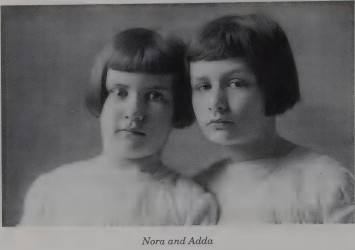
They talked from a bench near the station to a café overlooking the city. Ada’s father, Fabrizio Maffi, a doctor, communist, and member of parliament, had been arrested by the fascist authorities and was awaiting trial in Genoa. The children had moved from Rome to visit their father weekly. Ada’s brother Mario and sister Nora lived there, while her older sister Bruna worked in Milan and occasionally returned on weekends.
Leo was shocked and even a little embarrassed to talk about his peaceful life. A few days later, he met Ada’s family and they quickly became friends. He often went to their boarding house to do his homework and eat.
At the lively and dialectical dinner table at the Mafie family home, Leo not only gained a deep friendship that was instantly established, but also received his own silver napkin ring—a ceremonial confirmation that he had been formally accepted as “one of the family” by this family full of political ideals and suffering.
It was also during this period that he witnessed fascists throwing books from the home of a socialist lawyer into the street and burning them, and then throwing a piano from a third-floor balcony. The wood and strings crashed against the street with a loud thud, and he trembled and ran home. Politics had transformed from a vague concept into real harm inflicted on those around him. He began reading extensively by Tolstoy, Pushkin, Gogol, and Turgenev, and later discovered Proust and other French writers.
Ada was a year younger than Leo, intelligent, strong-willed, romantic, and sometimes surprisingly insightful. Neither of them wanted to be bookkeepers, so they sought the education they truly desired through reading, outside of their tedious classes. In their boarding house, they would lie in bed reading and telling childhood stories; Ada and Nora would sometimes come to Leo’s small living room to do homework, draw portraits, and listen to records. Leo and Ada would later still immerse themselves together in the twelve-volume edition of *In Search of Lost Time* published by the New France Review (NRF), discussing the thoughts and feelings that reading brought them.
In his autobiography, Leo recalled his profound yet brief romance with Ada in this way:
“My relationship with Ada was passionate, but short-lived. She was an extraordinary young woman—intelligent, strong-willed, romantic, and remarkably insightful for her age. She shared my sudden passion for reading, and much of our enjoyment came from discussing what we had read and the thoughts and feelings it evoked…”
What Ada brought to Leo was a profound intellectual enlightenment and spiritual resonance. She was like a bolt of lightning, pulling Leo out of the void of individualism and pushing him into a vast world where literature, thought, and real history intertwine.
Years later, he still called Ada an extraordinary young woman, and admitted that their romance was passionate but short-lived. Reading bound them together, but their love slowly drifted elsewhere. In that small living room, when Ada picked up a book and lay down on the sofa, her sister Nora would pull Leo to dance.
[To be continued]
Leave a Reply