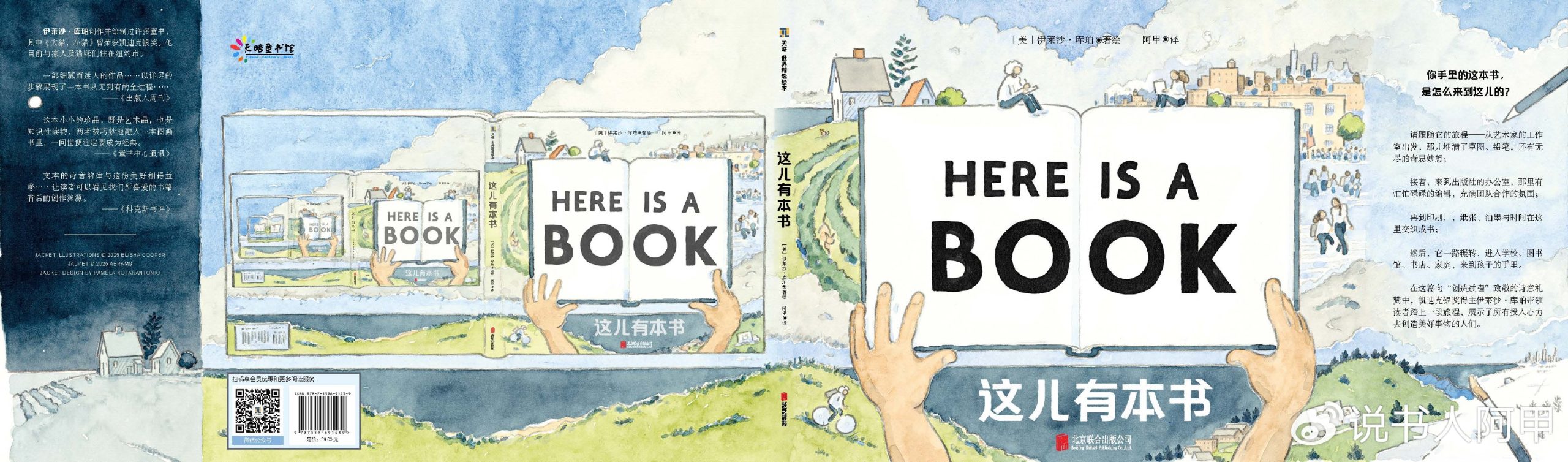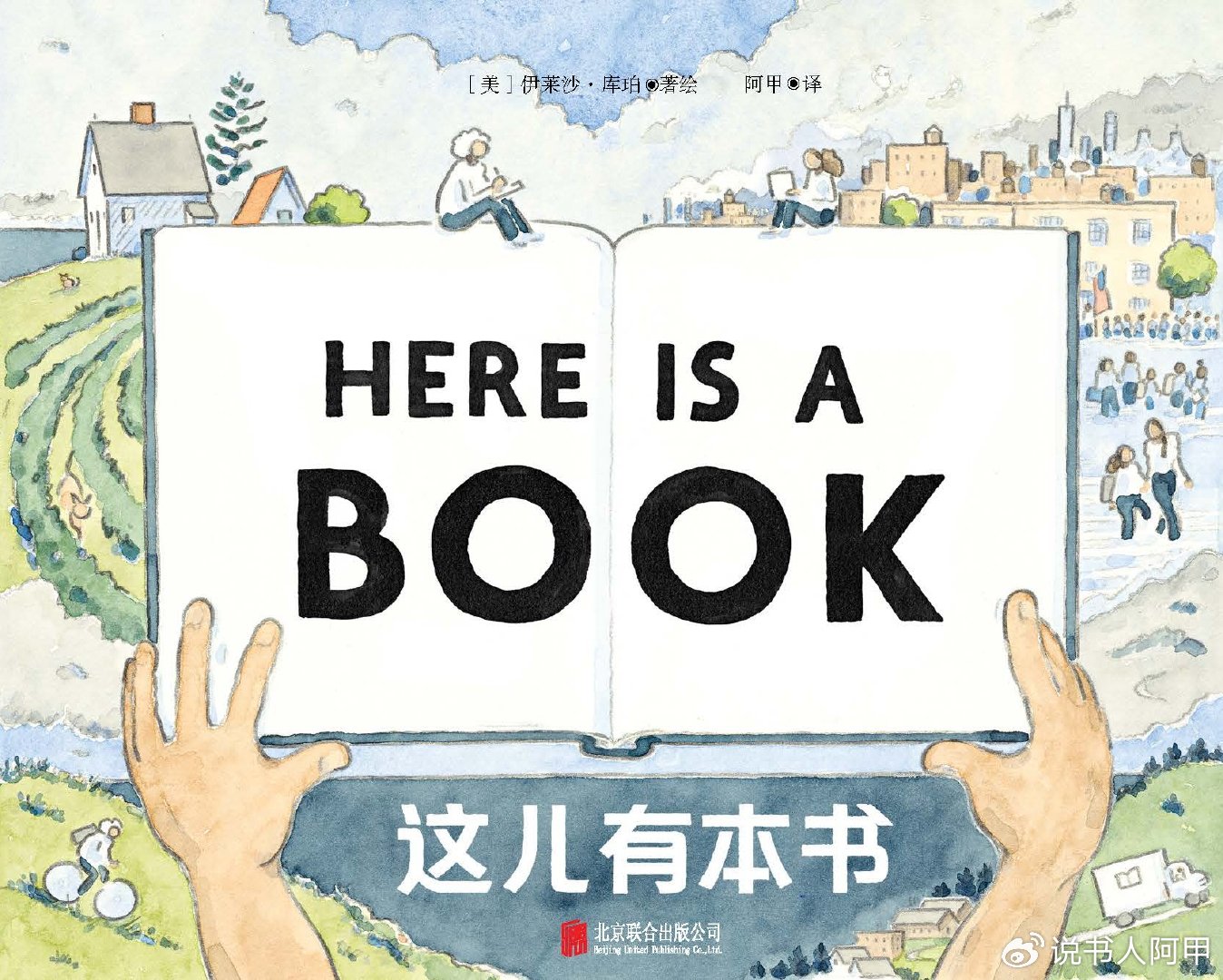
A poem about tangible life and labor written for the book production chain.“
Elisha Cooper, the illustrator who won the Caldecott Honor for *Big Cat, Little Cat*, occupies a unique position with her restrained, minimalist yet sophisticated aesthetic. Her picture book *Here Is a Book: A Picture Book*, released in the English-speaking world in April 2025, is a meta-narrative masterpiece exploring the essence of creativity and collaboration. The Chinese version, translated by A‑Jia, will be published in 2026.
This book, themed “How a Book Is Born,” tells the story of an artist’s initial inspiration, sketching, and revisions in their garden and studio, the collaboration between the publishing house’s editors and design team, the printing and binding process, the transportation across mountains and rivers, and finally, the book’s arrival in a child’s hands, reigniting their creative impulse. Numerous authoritative children’s book and publishing media outlets in the English-speaking world have given it high praise, generally considering it not only a popular science book but also a “tangible poem of life and labor,” a gentle tribute to the book and the creative process. This report will synthesize numerous authoritative book reviews, author interviews, and educational application cases, providing a panoramic and in-depth analysis of the book from the dimensions of the creator’s background, textual rhetoric, artistic language, and interdisciplinary educational value.
The Creator’s Underlying Qualities and Sources of Inspiration: Authentic Observation and “Made with Love”“
Elisha Cooper’s work has always been closely linked to his life trajectory and perspective. He grew up on a farm in New England, an experience that gave him a keen eye for nature; his subsequent work in the art department of The New Yorker taught him a sketching style that captures moments of life and avoids excessive embellishment.
* The budding of inspiration and modular structure
Regarding the inspiration for *Here’s a Book*, Cooper revealed in an interview with renowned children’s book critic Betsy Bird that it stemmed from the question children repeatedly asked him during his years of school visits: “How do you make a book?” And on an ordinary day, as he sat reading by the Hudson River…The essay “Something to Do” by British author Zadie SmithAt that moment, he was instantly struck by the phrase “made with love.” In that instant, he saw the book’s curve and its modular structure—a cumulative quality where “add something, and something will happen.” The core of the entire book was established on these few words:Structure, color, rhythm, love.

* The “Trash Can” Philosophy and the Creative Ecosystem of Embracing Authenticity
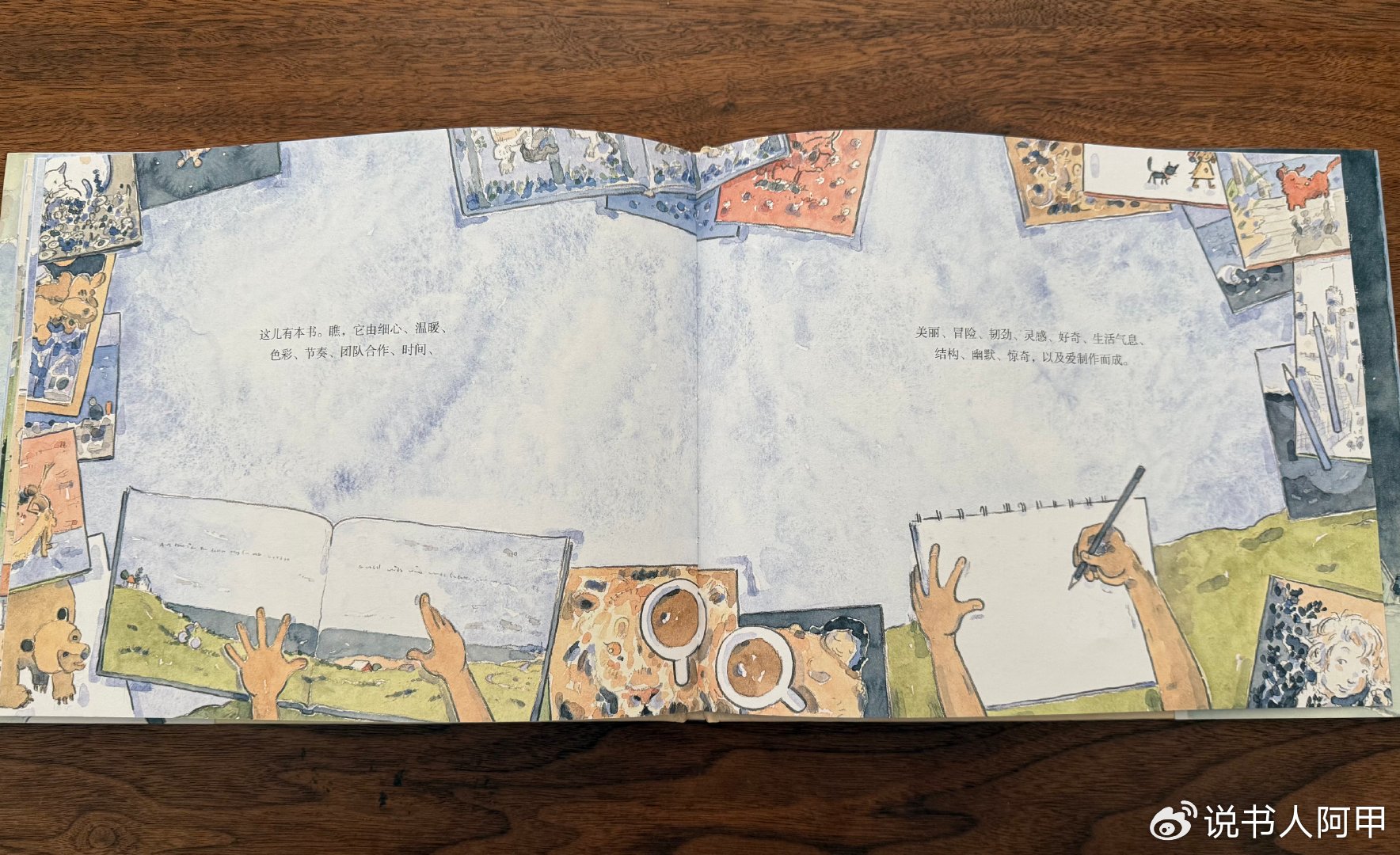
Throughout his work, Cooper has consistently strived to break away from the excessive “embellishment” of the real world in picture books. In this book, he dedicates himself to revealing the tedious, even chaotic, reality of book production. The artist’s studio depicted in the book is filled with sketches, paintbrushes, and overflowing “trash cans.” This is not only a realistic recreation of the working environment of professional artists but also conveys a core educational philosophy: beautiful things are not achieved overnight but are the result of numerous failures, revisions, and a significant investment of time.
Even more dramatically, Cooper mentioned in the interview that the first edition of this picture book about “how a book is born” had an error on both the front and back covers. He and the designer repeatedly weighed whether to accept the mistake, since “admitting that mistakes can happen during the production process is actually the most honest expression.” Although they eventually corrected it, this behind-the-scenes story perfectly illustrates the book’s underlying acceptance of imperfection.
* The artist’s “mix-and-match” archetypes and brush choices
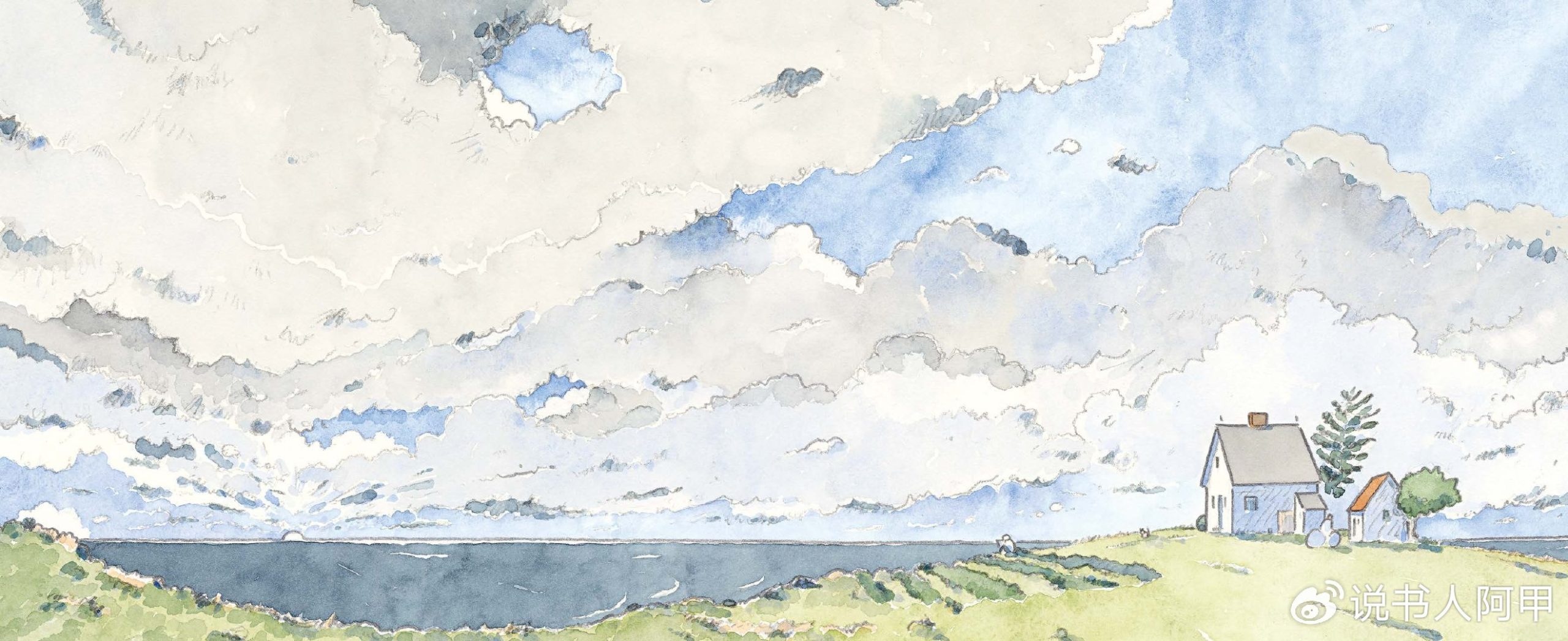
The female artist in the book, conceiving her ideas in a sea-breezy cottage and cycling through the city, is actually a “hybrid” of several characters. She possesses the white, halo-like curls of Cooper’s grandmother, the painter, and resides in a writing studio reminiscent of Cooper’s other grandmother, the writer. Simultaneously, she incorporates elements of renowned illustrator Barbara McClintock’s studio persona (even including the cat jumping onto the table), and reflects Cooper’s own cycling trips to meet editors. Cooper deliberately used ochre and burnt umber to create a balanced skin tone, hoping she could resonate with as many people as possible, “becoming anyone’s grandmother or great-grandmother.”
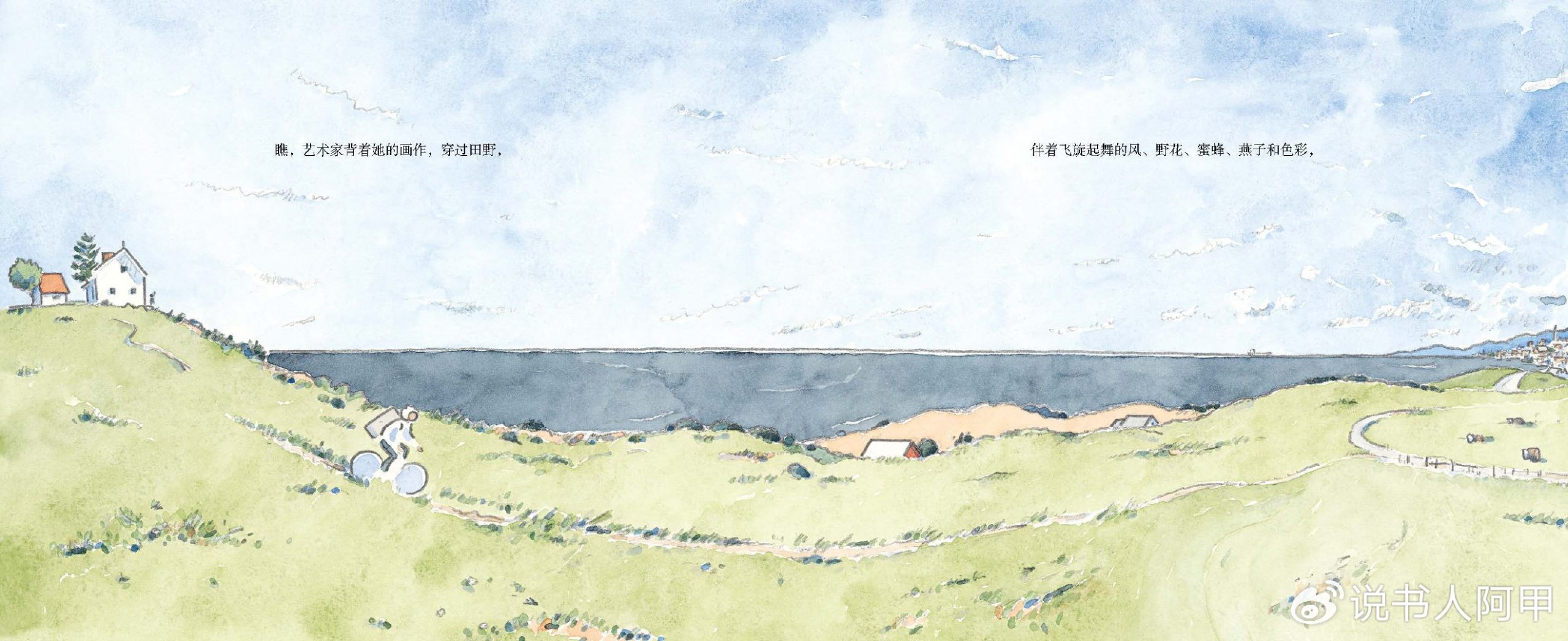
In his choice of media, unlike the somber black ink used to express life and death in “Big Cat, Little Cat,” Cooper opted for a combination of Winsor & Newton watercolors and Faber-Castell 5B pencils to showcase the “process” of production and flow. The roughness, speed, and fluidity of the pencil lines allow the painting to retain the captivating “breathing” and “movement” he displayed during his outdoor sketches.
Authoritative book reviews and audience testimonials: A work that combines information and poetry, destined to become a classic.
Since its publication, “Here’s a Book” has received consistently positive reviews from the English publishing, library, and children’s book review communities, garnering numerous “Starred Reviews” and being included in several authoritative annual recommendation lists.
* Media Review: Balancing Technology and Poetry
• Publishers Weekly gave it a star rating, praising the book for its “high granularity” and for clearly showing how the components make up the whole by “showing step by step how a book is born.”
• Booklist starred reviews say the book has both literal and metaphorical meanings, noting that “every word in the short text has been carefully chosen.”
• A starred review in the Children’s Book Center Newsletter (BCCB) hailed it as a masterpiece that “will become a classic immediately,” praising its humorous and caring portrayal of the complex layers of production.
• The Horn Book magazine focused on its visual and reading experience, describing it as a “visualized fantasy” and praising its “dreamy blues” color scheme that encourages readers to project themselves into it.
• Kirkus Reviews argues that this book offers a “behind-the-scenes glimpse” into familiar objects, making mundane processes tangible and respectable once again.
• The School Library Journal considers it “a lovely tribute to the process of bringing books into children’s hands” and emphasizes its greatest value in “inspiring further creation.”
* English reader feedback: A smooth but meditative experience that requires slow reading.
Feedback from readers and educators has largely aligned with professional reviews. Blog readers frequently describe it as “gentle” and “blues-like,” finding it remarkably engaging on what could be a dry subject. However, some bloggers have pointed out that the book’s dense text, including numerous long sentences, makes for a “smooth and enjoyable but occasionally dense” reading experience. They suggest that parents and teachers slow down and read in segments when reading together to fully absorb the visual details and textual meaning.
Core Text and Artistic Analysis: Hidden Writing Lessons and Meta-Narrative Loops
What makes “Here’s a Book” most acclaimed in the industry is that it transcends the framework of traditional popular science books, transforming the cold industrial publishing process into a poetic literary text and constructing an exquisite meta-narrative structure.
* Poetic “list-style long sentences” and “emphasis words” at the end
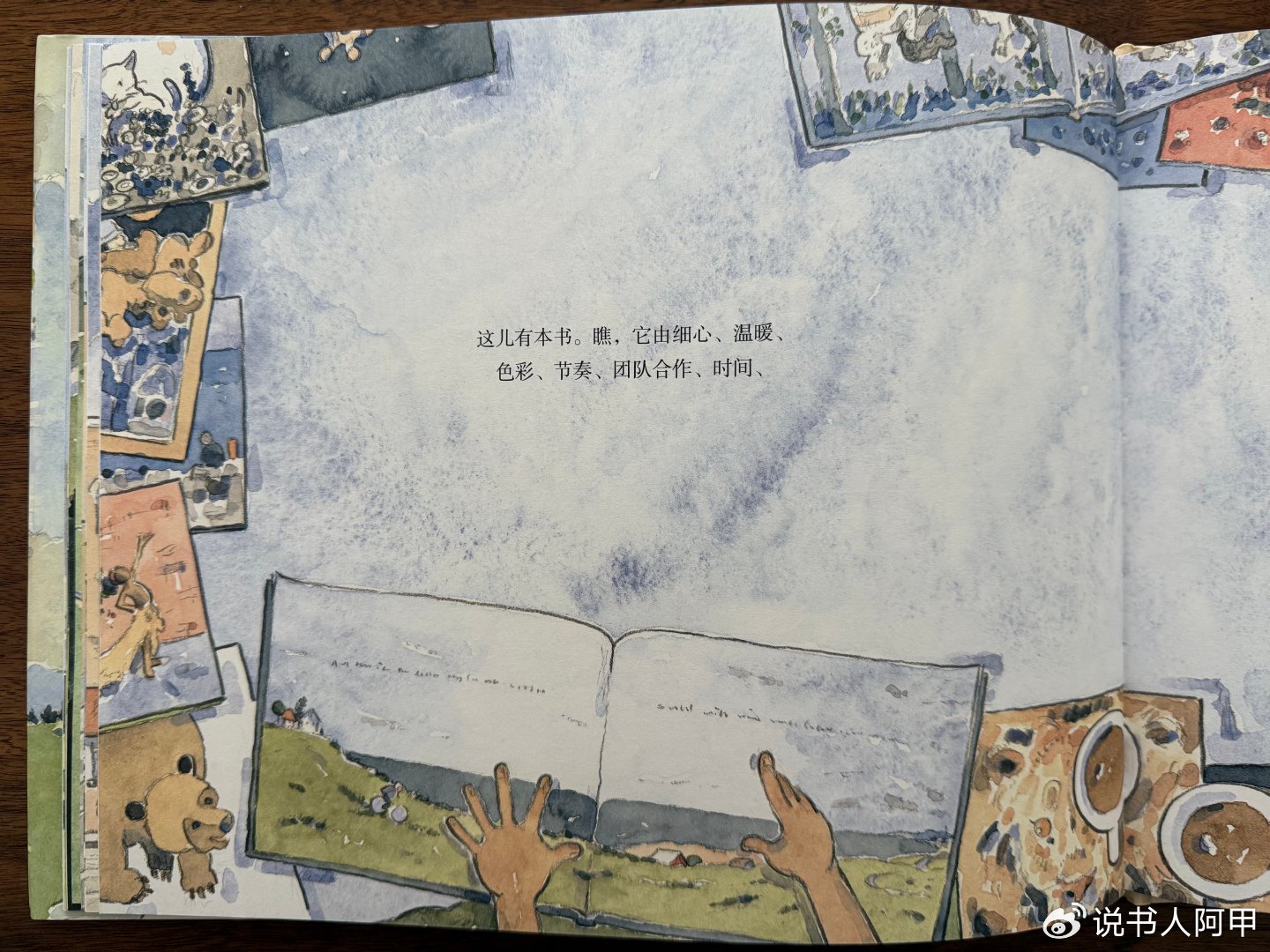
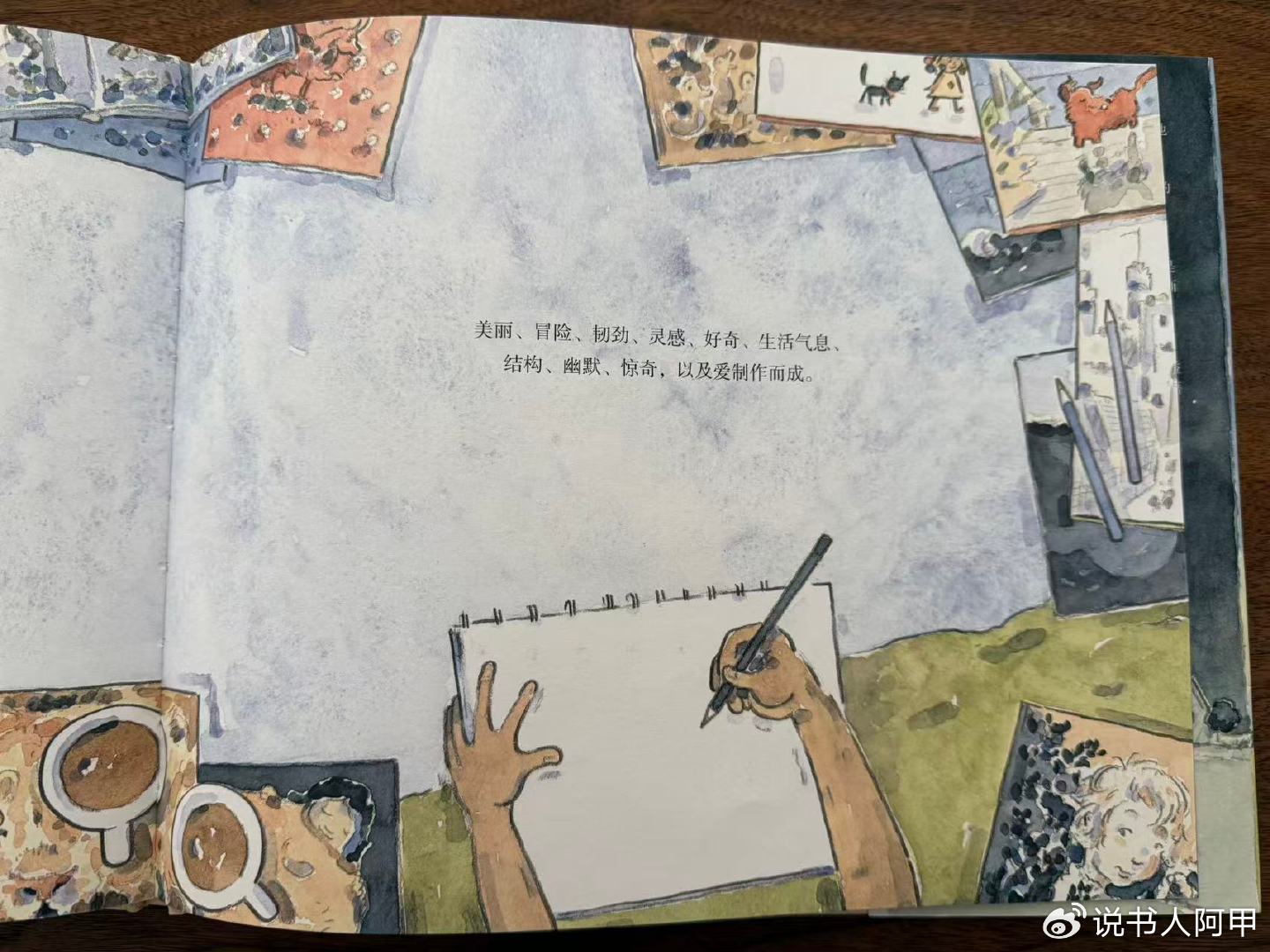
In his textual arrangement, Cooper demonstrates exceptional literary skill. He makes extensive use of “list-style long sentences,” allowing the text to flow like a river, guiding the reader through page turns and prompting contemplation. In the English context, this rhythm is described as a gentle yet powerful beat (bop), perfectly suited for reading aloud. Even more exquisite is his cumulative use of “emphasis words.” In describing each stage, the author not only lists concrete objects but also concludes with an abstract emotional word:
• Initial stage: Sunshine, rain, soil, and love and warmth.
• Creation stage: sketches, trash cans, and wonder.
• Publishing stage: editing, computers, coffee, and teamwork.
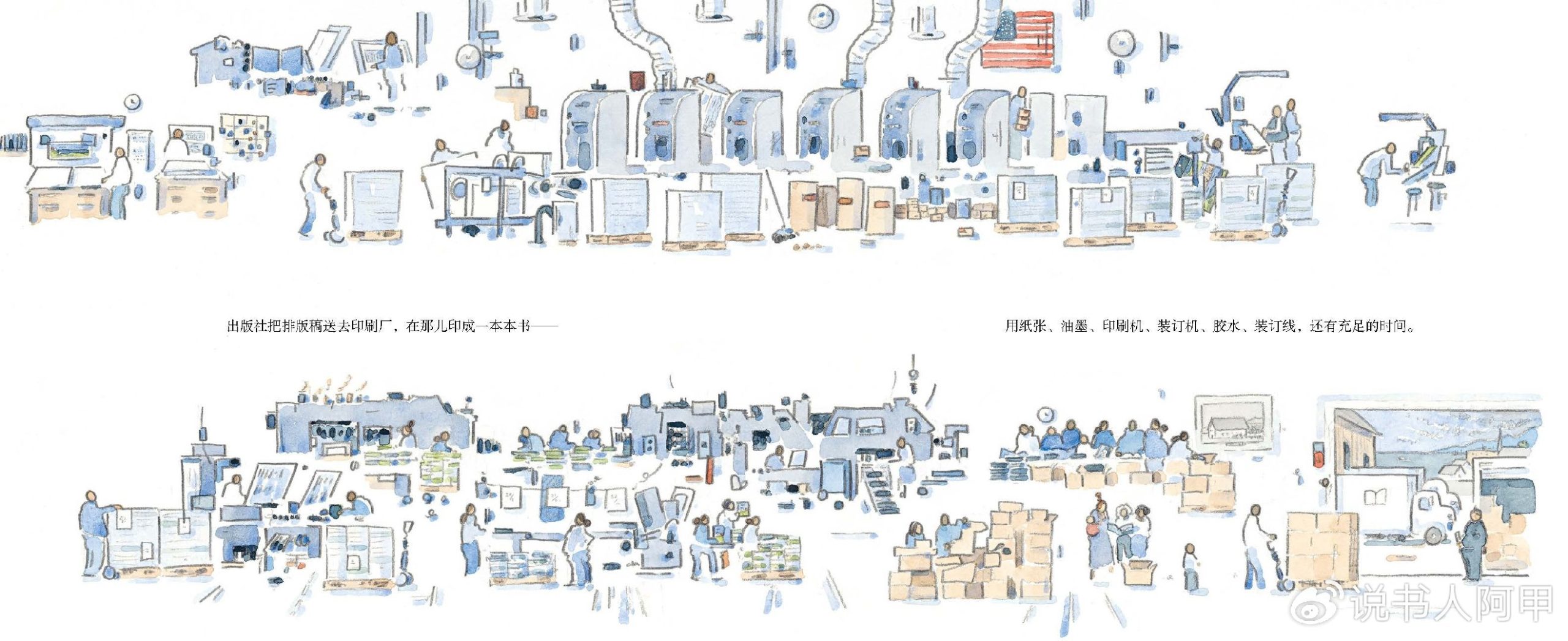
• Printing and shipping stage: printing press, paper, ink, and sufficient time and grit.
As the story draws to a close, Cooper gathers together all the key “emphasis words” scattered throughout, creating a grand conclusion that imprints the theme that “books are products of love” in the reader’s mind. For this reason, professional reviews have explicitly pointed out that this is actually a hidden, excellent writing lesson on “rhythm, repetition, accumulation, and conclusion.”
* The visual echo between the meta-narrative structure and the closed loop
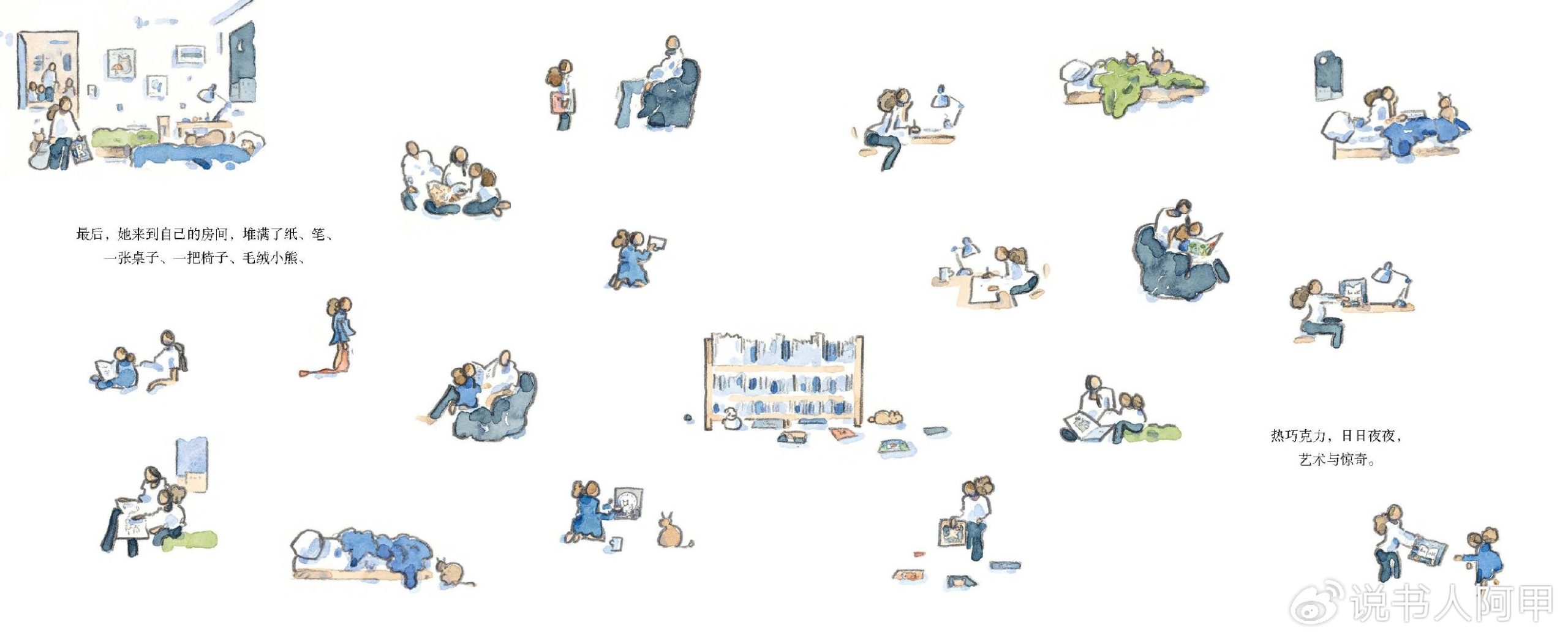
This book is a highly typical meta-fiction work: it tells the story of the book in the reader’s hands. The narrative arc moves from the artist’s solitary private conception, through the collaborative work of the editorial office and the printing press, and finally back to the solitary individual reading the book. At the beginning of the book, pencil sketches surround the artist; at the end, the same pencil sketches and a similar workbench scene appear in the child’s room who brought the book home. This visual echo completely dissolves the boundary between “book producer” and “consumer.” Cooper attempts to tell the reader that each reader’s reading process is, in fact, a second life for the book’s creative concept.
* Intertextual Easter Eggs in the Canvas: A Tribute to the History of Reading
The book is filled with hidden details and Easter eggs. On the penultimate doublet—a scene depicting a young reader—the covers of about 18 classic children’s books appear on a bookshelf. Cooper pays homage to his contemporaries who inspired him, including David Macaulay’s *Castle*, which profoundly influenced his childhood, Maurice Sendak, and contemporary illustrators such as Grace Lin. This approach of “placing the history of reading back into the history of production” allows children to intuitively realize that every book they love has gone through such a long and warm chain of transmission.
Cross-cultural acceptance and implementation of education
For educators (especially teachers of early childhood education and lower elementary grades) and parents, “Here’s a Book” is a highly versatile educational resource.
* Creative Writing and Rhetoric Training
Cooper’s recurring phrase “Here is… made with…” forms an excellent framework for imitation writing. In language arts classes, teachers can guide children to practice sentence construction using this structure (for example, “This is my breakfast, made with flour, eggs, milk, a frying pan, and my mother’s love”). This can very effectively improve children’s ability to accumulate and use precise nouns and adjectives, while also training them to develop the writing habit of extracting “core value words” at the end of paragraphs.
* The Implementation of STEAM Education and Project-Based Learning
This book demonstrates the enormous potential of interdisciplinary learning.
• Vocational Education and Collaboration: Teachers can organize mini-publishing projects in the classroom, such as “Let’s Make a Book Together,” where children are divided into groups to role-play as authors, illustrators, editors, typesetters, printers, and distributors. This helps children understand that beautiful things require not only individual talent but also the result of teamwork that transcends social divisions of labor and geographical barriers.
• A Cross-Cultural Exploration of Global Supply Chains: For older students or those with a critical thinking perspective, an interesting detail in the original English version is worth exploring: reviewers have noted that the printing plant scene depicted in the book bears distinctly American symbols, while the copyright page of the book states “Printed and bound in China.” This discrepancy between reality and artistic expression should not be ignored; rather, it can serve as an excellent entry point for exploring the logistics, cost structure, and global supply chains of the modern publishing industry, providing a deeper sociological introduction.
* Library Education and Emotional Connection
For librarians, this is the perfect “guidebook to begin your visit.” Through this book, young readers can develop a sense of “reading community”—understanding that a book is not a gift from heaven, but rather something that has come to them through paper, ink, and the hands and patience of countless people. This tracing of the source of the material naturally cultivates children’s appreciation and gratitude for books.
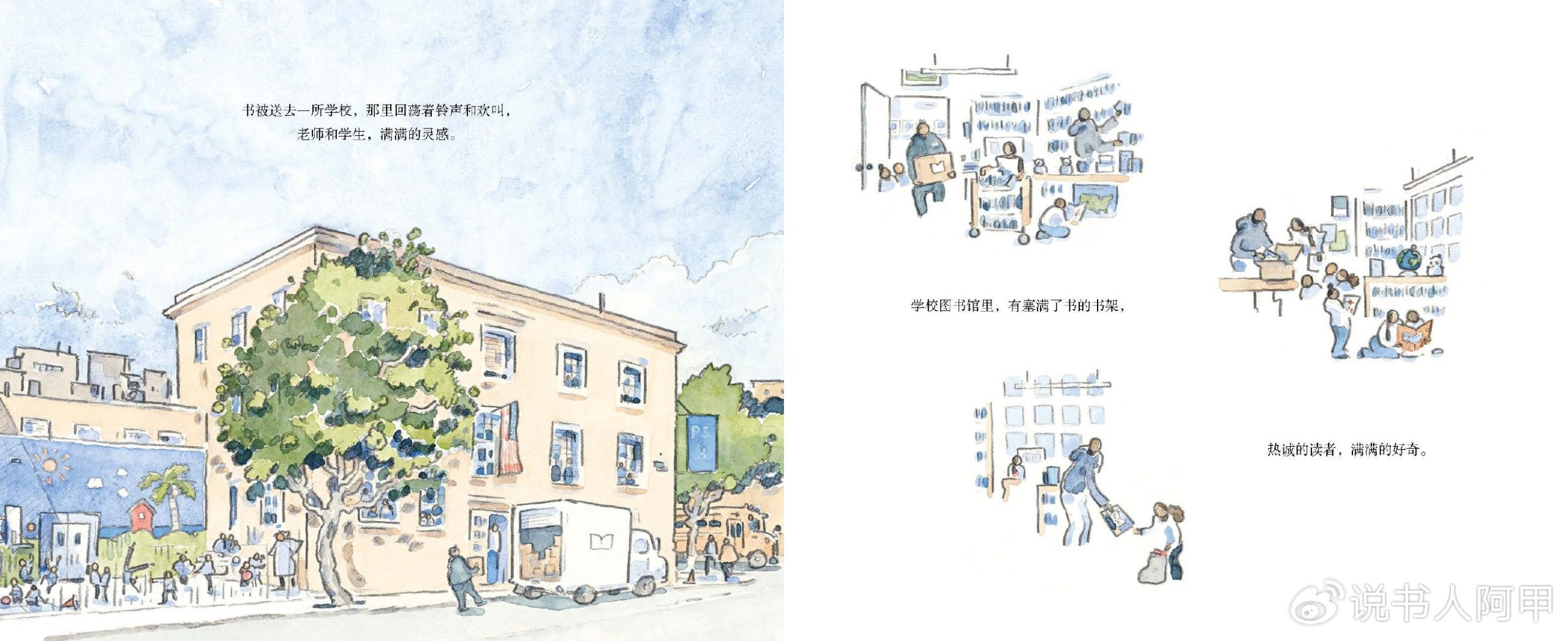
Reading as the starting point for a new round of creation
Elisha Cooper’s *Here’s a Book* transcends the monotonous illustrations of industrial manufacturing, imbuing book production with unparalleled dignity and warmth through poetic long sentences and vibrant watercolor pencil strokes. It shows readers that creation is not just about technology, but also about time, patience, a crowded and cluttered wastebasket, and team connections that transcend geographical barriers.
As Cooper hoped in the interview, the ultimate goal of this book is “inspiration”: to see what an artist does, and then what a book goes through, thus making the act of “creation” accessible to children. Its most heartfelt appeal to young readers is: when this book reaches your hands, this is not the end. Now, open your heart, pick up your paper and pen, and become the creator who starts a new cycle!
Compiled by A‑Jia on April 17, 2026 in Beijing

[Attached: Excerpts from an interview with the author of “Here’s a Book”]
The following is an excerpt fromIn an in-depth interview with author Elisa Cooper by renowned American children’s book critic Betsy Bird on the School Library Journal blog.Below is a summary and detailed translation of the core content of the interview. The content has been moderately simplified, but the author’s original words and tone have been preserved to the greatest extent possible:
[The inspiration for “This Is a Book”]
Betsy Bird: This is somewhat different from your previous animal-themed works; it involves not only the technical aspects of bookmaking but also the industry itself. Where did this inspiration come from?
Cooper: The inspiration probably came from visiting schools. When kids ask, “How did you make a book?” I often have to spend ten minutes explaining the chaotic book-making process. Then one day, I was reading Zadie Smith’s essay “Something to Do” on the banks of the Hudson River, and when I saw the phrase “made with love,” I instantly saw the book’s curves and its block-like structural foundation—“add something, and something will happen.” So it really started with these words: “structure, color, rhythm, love.”
Regarding the medium, I chose pencil because it’s better suited to telling the story of “process” than ink. It’s faster and more fluid, and I wanted the drawing to “move.” I tried to retain the rough texture I love from my field sketches in the final artwork.
How to balance creative expression with tedious technical details? Is there a big difference between the final draft and the first draft?
Betsy Bird: This book strikes a good balance between the “creative end” of bookmaking and the “real-world production steps.” How many technical details did you initially intend to showcase? Were there significant changes to the book?
Cooper: I know I don’t have David Macaulay’s technical skill and patience. I want to show enough of the process, but not so much that it slows down the narrative—that’s the “sweet spot.” When drawing the printing press, I wanted the reader to think, “Wow, that printing press is huge and wild!”, but I didn’t want to draw every single part; I just wanted to capture the atmosphere.
From that day on the banks of the Hudson River, the story’s trajectory hasn’t changed much, but it has undergone countless drafts, edits, and polishing. I deleted a double-page spread about transoceanic shipping because it disrupted the narrative. Initially, I only wanted to title the book “Book,” but I was glad the editor persuaded me to change it to “Here is a Book,” which better fits the concept of a “book within a book.”
Is the female artist in the book based on a real person?
Betsy Bird: The author/illustrator you drew lives in a cottage by the sea breeze and rides a bicycle to meet her editor. Is she an idealized figure, or is she based on a real person?
Cooper: She’s a mix of several artists. One of my grandmothers was a writer, another was a landscape artist with curly hair like a white halo—that’s her in the book. I also drew an illustration of illustrator Barbara McClintock working in her studio; the cat jumping onto the desk is hers. (Some people say she looks like Kate DiCamillo.)
I deliberately mixed ochre and burnt umber to create a balanced skin tone, hoping it would resonate with as many people as possible—anyone’s grandmother or great-grandmother. That studio spread is my favorite; it’s filled with a “crowded, vibrant chaos.” There are paintbrushes, trash cans, and ideas.
Finally, she was me too. Like her, I also enjoyed sprinting down Broadway on my bicycle to meet publishers, brainstorming ideas, dodging buses, and then appearing disheveled before the editor.
Are there any parts that were regrettable or deleted during the writing process? Regarding the “errors” in the book?
Betsy Bird: Is there anything you wanted to include in the book but had to remove because it wasn’t suitable?
Cooper: “No. And then… (throws down microphone).” I’ve been trying to answer the question in one word! But honestly, the book turned out exactly as I wanted it to be, even better, thanks to the help of so many friends, editors, and designers.
Additionally: There was indeed an error on both the front and back covers of the book. The designer and I discussed whether to correct it or keep it—since this is a book about “how books are made,” isn’t admitting mistakes the most honest way to express ourselves? We weighed the options repeatedly and finally fixed it (which, in a way, makes the flawed first edition even cooler).
[A tribute to and inspiration for young readers]
Betsy Bird: Did you deliberately make this technical book more youthful and lighthearted to inspire young readers to dream of creating in the future?
Cooper: I’m glad you saw that! When we finished reading this book, its focus was on “inspiration”—how one person’s art can change another, and always about building connections. That’s why the artist’s studio and the child’s room at the end create a sense of connection, with pencil sketches surrounding the artist and then surrounding the young reader on the last page. I drew the cover of David Macaulay’s *The Castle* on the penultimate page, which was a very important book to me during my childhood.
I’ve always hoped that some student would dream of owning “their own” book. Look at what an artist has done, look at what I’ve done, and now open your heart… and create!
[Next Steps in the Work Plan]
Betsy Bird: What are you busy with next?
Cooper: Birds! I just finished a children’s book called *The Rare Bird* (published next year), about a cat who thinks he’s a bird (as well as a dolphin and an elephant). But right now, I’m mainly celebrating my daughters’ dance performance and college graduation.
As for work? I want to stay open to “love.” I’ve found that good things happen when I start to be curious about something and fall in love with it. For example, right now I’m looking out the window at the window cleaners working high up; they’re like vertical ballet dancers, and I could draw them all day.
Yes, I’m waiting to fall in love with a brilliant idea.