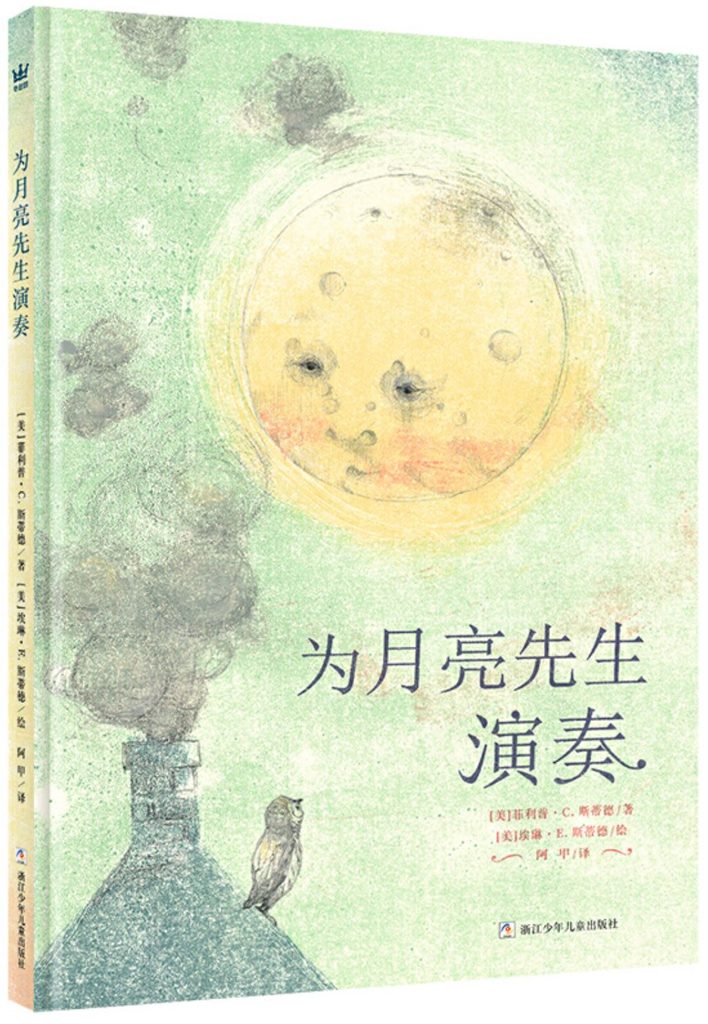
This is the fourth picture book created by the young Steads (not counting their joint adaptation of Mark Twain’s *The Stolen Prince of Margaret*), and I am fortunate enough to have translated all four.Postscript in 2026:In 2025, he also translated “Amos’s Snowy Day”.As a continuation of “Amos’s Late Day,” the couple’s collaborative works have now been translated into six volumes.)
Since their first collaborative book, *Amos’ Sick Day*, won the 2011 Caldecott Medal, they have gradually become rising stars, with even ABC News describing the husband-and-wife team as “one of the most famous names in (American) children’s literature.” For nearly a decade, they have each collaborated with other creators (authors or illustrators), and husband Philip Stead has also written and illustrated several works himself. Interestingly, however, the couple’s actual collaborative writing has been quite slow: *The Bear Has a Story to Tell* was published in 2012; *Lenny and Lucy* in 2015; and *Playing for Mr. Moon* in 2019. Moreover, attentive readers may notice that the tone of these works has become increasingly quiet, seemingly forming a stark contrast to the noisy world.

I met them in Beijing in November 2015. They were younger and more energetic than I had imagined, but also possessed a rare sincerity and purity. They said that around 2013, they moved with their adopted stray dog, “Wednesday,” to a remote town in Michigan with only two or three hundred people. Their new home was next to a grove of trees, where they could sometimes hear owls hooting at night. They were indeed the kind of unconventional people who cherished quiet inside and out, yet they so desperately longed for pure friendship. All their works were inseparable from the warmth based on friendship. Their book, *Lenny and Lucy*, was even more direct, telling the story of finding new friends after moving to a remote place—quiet and heartwarming. This book, *Playing for Mr. Moon*, seemed even more serene, its expression more subtle and nuanced, leaving the reader with even more anticipation.
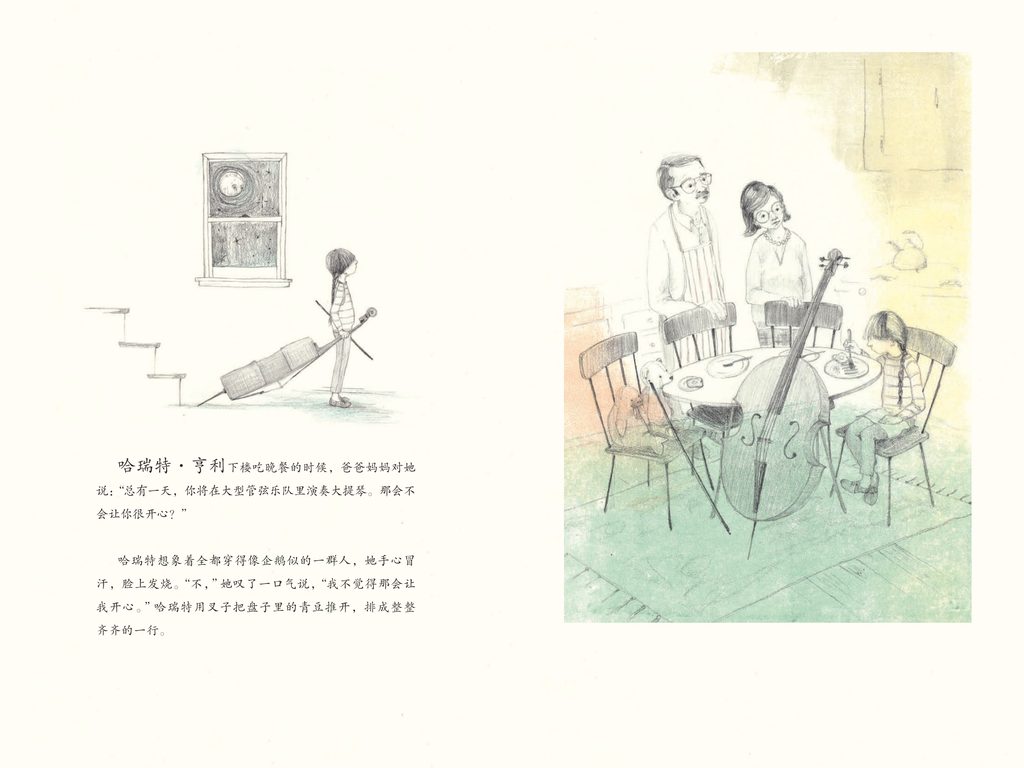
At the beginning of the story, Harriet’s parents, full of anticipation, say to their daughter Harriet, who is obsessed with playing the cello, “One day, you’ll be playing the cello in a large orchestra. Wouldn’t that make you very happy?” This is meant to be a strong affirmation and support for their child, and it contains fervent expectations. I think most parents would understand and agree with this. However, the cello girl’s reaction in the story is unexpectedly cold. Her palms are sweating, her face is burning, and she imagines her parents as penguin-like listeners, wanting to run away as soon as possible.
At this point, some readers might wonder if the girl has some kind of psychological issue, or at least is too shy. Would this book be an inspirational story about helping children overcome their shyness? If you think that, you’ll be disappointed. The narrator is actually completely on the girl’s side, offering complete understanding, acceptance, and even genuine appreciation. How is this possible?
It turns out that Harriet (who calls herself “Hank” to her close friends) is an introverted child with an extremely rich inner world. She loves music and is fascinated by playing the cello, but only for herself, and only for herself. On the title page, you can see Harriet bowing to thank the audience after her performance (of course, that gesture can also be seen as asking the audience for her repertoire), but the audience are just her two puppets, so in reality, they are also herself.
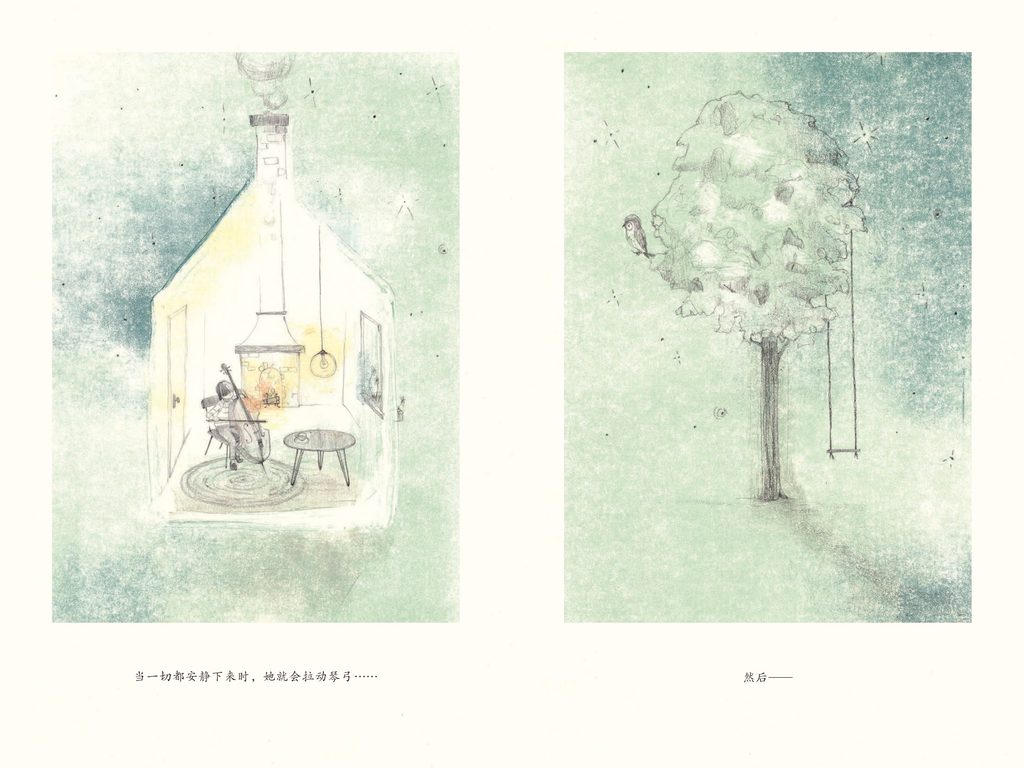
Readers might ask, isn’t there something wrong with a child who seems so “aloof,” playing only for herself? Let’s set aside judgments of good and bad for now and consider this: doesn’t someone so immersed in their music demonstrate a profound love for music? She loves music simply for love, not for showing off or performing for others. This reminds me of Confucius’s lament: “Ancient scholars studied for themselves; modern scholars study for others.” Whether Confucius was criticizing modern scholars for pursuing knowledge primarily for showing off or gaining a prominent position is hard to say; his “for others” might also refer to the pursuit of practical application. But what is certain is that he greatly admired ancient scholars because, in his view, they pursued knowledge for their own benefit. In short, this is true love! From this perspective, doesn’t Harriet’s attitude towards music perfectly align with the attitude of the “ancient scholars” whom Confucius admired towards learning?
Returning to the picture book, I can clearly feel the Steeds’ admiration for Harriet. In their eyes, she was a true artist, much like themselves. Harriet possessed the same imaginative capacity; she envisioned her everyday world as another kind of everyday—the everyday life of a musician. Her bedroom became a small cabin, simple yet complete, possessing everything a musician needed, except for one thing: quiet! (Perhaps it was simply because a restlessness still lingered within her?) The owl—the most common animal in the Steeds’ stories—always disrupted the tranquility needed for a performance at crucial moments. Harriet threw a teacup out the window, scaring away the owl, but also knocking down the moon. From the moment the translucent moon appeared, the story presented a completely different landscape.
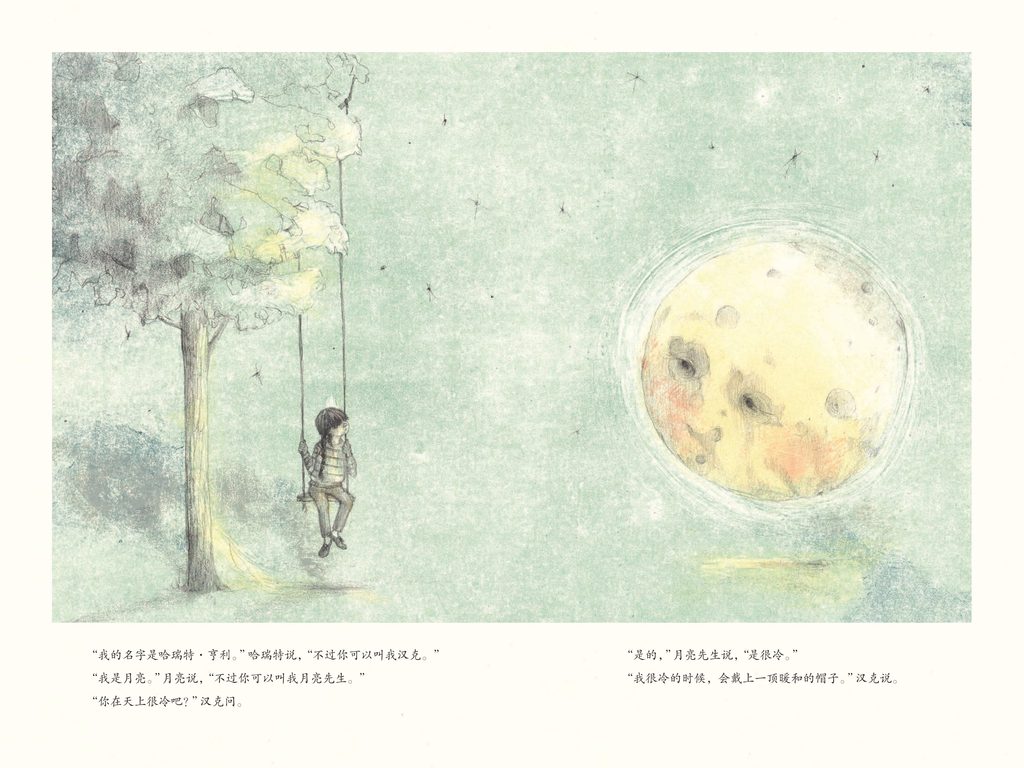
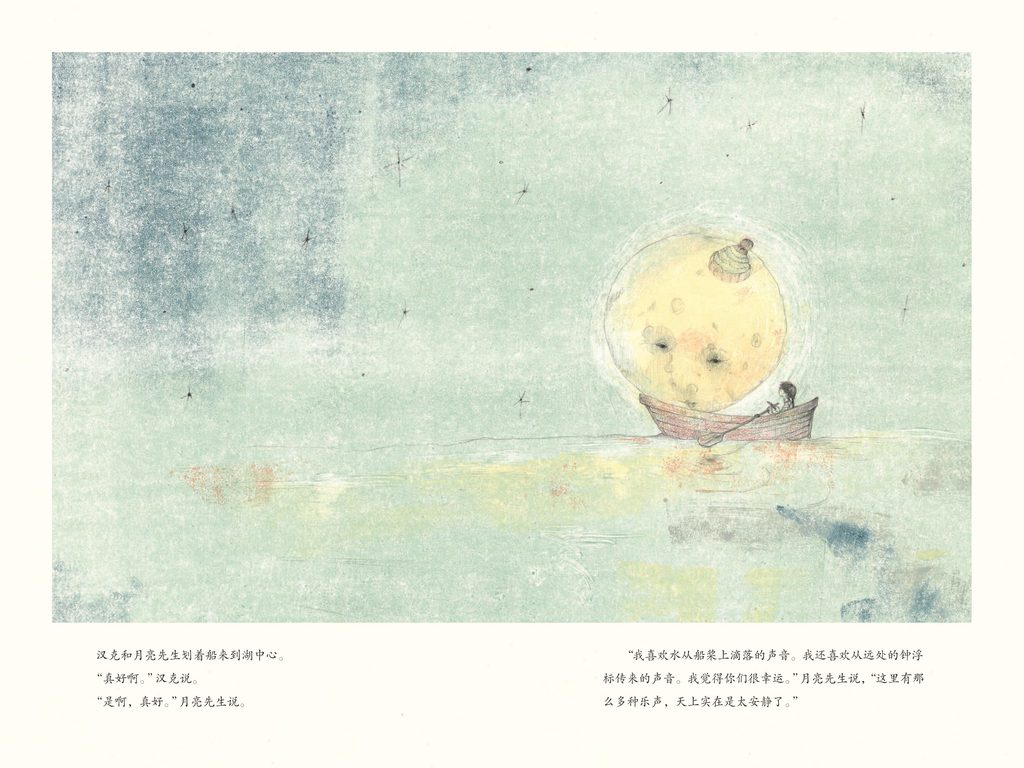
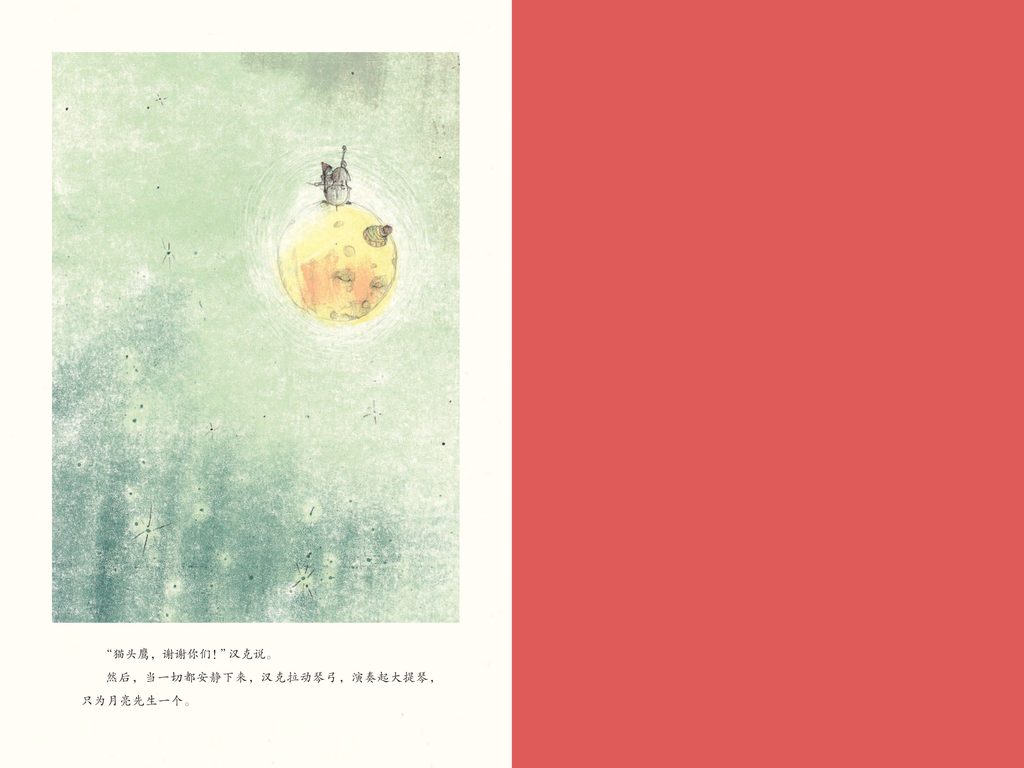
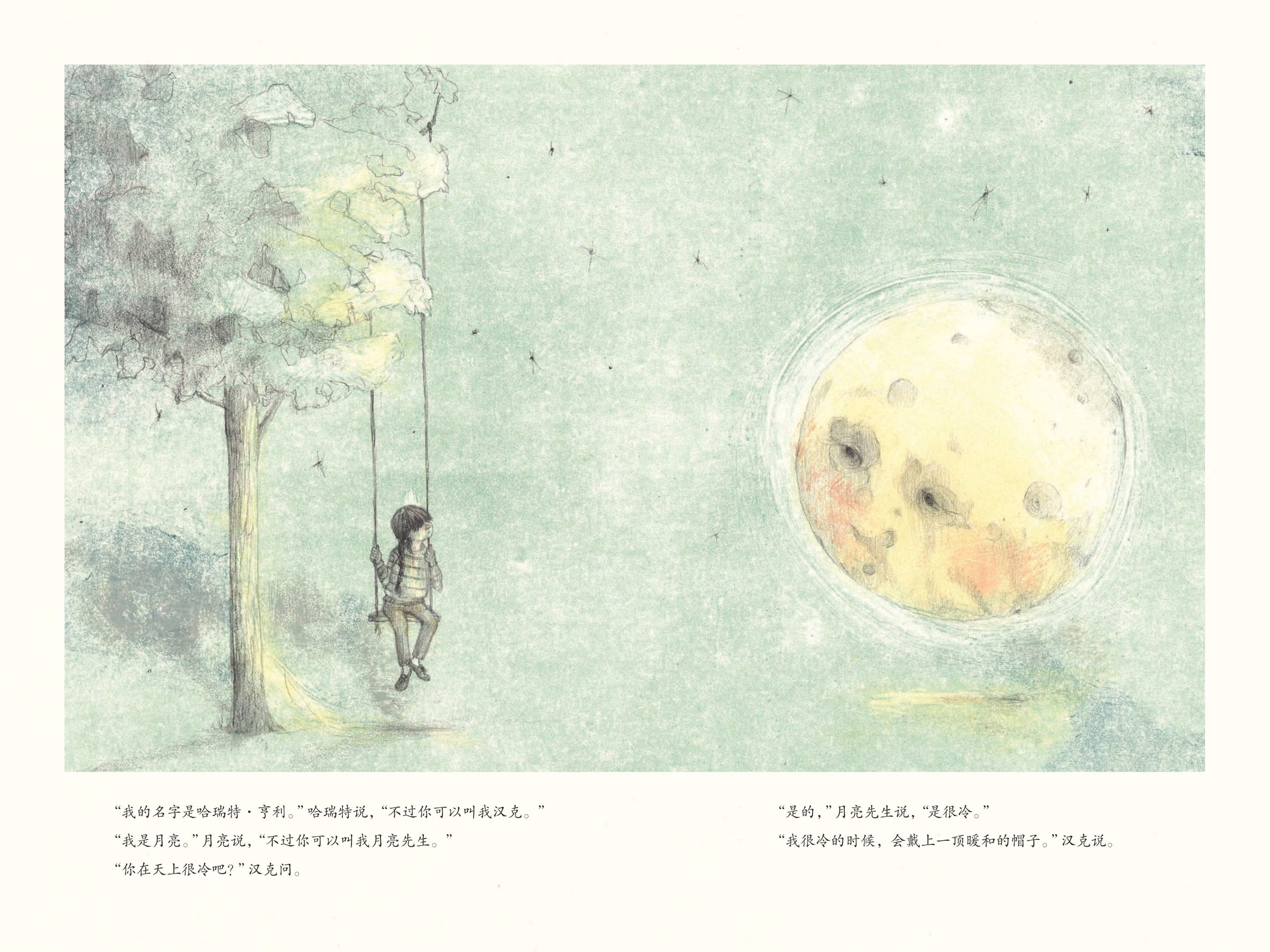
When Harriet asked Mr. Moon to call her “Hank,” a pure friendship began. Yes, she was a daughter her parents were incredibly proud of; they had high expectations of her and doted on her. Unfortunately, they didn’t seem to understand her, at least not her passion for music. A passion for art doesn’t equate to isolation; it’s just that sometimes true understanding is hard to find. Out of guilt and affection for the Moon, Hank helped him fulfill his earthly desires. They rowed out onto the lake, and the Moon sincerely said, “I love the sound of water dripping from the oars, and I love the chimes from the distant buoy. I think you’re very lucky. There’s so much music down here; it’s so quiet up here.” — Yes, Mr. Moon also loved music; he loved celestial music. Therefore, Hank was willing to play for him, only for him, just as Bo Ya was willing to play for Zi Qi. But Hank asked Mr. Moon to promise: to close his eyes and not cheer. As a kindred spirit, it would only be for himself.
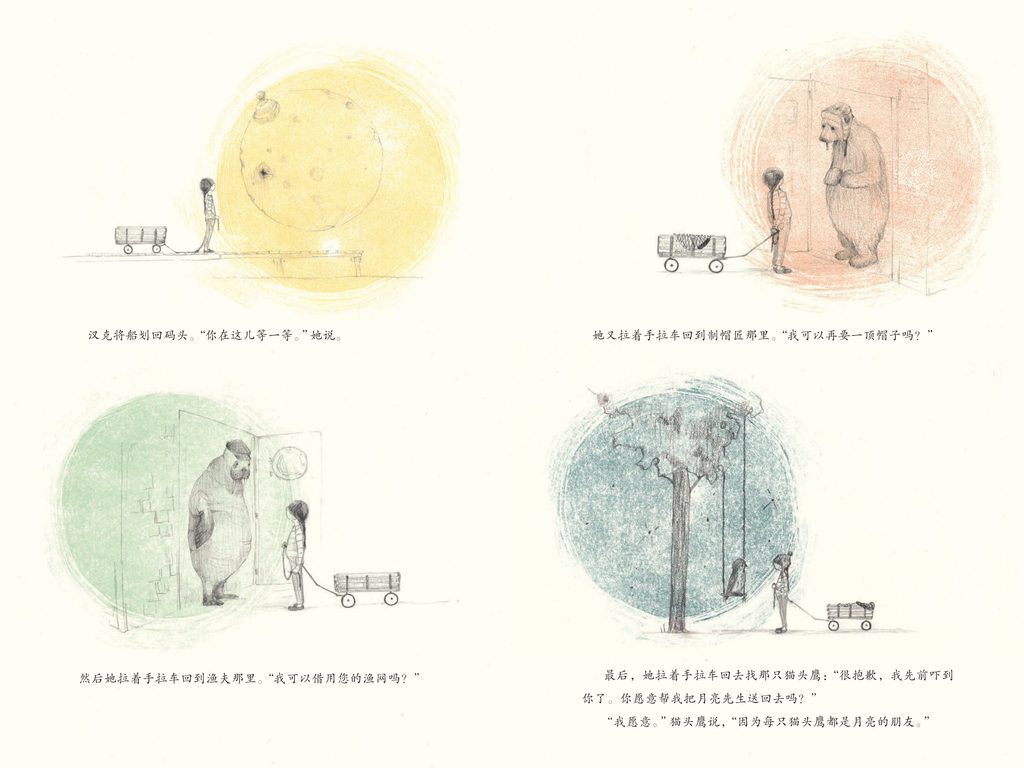
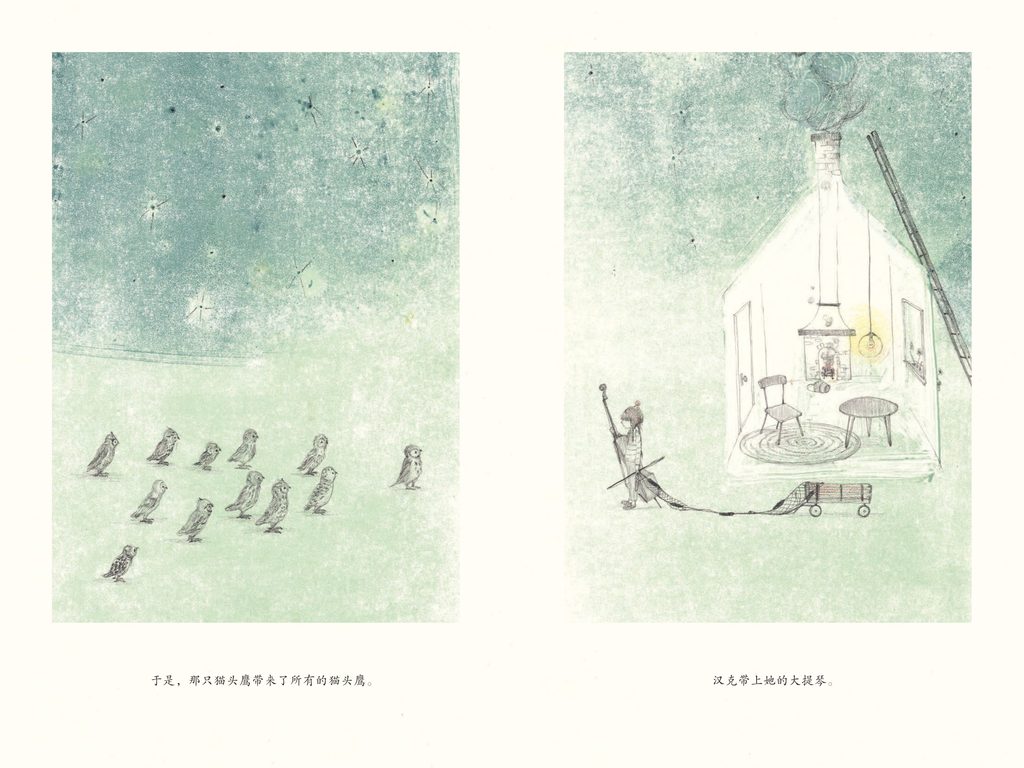
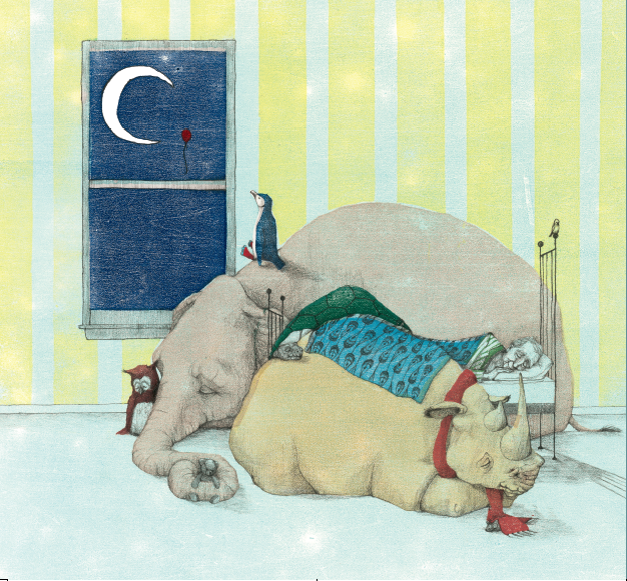
I couldn’t help but think that Erin Stead was probably an artist with a temperament very similar to Hank’s. She used light oil paint and colored pencils to depict Harriet’s (Hank’s) spiritual world, a semi-transparent world, hazy and indistinct, but full of vitality and fun. The bear hatter wore a Lei Feng hat, the walrus boatman stood upright on his hind legs, and the owls worked together to pull the fishing net… How could children not love such a fun world? But what truly touched the depths of the heart was that confident, dreamlike tranquility, the poetic beauty and the warmth of friendship flowing within this tranquility.
Picture books like “Playing for Mr. Moon” can be considered a rare gift to this increasingly noisy world. They allow us—whether children or adults—to see another possibility: the possibility of living quietly and poetically.
Written by A‑Jia on April 9, 2019 in Beijing