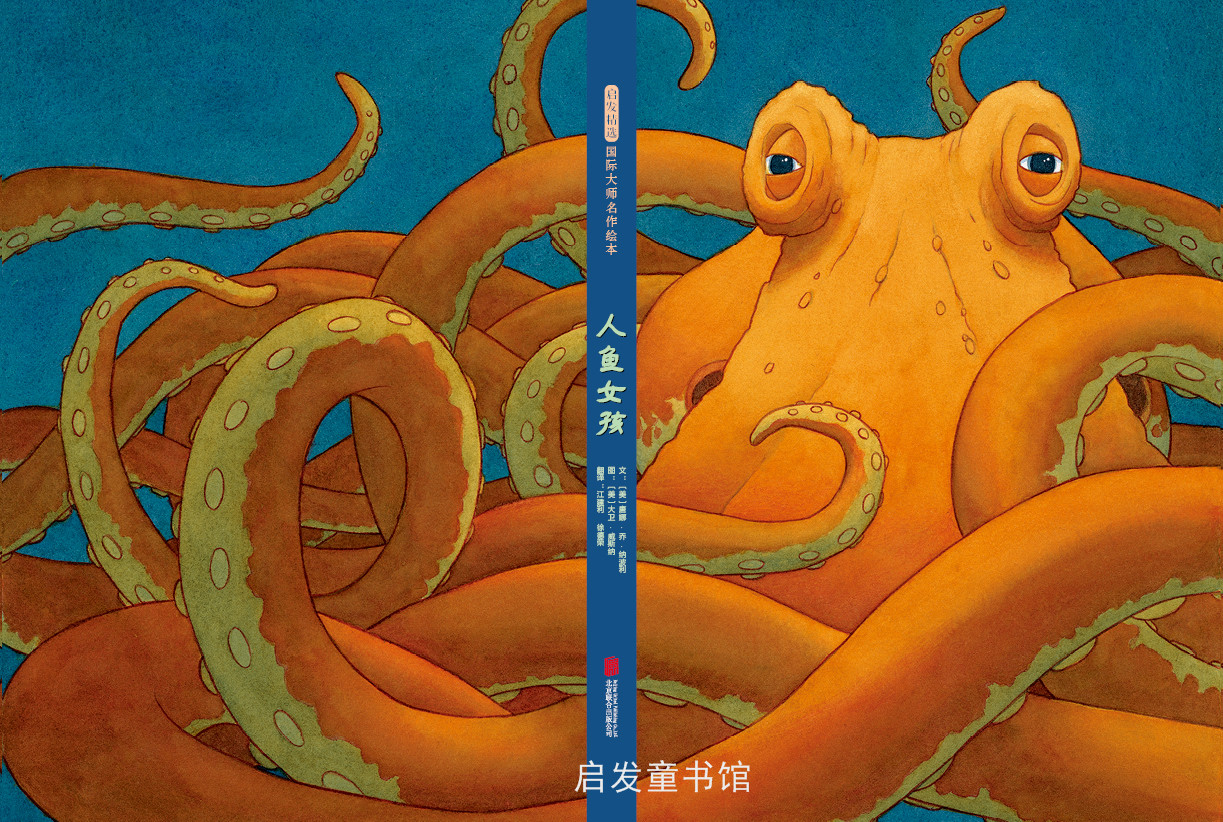
Last time we talked about the overall structure of David Wiesner’s graphic novel “Mermaid Girl“This time, we’ll delve deeper into the reading value of the “graphic novel” genre represented by this book.
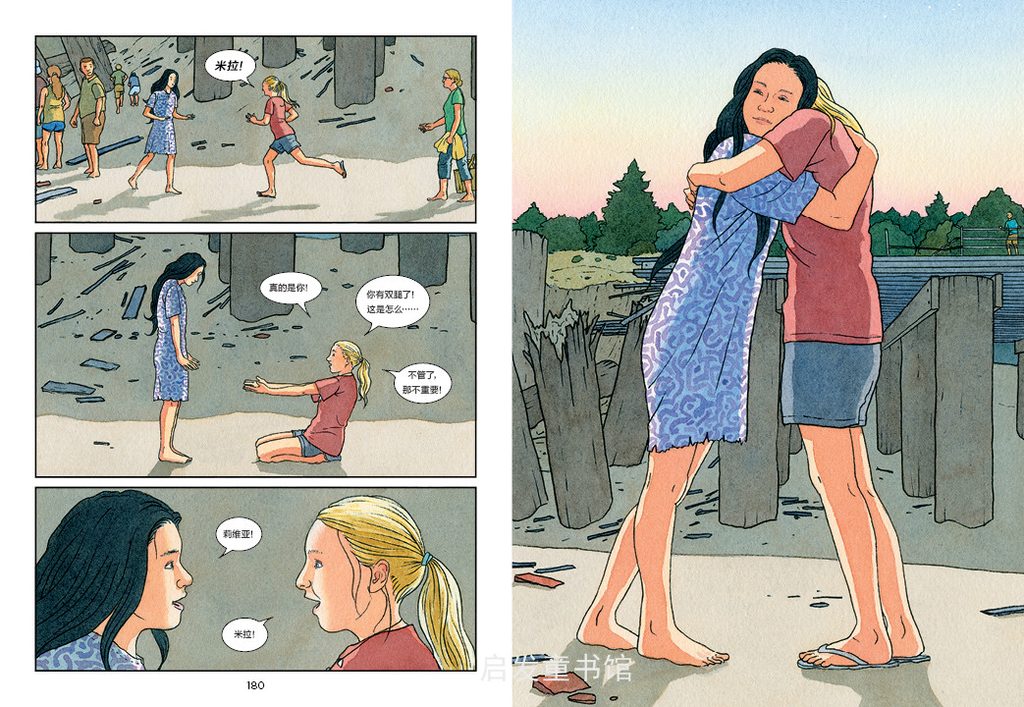
In the previous episode, I quickly gave a brief overview of the book’s plot. We know it’s a fantasy story about Mira, a mermaid girl in an aquarium, roughly the age of a 12-year-old human. She was initially kept there by a fisherman who called himself Neptune, used for exhibitions to make money—of course, to make money for Neptune. Mira herself initially believed Neptune was her savior and protector, so she wholeheartedly helped him, thinking it was also helping herself. However, a chance encounter led her to meet Livia, a curious human girl. The two girls quickly became best friends, deeply trusting each other. Awakened by intense curiosity, the mermaid girl began to explore the secrets of the aquarium, investigate the mystery of her own origins, and attempt to venture into the human world outside the aquarium. Finally, a major upheaval allowed her to begin a completely new life.
This 190-page graphic novel consists of a large amount of text and approximately a thousand illustrations, so I cannot describe it in its entirety here. Moreover, readers of David Wiesner’s works will have this experience: different readers may find completely different things to read, and even the same reader will find very different things to read at different times. Perhaps this is one of the most fascinating aspects of this kind of visual storytelling.
However, as I mentioned in the previous episode, this kind of “graphic novel” is actually the same as the comics we are familiar with; you can also call it a “picture novel” or a “comic book novel.” Why is this kind of comic worth reading? Why should we recommend it to children? Let me briefly explain.
First, let’s talk about what graphic novels are and where they come from.
In essence, graphic novels are comic book stories, only “comics presented in a novelistic style.” Early comics were typically four-panel comics, or several consecutive panels, depicting short stories, such as the well-known “Father and Son” and “Sanmao the Vagabond.” They were usually humorous, making people laugh out loud. However, this form of expression often contained satire and self-deprecation, and its revelations about human nature were often quite sharp, but within the laughter—inspirational without being hurtful. Later, graphic novel stories became more complex, starting to tell a complete story in an entire book, with the amount of information in the story increasingly resembling that of a novel.
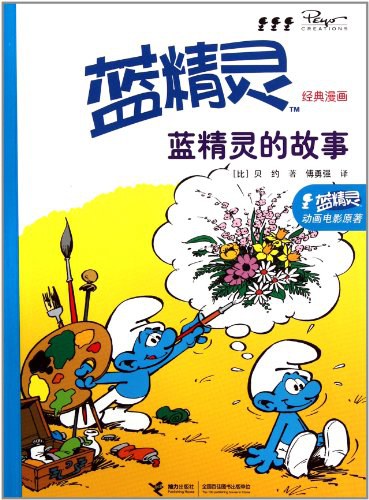
For example, many people may have read the comic book version of *The Smurfs*. Some Smurf stories are contained within a single book, while others consist of a larger story. There’s also *The Adventures of Tintin*, where each book is an independent story, and some stories even have continuity, resembling a series. *The Blue Lotus*, most familiar to Chinese readers, is set in Shanghai on the eve of World War II, depicting the complex situation of that era. Created in the 1930s, *The Blue Lotus* is a typical example of early comic book fiction. This format first appeared in Europe and later spread to Britain, America, and Japan, gradually becoming part of popular culture. However, because the comic book market was so booming, it was indeed flooded with many low-quality comics designed solely to grab attention, stimulate readers, and make quick money. Therefore, more traditional academic circles, including the library community, were reluctant to accept comic book fiction as a more serious and mainstream genre. A simple fact is that for a long time, both academics and critics avoided discussing this topic.
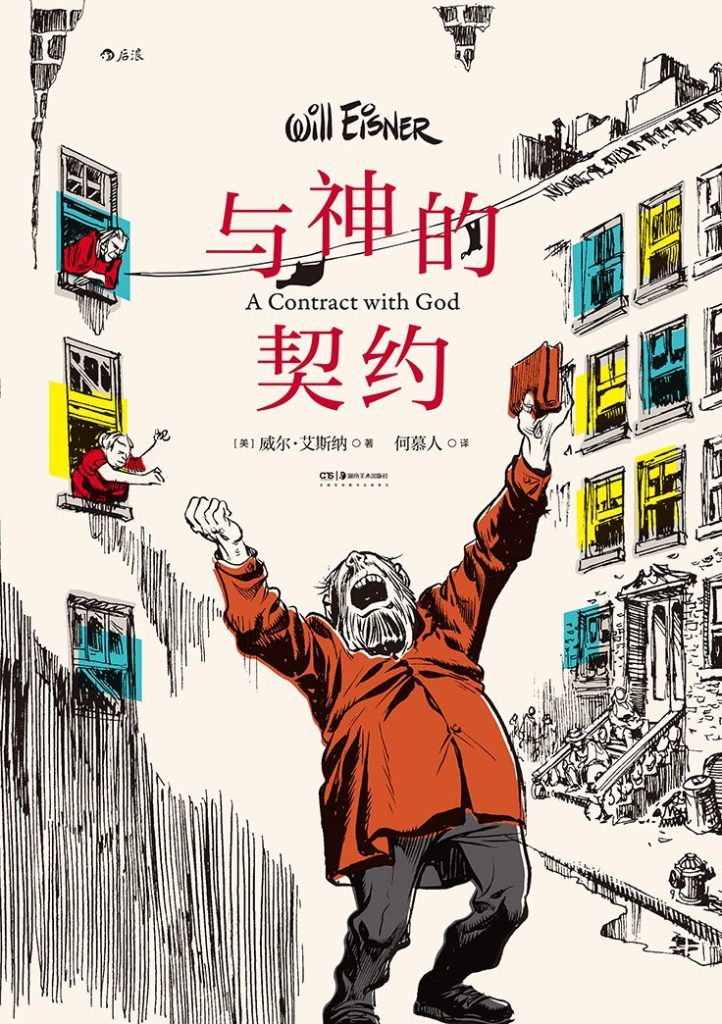
Around the 1970s, this type of novelistic comic had developed quite maturely in Europe, America, and Japan. Will Eisner, an American cartoonist who had won numerous awards and was a renowned professor at the School of Visual Arts (SVA), a very avant-garde art school in New York, where he taught for about 20 years, was quite averse to and resentful of the academic and critical reception of this type of comic novel. Therefore, he was the first to propose that cartoonists themselves conduct research and criticism. Thus, in the late 1970s, he first coined the term “Graphic Novel,” which is simply called “graphic novel.” Then, in 1985, he published the first theoretical monograph on graphic novels, “Comics & Sequential Art,” which has been translated into Chinese as the “Will Eisner Comic Book Tutorial” series (“Comics and Storyboard Art,” “Painting Stories and Visual Narrative”), and his representative graphic novel, “The Covenant with God,” has also been translated into Chinese.

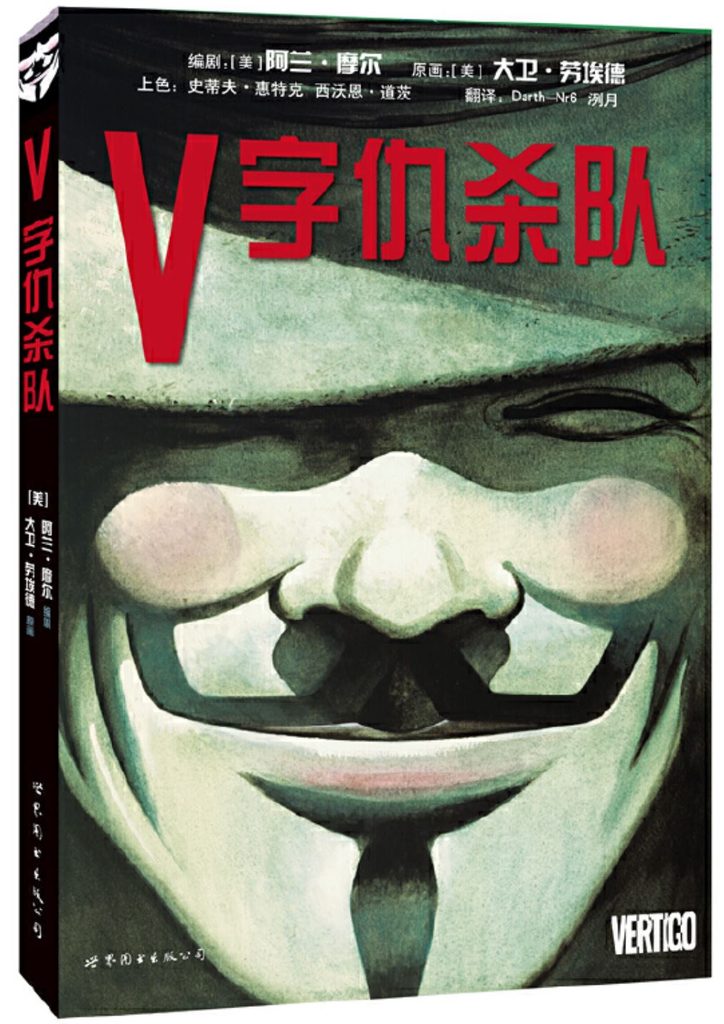
Initially, graphic novels were primarily intended for adult readers. I’ll try to recommend a few graphic novels with Chinese versions; if you’re interested, you can find them and give them a try. For example, *V for Vendetta* and *Watchmen* are both quite complex dystopian graphic novels, which I think are probably more suitable for young readers above high school age. Both books have been adapted into movies, with *V for Vendetta* being the more familiar one to Chinese audiences.
If you enjoy reading love stories, I recommend two: *The Taste of Hazelnuts* and *Love’s Probation*. *The Taste of Hazelnuts* is a light and refreshing book, with a subtle flavor that lingers in the mind; *Love’s Probation*, on the other hand, is romantic and intense, slightly unsuitable for children, and has a rather shocking and poignant ending. Adults can read these books as novels. Oh, and there’s also *Chernobyl Spring*, which can be viewed as a documentary about the consequences of nuclear proliferation—a very powerful and moving work.
Okay, let’s talk about graphic novels specifically designed for young readers. It’s quite fun for kids to choose and read books, but adults often set limits for them: this pile is for adults, that pile is for kids. However, you might notice that children often secretly look at books labeled “for adults.” Like graphic novels, I mentioned earlier that adults could try reading those, but in reality, older children, like upper elementary or middle school students, will seek them out and enjoy them immensely. Children’s book creators, wanting to connect with these children directly, naturally try creating works in this format.
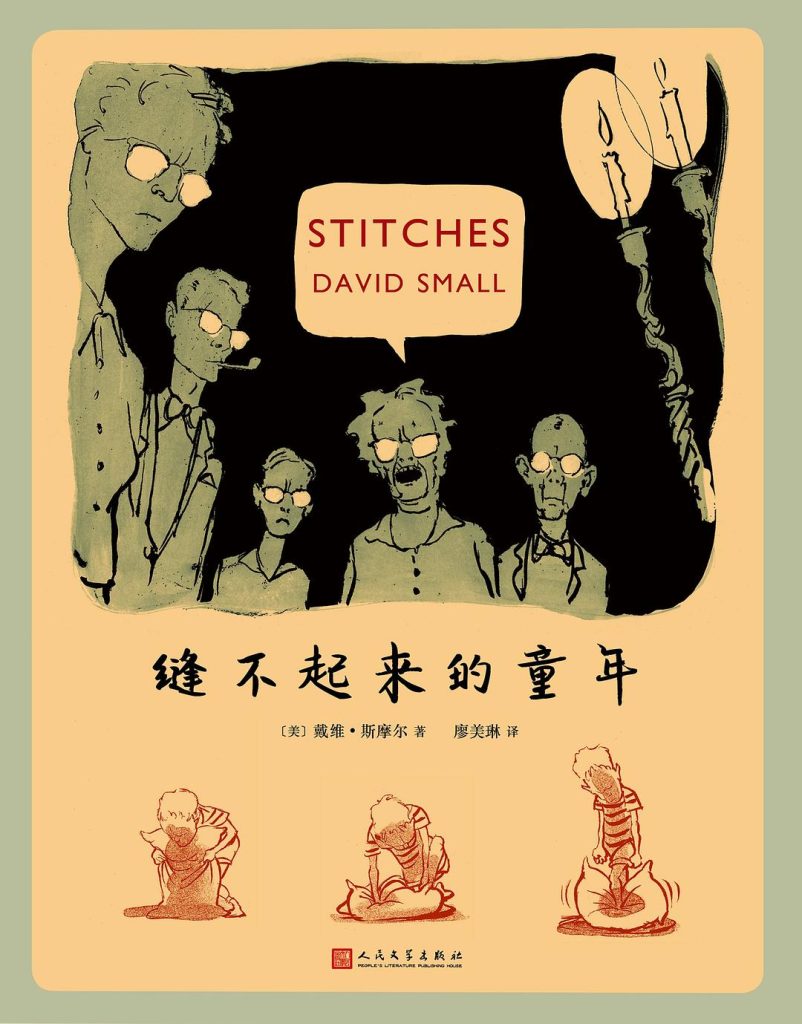
There’s a classic picture book, formerly translated as *Little En’s Secret Garden*, now as *The Gardener*. The illustrator, David Small, also created a graphic novel called *A Childhood That Can’t Be Stitched Back*, telling his own coming-of-age story—a poignant yet touching tale. There’s also the wordless British book *The Snowman*, which many readers may have read. The author, Raymond Briggs, created a graphic novel called *A London Family*, telling the story of his parents’ lives—also very moving, though more suitable for adults or older children. Therefore, illustrators like David Wiesner, who are particularly skilled at storytelling with pictures, still can’t resist creating challenging graphic novels; *The Mermaid Girl* was his first. These graphic novels specifically created for children are becoming increasingly common.
So, going back to the question: why should we recommend these graphic novels to children?
First, children today love reading this type of book, and they are also very good at it, so this is a great way to attract them to read.
Secondly, these graphic novels may be one of the best bridges for children to transition from picture book reading to longer text reading, such as novel reading.Many children are very active in early parent-child reading, reading many picture books. However, once they start school, adults expect them to quickly learn to read and read books with text on their own. In reality, many children find this transition period very difficult. Thoughtful adults might consider preparing more of these bridges for them.
The third reason is that graphic novels have become a mainstream form of children’s books worldwide, and they represent a future trend.For example, the New York Public Library, a benchmark for reading recommendations, used to have classic lists like “100 Picture Books Everyone Should Know,” and a few years ago it launched…“100 Graphic Novels Everyone Should Know”This is a trend. Instead of stopping children and forbidding them from reading, which would essentially turn them into underground readers, it’s better to openly recommend excellent graphic novels. The more they read, the more taste they develop, and they’ll naturally distance themselves from trashy content.
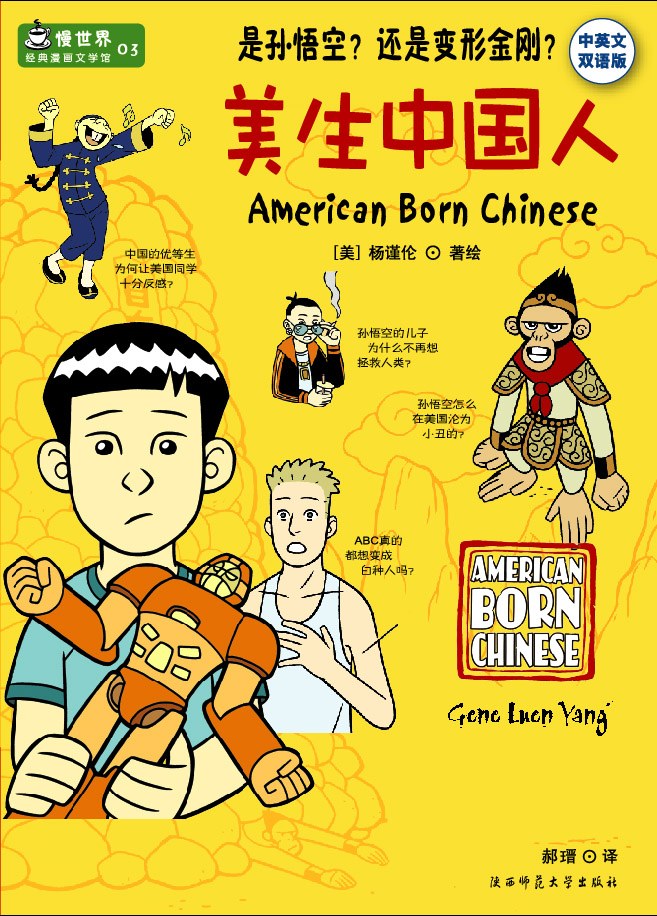
In fact, excellent graphic novels are rich in content. A Chinese-American graphic novelist named Yang Jinlun, whose representative work “American-born Chinese” was nominated for the National Book Award, used a clear example in a speech to tell the audience that the creation of the best graphic novels, like the creation of Shakespearean plays, requires superb literary skills.
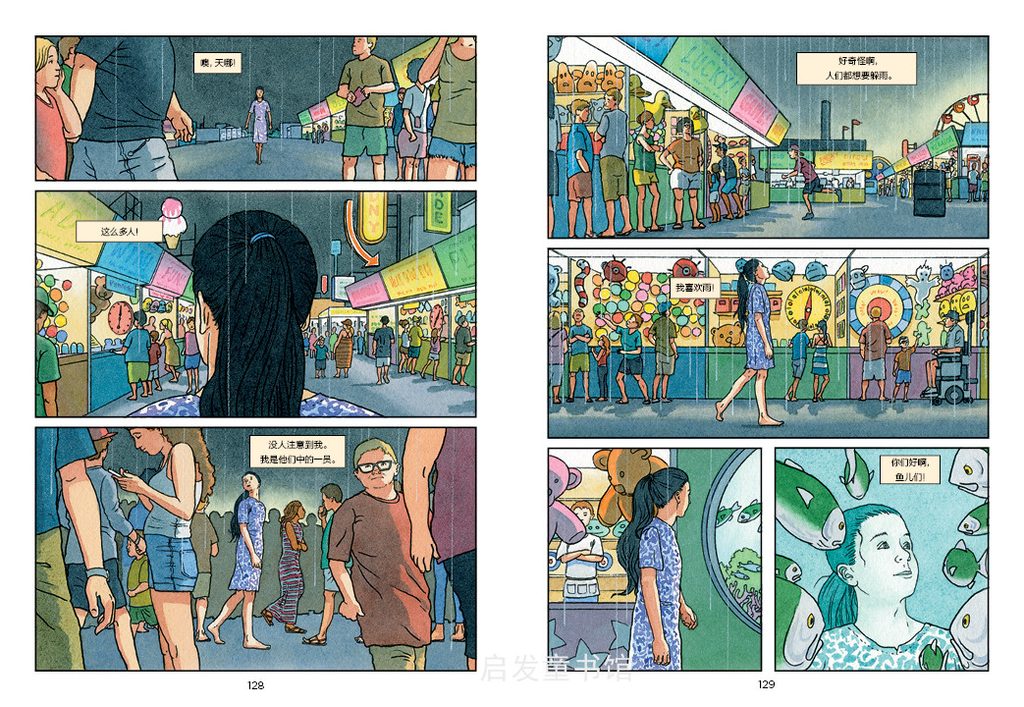
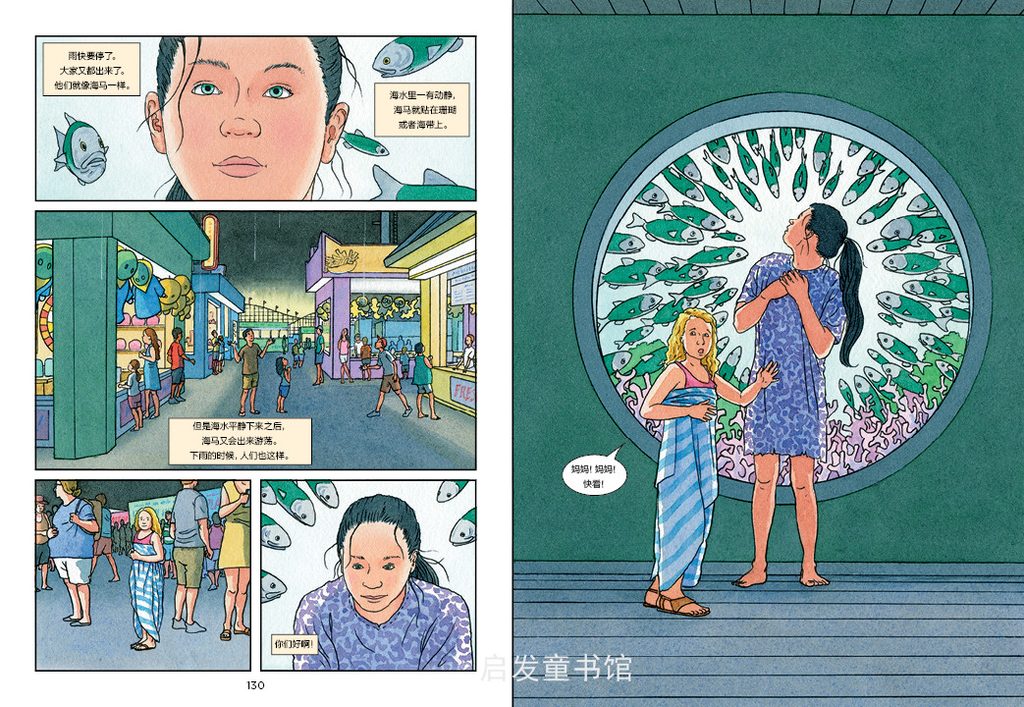
If you don’t believe me, I urge you to read certain chapters of *The Little Mermaid* repeatedly and ponder them. For example, Chapter Nine, from pages 125 to 137, is where the little mermaid Mira first comes to the street, into the bustling crowd. How will a mermaid girl from the mysterious underwater world react? How will people who don’t know her identity view her? How will the fish in the large fish tank react? What do the children and adults notice? What reactions do humans, fish, and the sea all have? What does this foreshadow for the next stage? — If readers can immerse themselves in these questions, they will find that the creator has skillfully used various elements, allowing us to delve into the protagonist’s inner world and sense that a great upheaval is about to occur. This may symbolize a certain relationship between humans and nature, an ancient association that can be traced back to Hans Christian Andersen’s *The Little Mermaid*, or even further back to ancient Greek and Roman mythology.
Simply put, as long as we are unbiased, reading such works is a great pleasure, allowing us to absorb rich knowledge and information while also enjoying the beauty of literature and art. Well, that’s the fourth reason why I recommend excellent graphic novels to children.
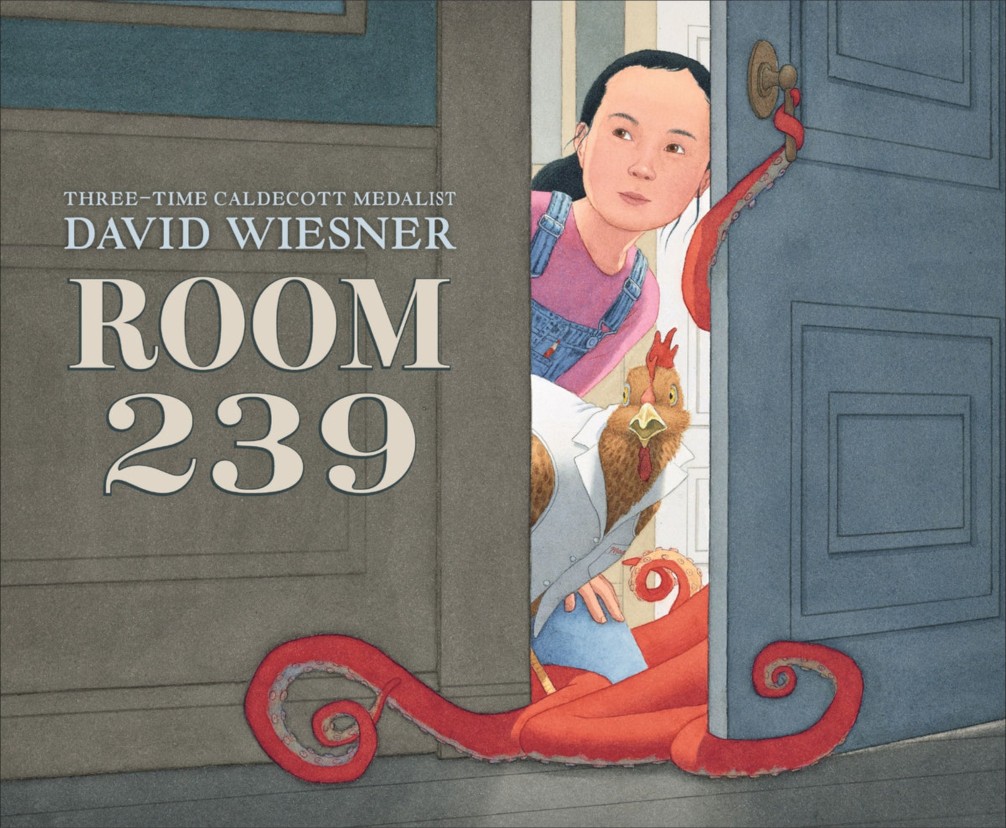
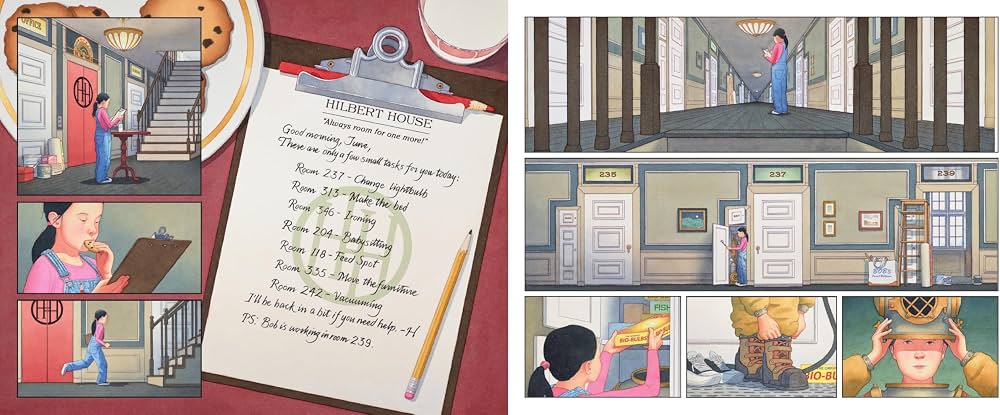
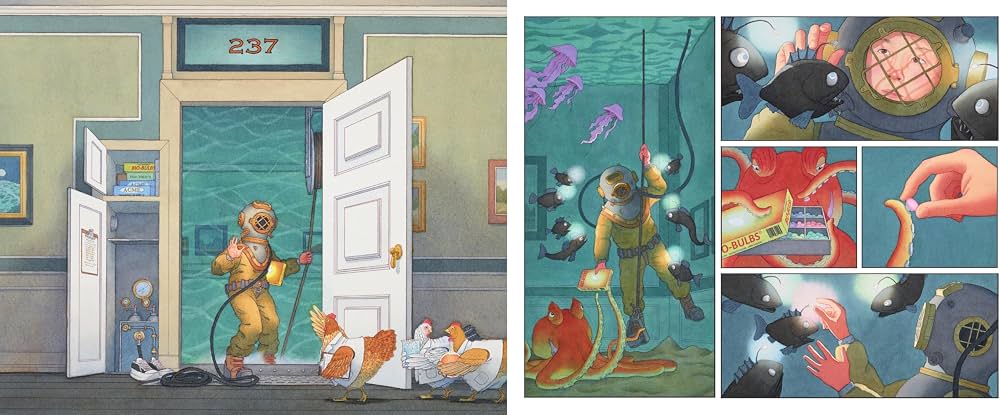
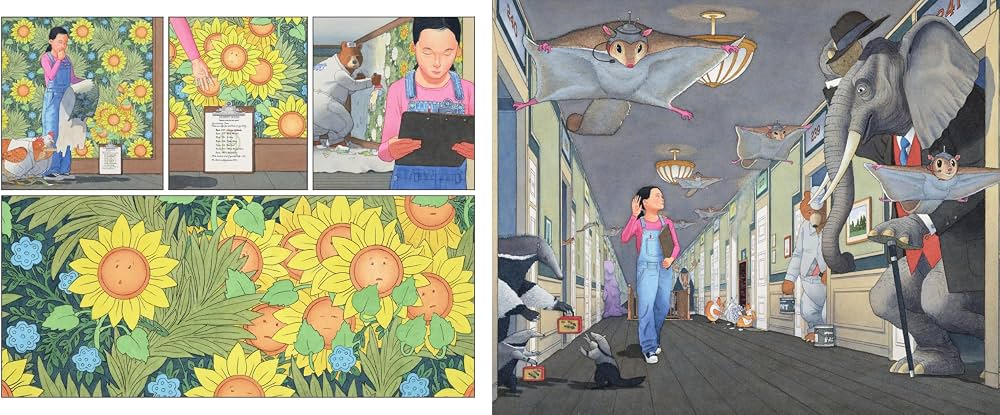
That’s all for now on David Wiesner. We’ll continue our discussion when his new book, *Room 239*, is published.