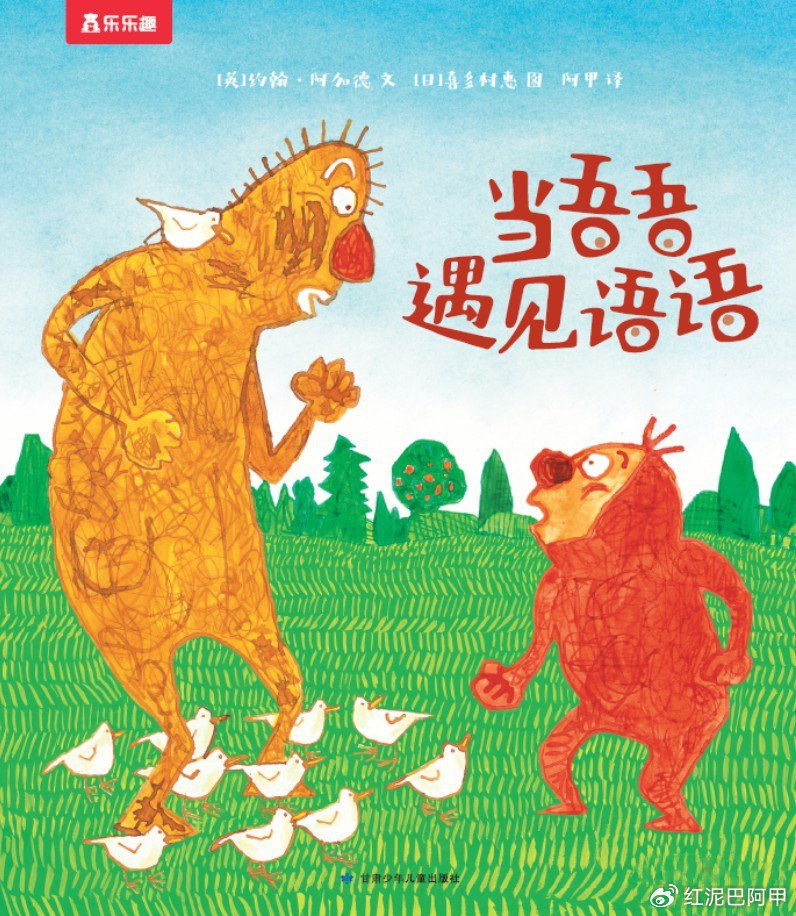
– Read aloud by the translator of “When I Met Language“Link-
When we become parents, we always hope our children will learn to speak early. Once they can speak, we hope they will become increasingly fluent, with a rich vocabulary and excellent expression. Children who can speak well are always especially popular, aren’t they? Because language is truly a wonderful thing, a powerful tool for expression and communication. Confucius once said, “Without studying the Book of Poetry, one cannot speak properly.” (The Analects, Ji Shi). He emphasized the importance of expression and communication, and advocated for the study of the Book of Poetry. This reflects his admiration for poetic imagery and language, as well as his emphasis on the linguistic and cultural environment.
Interestingly, Confucius once said, “I wish to remain silent.” He didn’t want to speak anymore, and Zigong became anxious: “If you don’t speak, what will we students pass on?”—He felt that if the teacher didn’t speak, the students couldn’t impart their knowledge. So Confucius uttered the following famous saying: “Does Heaven speak? Yet the four seasons proceed, and all things are born. Does Heaven speak?” (Analects, Yang Huo Chapter)—Wow, Heaven is silent, yet it guides the changing of the seasons and the growth of all things. In just four sentences, he said “Does Heaven speak?” twice! So…Is it better to speak or to remain silent?
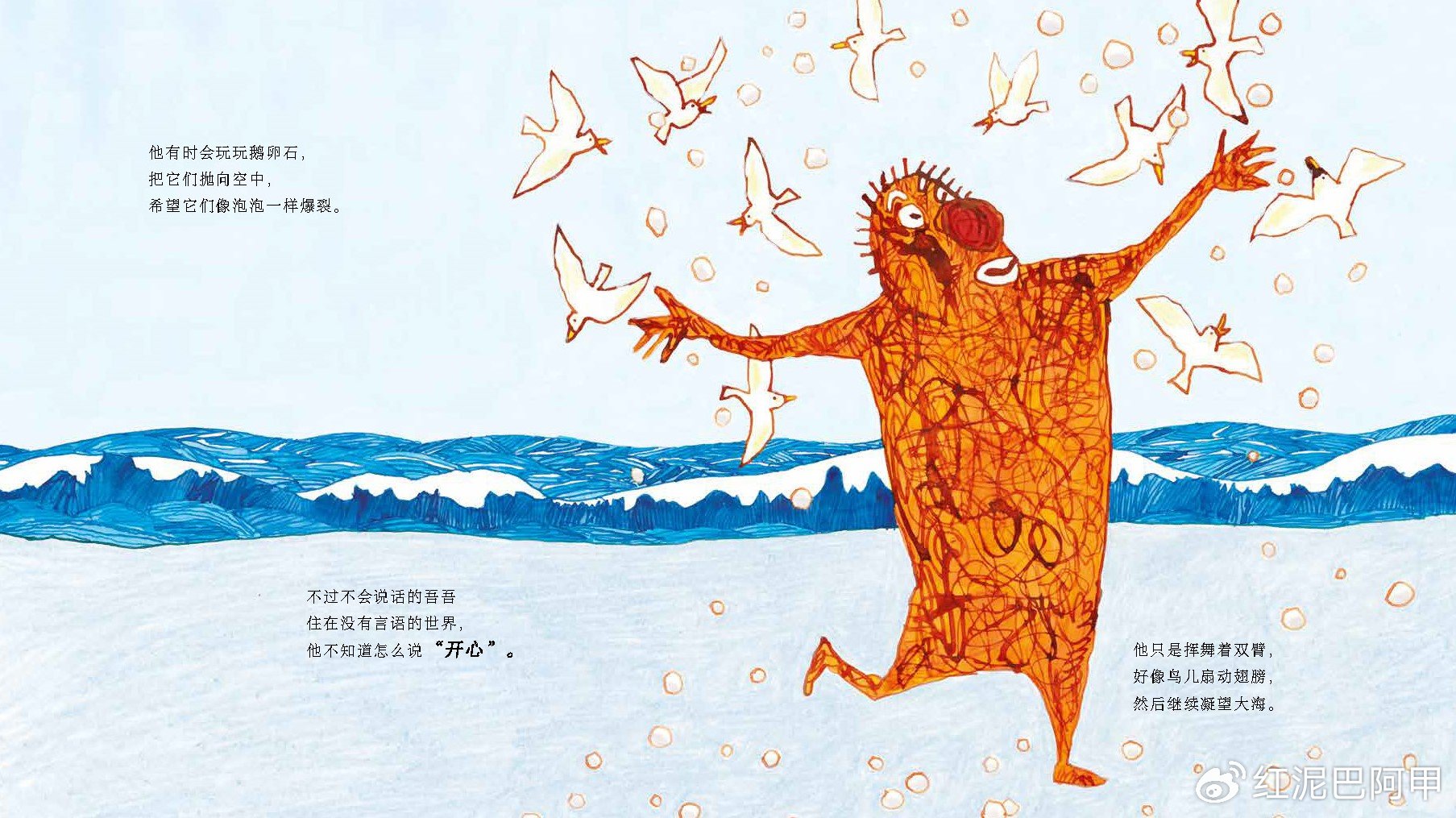
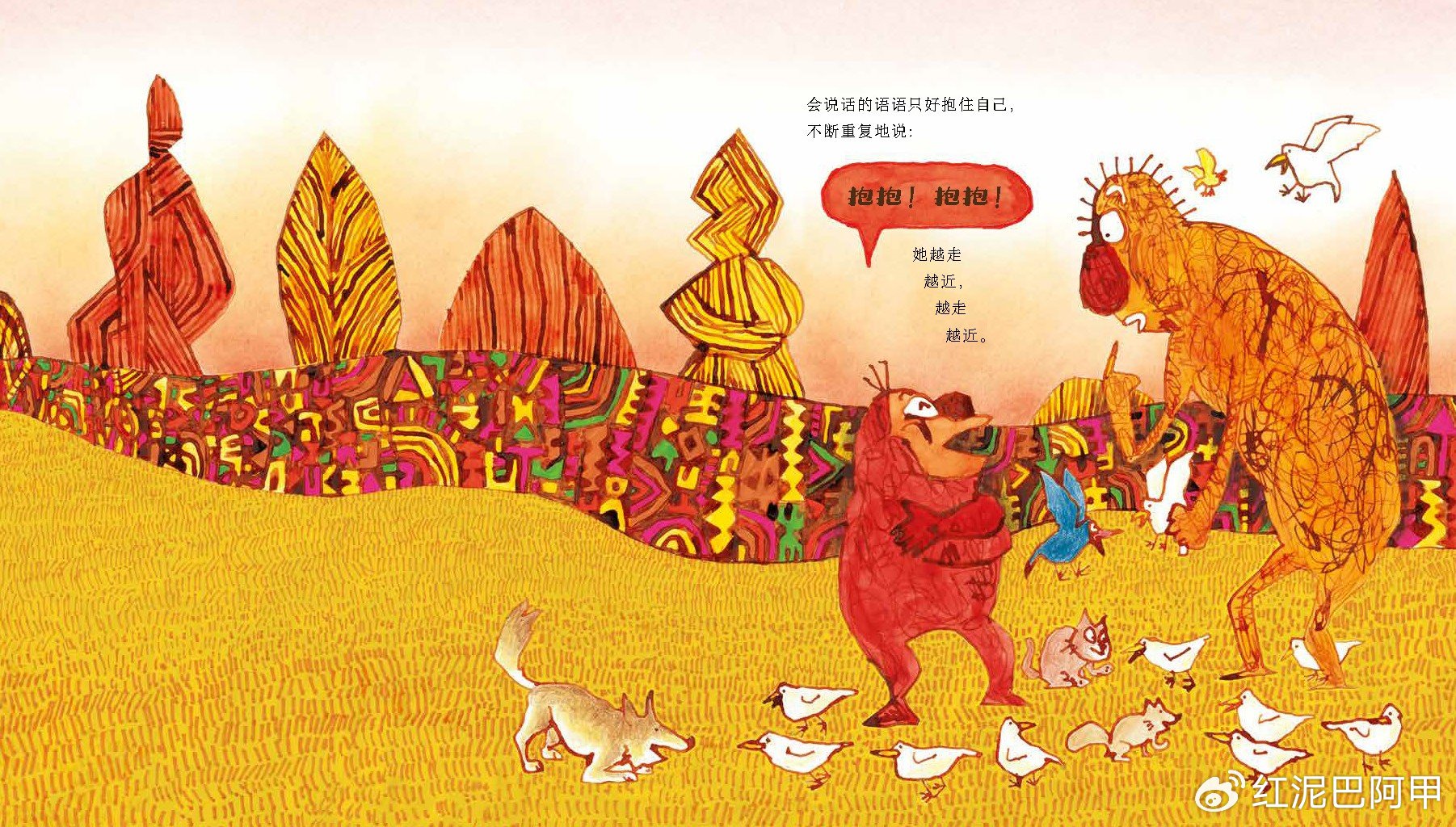
When I first read John Agard and Kitamura Megumi While collaborating on this somewhat “odd” picture book, I couldn’t help but think of this debate about words versus silence. The adorable monster who first appears in the book lives in a silent world. Most of the time, “he” (clearly male in the original text) is incredibly happy, but sometimes he inexplicably falls into a state of icy coldness. Even worse, he can’t even say “sad” because he can’t speak. Then another, smaller but equally adorable talking monster appears. This “she” (clearly female in the original text) is not only always happy but also has a special compassion for others. “She” helps “he” learn to use language; the first word is “hug.” They embrace and live happily ever after… Wait a minute! Finally, why do these two talking beings prefer to spend silent nights together? Is it better to speak or not to speak?
I believe that discerning adult readers will find unique philosophical insights and humor in this “strange” story, but I’m not sure if that will be the primary focus for three- or four-year-old readers. They’ve just gone through the process of learning to speak, and they can’t yet articulate or dominate the conversation like adults. Therefore, they might feel more sympathy for the character who can’t speak and prefer to experience communication that doesn’t rely on standard language. For example, a four-year-old boy abroad, after becoming fascinated by this book, would drag the adults in his family along for a “crazy” session, using their own invented “babbling” instead of everyday conversation, along with eye contact, gestures, and other body language—it’s a fun game in itself. But the illustrator, Megumi Kitamura, certainly deserves much credit for making this book so appealing to children, turning the pages again and again.
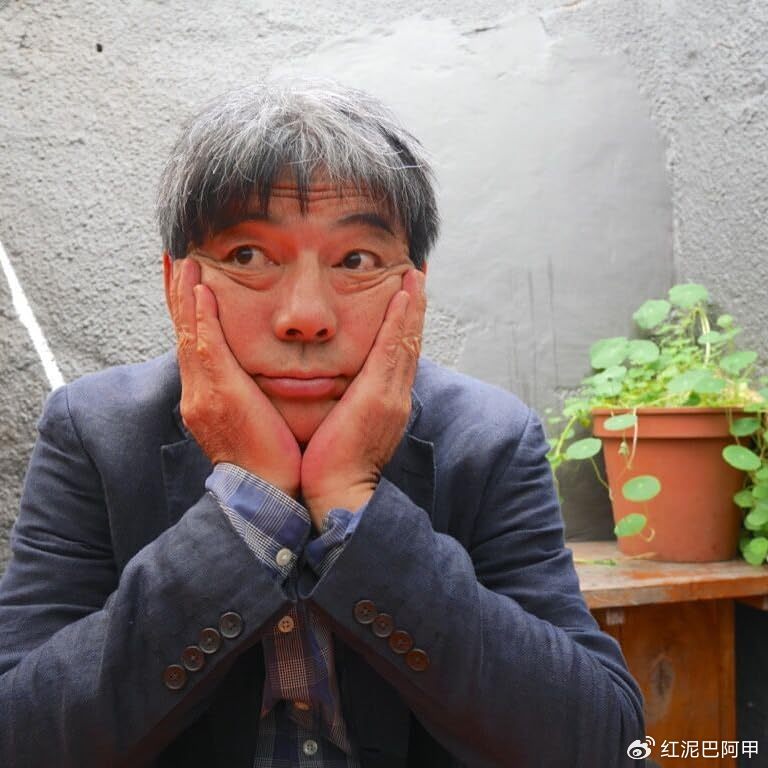
This Japanese illustrator, residing in the UK, has never won a top award, but his picture books have a highly distinctive style and a large global following, making him a favorite subject of study for researchers. His representative works, such as *Arthur Is Angry*, *The Little Lamb Can’t Sleep*, and *Millie’s Hat Transformation*, are particularly popular in China. Frankly, it was because of him that I initially noticed this “strange” book. Kitamura Megumi’s illustrations may initially seem clumsy and childlike, which is probably one reason why young readers often like them at first glance. However, upon closer inspection, his drawing skills are excellent; the images are beautiful, and the composition, color, lines, and figures are all meticulously crafted. The more you examine them, the more you appreciate their beauty, and in terms of visual storytelling, they are often textbook examples.
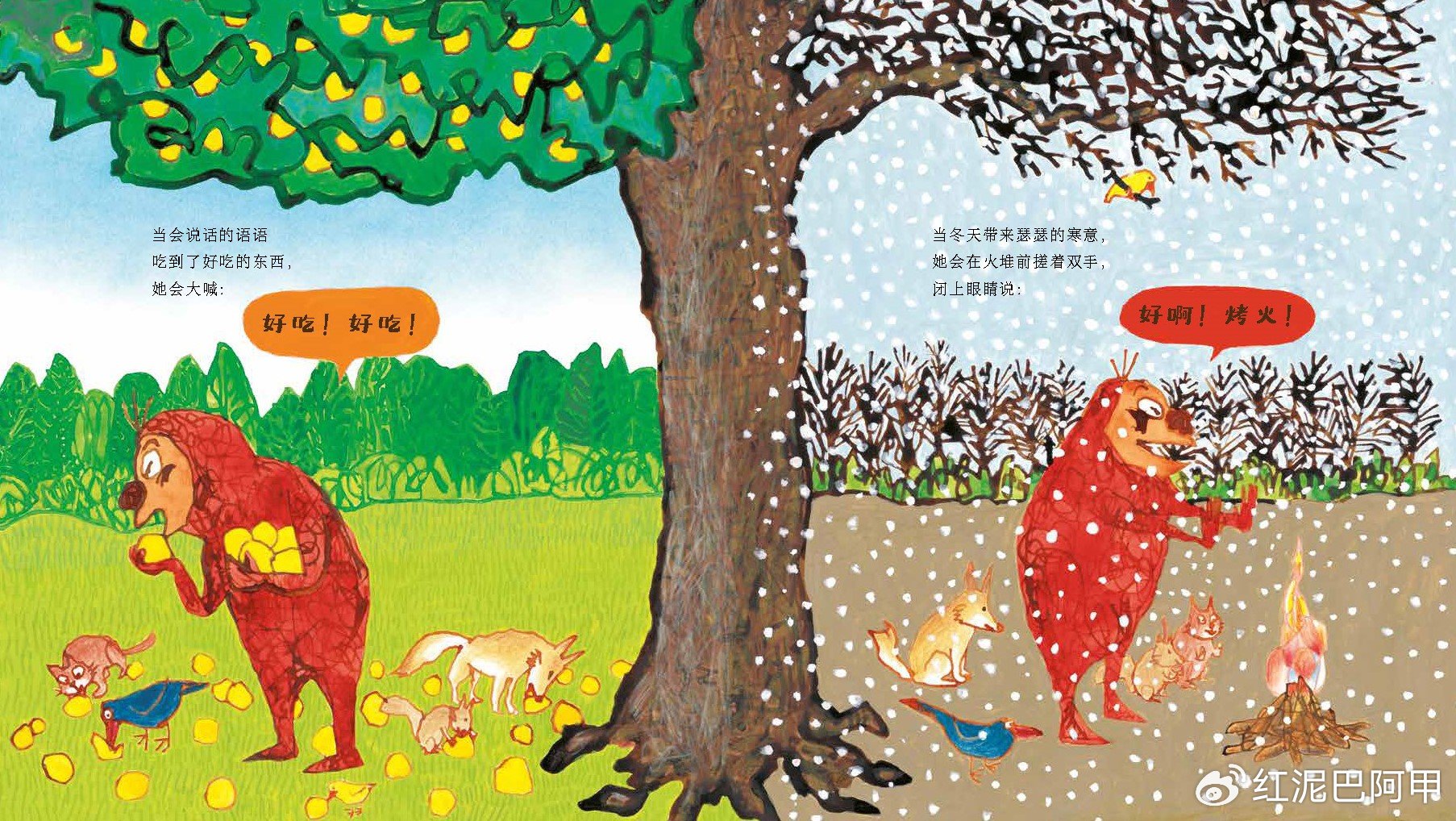
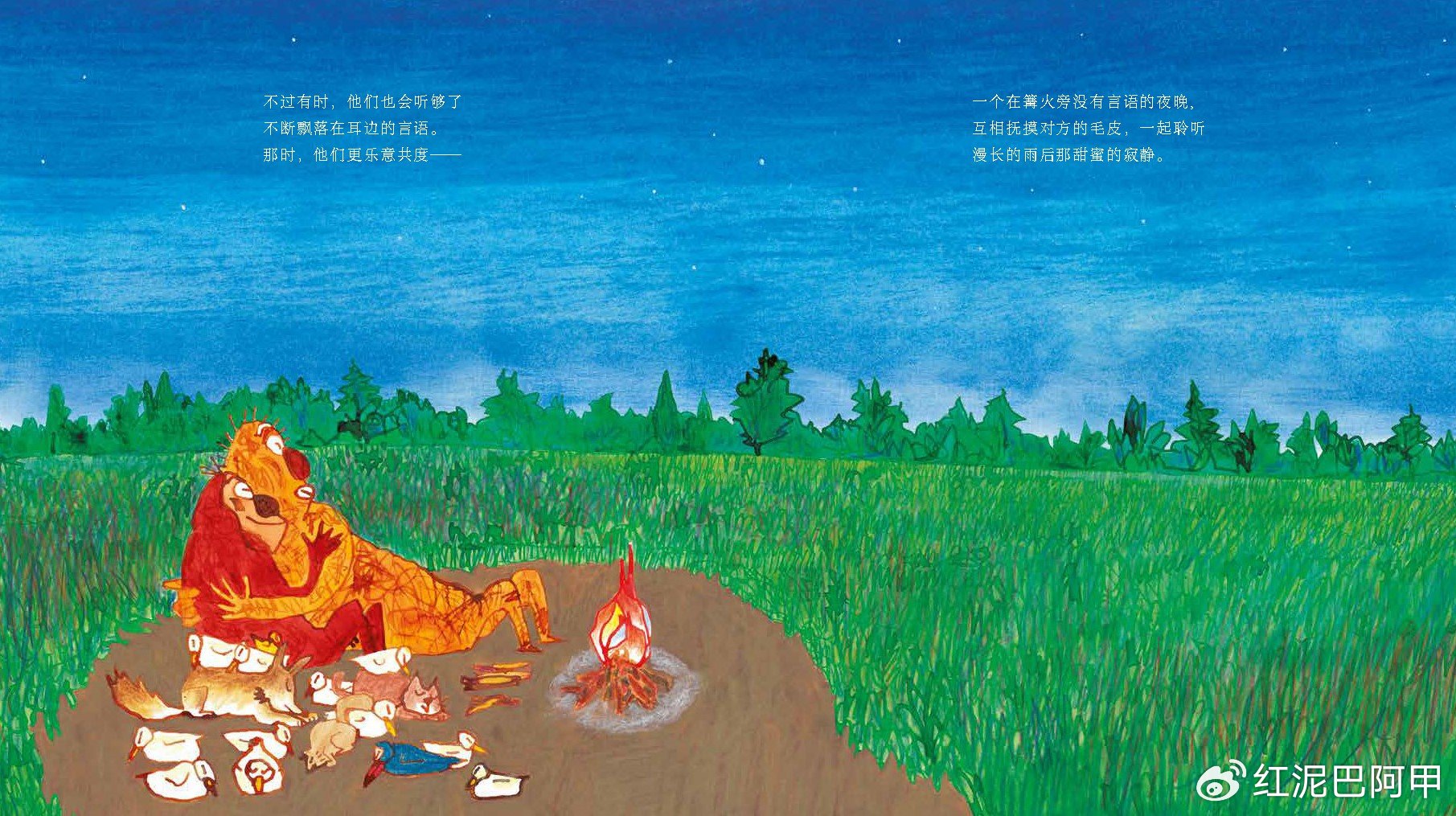
This book is no exception. Kitamura Megumi has created a pair of quirky yet incredibly endearing characters, giving the work a primal, surreal feel. The protagonists are set on an Eden-like island with jungles, caves, and sometimes glaciers or seemingly scorching environments in the background—clearly reflections of their inner state. Occasionally, on the same double-page spread, the left and right pages even depict different seasons. In other words, this “director” changes the stage setting according to the mood and the needs of the plot. Understanding this makes it easy to appreciate the many carefully crafted and interesting arrangements in the illustrations. For example, the mute “he” is always surrounded by a flock of small white birds, a single species, but always seeming to be an extension of his emotions; while the talking “she” is surrounded by a group of different kinds of small animals, various colors, some running on the ground, some flying in the sky. This arrangement is clearly a metaphor, perhaps representing that the talking one is more likely to attract different types of friends, but the mute one may also have die-hard fans. Of course, in the end, these two groups naturally merge together.
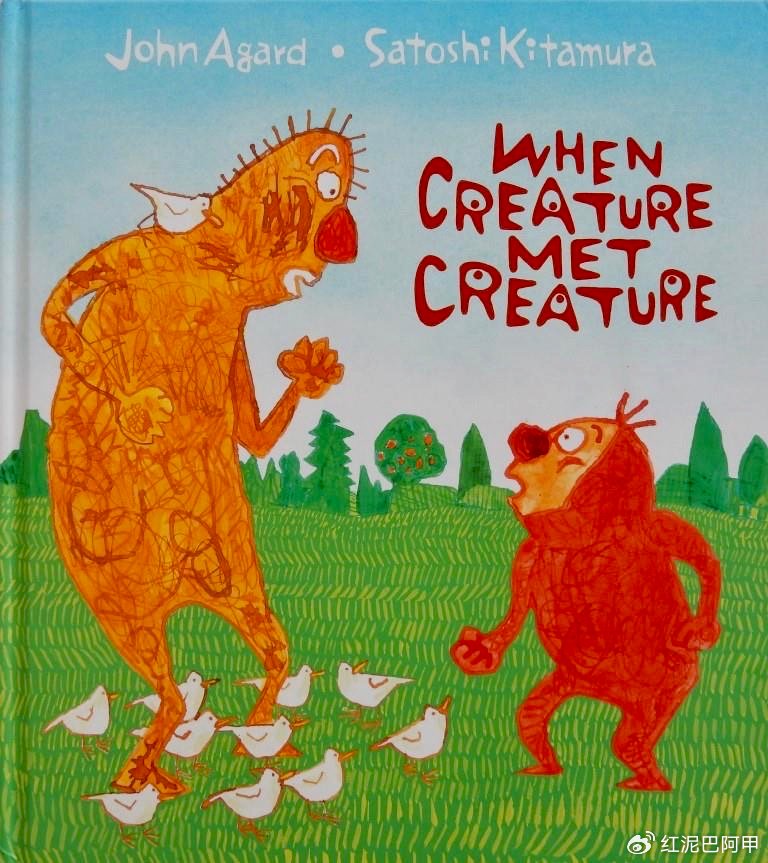
As a translator, I had to face the challenge of language head-on. The original text was a poem, with somewhat arbitrary rhyming, but still several instances of rhyme. The most difficult part to translate was its somewhat humorous and quirky poetic quality; it is said that…Poetic beauty is often what is lost in the process of translation.Despite the difficulties, I can only do my best. For me, the most challenging aspect of this book is its title…“When Creature Met Creature”“Should we translate it directly as ‘When Biology Meets Biology’ based on the AI’s suggestion?”
The most difficult word to handle is “creature,” which has at least three possible meanings in English that apply to this book: first, “organism,” referring to living beings, including animals and humans; second, “monster,” referring to strange, imaginary creatures; and third, “person,” often derogatory, but also potentially neutral. Regardless of which translation you choose, you will soon face the challenge of…“Creature-Of-No-Words”“and”“Creature-Of-Words”“This presents a dilemma in translating the main characters: should they be translated as ‘creatures that cannot speak’ and ‘creatures that can speak,’ or ‘monsters that cannot speak’ and ‘monsters that can speak’? Or even ‘silent monsters’ and ‘monsters that can speak’? — Obviously, all of these are awkward!”
After much deliberation and repeated testing, I decided to abandon translating the word “creature.” After all, Kitamura Megumi clearly understood the existence depicted in that way in her artwork; the definition and classification are left to the reader’s discretion. Instead, we could try naming the main characters. Any character a child can empathize with will surely have a name. Suddenly, “吾吾” and “语语” popped into my head. “吾” is indeed “I,” and adding the “言” radical makes it “语”—they even rhyme! The funniest part is that when “吾” doesn’t speak but opens its mouth to make a sound, it’s exactly “唔唔.” Thus, the book became *When Wuwu Meets Yuyu*. Children who read this book will likely find it hard to forget the title, and they’ll also learn some basic phonetic symbols along the way.
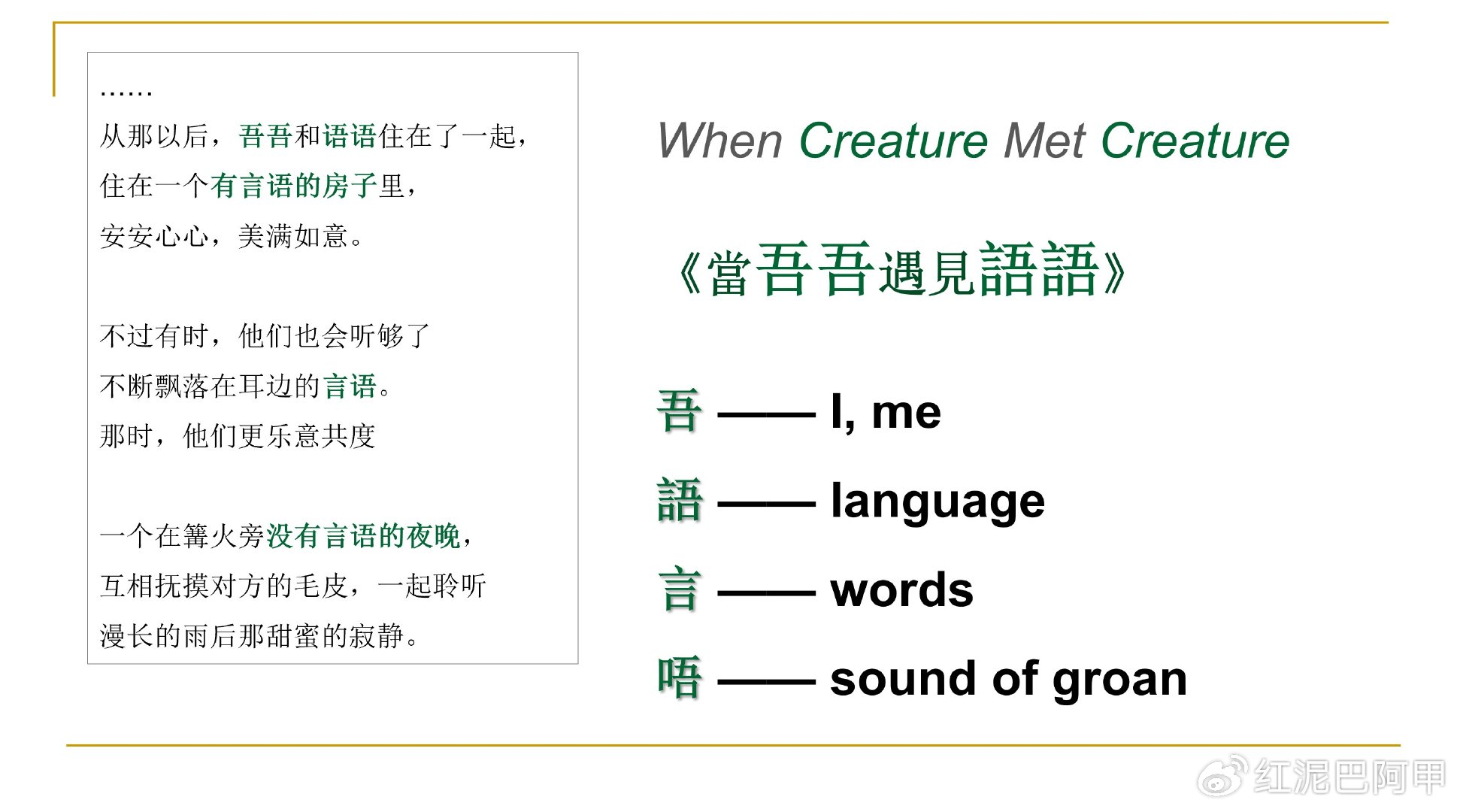
I believe the poet John Agard would appreciate this language game, which is perhaps unique to Chinese. This should also align with the original work’s inherent metaphors and symbols:When Wuwu was unable to use language to express himself and communicate, he was basically self-centered, which was the most primitive form of “Wu”. When Wuwu mastered language and could communicate smoothly with others, he and “Yuyu” transcended the state of being completely self-centered.And after that,When Wuwu and Yuyu are immersed in the world of language, they may advance to an even more enchanting world—a tranquil world where language is so integrated that it is no longer needed.At this point, it is probably as Confucius said that we should temporarily forget language and learn to listen to the voice of nature.
You might say this sounds a bit like imposing one’s will, and question whether the original author had so many ideas. I’m not sure if Mr. John Agard has read the Analects of Confucius, but he is indeed a profound poet, playwright, and children’s author. Born in British Guiana in 1949, he immigrated to the UK in 1977 and later became a naturalized British citizen. He was fascinated by poetry from a young age, but wasn’t a good student. During his sixth-grade graduation exam, he couldn’t concentrate on the questions and wrote a poem on the back of his paper, resulting in failing the exam and dropping out. However, the examiner greatly appreciated the poem he wrote and encouraged him to publish it. He did publish his first poem and gradually made a living as a poet. This talented poet of mixed African and Portuguese descent, with only a sixth-grade education, is known for his profound social and cultural themes, often exploring topics such as race, national identity, and the legacy of colonialism with humor, satire, and imagination. His famous poem “Half-Caste” is a poem that reflects on racial issues. It explores the complexity of mixed-race identity in a humorous and satirical way, emphasizing the absurdity of defining them as “half-race”.
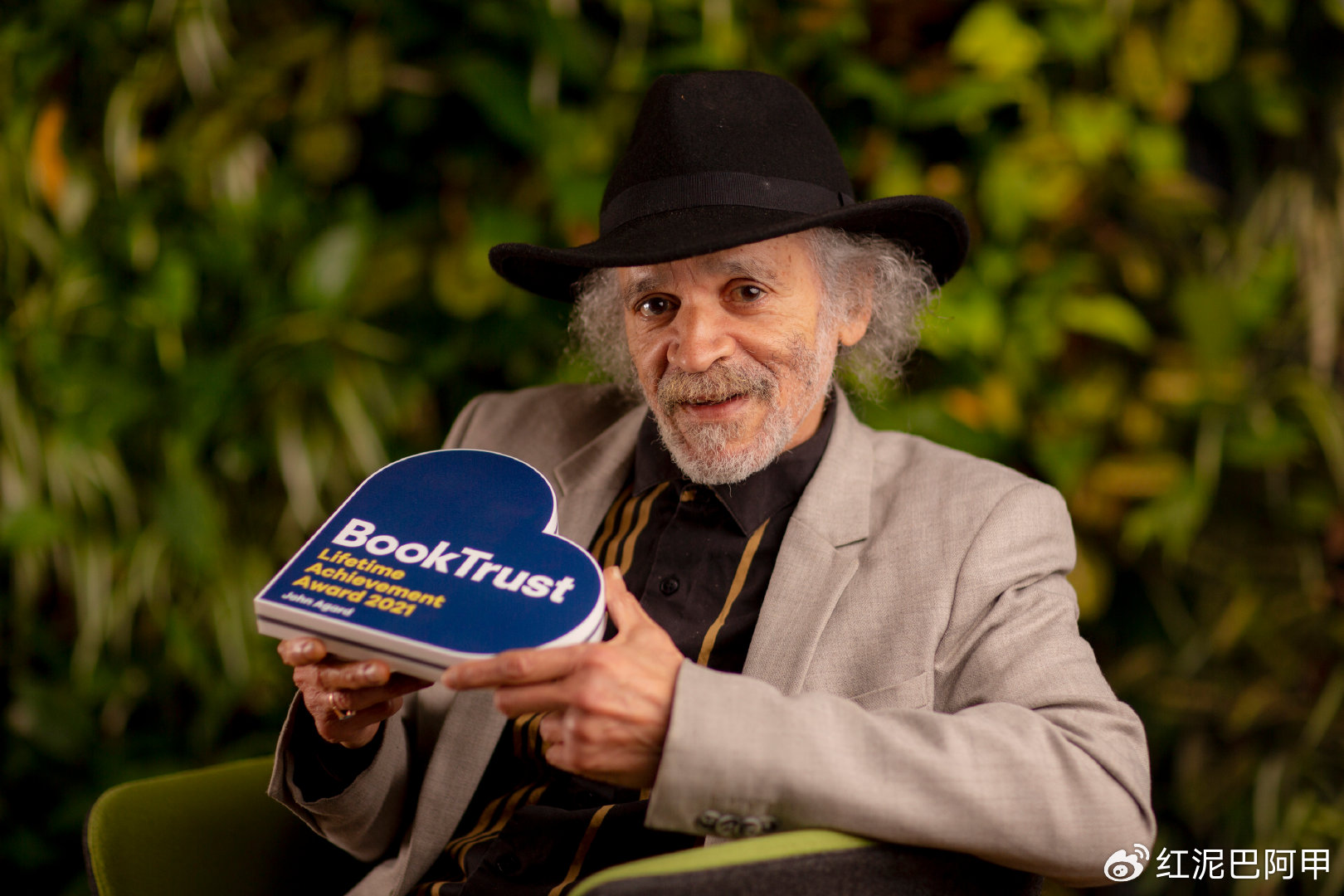
Argard received numerous awards throughout his life, the most important of which was the Booktrust Lifetime Achievement Award in 2021. The award was given to David McKee in 2020, and in 2018, John Burningham and his wife Helen Oxenbury jointly received the award. Argard was also the first poet to receive this honor.
In this picture book, a collaboration with Megumi Kitamura, Agard reveals his lifelong fascination with language. He clearly believed in the magic of language, and his encounter with it can be seen as a great leap forward in evolution. But what’s most remarkable is that Agard’s poetic language is simple enough for four- or five-year-olds to understand and be captivated by, partly due to its dramatic flair. As a playwright, Agard himself was also a skilled performer.There’s a video online of him vividly recounting the book; the whole process is like a one-act play.Therefore, when adults share this book with children, I don’t recommend reading it aloud in the usual nursery rhyme style. Instead, try exaggerating a bit and adding more performance elements. Perhaps this approach isn’t suitable for other picture books, but remember, this is the work of the witty and playful poet and playwright Agard.
However, I think what touches children most about this book is the expression of emotions and the communication of feelings. The extreme purity and kindness of Wuwu and Yuyu, the care and friendship between them, and the ultimate seamless understanding and love. Yes, the most beautiful emotions often transcend language…
Written by A‑Jia on May 5, 2023 in Beijing
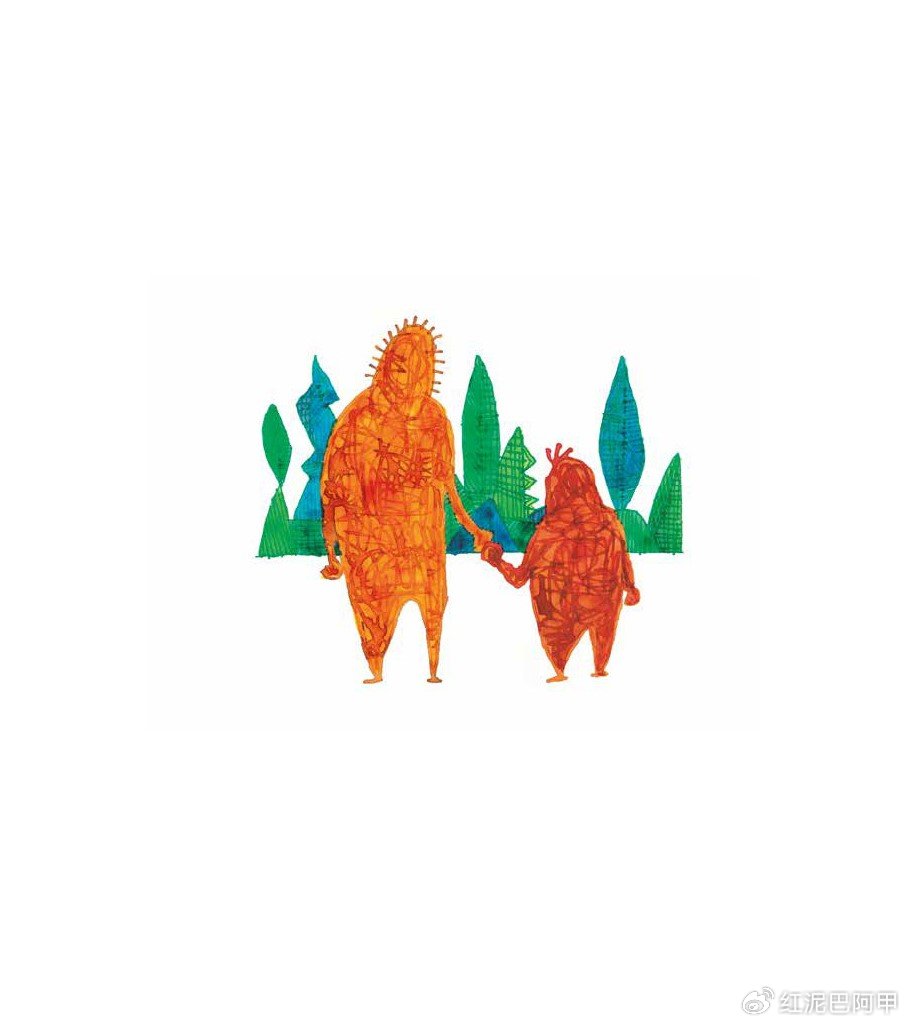
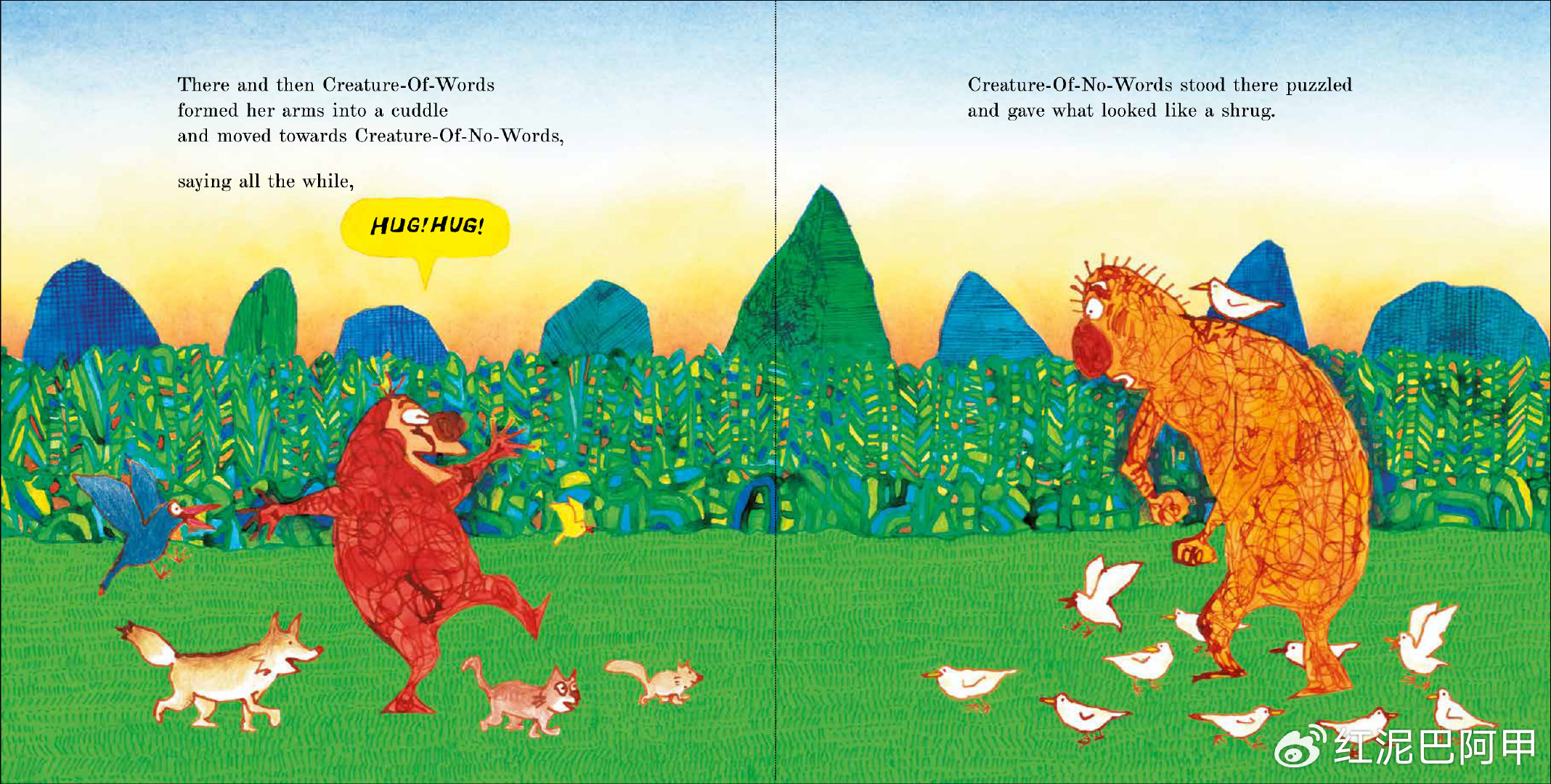
[Appendix 1: Sample pages from the English version]
[Appendix 2: Enjoy the original English text]
The original English version of this book is a beautiful and dramatic poem. The full text is transcribed below for poetry lovers and those interested in translation. A YouTube link to the author’s own full reading (with a performative element) is also available:Storytime: John Agard reads When Creature Met Creature
When Creature Met Creature
John Agard
Creature-Of-No-Words
I was happy to be furry.
And never in a hurry.
Creature-Of-No-Words
They would lie gazing at the sea.
Just lying there without a care.
Or playing with pebbles.
Throwing them into the air
wishing they’d burst like bubbles.
Since Creature-Of-No-Words
lived in a world of no-words,
he wouldn’t know to say HAPPY!
He’d simply flap his arms
like the wings of the birds
and carry on gazing at the sea.
When Creature-Of-No-Words
had just eaten something tasty,
he wouldn’t know to say YUMMY!
He’d simply lick his bristly lips,
pat the fur of his tummy,
Then do a triple back flip!
And on a freezing night
curled up beside a burning log,
He wouldn’t know to say FIRE!
It was enough just to feel snug.
O to feel that warming glow creeping
into his sleeping and dreaming!
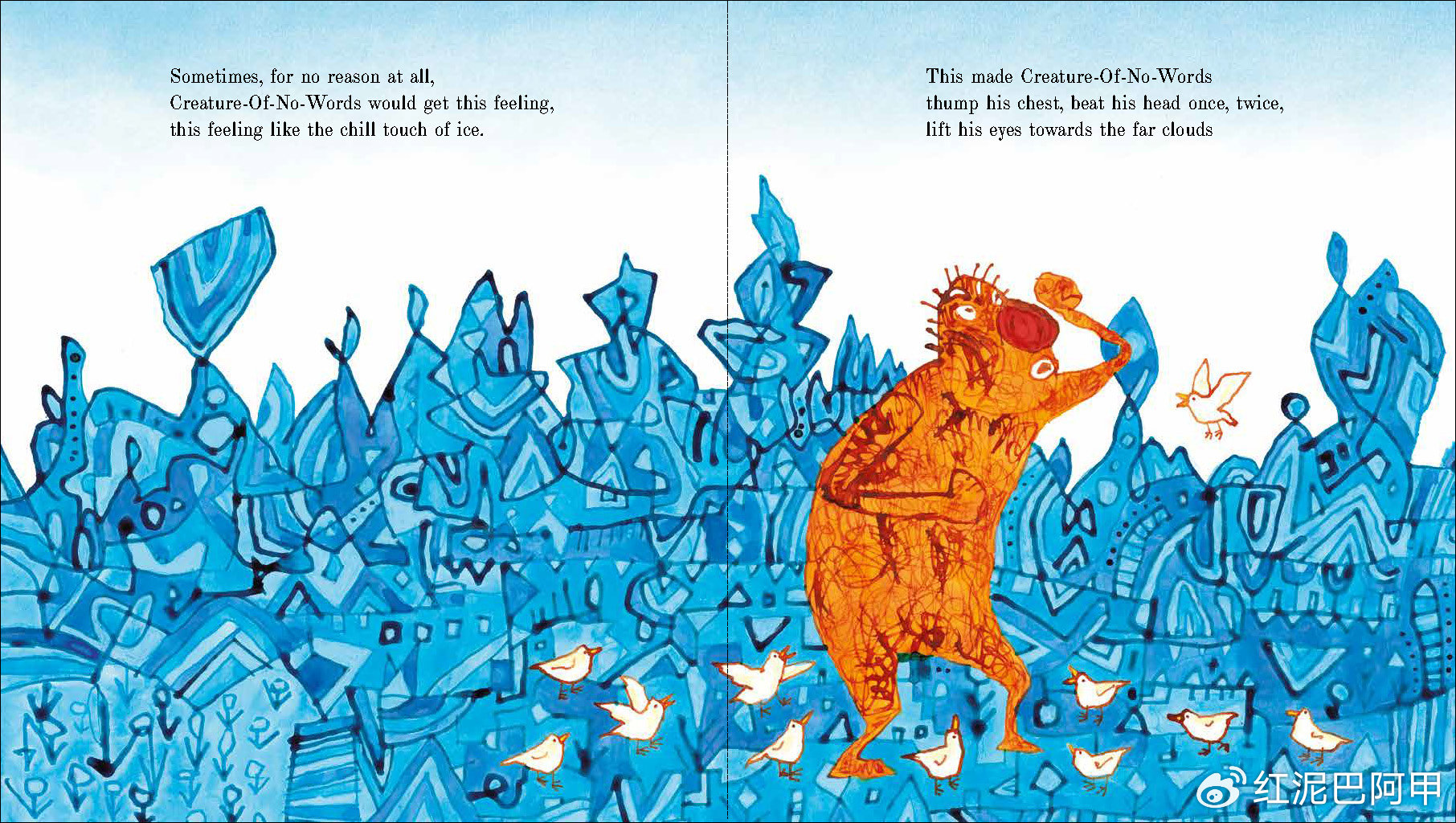
Sometimes, for no reason at all,
Creature-Of-No-Words would get this feeling,
this feeling like the chill touch of ice.
This made Creature-Of-No-Words
thump his chest, beat his head once, twice,
lift his eyes towards the far clouds
Yet, from his lips would come
a deep-down belly-groan GRRRRRR!
The look on his face
That’s all.
And if you’d dare look him in the eye
you’d see a little tear gather
Like a raindrop from the sky.
Creature-Of-No-Words could sense
something was really un-making his day.
But SAD was not a word he knew how to say.
One day who should spy
him with her little see-far eye?
Who else but Creature-Of-Words?
Creature-Of-Words was also
Happy to be furry.
And never in a hurry.
Now, Creature-Of-Words
lived in a world of words
and loved to speak them out loud.
When Creature-Of-Words
She splashed herself into the sea.,
She’d shout,
HAPPY! HAPPY!
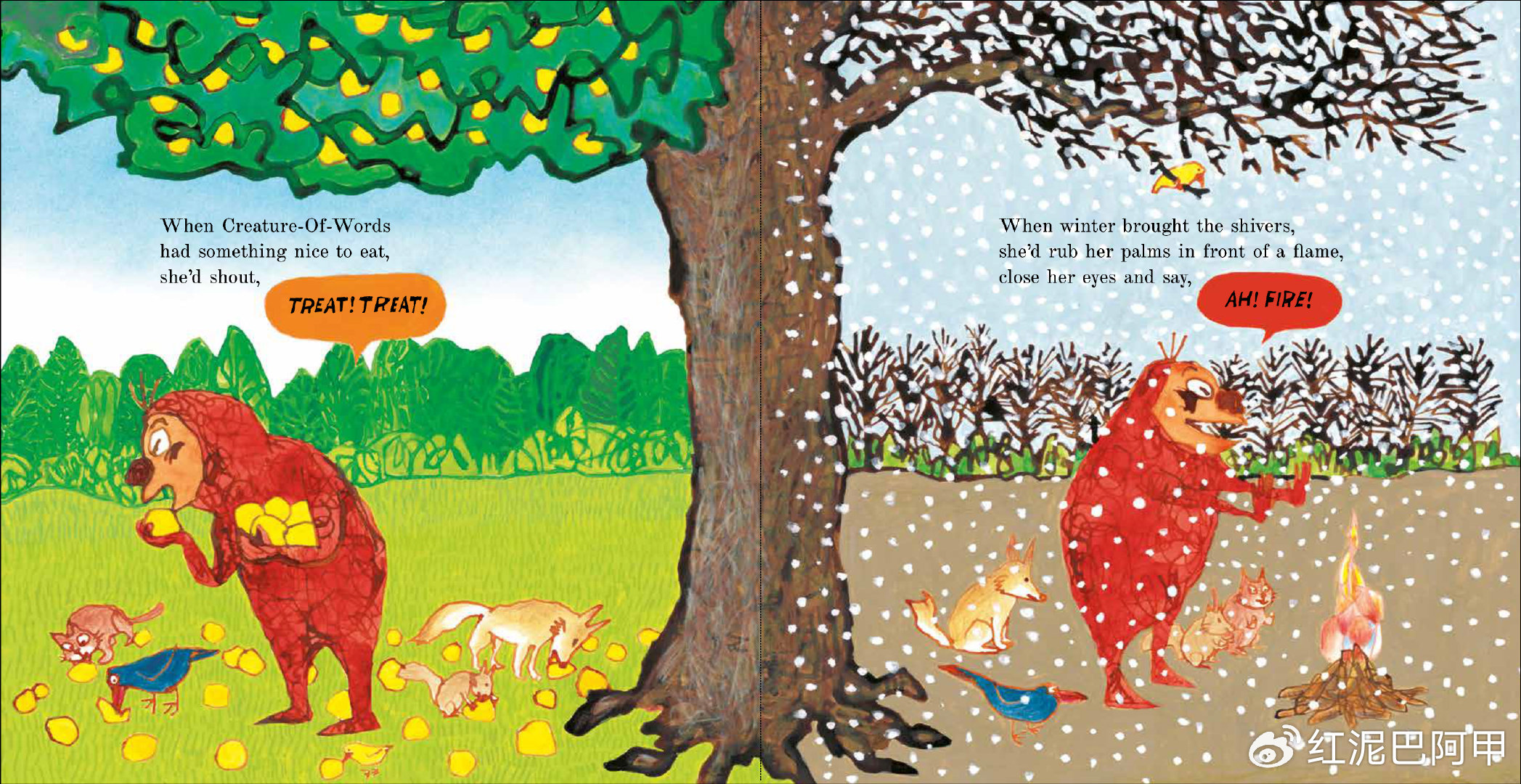
When Creature-Of-Words
I had something nice to eat.,
She’d shout,
TREAT! TREAT!
When winter brought the shivers,
she’d rub her palms in front of a flame,
close her eyes and say, AH! FIRE!
And that day when she’d spied
Creature-Of-No-Words thumping
his chest, shaking and beating his head,
and had heard him groaning
that terrible belly-groan GRRRRRRR!
she’d sensed his sadness with no word said.
There and then Creature-Of-Words
She formed her arms into a cuddle
and moved towards Creature-Of-No-Words,
saying all the while, HUG! HUG!
Creature-Of-No-Words stood there puzzled
and gave what looked like a shrug.
Creature-Of-Words then hugged herself
And repeated, HUG! HUG!
as she moved
closer
and
closer.
This time Creature-Of-No-Words
He heard himself say,
HUG!
And the two creatures did just that.
From that day the two of them lived
together in a house where words also lived,
which was all well and good.
But when they’d both had enough
of words falling on their ears
there was nothing they enjoyed more
than a no-words night beside the fire.
Stroking each other’s fur. Just listening
to sweet silence after a long rain.