Picture book enthusiasts are certainly familiar with the Caldecott Medal—one of the world’s most prestigious and influential awards for picture books. But who exactly was Randolph Caldecott (1846–1886), the man whose name was borrowed for the award? Why was it named after him? What contributions did he make to the world of picture books? Who knows the answers to these questions?
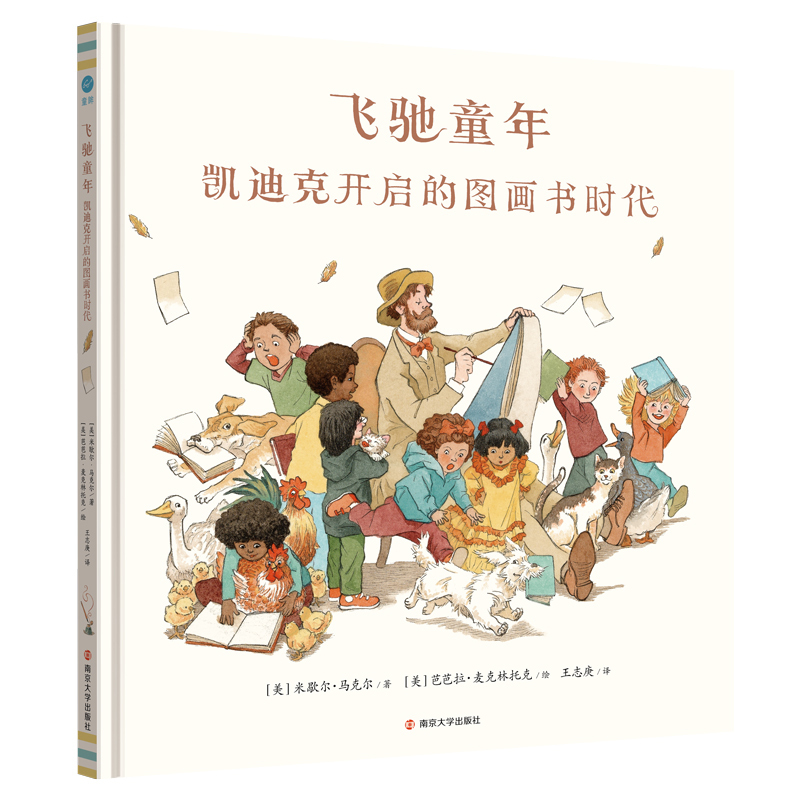
Writing a book tracing the origins of Caldecott’s story wouldn’t be too difficult. The real challenge lies in telling this story in a way that contemporary 4–8 year olds can understand, connecting young readers with an artist who lived a century and a half ago, and presenting it in picture book form. How can this be achieved? *Tomfoolery!: Randolph Caldecott and the Rambunctious Coming-of-Age of Children’s Books*, written by Michelle Markel and illustrated by Barbara McClintock, accomplishes this task perfectly. This vivid and engaging biographical picture book recounts Caldecott’s life and his revolutionary contributions to picture books, making it suitable not only for young children but also for older children and adults interested in the history of picture books and further research.
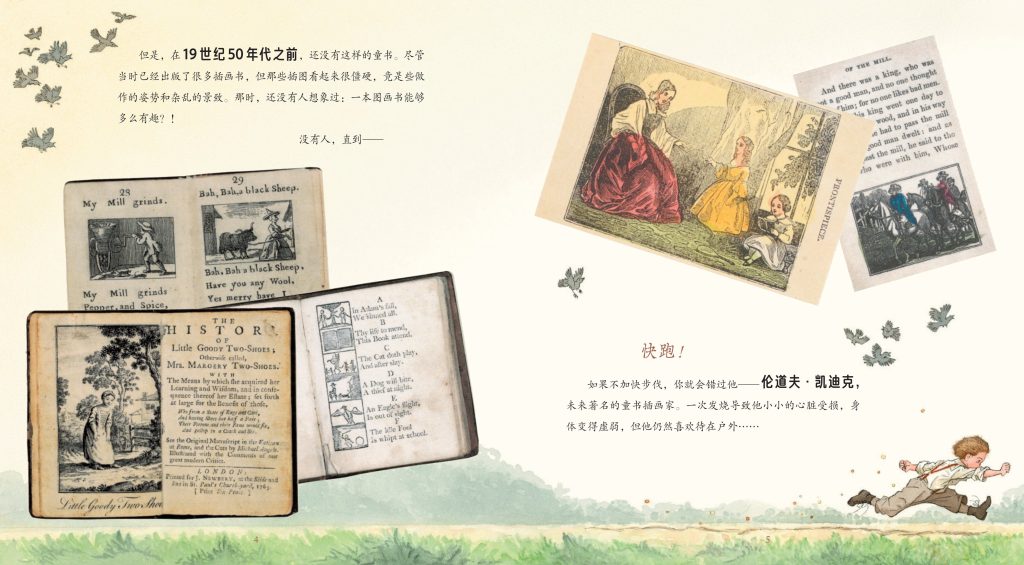
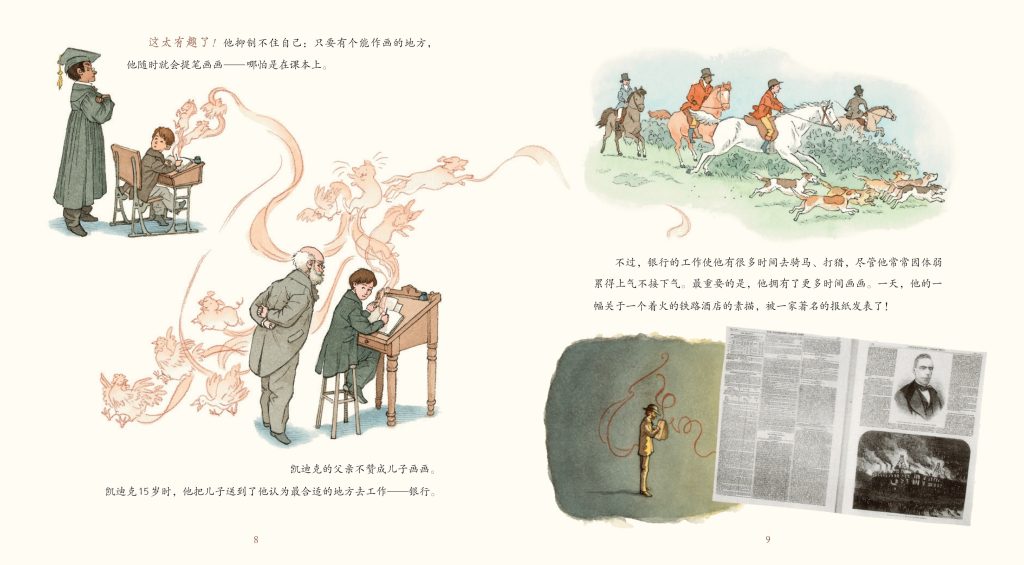
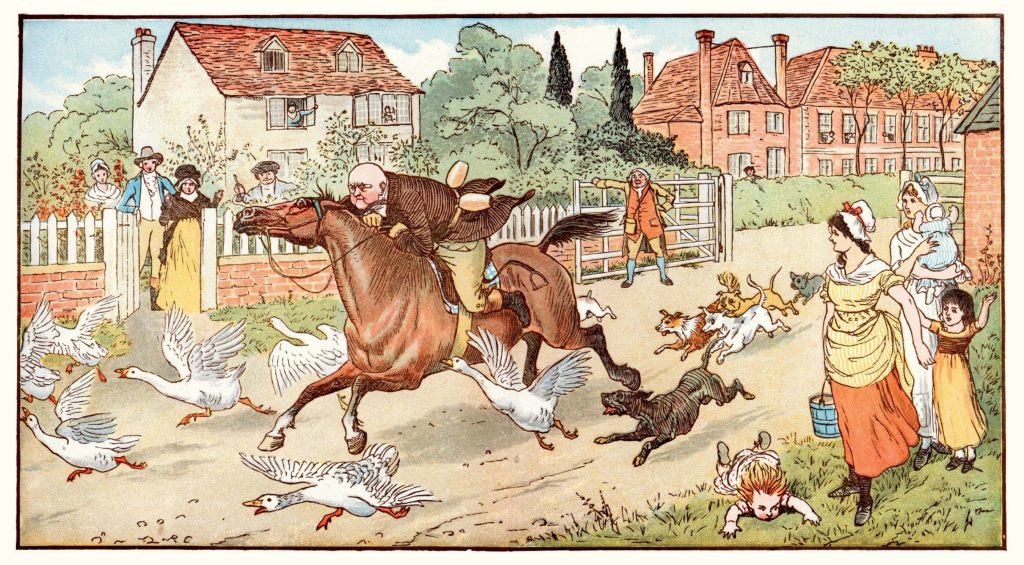
The book is roughly divided into two parts: the narrative and the reference section. The first half, written in a tone geared towards a child audience and accompanied by vivid illustrations, lightly narrates Caldecott’s journey from a boy who loved drawing to an artist who revolutionized children’s picture book illustration. In introducing his childhood, career, and how he changed the face of children’s books through his vibrant and humorous illustrations, purely factual details are omitted, instead relying more on evocative language and visuals to allow young readers to experience the story firsthand. The illustrations in this section are dynamic; young Caldecott is running from the very beginning, and even later, when he sits down, whether at school or working at the bank, he’s constantly drawing, with animals seemingly leaping off the page. The overall style of the illustrations is cheerful and lively.
In an interview, illustrator Barbara said that the biggest challenge in creating this book’s visual narrative was making it relatable for today’s young readers. After about a year of careful research, she found some tricks, one of which was the desk (or writing desk) that Caldecott uses in the book. It appears repeatedly throughout Caldecott’s childhood—at home, at school, and at work. While people rarely use desks now, the way people used writing desks in the past bears a striking resemblance to how people use computers today. Caldecott is always drawing, even during class or at work, and his teachers or colleagues enjoy watching. Isn’t that similar to people watching you use a computer today? Barbara makes the animal figures in Caldecott’s drawings fly off the page, truly “leaping off the page,” just like letting readers see the noisy computer screen.
However, the cheerful and lively style is only one side of this book. The latter half reveals its solid and rigorous research, including detailed annotations, background information, a bibliography of Caldecott’s works, and the sources of references used in creating the book. This provides clues for further in-depth research, allowing readers to learn more about Caldecott’s life and artistic achievements. Although this is a biographical picture book suitable for readers as young as four or five, the author still adheres quite rigorously to generally accepted academic standards, providing a valuable reference for those creating similar non-fiction picture books.
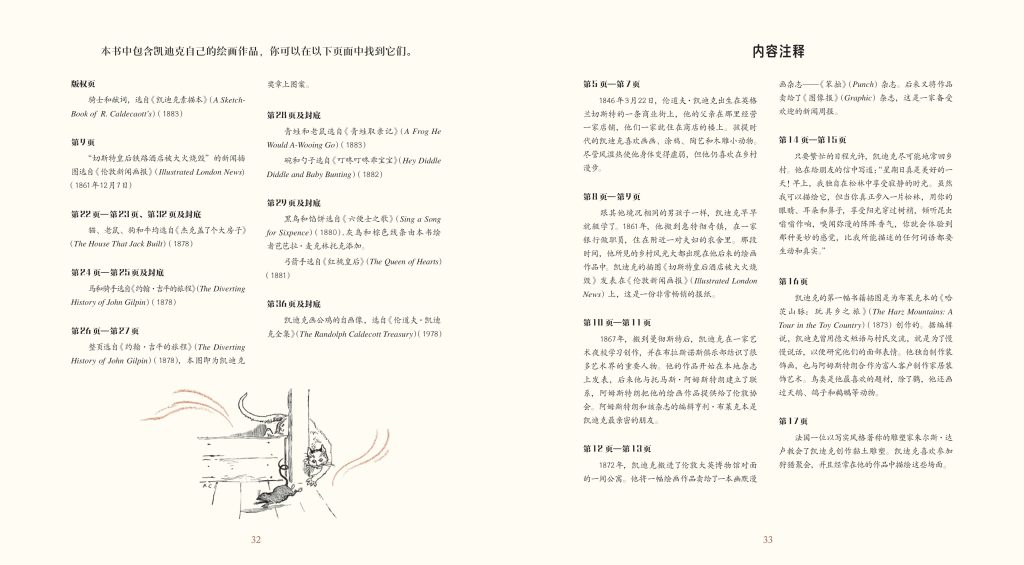
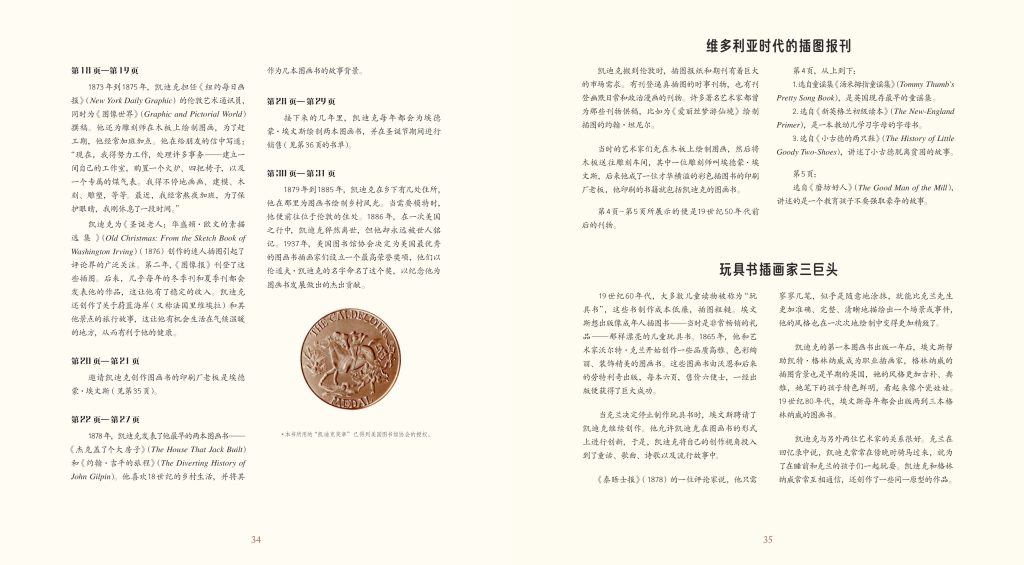
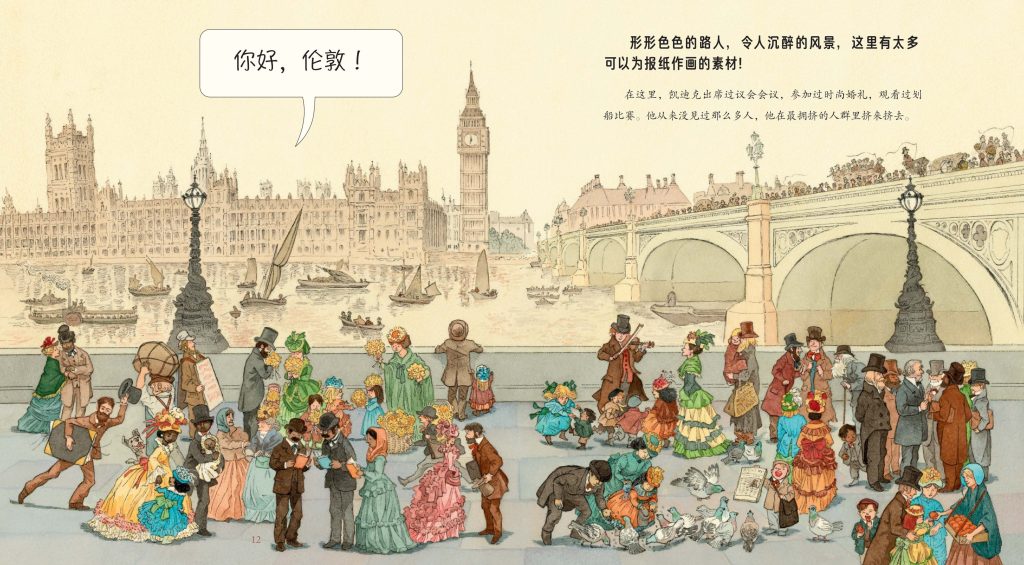
In fact, even the illustrator, while trying to pique young readers’ interest in Caldecott’s life story, also made every effort to ensure the visual information was solid and rigorous. Every image element in the book underwent meticulous research and restoration. Take, for example, the scene depicting Caldecott’s arrival in London in 1872. The illustrator had to first ensure that the buildings in the background were accurate to that year; for instance, Big Ben on the other side of the Thames definitely existed, having been completed in 1859. Then there were the lampposts by the bridge, which she needed to accurately recreate from photographs of the time. The most challenging part was the “diverse crowds,” where the illustrator had to depict people from all walks of life in London during the latter half of the 19th century: members of parliament, commoners and nobles, middle-class men and women, and the lower classes selling art or newspapers on the streets, adults and children, and of course, animals to add atmosphere to the scene. This picture book possesses both the rigor of non-fiction educational books and the lively fun of fiction.
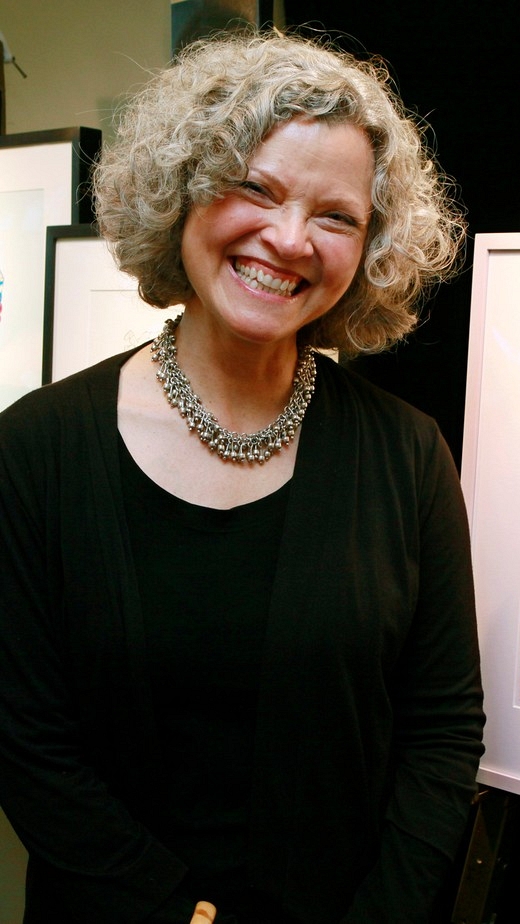
Barbara poured her heart and soul into illustrating this book, spending a year on in-depth research and revising the cover alone at least four times. But she had no regrets about this dedication, because she loved the book so much. In an interview, she said she had a deep fascination with Caldecott (adding a note asking her not to tell her husband). She has always considered Caldecott her idol, or rather, her mentor in picture book creation. Moreover, she found several similarities between herself and Caldecott, such as their insatiable love of drawing from a young age, their fondness for drawing cheerful animals and dynamic, lively scenes, and their self-taught approach to children’s book illustration…
Barbara’s story of becoming a self-taught illustrator is somewhat legendary. The most fascinating part is that when she turned 20, she was studying at Jamestown College (now Jamestown University) in North Dakota, but she longed to draw picture books. However, in the early 1970s, there weren’t many relevant majors to pursue. Barbara greatly admired Maurice Sendak because she particularly loved his novel *Midnight Kitchen*, published a few years earlier, and believed Sendak must know how to draw picture books. Knowing only that Sendak lived somewhere in Connecticut, she looked up his home phone number in a public phone book and, “naively,” called directly to ask for advice. Not only did Sendak answer the phone himself, but he also had a very pleasant 20-minute phone conversation with the girl he had never met before, telling her how to prepare for creation and submission, how to prepare her portfolio for exhibition, and more importantly, “don’t go to art school,” but try to learn on your own, preferably by moving to New York and making full use of public libraries… Not long after, Barbara really went to New York and began her journey of self-study and creation of picture books.
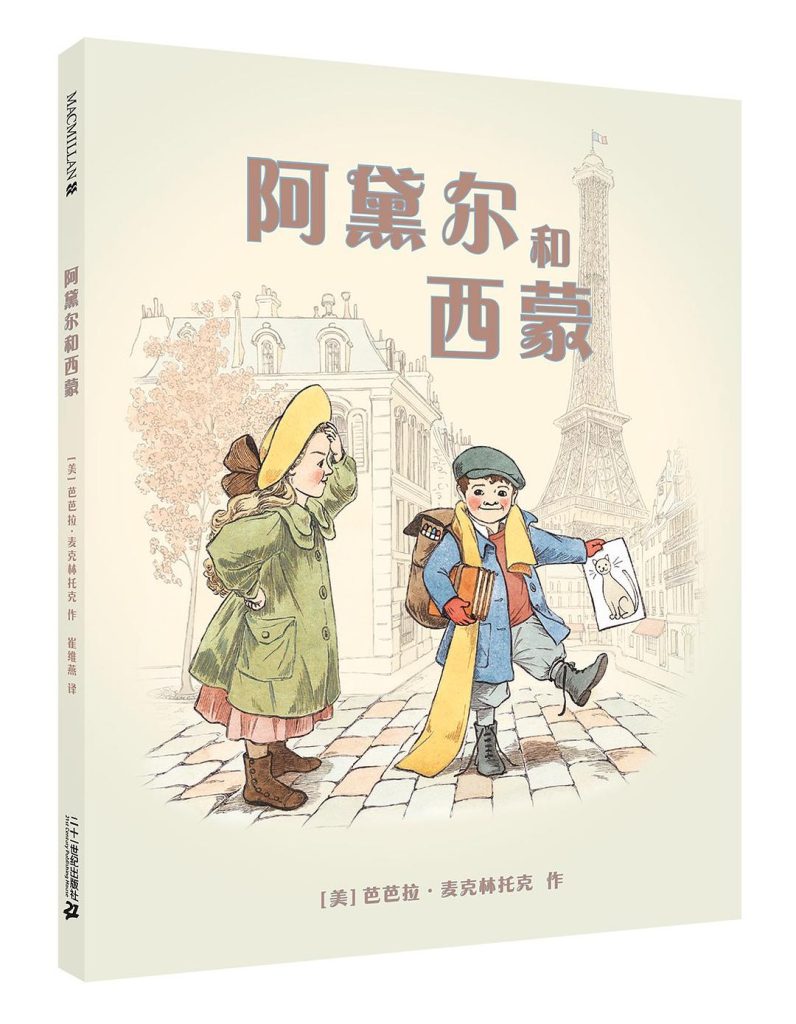
Many of Barbara McClintock’s self-written and illustrated works, or those for which she also provided the illustrations, have been introduced to China. These include *Adele and Simon* and its two sequels, *Where Are You, Mom?*, *Mary and the Little Mouse’s Secret*, and *Nothing Can Stop Sophie*, as well as the eight-book “Barbara McClintock Classic Picture Book” series, the most famous of which are *The Gingerbread Man* and *Grandpa’s Overcoat*. Barbara loved and excelled at drawing stories that transcended time, taking readers on a journey to a specific place at a specific point in time. Such journeys are indeed very suitable for picture books.
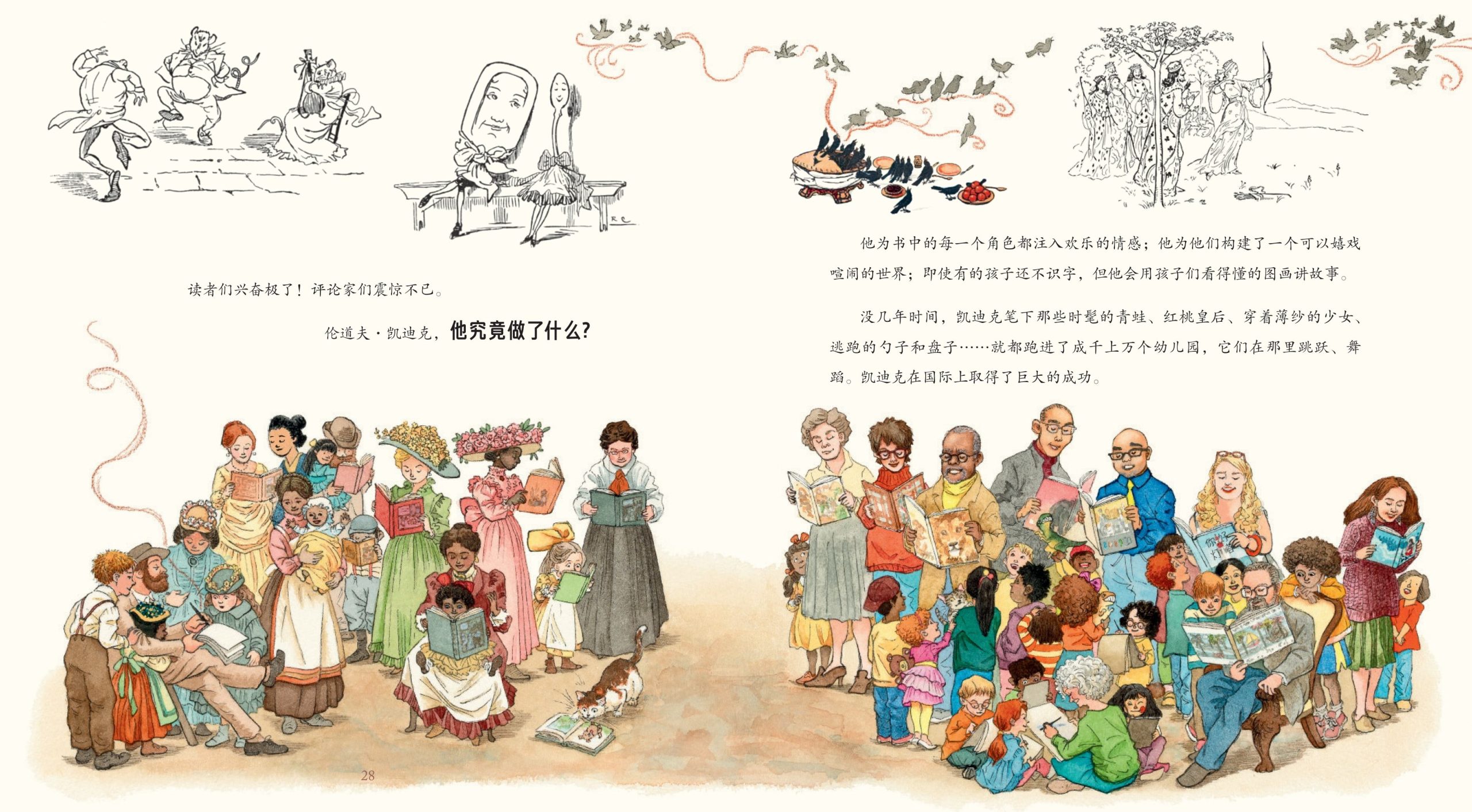
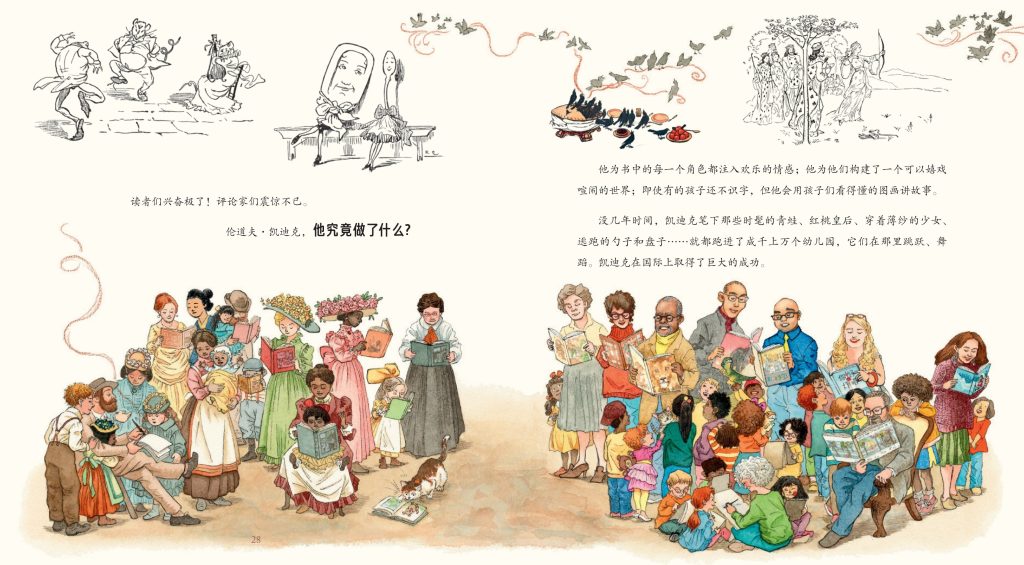
It was during these travels that Barbara “met” artists like Randolph Caldecott and Randolph Sendak. Her picture book creations have their own style, but are also deeply influenced by these predecessors. In *Childhood at First Sight: The Picture Book Era Ushered in by Randolph Caldecott*, near the end of the story, when she’s about to show “What exactly did Randolph Caldecott do?… Caldecott achieved tremendous international success,” Barbara displays some of Caldecott’s paintings in the upper half of the page, while the lower half uses many figures to illustrate Caldecott’s impact on the world. Particularly interesting is the illustration on the right page, where nine contemporary picture book illustrators are mingling with children who love listening to stories. The most recognizable is Sendak sitting in an armchair, and the green-clad, white-haired female illustrator sitting at Sendak’s feet, drawing for the children, is likely Barbara herself. In the illustration, Barbara’s drawing posture, especially the way she holds the paintbrush with her left hand, complements the image of Caldecott drawing for children on the left page. The other seven illustrators standing and reading in the right-hand image are reportedly Caldecott Medal winners, holding their award-winning works. —Can you recognize them? (This is a bit difficult; I myself couldn’t recognize two of them!)
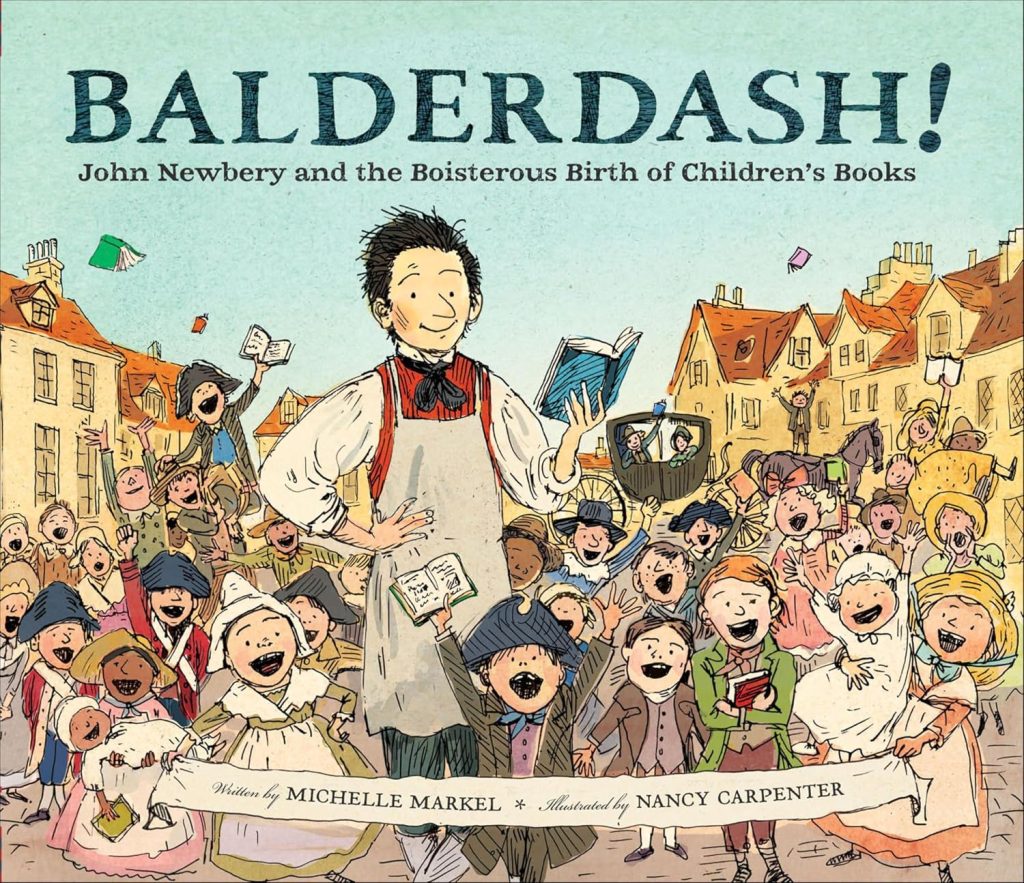
Let’s talk about the author of this book, Michelle Markle. While she hasn’t had any works introduced to China before, she’s a very accomplished female writer, especially skilled in non-fiction picture books. She has written biographical picture books for figures such as the French Post-Impressionist painter Henri Rousseau, the British-Mexican Surrealist artist Leonora Carrington, the American union leader (who led a garment workers’ strike) Clara Lemledge, and the famous politician Hillary Clinton. This isn’t her first time writing biographies of pioneering figures in children’s literature. In 2017, she published *Balderdash!: John Newbery and the Boisterous Birth of Children’s Books* (not yet available in Chinese). As the title suggests, this is a picture book biography of John Newbery, the creator of the children’s book for which the Newbery Medal is named, and its structure is very similar to this Caldecott picture book biography. In other words, the two books are clearly sister books.
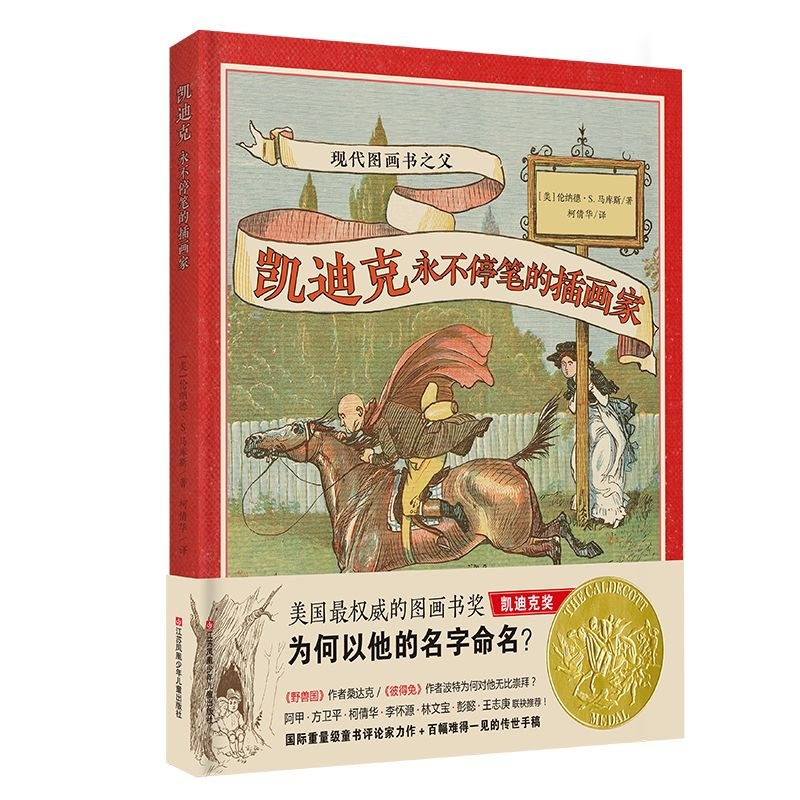
For younger children, reading these two books will provide an overview of Newbery and Caldecott’s early life. However, for older children or adults, these books offer a deeper understanding of these two pioneers, showing how they revolutionized traditional children’s book concepts and shaped the contemporary landscape of children’s literature. Regarding Caldecott specifically, there’s another excellent illustrated reference book that’s particularly accessible: *Randolph Caldecott: The Man Who Could Not Stop Drawing* by American children’s book historian Leonard Marcus. This book provides a comprehensive overview of Caldecott’s life and artistic achievements. Through detailed research and vivid narration, Marcus demonstrates how Caldecott transformed children’s picture books with his innovative illustration style.
Interestingly, I carefully compared the bibliographies of Markle and Marcus’s books, and found that the vast majority of them overlapped. Their sources were very similar, but their approaches and narrative styles differed. Marcus focused on adult readers, telling the story from a broader perspective of children’s book history.
I have also done some research on the life of Caldecott and related figures, which I have compiled in my book *A Brief History of Picture Books*. I believe that Beatrix Potter’s *The Tale of Peter Rabbit* is the pioneering work of modern picture books, but Miss Potter was actually deeply influenced by the three giants of Victorian children’s book illustration—Walter Crane, Kate Greenaway, and Randolph Caldecott, especially Caldecott. Miss Potter once said, “If I’ve ever thought about imitating anyone in my life, it’s Caldecott.”“

Sadly, Caldecott died of illness during his travels before the age of 40, a truly regrettable loss. Therefore, in the book I lamented: “Sometimes I can’t help but wonder, if Caldecott had lived to 1902 (which would have meant he was only 56 years old), would people have even noticed Miss Potter’s brilliance?”“
Although history cannot be changed, thankfully there are picture books like *Childhood Dreams: The Picture Book Era Ushered in by Caldecott*, allowing us to rediscover Caldecott and rethink the profound significance of picture books for us on a spiritual journey across time. Such a lively and joyful yet rigorous biography of early childhood enlightenment is worthy of this master who died young but whose brilliance remains undiminished.
Written by A‑Jia on July 27, 2024 in Beijing
Leave a Reply