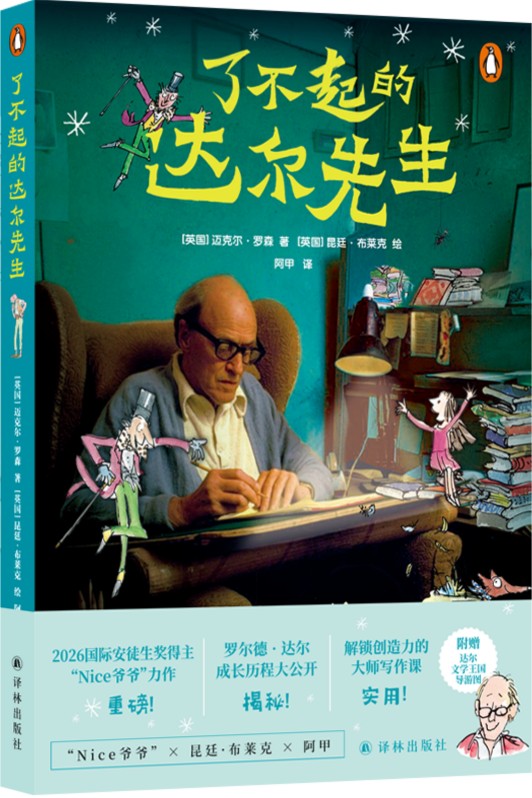
In the biography of Roald Dahl written by British children’s book author Michael Rosen, *The Great Mr. Dahl*Fantastic Mr. DahlThe opening section records a short poem that Dahl held as his lifelong motto:
My candle burns at both ends;
It will not last the night;
But ah, my foes, and oh, my friends –
It gives a lovely light!— Edna St. Vincent Millay
My candle is burning at both ends.
It ultimately wouldn’t last until dawn;
But oh, my enemy, my friend—
It emits such a mesmerizing light!
—Edna Saint Vincent Millais (Translated by A‑Jia)
This short poem, only four lines long, is quite spirited. It first admits: burning at both ends like this, the candle won’t last long. Then it abruptly changes its tone: But look how enchanting this light is!
It seems fitting to place it in front of Dahl’s book. The man who wrote about the chocolate factory, the giant peaches, and the BFG certainly doesn’t resemble a proper, slowly burning candle.
However, tracing the author’s name leads to an interesting question: this poem is by an American female poet with strong feminist views. Why did Dahl choose it? (Because a significant portion of the complaints against Dahl concerns his “anti-feminist” tendencies!)

Listen first, who’s saying “my candle”?“
Millais’s poem, “First Fig,” was included in her 1920 poetry collection. A Few Figs from ThistlesThe book could be translated as “Picking Figs from Thistles.” Three years later, she won the Pulitzer Prize for Poetry.
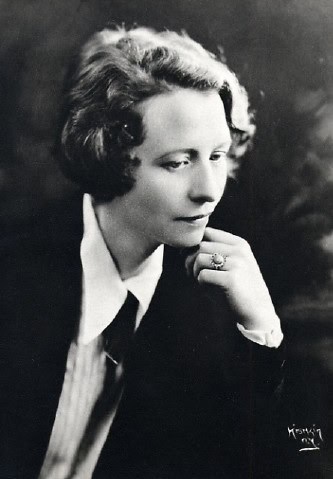
This collection of poems attracted attention at the time, largely due to its bold expression of female desire and autonomous life. The American Academy of Poets’ author introduction also specifically mentions its feminist aspects.
Of course, these four lines alone do not mention “woman” nor directly discuss gender equality. To understand their meaning, the poem must be placed back into the context of Millais’s work and his era.
What’s noteworthy is the word “my” at the beginning.
My candle—I know how it burns, and I know the price that comes with it. Enemies may disapprove, friends may worry, but the speaker must still point out to everyone the light it emits.
If you ask a young woman who is expected to be docile, restrained, and considerate of others to say these words, the challenge they carry is not hard to hear. “How I choose to live, can I decide for myself?” This is where I see the connection between this poem and female autonomy.
Moreover, the poem wasn’t at all bitter or resentful. A few exclamations like “But,” and “Oh,” even carried a touch of playfulness. She knew perfectly well what others would say in their words, yet she smiled and accepted their response.
Such a voice could certainly move a male reader.
As for where Dahl first read it and why he chose it as his motto, the available materials are insufficient to provide a definitive answer. Liking a poem by Millais does not prove that he agrees with all of the poet’s ideas. What we can do is place these four lines alongside his life and works, and see how they reflect each other.

Even if an experience is legendary enough, someone still needs to turn it into a story.
Dahl’s experience certainly makes one think of “burning at both ends”.
In 1939, he joined the Royal Air Force. The following year, his plane made an emergency landing in the North African desert, caught fire, and he was seriously injured. After treatment and recuperation, he returned to the cockpit and participated in combat over Greece.
Later, he was assigned to Washington as an assistant air force attaché, where he also participated in wartime propaganda and intelligence work. If the camera were to stop here, it would already resemble the opening scene of an adventure movie.
What interests me more is what happened next: how did those experiences become part of his story?
There’s a great example in *The Amazing Mr. Dahl*. Pilots often blame plane malfunctions on a mischievous little creature called an “airplane sprite.” These little things hide inside the plane and cause trouble. Dahl heard this, remembered it, and talked about it with his companions as they traveled, gradually turning it into stories.

This detail is much more specific than saying “a genius writer has a rich imagination”.
It turns out his imagination did have its sources: a joke from someone else, a slang term, casual conversation during a journey. Once it reached him, the story would unfold—Where do these little elves live? Why do they cause trouble? Do they have wives and children?
Michael Rosen is a master storyteller himself, so he knows exactly where to lead us. While legendary experiences are certainly compelling, he also wants young readers to see how a person listens, remembers, and transforms what they hear into their own story.
Some light comes from places that are hard to describe.
Dahl’s family life also suffered a series of devastating blows.
In 1960, his four-month-old son, Theo, was in a car accident and suffered a severe head injury, later developing hydrocephalus. Dahl participated in his son’s treatment, collaborating with engineer Stanley Wade and neurosurgeon Kenneth Thiel to develop a drainage device. It later became known as the “Wade-Dal-Thill valve”.
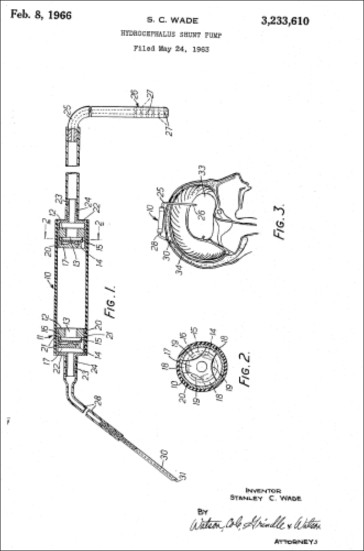
In the book, Rosen mentions a detail that is easily overlooked: when the device was made, Theo’s condition had already improved, and he did not need it; but later, thousands of other sick children received help.
A father, eager to do something for his own child, ended up helping someone else’s child. This turning point is powerful enough; there’s no need to glorify him as an omnipotent hero.
In 1962, his seven-year-old daughter Olivia died from complications of measles. This time, Dahl could not save her.
It’s also difficult to connect this to the phrase, “So he turned his grief into strength.” Rosen writes that Dahl had long suffered from depression. He tried to understand the circumstances of his daughter’s death and later spoke out for the cause of measles vaccination for children. But these actions did not mean that the grief was over.
Reading this, you’ll better understand why I appreciate Rosen writing this biography. The author of *The Book of Grief* also experienced the pain of losing a child. In writing about Dahl, he describes the shared grief, anger, and confusion they faced. The biography pauses here, showing us that even someone who could write magic had moments of helplessness.
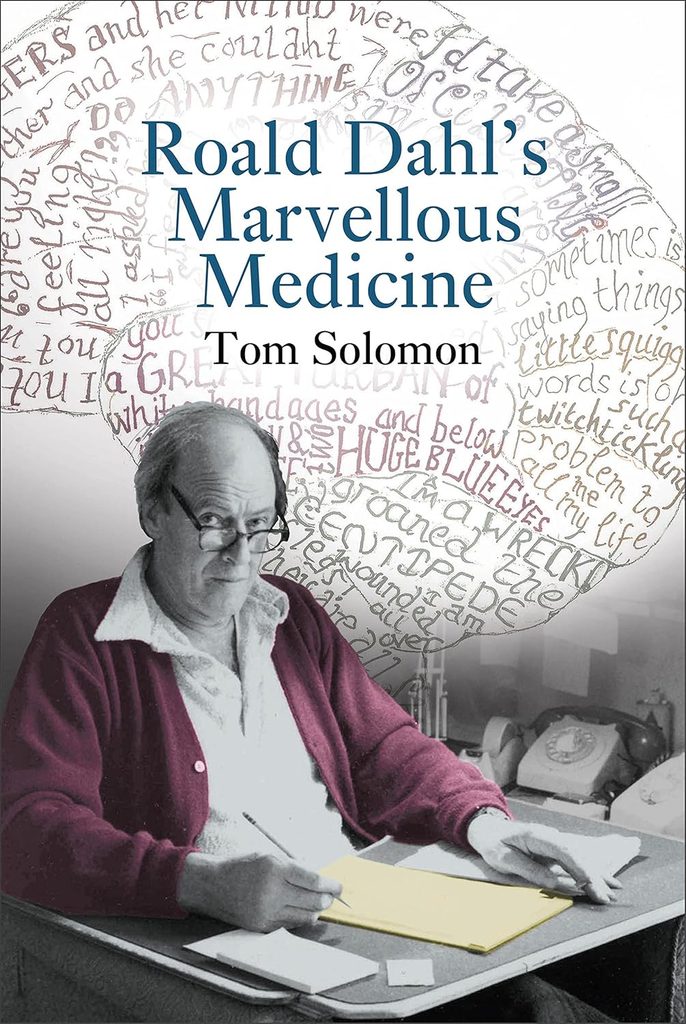
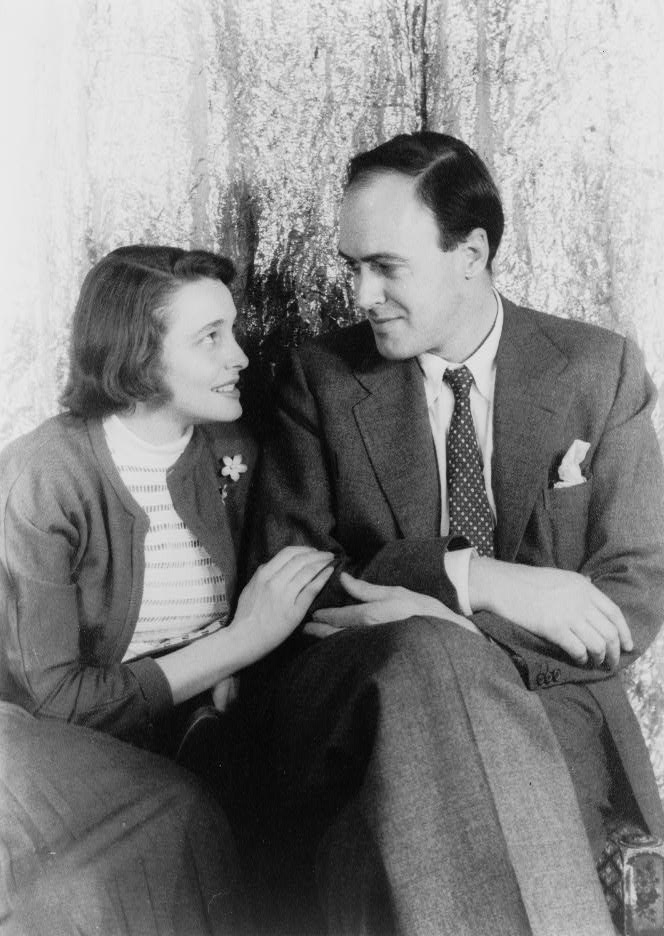
Years later, when his wife Patricia Neal fell seriously ill, Dahl devoted himself to her rehabilitation. He arranged very rigorous training, and Neal eventually returned to the entertainment industry. But to simply portray this experience as a “miracle by a strong husband” would obscure Neal’s own arduous efforts and the complex feelings within the relationship.
Biographies written for children and biographies aimed at adults that delve into marriage and character each have their own priorities. When reading Dahl, I am willing to consider these different narratives together. The word “remarkable” can encompass admiration, but it should also allow for further inquiry.
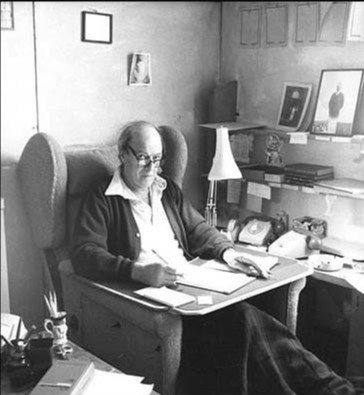
Even someone burning at both ends has to sit down and revise their manuscript.
Having recounted these ups and downs, returning to the writing hut in the garden feels all the more interesting.
A pencil, a yellow notepad, and a chair modified to accommodate his injured back. Dahl sat there, writing stories.
Based solely on the phrase “burning at both ends,” we might imagine him working day and night, unable to stop once inspiration strikes. However, Rosen’s daily life, as depicted, follows a rather fixed rhythm: Dahl writes during his usual hours and spends the rest of his time doing other things and finding enjoyment.
He also kept a notebook to catch those ideas that he might forget in the blink of an eye. A strange scene, an interesting saying, he would jot it down first; when he didn’t know what to write, he would flip through it again.
As I mentioned in the translator’s afterword, what I find most hard to let go of in this book is Rosenken’s masterful storytelling.

He will lead readers to ponder: how Dahl exaggerates, how he whets the appetite, and how he makes us stand on the side of the bullied child. Reading *James and the Giant Peach*, why do we so eagerly await James escaping those two horrible aunts? Reading *Matilda*, why do we feel both afraid of the headmaster and unable to resist laughing?
As a child, I was engrossed in reading these books, and as an adult, revisiting them to see how the authors achieved this still brings just as much enjoyment.
For children already captivated by Dahl, this book allows them to discover new things within familiar stories; for adults reading with their children, it provides a great starting point for conversation. There’s no need to rush into discussing “writing techniques”; simply ask each other: Why does this passage particularly make you want to continue reading?
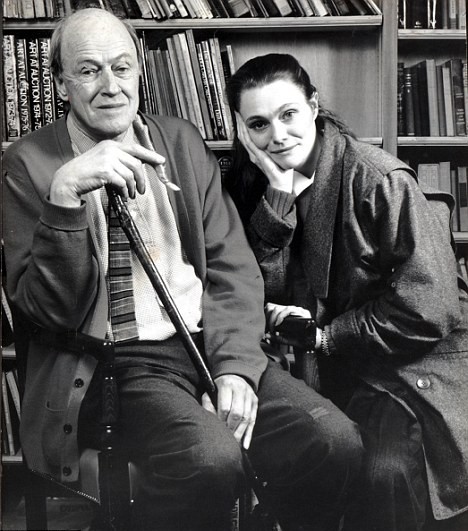

Let’s go back to that little bit of light.
Dahl also brings stories from the page into real life.
Not content with telling his granddaughter the story of the kind-hearted giant, he actually climbed a ladder and peered into the upstairs bedroom window—to let the child listening to the story meet her own “giant.”
Rosen wrote about this in his book and asked young readers to imagine: How would you feel if you were lying in bed on the second floor and your grandfather suddenly peeked in through the window?
I love this scene. The tall Dahl, climbing a ladder, is diligently working on a story.
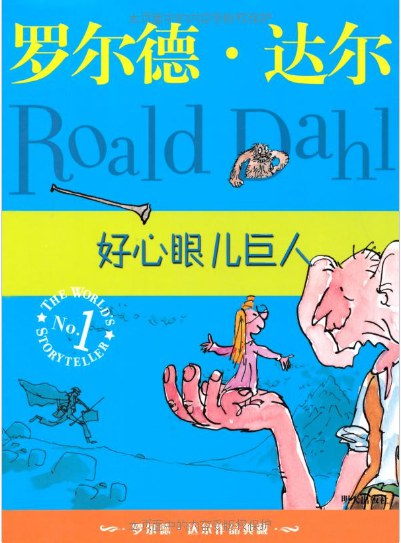
Rereading Millais’s poetry, I think Dahl might appreciate its restless spirit and playful nature, its tendency to quip off to both friends and enemies. Of course, this remains a reader’s speculation. That candle cannot explain his entire life.
But it’s perfect to place it at the beginning of the book, reminding us to read on with curiosity.

If you and your children have already explored the world of the chocolate factory, the giant peach, or Matilda’s world, why not pick up *The Fantastic Mr. Dahl* again? This time, let “NICE Grandpa” Michael Rosen guide you through how those captivating stories came to be.
After reading this, you might want to take out an idea book.
Just jot down this thought for now.

[Appendix: Grandpa Nice’s response to Dahl’s so-called “anti-feminist” tendencies]
In the book, Rosen shows how Dahl refuted these criticisms:
- Emphasizing the coexistence of “good” and “evil” women in the work.When Dahl clashed with critics, he made it clear that his books featured both terrible and kind women, and asked rhetorically, “Aren’t all children’s stories like that?”
- Using exceptionally outstanding female characters as counter-evidenceRosen noted that Dahl and his supporters encouraged readers to pay attention to powerful women. For example,The wise and loving grandmother in “The Witches” and the brave and kind little girl Sophie in “The BFG” are both extremely intelligent and gentle female figures..
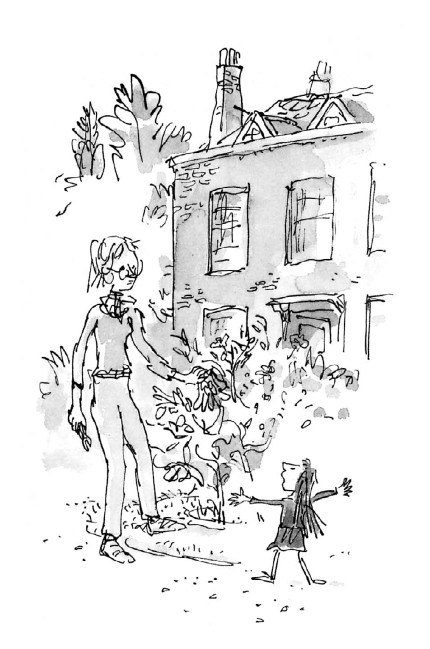
- Further evidence was provided through later works.Rosen added that Dahl’s later work, *Matilda*, continued this portrayal of beautiful women. In this book, he further created…The genius girl Matilda and the kind and gentle Miss Henny.
It’s clear that Rosen’s handling of this controversy is somewhat similar to his previous treatment of racial bias in his work. He didn’t try to ignore the criticism, but rather…It guides readers to view the multi-dimensional group of characters in Dahl’s works in a comprehensive way.This proves that while Dahl exaggerated the “evil” side of certain women, he also poured great emotion into praising those female characters who were full of wisdom, love and rebellious spirit.