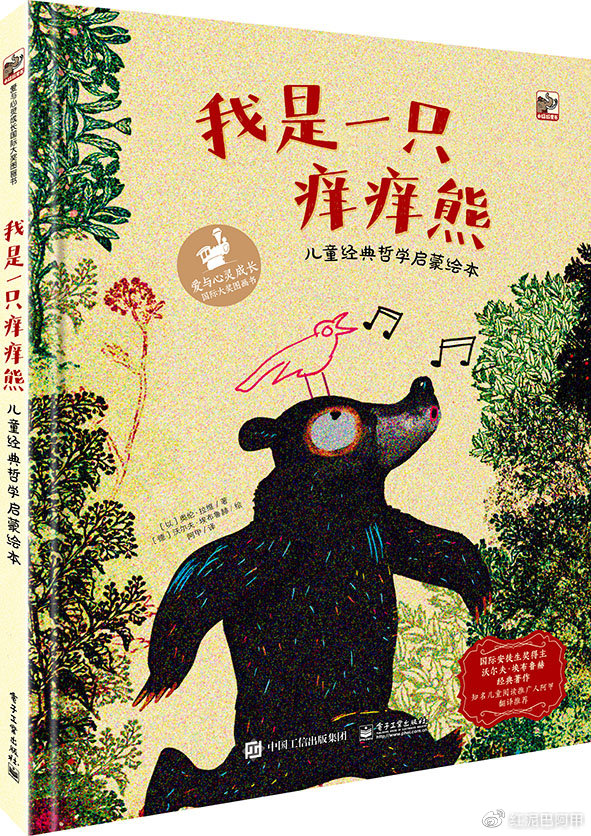
 Cover of “I Am an Itchy Bear”
Once upon a time, there was an itchy person.
It’s not a severe itch.
It’s not just a minor itch.
It’s a bit itchy.
I feel an itch and want to scratch it.
Once upon a time—
After a while, probably…Once upon a timeAdd another 15 minutes,
When Yangyang saw a tree, she started rubbing herself against it.
Then, something very strange happened:
The itching started to spread. Honestly,
The more you scratch, the bigger the itch gets…
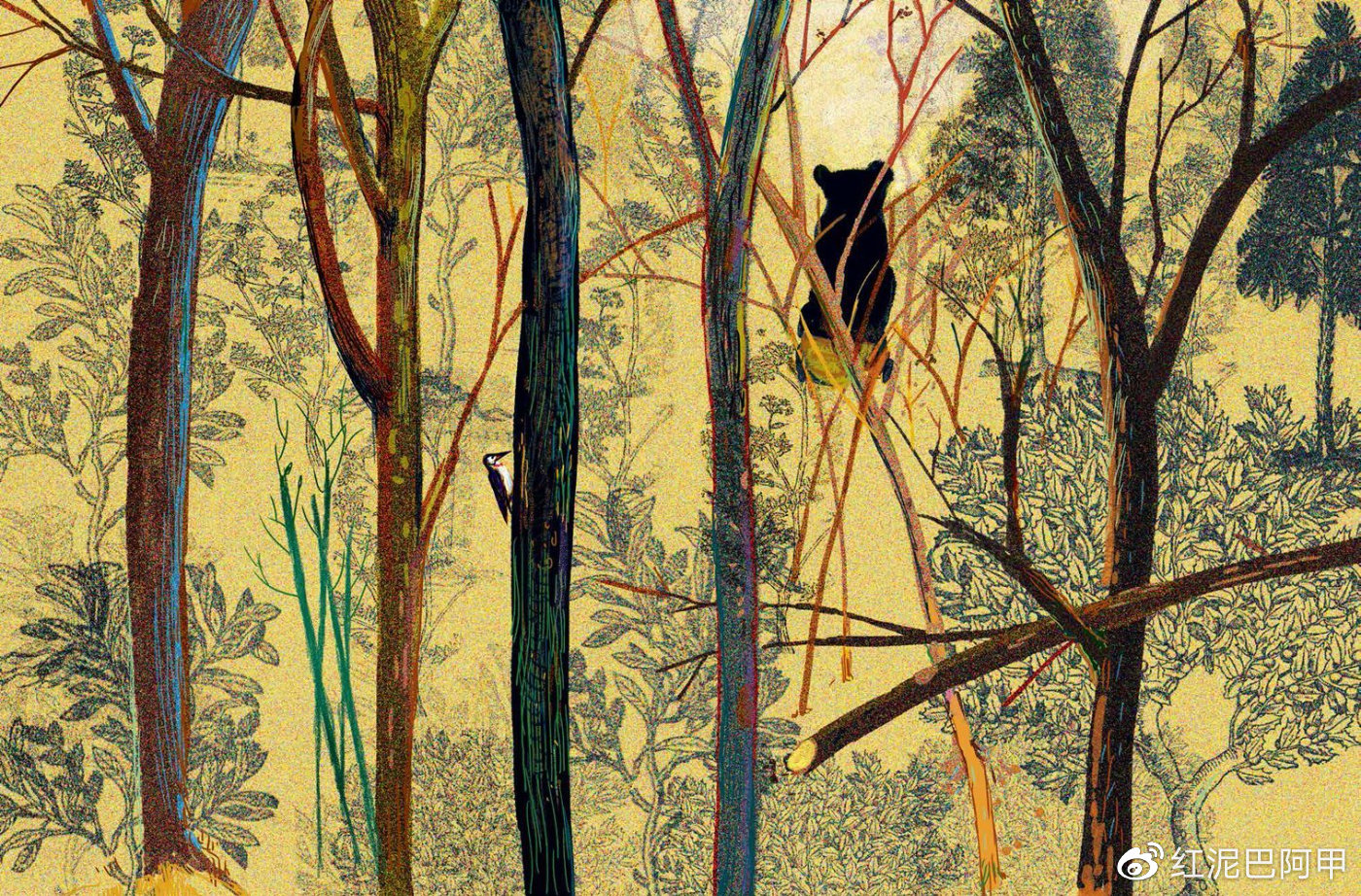 The captivating interior illustrations of “I Am an Itchy Bear”
Initially, I accepted the translation of this book without hesitation, entirely because of the illustrator, Wolf Ebruch. This master, a recipient of the Hans Christian Andersen Award, had already captivated me with “Who Pooped on My Head?”, and I love almost every book he illustrates. He always manages to touch upon profound themes while handling them with remarkable humor, presenting the characters vividly and creating stunning visuals. This book about a bear and a magical forest is equally captivating. The bear is comical, the forest possesses an ancient mystique, and the other animal characters are endearingly goofy. To be honest, I loved it even before I fully grasped the story’s plot.
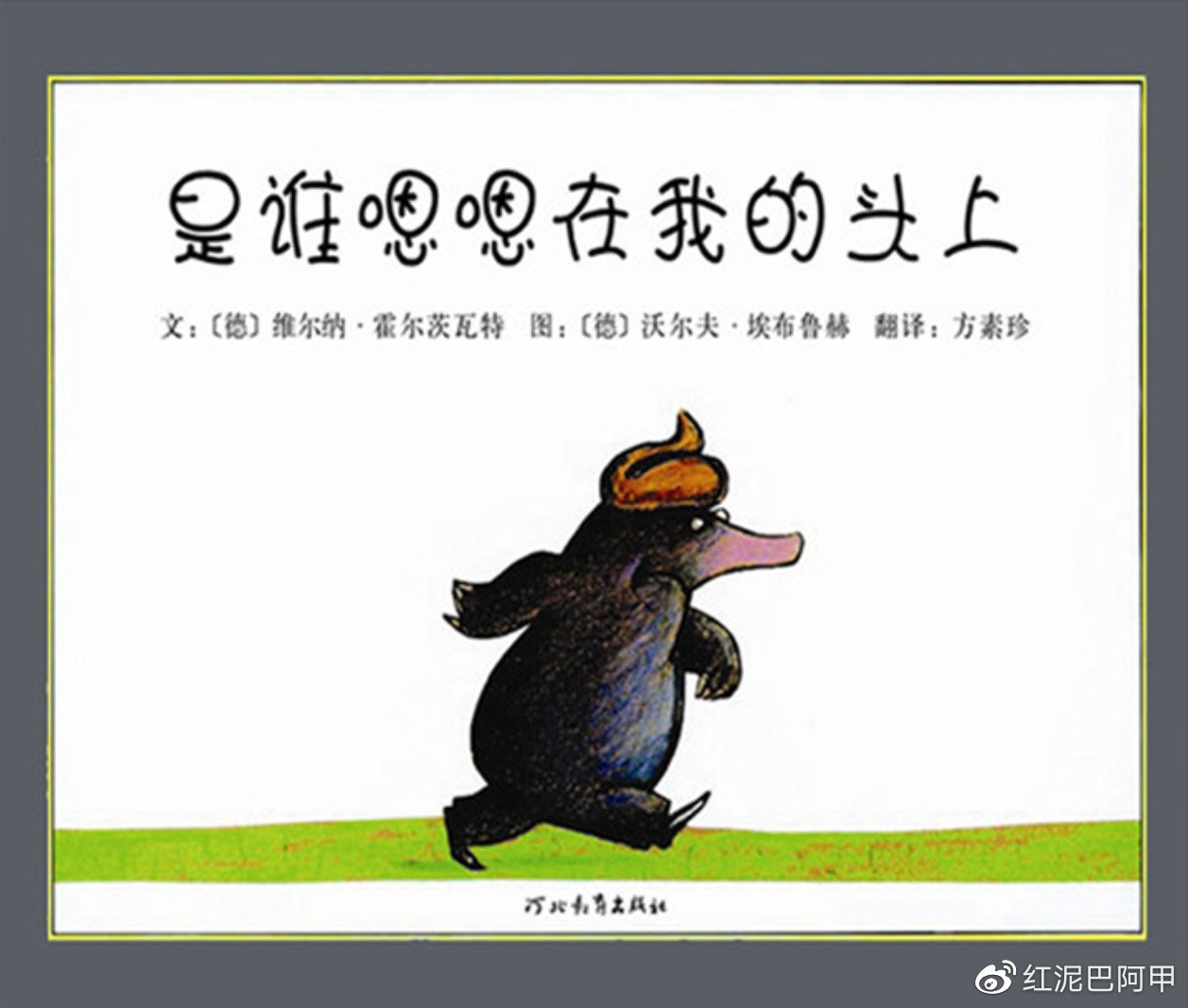 The cover of “Who Pooped on My Head?”
 Wolf Erbruch
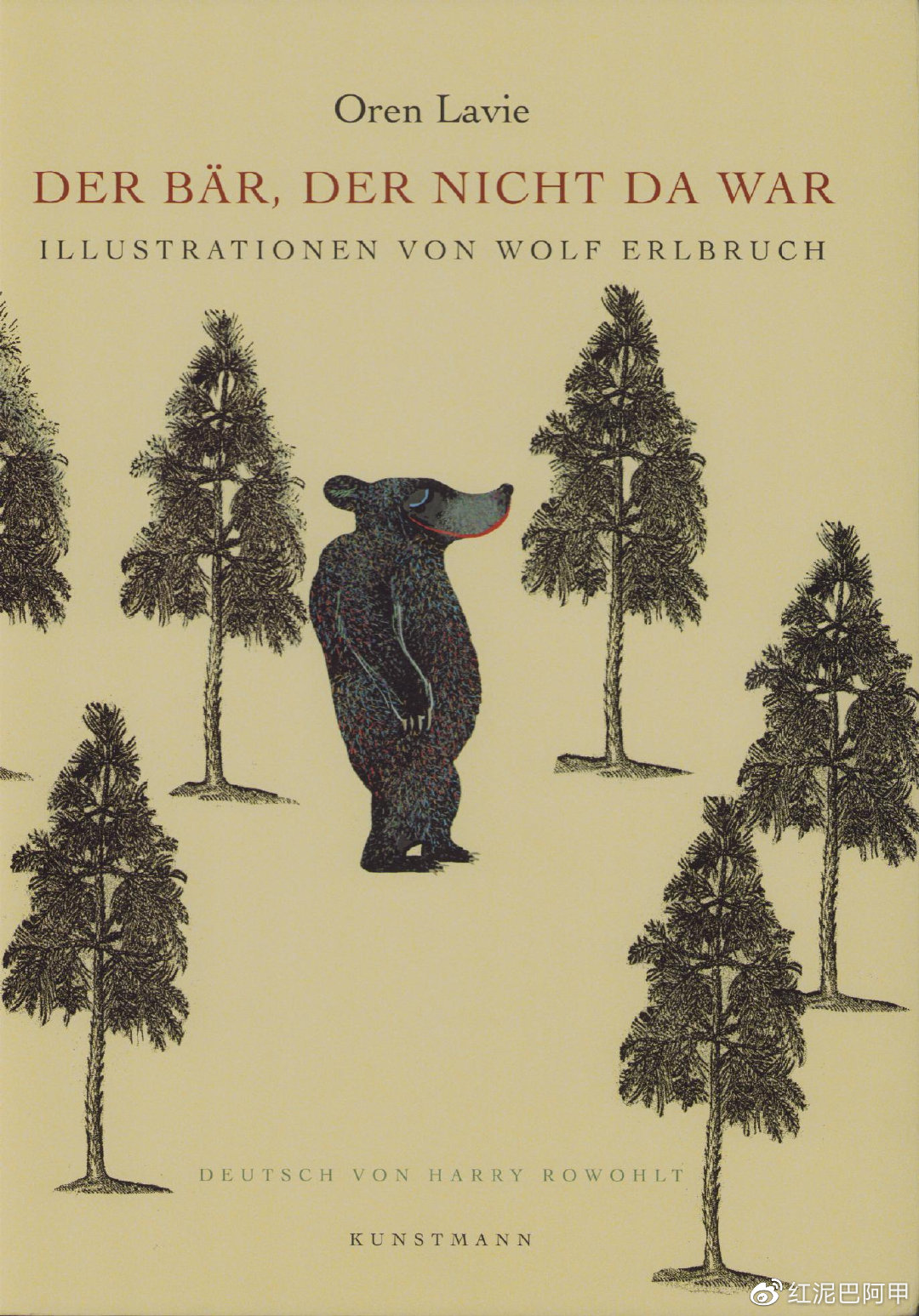 German version title page
The translation preparation encountered a minor mishap. Since this book was first published in German in 2014, even though I had the 2016 English version on hand, I still put in considerable effort to transcribe the rather lengthy German text. Because I was concerned that the English version, serving as an interim translation, might lose some of the original meaning during the translation process, I decided to primarily rely on the English version, but also consult the German version (using various translation software for comparison). Only after comparing them did I discover:First, the English version is very close to the English translation from the German version; second, the English version is the original version, while the German version is actually a translation!
 Oren Lavie
»> Oren Ravi Douban Music Link
—It turns out that the author, Oren Lavie, is an Israeli born and raised in Tel Aviv. He is a musical prodigy who later studied and developed his music career mainly in the UK and the US. Therefore, he wrote in English, and this book published by the German publisher is his first picture book!
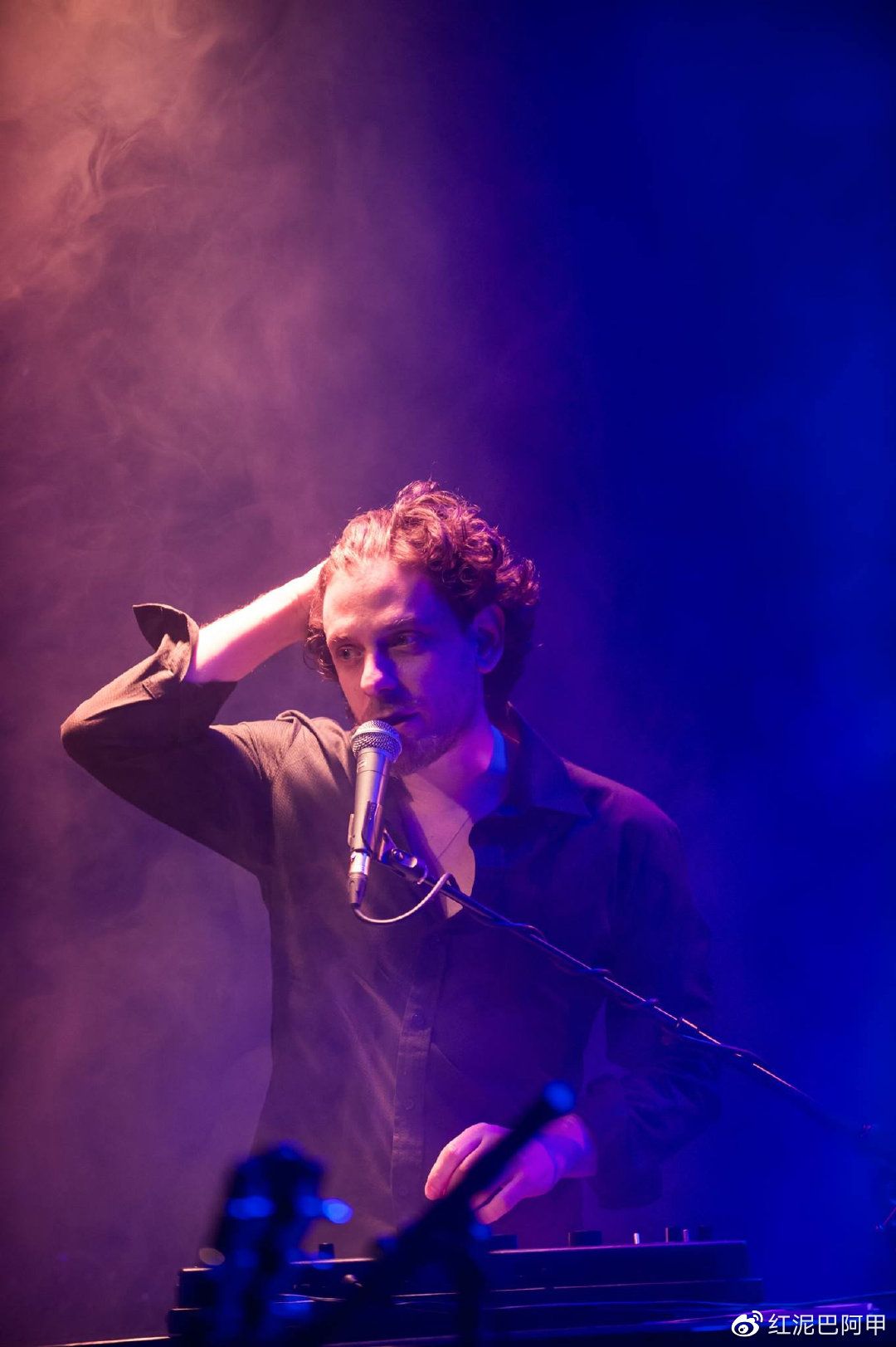 Oren Lavie
I later learned that I wasn’t the only one confused. The renowned American book review magazine *Kirkus Reviews* wrote in its review of the book: “A lengthy picture book discussing existential dilemmas… but it seems impossible to determine whether it’s truly absurd. Since the book was originally published in German, perhaps something was lost during the (unattributed translator) translation process?”—This shows that the reviewer was actually quite confused about the book’s content. The reason the English version “didn’t attribute a translator” is because there was no translator at all; the author wrote it in English, and his own English songs, which he composed and sang, even won major awards in the United States.
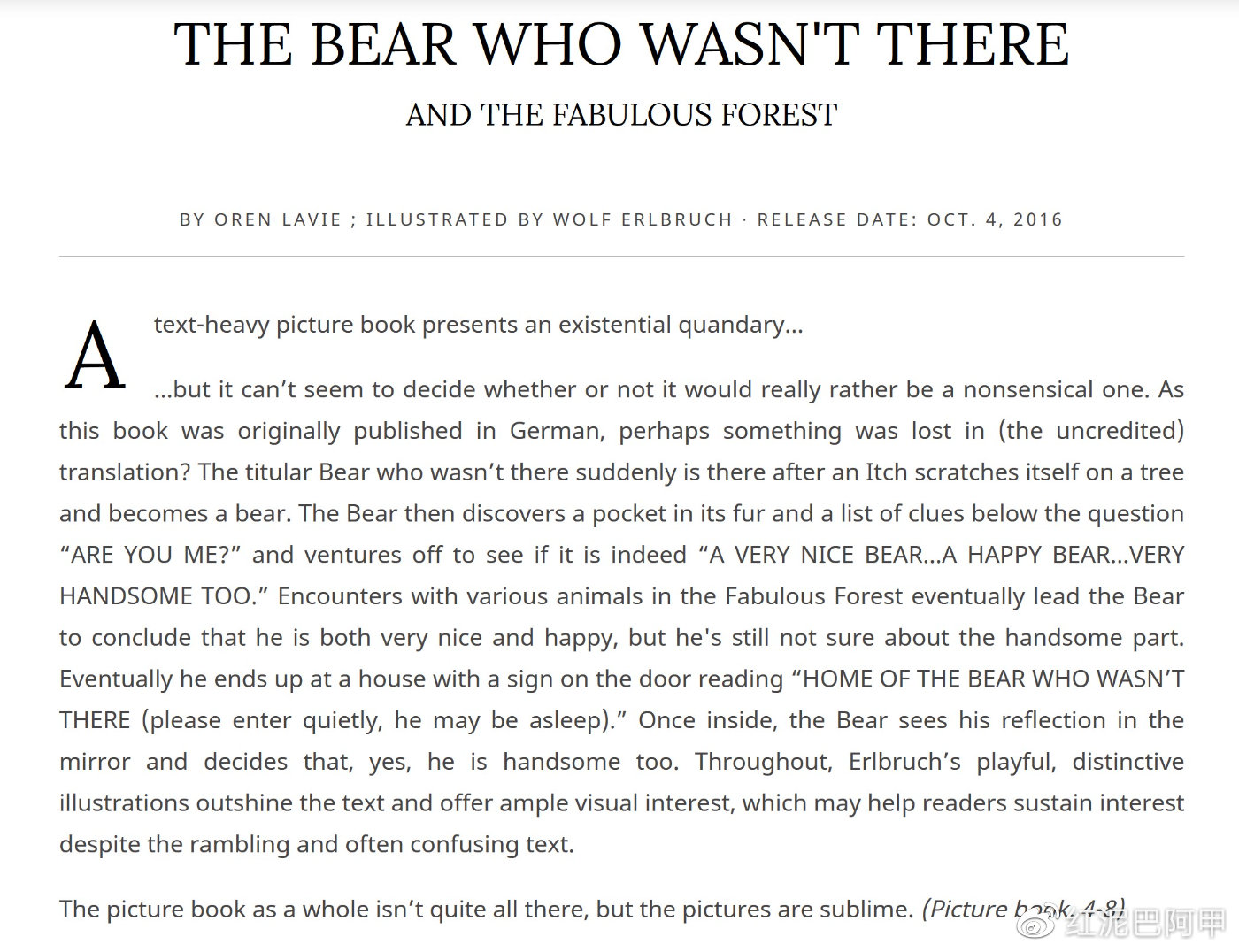 Screenshot of Kirkus book review for the English version of “I Am an Ivy Bear”
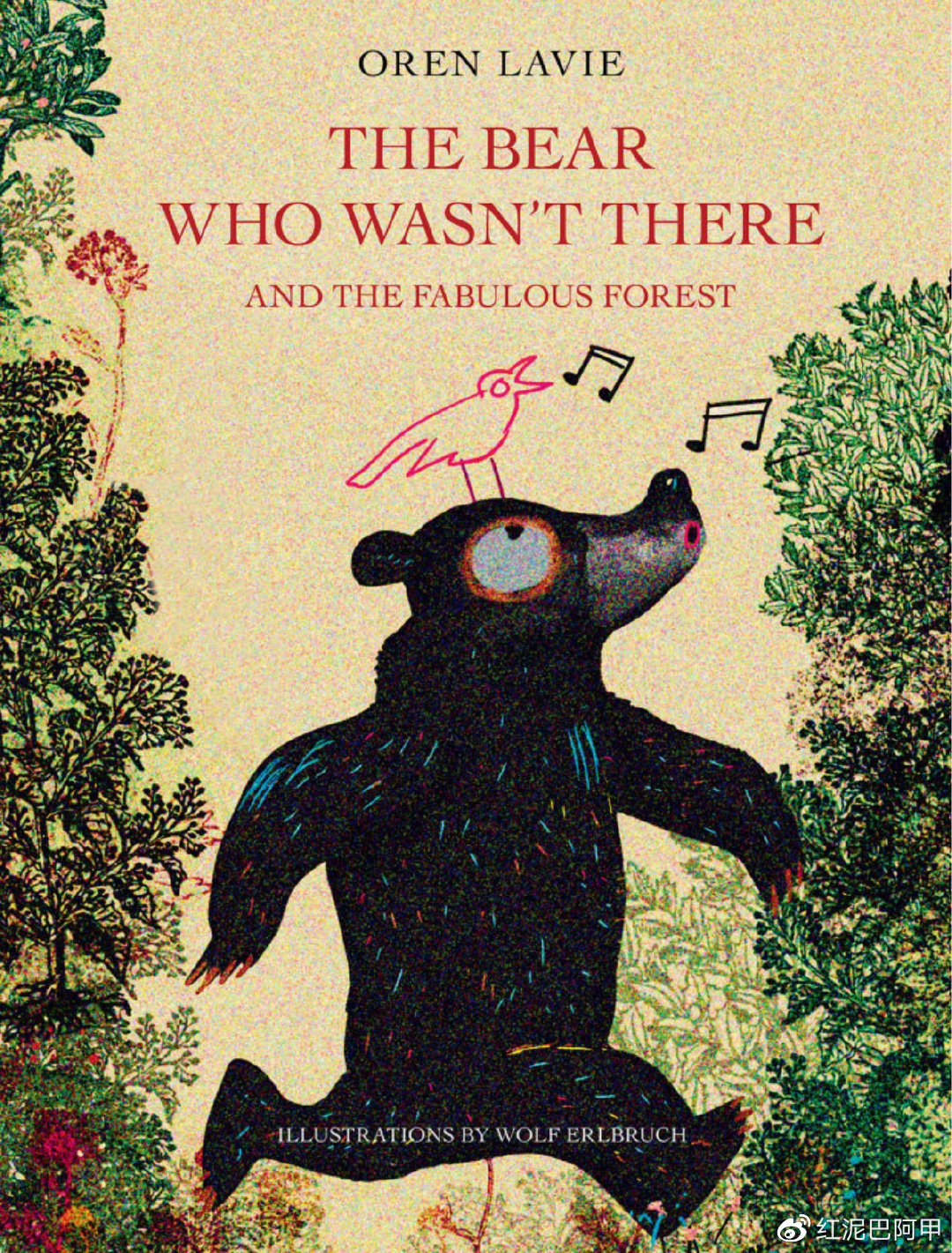 English version cover
I think the reason this book has confused some readers (and even critics) is mainly because its expression goes beyond the usual usage of language. The author fully utilizes the polysemy of language, using seemingly silly expressions to discuss profound philosophical topics. For example, the logic behind the creation of a bear from a particularly amusing scene at the beginning is a bit strange:First, there was an itch, and the itch wanted to be scratched. Then, it saw a tree, rubbed itself against the tree, and that’s how it turned into a bear.But it means:
A. Itchy is a bear, and bears love to scratch themselves, so this is a bear named Itchy; or—
B. Itching makes it want to scratch, so it kept scratching and eventually turned into a bear.(Actually, his name isn’t Yangyang)?
Literally, the direct translation is “When they are bears, an itch will scratch an itch,” and the German wording is similar, however…““yes””This word, on a philosophical level, is also““exist””The meaning of this is discussed at the beginning of Heidegger’s *Being and Time*. From the context of the story, it can also mean:
C. When they exist as bears, they scratch when they feel itchy.
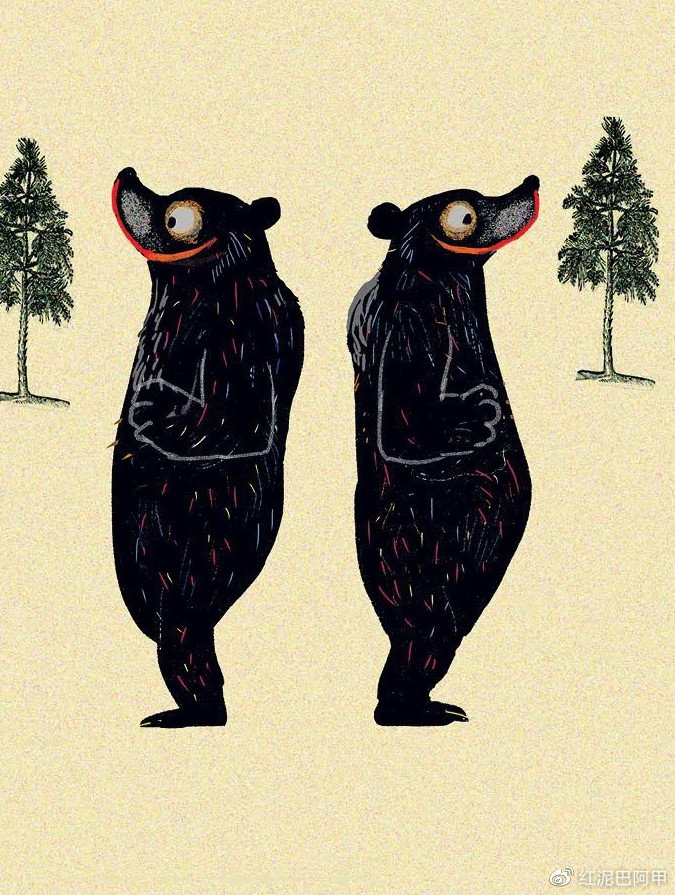
That’s why what happened next: “The more you scratch, the more you look like a bear.” Because there wasn’t a bear there originally, and it wasn’t a bear, the scratching created one. This bear was a…An unprecedented Utopia bear!
The next question is, how does Wuyouxiong (or Yangyangxiong) prove that ““I am who I am.”“What? In other words, how does the ‘Nowhere Bear’ (or ‘Itchy Bear’) prove its existence? The story provides three clues out of thin air, which the bear needs to confirm—”
1I am a very good bear;
2I am a happy bear;
3I am a very beautiful bear.
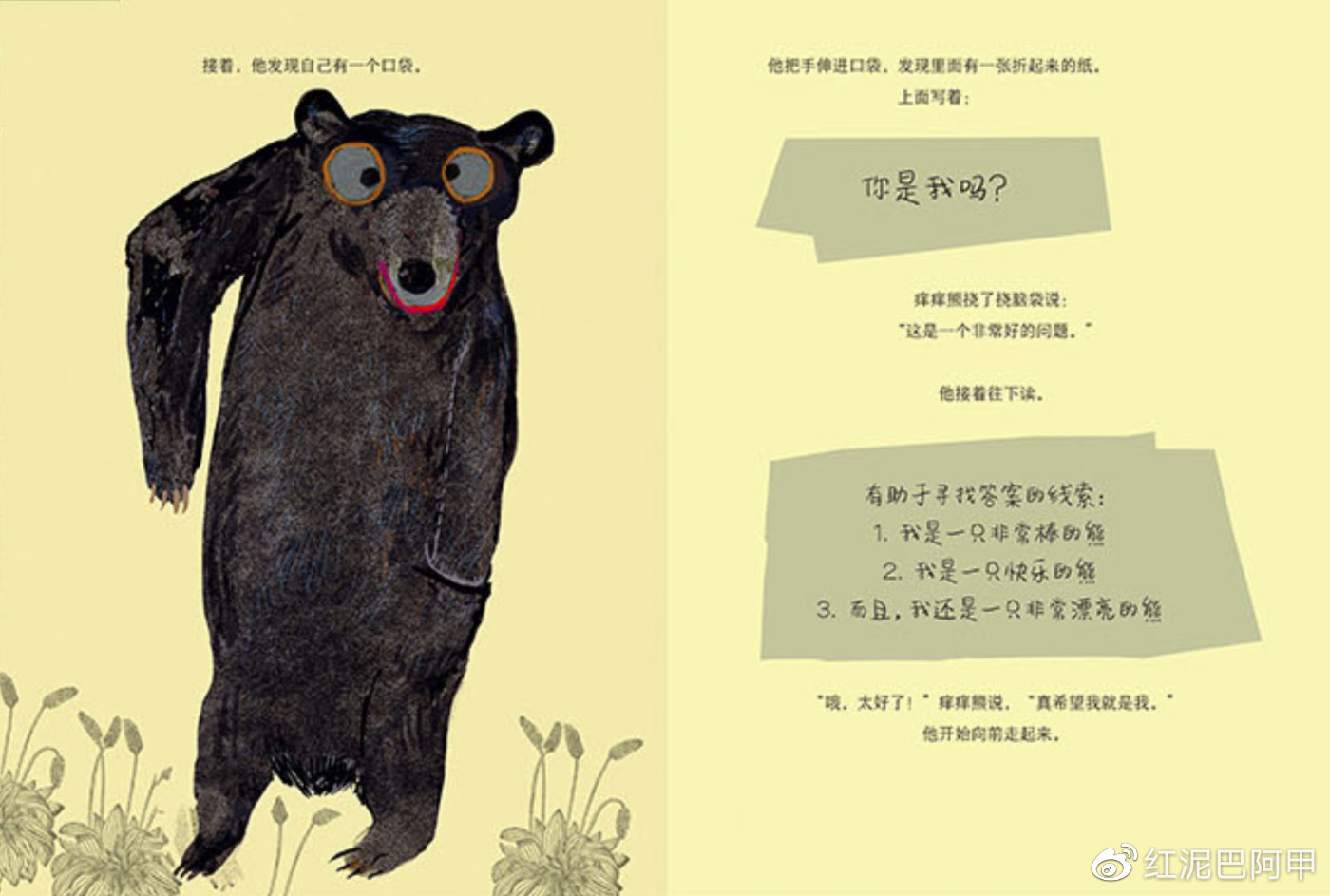
Only in this way can it be proven““I am who I am.””The three sets of keywords are: very nice, happy, and handsome, which could also be translated as “very kind, happy, and handsome (very dashing).” However, the Chinese word “kindness” carries too strong an ethical connotation and doesn’t seem suitable here. Anthony Browne’s *My Mum* also uses “nice” to describe his mother, and translating it as “great” would be more appropriate than “kindness.” “Handsome” and “cool” are specifically used to describe boys. Although the author uses the masculine “he” in the story, I think choosing the more neutral “pretty” is more in line with the author’s intention, since half of the young readers are girls!
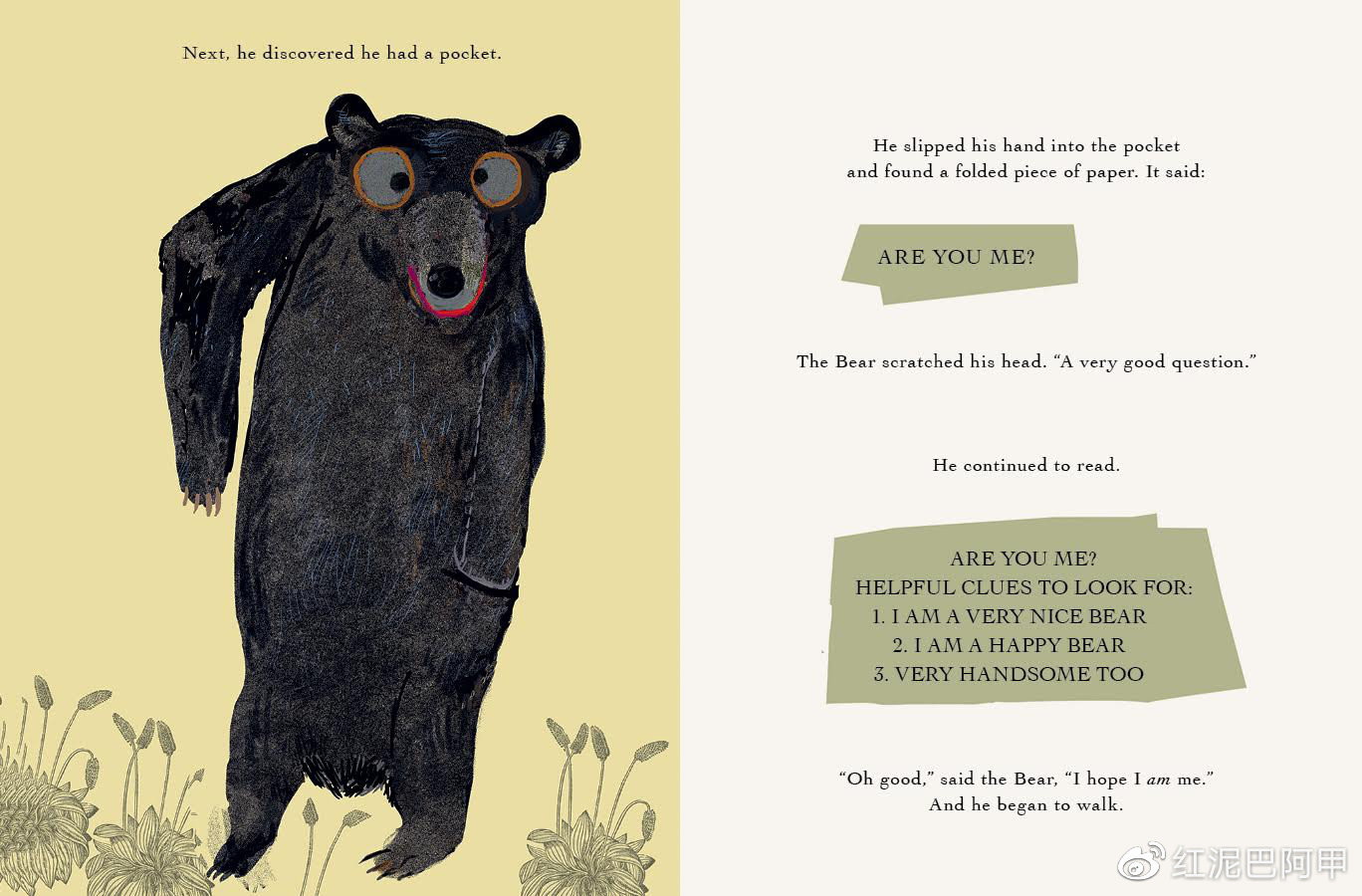
The author seems to offer three essential characteristics—“great, happy, and beautiful”—as proof of the bear’s existence; if these characteristics are met, it exists; if not, it doesn’t. Thus, the UFO Bear (or Itchy Bear) embarks on a journey of verification, a journey tinged with absurdity. For example, the growth of the magical forest seems to revolve around the bear, continuing to grow even when its eyes are closed, but…““The more you see, the less you know whether the trees and flowers were growing when you weren’t looking.””This seemingly illogical adventure is quite similar to Alice’s Adventures in Wonderland. The comfortable cow, the lazy lizard, the penultimate penguin, and the tortoise taxi that the bear encounters are also quite similar to the various creatures Alice meets in Wonderland. They speak incoherently, but their dialogues are full of hidden meanings and are very enlightening if you think about them carefully.
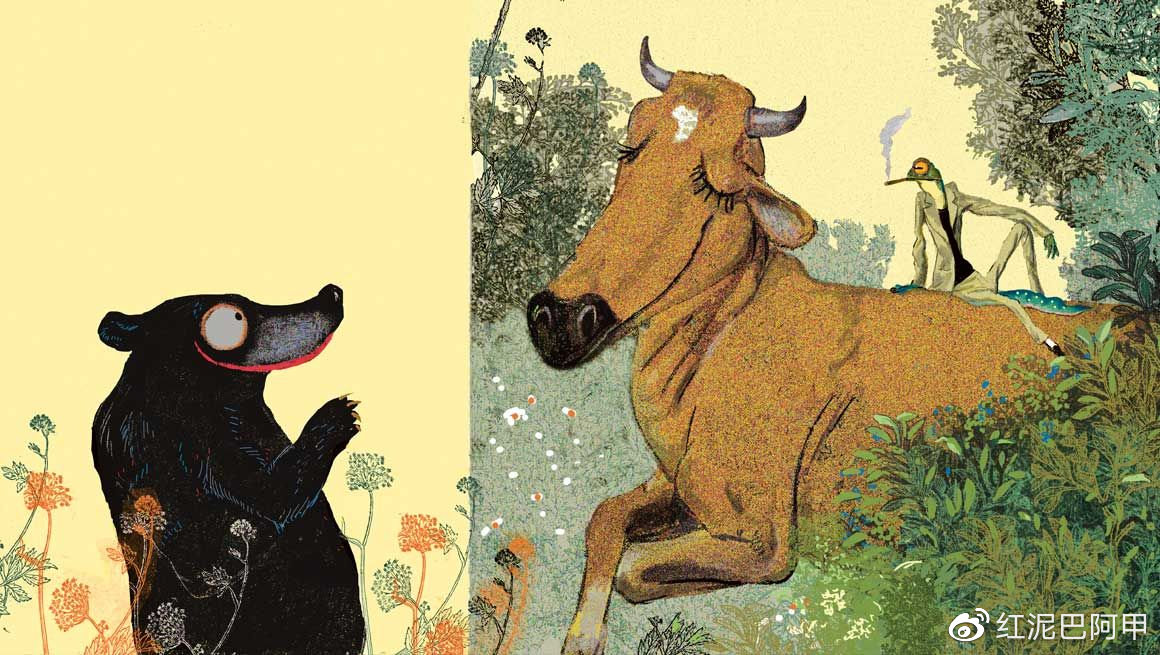 Itchy Bear with Comfortable Cow and Lazy Lizard
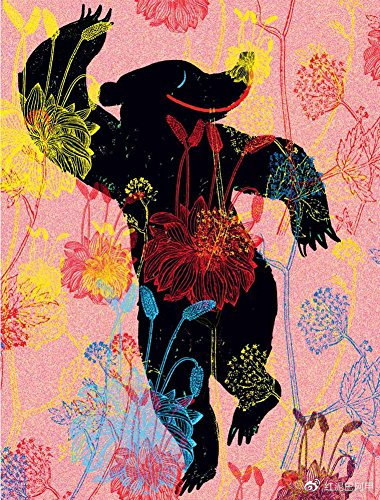 A bear dancing gracefully among the flowers
My favorite part is the dialogue between Ubiquitous Bear (or Itchy Bear) and the second-to-last penguin, borrowing from Fromm’s perspective in “Possession or Being.“Bears and penguins seem to represent two different ways of life: the former values existence, while the latter values possession.Let’s take the example of a bear counting flowers. The bear counts randomly and then happily announces, “There are exactly a few flowers there.“beauty“The flower”, and that one not only needs to thinkeverythingWe still need to think about it.NothingThe penguins firmly believe that “beauty isn’t a number,” and that there are “exactly 38 flowers” there—just remember the number. But for the bears…Beauty is “a special number used to count flowers.”“Because smelling flowers is more enjoyable than counting them—by comparing attitudes, the bear proves that it is happy!
In reality, Wuyou Bear (or Itchy Bear) didn’t need any proof in the conventional sense. His journey was less about proving something and more about experiencing and confirming his own feelings. The Comfort Cow told him, “You’re the best bear I’ve ever seen,” to which the bear replied, “I just feel that way.” The penguins’ boredom, in turn, highlighted the bear’s joy. And finally, the bear saw himself in the mirror of the treehouse—did he discover himself first, or did he first see a very handsome bear? Regardless, the bear recognized himself and confirmed his belief.“I am who I am.”Thus, it was perfectly proven.One’s own existence.

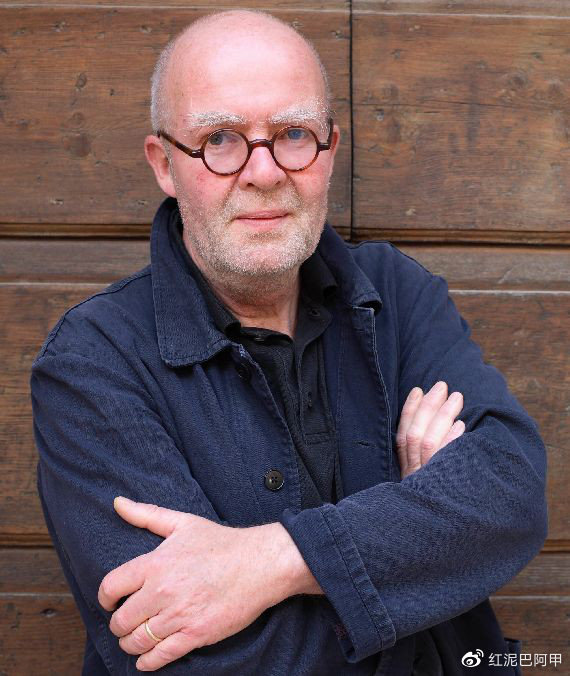
An Israeli musical prodigy and a German illustrator collaborated to create this unique story. Leaving aside the philosophical topics and proofs, it remains a very lighthearted and humorous tale. However, if adults are willing to engage children in thought-provoking discussions, they might discover that children possess strong analytical skills and are perfectly capable of engaging in “philosophical” games.
For Utopia (or Itchy Bear),Does one need to first meet the characteristics of “I am great, I am happy, I am beautiful” to become a bear, or does one choose to confirm that they are “great, happy, and beautiful” after becoming a bear?
or,Returning to the individual—do I need to meet the characteristics of being “great, happy, and beautiful” before I can be who I am?
still,If I accept that “I am who I am,” then I am a “great, happy, and beautiful” being.
There’s no standard answer to this question; it’s simply a choice. What would you choose? What would your child choose?
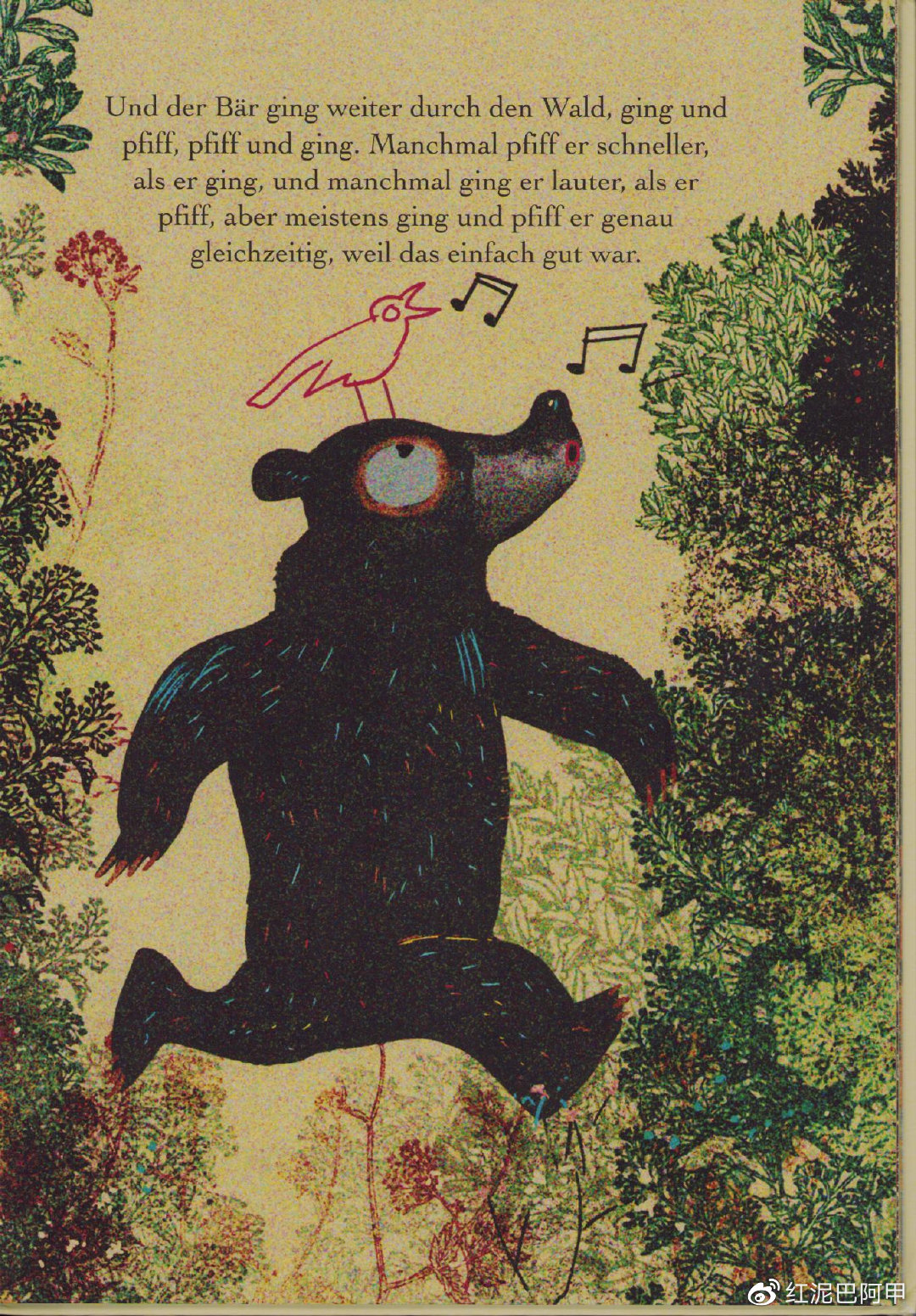 German edition inner pages