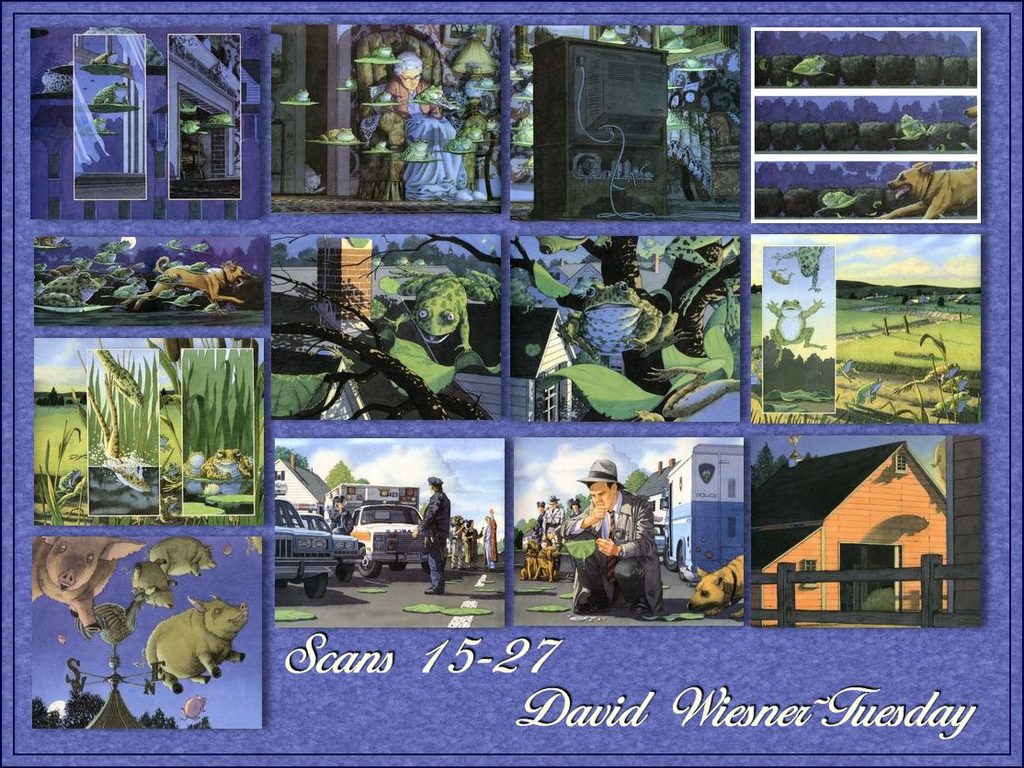
Last time, we did a “speed read” of David Wiesner’s masterpiece, *Tuesday*, a work by the master of wordless books.This time, I’ll try to explore more of the stories “behind” this book.
In the previous episode, I tried to tell the story of this book, roughly describing part of the story I saw in the illustrations. As a nearly wordless picture book, everyone is likely to see different things. David Wiesner said in an interview that he has received a lot of feedback from readers, and what readers discover sometimes surprises him. Artists often rely on instinct and intuition when creating; they may not be thinking much about it, but readers may read things that the artist himself is not even aware of. This is normal. When we read, we often see ourselves, projecting our own life experiences and inner feelings onto the work.
Okay, let me first talk about why David Wiesner wrote this book, Tuesday, and why he made frogs fly.
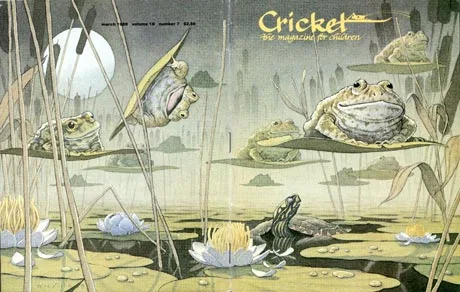
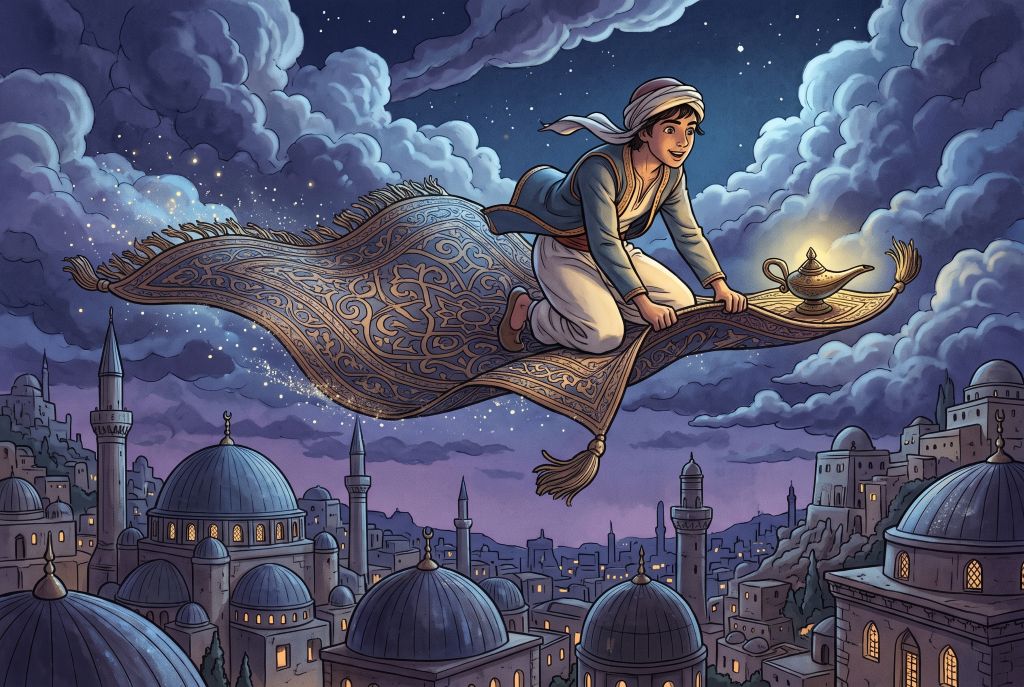
The immediate cause was actually a coincidence. A children’s literature magazine called *The Cricket* asked him to design a cover, and the magazine’s design director gave him free rein. It was March, coinciding with St. Patrick’s Day, whose main color was green, and the frog was a common motif. Perfect! He decided to draw a frog! So, he drew a frog sitting on a water lily leaf, but the leaf looked suspicious—it looked like a flying saucer! Okay, he remembered the various science fiction movies he’d watched as a child, like *Forbidden Planet* and *The Day the Earth Stood Still*, classic blockbusters with flying saucers. And then he had the frog sitting on a water lily leaf flying—didn’t that remind him of Aladdin’s magic carpet from *One Thousand and One Nights*?
In his magazine cover illustration, set against a backdrop of a pond on a full moon night, there are water lilies, a frog taking flight on a lotus leaf, and a terrified turtle… The next question is: Why do frogs fly? Where are they flying to? And then what? And then what?… To satisfy this curiosity, David Wiesner illustrated this book, Tuesday.
So, the real question is, why did David Wiesner tell this frog story, and almost entirely through pictures? The story seems fantastical, but it doesn’t seem to have much educational value. What lesson is he trying to teach children? That’s the crux of the matter.
David Wiesner didn’t intend to preach any moral lessons in this book; he simply wanted to create a book he’d always wanted to read as a child, a book that was exceptionally fun and hadn’t yet been written by anyone else. If you know about his childhood, you’ll know he grew up in a very happy family, had a wonderful childhood, and lived in an environment very close to nature. On one hand, he had a rich education in art and science; on the other hand, he had plenty of time to play with his friends in nature. *The Hurricane* is a perfect reflection of his childhood. It was because of this childhood that he became a curious and imaginative individual.
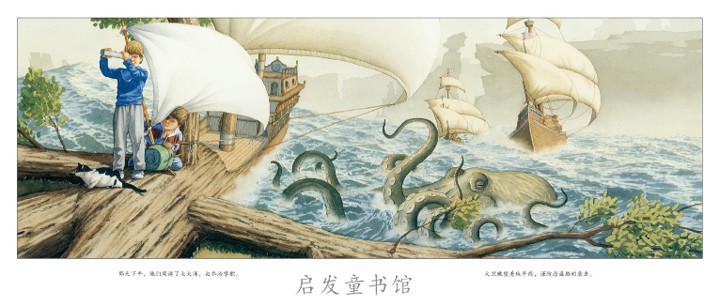
In terms of his drawing style, he particularly enjoys distortion. For example, seeing an orange, he might draw it and eventually turn it into a sailboat, which then transforms into a fish once it hits the water. So, seeing a frog sitting on a lotus leaf, he can’t help but see it as a flying saucer. He also loves playing with disproportionate sizes; for instance, in this book, the frog is zoomed in for a close-up, creating a rather eerie and mysterious atmosphere, doesn’t it? David Wiesner wants to share the sense of wonder he often experiences with children.
However, although he started illustrating children’s books immediately after graduating from university, for over a decade due to financial pressures, he primarily worked on custom illustrations for editors or collaborated with other authors to create more traditional picture books where the illustrations complemented the text. David Wiesner illustrated over a dozen such picture books, employing diverse styles ranging from realistic to simplistic fairy tales to fantasy. He found himself better suited to the fantasy style, but his own creative freedom was limited in stories written by others. It wasn’t until his first wordless book, *The Great Flight of Dreams*, won the Caldecott Honor in 1989 that he became convinced he could independently create the kind of picture books he had longed to read as a child.
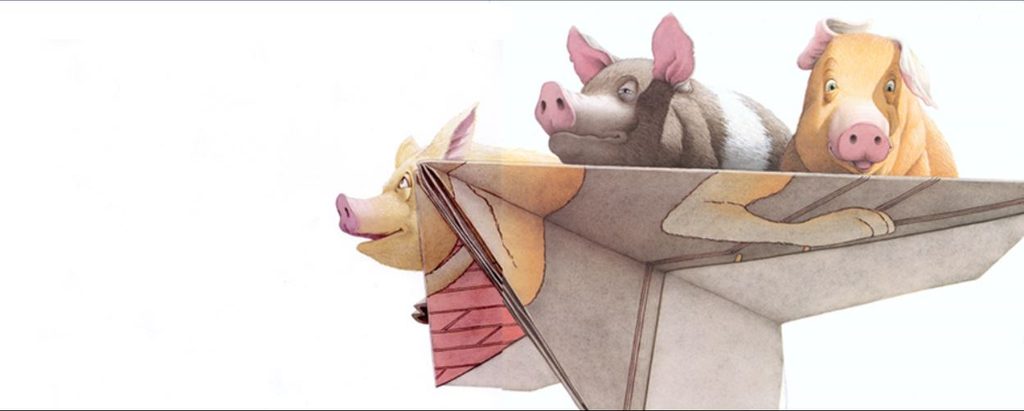
You can think of Tuesday as a collection of various elements that David Wiesner loved growing up, and you can discover a lot by reading it from this perspective.
First, there’s comics. David Wiesner belongs to the generation that grew up reading comics. He favors cool visuals and is adept at the visual storytelling style of comics. Although he draws picture books, he heavily borrows from comic book techniques. For example, he might divide a page vertically or horizontally into several image blocks to depict a series of actions, like the frog taking flight or the turtle on the driftwood. Another common technique is inserting frames into large background images to provide close-ups of details.
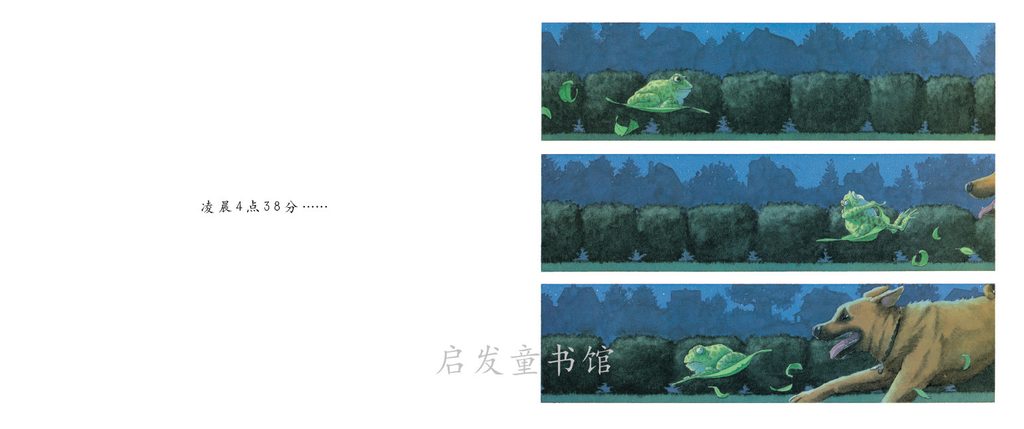
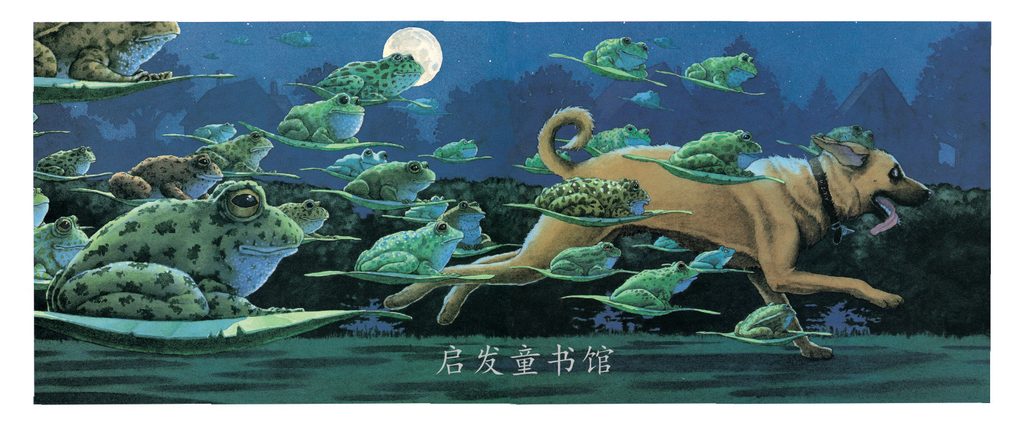
However, the basic grammar of comic book storytelling is quite similar to that of picture books, as both use pictures to tell stories and follow certain common conventions. For example, the sense of direction: usually, moving from left to right on the page is the direction of progress, and vice versa is usually backward. In this book, the frog army’s direction is basically from left to right, giving the impression of advancing all the way. In the fourth part, “4:38 AM,” the scene where the big dog encounters a frog flying low is particularly typical in terms of direction. First, the frog flies from left to right, then the big dog suddenly darts out from the right side of the screen, the frog grabs a lotus leaf to brake, and then turns and runs away; at this point, the direction is from right to left. Turning to the next page, the frog army comes to help, chasing the big dog away; at this point, the direction becomes forward from left to right again. This sense of direction is a common convention in visual storytelling, but picture books emphasize the effect of turning pages more; the previous page creates suspense, and turning to the next page may bring surprises.
Okay, let’s talk about the second type of element David loved growing up: fantasy films, especially science fiction. As mentioned earlier, David’s favorite techniques—distortion and using disproportionate size comparisons to create magical effects—stemmed partly from his preferred surrealist painting style and partly from direct borrowing from science fiction films. His viewing of *2001: A Space Odyssey* when he was around 13 years old had a profound influence on his life’s work. In *Tuesday*, the scene where the frogs arrive in town on lotus leaves directly borrows from the spaceship shots in the film. So, readers can try to imagine themselves making a movie, tracing these scenes, and imagining how they were “filmed.”
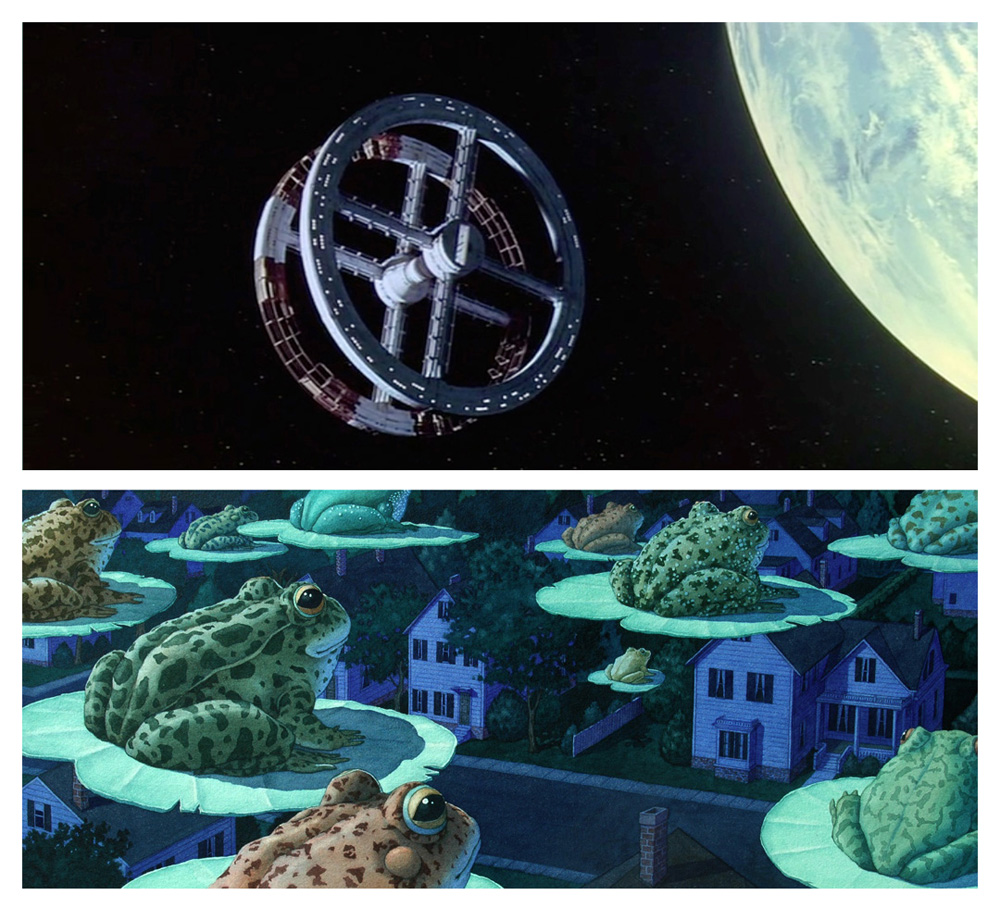
When creating such works, David Wiesner typically doesn’t write a manuscript first. Instead, he conceives the image in his mind and then sketches it into a series of small drafts—the kind of storyboards or shot sketches often used in filmmaking and animation. To create a realistic effect, he makes small models, such as frogs or lotus leaves, sketching them from different angles and adding lighting to achieve a very realistic interplay of light and shadow. For him, creating such a book is almost like writing, directing, and filming a short movie himself. If you’ve seen *2001: A Space Odyssey*, you know that the film has very little dialogue; there’s not a single line in the first 20 minutes. David Wiesner has long desired to create visual narratives that require virtually no text.
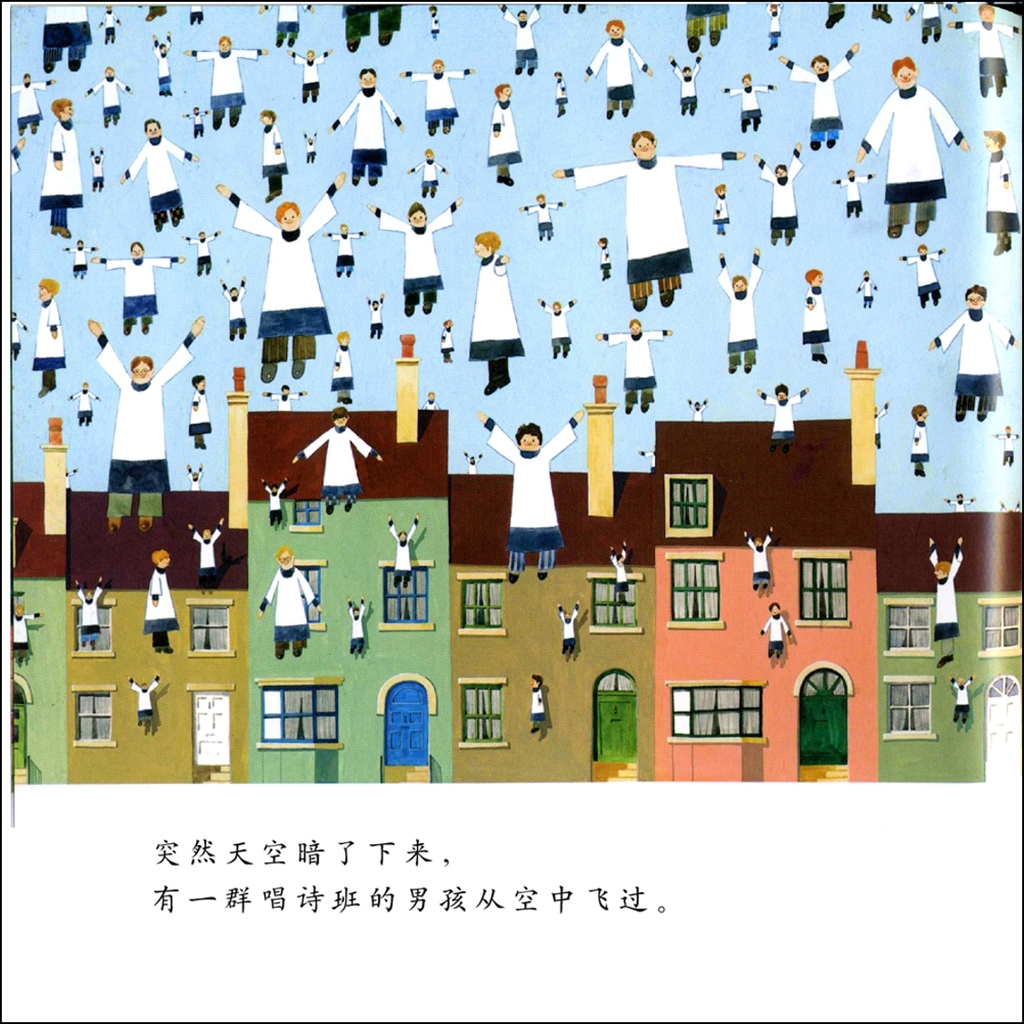
Let’s talk about the third element he loved growing up: drawing. His fascination with art began at a very young age, but his interests changed at different stages. Initially, he adored classical painters like Michelangelo and Leonardo da Vinci. As he grew older, he fell in love with modern artists like Dali, Picasso, and Magritte. As you may know, the British picture book master Anthony Browne also adored surrealist painters like Dali and Magritte. He often paid homage to these masters in his works. For example, in Anthony Browne’s debut book, *Through the Magic Mirror*, there’s a picture of choir boys floating in the sky. That picture is based on Magritte’s famous painting *Gorconda*, where a group of men wearing bowler hats float in the air. You see, in David Wiesner’s illustrations, this scene becomes frogs sitting on lotus leaves, floating in the air! Therefore, looking at *Tuesday* from a surrealist perspective, borrowing a perspective similar to Anthony Browne’s “shape play,” might reveal many new discoveries.
The dedication page for *Tuesday* reads “Dedicated to Tom Sculls.” Who is this person? Tom Sculls was a painter and a senior professor at the Rhode Island School of Design, who had a significant influence on David Wiesner’s art. David initially tried oil painting in college, but always seemed to struggle. Finally, under Professor Sculls’ guidance, he regained his confidence in watercolor painting.
To summarize, Tuesday may seem uninformative, but it’s incredibly fun and engaging, packed with engaging elements. Perhaps its greatest strength is its ability to spark young readers’ curiosity, and the story’s content largely depends on what the reader discovers within the book.
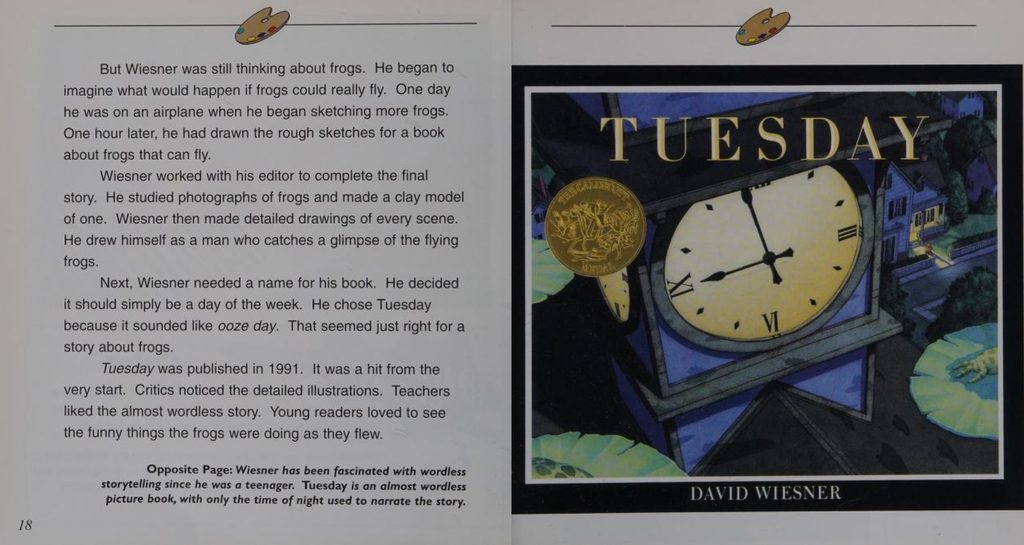
When it was first published, David Wiesner was a little uneasy. He worried that parents or teachers would complain that “this book is a bit scary” or “it frightened the children,” but he later discovered that teachers loved it. The main reason was that the book was perfect for encouraging children to express themselves. After all, there are no standard answers in a wordless book; just say whatever you see, without fear of making mistakes. Gradually, many adults also loved the book. Precisely because it has no words, everyone found their own meaning in the story. So you see, the less standard the answer, the more it stimulates people’s imagination, right?
That’s all for this book for now. We’ll talk about the next book in the next episode.