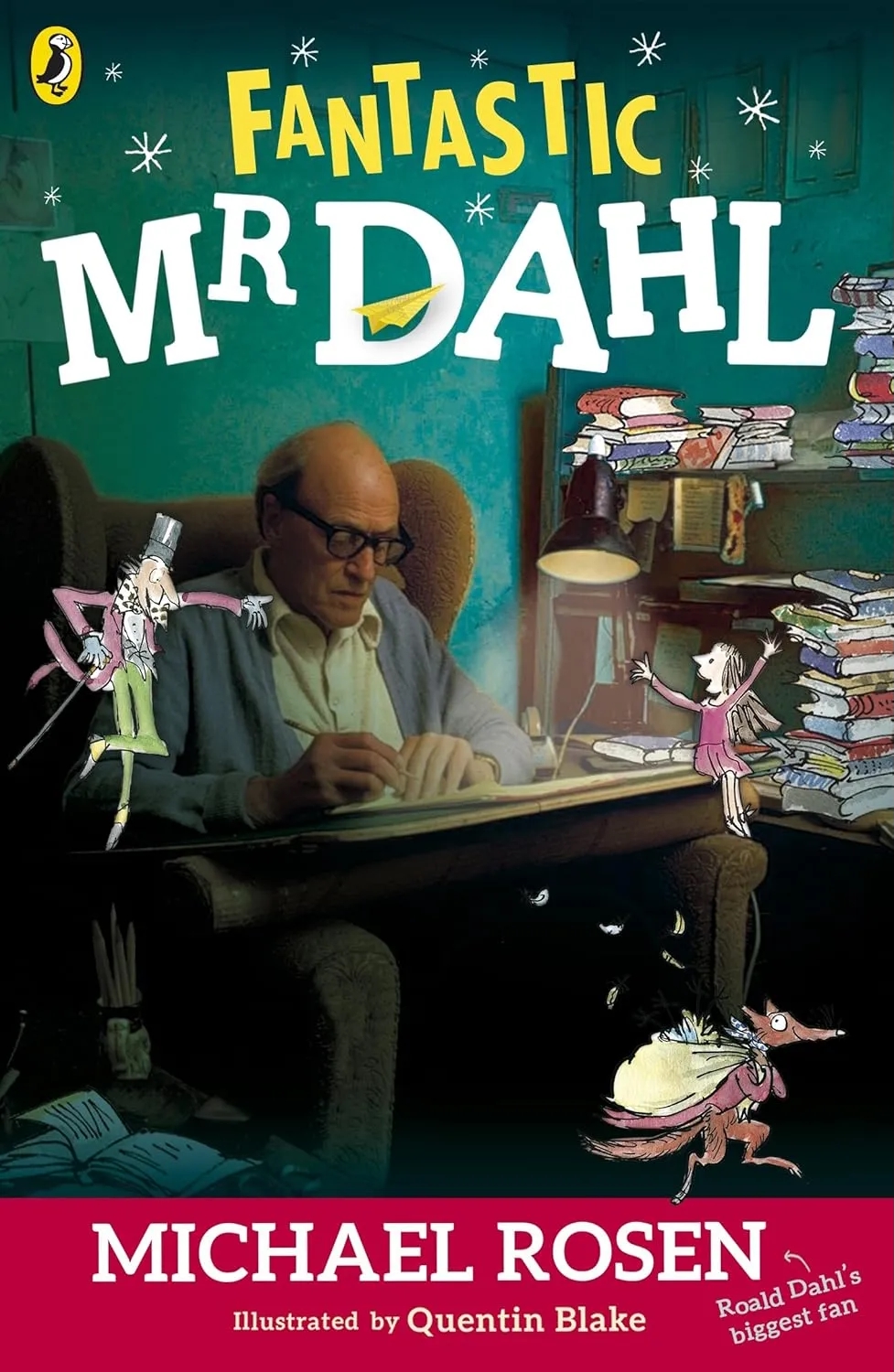
Speaking of Dahl, I can’t help but get excited. I’ve read quite a few books for adults and children, but books that are truly captivating, exciting, and leave a lasting impression, even moving me deeply, are rare indeed. I’ve heard many friends comment on Dahl, and one remark particularly resonates with me. This friend said, “Alas, it’s a pity I’m an adult now!” It’s so true. If I had read Dahl more than 20 years ago, I think I wouldn’t be wearing this shrewd smile; I’d probably be jumping for joy. Ah, growing up brings a certain…
There are quite a few reviews of Dahl’s work in China, mostly praising him. It seems they’ve used up almost all the words they could think of for praise. Generally, these reviews categorize him by aspects like humor, imagination, skill, and relatability to children, suggesting that domestic works fall short in comparison. It’s like how, when you mention the Chinese national football team, the first thing that comes to mind is: “Inferior skills!” But saying this too often becomes tiresome, sounding like a perfunctory, irresponsible statement. Similarly, when comparing Chinese children’s literature with excellent children’s literature from around the world, the phrase “some gap” is gradually becoming a similar expression.
The eccentric old man who works on children’s literature (Mr. Sun Youjun) was quite indignant. He said, “You (I guess you’re referring to researchers) always say that Chinese children’s literature is no good, that it’s far behind foreign ones. Then tell me where the gap is, how it’s bad, and how it should be written.” I admire the old man’s straightforwardness and completely agree. If someone is doing research or literary criticism, they should at least draw up some conclusions. It doesn’t matter if they’re wrong; at least we can discuss it. However, I’m particularly glad that I’m not a researcher; at most, I’m just an enthusiast. Hehe, I’m just here to have fun.
He gets especially happy when Dahl is mentioned.
Mr. Wei Wei said, “God poured all kinds of talents and abilities onto Dahl like a torrential rain. The 20th century produced Astrid Lindgren, who was already the pride of 20th-century children’s literature. Then, the 20th century produced Robert Dahl, so 20th-century children’s literature had double the pride.” — Wow, that sounds pretty scary, doesn’t it?
But what exactly is this “storm of talent”? I’ve thought about this question for a long time. I’m a pretty meticulous person. A friend once told me that a certain book became a classic picture book because it “contains all the elements that a picture book should have.” I kept pestering this friend, asking what exactly the elements of a picture book should be, and why this book said it contained those elements. In the end, I made my friend quite embarrassed. Actually, I know she definitely knew, but some things are just hard to express in words right away.
But Dahl’s questions cannot be ignored. What exactly were his talents? What are the differences between our local products and his imported works? These questions should not be avoided. Because there are countless works in China that are similar in form to his, and picture books are, after all, a different concept.
I’ve thought about this issue a lot, so I’ll just throw out my initial thoughts.
I believe Dahl’s most remarkable talent lies in creating and resolving plot points. If you don’t know the origin of these colloquial terms, I’ll assume I invented them. A more elegant way to describe a plot point is a “contradiction.” Every story has a core conflict, and then parallel or supporting conflicts. A master storyteller always presents this conflict as if it were real, keeping the audience on the edge of their seats, their hearts pounding, drawing them into the story, wondering, “What happens next?” Finally, the plot is resolved, and the audience is relieved. A true master is always far superior to the audience. Even if everyone knows the ending beforehand, they can’t guess how the plot is resolved. The master reveals the method, and the audience suddenly understands, exclaiming in admiration—“How come I didn’t think of that!” This is the “creating plot” and the “resolving it.”
Take Christie, for example. Her detective novels are incredibly well-crafted in their plot twists, and few readers escape her grasp. However, I have some reservations about her methods of unraveling these twists. She often unravels them completely outside the original context. For instance, in a story like “Ten Indians,” no one could possibly come up with a way to unravel the plot because the information she provided was initially insufficient.
In terms of unraveling plot devices, I think O. Henry is a master. Take “The Gift of the Magi,” for example. Everyone is familiar with it. Della wants to give her husband Jim a Christmas present, but the family is poor. What to do? That’s the dilemma. This plot device is simple and relatable. In explaining this, O. Henry naturally mentions that Della has beautiful hair and Jim has a family heirloom gold watch, their most valuable possessions. And then? Della sells her hair to buy the watch chain, while Jim sells his watch to buy a comb. —This plot device is beautifully unraveled! The story is so short, yet it’s intricately woven and utterly moving. “The Last Leaf” is another masterpiece.
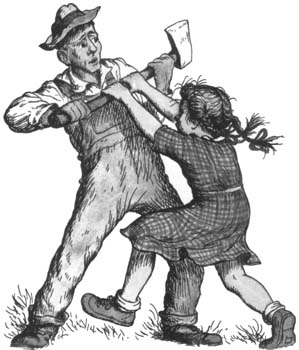 Speaking of “The Last Leaf,” I immediately think of E.B. White’s “Charlotte’s Web.” Both stories revolve around the themes of salvation and self-sacrifice, with the latter carrying an added layer of depth. White’s theme is also masterful: a pig named Wilbur, born tiny, is slaughtered by a farmer, but a little girl named Finn bravely saves him. Wilbur survives and grows increasingly normal. When he becomes fat and strong like a normal pig, the farmer again intends to kill him for ham. From the pig’s perspective, it’s a truly agonizing situation: if he doesn’t grow up, he’ll die; if he does grow up, he’ll still die. Do you think this pig has any reason to live?
Don’t laugh, White was very sincere in asking this question. He raised pigs on his own farm; while he wouldn’t say he “loved his pigs like his own children,” he certainly treated them like pets, much like dogs. One of his pigs fell ill, and he sought out veterinarians and cared for it for two days and two nights. He was quite saddened when the pig died. He held a small funeral for it, and many friends sent condolences. Later, he even wrote a famous essay, “The Death of a Pig.” To be honest, White’s feelings about pigs differed from those of us who only see them as pork and ham; he believed they were also lives worth cherishing, which is why he wanted to rescue Wilbur in his fairy tale. This was a very sincere idea, not a joke at all.
Traditional fairy tales often employ “mythical” unraveling methods, such as: the prince kisses the princess, the princess kisses the frog, or someone casts (or breaks) a spell, or a tremendous coincidence occurs (purely by luck). The underlying principle is mostly “love conquers all” or “good deeds bring good rewards.” However, children today, once they get a little older, can’t stand these old clichés. Some children say, “I don’t like reading fairy tales; they’re all lies.” Actually, they don’t dislike fairy tales; they just dislike the old clichés. If you don’t believe me, ask any children how many don’t like the fairy tales of White and Dahl. They also wrote fairy tales, but they used entirely new unraveling methods.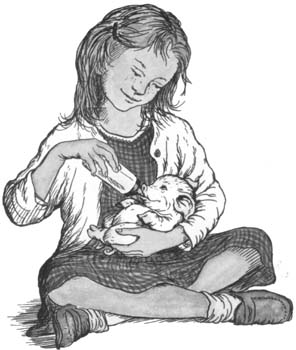
Let’s get back to White’s puzzle. Honestly, it was a real problem. You couldn’t let the pig escape, it wasn’t a wild animal; and you couldn’t turn the pig into a little boy, that would be too much of a joke on a child. If you put yourself in White’s shoes, it’s incredibly frustrating. From the age of four, White had developed a habit of spending a month each year vacationing on the Great Lakes of Maine. At first, he went with his father, then with his son. Whenever he needed quiet time to think about important issues, he would always think of going there. So, he went to a small boathouse there to ponder: how to save the pig named Wilbur? He thought about this problem for over two weeks, until one day he spotted a large spiderweb and a spider in the corner of the boathouse. And so, a spider named Charlotte was born!
Using a spider web to save a pig is, in my opinion, far more difficult than using the last leaf to save a dying artist. This is a remarkably clever twist. Why is it difficult? Because White is trying to convince children, and children are actually harder to fool than adults. You not only have to make the lie flawless, but you also have to make it incredibly entertaining. You can’t rely on the “last leaf” trick to coax children; few children have the patience to listen to you finish your story. Dahl understood this deeply; he said that writing stories for children is harder than writing stories for adults. The difficulty lies here—you must immediately capture a child’s heart.
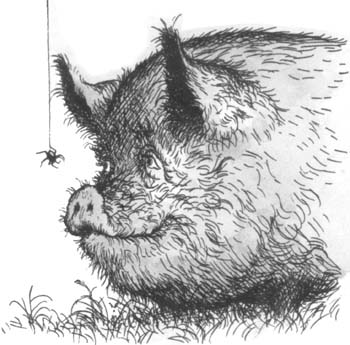 White also gave more thought to Charlotte’s “self-sacrifice.” In O. Henry’s story, the artist who saved the pig died of illness, and Charlotte, who saved the pig, also died. But Charlotte left offspring; her self-sacrifice was also a natural process of reproduction. This is a significant difference between unraveling a story in adults’ stories and in children’s stories. Children’s stories need a sense of return, or something akin to “security.” White hoped that children wouldn’t be overly saddened by Charlotte’s death. This reflects a sense of responsibility on the part of storytellers for children.
You see, telling stories to children is indeed a bit difficult.
White’s genius in creating and uncreating clasp is also evident in *The Trumpet of the Swan*, a near-flawless work, exquisitely detailed. However, I still find it less vivid than *Charlotte’s Web*. Selden’s *The Cricket in Times Square* is also a masterpiece of clasp-uncreating. But let’s leave that aside for now, as it seems I’m drifting further and further away from Dahl’s style.
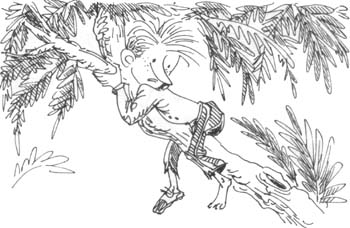 Unlike others who create and undo buttons, Dahl’s work is first and foremost remarkable in its sheer quantity. If White and Selden were engaged in “retail,” then Dahl was in “wholesale.” Dahl’s button-making and undoing seemed to be an effortless affair, as if it happened without a second thought, and you can find incredibly ingenious buttons in every piece he creates.
“The Witches” is probably the most well-known work. There are many minor plot twists in the story, but I will only talk about the most important one.
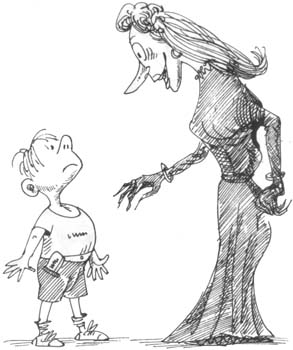
First, there’s the technique of building suspense. The first half of the story repeatedly emphasizes and sets the stage for the witch’s wickedness and terror. Grandma is practically Dahl’s spokesperson, gradually peeling back the layers of the “witch mystery” with a hazy, enigmatic approach. Frankly, at first I thought it was just something purely meant to scare children, but then the witch actually appears in the little boy’s life. The scene where the witch teases him under the tree is crucial. A master storyteller doesn’t rush to the climax; like a bird tucking its wings before taking flight, it creates a sense of anticipation and suspense. Then, in a completely unexpected situation, the little boy is suddenly caught up in the center of a witches’ gathering. To demonstrate their power, the witches give a live demonstration, turning another little boy into a mouse on the spot.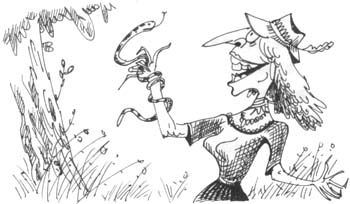
At this point, I thought the knot was taut enough; it was time to see how the little boy would break free and untie it. But it wasn’t over yet. Just when we thought the boy was about to escape the clutches of evil, a witch smelled the boy and turned him into a little mouse!
And there you have it, the button is finally finished. But this button is truly dreadful. What can you do? What can a little boy turned into a mouse possibly do?
 Here, I’m particularly reminded of Dahl’s personality; he was a guy who loved adventure. In his autobiography, *Boy*, the restless young man was originally assigned by Shell to Egypt in North Africa—a coveted position. But he thought Egypt was too civilized and not exciting enough, so he refused to go. As a result, his supervisor had to send him to the less developed Central Africa, where he was overjoyed. He said, “I want to go to that land with palm trees, coconut trees, coral reefs, lions, elephants, and deadly snakes. A white hunter who lived in Mombasa for ten years told me that if a black cobra bites me, I’ll die within an hour, writhing in agony and foaming at the mouth. I can’t wait!” See? That’s the kind of guy he was!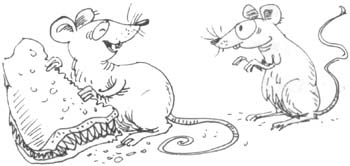
What else can we expect from this guy? He’s going to give us the most exciting twist yet: a little boy, turned into a mouse, faces an incredibly powerful group of world witches, and he must save the world!
The subsequent unraveling is truly unbelievable: the little boy, transformed into a rat, uses a poison concocted by the witches themselves to turn them into rats, leading to their annihilation. This tactic, in the parlance of *Demi-Gods and Semi-Devils*, is called “using their own methods against them.” Truly, “Eastern Murong, Western Darl,” perhaps even “English Murong”?
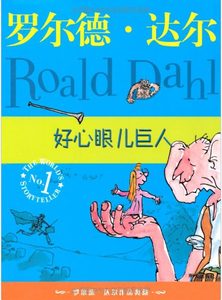
However, while *The Witches* is highly praised by many critics, I don’t think its plot is the most ingenious. In terms of imaginative wonder, *The BFG* surpasses it. Let me briefly describe the plot: The BFG kidnaps a little girl named Sophie to Giant Island, and the two become fast friends. Sophie hears that the evil giants on the island enjoy eating children, and the brave girl decides to risk her life to save all the children in the world. But the BFG on Giant Island is just a small giant with limited abilities; his language skills are rudimentary, and besides capturing and manipulating dreams, he has no other remarkable abilities. Their only chance is to notify the British government and ask for help. But who would believe them? Moreover, even a large army might not be able to subdue those giants. What to do?
When I read these kinds of books, I have a habit of always thinking about how to solve the mystery first. That’s part of the fun of reading mystery novels. If you’re reading a detective novel and don’t first think about “who the murderer is,” or if someone walks up behind you and says, “I’ll tell you, so-and-so is the murderer,” I believe it will be quite boring. So I won’t reveal the mystery yet, lest you throw a brick at me.
 I might as well tell you some more things that I particularly admire, let’s treat it as an intellectual game first.
Actually, what I admire and am most moved by is Dahl’s *Matilda*. Published in 1988, Dahl passed away in 1990 at the age of 73. A 70-year-old man, already incredibly insightful back then. Dahl lived those 70-plus years to the fullest. If you divide it into three parts, the first was adventure, the second was writing detective novels for adults, and the third was telling stories to children—each part was incredibly brilliant. Looking back at myself, even living just one of those brilliant periods would be enough to make me content.
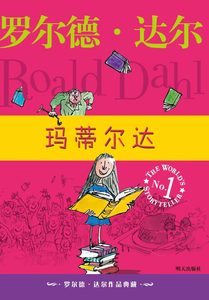
This 70-year-old man poured his life’s work into *Matilda*. His untamed spirit, sharp insight, magnanimous attitude towards life, rich emotions, and especially his aging yet masterful technique, all unfold freely in this work. The knot in this story is arguably the most complex in Dahl’s works: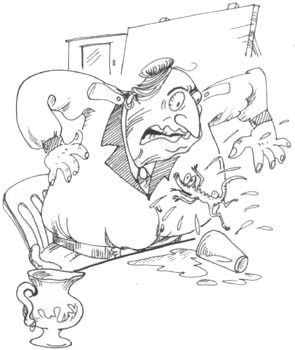
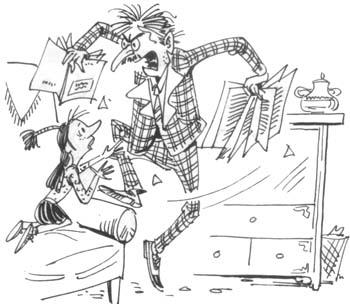
Matilda is a child prodigy, completely at odds with her family atmosphere. She has a terrible home; her parents and brother are incredibly vulgar, and her parents take pleasure in suppressing and belittling her. Things don’t improve much after she enters school. The headmaster is a sadistic psychopath, and the other teachers either don’t understand her or are terrified by his oppressive behavior. The only light is her teacher, Miss Henny, who is as warm as spring.
Speaking of which, we must mention Dahl’s childhood school life; this story seems to be Dahl’s deepest impression of school. A few years before writing *Matilda*, Dahl had just finished two autobiographies. I suspect that this old man probably wanted to find a kind of liberation from his childhood through Matilda’s story.
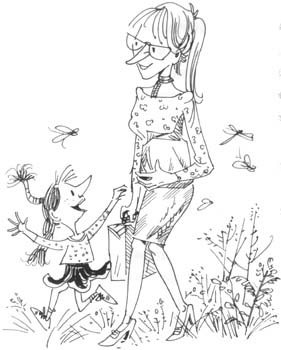 See, this button was made with great difficulty. About four-fifths of the story describes Matilda’s predicament. She cannot grow up normally in her own family; she faces similar difficulties at school, where she, her classmates, and her teachers are all oppressed by the principal; her only beloved teacher is actually the principal’s niece, and one of the most oppressed by the principal, struggling with only meager strength. But she learns a very strange anecdote: Miss Trundle, the principal, is very likely the murderer of Miss Henny’s father, and thus seized Miss Henny’s inheritance. This is the key to unraveling all the contradictions in the story!
But no one could help her and Miss Henny. She was indeed a child prodigy, but with only a tiny special ability: the ability to manipulate small objects over short distances with her mind, and even that was unreliable. How could she possibly accomplish such a massive unraveling task with such a limited superpower? This was giving the old man quite a headache.
He actually solved it, and it was absolutely brilliant!
Dahl wrote a children’s story when he was 27, and afterwards focused on writing stories for adults, especially mystery stories. He even wrote a screenplay for the James Bond film series, “You Can Only Live Twice.” Around the age of 45, after having his own children and being pressured to tell stories daily, he started writing children’s stories again, becoming addicted and never returning to writing for adults. It wasn’t that he found writing for children easy; rather, he found it more exciting. Have you ever heard of a Chinese writer with a similar experience, who didn’t turn back because writing for children was more challenging? I think that’s the difference. Our writers often take the opposite route, writing for children first, then finding it uninteresting, and then turning to the adult world. Of course, there are certainly many difficulties and environmental factors involved, but I won’t go into those now.
Let’s take another look at Dahl. Although his talent was “pouring out like a storm,” it wasn’t as unrestrained as we might imagine. Writing a story was a labor of love for him; he would typically spend several years crafting a book, and sometimes an idea would take years to develop into a story. There’s a difference between writing five stories a year and writing one story in five years. Besides, how many people in this world can have their talent “pouring out like a storm”?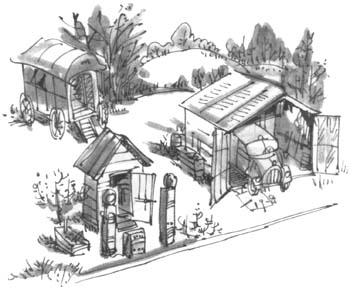
It is said that Dahl considered the first page the hardest to write, and he would typically spend a month writing it. He knew his audience was children, who were very discerning and would turn away if the story became even slightly uninteresting. He said, “Conceiving a vivid, fantastical, and fresh plot is a difficult task; I might have to spend a lot of time, even a year, to come up with one. I wander around the house, the garden, the village, and the village streets, searching again and again for that vivid, peculiar new idea.”“
I can’t think of any of Dahl’s works that, in terms of concept alone, doesn’t qualify as “a vivid, wonderfully strange, and very fresh plot.” This gives you an idea of how exhausted he must have been.
Even the most discerning critics have not offered any negative criticism of the storytelling techniques in “World Champion Danny”.
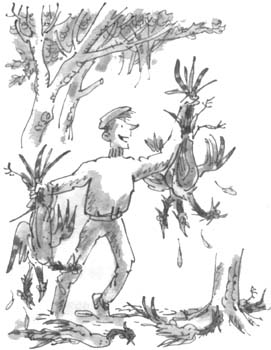 A young boy named Danny lives with his father in the countryside. Although they are poor and his mother has passed away, the father and son live happily together. However, by chance, Danny discovers that his father has a dark secret: he is a poacher by trade! After his father’s poaching attempt fails, Danny risks his life to rescue him. From then on, father and son are united in their hatred of the evil forest owner and vow to fight him to the end.
Poaching is generally considered immoral and shameful, but in this story, it’s portrayed as exceptionally bright, exciting, and creative. This premise was already quite challenging. But Dahl pushes it to the extreme, making this 9‑year-old boy the world champion poacher, capable of poaching 200 pheasants in a single night, risking disgrace and even injury!
Dahl was truly a man of extraordinary courage. It is said that Dahl racked his brains to write this story, finding the most difficult part to be choosing a suitable geographical setting. After much deliberation, he chose a rural dwelling to live in, where he completed his conception and writing. Thus, in this story, we not only read about ingenious knot-breaking techniques but also experience a rich, rustic atmosphere. Particularly noteworthy is that this work does not rely on any supernatural forces; it is essentially a realistic work. This is a rare exception in Dahl’s oeuvre.
I’ll discuss the solution to the plot hole in this story next time. First, I’ll quote a passage Dahl wrote at the end of the book for children: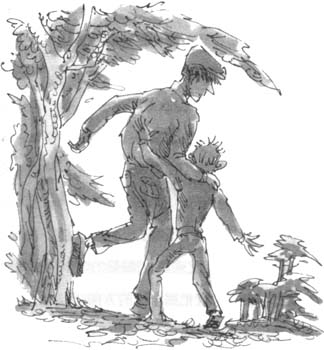
“When you grow up
When you have your own child,
Please remember this:
Lifeless parents are dull and uninteresting.
What a child needs
What is worth wanting
They were brilliant and intelligent parents.”
I think children need not only intelligent parents, but also intelligent uncles, aunts, grandfathers, and grandmothers, especially those uncles, aunts, grandfathers, and grandmothers who tell them stories. Otherwise, how boring childhood would be!
Let’s take a break. To find out what happens next, stay tuned for the next episode.
Leave a Reply