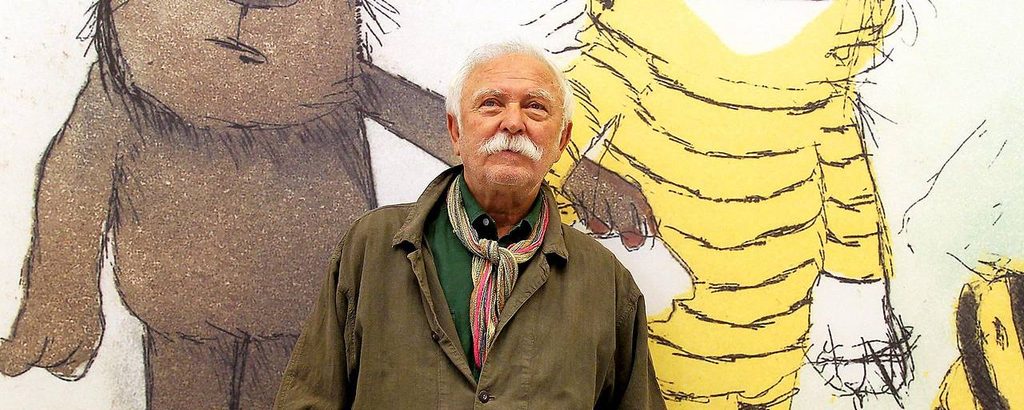
As an adult, writing a review of the works of German picture book master Janosch is quite a difficult task, because you have to face the dilemma of choosing sides: if you side with the children, you may offend many adults; but if you side with the adults, you may have to lie! In order to avoid making my nose too long like Pinocchio, I decided to tell the truth.
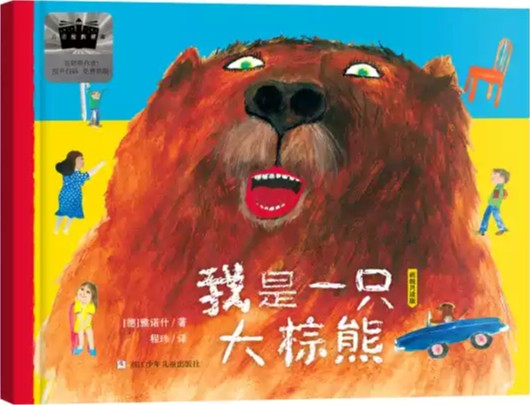
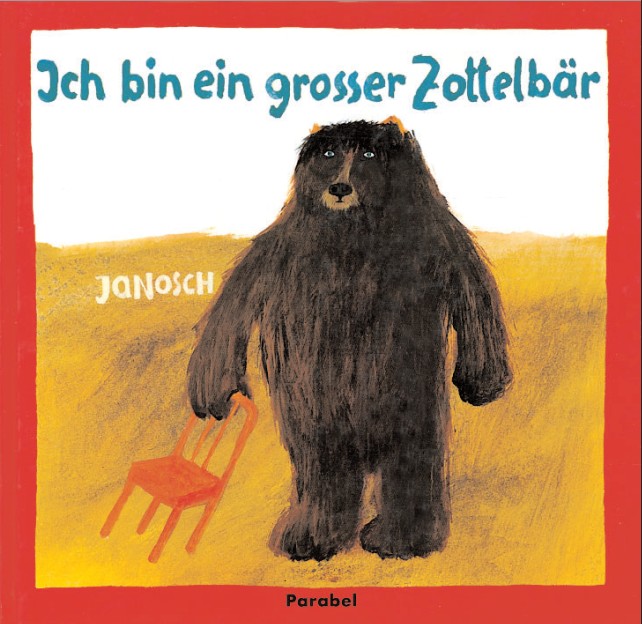
To be honest, Jánosch’s *I Am a Big Brown Bear* doesn’t really have much “educational value.” If you’re looking for a book that teaches children to be well-behaved, there’s really no need to read it. The original German title is even more flamboyant, roughly meaning “I’m a big, spiky bear!” Imagine the little boy Hansley shouting that—he’d definitely look fierce (or perhaps imposing), certainly not a model of a well-behaved child.
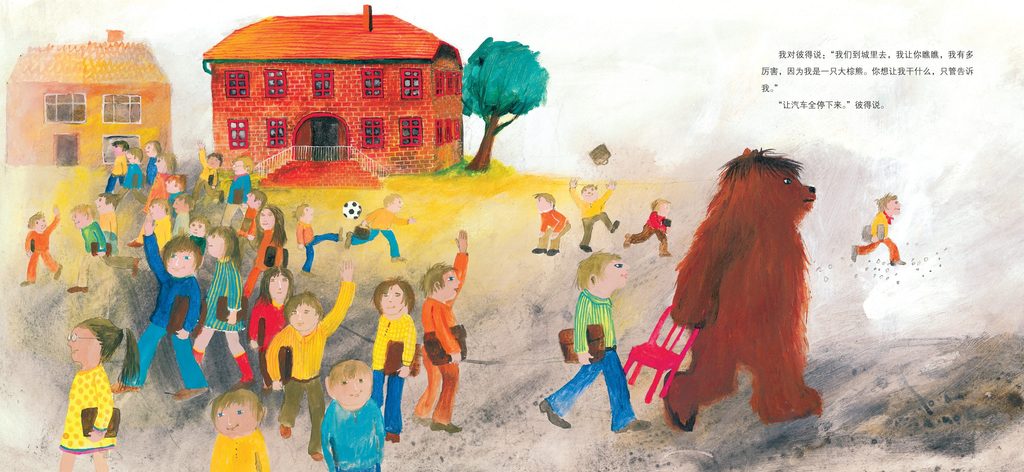
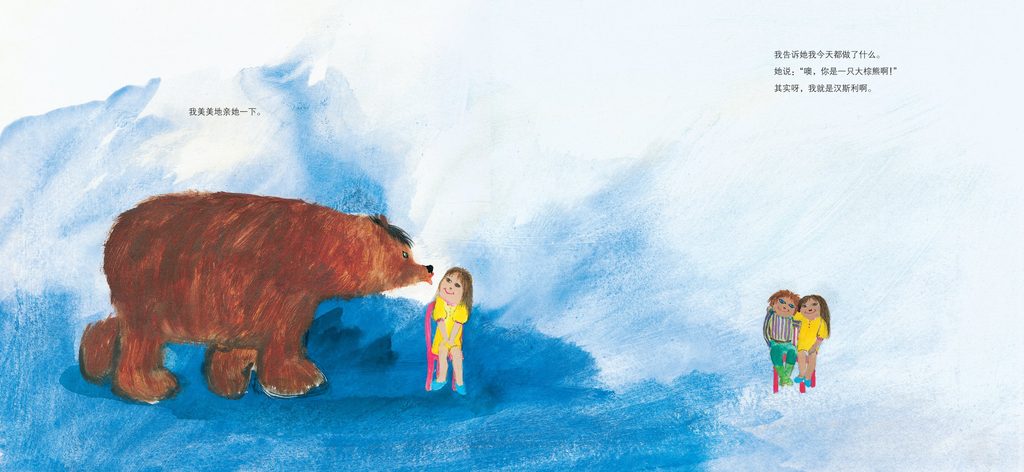
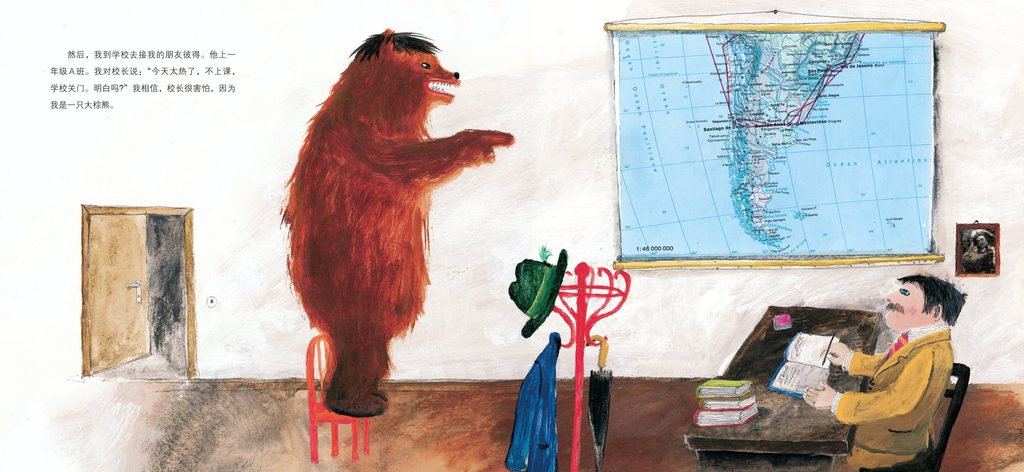
For adults who prefer following the rules, the plot in the book is a bit excessive. The little boy, Hansley, throws a tantrum at home, then runs to school and orders the principal to give the children a holiday. He then takes to the streets, replacing the traffic police and directing all vehicles to stop. Hansley’s reasons for not letting people drive are “to let the children play on the road” and “cars pollute the air.” If people don’t listen, he unleashes the threat, “I’m a big, spiky bear!” Okay, fine, he’s something else. But after indulging his role as a traffic policeman, he takes his friends to buy a new car and drives off on a picnic—is that even reasonable? Perhaps the most baffling thing for adult readers is that when this fierce brown bear goes to see the little girl Putty, he instantly transforms back into a remarkably well-behaved little boy, and Putty even praises him with adoration, saying, “You’re a big, spiky bear!”—Isn’t that just illogical?
If you share this confusion about the story, I’m not alone. Even readers in the German-speaking world are perplexed. I saw two brief reader reviews on the German Amazon website. One mother said, “I think the story is about how you can do anything you want. But my husband and I don’t really like it…”; another parent felt the book was about a minor dictator, “Clearly one of János’s worst books—sometimes great, sometimes terrible…”. They both gave rather negative reviews, but—and I must commend the honesty of German readers—they also admitted their children loved the book. The first mother said, “…but my two-year-old son loves this book! He asks us to read it to him every night…I remember genuinely liking this book when I was a child.” The second parent said, “…my three-year-old daughter loves this book, but I still have to tell her I hate it.”
Reading these two German parents“ comments, I couldn’t help but laugh out loud. I really admire their honesty and tolerance. Although they disagreed with (and even disliked) the book, they at least gave it and their child a chance, thanks to their hard work in reading it aloud, because two- or three-year-olds still need adults to read to them. The mother mentioned earlier was even more endearingly ”split-minded.“ She genuinely loved the book as a child, but disliked it after becoming a mother, yet she still allowed her young, innocent son to continue being ”fooled” by it. Thinking about it carefully, there must be some reason for this.
“I Am a Big Brown Bear” was first published in 1972, half a century ago, no wonder that mother read it as a child. That year marked Jánosch’s 13th year as a children’s book author, having written approximately 20 books, many of which sold over 100,000 copies. This particular book was nominated for the 1973 German Youth Literature Prize. In other words, he was a prominent mainstream author in the German children’s book world at the time. Interestingly, however, he actually represented the emerging mainstream. His fans liked him not because he was “orthodox,” but quite the opposite, because his style was somewhat eccentric and subversive, making more “orthodox” readers uncomfortable.
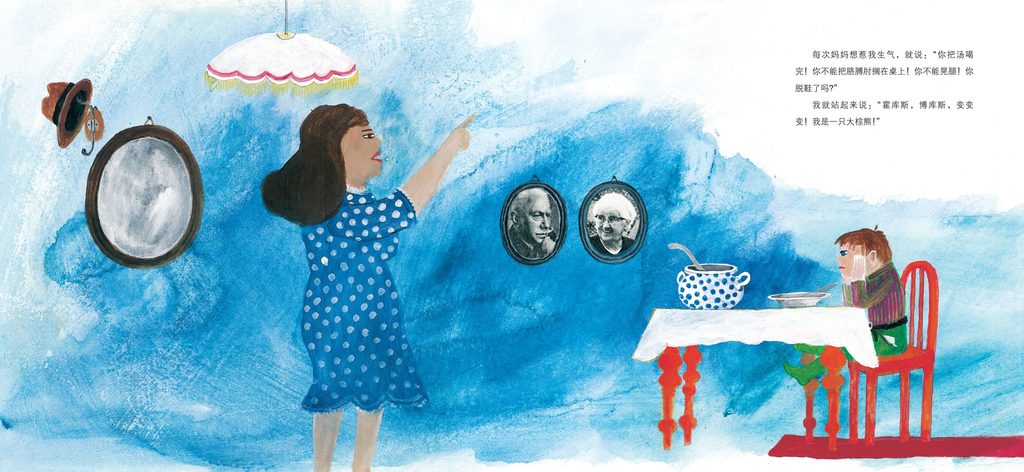
Why do I say this? Consider the beginning of the book: “Every time Mom wanted to make me angry, she would say, ‘Finish your soup! You can’t put your elbows on the table! You can’t swing your legs! Did you take off your shoes?’”—We already know that the little protagonist is about to throw a tantrum, seemingly about to unleash negative emotions. Think about picture books related to children’s negative emotions, such as *Where the Wild Things Are*, *Fifi’s Angry*, *Angry Arthur*, and *David, No!*. Even these classic works, written from a child’s perspective, usually begin with “the child making a mistake” (at least from an adult’s perspective), with the focus on how the emotion is resolved. But in Janosch’s work, there’s no definitive premise regarding who is right or wrong between adults and children; at least, he doesn’t present the viewpoint of “Look, the child is being naughty again, disobedient again.” He directly expresses the child’s perspective: “Look, the adults are trying to make me angry again!” —I guess this might be an expression that makes adult readers uncomfortable. When you read it as a child, you might think, “Yeah, that’s it!” But when you become a parent yourself, you might think, “Humph, shouldn’t adults be disciplining their children?” So, when reading Janosch’s books, you often find yourself unconsciously taking sides.
The judges of the German Youth Literature Prize commented on this book as follows:
“Hansley knew a spell to break his mother’s old nagging and warnings: he transformed into a terrifying, furry bear and left home, fulfilling all his previous unfulfilled desires. Of course, not only because he was big, but also because he was strong! The story is fun, liberating, and thought-provoking. However, Hansley didn’t use his new superpowers all the time; instead, he voluntarily transformed back to his original form so he could play with his little girlfriend.”
It’s clear the judges not only understood Janosch, but genuinely loved the book. For children, it’s more like a psychological game packaged as a fairy tale, a kind of “pretend play” they often engage in. In this imaginary game, they can become incredibly powerful, achieving desires impossible in the real world. However, once they are fully understood and their emotions are properly released, they naturally revert to their perhaps somewhat small and vulnerable selves when facing their beloved friends, becoming as adorable as angels. This isn’t “illogical,” but rather a childlike logic.
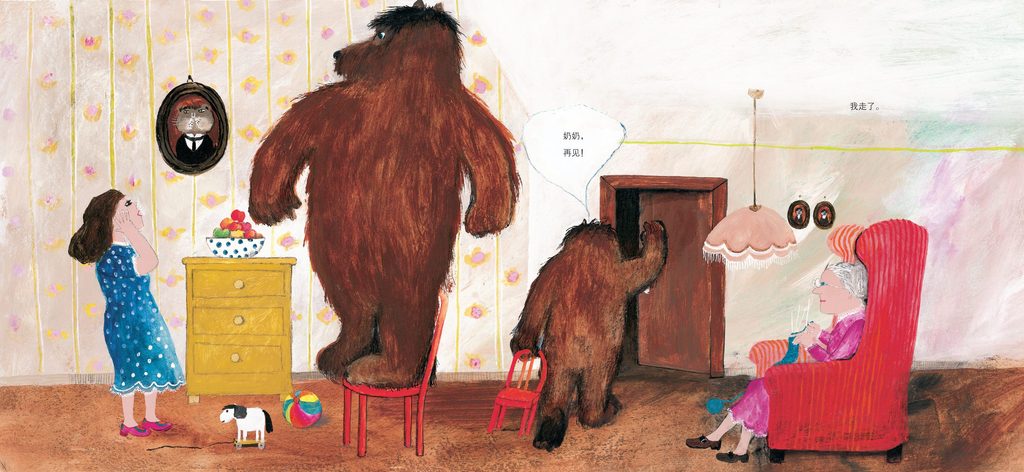
Janosch’s style is also particularly childlike, looking like children’s drawings done on a whim, but upon closer inspection, the details are quite meticulous. For example, Hansley’s red chair is initially depicted at the dining table, its legs particularly high, no wonder Hansley “shakes his legs”; then, when Hansley, transformed into a large brown bear, leaves home, you’ll notice that the bear is always carrying the red chair, taking it everywhere (except when returning to see Putti). Why? Look closely, every time the bear wants to talk to an adult, such as his mother, the principal, the traffic police, or the drivers on the road, he stands on the chair. This chair prop is very interesting; even though the figure in the picture is a large brown bear, the presence of the chair tells the reader that this is actually the little boy’s “pretend game”—he needs to stand on the chair to be at the same height as the adults! Looking even closer, you’ll even notice that the chair gets smaller and smaller, and in the process of rehearsing, the bear gets bigger and bigger. When it comes to buying a car, he doesn’t even need the chair anymore, and the car salesman bows and scrapes. Think about it: children usually have to endure the criticism and judgment of adults, but when they become customers who spend money, don’t the adults who are selling to children automatically become less influential?
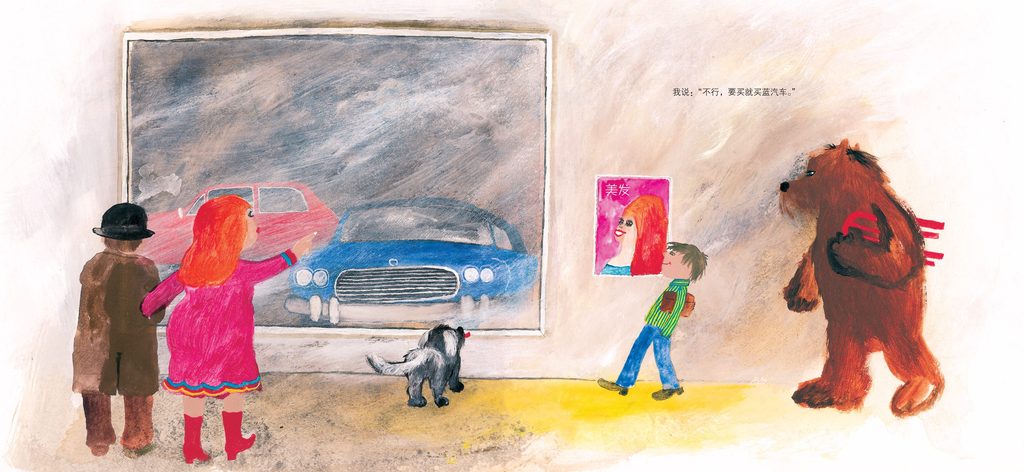
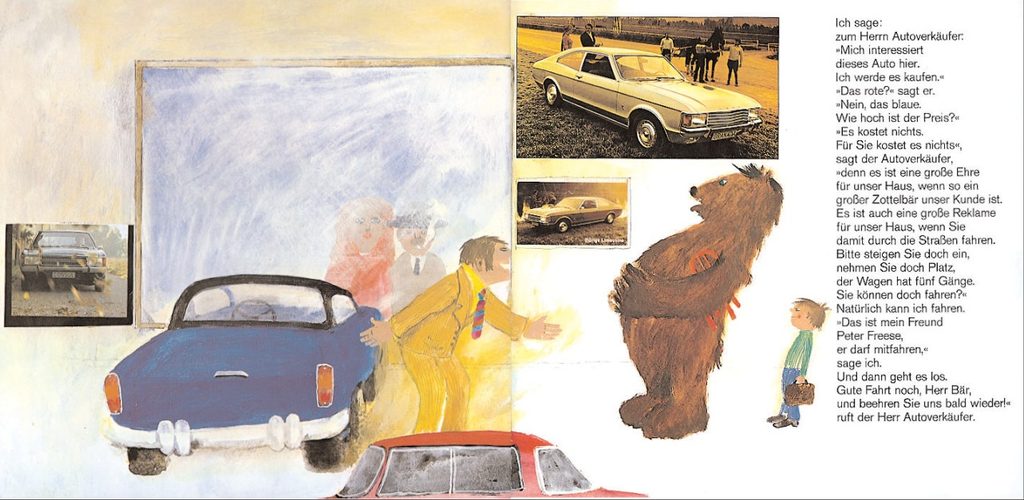
It’s worth noting that artists like Jánosch possess exceptionally sharp observational skills, often incorporating satire or irony into their works. For example, he might unexpectedly place photographs in seemingly normal scenes; a wall in his home might display portraits of public figures, while a picture of a car for sale might feature several images of Ford vehicles, including the “Granada,” a new model launched by Ford in Europe in 1972. From today’s perspective, Jánosch might even smack of “product placement,” but I suspect he was just being playful and perhaps even dreaming of owning that car. His biography describes his life during that period; he was a struggling full-time creator, living a lifestyle somewhat akin to a hippie (whom he believed was at least beneficial to world peace). Therefore, creating such picture books was, for Jánosch, a kind of “pretend game,” and the large brown bear in the book, to some extent, fulfilled his own desires.
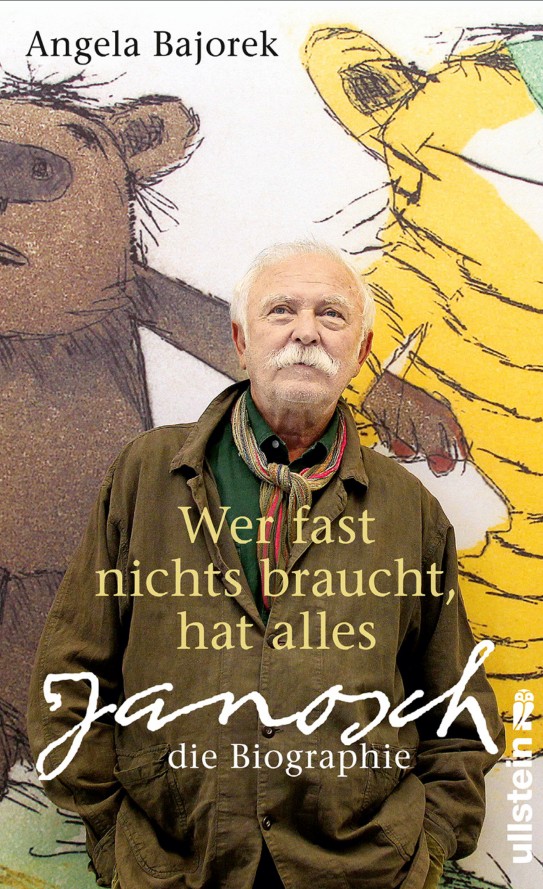
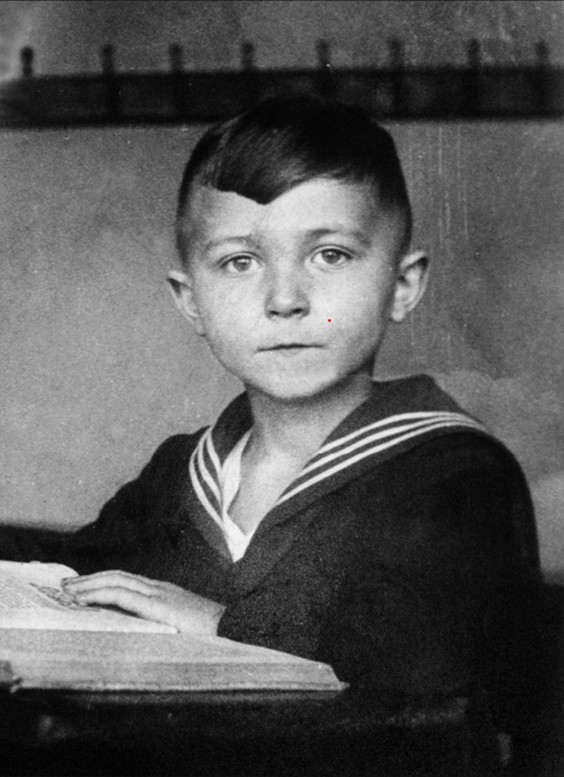
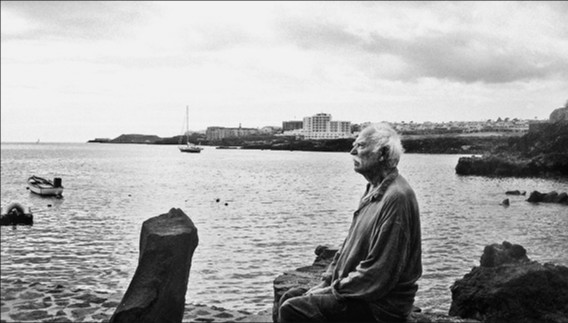
János’s childhood was extremely unfortunate; he even described his childhood family and environment as “hell.” Born in 1931 in Zabrze (then Hindenburg under German rule), which was part of Poland, his family were among the lower classes of Polish society. His mother was a devout Catholic who was extremely strict with her children, while his father was an alcoholic who frequently became violent at home after drinking, and some family members were indeed beaten so badly they became mentally impaired. János was often beaten at home, and he later said that his low IQ was due to brain damage from the beatings he suffered as a child. To make matters worse, he was constantly bullied by classmates and physically punished by teachers at school. This terrible upbringing, coupled with Nazi rule and the trauma of World War II, meant that although János attended primary and secondary school for a few years, he never truly graduated.
Things only improved slightly after the war when the family fled to West Germany. But that only meant he could work in factories to barely support himself. He once had a spark of artistic talent and tried to study painting at the Munich Academy of Fine Arts, but was rejected because he was deemed “lacking in talent.” In short, it’s hard to imagine how someone from such a poor family with almost no formal education could have grown into a world-class illustrator.
It was probably that particularly difficult upbringing that honed his extraordinary survival instincts through the trials and tribulations. Besides his arduous odd jobs, he tried writing and illustrating for magazines, and gradually developed the idea of trying his hand at children’s book creation. Completely unfamiliar with the children’s book industry, he found a directory of publishers and called the first one. Even though they clearly rejected him, he insisted on visiting them in person to meet the owner. Fortunately, the author and publisher, Georg Lenz, was also an eccentric himself, and surprisingly appreciated this strange young man who had barged in. He immediately opened a bottle of cognac to entertain him. The two hit it off immediately, and Lenz asked him to start writing and illustrating a children’s book, but with a style that would absolutely shock “orthodox” children’s book readers. The deposit for the manuscript was the half-finished bottle of cognac. Janos went home, drank all his wine, and wrote “The Story of a Horse Named Valek,” a children’s book that had been in his mind for a long time. This debut children’s book was published in 1960.
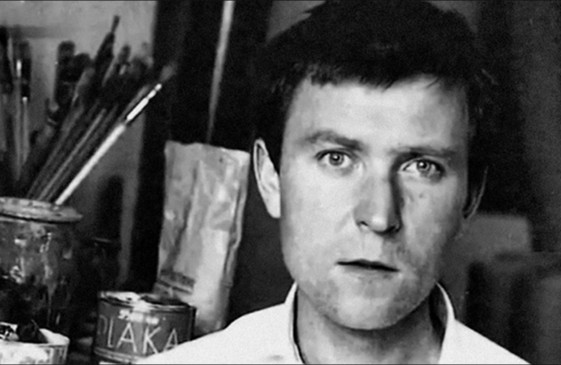
Although his debut book only sold 15 copies, and although Lenz’s publishing house went bankrupt after publishing several more of his children’s books, Janosch gradually figured out the knack and found enjoyment in children’s book writing. After changing publishers, his children’s books sold increasingly well, and top children’s book publishers began to extend offers to him. However, he was most grateful to Mr. Lenz, who had initially introduced him to the field. He also maintained the habit of having a few drinks before writing children’s books, as if only in a slightly numbed yet completely relaxed state after drinking could he create truly interesting (and somewhat eccentric) children’s stories.
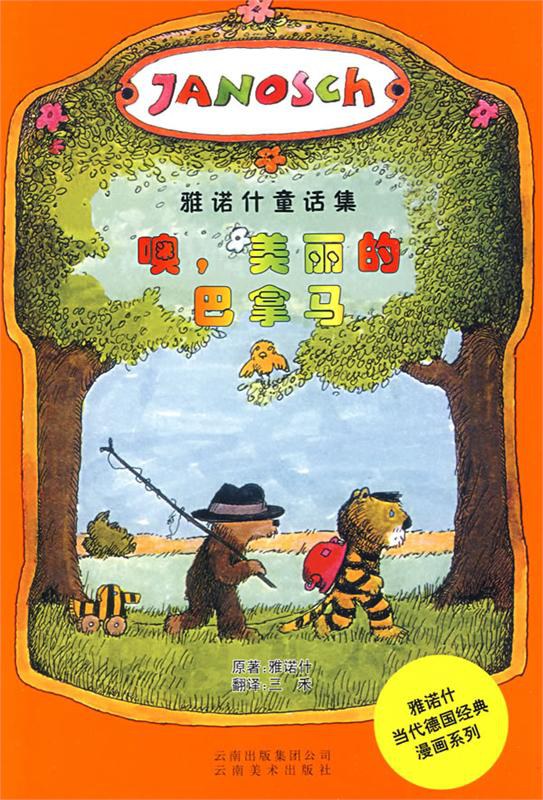
János János has been a prolific writer, with over 150 books to date. His most renowned work worldwide is *Oh, Beautiful Panama*, published in 1978 and winning the German Youth Literature Prize, along with its subsequent “Little Tiger and Little Bear” series. János János’s Panama is incredibly pure and beautiful—which is, of course, the original home of the little tiger and little bear. He came up with the idea of “Panama” because he had seen news reports of government corruption and collusion with drug lords, leading to a dire living environment for the local people… János János’s thought process is indeed unconventional; frankly, he’s incredibly childlike. He couldn’t do much about the real Panama, but he could construct a utopian Panama in his imagination.
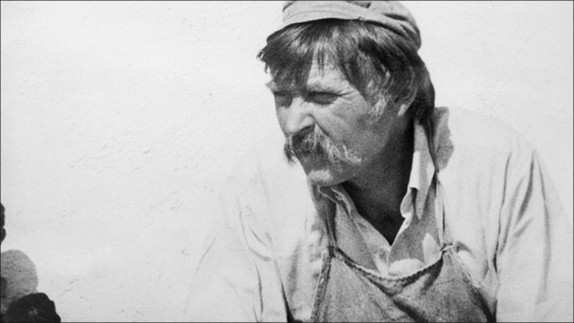
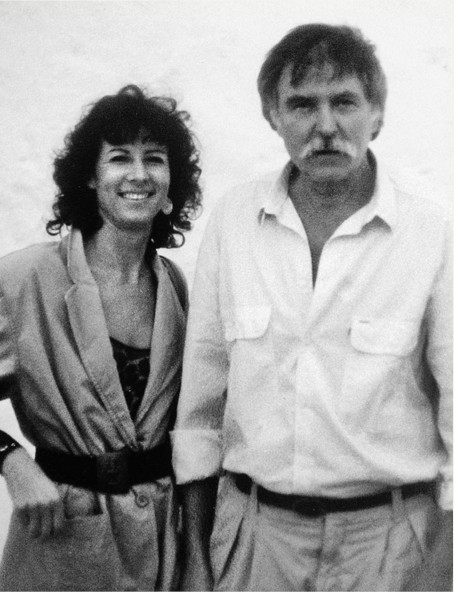
In Janosch’s children’s book writing, the transition from the adult world to the children’s world is remarkably easy, which is often very difficult for many who attempt to create children’s books. Janosch’s explanation for this is:
“I have never left the world of children, nor have I ever entered the world of adults. This is not ‘art,’ but merely a psychological accident. Psychiatrists can explain this.”
This probably explains why children love Janosch so much; they find complete understanding and great comfort in the story of this genius artist who can be considered a “kindred spirit.”
Jánosch’s own childhood was horrific; he received little understanding or solace. Although he eventually grew up battered and bruised, and established himself in society through talent, hard work, and luck, the shadows of his childhood lingered. He often relied on alcohol to find temporary refuge. Fortunately, he had picture books. In his self-created childhood utopia, he could fulfill all the desires impossible in the real world, just like the little boy Hansley. For him, this was an irreplaceable and wonderful form of healing.
Children who grow up reading Janosch’s works may not gain much “educational value,” but at least they will be quite mentally healthy, and may even save themselves a lot of money on psychological treatment in the future.
Written by A‑Jia on March 15, 2023 in Beijing

Leave a Reply