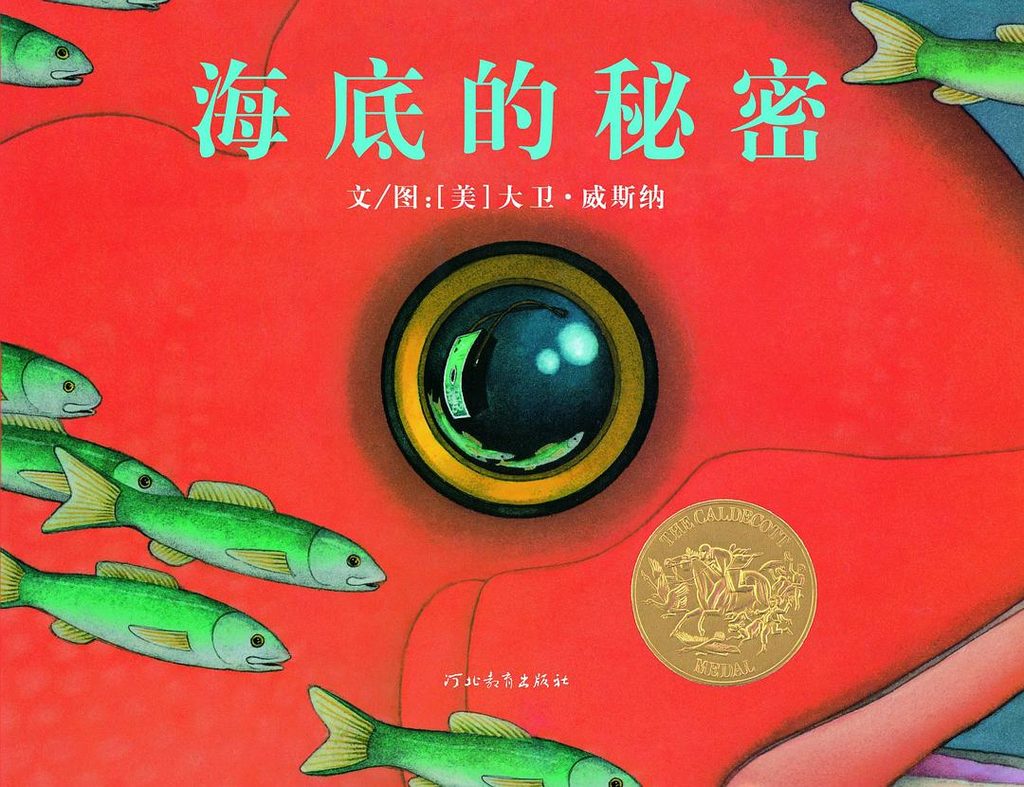
Last time we talked about David Wiesner’s fantasy epic, *Tuesday*.This time, let’s talk about the masterpiece of this wordless book master, “The Secret of the Sea”.
This book won the Caldecott Medal in 2007, marking David Wiesner’s third Caldecott Medal. Winning three medals is extremely rare; the judges must have felt the book was so exceptional, almost perfect, that they had to award it another medal. His first two were *Tuesday* (1992) and *The Three Little Pigs* (2002). *The Three Little Pigs* had a considerable amount of text, and *Tuesday* also had some text, making them quasi-wordless books. *The Secret of the Sea*, however, is a completely wordless book. David Wiesner had previously created two other wordless books of this type: *Dream Flight* and *Dream Factory No. 7*, both of which only won the Caldecott Honor. With this third truly wordless book, *The Secret of the Sea*, he reached an impeccable peak.

David Wiesner poured his heart and soul into creating this book, spending five years illustrating all 48 pages from cover to back cover. So, what story does this book tell?
Before introducing this story of the wordless book, I would like to emphasize three points:
First, this kind of wordless book is actually impossible to tell.I remember once a few of us storytellers were at the Beijing Concert Hall, telling stories to hundreds of children with music playing. That time, Teacher Bird Xiang Hua told the children about “The Secret of the Sea” for about half an hour. He and the children were very happy, but to be honest, he only talked about a small part of the book.
So rememberSecondly, wordless books are particularly suitable for repeated reading together.Perhaps the best approach is for adults and children, or children in groups, to discover stories from books, find details in the illustrations, and exchange ideas, reminding and inspiring each other.
And alsoThirdly, this type of book inspires a love of exploration.What makes it fun is that no matter how many times you watch it, you can always discover something new, and there might be something in the story that makes you want to explore it further.
Let’s take this book, *The Secrets of the Sea*, as an example. If we were to summarize it simply, we could use four keywords: observation, awe, recollection, and longing. Observation, awe, recollection, and longing—I’ve tried to understand the story’s thread from these four perspectives.
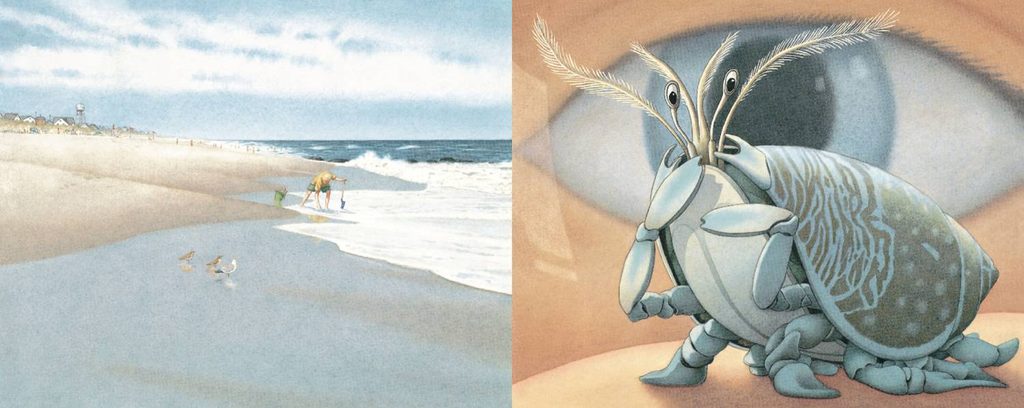
First comes the observation. Right in the center of the cover is a large red fish eye. Turning to the title page, the first image on the inside page is another large eye—this time, a boy’s eye. On the next page, we see the boy lying on the beach, using a magnifying glass to observe a sand crab. That tiny creature, which looks like an insect, is scientifically called a cicada crab. The name is a bit odd, combining “mouse,” “cicada,” and “crab”—and the cicada being observed is also staring at us with wide eyes—this story invites the reader to pay attention from the very beginning; even if you don’t look at it, it will look at you!
Judging from the series of paintings, the story is about a beach where a boy is clearly on vacation. While others are swimming, playing in the sand, and building sandcastles, this boy seems to be conducting research. Besides a magnifying glass, he also has a telescope and a microscope nearby, and to prevent the sand from damaging the microscope, he professionally covers it with a sealed plastic bag. This definitely has the air of an amateur scientist.
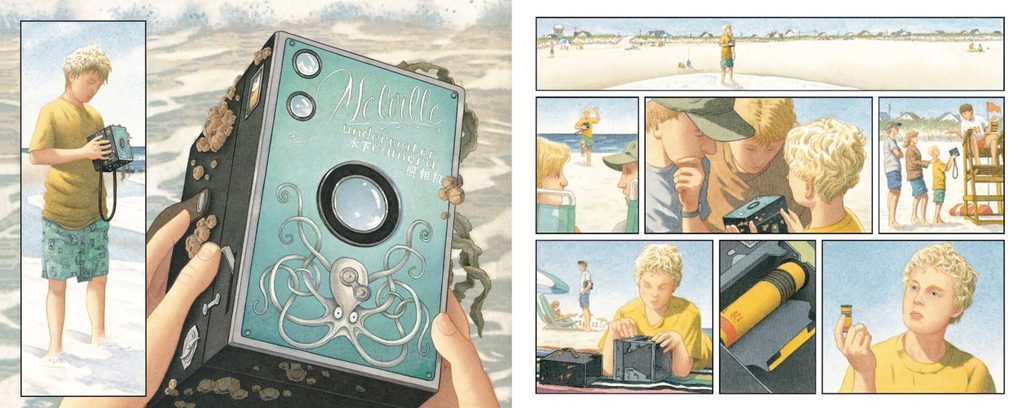
Next, he explored a beach closer to the sea. While lying on the ground studying a passing crab, a wave washed ashore and knocked him to the ground. When the wave receded, he found an old-fashioned, mechanically controlled camera. This camera was quite remarkable; it looked like an antique, but it was a very advanced underwater camera. The sign on it read “Melville.” Do you know what that means? Actually, there’s no camera brand with that name. It was made up by David Wiesner. Melville was one of the greatest American novelists of the 19th century, best known for *Moby-Dick*, a thrilling story about whaling at sea. This means the camera has a very impressive history, right?
After finding the camera, the boy first asked around the beach, “Who lost this camera? Who owns it?” Of course, no one claimed it. The boy opened the back cover and found film inside. That made things easier! He could just take it to a photo studio, get the film developed, and find out who owned the camera. The boy quickly ran to the photo studio, had the photos developed, and when he received them, oh my god, he was completely shocked!
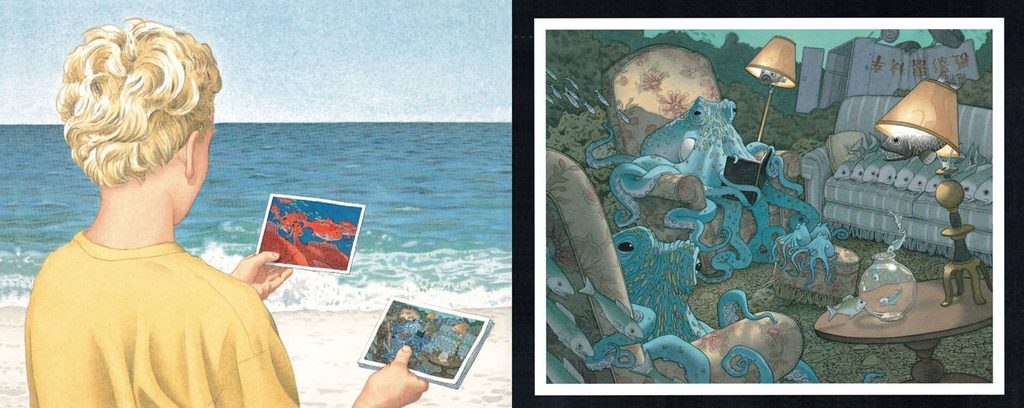
This leads to the second key word: Amazing!Or perhaps it was simply astonishment. What did he see? An absolutely magical underwater world: a group of swimming red fish, among which were clearly wind-up robotic fish; a living room for a group of octopuses, complete with sofas and lamps lit by electric fish; a sea turtle carrying a small city on its back, and a pufferfish inflating into a hot air balloon and soaring into the sky; aliens diving to the bottom of the sea, with seahorses standing upright beside them; and giant starfish walking like coral islands, with enormous sperm whales appearing as tiny fish beneath their feet… and so on and so forth. The underwater photographs contain so many details that readers need to discover them through repeated readings.
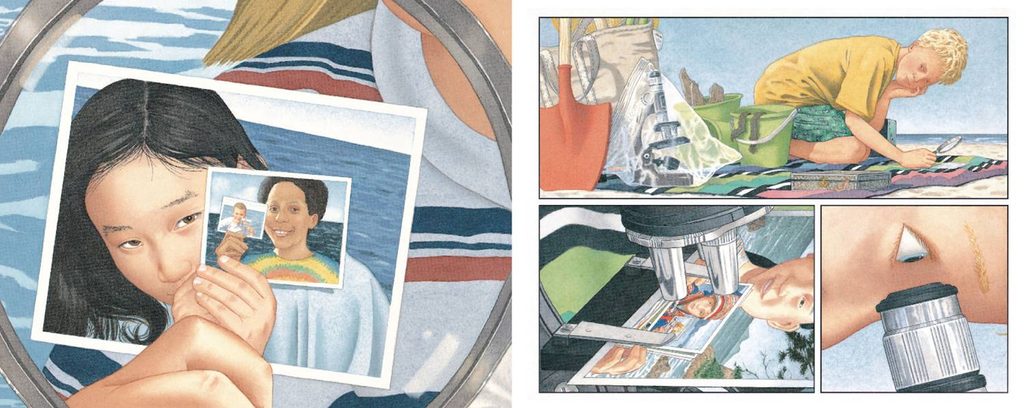
In short, what amazed the boy most was the last photograph. It depicted people: a girl who appeared to be from another continent, holding a photograph; a boy of some ethnicity, also holding a photograph; and a blond boy holding a photograph. The photographs progressed in layers, getting smaller and smaller. The boy had to use a magnifying glass, and then, remember, he even had a microscope with him, magnifying each one, level by level, up to 70x. Finally, the only clearly visible image of the boy was a black and white photograph, dressed in very old clothes, with old buildings and people from a bygone era in the background—it looked at least a hundred years ago, perhaps even back to Melville’s 19th century. It turned out that this underwater camera had drifted ashore from that era, passing through the hands of many children, and the photographs captured a journey across time.Memories—this is the third keyword.
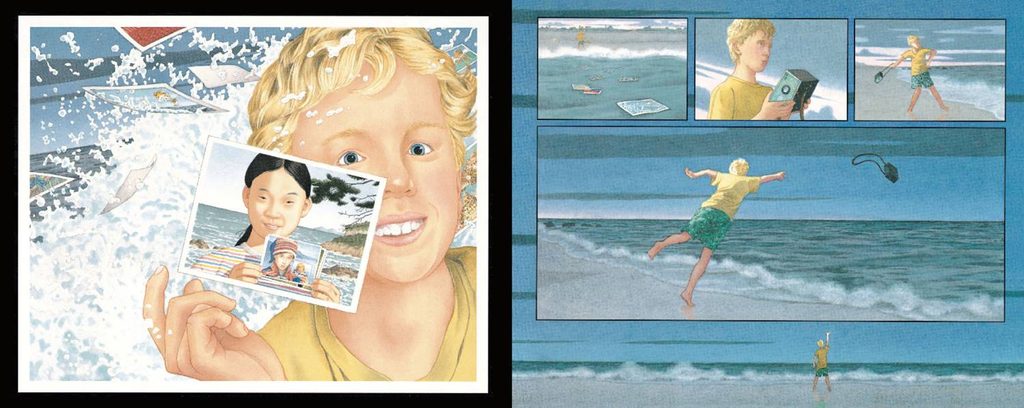
Looking at the photos that held countless memories, the boy felt as if he were in another world. He sat blankly on the beach, staring at them. We can see that most of the tourists had left; it was probably dusk. The boy desperately wanted to do something; he longed to join this journey through time. This is the fourth key phrase. So, he took a selfie in front of the Melville camera, holding up the last photo. How do you take a selfie with a robotic arm controlling a camera? Imagine, this is a tech whiz; he has a trick up his sleeve. After he took the photo, guess what? He picked up the camera and, like a slingshot, tossed it far into the sea. The camera then embarked on a new underwater adventure.
I won’t go into the details of the adventures that followed, but I’ll give you a little hint: they foreshadowed at least two books. One was his later graphic novel, *The Little Mermaid*, and the other was actually an e‑book, an app called SPOT. But that’s a story for another time. At the end of the story, the camera will naturally meet a similarly curious child on a beach in the future. And so the magical tale continues.
Okay, I’ve given a very brief overview of the storyline of “The Secret of the Sea.” As always, to truly enjoy this book, you have to read it slowly on your own, and it’s best to think about it together with your child.
So why did David Wiesner spend five years illustrating this magical story? The book is said to be 48 pages long from cover to back cover, but in reality, it features at least 90 large and small illustrations. Where did this painstakingly drawn story come from? Look at the dedication page: the author dedicates it “to my family and all those days by the sea.” It turns out that when David Wiesner was a child, until he was about 14, his family would spend about two weeks every summer vacationing at the beach. The boy in the book is roughly a reflection of David as a child.
Another incident deeply moved David. When he was nine, he and a friend accidentally unearthed a metal bull in the riverbed of a creek near their home. It was slightly damaged but mostly intact. This bull sparked a lot of imagination in the two boys. Since David was a little older, he may have found it first, so he temporarily kept it safe. Almost thirty years later, the friend met David again and brought up the bull, suggesting it was his turn to keep it. David recounted how the bull had disappeared in an apartment fire, leaving the two friends deeply saddened. David felt that this experience of remembering something was truly special, and thus, in *The Secret of the Sea*, the underwater camera was passed around like a relay. Every child who happens to get their hands on this camera will likely imagine the possible magical experiences, and the camera can capture the evidence.
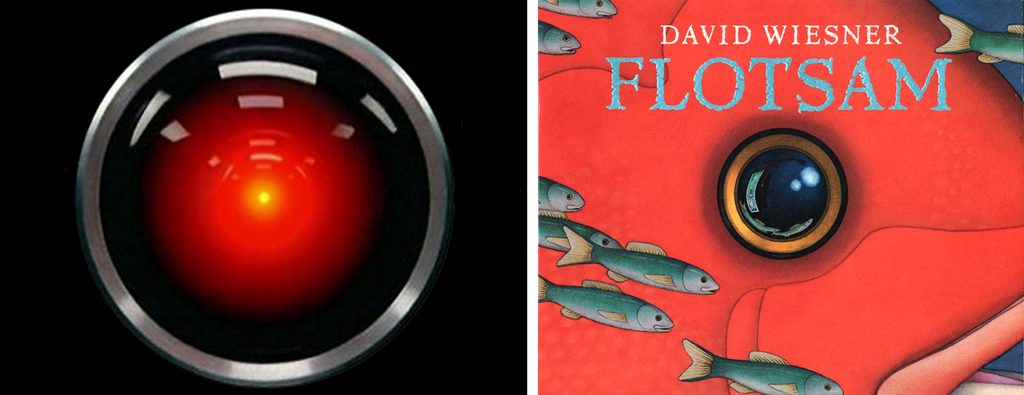
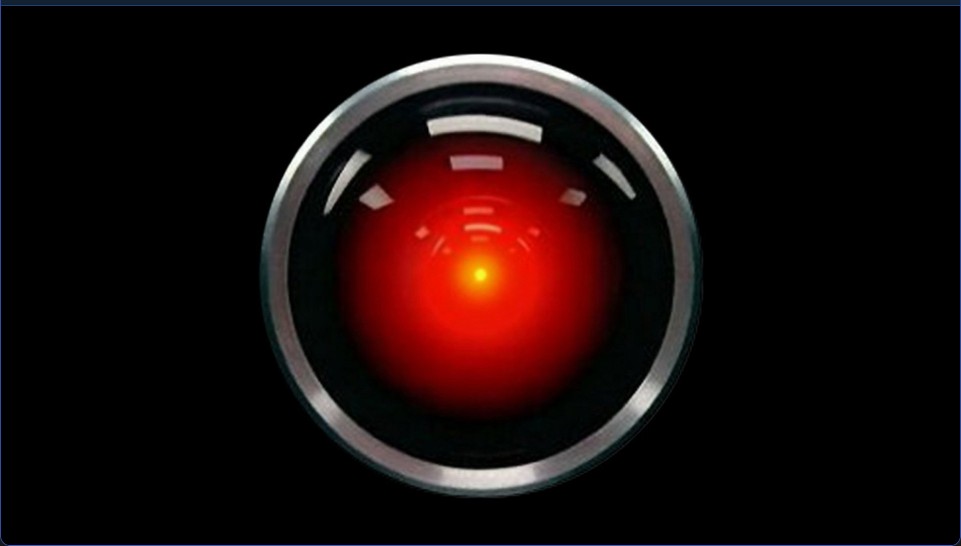
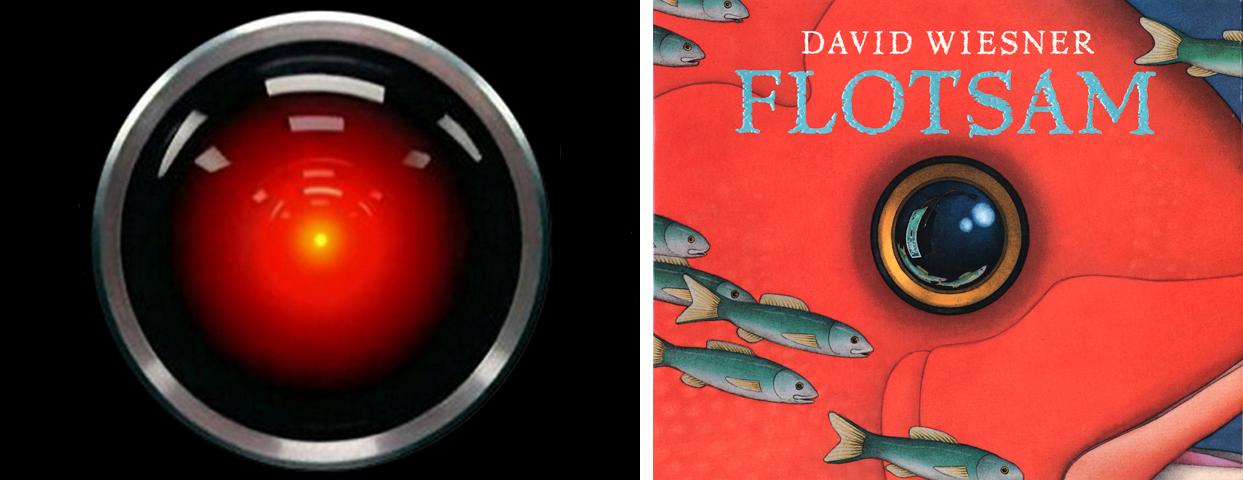
Regarding the profound influence of this creative approach and method, we must mention David Wiesner’s fascination with science fiction films. He watched his favorite film, *2001: A Space Odyssey*, at least 25 times. Although he didn’t think much about the film when he was drawing *The Secret of the Sea*, it wasn’t until the cover was printed that David realized the large eye of the red fish on the cover was actually the webcam of the supercomputer in *2001: A Space Odyssey*.
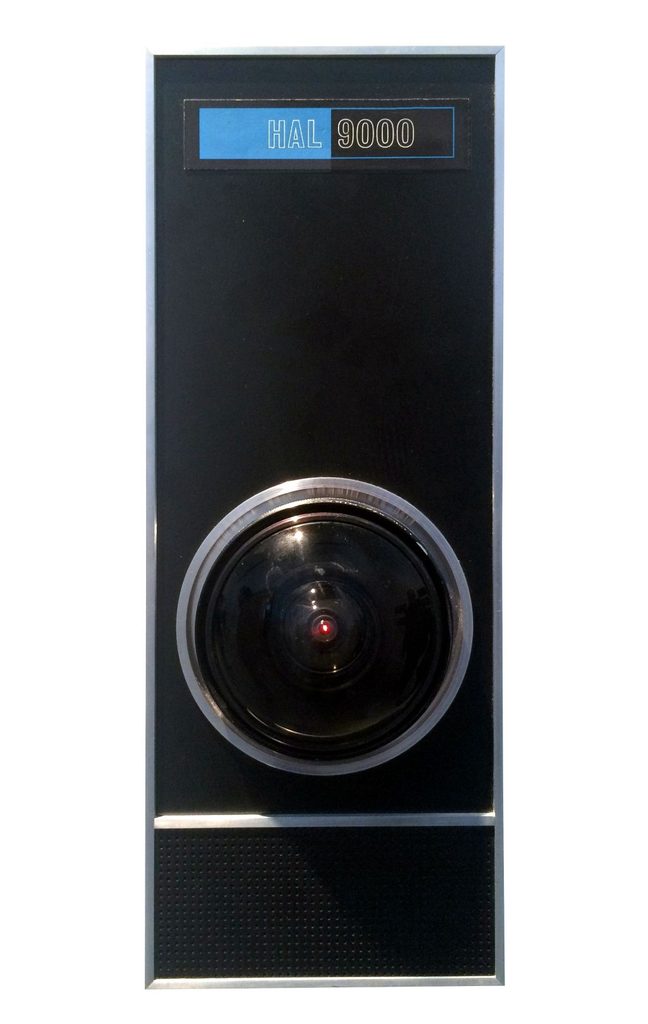
That film raises a very interesting question: is the endless development of technology ultimately beneficial or detrimental to humanity? Technological advancement is certainly cool, but can’t the supercomputer invented by humans also destroy humanity? David Wiesner seems to be showing children this possibility: to organically integrate the superpowers of machines with human intelligence and emotional abilities, and to use the power of technology to connect the past, present, and future. This cool artist is most concerned with connection itself; he longs to connect with his own childhood and, in doing so, connect with children of the present and future.
That’s all for this book for now. We’ll talk about the next one in the next episode.