The “Creator’s Notes” section of *A Brief History of Picture Books* only contains thirteen entries due to space limitations. I will gradually add more here as a kind of after-sales service. ^_^
The following content is mainly from “The Power of Childhood,” with slight updates.
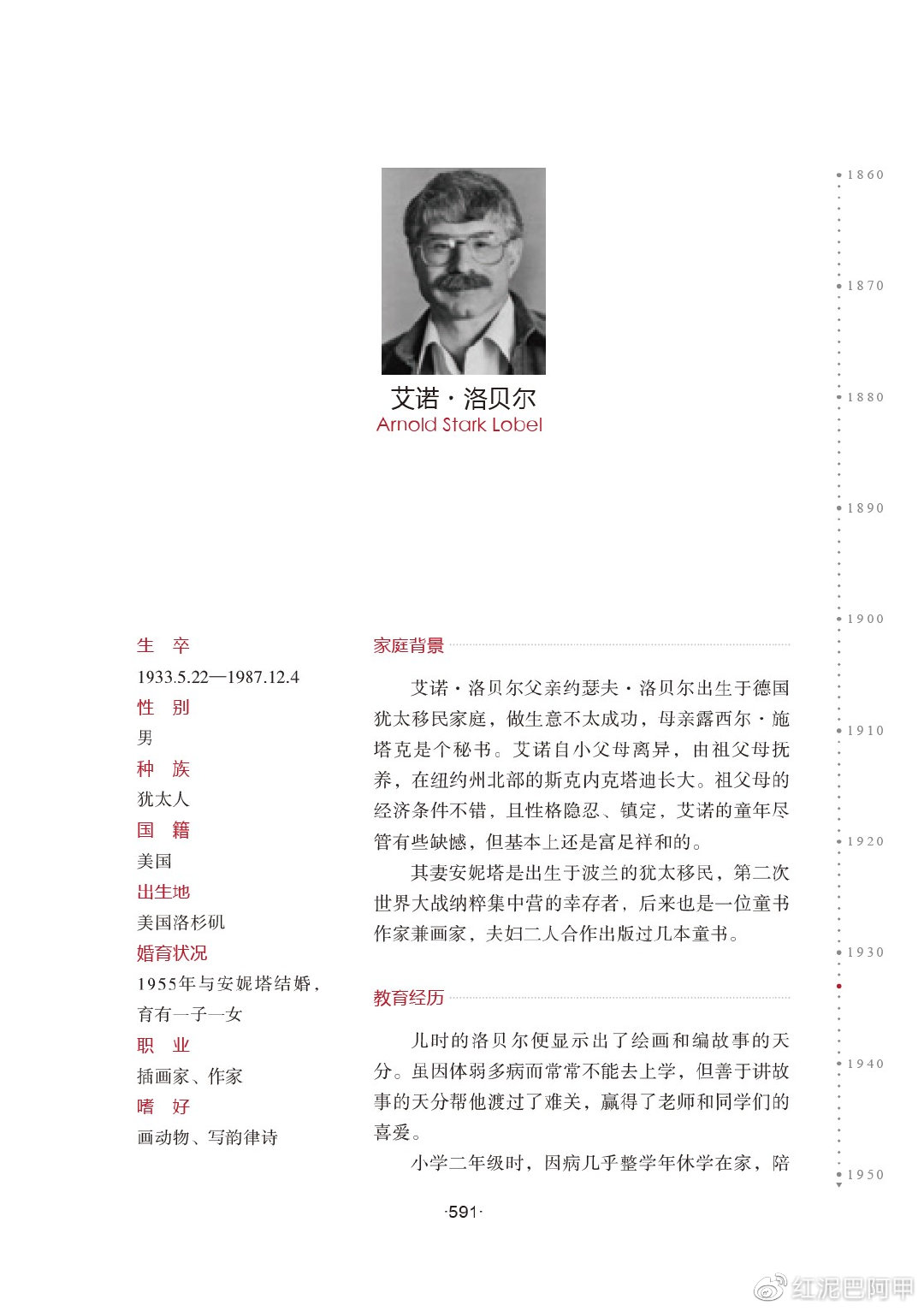
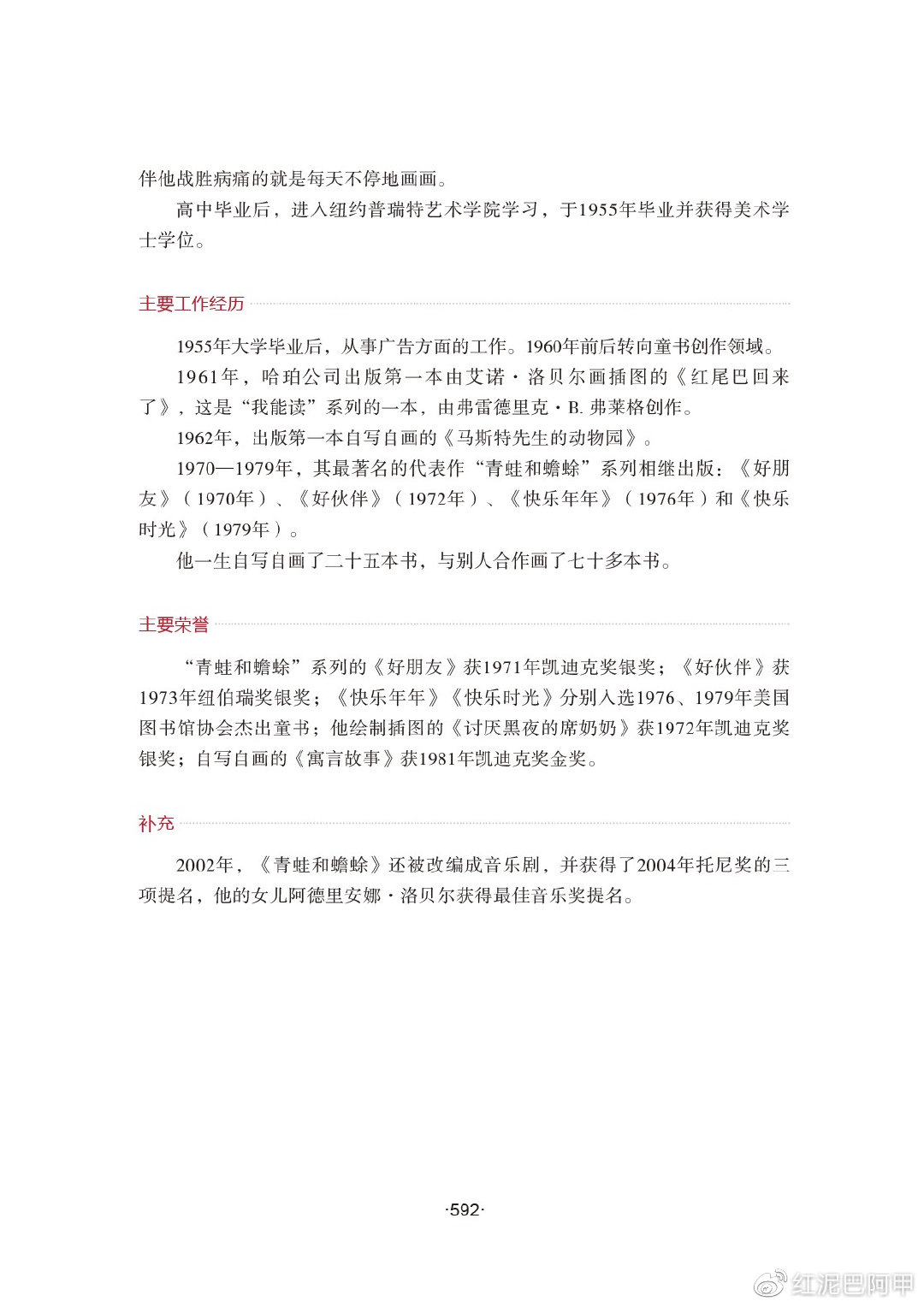 Arnold Lobel’s resume – from “The Power of Childhood”, completed by: Huang Jianping

Lobel’s Fables — Caldecott Medal Winner
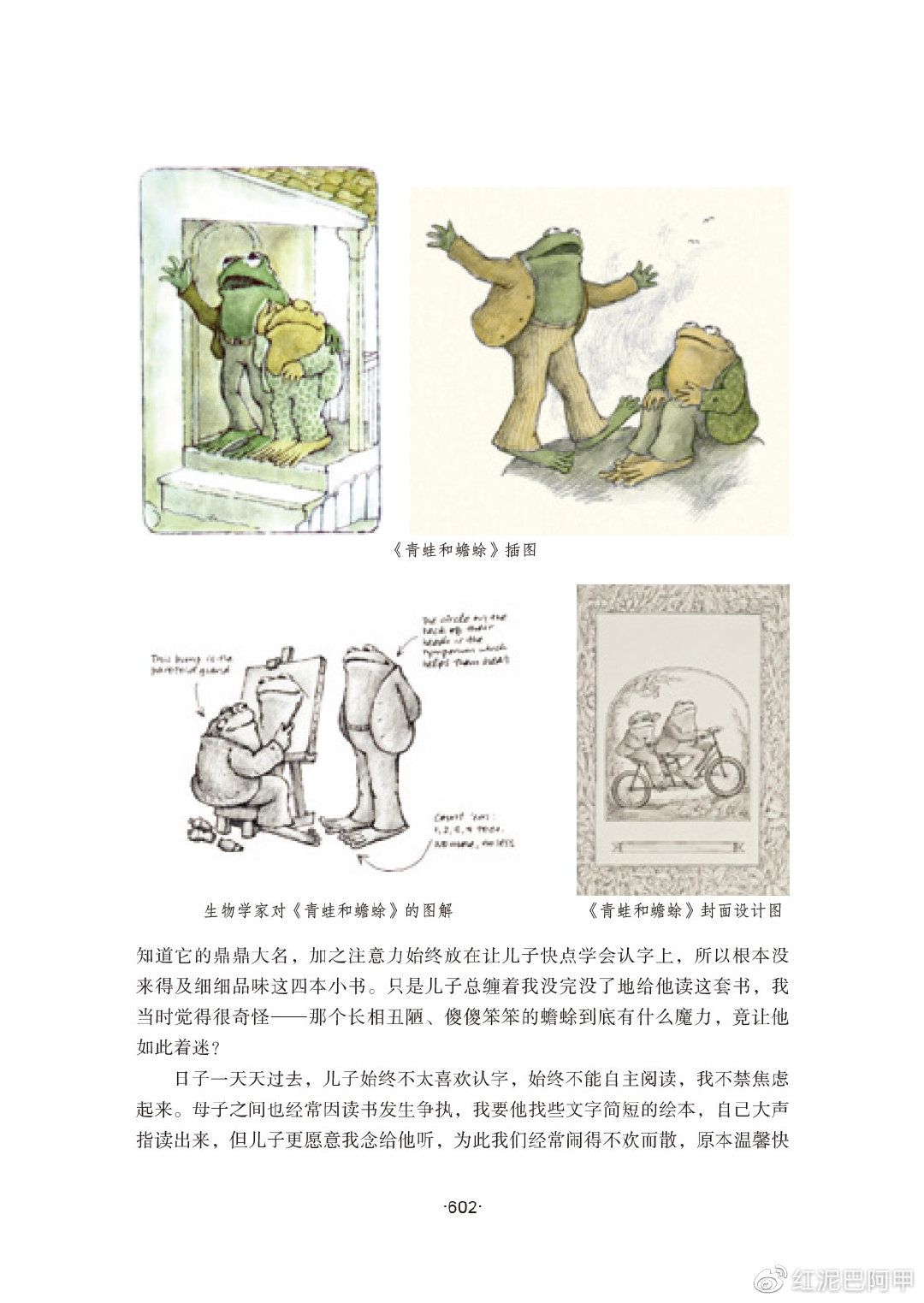
 Arnold Lobel’s masterpiece “Frogs and Toads” series
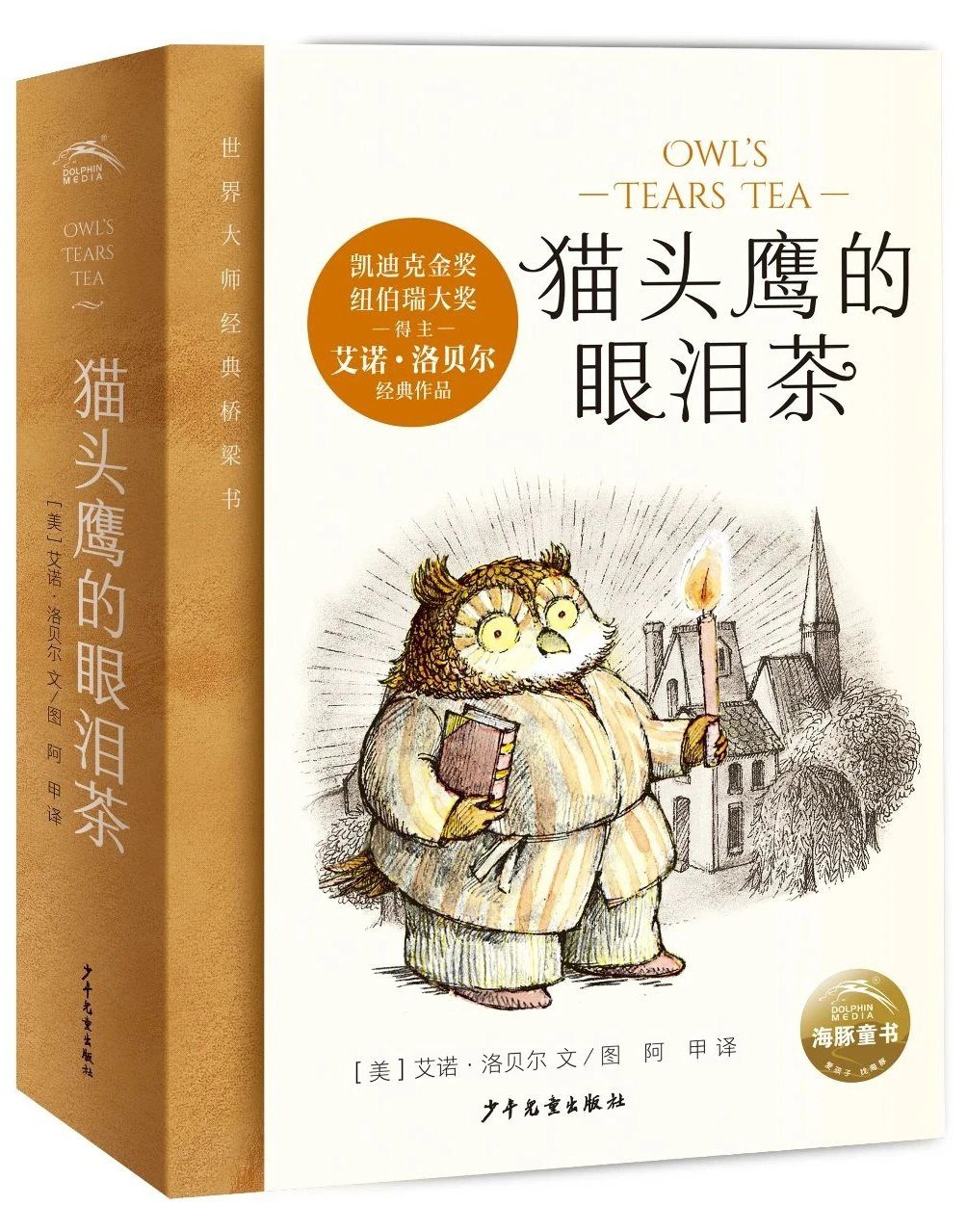
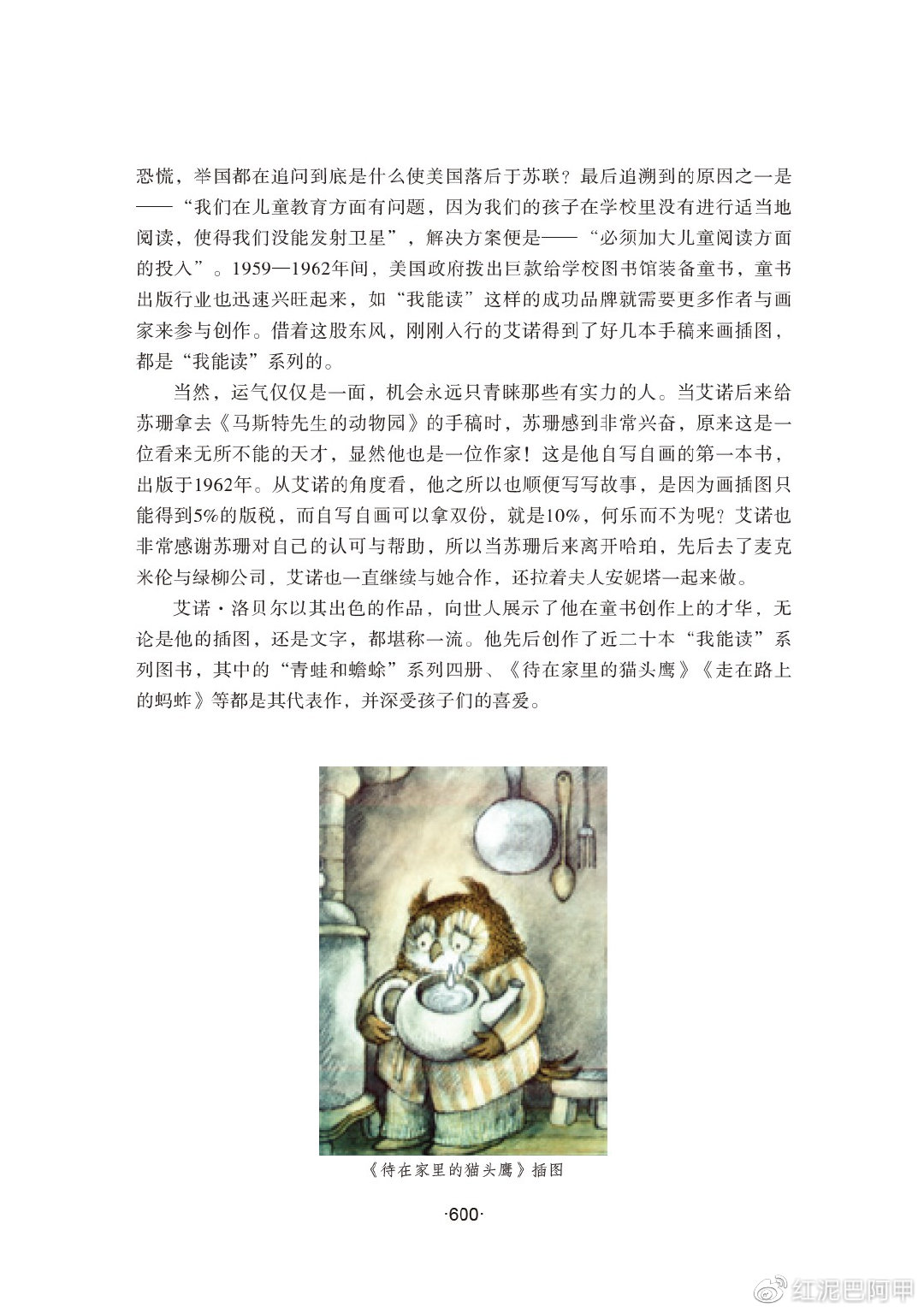
Arnold Lobel’s masterpiece from “I Can Read,” included in the Chinese edition of the “Owl’s Tears Tea” series.
The Lobel family has quite a story.
Arnold Lobel published a humorous picture book called *Ming Lo Moves the Mountain* (1982) when he was forty-nine years old (five years before his death). The story is clearly adapted from the ancient Chinese fable *The Foolish Old Man Who Moved Mountains*, but with significant structural changes. The protagonists are now a couple, and the wife makes the initial suggestion, advising her husband Ming Lo to ask the village’s wise man—in Jewish culture, this would likely be the rabbi of each settlement. The wise man’s advice is reminiscent of the methods in *Grandma Sheep Who Hates the Night*, such as cutting down trees to smash or banging on dishes. The couple tries all the obviously foolish methods without a second thought, and of course, none of them work. The clever man resorted to his last trick: he had the Mingluo couple carry all their belongings on their backs, face the dreaded mountain, close their eyes, and dance the Mountain Moving Dance. The basic steps of the dance were to step backward one step at a time. They danced like this for many hours before opening their eyes. The Mingluo couple did exactly as instructed, and sure enough, the mountain was finally “moved” away!
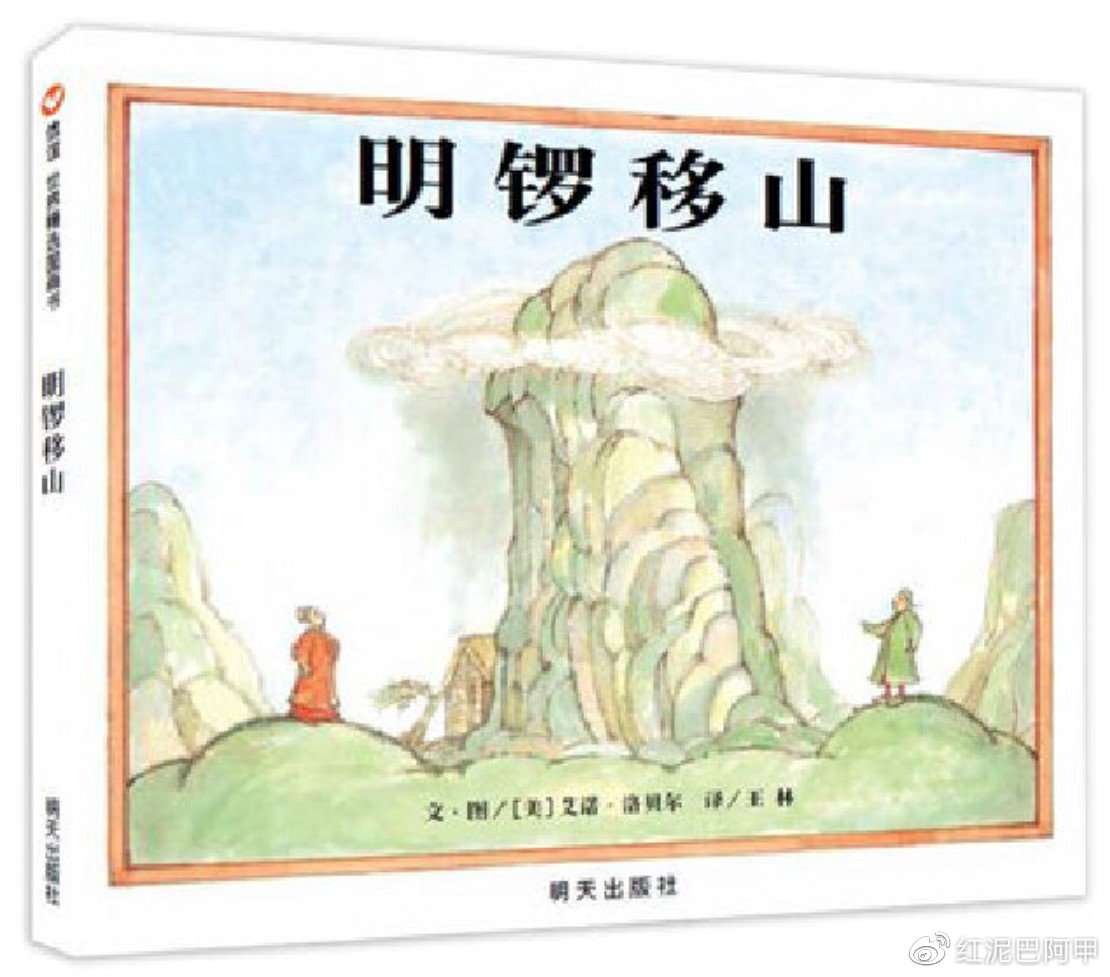 Cover of “Mingluo Yishan”
This is still one of Arnold’s signature stories—seemingly silly yet full of wisdom—and it likely stems from some real-life experience he had.
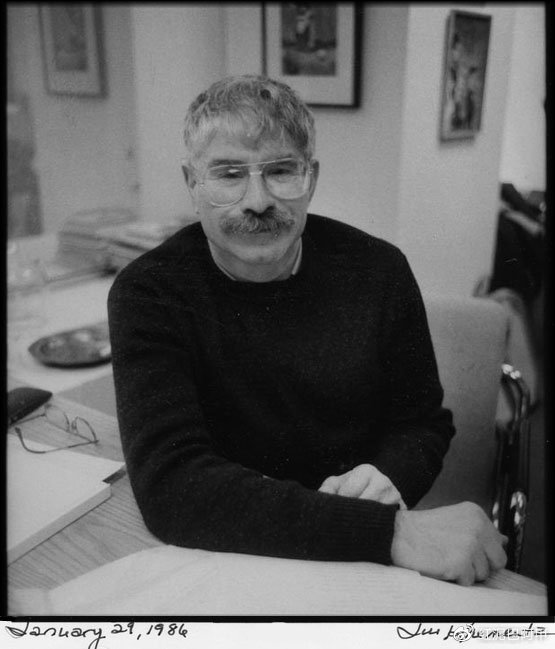 Arnold Lobel
 Anita Lobel
Arnold and his wife Anita were not only a married couple, but also excellent partners. They were classmates at Pratt Institute, perhaps not meeting in class or not noticing each other, but their shared love of theatrical performance led them to meet and fall in love in the academy’s drama club. A quick glance at the timeline reveals how quickly their relationship progressed: they met in 1955, graduated in 1955, married in 1955, and their daughter Adriana was born in December 1955! This young Jewish couple, fresh out of school with a daughter, struggled to build their careers while supporting their family. A few years later, their son Adam was born. The young couple initially worked in advertising design and freelance textile design, but both felt these weren’t truly their calling, and when opportunities arose, they both turned to children’s book illustration and creative writing.
The couple’s first self-written and self-illustrated books had two things in common: first, both benefited from the encouragement of Susan Carl Hirschman, an editor at Harper’s Books at the time, whose help Anita later mentioned in the preface and afterword of her autobiography; second, both were related to their small family. Arnold’s *Mr. Master’s Zoo* was inspired by a family visit to the zoo, with materials collected on the spot; Anita’s debut children’s book, *Sven’s Bridge*, was inspired by a family trip to a folk museum in New England. Anita recalled that she gradually completed the manuscript after Arnold had fallen asleep with the two children during the trip. The Lobels shared a studio, taking turns caring for the children and creating, much like a family workshop.
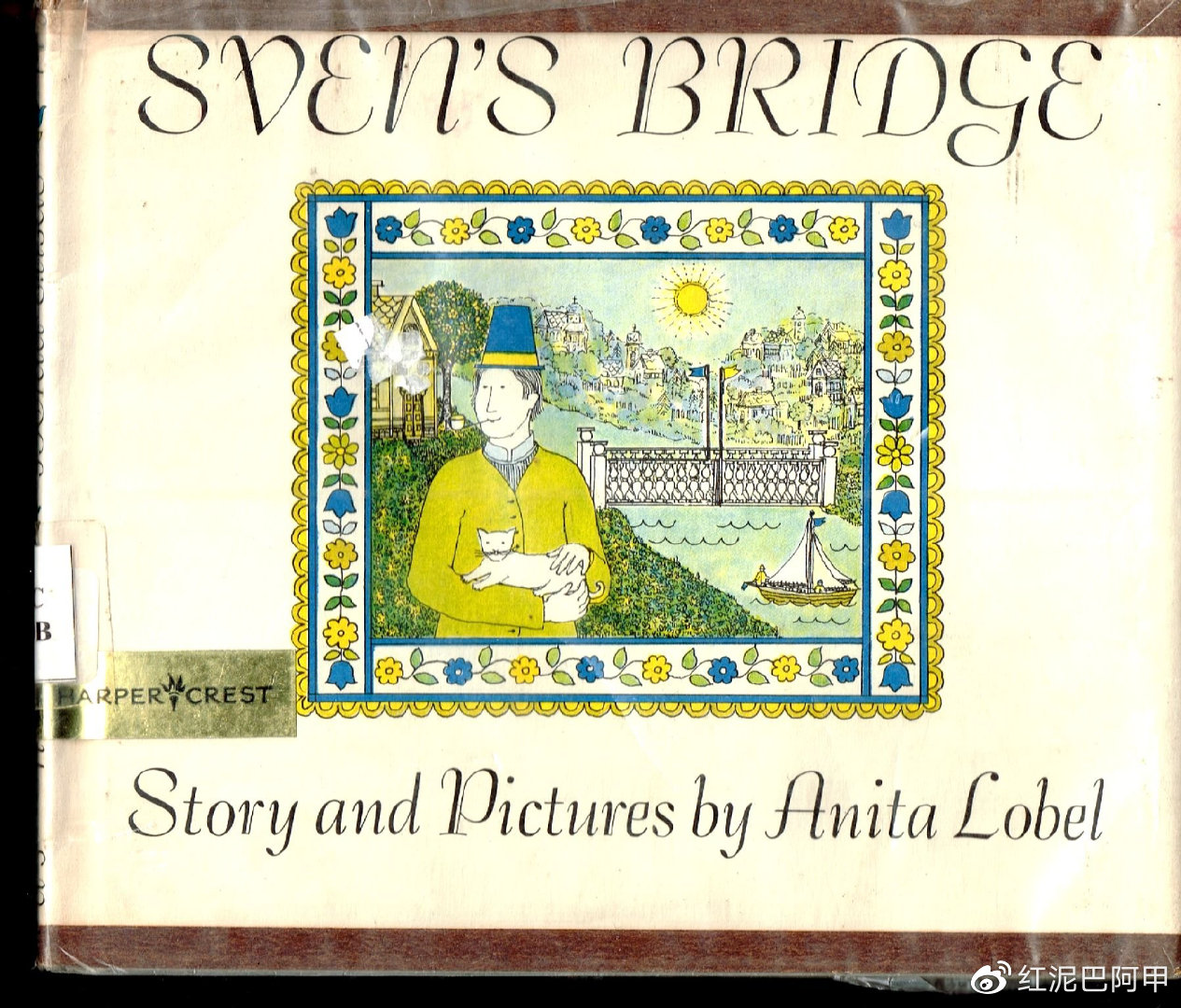 Original cover of “Siwen’s Bridge”
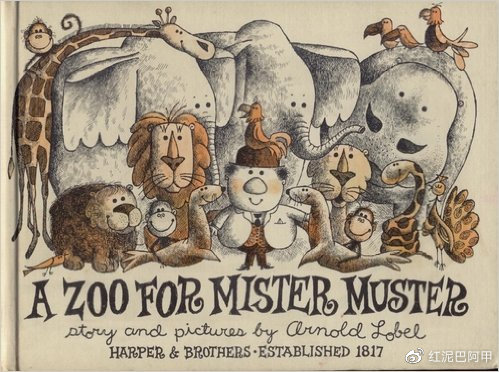 Original cover of Mr. Master’s Zoo
Arnold’s writing certainly benefited greatly from family life. His daughter, Adriana, later recalled that the idea for “Frog and Toad” originated from a conversation between father and daughter during a vacation. That summer, they were vacationing near Mount Vernon in New York State—coincidentally, the place where E.B. White was born and raised. His daughter brought back a toad from the wild, and Arnold casually remarked, “Your frog is great!” Adriana, who was then fascinated by animals, explained to her father in detail how to distinguish between frogs and toads. Soon after, the story of Frog and Toad, which would later captivate countless readers, was born. Of course, Arnold was actually telling a story about two good friends, but he felt that using human figures wouldn’t be as effective or fun. Instead, he used two amphibians that are easily confused by most people: the one who likes to stay in the mud is the toad, who always seems a bit pessimistic, while the frog is like an athlete, always full of energy. This made the story between the two particularly entertaining. Arnold later explained that color illustrations at the time required color separation, with each illustration needing four color plates. Working on a single painting for a long time would be incredibly boring for the artist if it wasn’t enjoyable! To put it bluntly, wouldn’t it be much less work to paint green frogs and toads?
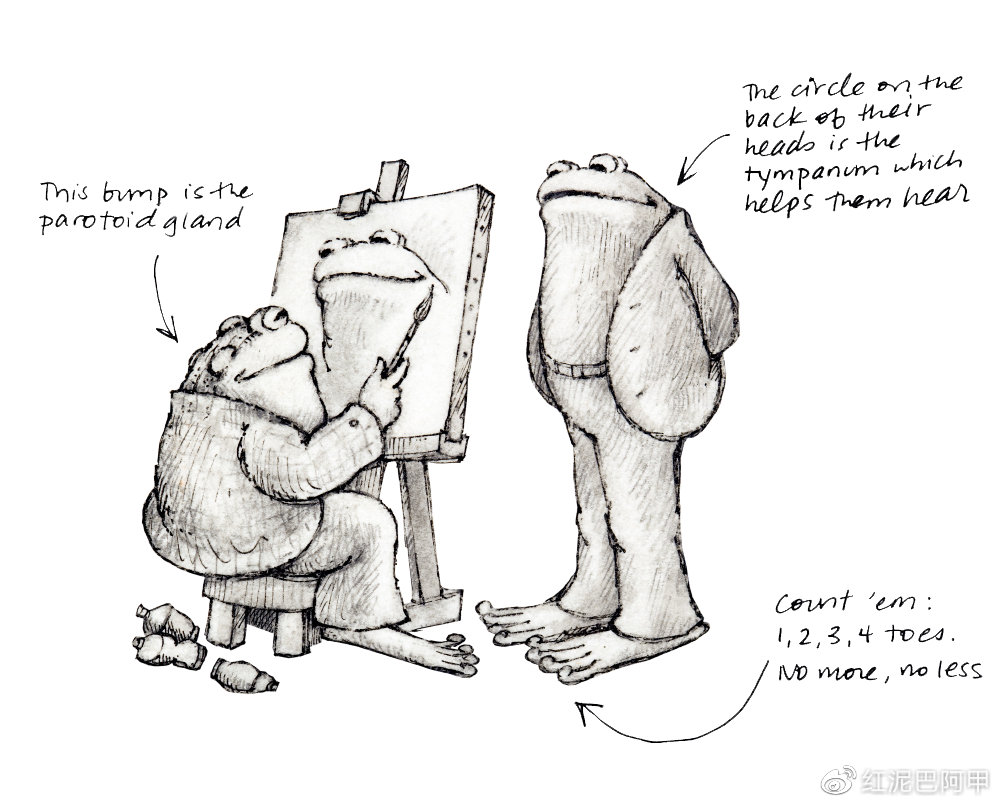 Biologists’ illustrations of frogs and toads
Interestingly, many British and American readers later discovered homosexual tendencies in their interpretation of the relationship between the frog and the toad. This stemmed somewhat from speculation about Arnold’s private life. He died of AIDS in December 1987. While the possibility of infection through injection or other means cannot be ruled out, it still inevitably leads to speculation about his sexual orientation, though there was no publicly stated fact on the matter. Years later, according to Don Shevy, a New York art and theater critic, Adriana confessed to him at a solo exhibition that they later discovered her father was a closeted gay man. Today’s readers seem unfazed by this; on an Arnold enthusiast website, users unanimously voted that Arnold was actually bisexual. Clearly, this does not diminish their love for Arnold.
Adriana Lobel is a highly influential figure in New York’s theater and arts circles. An active stage designer since the 1980s, she is also a painter, holding a solo exhibition in January 2010. She and her brother Adam co-produced the successful musical *Frog and Toad*, which received three Tony Award nominations in 2004, with Lobel herself receiving a nomination for Best Original Score. Adam is a musician living in Boston, where he and his sister manage their father’s estate and works. Adriana’s husband, Mark Linn-Baker, a prominent and accomplished actor in the American entertainment industry, also participated in the musical. He is said to be a devoted fan of the *Frog and Toad* story, and upon meeting Adriana and learning she was Arnold Schwarzenegger’s daughter, he was overjoyed and likely fell hopelessly in love with her from that moment on.
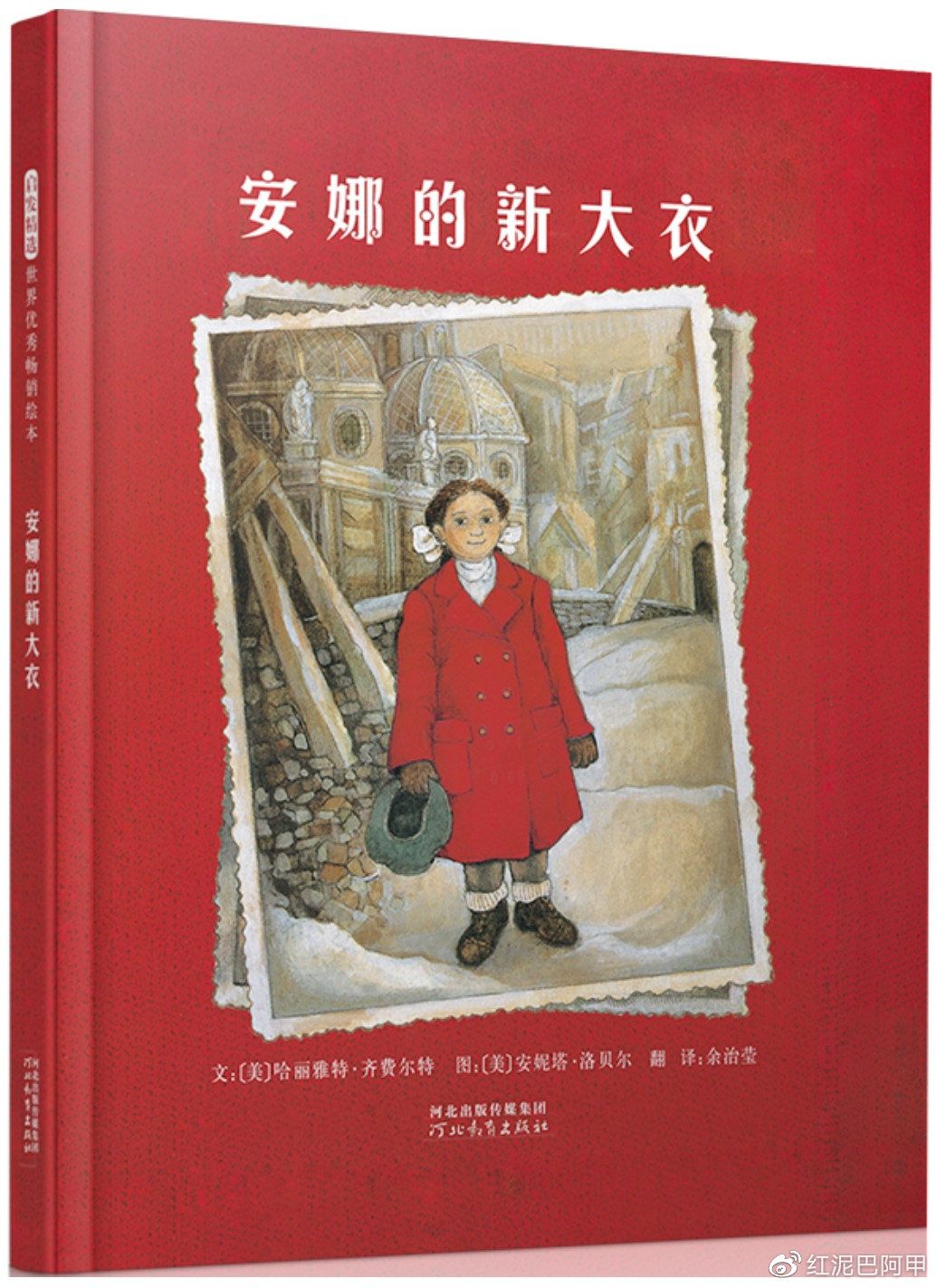 The cover of Anna’s New Coat
Let’s talk about Anita Lobel. She’s actually the most interesting member of the family. Chinese readers aren’t very familiar with her; currently, only one book illustrated by her, *Anna’s New Coat*, has been imported to mainland China. Although the story may not necessarily take place in a Jewish community, it inevitably evokes Jewish culture, which is certainly related to this artist. The story is set right after the end of World War II, a period Anita is most familiar with and has the most to say about.
Anita was born in 1934 into a wealthy Jewish family in Poland. Her father, Leon Kempler, owned a successful chocolate factory and reportedly possessed a large collection of furs and jewelry. Her mother employed a group of servants and a nanny to care for Anita and her brother. As successful businessmen, the Kempler family employed local Polish workers to avoid appearing too Jewish. The nanny, known as Ninya, was a devout Catholic. Had life continued as normal, Anita, this “little princess,” might have been pampered, received a highly aristocratic education, and entered into a marriage of equal social standing… But the German invasion of 1939 destroyed everything. At the age of five, she witnessed the horrific scenes of looting and massacre. Her parents were sent to a ghetto and a concentration camp. Ninya, the nanny, disguised the two children as her own, hiding them in the countryside and later in a convent, where the nuns cared for them. He remained hidden until 1944 when Nazi soldiers discovered him and sent him to the Plasov concentration camp.
This was a truly terrifying childhood experience. After hearing about Anita’s ordeal, many people urged her to write it down. However, Anita was always reluctant to write it, probably because it was a memory she didn’t want to easily revisit. But in 1998, when she was a 64-year-old grandmother, she finally agreed to write it down and publish it. The publisher of this book, *No Pretty Pictures: Children in War*, was Green Willow Books, founded and managed by Susan Hirschman. In the book, Anita expresses her deepest gratitude to Susan.
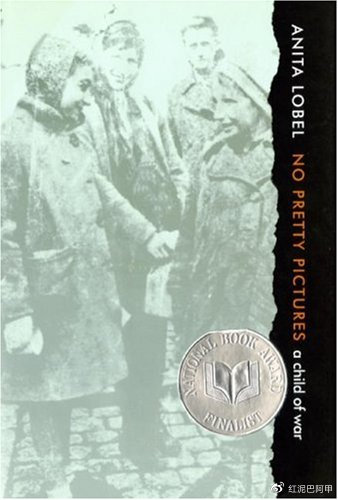 Anita’s autobiography cover
Somewhat surprisingly, this little book recounting those horrific years is quite simple and straightforward, narrated entirely from a child’s perspective. There are no dramatic scenes, no intense sadness or hatred on the surface; instead, it’s filled with the unique feelings of childhood and an ever-present curiosity. For example, the Jewish girl’s appreciation of the beauty of the Catholic church (which later led her to a passion for painting and music); the immense sense of security she felt holding the statue of the Virgin Mary and Child given to her by her nanny; even the sister’s inexplicable sense of accomplishment at being able to find her way through the infamous Auschwitz concentration camp during their transfer to Germany. For some reason, reading this story reminded me of the Italian film *Life Is Beautiful*.
Anita and her brother were fortunate; they were rescued by a Swedish Red Cross rescue team in 1945 and taken to Stockholm. The kind Swedes helped them recover, cared for them, and sent them to school. Anita immediately fell in love with everything Swedish, and she became madly in love with school, almost every subject, but of course, her greatest loves were drawing and reading. 1945 was also the first year of Astrid Lindgren’s Pippi Longstocking series, and Anita became obsessed with Pippi, enthusiastically illustrating the stories. In 1947, the image of the Virgin Mary and Child that Ninja had given them seemed to have worked again; the surviving Kemplers arrived in Stockholm and were reunited with their two children. The family, separated by war and massacre, was miraculously reunited!
In 1964, when Anita wrote her first children’s book, “Sven’s Bridge,” she dedicated it to the Swedish people who rescued and helped her, the people who built the bridge of reconstruction that would forever be etched in her heart.
(Argentina)

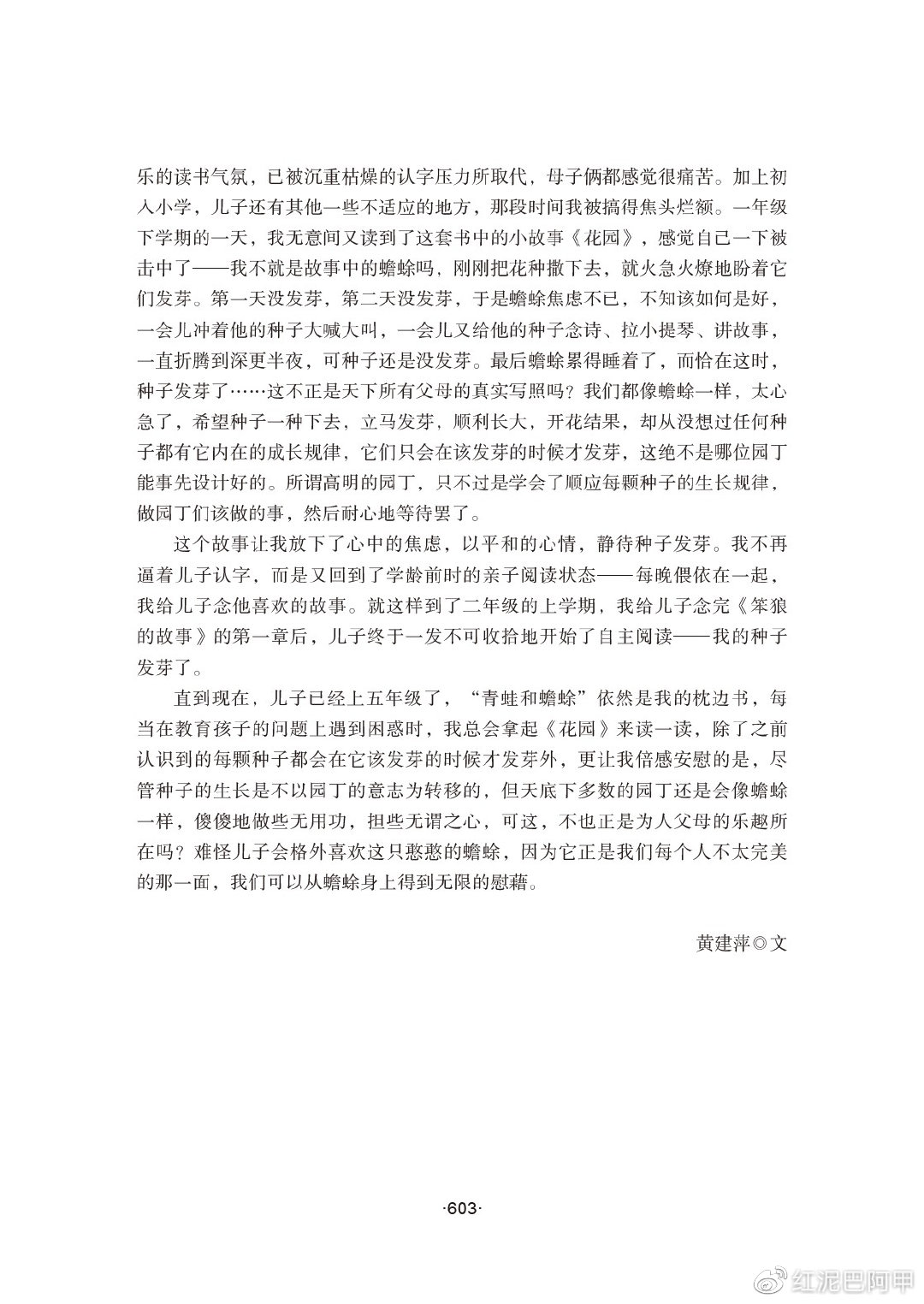
The following is a story about Arnold Lobel, “The Frog and the Toad Forever,” a screenshot from “The Power of Childhood” by Huang Jianping.