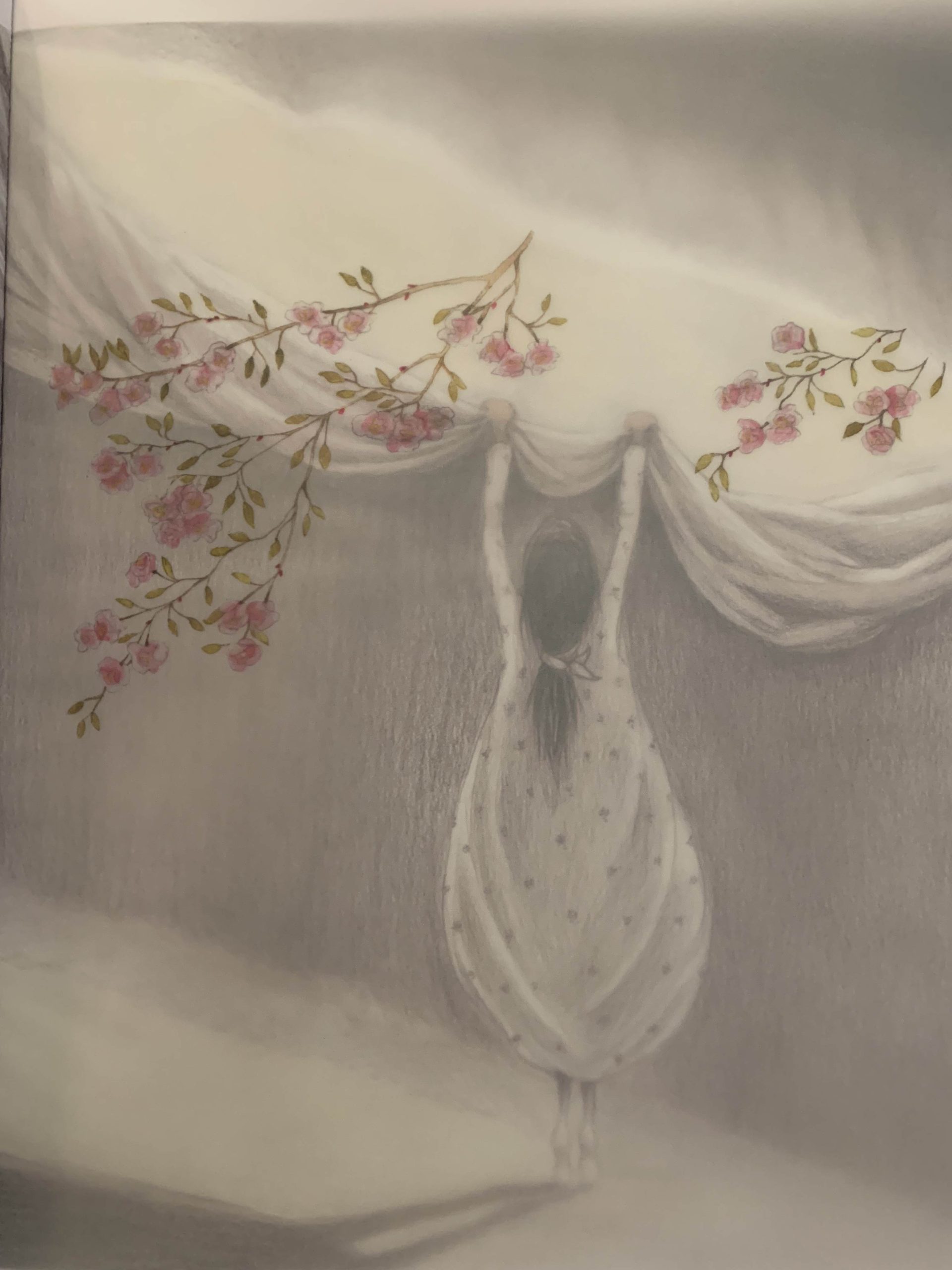
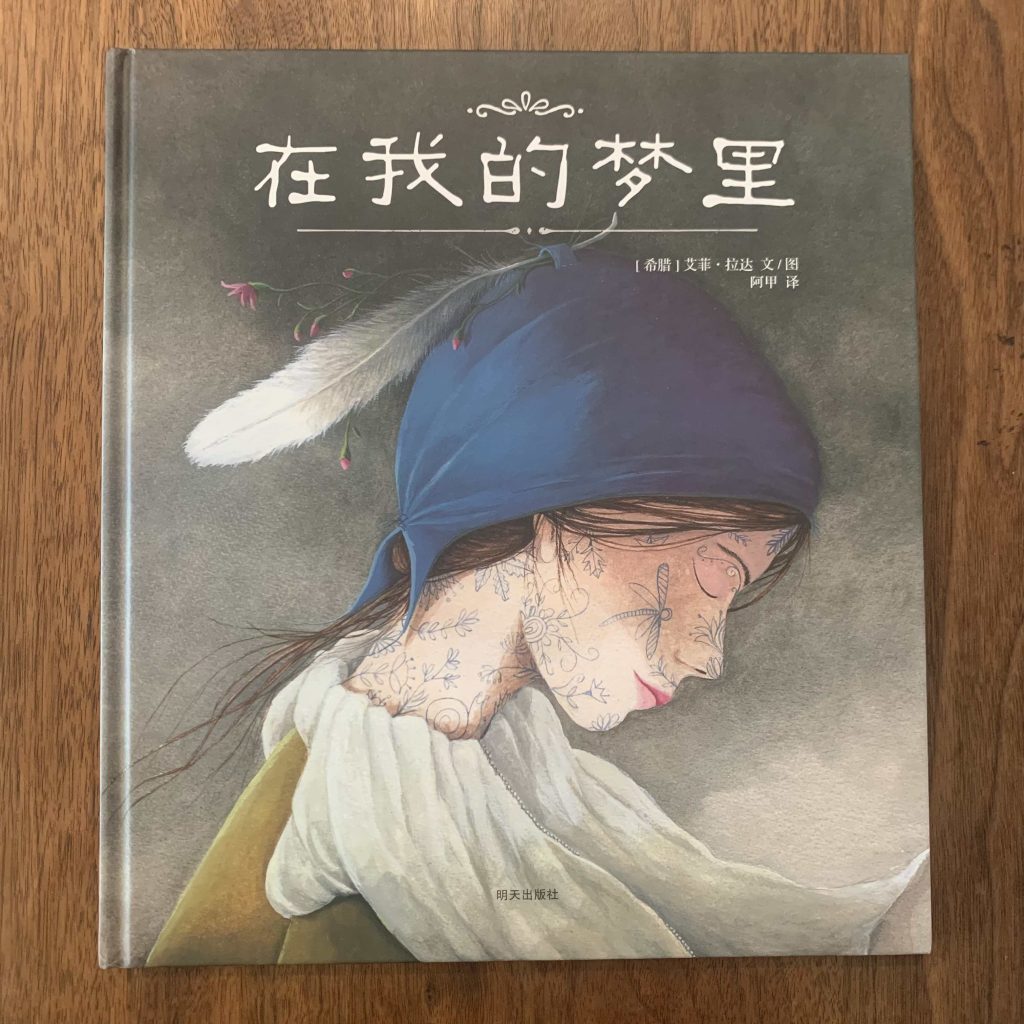
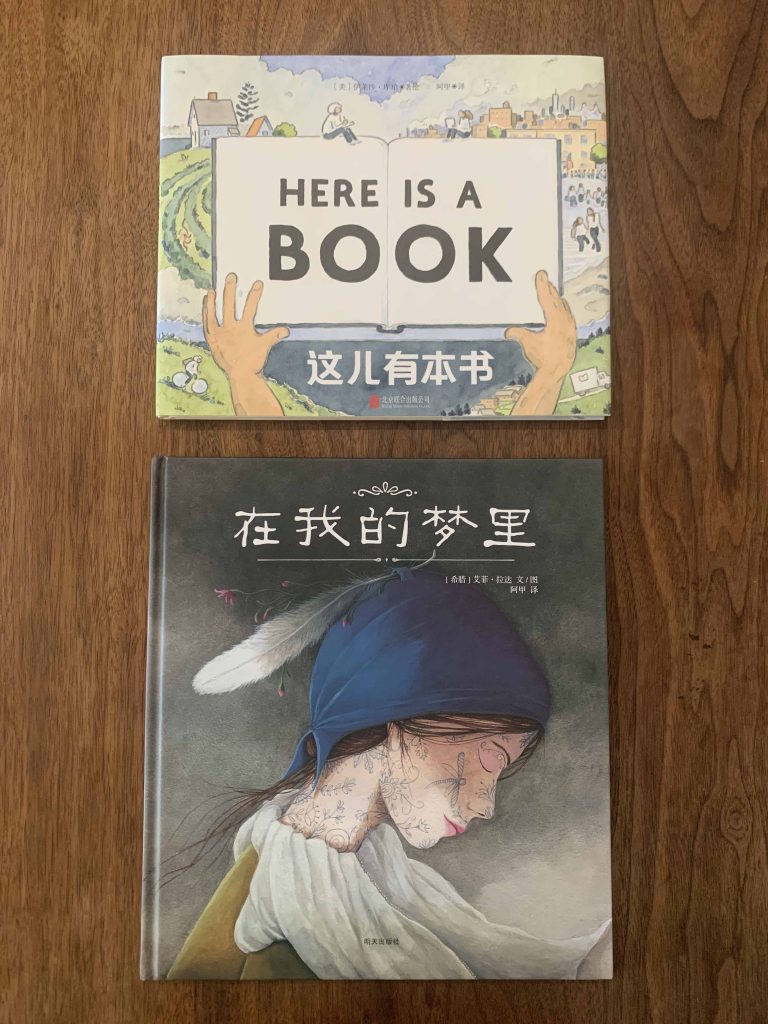
“In My Dreams” is a dreamlike work by Greek picture book artist Effie Lada (1959~). It brings us a dream world full of poetry and imagination, conveying a beauty that transcends reality and a profound emotional experience to readers of all ages. It focuses on dreams and explores the themes of dreams and growth, and dreams and self-awareness. Although this is the first time Effie Lada’s work has been introduced to China, she has actually been in the industry for many years and enjoys a high reputation on the world picture book stage. She has been nominated for the Astrid Lindgren Memorial Award and the Hans Christian Andersen Award, and her works are beloved by readers in Europe and America.
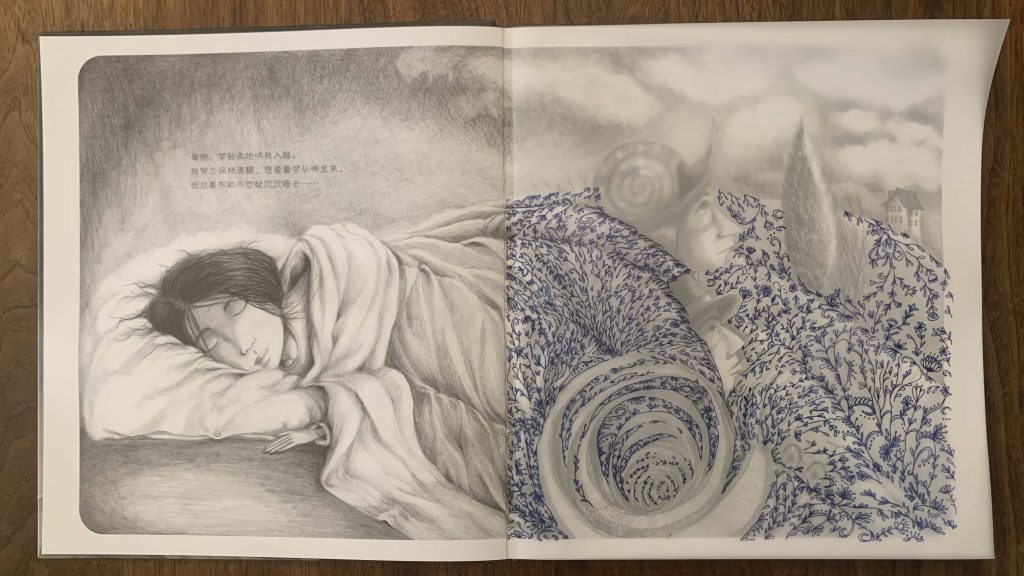
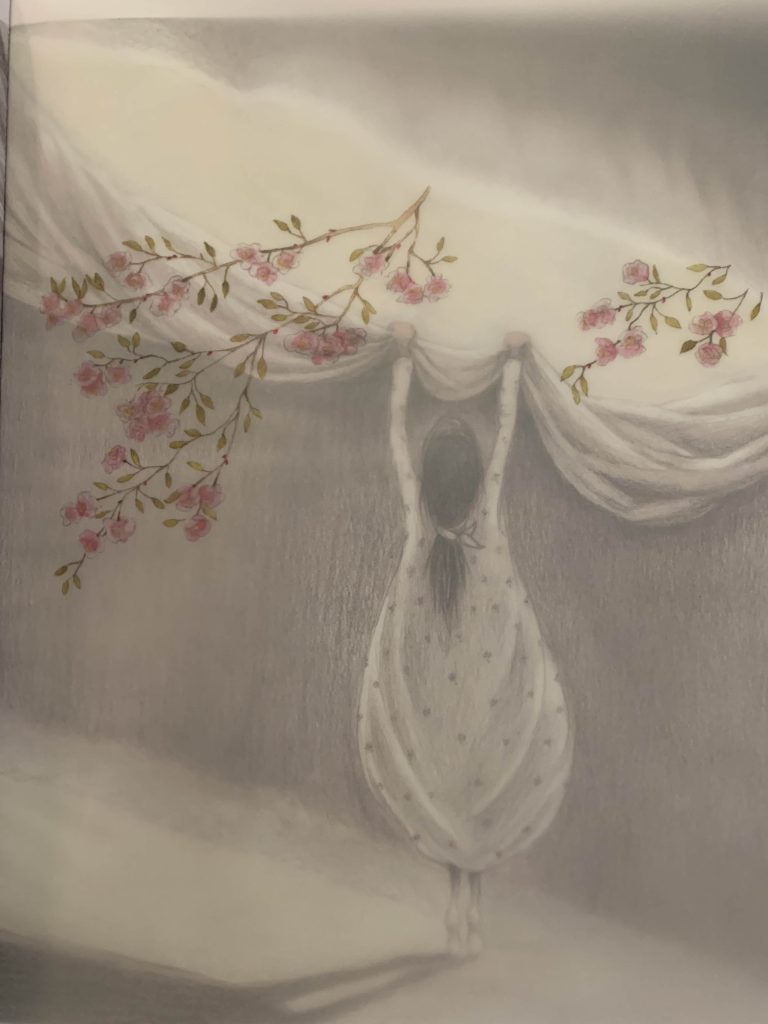
The first impression this book gives readers is its striking visual impact. The extensive use of soft pencil drawings creates a slightly hazy, dreamlike quality. Rada’s style is delicate and expressive; many scenes are filled with a fairytale-like fantasy, such as children floating on feathers or walking in the dark in shimmering clothes. These images cleverly intertwine reality and dreams, blurring the lines between the two. In fact, some critics noticed Rada’s dreamlike style early on: “Her delicate figures always seem to be dancing, as if they are never truly on the ground. Influenced by natural elements and emotions, these figures often bend and sway to deeply reveal their inner world.” This visual treatment always evokes a sense of fantastical detachment from reality.
What’s even more unique is that the book uses translucent tracing paper as inserts, placed between the black and white illustrations on the double-page spread. As readers turn the pages, the originally simple images become more layered due to the colorful patterns on the tracing paper, further enhancing the ambiguity and mystery of the dream.
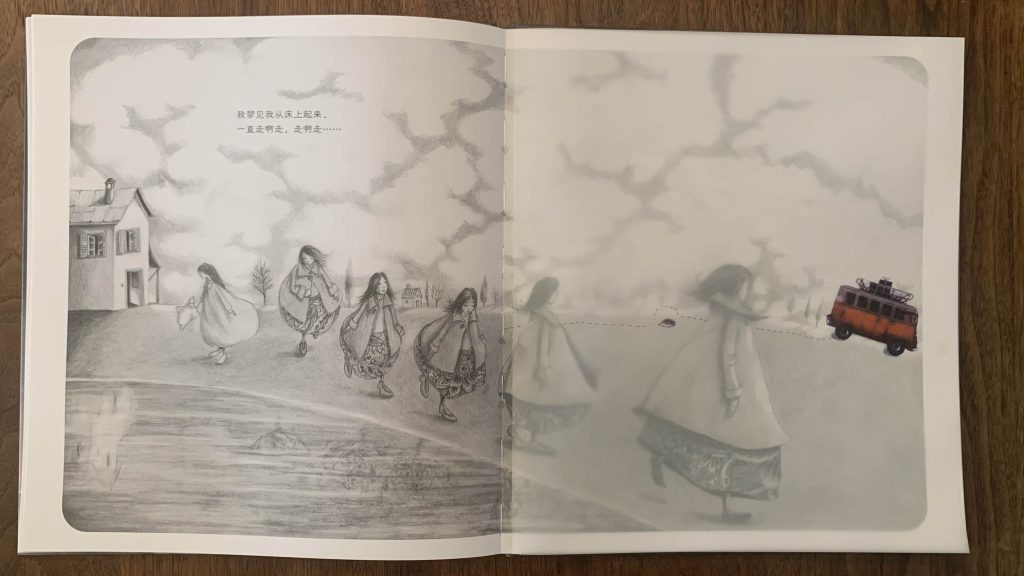
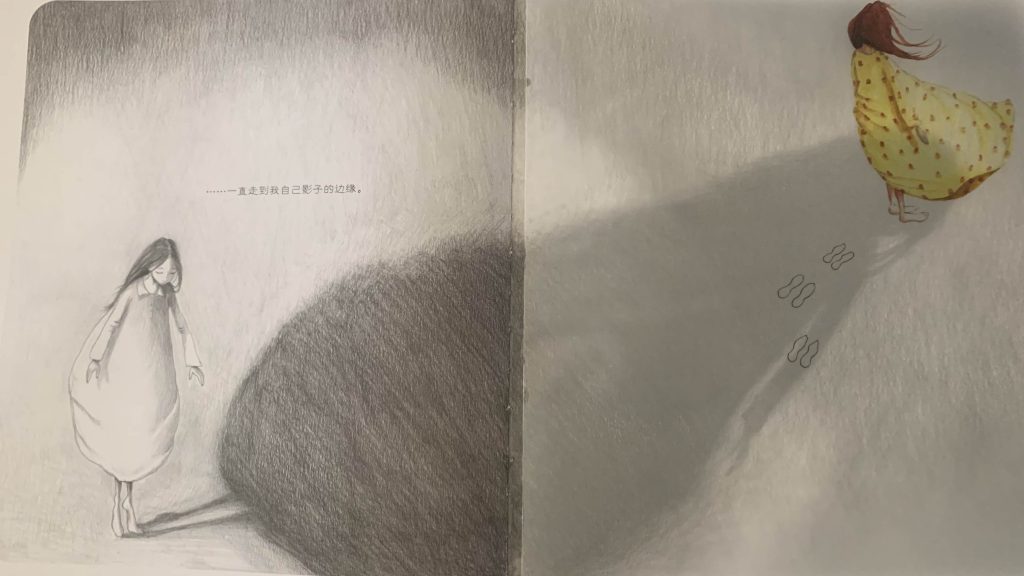
For example, on pages 20–21, “I dream that I get out of my bed and I walk and walk and walk …”, in the black and white illustration, a half-asleep girl wanders out of the room, heading to the right, but her destination is unclear; at this moment, on the tracing paper, a colorful bus is driving towards the right edge of the page, and strangely, judging from the dotted line of the bus’s movement, it deliberately avoids a hedgehog in the road; and turning the tracing paper, the bus is driving in the opposite direction on the left page. The girl continues on to pages 22–23, “…until I reach the edge of my own shadow.” Looking at the black and white illustration alone, there is only the girl and her long shadow, but in the colored illustration on the tracing paper, there is also a colorful girl herself standing at the edge of the shadow…
This gradual visual change not only immerses the reader in the wondrous atmosphere of a dream but also creates a unique interactive experience, making the process of turning the pages feel like an active journey of exploration within the dream world. Many readers are captivated by this exquisite design, praising it as “full of tenderness and inspiration on every page.” Children, through this unique visual design, can experience the layered progression of the visuals, more intuitively feeling the fantastical and ever-changing nature of dreams.
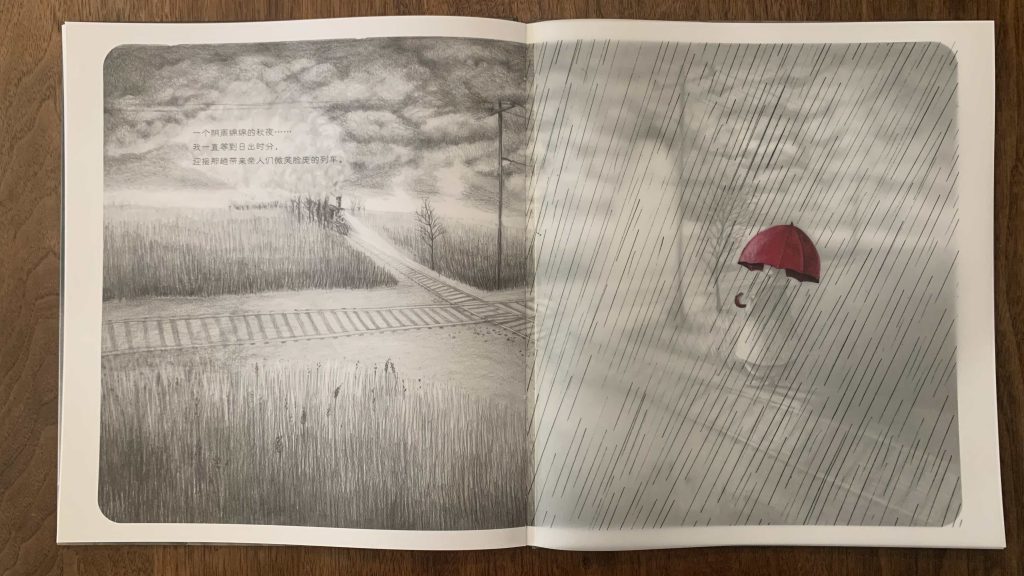
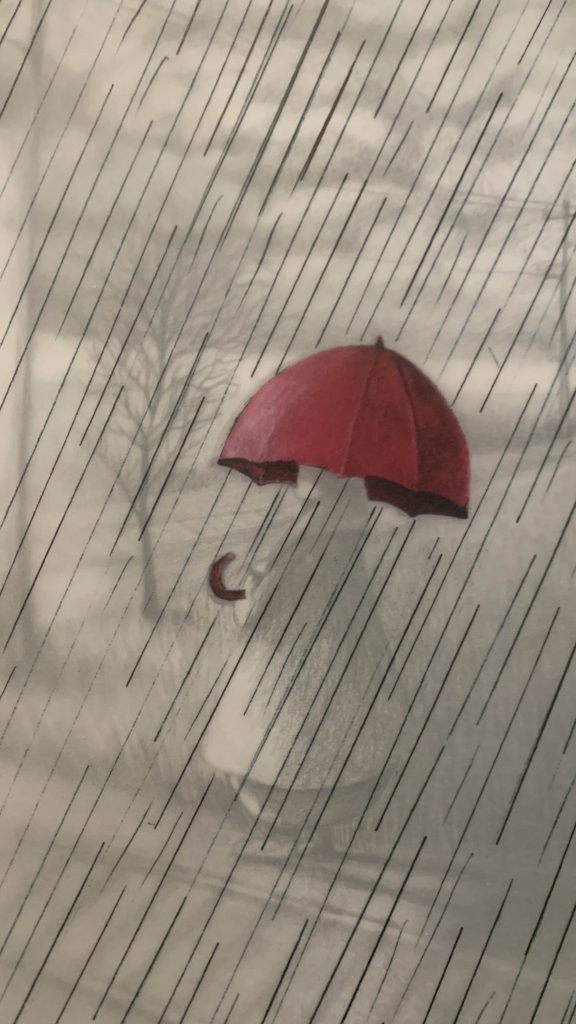
While translating this book, what particularly moved me were pages 14–15: “A rainy fall evening … I wait until sunrise for the train that brings me the smiling faces of my loved ones.” Although the main imagery is in black and white, it evokes a pure warmth and anticipation. The fields and distant views, rendered with delicate lines, create a sense of openness, yet not emptiness; rather, the tranquility of the fields instills a sense of peace. The protagonist stands beside the railway tracks, the intersecting lines pointing into the distance, seemingly guiding the eye to the approaching train. The soft light brings a sense of peace, especially the streetlights on the right, which seem to envelop the waiting protagonist in a warm halo. But the most exquisite element is the drizzle on the tracing paper and the splash of red umbrella, which adds to the dreamlike haze and uncertainty, as well as the dynamism of the rain. Once this veil is lifted, the reader feels a profound sense of reassurance. That splash of red allows one to feel a warm and joyful anticipation within the uncertain, flowing imagery.
This visually stunning picture book, through the ingenious combination of text and dynamic images, profoundly explores the relationship between dreams and life, and dreams and growth. Radha’s narrative is concise and poetic; through a child’s perspective, she showcases the diversity and possibilities of dreams—from wearing beautiful clothes to flying on feathers, from strolling through a nighttime garden to exploring a maze. Dreams provide children with a world full of imagination, far removed from the constraints of reality.
Although the book emphasizes that “dreams almost always take place in the dark,” these dreams are not negative; they are full of positive meaning. Through these dreams, the protagonist gradually discovers and accepts herself, ultimately reaching a moment of light—“I look the world in the eye and … I am myself.” In this process, the author not only reveals the fantasy and mystery of dreams but also conveys to children a concept of growth that involves facing reality and accepting oneself. At the end of the story, even though the child returns to the real world and faces the cracks in the wallpaper, she still chooses to face the world and accept the beauty within its imperfections.
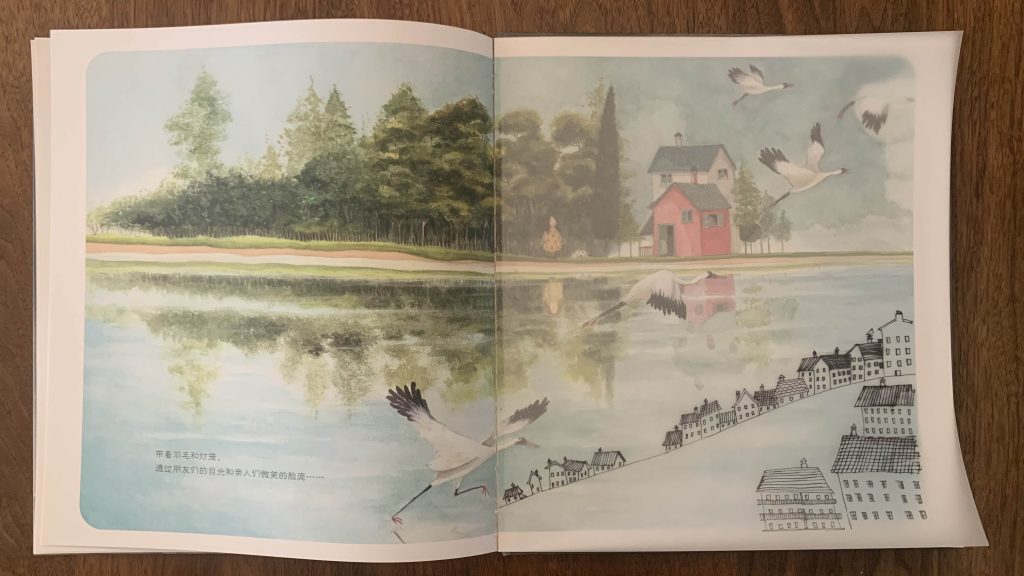
This transition from dreams to reality is, in fact, a process from fantasy to self-acceptance. This narrative serves as an important example for children’s development, guiding them to understand and accept themselves through dreams, and to feel their own power in reality.
Effie Radha was born and raised in a small village on the Peloponnese peninsula in Greece. After successfully passing her medical school entrance exams, she decided to end her formal education and become a wife and full-time mother. While raising her two daughters, she began to draw seriously, working as a Christmas card artist and theatrical set designer, but ultimately devoted herself to children’s book creation. From the beginning, her artwork was a way for her to express her maternal feelings and communicate with her children. This was also the starting point for her children’s book creation.
Lada’s depictions of dreams stem not only from her concern for the inner world of children but also from the artistic sublimation of her personal life experiences. In her view, dreams are windows into human emotions and imagination, especially for children, who use them as an important means to release emotions, express desires, and resolve inner conflicts. Therefore, she chooses to use art to present this seemingly elusive topic to children through beautiful illustrations and simple language. Such creations help children understand the meaning of dreams, especially those that may trouble their emotions. Through the form of dreams, she shows children a world to explore, a boundless mental space, helping them cope with life’s challenges and cultivate self-confidence and curiosity about the unknown.
Dreams are an important part of everyone’s life, especially for children, as they reflect their subconscious, emotions, and daily experiences. Whether a dream is illusory or helps children understand the world, the key is guiding them to comprehend it and draw positive strength from it. “In My Dreams” offers a rare and excellent tool to help children understand dreams and emotions, teaching them how to view dreams, how to understand themselves through dreams, and how to find beauty and strength even when facing confusion and imperfections in reality.
Beyond dreams can be a better version of yourself. The power of dreams lies not only in their mystery and fantasy, but also in their ability to guide us to discover that better version of ourselves. In this sense, this book is also suitable for adults who still dream often.
Written by A‑Jia on September 10, 2024 in Beijing
Comment
One response to “梦的彼岸是更好的自己”
Thank you!