


⚰️ 2023 — Passed away: Ed Young
Renowned Chinese-American children’s picture book author and illustrator (1931–2023). Born in Tianjin and raised in Shanghai, he later studied art and industrial design in the United States. He was a master who integrated traditional Chinese philosophy, Tai Chi philosophy, ink painting, Xuan paper collage, paper cutting, and the classical screen panel structure into modern Western picture books.
- Top Award and Representative Works:
- Grandma Wolf (Lon Po Po: A Red-Riding Hood Story from China(1989) — Awarded 1990 Caldecott MedalA Chinese version of Little Red Riding Hood. The story tells of a mother visiting her grandmother, leaving her three daughters, Axiang, Atao, and Xiaobao, at home. A wolf, disguised as the grandmother, knocks on the door. Axiang, the eldest sister, discovers something amiss by lighting a candle. Cleverly, she tricks the wolf into sitting in a basket, pretending she’ll pull it up a ginkgo tree to pick magical ginkgo fruits. The sisters work together to kill the wolf. Yang Zhicheng uses mysterious and profound pastels and watercolors, blending them with the traditional Chinese triptych composition, to powerfully portray the wolf’s cunning lurking in the darkness and the sisters’ composure.
- Twice awarded the Caldecott Honor:
- The Princess’s Kite (The Emperor and the Kite(By Jane Yolen, 1967) — Awarded 1968 Caldecott HonorUsing traditional Chinese openwork paper-cutting techniques, this piece depicts the touching legend of a petite and unassuming princess rescuing her father, who was trapped in a high tower, using a kite.
- Seven Blind Mice (Seven Blind Mice(1992) — Awarded 1993 Caldecott HonorUsing the classic fable of the blind men and the elephant as its theme, the artwork features seven colorful collage mice against a pure black background. Each mouse touches a pillar, a snake, a spear, a cliff, a fan, and a rope. In the end, the red mouse runs from one end to the other and understands the whole picture, symbolizing that “to understand things, one must see the whole picture.”
- Awarded the U.S. Medal in 2017 The Carle Artist Honoree.
| Deceased | Ed Young | Ed Young (Wikipedia) |

Coincidentally, on September 29, 2022, I attended the award ceremony held in New York as the winner of the Eric Carle Honorary Award Bridge Award that year. Two days later, I visited Yang Zhicheng at his home and had a very enjoyable chat for more than 6 hours. On his behalf, I brought back his original drawings of “The Little Tree’s Words” and the electronic copies of “My Grandfather Lao Qiu” to China for delivery to the publishing house. I also listened to his detailed introduction to the “Bright World” he was working on. At that time, he was working on 10 books simultaneously! Judging from his mental state, I thought he could live to at least 100 years old. However, I later heard that even three days before his death, he was still in a vigorous working state. The “Bright World” we see now was just completed before his death. The electronic document production… Yang Zhicheng studied under Zheng Manqing, the “Five Wonders Old Man”. He started practicing Tai Chi in his thirties and is also a Tai Chi teacher with many students all over the world. In an interview, he talked about the connection between practicing Tai Chi and creating picture books, “They are both about the same thing -Be patient, be trusting, do your best, and seize the moment.”


🎂⚰️ Rieko Nakagawa (born) and Yuriko Yamawaki (deceased): The Legendary Sisters of Japanese National Picture Books
Rieko Nakagawa (1935–2024) and her younger sister Yuriko Yamawaki (1941–2022, real name Yuriko Ōmura). The elder sister, Nakagawa, was a former kindergarten teacher and children’s song lyricist (she wrote the lyrics for the theme song “Walking” for Hayao Miyazaki’s classic Studio Ghibli film *My Neighbor Totoro*). The younger sister, Yuriko, graduated from the French Department of Sophia University and was skilled in simple and clear watercolor and pen sketches. Remarkably, the following coincidences are also noted:The elder sister, Rieko Nakagawa, was born on September 29, 1935; the younger sister, Yuriko Yamawaki, passed away on September 29, 2022.The sisters’ birthdays and death anniversaries are closely intertwined on this day.
- Timeless totems and representative works:
- ““Guri and Gura” series(Guri and Gura The series (Japanese original title: ‘Guritogura’, debut work 1963) is a classic of Japanese children’s literature. Two wild mouse brothers, Guri and Gura, wearing red and blue pointed hats and red and blue overalls, discover an enormous forest egg in the forest. Because the egg is too heavy to move, the two brothers bring pots, pans, and a stove into the forest and bake a golden, fluffy, and fragrant giant Nagasaki cake, inviting all their animal neighbors to share it. Finally, they even make a toy car from the giant eggshell and drive it home. The book, with its lighthearted innocence, the joy of sharing, and its enticing aroma, has healed generations of Asian children.
- Rieko Nakagawa’s representative long children’s story, “No-No Garden” (いやいやえん(Illustrated by Yuriko Ōmura, 1962) pioneered the genre of postwar Japanese children’s fantasy literature; her representative works also include “Blue Seeds” (そらいろのたね).
| figure | commemorate | Wikipedia link |
|---|---|---|
| Rieko Nakagawa | Born on September 29, 1935 | Rieko Nakagawa (Wikipedia) |
| Yuriko Yamawaki | He passed away on September 29, 2022. | Yuriko Yamawaki (Wikipedia) |


🎂 Born 1940: Noriko Ueno
A renowned Japanese children’s picture book author and illustrator (1940–2019). She and her husband, Yoshio Nakae, were a legendary couple in the Japanese picture book world. Her style is characterized by minimalist visual compositions with large areas of white space, extremely restrained and soft black and white pencil lines, and a striking contrast with pure and bright primary colors, accurately conveying the innocent and restrained emotions of children.
- Representative works and content:
- ““Little Mouse” series(The pioneering work “Little Mouse’s Vest”)ねずみくんのチョッキ / Little Mouse’s Red Vest(1974, written by Yoshio Nakajima) — Winner of the Kodansha Publishing Culture Award for Picture Books, a landmark Asian picture book bestseller for half a century. Little Mouse proudly shows off a red vest knitted by his mother, saying, “It fits me perfectly!” Then a duck, a monkey, a sea lion, a lion, and finally an elephant appear in turn, each animal asking to “lend” the vest, stretching it ever wider. When Little Mouse retrieves the vest, it has been stretched into a long yarn rope by the elephant, hanging down to his feet. Seeing Little Mouse’s disappointment, the elephant cleverly hangs the yarn rope on its long trunk, using it as a swing for Little Mouse. The work, with its exquisitely crafted progressive repetition and plot twists, has become a structural model for early childhood picture books.
| Birth | Noriko Ueno | Noriko Ueno (Wikipedia) |


🎂 1923 – Born: Stan Berenstain
He was a renowned American cartoonist, illustrator, and children’s author (1923–2005). Encouraged by Dr. Seuss, he and his wife, Jan Berenstain, began creating children’s books, together constructing a well-known picture of ordinary American family life in the 20th century.
- Representative works and content passed down through generations:
- “Berenstain Bears series(The Berenstain Bears The series, starting with “The Big Honeybee”.The Big Honey Hunt(1962) — A global bestseller with over 300 million copies sold, hailed as “the number one book on children’s behavior and emotional intelligence education.” The story takes place in a large treehouse and revolves around Papa Bear, Mama Bear, Brother Bear, and Sister Bear. The entire series directly addresses common developmental issues in early childhood: lying, picky eating, excessive television viewing, dealing with strangers, going to the doctor, arguing, and sharing. The work avoids rigid preaching, instead conveying simple and healthy life wisdom through Papa Bear’s clumsiness and Mama Bear’s gentle tolerance.
| Birth | Stan Berenstain | Stan Berenstain (Wikipedia) |

September 29, 1947 — Born: Boris Zabirohin, a Russian children’s book illustrator born in Leningrad (now St. Petersburg), has illustrated over 30 children’s books, his work blending fantasy and realism.[10]Zabirochin won the Golden Apple Award at the 2009 Bratislava International Illustration Biennale (BIB) for his illustrations of a collection of Russian fairy tales.[11], enriching the visual expression of children’s literature.


⚰️1998 – Died: Bruno Munari
Italian artist, designer and writerBruno MunariBruno Munari is born. He is widely considered to beThe most innovative and interdisciplinary thinking of the 20th centuryOne of the greatest artists of his time, he was also a pioneer of modern picture books and children’s design education.
- Important works and contributions: Munari opposes traditional didactic children’s books and advocatesOpen-ended, multi-sensory and interactivePicture book.
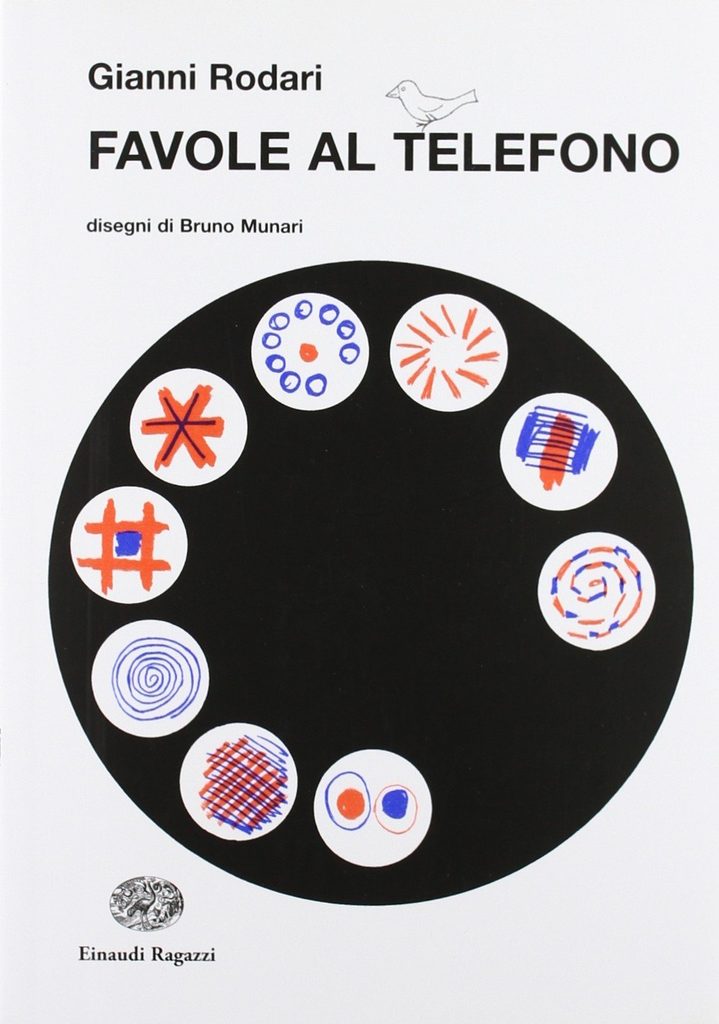
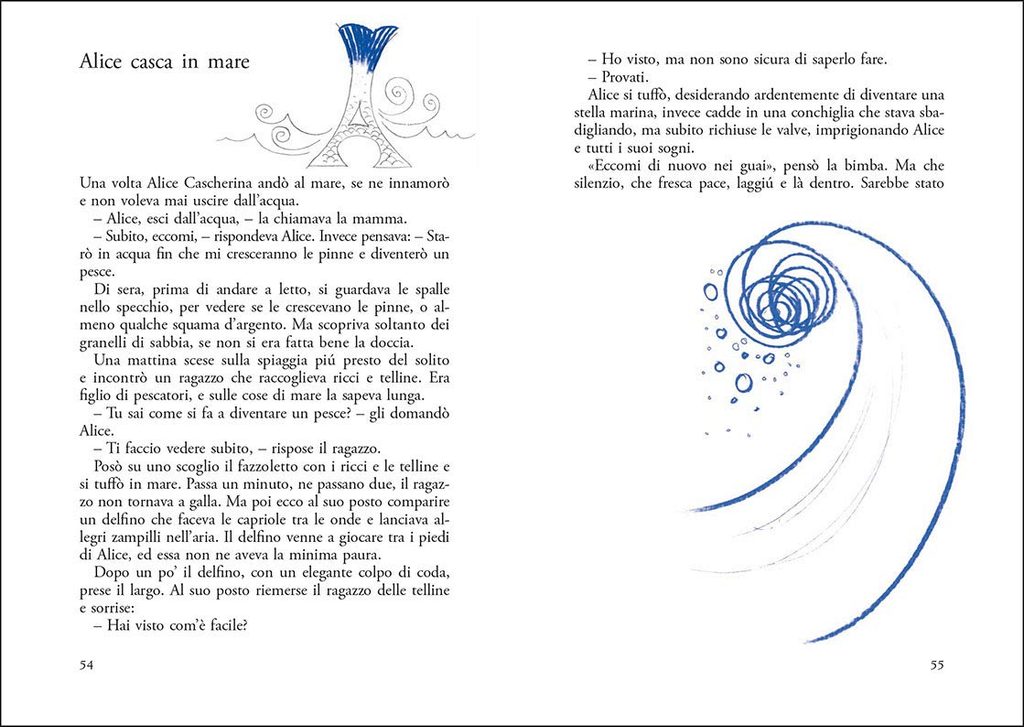
- Representative works: His works includeCircus in the Fog-Nella nebbia di Milano), 《Draw a tree-Draw a Treeand a series of “unnecessary machines”“(Macchine Inutili) etc. He pioneered“The concept of “pre-books” refers to wordless books made of different materials and in different formats, encouraging babies to explore through touch and sight. This is based on Gianni Rodari’s timeless absurdist fairy tales.The Fairy Tale on the Telephone (Favole al telefono(1962)She created classic illustrations with a strong sense of modern composition, which were selected for “1001 Children’s Books”.
- Influence: Munari’s work has been a landmark in the world of art and design, and his contribution to children’s creative thinking and artistic perception has been revolutionary.
| born Bruno Munari Bruno Munari (Wikipedia) |

September 29, 1901 — Born: American children’s book author Dorothy Kunhardt was born in New York City[3]Her most famous work is the baby tactile book “Pat Pat the Bunny” (Pat the Bunny)[4]After its publication, the book sold over 6 million copies[5], becoming a classic children’s book in the early parent-child education category.
- September 29, 1952 — Born: American young adult author Pete Hautman was born in Berkeley, California[12]His youth novels mostly focus on the growth and difficulties of teenagers, including “Godless” (Godless) won the National Book Award (Juvenile Literature Category) in 2004[13], which has had an impact on the development of contemporary youth literature.
- September 29, 1959 — Born: American children’s book author Marissa Moss was born in Jeannette, Pennsylvania[14][15]She is best known for her “Amelia’s Notebook” series, which vividly depicts a girl’s growth experience and creativity in diary form, resonating with generations of readers and promoting the development of interactive children’s literature.
- September 29, 2010 — Passed away American children’s book author Clifford B. Hicks dies in Brevard, North Carolina at 90[16]He is the author of the famous Alvin Fernandez series of children’s novels, which tells the adventure stories of a clever boy and was adapted into a Disney television movie.[16], which had a lasting impact on American children’s literature.

September 29, 1547 — Birth: Spanish writer Miguel de Cervantes was born in Alcalá de Henares[1]His representative work is Don Quixote, which is regarded as the first modern novel.[2]Although it is mainly aimed at adult readers, its knight adventure stories have had a profound impact on the spread of knights and fantasy elements in children’s literature around the world.