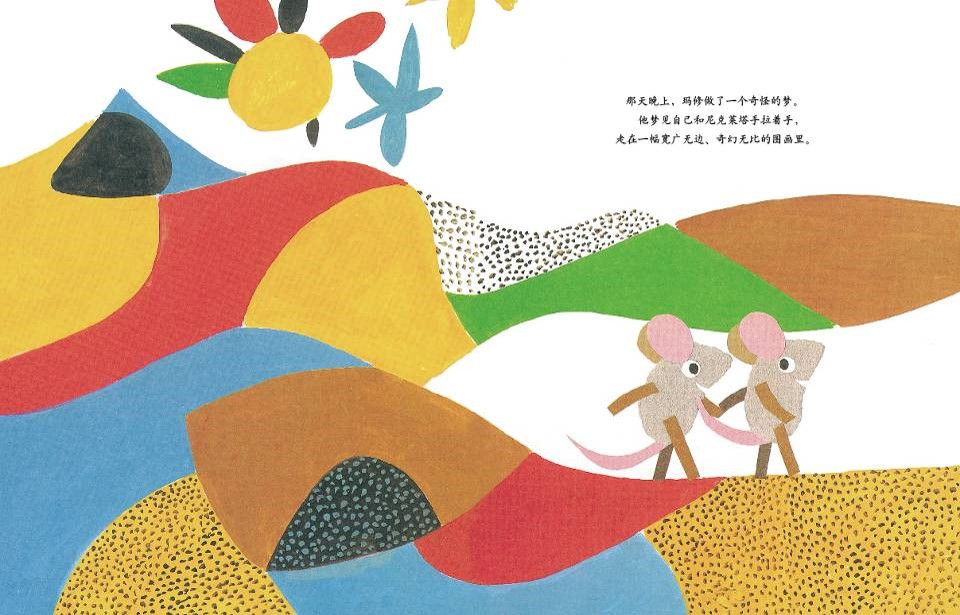

1910s–1930s: Early Years and Artistic Enlightenment
May 5, 1910: Born in Watergraafsmeer, Amsterdam, Netherlands, of half Jewish descent.
1910–1914: Spent the first four years of his life in Watergrasmere.
Childhood: He grew up in Amsterdam, Brussels, Genoa, Philadelphia, and other places. His father, Louis Lionni, was a diamond cutter who later became an accountant; his mother, Elisabeth Grossouw, was an opera singer. As a child, he had a deep love for nature (keeping animals in terrariums) and a keen interest in art (he was greatly inspired by his uncle Peter, his great-uncle William, and the painter Chagall, among others).
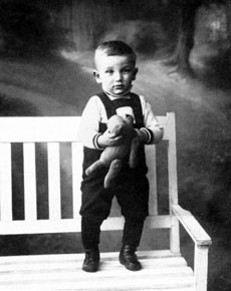
Around 1922: Lionni’s parents left for the United States, and he lived with his grandparents, Elie and Rose Beffie, in Brussels, Belgium, for two years. During this time, he developed a keen interest in the modern art collection of his uncle, René Gaffé.
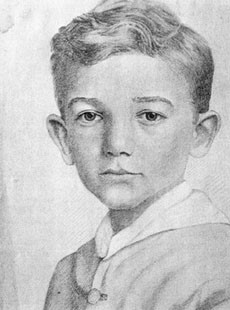
Around 1925: Reunited with his parents in Philadelphia, USA for a year.
Around 1926: Moved to Genoa, Italy. During this time, he established his own studio (salottino) and developed a love of Italian literature and art under the guidance of his tutor, Professor De Amicis.
circa 1926–1931: Studied at the Technical College (Istituto Tecnico Superiore Vittorio Emanuele Terzo). Witnessed the rise of fascism in Italy and met Nora Maffi and her family; Nora’s father was one of the founders of the Italian Communist Party.
1931: Married Nora Mafi and began creating abstract paintings.
1931–1939: A renowned painter in Italy, his style leaning towards Futurism and avant-garde art. He also began to focus more on advertising design.
1932: Gets his first “real” job as assistant cashier at Foltzer.
1933: Returns to Milan from Amsterdam due to Dutch army conscription. His eldest son, Mannie (later renamed Louis), is born.
1934: Meets Edoardo Persico, editor of the architectural monthly Casabella, who becomes Leoni’s friend, mentor, and moral guide.
1935: Earns a degree in economics from the University of Genoa. Works as assistant to the advertising director for the Motta candy company.
1936: Edoardo Persico dies. Many of his artist friends in Milan are arrested and interrogated by the Fascist secret police (OVRA). Lioni leaves Motta and opens his own small design studio.

1939–1950s: Immigrating to the United States and Design Career
March 1939: He and his father sailed from Rotterdam aboard the SS Rotterdam to New York. Settled in Philadelphia, he began working full-time in advertising, achieving significant success with clients including Ford Motor Company and Chrysler-Plymouth.
September 12, 1939: His wife Nora and two sons (Manny and Paul) obtain visas and depart for the United States.
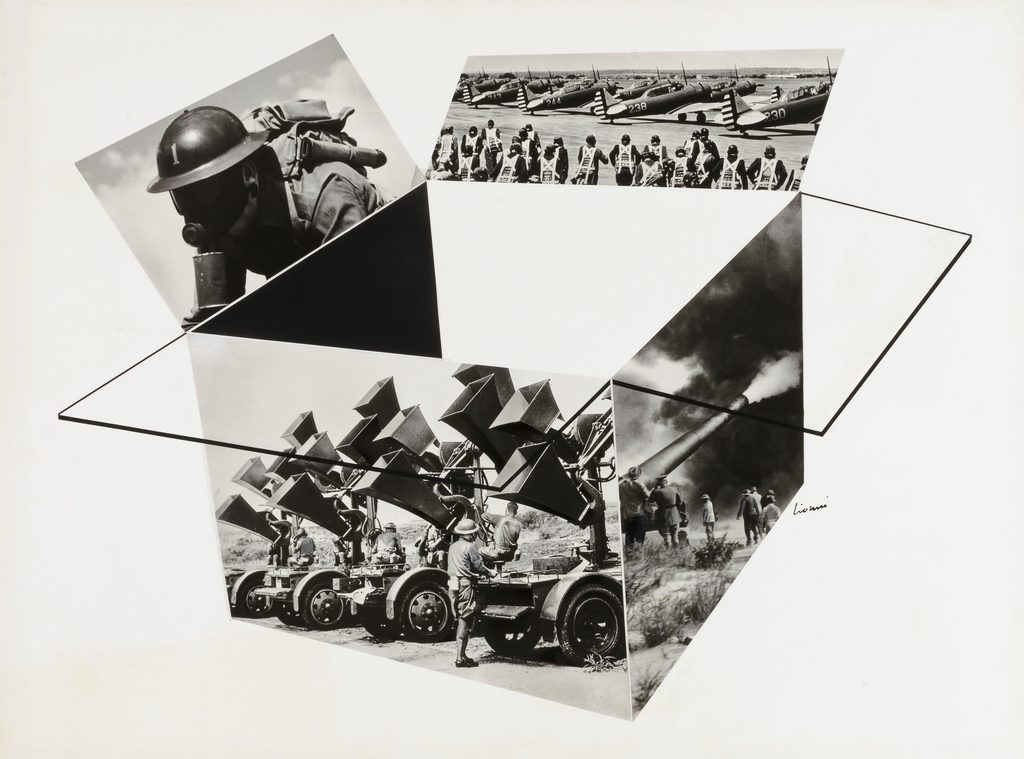
1941–1945: Creates wartime works such as “Protecting America’s Protection!”, “Pine Tree to Package,” “Army-Navy,” “Press the Button,” and “France Reborn.” Invited by Josef Albers, he teaches at Black Mountain College. He holds his first solo exhibition in the United States at the Norris Gallery.
1946: Declines a position as art director of the Ford division at J. Walter Thompson Advertising Agency, deciding to spend a year in Europe.
1948: Returns to New York, USA, where he receives commissions from Fortune, Procter & Gamble, the Museum of Modern Art (MoMA), CBS, and the American Cancer Society.
1948: Accepts position as art director of Fortune magazine, a position he holds until 1960.
1949: Moved to Greenwich, Connecticut.
June 1951: Chairs the first International Design Conference in Aspen.
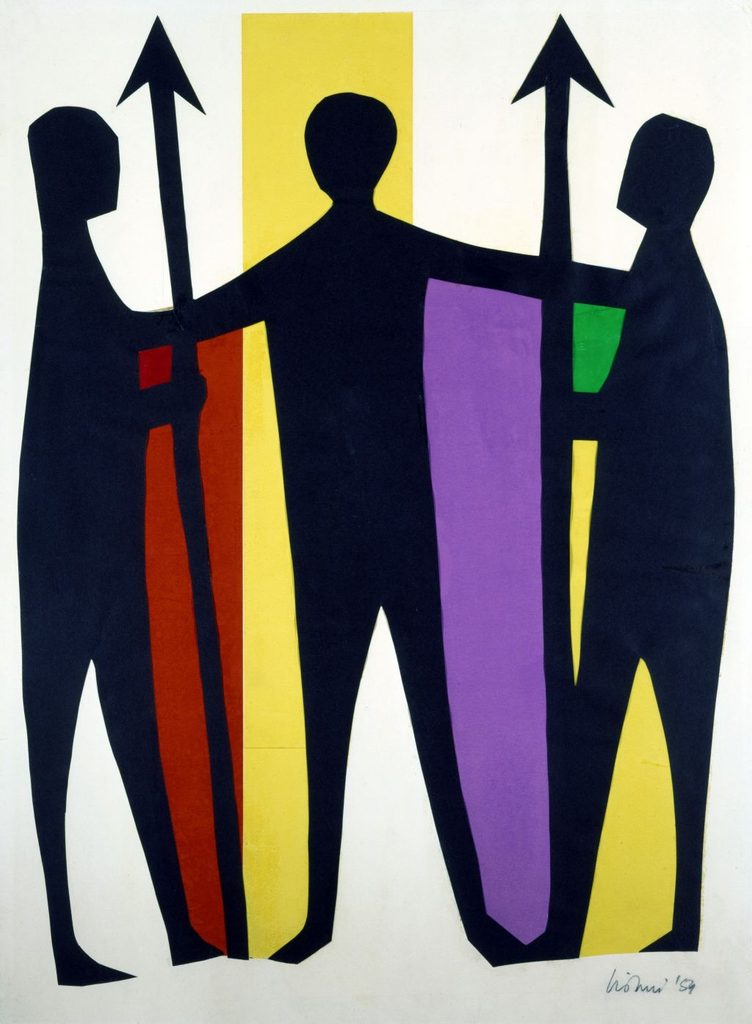
1954: Created “Here is the beginning of philosophy…” as part of his “Great Ideas of Western Man” series.
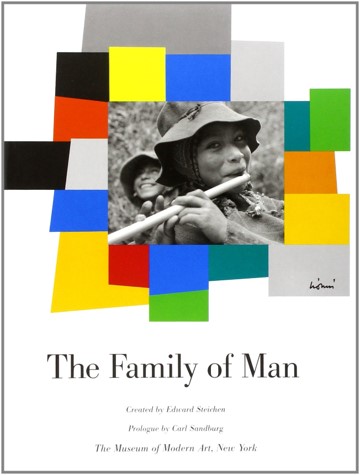
1955: Designs the cover for the Museum of Modern Art’s “The Family of Man” exhibition. Becomes editor of Print magazine.
1957: First solo trip to India for three months.
Spring 1959: Makes a life-changing decision to resign from all business positions, sell his house in Greenwich, and move back to Italy to devote himself full-time to art.
1959–1970s: The Golden Age of Picture Books and Artistic Exploration
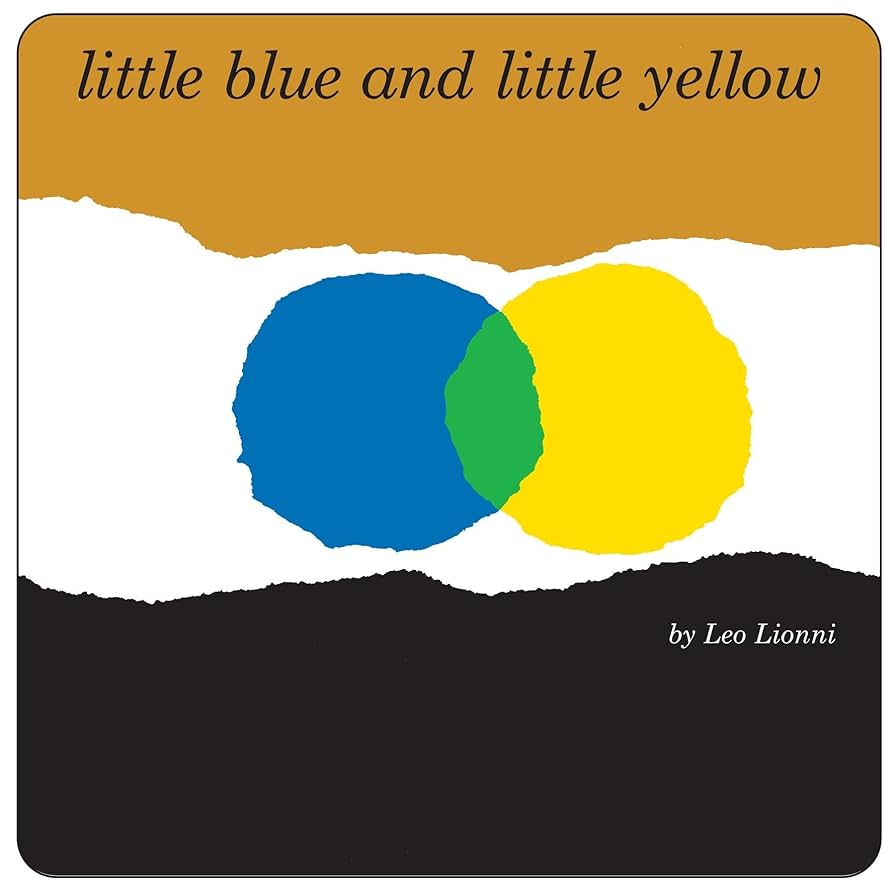
1959: He improvises the story of Little Blue and Little Yellow for his grandchildren on a train, which becomes his first children’s picture book. It wins the New York Times Award for Best Illustrated Children’s Book of the Year.
Little Blue and Little Yellow is published. Translated by Peng Yi, published by Xinyi Publishing House and Tomorrow Publishing House.
End of June 1959: Moved back to San Bernardo, Italy.
1960: Inch by Inch was published and won the Lewis Carroll Shelf Award and the Caldecott Medal in 1961. Chinese version of Inch by Inch: Translated by Yang Maoxiu, Xinyi/Tomorrow Publishing House.
1961: “On My Beach There Are Many Pebbles”.
February 1962: Became editor of the Italian magazine Panorama.
1963:SwimmyPublished in 1961, considered by the author to be the first allegorical picture book. Chinese edition: Translated by Peng Yi, The Giving Tree / Nanhai Publishing Company. Winner of the 1964 Caldecott Medal.
1964: Moves to Porcignano, Tuscany, due to highway construction threatening San Bernardo. Publishes Tico and the Golden Wings.
1965: Won the German Youth Literature Award (Deutscher Jugendliteraturpreis).
1967: Created “Every man is the son of his own works.”, taught at the University of Illinois at Urbana-Champaign, and was invited to participate in the Montreal World Expo.
FrederickPublished. Chinese version: Translated by Ajia, The Loving Tree / Nanhai Publishing Company. Winner of the 1968 Caldecott Medal.
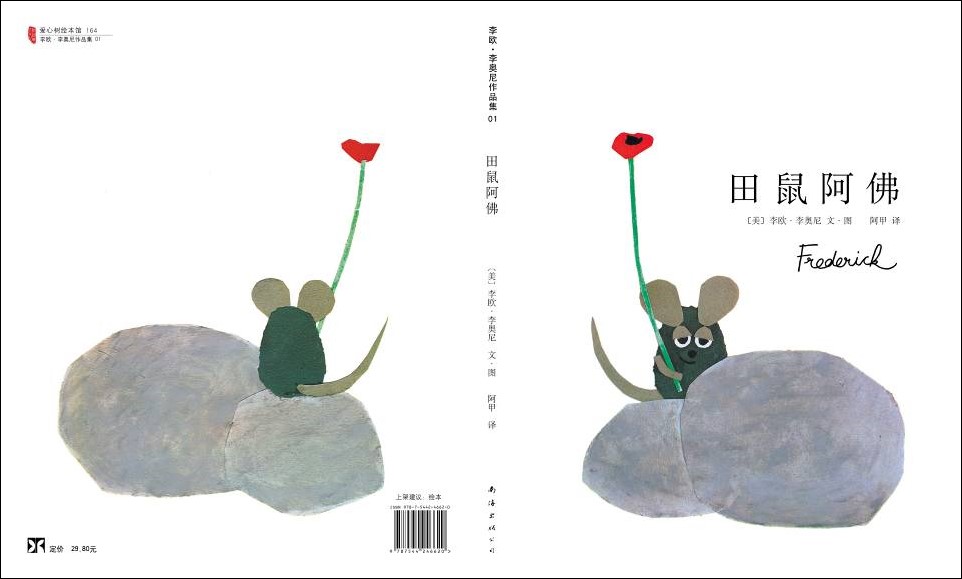
1968: His mother passed away. Published The Biggest House in the World and The Alphabet Tree in the same year. Chinese translation by Ajia.
1969:Alexander and the Wind-Up MousePublished. Chinese version: Translated by Ajia, The Loving Tree / Nanhai Publishing Company. Winner of the 1970 Caldecott Medal.
1970: Fish is Fish (Chinese version: translated by Ajia) was published.
Early 1970s: Parallel Botany project launched.
1971: Theodore and the Talking Mushroom (Chinese version: translated by A Jia) was published.
1972: Sculpture exhibition at Il Milione Gallery in Milan.
1973: The Greentail Mouse (Chinese version: translated by Ajia) was published.
1975: Pezzettino (Chinese version: translated by Ajia) and In the Rabbitgarden were published.
1976: A Color of His Own (translated by A Jia) is published. In the same year, La botanica parallela (Parallel Botany) is published in Italian.
1977: Published “I Want to Stay Here I Want to Go There: A Flea Story” and the philosophical work “Parallel Botany” (Knopf English edition).
1979: Published Geraldine The Music Mouse (Chinese version: translated by A Jia) and Mouse Days.
1980s–1990s: Late Works and Retrospective
1981: Won the Japan Foundation Award for the Japanese edition of Parallel Botany.
1982: Let’s Make Rabbits (translated by Ajia) was published.
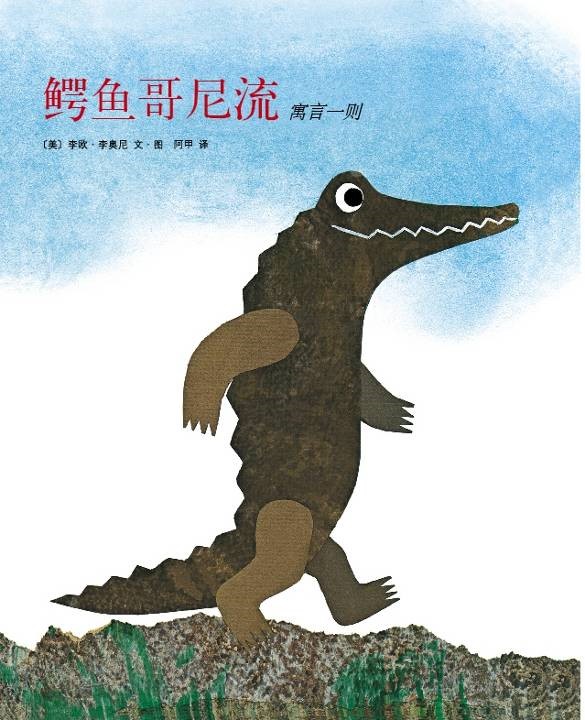
1983: Published Cornelius the Crocodile (Chinese version: translated by Ajia), as well as Let’s Play, Who, What, When and Where.
1985: Published the picture book collection “Frederick’s Fables” and “It’s Mine Knopf!” (Chinese version: translated by A Jia).
April 6, 1985: Son Paul died.
1987: Delivered the keynote address at the U.S. Library of Congress’s International Children’s Day celebrations; diagnosed with Parkinson’s disease that same year.
1987–1989: Published Nicholas Where Have You Been, Six Crows (Chinese version: translated by A Jia), and Tillie and The Wall (Chinese version: translated by A Jia).
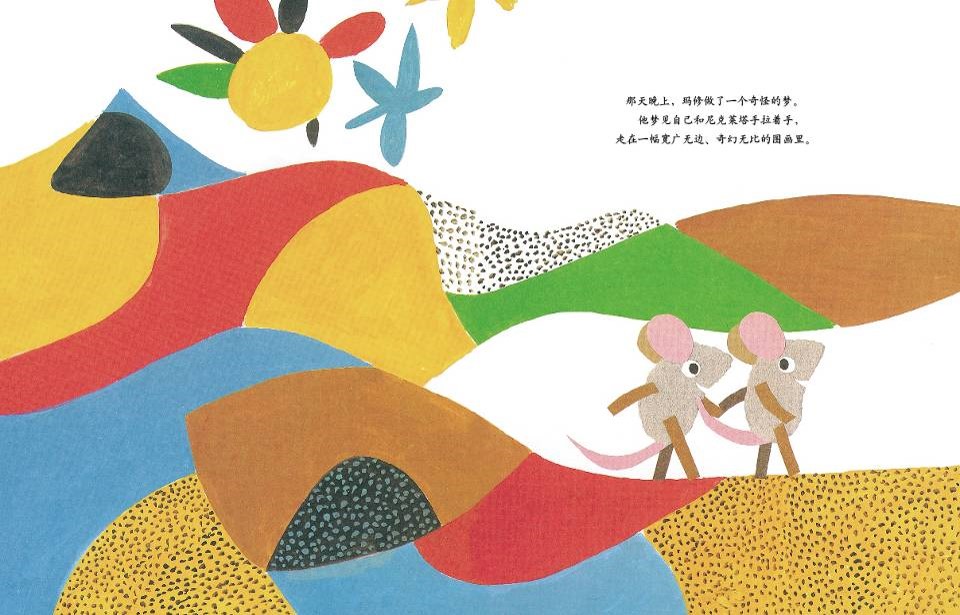
1991: A retrospective exhibition was held at the Museum of Modern Art in Bologna, and the album “Arte come Mestiere” was published. Aunt Mestiere passed away. That same year, “Matthew’s Dream” (Chinese translation by A Jia) was published.
1992: Published “A Busy Year” (Chinese version: translated by Ajia) and “Mr. McMouse”.
1994: Published An Extraordinary Egg (Chinese translation by Ajia). Also in 1994, painted the flag for the Palio de Siena horse race.
December 22, 1994: Close friend Bob Osborn dies.
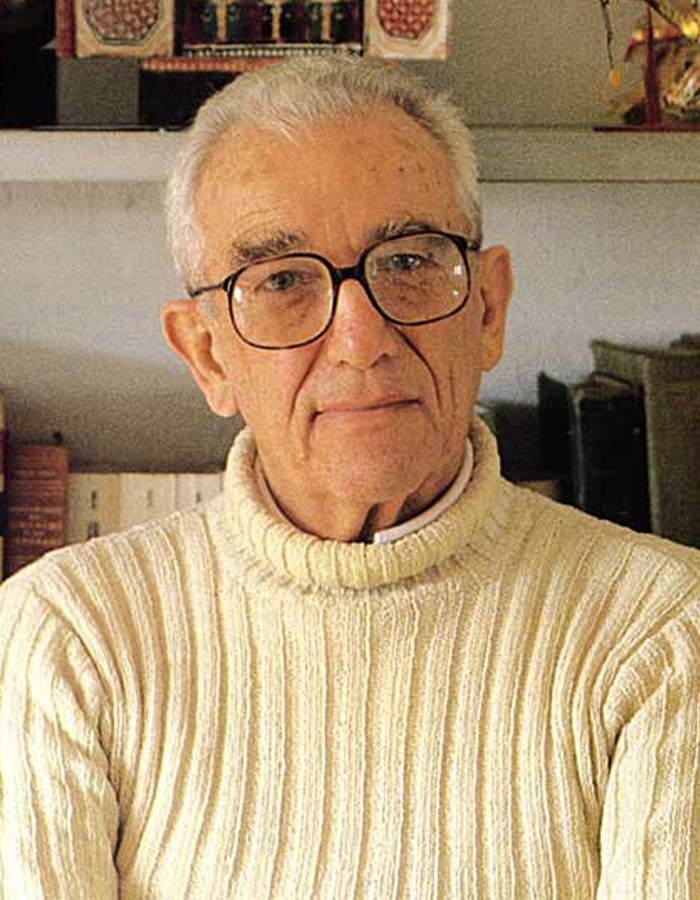
1997: His autobiography, Between Worlds, was published.
October 11, 1999: Dies at his home in Tuscany, Italy, at the age of 89.
[List of Leo Lionni’s Works in English and Chinese]
(In order of first publication year; **Caldecott Honor Book)
Little Blue and Little Yellow. Astor-Honor, New York, 1959, renewed 1987
“Little Blue and Little Yellow”, translated by Peng Yi, published by Xinyi/Tomorrow Publishing House
**Inch by Inch. Astor-Honor, New York, 1960, renewed 1988
“An Inch of an Inch”, translated by Yang Maoxiu, published by Xinyi/Tomorrow Publishing House
On My Beach There Are Many Pebbles. Astor-Honor, New York,1961, renewed 1989
** Swimmy. Knopf, New York, 1963, renewed 1991
“Little Black Fish”, translated by Peng Yi, published by Aixinshu/Nanhai Publishing Company
Tico and the Golden Wings. Pantheon, New York, 1964, renewed 1992
Tico and the Golden Wings, translated by A‑Jia, published by Aixinshu/Nanhai Publishing Company
** Frederick. Pantheon, New York, 1967, renewed 1995
“Frederick the Field Mouse”, translated by A‑Jia, published by Love Tree/Nanhai Publishing Company
The Biggest House In The World. Knopf, New York, 1968, renewed 1996
The World’s Largest House, translated by A‑Jia, published by Love Tree/Nanhai Publishing Company
The Alphabet Tree. Pantheon, New York, 1968, renewed 1996
The Alphabet Tree, translated by A‑Jia, published by Love Tree/Nanhai Publishing Company
** Alexander and the Wind Up Mouse. Pantheon, New York, 1969, renewed 1997
Alexander and the Wind-up Mouse, translated by A‑Jia, published by Aixinshu/Nanhai Publishing Company
Fish is Fish. Pantheon, New York, 1970, renewed 1998
Fish Is Fish, translated by A‑Jia, published by Aixinshu/Nanhai Publishing Company
Theodore and the Talking Mushroom. Pantheon, New York, 1971, renewed 1998
Theodore and the Talking Mushroom, translated by A‑Jia, published by Aixinshu/Nanhai Publishing Company
The Greentail Mouse. Pantheon, New York, 1973, renewed 2001
“The Green-Tailed Field Mouse,” translated by A‑Jia, published by Aixinshu/Nanhai Publishing Company.
Pezzettino. Pantheon, New York, 1975, renewed 2004
Pezzettino, translated by A‑Jia, published by Aixinshu/Nanhai Publishing Company
In the Rabbitgarden. Pantheon, New York, 1975, renewed January 1, 2004
A Color of His Own. Pantheon, New York, 1976, renewed 2004
“My Own Color”, translated by A‑Jia, published by Aixinshu/Nanhai Publishing Company
I Want to Stay Here I Want to Go There: A Flea Story. Pantheon, New York, 1977
Parallel Botany. Knopf, New York, 1977
Geraldine The Music Mouse. Pantheon, New York, 1979
Music Mouse, translated by A‑Jia, published by Love Tree/Nanhai Publishing Company
Mouse Days. Pantheon, New York, 1979
Let’s Make Rabbits. Knopf, New York, 1982
“The Hungry Rabbit,” translated by A‑Jia, published by Aixinshu/New Star Press.
Let’s Play. Random House, New York, 1983,
Cornelius. Pantheon, New York, 1983
Cornelius the Crocodile, translated by A‑Jia, published by Love Tree/Nanhai Publishing Company
Who Pantheon, New York, 1983
What Pantheon, New York, 1983
When Pantheon, New York, 1983
Where Pantheon, New York, 1983
Frederick’s Fables: A Leo Lionni Treasury. intro by Bruno Bettelheim, Knopf, New York, 1985
Colors Pantheon, New York, 1985
Letters Pantheon, New York, 1985
Numbers Pantheon, New York, 1985
Words Pantheon, New York, 1985
It’s Mine Knopf, New York, 1985
“This is Mine!”, translated by A‑Jia, published by Aixinshu/Nanhai Publishing Company
Nicholas Where Have You Been. Knopf, New York, 1987
Six Crows. Knopf, New York, 1988
Six Crows, translated by A‑Jia, published by Aixinshu/New Star Press
Tillie and The Wall. Knopf, New York, 1989
Tilly and the Wall, translated by A‑Jia, published by Aixinshu/Nanhai Publishing Company
Matthew’s Dream. Knopf, New York, 1991
Mash’s Dream, translated by A‑Jia, published by Aixinshu/Nanhai Publishing Company
A Busy Year. Knopf, New York, 1992
“A Very Busy Year”, translated by A‑Jia, published by Aixinshu/New Star Press
Mr. McMouse. Knopf, New York, 1992
An Extraordinary Egg. Knopf, New York, 1994
“A Peculiar Egg”, translated by A‑Jia, published by Love Tree/Nanhai Publishing Company
Between Worlds. Autobiography, Knopf, New York, 1997 (autobiography)
【reference book】
The Girl with the Brown Crayon by Vivian Gussin PALEY (Author) , Harvard University Press, 1998
A Year of Reading Picture Books Together, by Vivian Jasin Paley, translated by Zaoni, published by Aixinshu/Beijing United Publishing Co., Ltd.