British picture book master Anthony Browne not only won the Hans Christian Andersen Award, often referred to as the “Little Nobel Prize,” in 2002, but also continued to hone his writing skills and expand his creative horizons. This has earned him countless fans among the general public and made him a leading figure in his professional field. In October 2024, Martin Bassett, a popular picture book artist in Germany, visited Beijing. During our conversation, I mentioned that I admire Anthony Browne and have translated more than 20 of his books. Martin immediately exclaimed excitedly, “Anthony Browne is my hero!”“
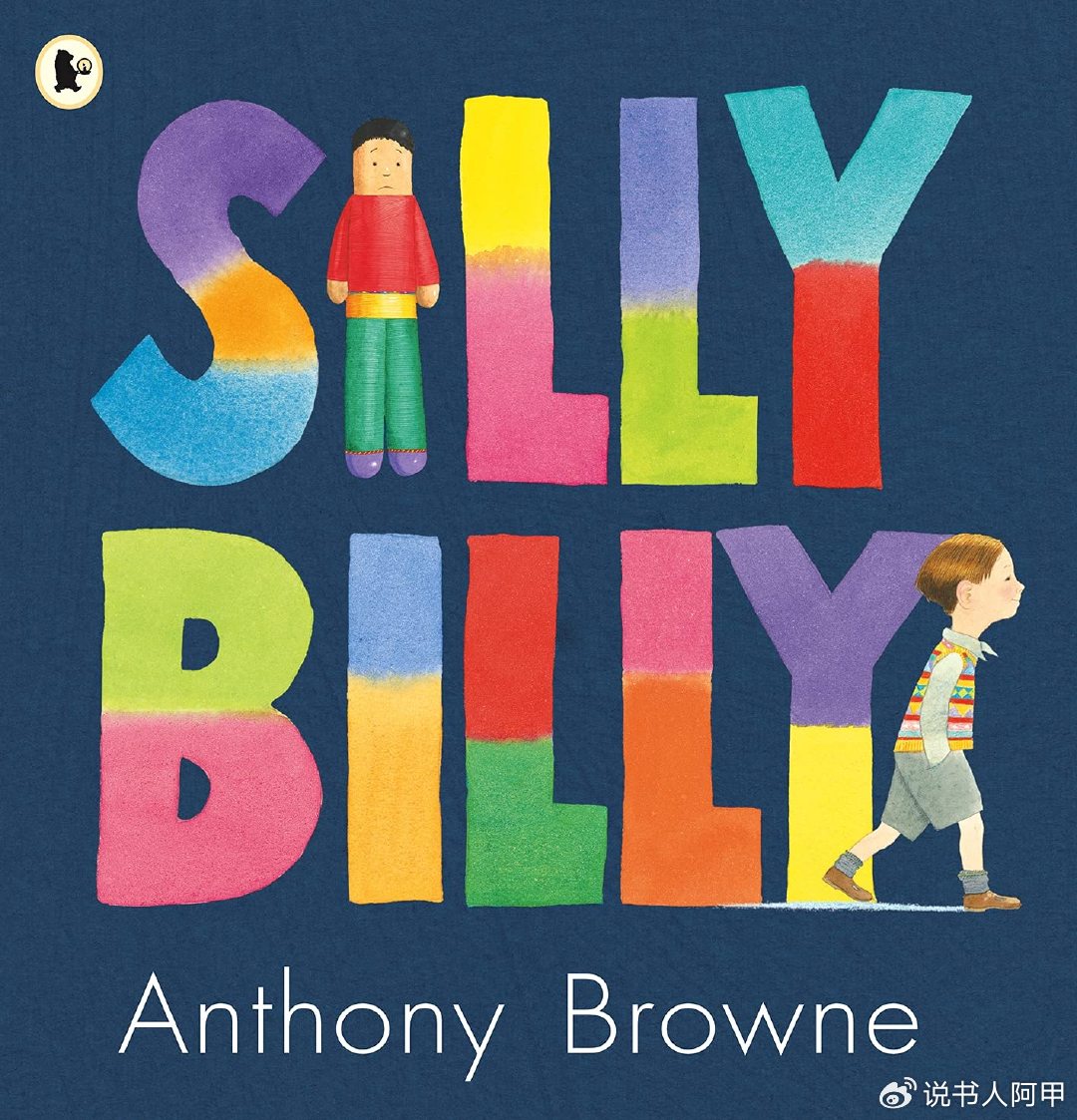
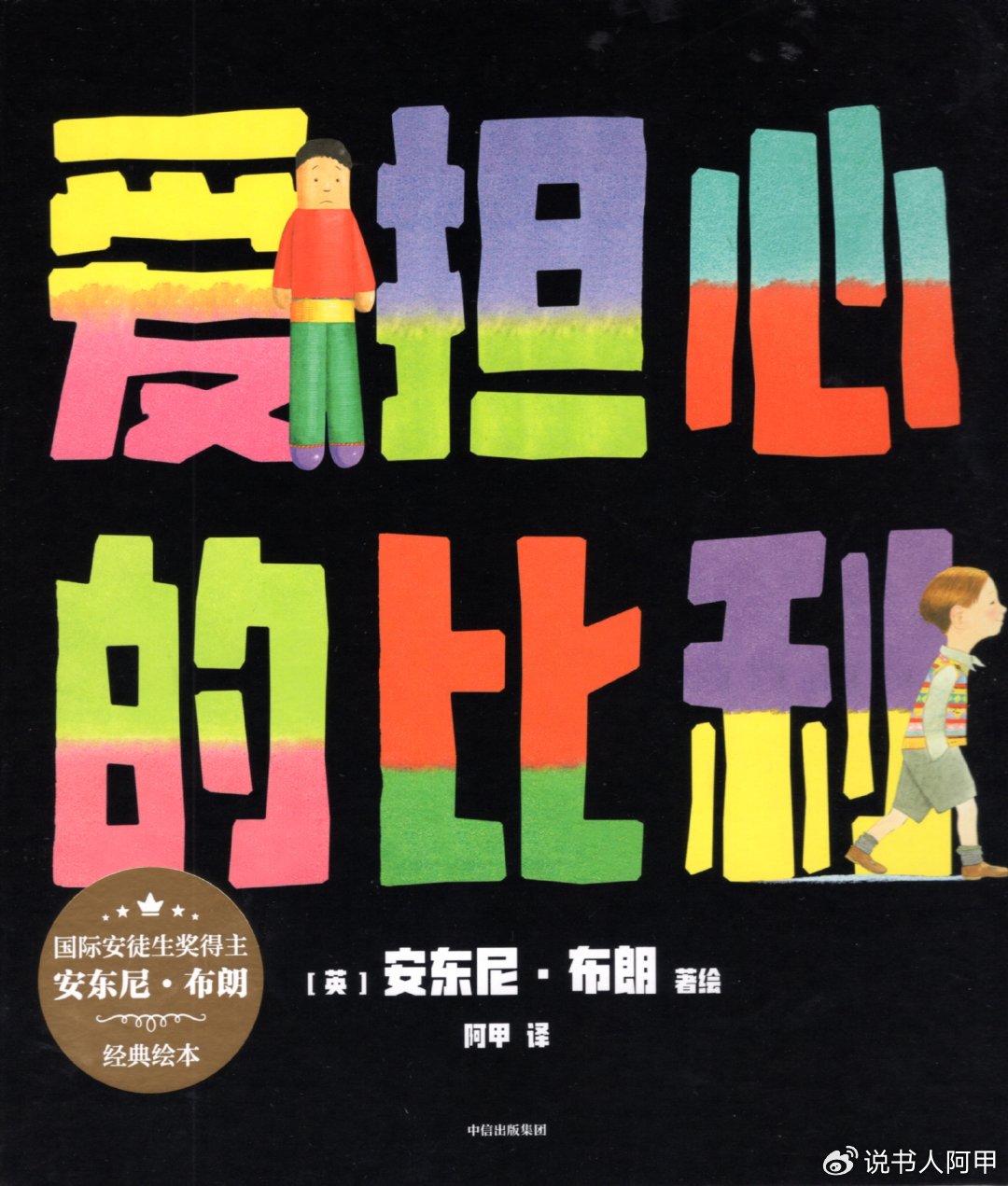
This book, “Billy the Worrying,” is one I’ve been following for a long time. I recently had the privilege of translating it, and I’m happy to have the opportunity to share my special fondness for it.
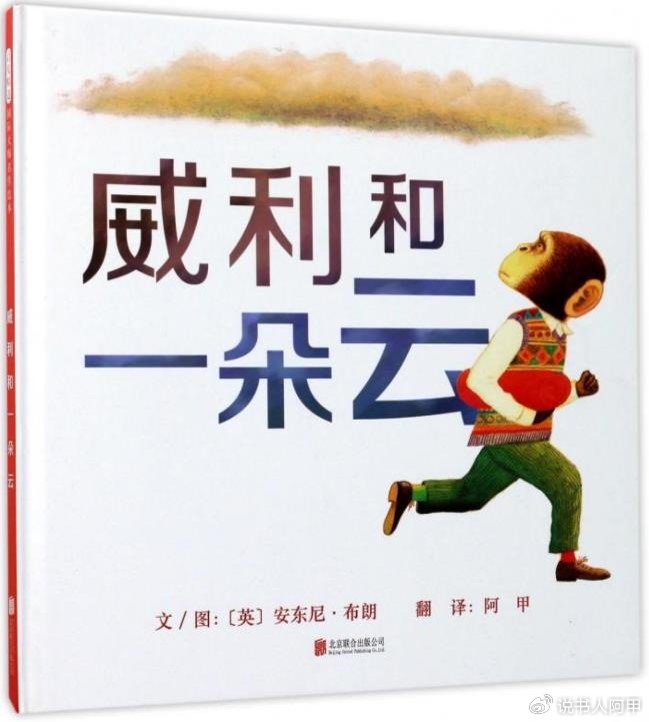
Of the approximately 50 picture books Anthony Browne created over nearly half a century, *Billy the Worrying* can be broadly categorized as part of his “psychological picture books.” While these books also tell fun stories through text and illustrations, they often focus on psychological growth. For example, his Willy the Chimpanzee series, including *Willie the Coward*, *Willie the Hero*, *Willie and Friends*, and *Willie the Magician*, are all entertaining stories that actually explore psychological issues in children’s development, such as bullying and timidity, inferiority and self-acceptance, differences and interaction, friendship and mutual support, and so on. *Willie and a Cloud* explores how to overcome anxiety and depression; *Joe’s First Party* depicts children’s emotional struggles with the unknown; *How Are You Feeling?* deals with recognizing emotions; and *Kai’s Home Is Different* tells the story of the older child’s psychological reactions to the impending change in a family with two children.
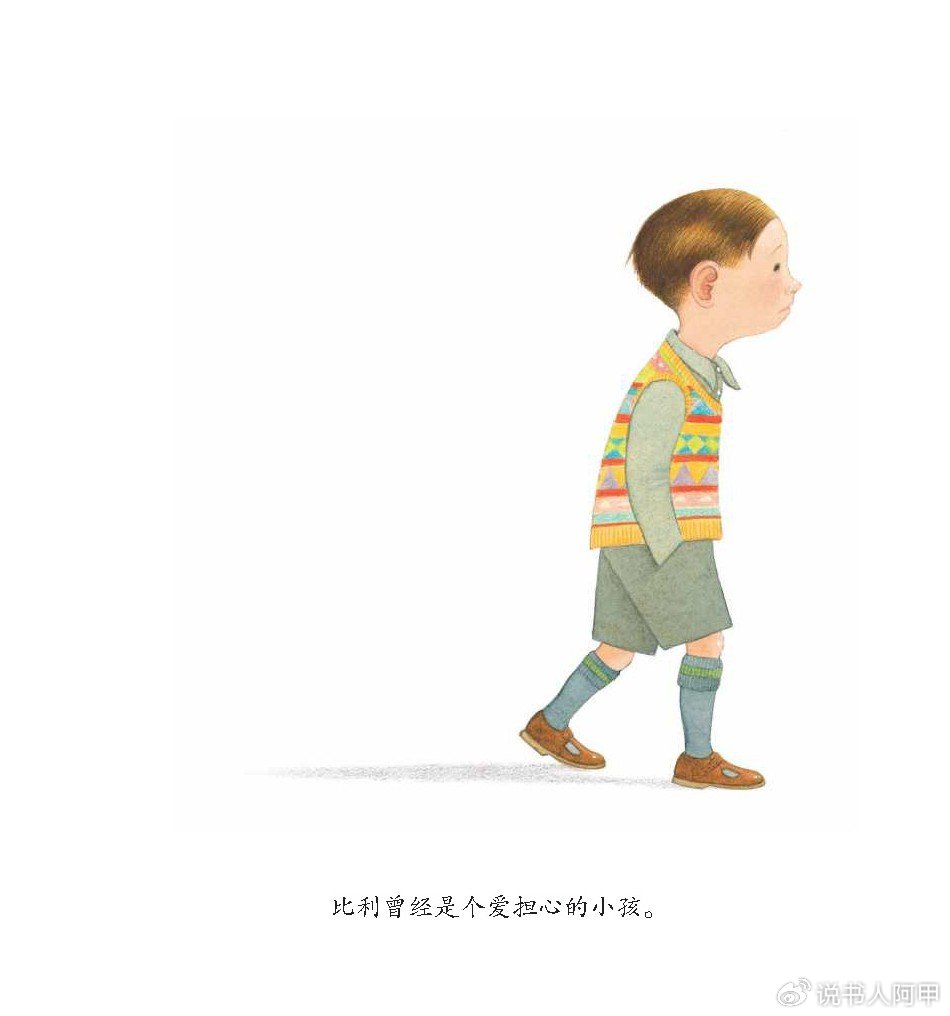
Anthony’s signature surrealist style skillfully blends reality and imagination, concretizing abstract emotions and psychological states with tangible visual forms. This approach is particularly suitable for exploring children’s emotions and psychological topics because, through distorted, anthropomorphic, and symbolic imagery, hidden emotions can be visualized, providing a pathway to understanding complex psychology. It also creates a safe space for children to express themselves, stimulating their resonance and expanding their imagination, thereby at least achieving the function of identifying emotions and potentially offering comfort or healing. The first edition of *Billy the Worrying* in 2006 is an outstanding example of his unique approach to psychological healing through picture books.
Unique tips for facing anxiety
Billy in the book is a little boy who used to worry about everything. This kind of character is not uncommon in contemporary children’s picture books. Chinese readers may be more familiar with Kevin Hanks’ “I’m So Worried,” first published in 2010. In that book, the most worried character is a little girl named Lily, and her anxiety is alleviated through making friends, a friendly environment, and support. However, “Billy the Worryer” uses more visually striking surrealist imagery to present anxiety itself, guiding children to confront and overcome anxiety through symbolic methods and autonomous growth.
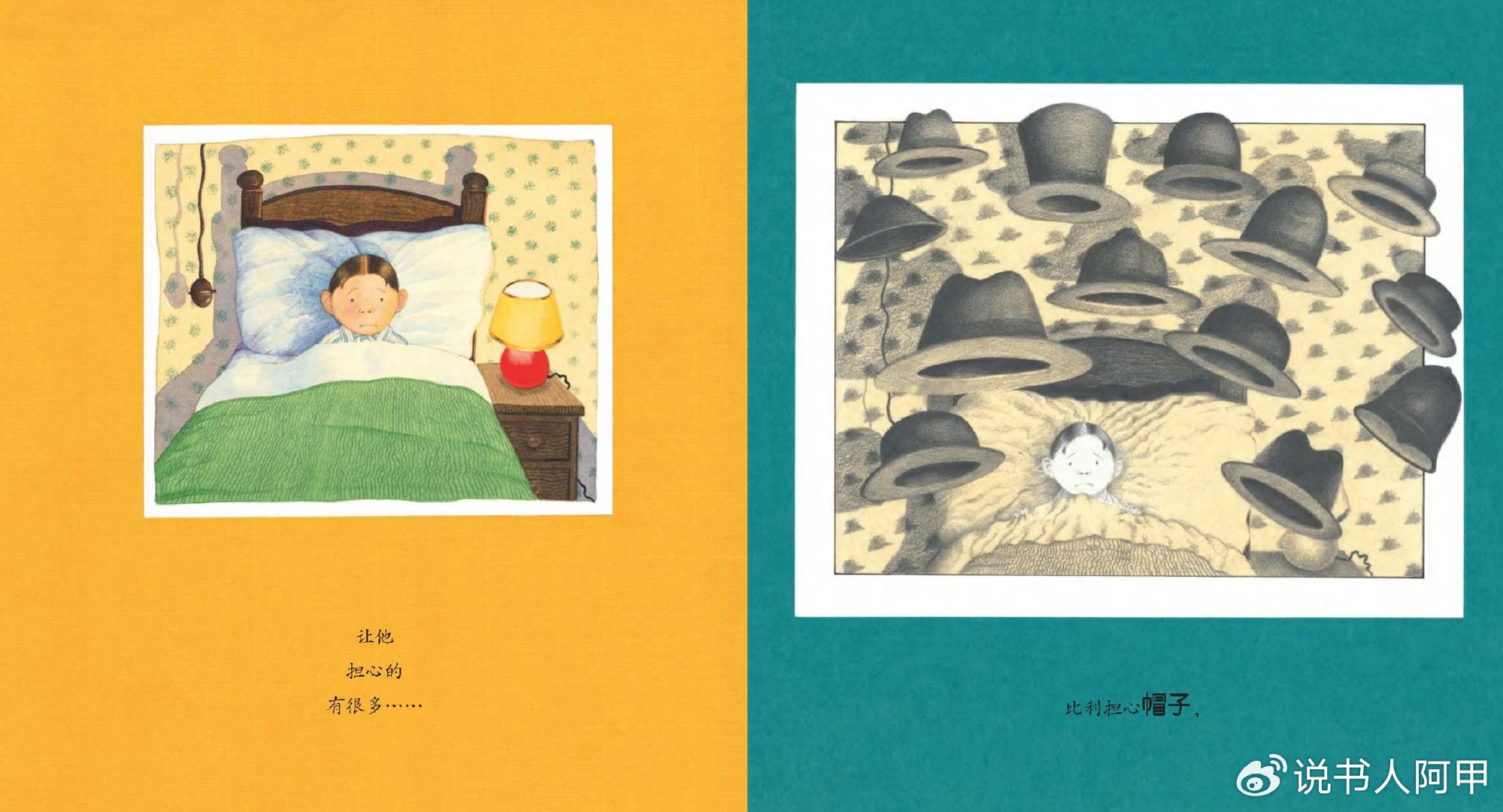
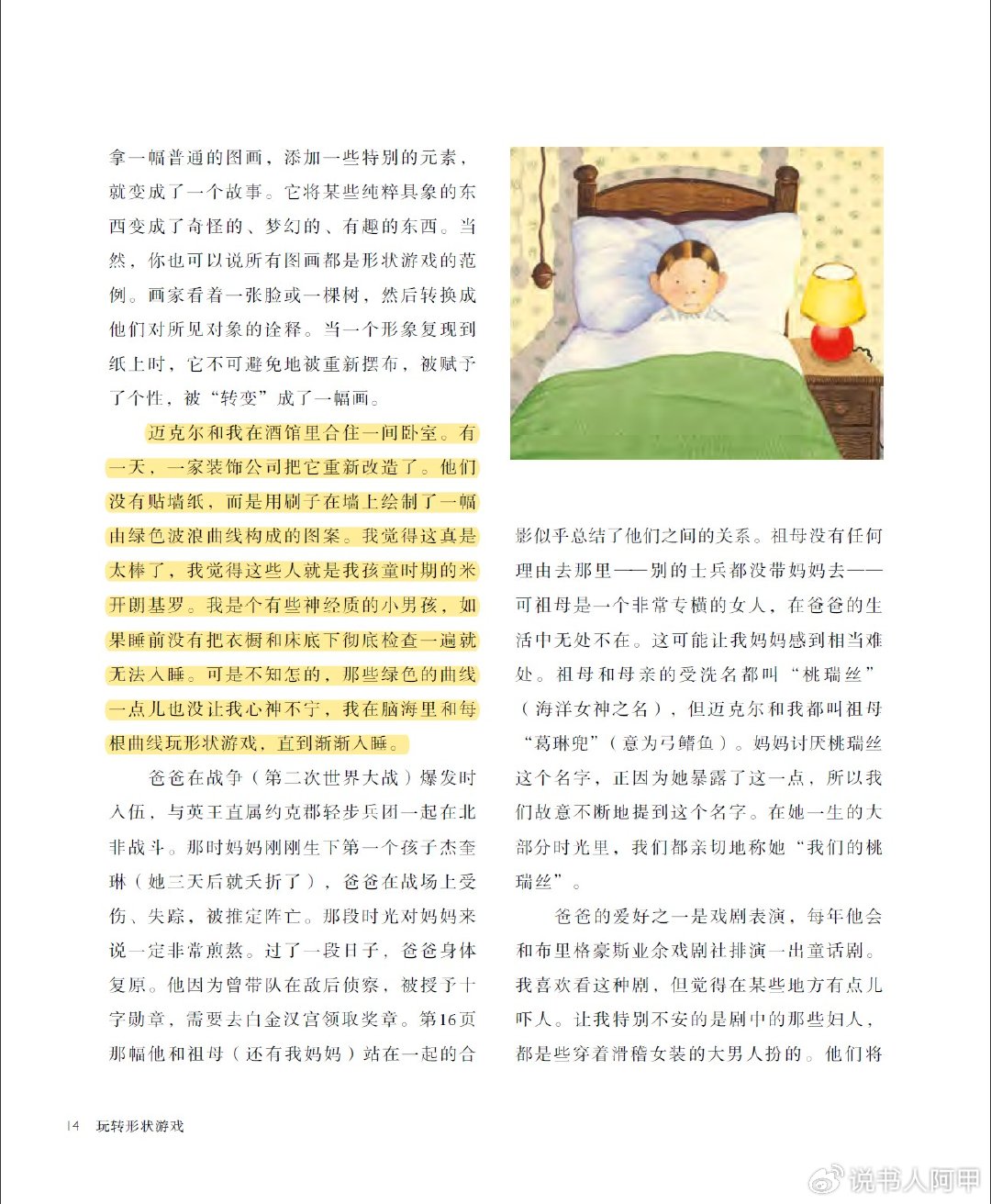
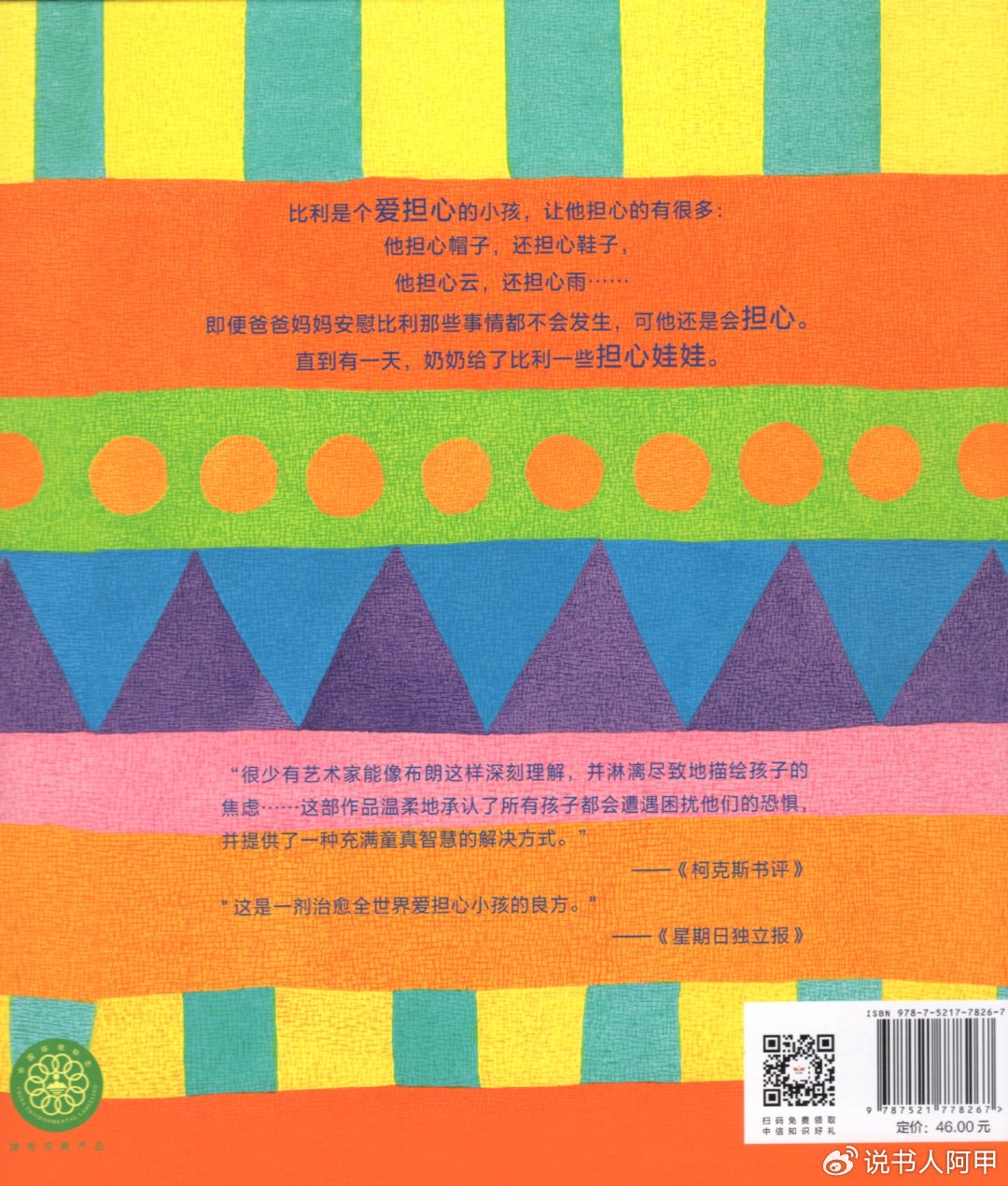
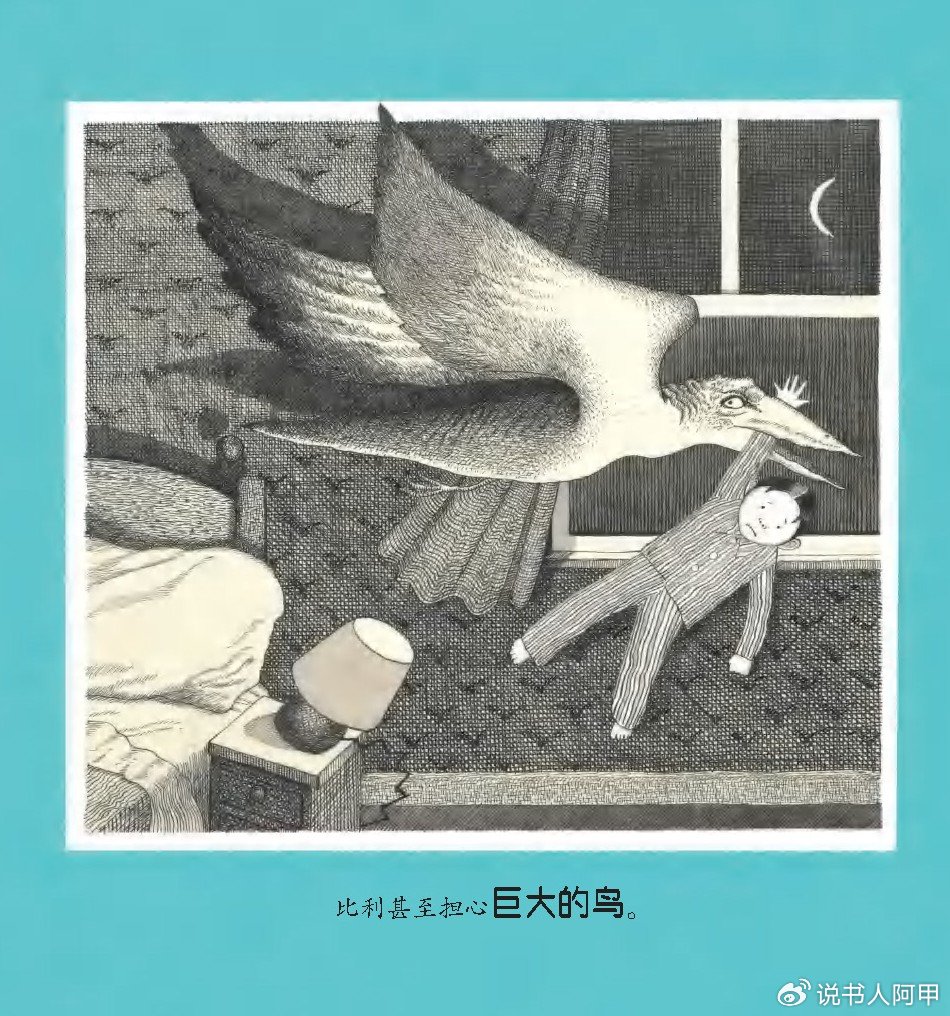
At the beginning, the protagonist Billy is plagued by anxiety, to the point that it keeps him awake at night. Whether it’s a hat, shoes, clouds and rain, or even a giant bird that appears out of nowhere, Billy is constantly worried. This anxiety is ubiquitous, realistically reflecting the emotional struggles many children face as they grow up. Brown brings these abstract anxieties to life through vivid language and illustrations, allowing children to clearly recognize and perceive them.
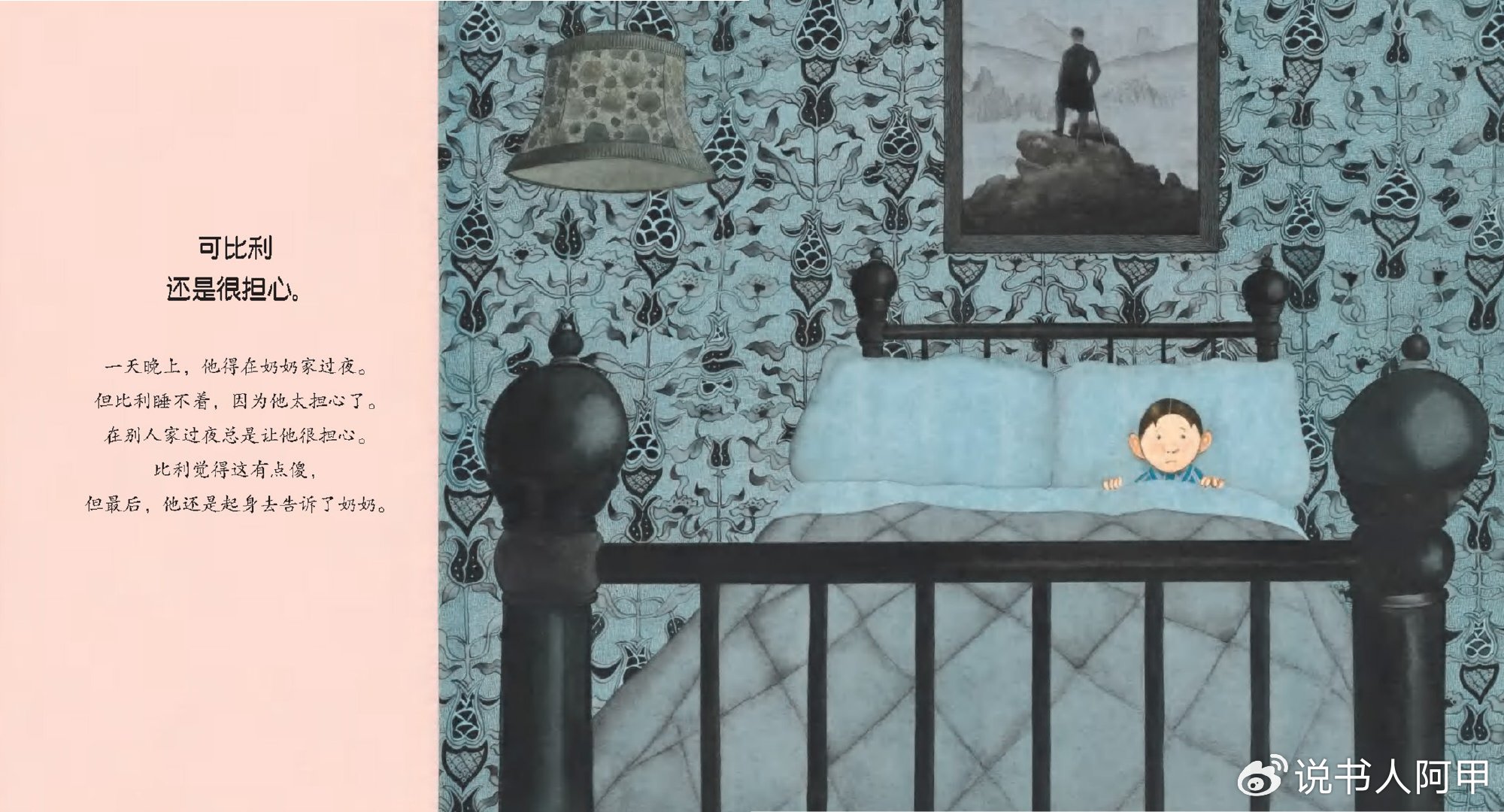
Billy’s turning point came from his grandmother. She introduced him to the tradition of worry dolls: telling these tiny dolls about your worries and placing them under your pillow, where the dolls would worry for you at night. This tradition from Guatemala in Central America provides a symbolic way of transferring emotions by giving children a tangible tool. After trying it, Billy found himself sleeping soundly; this simple yet effective healing power was comforting.
The power of freedom beyond anxiety
Anthony Browne’s brilliance lies in not letting the story stop at Billy overcoming his anxiety. As the plot unfolds, Billy gradually realizes that he has entrusted all his worries to the worry dolls, and wonders if these dolls will become overly worried as a result. This reverse anxiety, seemingly humorous, actually reflects a profound human concern:Transcend your anxiety about yourself and start thinking about others.
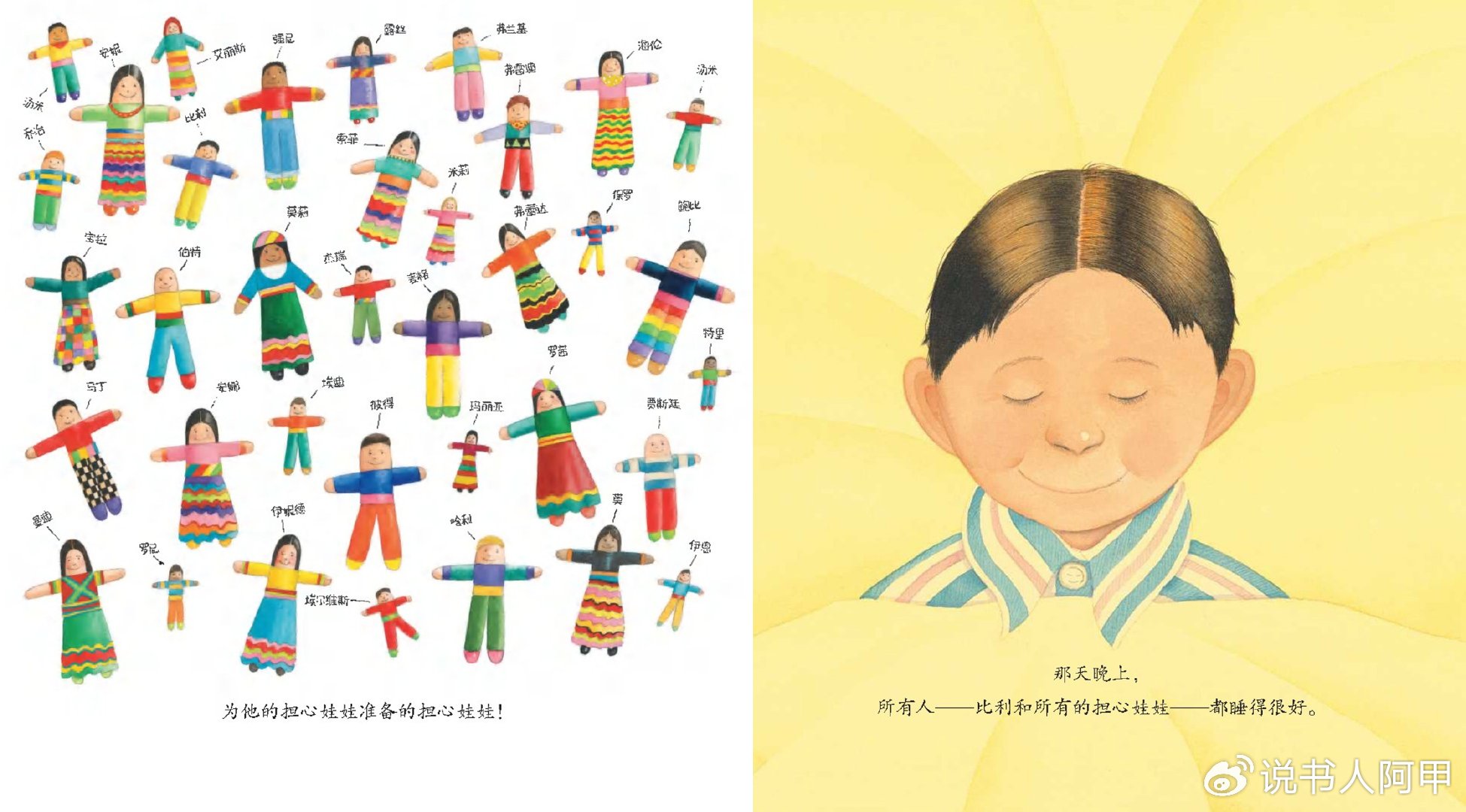
The climax of the story lies in Billy’s actions. He decides to make more “worry dolls” to alleviate their “burden.” This twist is not only captivating in terms of plot but also elevates the theme. From simple emotional management to caring for others, Anthony conveys a particularly positive and benevolent value through Billy’s growth. This process of transcending anxiety and turning to care is highly inspiring for both children and adults. Such a work not only conveys unique secrets to emotional management but also teaches us, in a gentle yet profound way, how to find strength in anxiety and use that strength to care for and help others.
Anthony’s elevating treatment of anxiety reminds me of Danish philosopher Kierkegaard’s *The Concept of Anxiety*.Fear and TremblingThe viewpoints expressed in the text can be broadly summarized as follows:Anxiety is a defining characteristic of human nature; it is precisely through anxiety that we experience our freedom. Anxiety is, in fact, synonymous with possibility.This philosopher said, “Anxiety is not found in wild animals because they lack the essential characteristics of the mind.” Therefore, we, as human beings, should be proud of our ability to feel anxiety. Anxiety is not simply fear, but an awareness of freedom. Freedom is accompanied by anxiety because freedom means facing choices and taking responsibility.
Stories originating from personal life
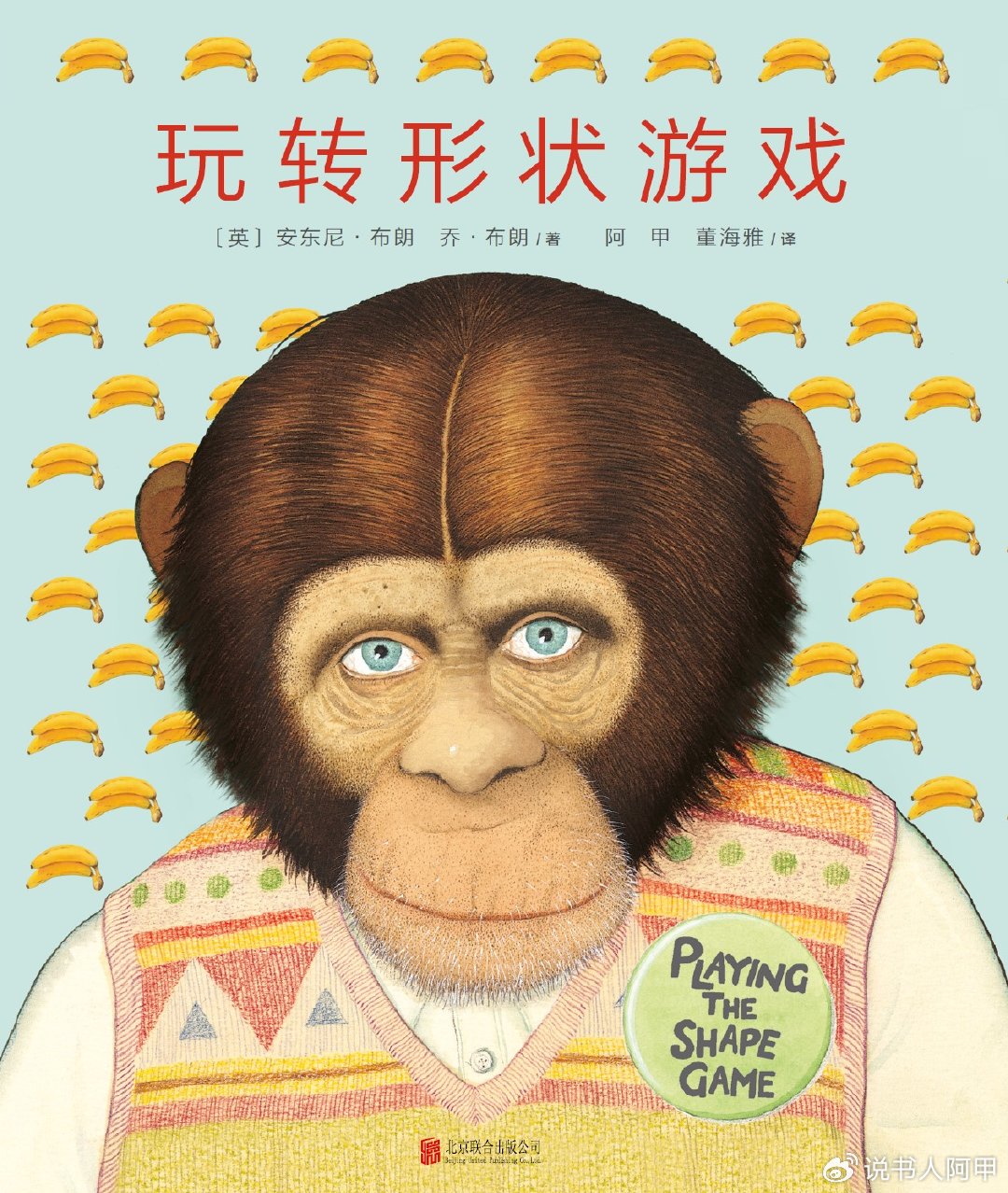
If you’ve read Anthony’s autobiography, *Playing with Shapes*, you’ll know that this picture book master had a particularly anxious (worried) nature from a young age, a trait inherited from his Brown family. Anthony recalled his childhood, saying:““I’m a somewhat neurotic little boy. I can’t fall asleep without thoroughly checking my closet and under my bed before going to sleep.””The strange wallpaper patterns in Billy’s bedroom that readers see in “Billy the Worrying Man” actually originate from Anthony’s childhood memories. Even as an adult, his tendency to worry persisted, and he repeatedly recounts his various anxious experiences in his autobiography, proving that he was the perfect choice to create works exploring the psychology of anxiety.
However, compared to his mother’s extreme level of anxiety, Anthony’s anxiety level pales in comparison. His family consisted of his parents and two brothers. His mother, the only woman in the family, was always specially protected; Anthony and his brother Michael affectionately called her “our Doris.” When their father was alive, he often traveled for work, sometimes returning home very late. In these situations, “our Doris and Michael would chatter on and on. They worried that Dad might have been in a car accident and died. But I never worried along with them…” (from *Playing with Shapes*, hereinafter the same). This shows that Michael was more prone to worry than Anthony.
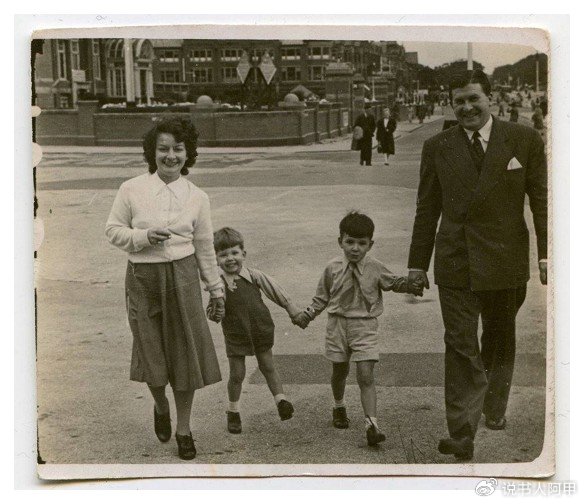
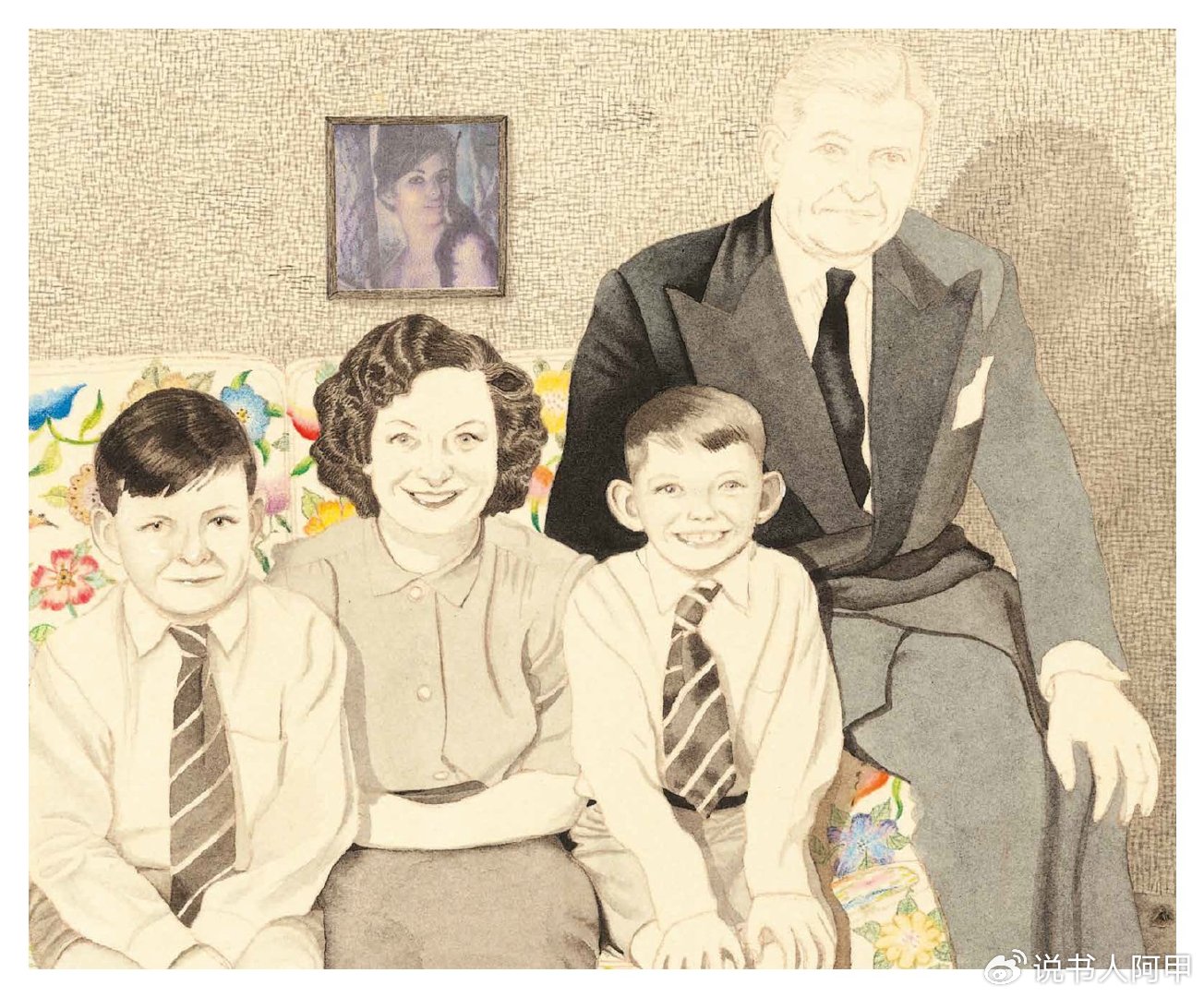
Anthony stated with certainty that the main prototype for “Billy the Worrying” was “our Doris.” It all started when, during a trip around the world sharing his creative insights, he received a gift of “worry dolls” in Mexico—a box of ten brightly colored dolls. Upon returning home, he gave them to someone who needed them more: “the most worrisome person I’ve ever known—my mother.” Sure enough, his mother loved the dolls, and they did help alleviate her anxiety for the first few days. But one morning, Anthony discovered his mother was caught up in a new worry: she had “lost the worry dolls!”
Anthony didn’t adopt the mother’s new worry in the story, but instead created a new approach for Billy to implement. This new approach still stemmed from his observation and understanding of his mother: “Her worry is most unique in that she always worries about others. Our Doris proves that worry and concern are very closely related. I think that when worry turns into concern, it means that a person’s emotions have reached a certain maturity.” Through the growth of the young boy Billy in his worries, learning to transform his own worries into concern for others, Anthony conveys a very important message: “Everyone worries, but only the kindest people can transform their worries into concern for others.” —For this reason, I’m willing to see *Billy the Worryer* as an “upgraded” version of Anthony’s unique secret to managing anxiety.
Billy is Willie
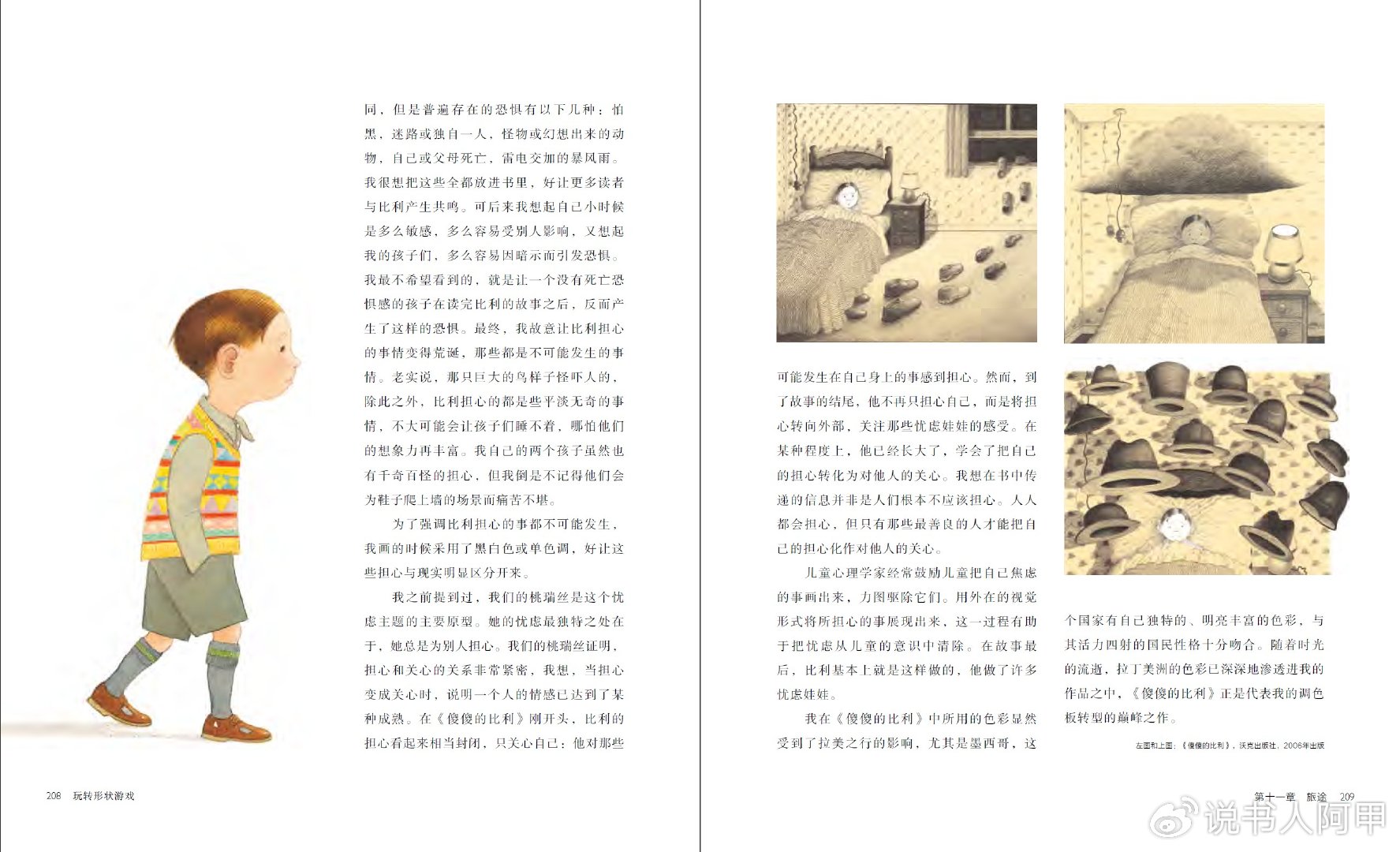
As a master of picture books, Anthony Browne’s visual storytelling in this book is also exceptional. He continues his surrealist approach to exploring psychological phenomena. The illustrations concretize Billy’s anxiety: a huge dark cloud looming over the bed, damp rain beside the bed, and a giant bird flying around the room. These visually striking images directly present Billy’s inner fears. This visual expression not only deepens the emotional tension of the story but also helps readers (especially children) to understand the abstract emotion of anxiety more concretely.
As Billy begins to accept the help of the Worry Dolls, the colors and atmosphere of the imagery gradually change. Dark, somber scenes are replaced by warm, bright tones, metaphorically representing Billy’s emotional shift. Especially at the end, when Billy creates a large group of Worry Dolls, the imagery is filled with color and vitality, symbolizing the clarity of Billy’s inner world and the joy of his growth.
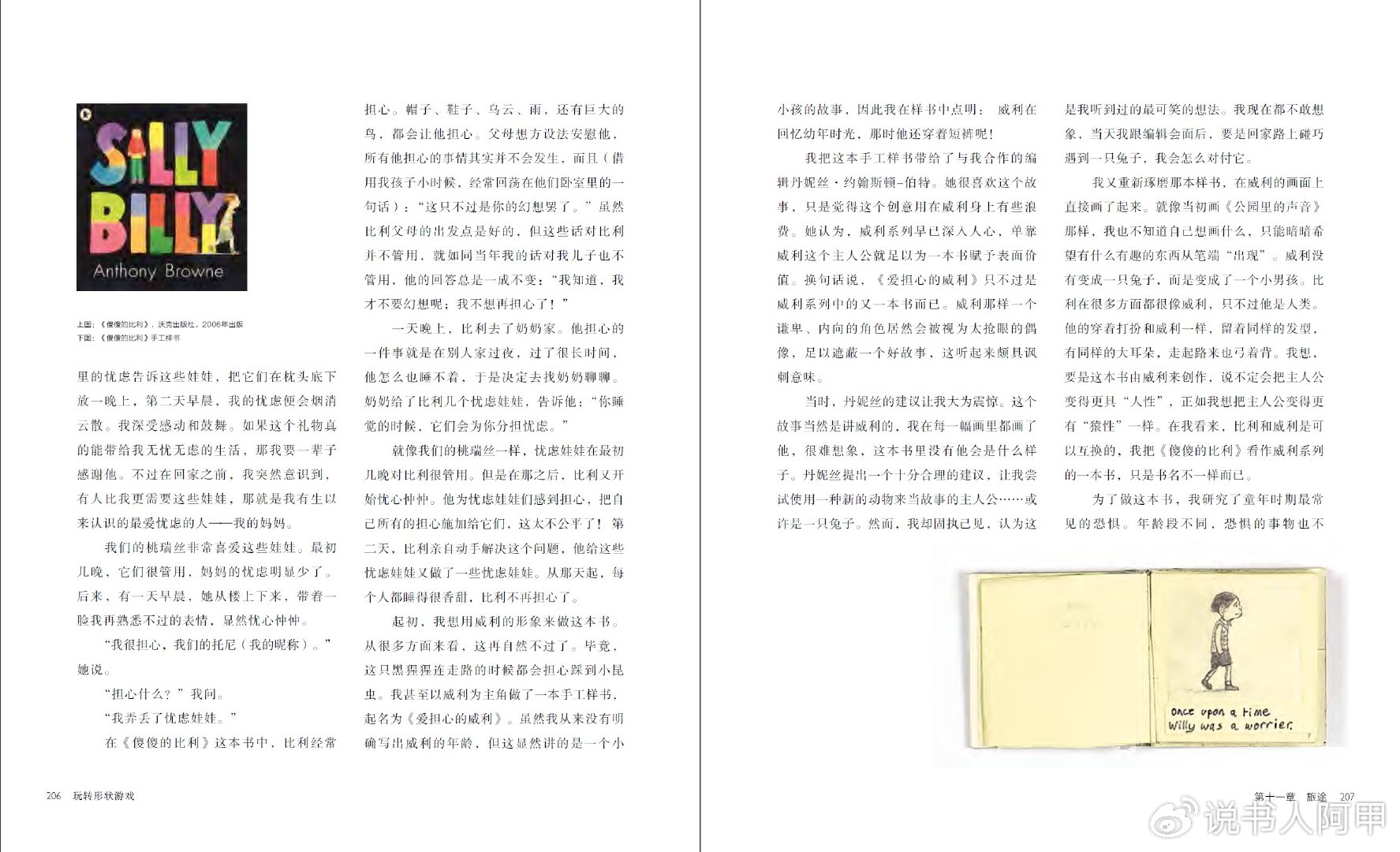
It’s worth mentioning that when Anthony was drafting the story, he actually envisioned Willie the chimpanzee as the protagonist. Among the picture book characters he created, Willie was the most relatable to young readers, with many children seeing themselves in him. However, the publisher’s editor, Denise, loved the story so much that she felt Willie was already deeply ingrained in the public consciousness, and adding another “silly Willie” would seem like merely filling in a sequel, significantly diminishing the book’s unique value. Anthony readily agreed, and after careful consideration and several attempts, ultimately adopted the image of a little boy, Billy, but Billy dressed the same as Willie, had the same hairstyle, and even walked with the same hunched back. He later recalled:““In my opinion, Billy and Willy are interchangeable. I consider ‘Billy the Worrying’ to be a book in the Willy series, just with a different title.””
“Billy the Worrying Child” is indeed a very special work by Anthony Browne, bearing the imprint of his personal life and family memories, while also being a healing work that attempts to help children confront anxiety. Through the fascinating traditions and customs of Central American children and Billy’s coming-of-age story, it showcases a unique wisdom of transcending the self and caring for others. He skillfully blends psychological insights with surrealist artistic expression, demonstrating the peculiar magic of drawing strength from anxiety, which is also quite inspiring for adult readers.
Written by A‑Jia on December 12, 2024 in Beijing