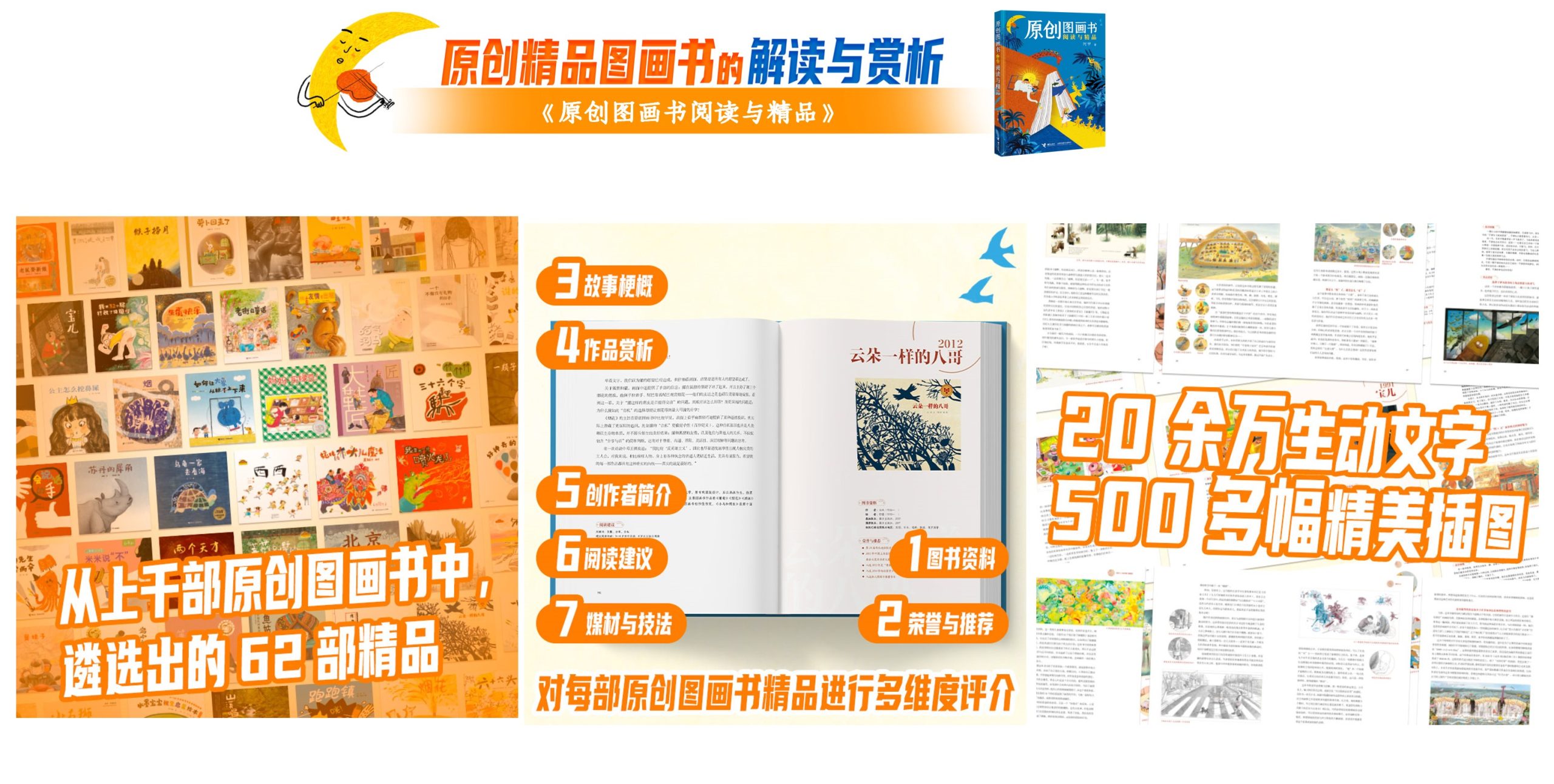
Introduction: This is an interview podcast conducted on “Picture Book Lollipop”, hosted by Xiaoxiang and guest Ajia. Starting from the reference book “Original Picture Books: Selected Readings and Highlights” published at the end of 2024, an in-depth conversation was held around the selection criteria, historical context, current themes and future development of original picture books. The recording time is on the evening of January 3, 2025, and the broadcast time is January 17, 2025.
The following text is compiled as an excerpt. To listen to the full podcast, please click the following audio link:
Microcosm:http://t.cn/A6uDFbvy
[Part 1]
Xiaoxiang:
Hi, everyone, welcome to the new episode of “Picture Book Lollipop”. I am Xiaoxiang.
It’s been a long time since we last updated the podcast, but the podcast is finally online. The last episode was during the summer vacation, and this one will be the last one during the Lunar New Year.
Because it is the end of the year, it is actually quite suitable to talk about some topics related to inventory and summary.
What we are going to talk about today is a topic that everyone is very interested in — about our original picture books.
Teacher Ajia has just published a theoretical book on original picture books, called “Original Picture Books: Selected Readings and Highlights”. In this book, Teacher Ajia analyzes the development of original Chinese picture books from multiple perspectives, such as culture and art, and lists 62 representative works from 1955 to 2020.
We have also recommended this book on Lollipop’s December new book list, and readers have responded very enthusiastically. So I think today is a particularly good opportunity to talk about this book, as well as the many questions and thoughts about original picture books that cannot be exhausted in the book.
First of all, welcome our guest, Teacher Ajia!
Ajia:
Hello, Xiaoxiang, hello everyone! Yes, I should be considered an old friend, right? I think we have chatted twice before, right?
Xiaoxiang:
Yes, yes. Mr. Ajia is the guest who has returned the most times in Lollipop.
I remember we talked about the Caldecott Medal and “1001 Children’s Books You Must Read Before You Grow Up”.
Yes, in the past we talked more about imported works, but this time we are finally going to talk about original works.
Let’s start with this book. Could you please tell us about the origin of this book? What inspired you? And the whole creation process.
I remember that you didn’t seem to reveal much about working on this book before, so I was quite surprised when it was published.
In the last podcast, you mentioned that you wanted to write a book called “1001 Chinese Children’s Books That Chinese Children Must Read Before They Grow Up”.
Ajia:
Yes, if “1001 books” cannot be done, then let’s do “101 books” first. That book has actually been written and is now being typeset. It is to supplement the Chinese part of the series “1001 Books to Read Before Growing Up”. In fact, I have been writing that book since 2020, and the content is not limited to picture books.
But as for the original Chinese picture books, I actually started to prepare to write them in 2015. However, I didn’t intend to write them like this book.
It was completely accidental that this book finally came into being.
How should I put it? You know I have always been very interested in the history of picture books, and I want to understand their origins — all over the world, and in China.
During the sorting process, I found that it is easier to sort out the history of Western picture books, but it is actually quite difficult to sort out the history of original Chinese picture books.
So actually, I set a goal in 2015. I wanted to interview the creators of original picture books one by one, especially those who started writing in the early days.
For example, Ms. Cai Gao, Mr. Zhu Chengliang, and Mr. Zhou Xiang are all original picture book creators who have emerged since the 1980s. I want to start interviewing them, as well as some relatively young authors.
It also includes text writers, such as Mr. Zhu Zhiqiang and Mr. Peng Yi.
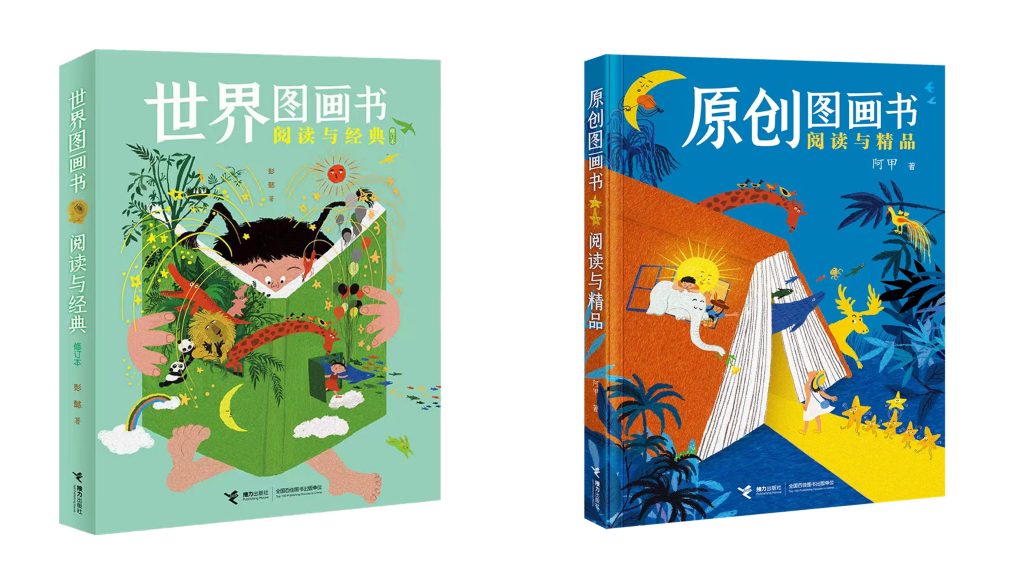
Mr. Peng Yi was actually the first person I asked to interview, because he was one of the authors of “World Picture Book Reading and Classics”, which was completed in 2005 or 2006. I also participated in some of the processes, helping him look up award information, reading the first draft, and even helping him find a publisher in the end, so I also contributed a lot.
In fact, my idea at the time was to start with the basic information, and understand the history behind these books one by one and what their growth experiences were like.
Later I realized that this was a huge project. I started working on it in 2015 and gave up in 2019.
One important reason is that I found that Wang Xinting of Iread Children’s Books is very good at interviewing, and she produces manuscripts very quickly and organizes them very well. With such people doing this, I felt that I didn’t need to do this anymore. I also told Xinting to do more. After her first book was published, I was also very happy to write the preface for her second interview collection.
So I can be lazy in this regard. After all, this is not my strong point.
I might be more suited to doing some historical sorting, such as a detailed sorting out of each book, or appreciating it, or arranging these works in chronological order, and then thinking about why they are what they are today in light of the background.
In that historical context, what value and status do they have? If we can go one step further, perhaps we can do something more.
Xiaoxiang:
I think both aspects of work are very important — on the one hand, interviews with writers, and on the other hand, what you are doing, combing through and summarizing the entire context. Appreciation is also very important.
For me, reading your book gives me a very interesting comparative reading perspective.
Because at the Shanghai Children’s Book Fair that just ended, I was fortunate to interview Japanese picture book researcher and book reviewer Yukiko Hiromatsu. She also published a very important research book last year about the development of Japanese picture books over the past century, called “Japanese Picture Books for 100 Years, 100 Books, 100 People” (『日本の絵本100年100人100冊』).
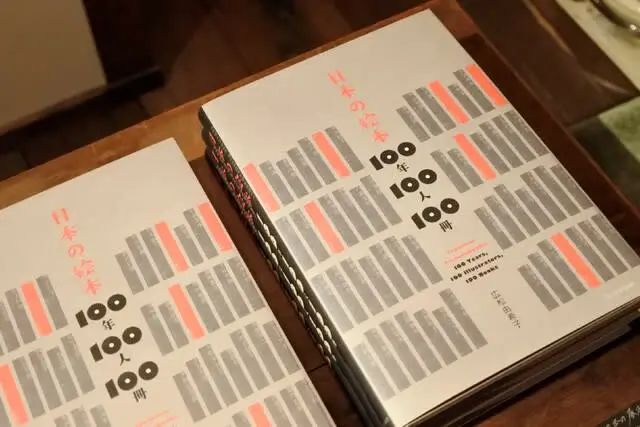
I think that book has a lot of similarities with yours in terms of format, ideas, and even style. Of course, there are also many differences.
So today I would also like to ask you some of the questions I asked her at that time, and I would also like to hear your thoughts.
I remember asking her: What is her positioning for her book? Who does she think are the potential readers? Or, who does she hope will read this book? I think I can also ask you this question. What do you think?
Ajia:
This is a good question.
In fact, I have wanted to study the history of Japanese picture books for a while, so I also tried to look up some information. Japan has a relatively mature tradition in the field of academic research, and the basic data is very solid.
The history of contemporary Japanese picture books can be roughly said to have started in the 1950s. Of course, there was a long transition period before that. But strictly speaking, the history of contemporary picture books should have started after the war, that is, around 1950. They have done very solid basic research.
As far as I can see, Japanese picture books have entered a new stage, a very diversified stage. There are many different evaluation systems, different reading groups, and different “enthusiast” groups. So in Japan, a relatively small group of people may like a certain type of picture book, while another group likes another type. They have a wide variety of picture book types, and there are also many sub-categories.
Such a state, from the perspective of development, is already very mature and will present different aspects. Its richness is worth knowing. Because you may belong to this niche group, but you also need to know what kind of books other groups like.
So I think that in addition to academic research, there should also be some books that can build bridges in the public domain, so that everyone can understand which books are valuable. Such books are a kind of “bridge-type” books.
For example, when I write something on original picture books, I actually hope that my readers can compare them with foreign picture books while reading my original works, and see their respective advantages. So I often make comparisons. For example, I compare them with some classic works, or compare them with a foreign picture book. Sometimes they are published at a very close time.
For example, the same year that Something From Nothing by Phoebe Gilman was published, the Taiwanese version of The Mouse Marries a Bride was also published. Coincidentally, they both adopted a similar structure: one is the human world, the other is the mouse world.
For example, “Something From Nothing” tells the story of a man in the human world who always has a way to turn old clothes into something else, and finally makes them into buttons, always solving problems. And underneath the story, there is a world of mice who use the scraps of cloth that humans don’t want to build their own lives. This is “Something From Nothing”.
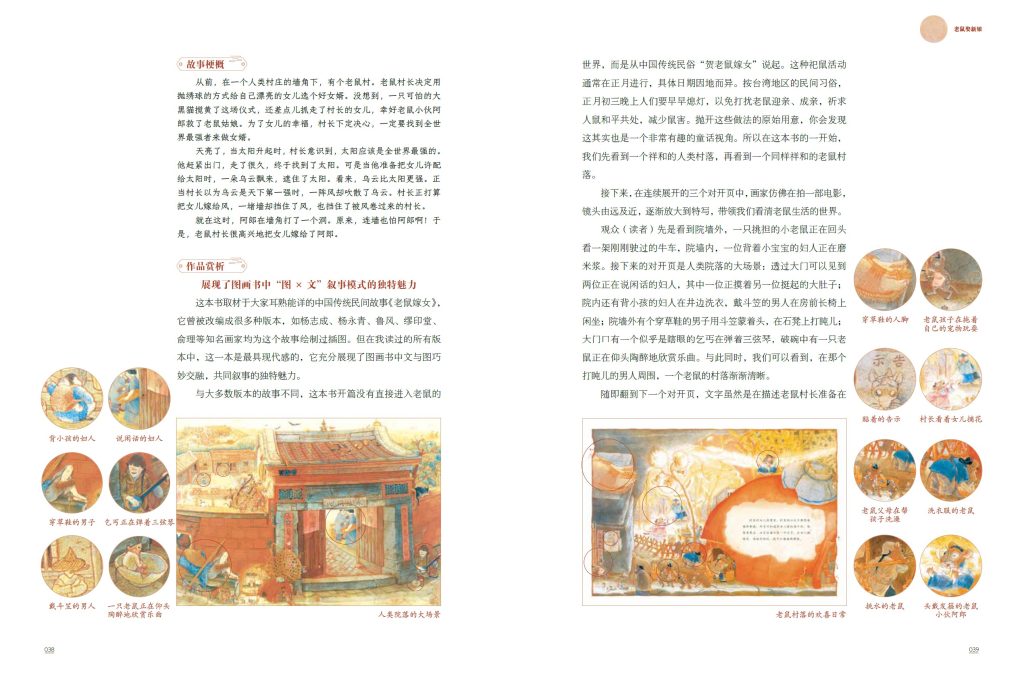
The same is true for “The Mouse Marries a Bride”, there are human villages and mouse villages. It mainly tells the story of mice, but we can also see the various appearances of human villages.
These two books were indeed published in the same year. I later discovered that sometimes such creativity may come from some earlier inspiration. Each of them has its own wonderful aspects.
To some extent, I think the mouse world in “The Mouse Marries the Bride” is better than the human world. This is definitely not plagiarism, and it is very likely that its creativity is even better. Of course, this is my personal evaluation.
Xiaoxiang:
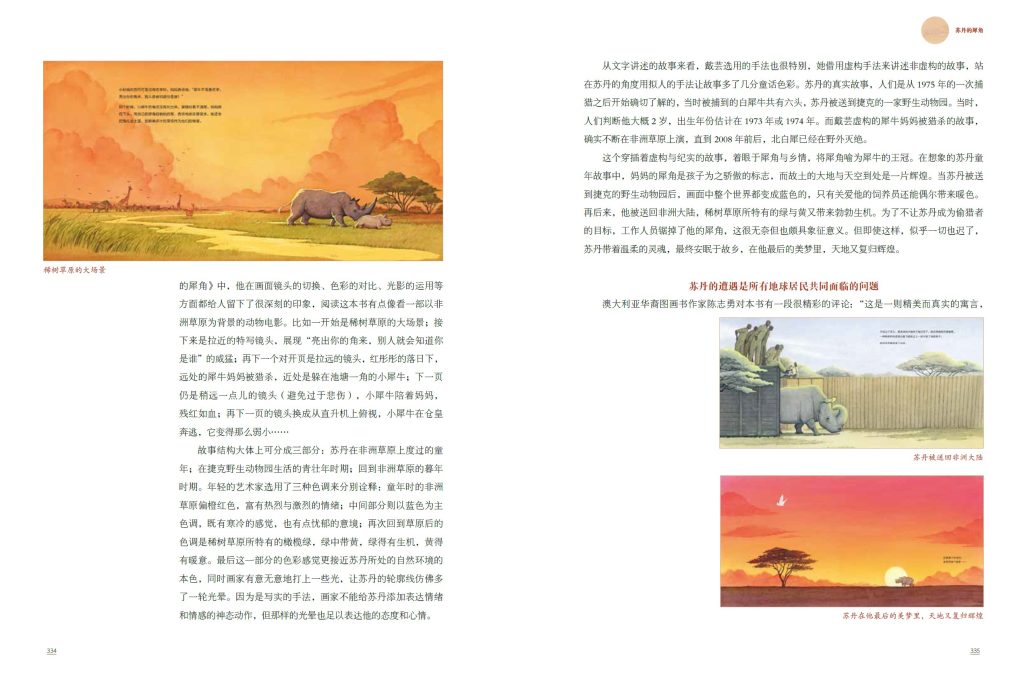
I have seen similar situations mentioned in many places in your book, such as works published in the same year with similar themes. For example, “Rhinoceros Horns of Sudan” by Dai Yun and Li Xingming and “Mr. Gumpy’s Rhino” by Burningham, I think you mentioned that they were both published in 2019? They both tell the story of the northern white rhino in East Africa.
But you can see that their creative choices are completely different. Maybe from the perspective of sentiment, “The Horn of Sudan” is more grand, right?
Ajia:
It’s hard to say. So I think this kind of comparison is just building a bridge so that each side can see each other.
I don’t really want to limit my readers to the purely academic or professional circles. I hope that more adults, both adults and children, can see the interesting side of these books.
I try not to use the tone that is written for academic or professional readers. In fact, I quite like to write with the interest of a “storyteller”.
Xiaoxiang:
This is your unique style.
Your answer is actually quite similar to Hiromatsu’s. She said that she also wanted to write a more professional or even academic book at first. But then she recalled that when she was a student in the 1980s, she read a book called “The World of Picture Books” (some say “The World of Illustrations”) written by Horiuchi Seiichi (ほりうち せいいち)in a bookstore. She thought the book was very interesting. It had a certain depth, but it was also very interesting. It was that book that opened the door to picture books for her at that time.
So she felt that when she wrote this book today, she hoped it would be for a larger group, for the future, and for the next generation. She said she didn’t care about professionalism at all. I think this is really close to your idea.
The second question I asked her was this: In her book, she actually summarized the entire 100-year history of modern picture books in Japan from 1912 to 2014 into a clear format of “100 years, 100 creators or 100 groups of creators, and 100 representative works.”
Among these 100 representative works, I actually noticed that some of them were not the “representative works” of those “representative writers” in Japan that Chinese readers would first think of. For example, when mentioning Mitsumasa Anno, she did not choose the most famous “Anno’s journey”, but another book “Don’t Open”. For example, Yoko Sano did not mention “The Cat That Lived a Million Times”, but “The Child Born”.
So regarding the issue of book selection, I also asked her: How do you balance professionalism and personal preferences, or personal reading interests?
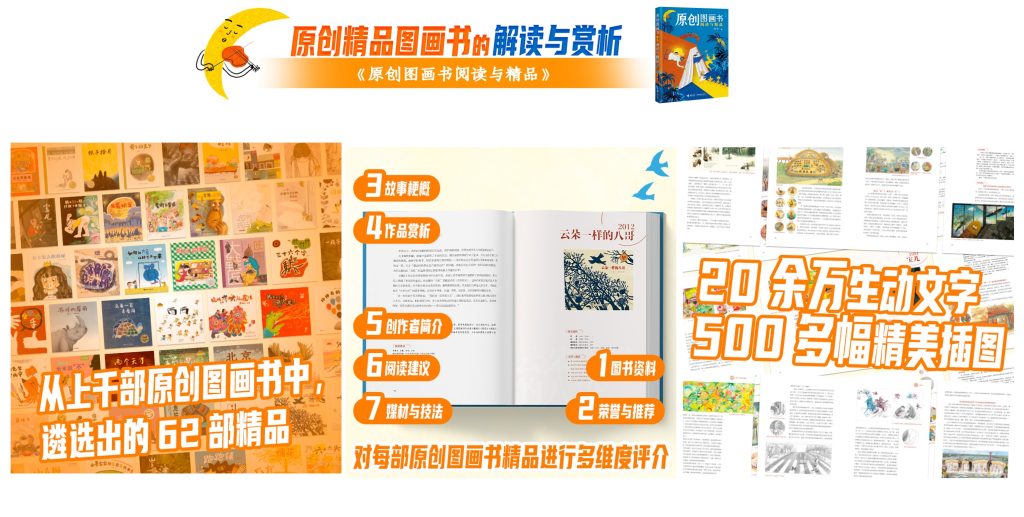
I would also like to ask you this question, because you also mentioned “62 representative works in 65 years” in your book. How did you select these representative works?
Ajia:
This is an interesting question.
I think the situation in Japan and China is different. To be honest, the predecessors of Yukiko Hiromatsu, whom you mentioned, have already done a lot of basic work. And from the perspective of their entire picture book culture, many people have been sorting it out, including various types of book lists.
The National Diet Library of Japan has also compiled a bibliography of representative picture books. I have downloaded their materials, which are really professional and represent recognized “good books”. It is also important to consider the time point. Because when you first start to sort out, you need to establish the concept of “milestones”. The so-called “milestone” means that for a certain author, the most important and most praised book, we should not bypass it.
This is the most basic part and cannot be ignored when you first start doing this work.
But once you have this foundation, you can expand upon it, such as adding some personal interests.
Back to the book “Original Picture Books: Selected Readings and Highlights”, in fact, its creation was somewhat accidental. Although I was unable to make an interview collection according to my original idea, I have been collecting and organizing materials for original picture books.
For example, I have been presiding over the annual TOP 10 list of must-read picture books for Hongniba and Parenting Science. Since 2015, I have been organizing the original picture books published in the previous period every year, trying not to miss any outstanding works. This is what I have been doing.
So I had a basic idea at that time: if we were to write the first book on the compilation of original picture books, we must not miss those basic books.
This was my initial starting point.
(The above is the first part, to be continued)