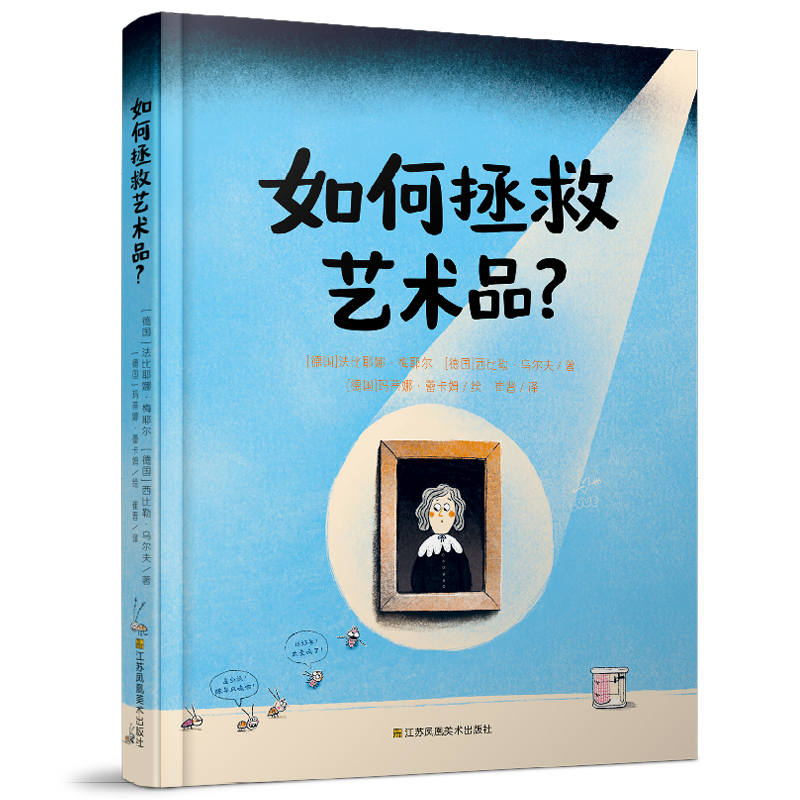
As we stroll through the quiet galleries of a museum, our gaze often focuses on the art treasures gleaming under the spotlights. However, behind these gleaming frames, behind those heavy doors marked “No Admission,” lies a little-known yet crucial world. There, you’ll find not only paints and canvases, but also microscopes, chemical reagents, scalpels, and a group of people racing against time. This is explored in the German science picture book, *How to Save a Work of Art?*Wie rettet man Kunst?This is precisely the key to unlocking the secrets behind museums.
The German version of this book was shortlisted for the Austrian Science Book of the Year Award and the Franco-German Youth Literature Award as soon as it was published. It is not only a technical manual about “fixing and repairing”, but also a “paper museum” that perfectly blends hard science, detective suspense and humanistic care.
The Adventure of Deconstructing “Hugo”
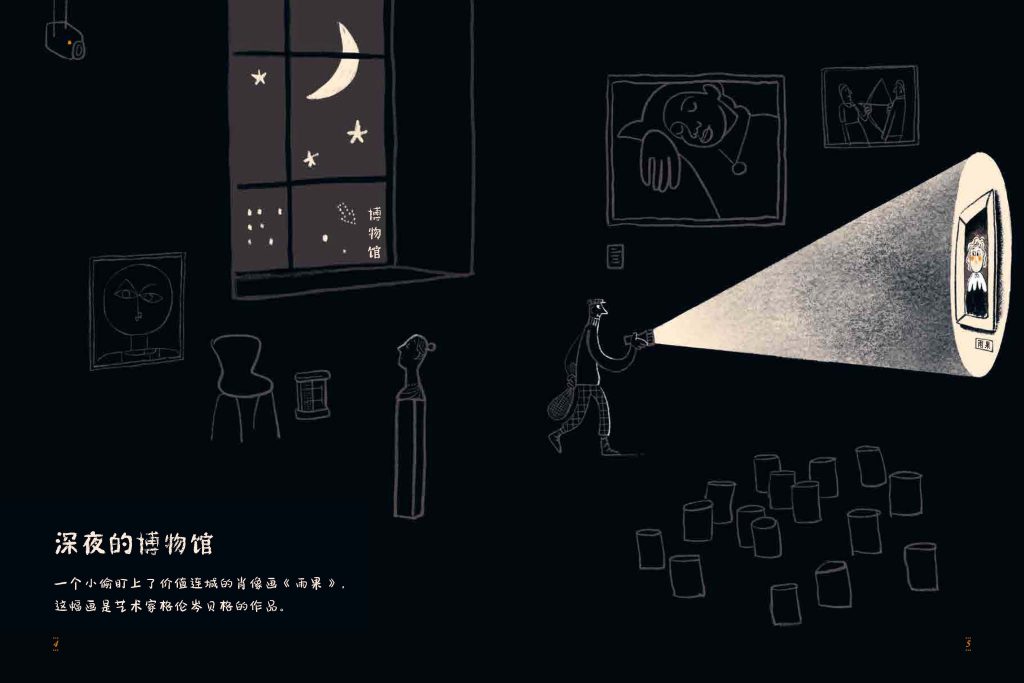
When people think of art restoration, they often picture serious white coats and dry chemical equations. But this book, co-authored by two veteran restorers, Fabienne Meyer and Sibylle Wulff, takes a different approach, choosing a highly dramatic angle—a rescue operation called “Saving Hugo.”
The entire story revolves around a fictional protagonist: a 17th-century portrait of a boy, Victor Hugo. Instead of a textbook-style narrative, the story opens with a thrilling museum heist. The clumsy thief, in his haste to steal the painting, leaves “Hugo” in a damp, filthy garage. This ingenious plot device instantly concretizes the abstract concept of “the aging of artifacts” into a sudden disaster.Hugo not only suffered physical impacts during transport, but also faced the deadly threats of being soaked in mud and water, mold growth, and temperature fluctuations.When the police finally recovered the painting, Hugo’s work was in ruins, and an urgent “medical rescue” was imperative.
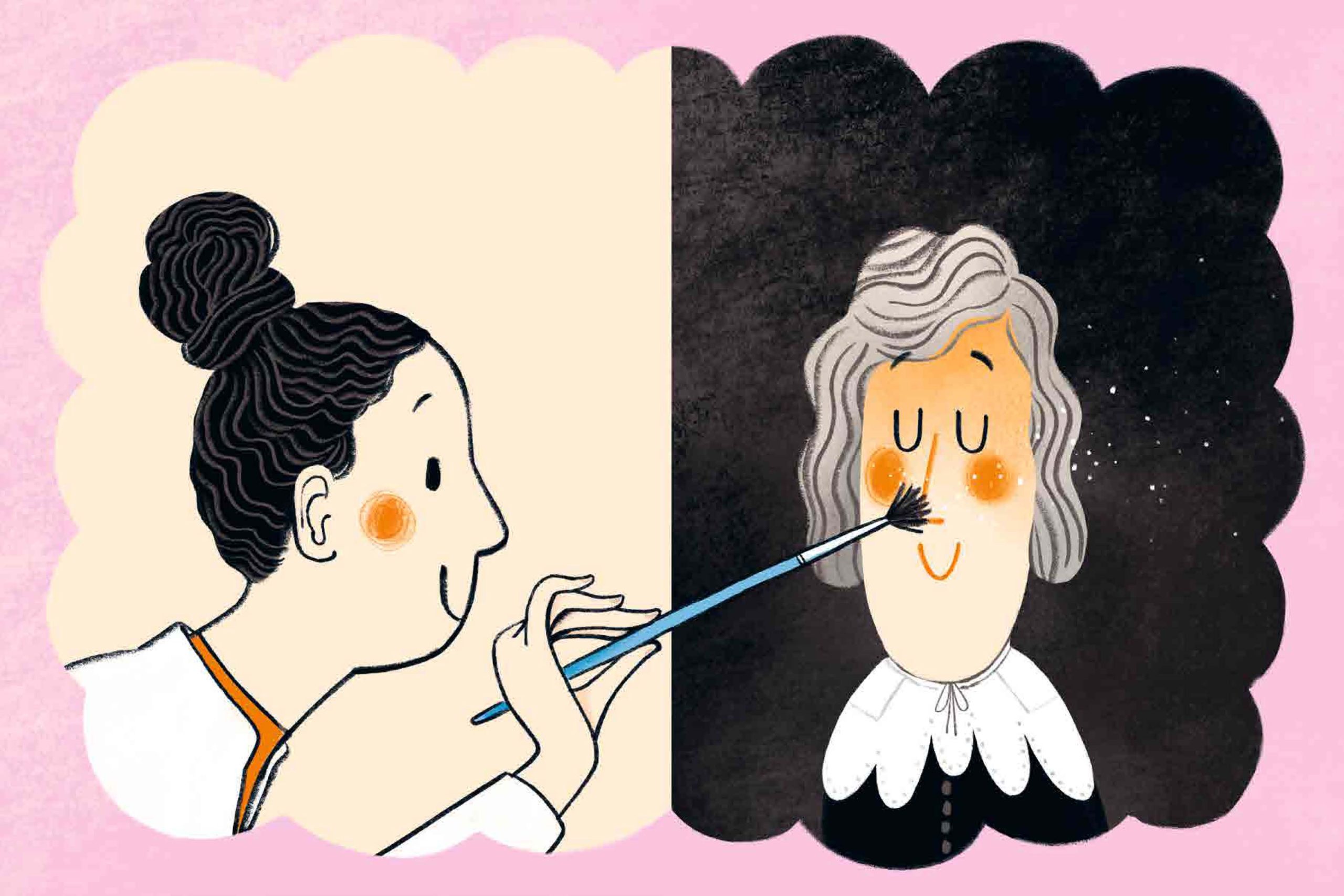
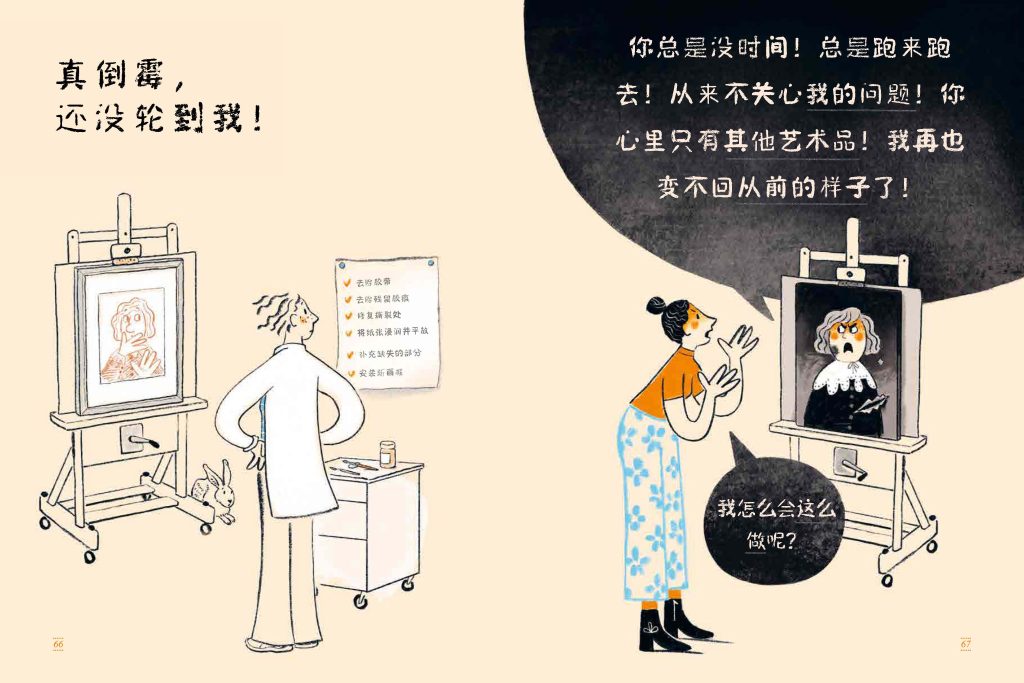
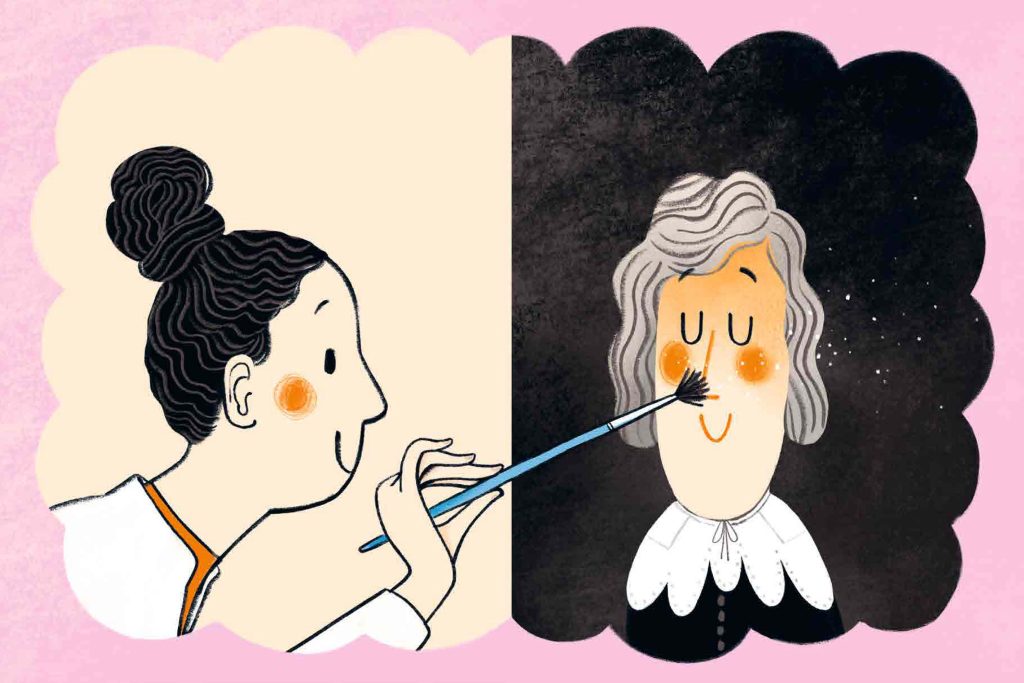
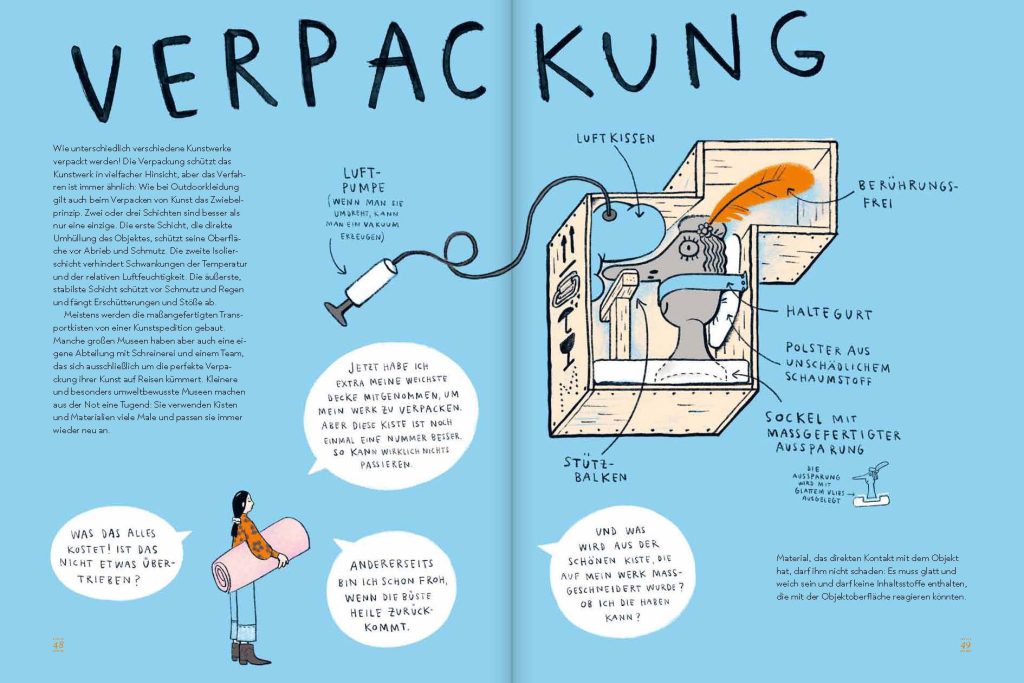
What’s most surprising is that “Hugo” isn’t merely a passive object in the book. The creators have breathed life and personality into him, making him the book’s “complaint king.” Through cartoonish speech bubbles, this character, like a picky patient, offers humorous observations about the restorers’ work. When the restorers spend long hours under the microscope developing a plan and delay starting repairs, Hugo can’t help but complain about being “left out”; when the cleaning swabs touch the wound, he cries out in pain; and when it’s finally restored, he can’t hide his pride. This anthropomorphic first-person perspective instantly breaks down the barriers between technical expertise and ordinary readers, allowing children to develop an emotional connection with the artifacts while reading—we are no longer coldly observing the repair of an object, but caring about the fate of a friend named Hugo.
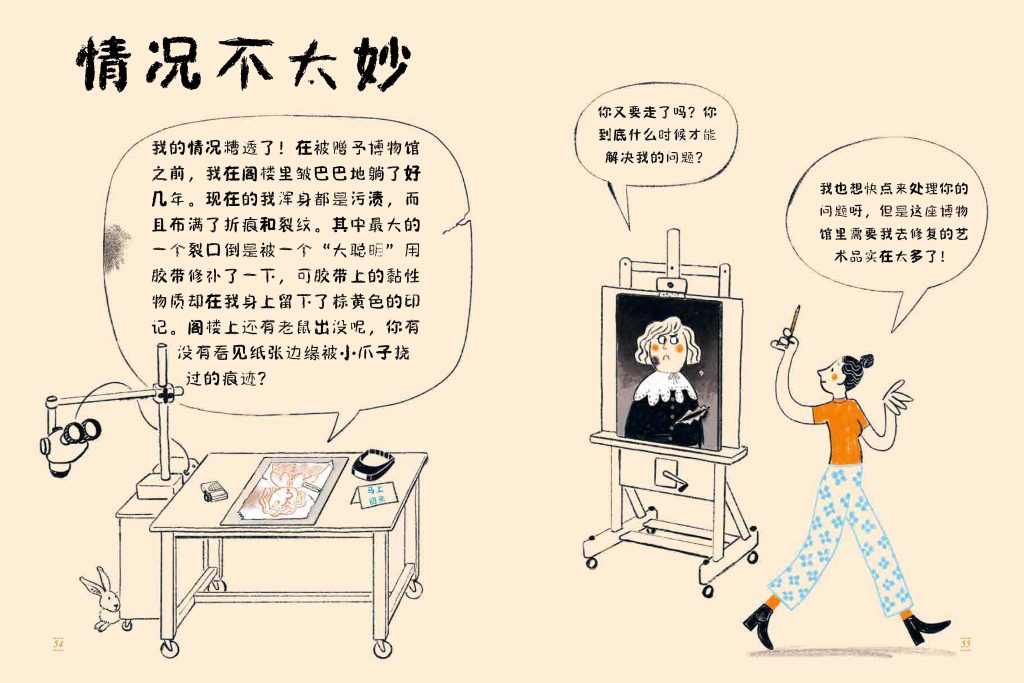
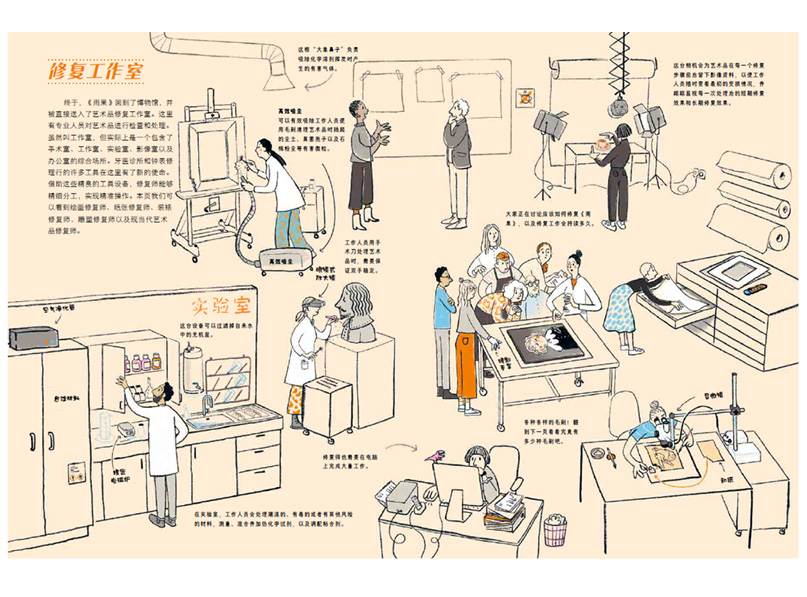
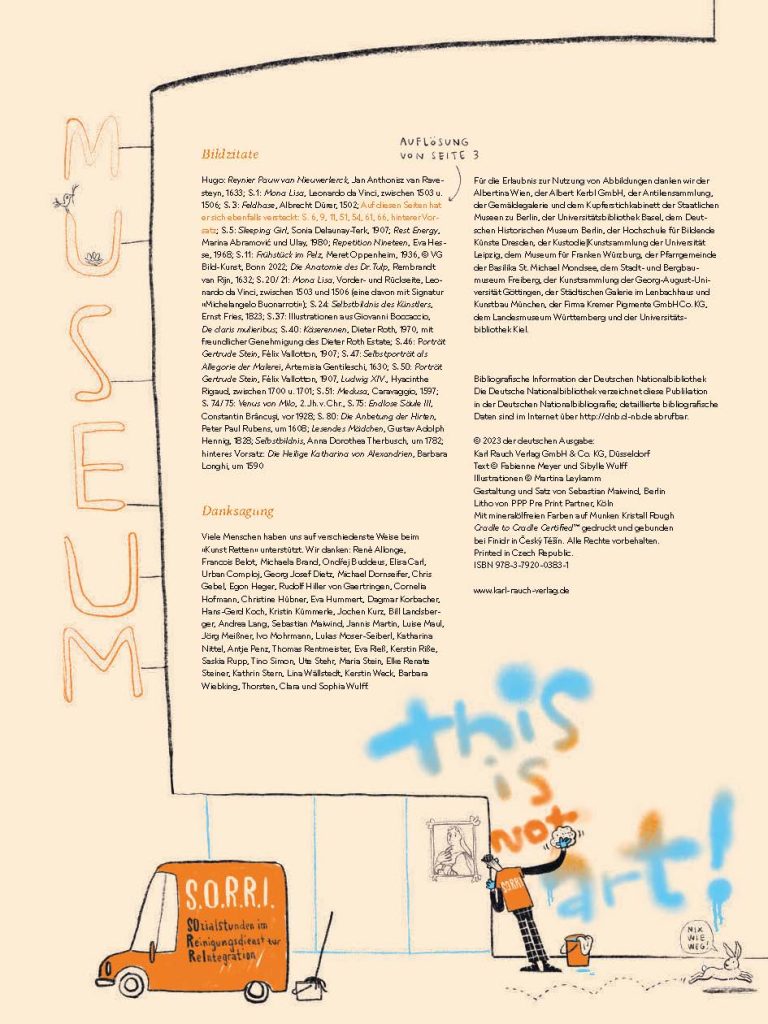
This unique narrative strategy benefits from the exquisite visual translation of illustrator Martina Leykamm. She employs a style akin to graphic novels, seamlessly connecting the microscopic world of science with the macroscopic narrative setting. The specially designed large-format fold-out pages are the finishing touch to the visual presentation. When readers unfold these pages, it’s as if they are personally opening the door to a restoration room, or putting their eyes close to a microscope: the left side might reveal a gray, visually obscure scene, while the right side shows the secret of the “crooked nose” as revealed by the artist under X‑ray; one moment it’s a panoramic view of the museum, the next it’s fibers and pigment particles magnified hundreds of times. This design not only increases the interactivity of the reading experience but also creates a sense of surprise through layered revelation. As German media have commented, the book itself is “an artwork about art.”
The Golden Triangle: When Scientists Pick Up Picture Book Pens
The reason why “How to Save a Work of Art?” can explain such a niche professional knowledge in such an accessible way is thanks to the “golden triangle” of three female creators behind it. This is not just the usual interpretation of children’s book authors after consulting materials, but rather genuine industry experts sharing their professional experiences.
One of the authors, Dr. Meyer, is a conservator at the Copperplate Print Gallery of the Berlin State Museums. She specializes not only in paper and modern art restoration but also holds a doctoral degree in research on harmful substances in the museum environment, such as volatile organic compounds. This gives the book’s descriptions of paper acidification and the corrosive effects of air pollutants on artworks a high level of academic value. The other author, Sibyl Ulf, comes from the Leipzig University Art Collections. She specializes in the restoration of classical oil paintings and polychrome wood carvings. It was she who contributed the prototype inspiration for the character “Hugo” to this book and brought with her profound knowledge of the structure of ancient pigment layers and the properties of wood.
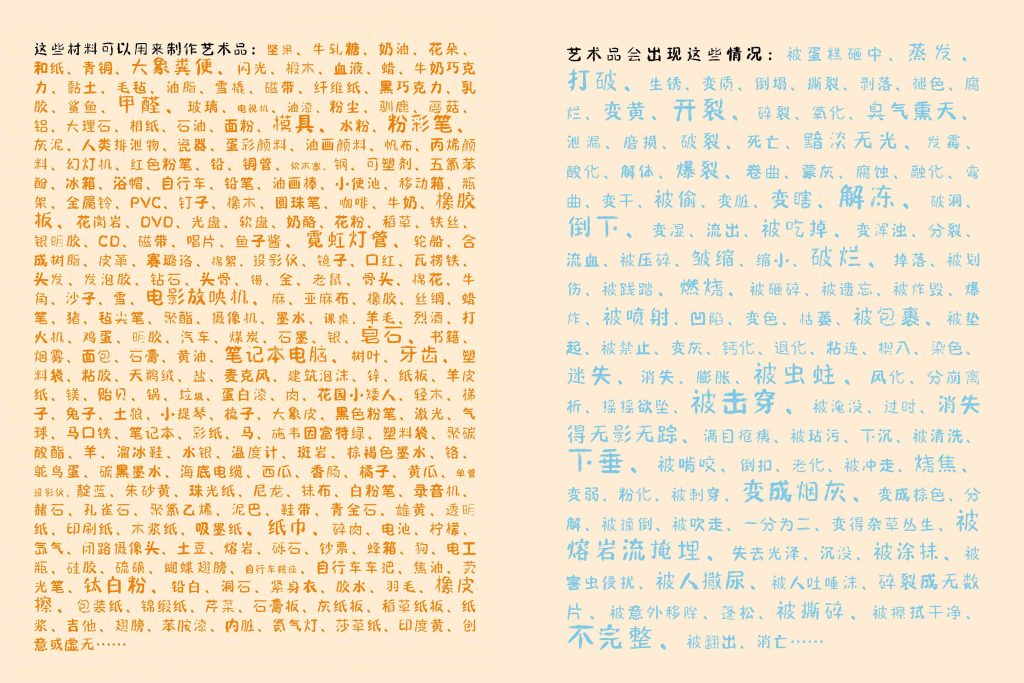
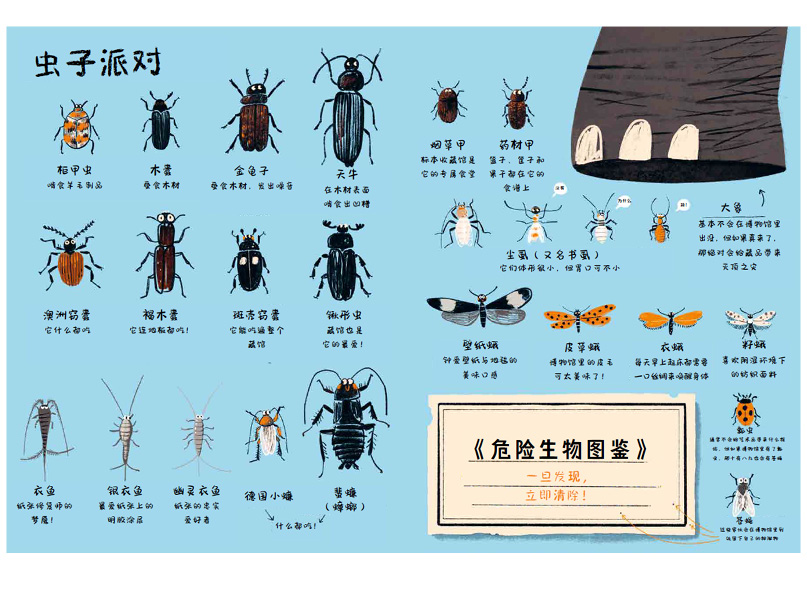
However, experts often fall into the trap of writing overly complex and difficult-to-understand science articles. This is where the illustrator of this book plays a crucial “translator” role. She transforms the complex terms used by the two scientists, such as “chroic structure” and “microfading test,” into intuitive, humorous, and logical visual language. For example, to explain the threat of insects to artworks, Recam doesn’t draw disturbing photos of real insects, but instead uses exaggerated cartoon techniques to depict how voracious woodworms and silverfish devour frames and paper like a feast. She even includes details like the stains left by flying insects “relieving themselves” on famous paintings. These details realistically reflect the challenges of cultural heritage preservation while also eliciting laughter from young readers.
This accessibility is not accidental, but rather “tested in real-world use.” Dr. Mayer revealed that her two children (aged 9 and 13) were the book’s most demanding “first readers.” During the writing process, the children bluntly pointed out which passages were “too boring” or “incomprehensible,” prompting the writing team to continuously refine the text until the complex ethics and chemical principles of restoration were transformed into stories that even 9‑year-olds could enjoy. This extreme pursuit of audience acceptance has enabled the book to successfully break through age barriers, becoming a truly meaningful family book.
Breaking the mold of obscure knowledge: Prevention is better than cure
Beneath its captivating narrative, this book conveys a core message that is exceptionally serious and profound. It attempts to correct a fundamental misconception about restoration: the best protection is not reactive repair, but rather “preventative protection.”
The book uses a title called ““1, 2, 3, Salvation!”The dice game cleverly incorporates this modern concept of cultural heritage preservation. In this game, players face threats such as light, humidity fluctuations, and mold. The key to victory lies not in skillfully repairing damage, but in controlling the environment to prevent damage from occurring in the first place. The author repeatedly emphasizes that “works of art are unique and irreplaceable.” Although modern technology can create perfect replicas, replicas are often “soulless.” Works of art carry human memories; once the original is lost, that historical memory is also erased. Therefore, the work of restorers is essentially a fight against forgetting, a protection of the “material evidence” of human civilization.
Furthermore, this book greatly satisfies the public’s curiosity about “art detectives.” Restorers are not merely skilled craftsmen, but also detectives proficient in chemistry, physics, and history. A dedicated chapter reveals the tricks of forgers—how they soak paper in tea to fake age, or bake paintings in an oven to create ancient cracks. Restorers, on the other hand, use high-tech methods such as X‑rays and ultraviolet fluorescence, peeling back the layers of disguise like forensic scientists to reveal the truth. This “deciphering” process greatly enhances the reading experience, leaving readers amazed by the methods of forgery while also inspiring awe for the power of scientific authentication.
This process of demystifying restorers also breaks down the stereotype of them as “lonely craftsmen.” In reality, restorers need to discuss exhibition lighting with curators, study pest control with biologists, and analyze solvent composition with chemists. This book, through a panoramic presentation, restores the true face of this profession as a composite of “scientist + doctor + artist.”
An ideal model of STEAM education and parent-child reading
For both family education and school teaching, *How to Save a Work of Art?* is undoubtedly a treasure trove of interdisciplinary knowledge and ideal material for STEAM education (Science, Technology, Engineering, Art, and Mathematics). It naturally connects seemingly unrelated subjects:
On a scientific level, the book covers a great deal of chemistry and biology. Parents can use the diagrams about the layered structure of pigments in the book to explain to their children that oil painting is not a flat layer of color, but a three-dimensional structure made up of chemical substances such as base coats, pigments, and varnishes; or they can use the concept of a “micro-fading test” to conduct small home experiments on the effect of light on color and discuss why the lighting in museums is always so dim.
On a technical level, the application of non-destructive testing technologies such as X‑rays and infrared reflection imaging demonstrates to children how the knowledge of spectral physics can be applied in real life. The X‑ray discovery of Victor Hugo’s “crooked nose” is a perfect example, illustrating how technology can see through history that is invisible to the naked eye.
On a humanistic and ethical level, the book’s discussion on “restoring the old as it was” versus “creating a completely new one” provides excellent philosophical material for parent-child dialogue. Parents can guide their children to think about: Why don’t we paint Hugo in a completely new way? What is the significance of preserving the traces left by history (such as cracks)? Such discussions help cultivate children’s respect for authenticity and historical awareness.
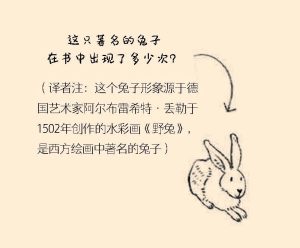
To enhance the reading experience, a hidden “rabbit” Easter egg is incorporated throughout the book. This is not just a search game, but also a training ground for children’s observation skills—just as a restorer needs to keenly spot even the slightest anomaly in a painting. For younger readers, parents and children can role-play as “the damaged Hugo” and “the restorer doctor,” simulating a consultation process and helping children understand the importance of care and concern through role-playing. For older children, the chapters on exhibition planning offer career enlightenment, allowing them to understand the complex logistics, insurance, and environmental control processes behind an exhibition.
The success of “How to Save Artworks?” lies in its avoidance of condescending professional lectures. Instead, it humbles itself and tells a story about “love and protection” in a child’s language. It tells us that those seemingly aloof artifacts in museum glass cases are just like us; they can get hurt, they can become ill, and they also need care and treatment.
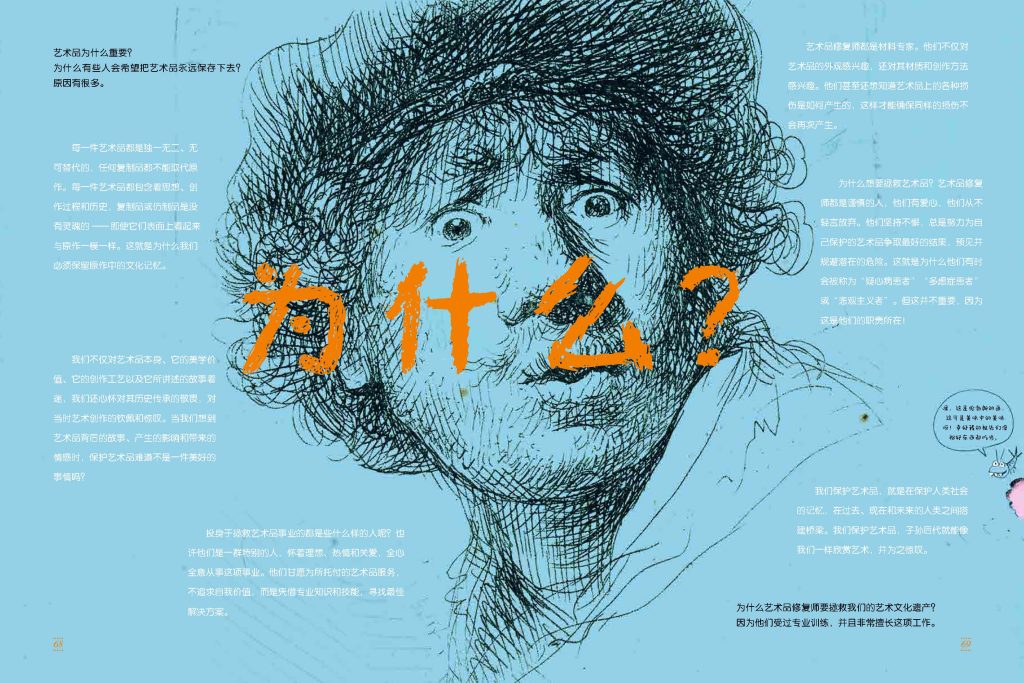
When these three female creators unfold the microscopic world under the microscope in such a magnificent picture book format, they are actually inviting every reader to participate in this great rescue operation. As the book states:
““By protecting artworks, we are protecting the memory of human society and building bridges between humanity in the past, present, and future.””
Argentine Primera División will be held in Beijing on February 10, 2026.
Appendix: German-language mediaEvaluation and compilation
“How to Save a Work of Art?” has received widespread acclaim from professional critics and the media since its publication. Reviewers generally praise the book’s unique topic, detailed content, engaging and educational approach, and excellent production quality, calling it a standout among children’s science books in recent years. The following are excerpts of some representative reviews and feedback:
- GermanyFreundin magazineThe review states, “Flipping through this family-oriented book, you’ll constantly exclaim ‘Aha!’ First, it brilliantly explains the workings of a large museum restoration workshop; second, its design is simply superb.” This comment affirms the book’s outstanding performance in both depth of knowledge and creative layout.
- The Badische Zeitung, a newspaper from Baden-Württemberg.Book critic Marion Klötzer praised the book, saying it “styles like a grand graphic novel, incorporating clever touches like fold-out pages, photographs, and collages, and revolves around methods of art preservation… The book itself is a work of art.” This review highlights the high artistic quality of the book’s illustrations and design, elevating it to the level of a “work of art.”
- The Neue Zürcher Zeitung (NZZ am Sonntag), a Swiss newspaper.The review states, “After reading this richly informative book, you will enter museums with a fresh perspective. The two authors impart much little-known knowledge and ignite a fascination with the hidden secrets within artworks.” This positive reception from the Swiss media demonstrates that the book’s influence has extended beyond Germany, resonating widely within the German-speaking world. Readers not only gain knowledge but also cultivate a renewed passion for art.
- Austrian newspaper Der StandardThomas Hofmann praised the book, saying, “Three women, with great ambition, passion, and expertise, coupled with a love of detail and a high level of artistry, have answered the question ‘How to save a work of art?’ ” This assessment elevates the book to an industry-leading level, emphasizing the seamless integration of the creators’ professional background and artistic expression.A benchmark for cross-disciplinary science popularization.
- The jury of the Franco-German Youth Literature Prize, a prestigious award in German youth literature. The award citation reads: “When experts write books, non-specialist readers may find them obscure if not handled properly. However, these two restorers have proven that popular science can be conveyed in an authoritative yet humorous way. They have fully utilized their expertise, and the illustrator’s skillful work makes the whole book a captivating read.”“
The judging panel specifically mentioned in the book that““The boy in the painting, Victor Hugo, has been stolen.””Using this framework, the numerous dangers faced by artworks are concretized; then, Hugo…““Comic-style satire and narration””How the artwork itself was saved through a series of actions. The review also praised the book.““The clear double-page layout, clever arrangement, and rich and varied illustrations bring many eye-catching details, while the large format and fold-out design ensure clear display of information.””The review committee noted that the book covers the causes of damage such as cracks, pigment chalking, bacterial erosion, and wear, as well as materials science knowledge and investigative methods ranging from infrared to micro-fading tests. The amount of information is astonishing, yet the structure is excellent. “Want a glimpse behind the scenes of museums? This book is for you. It covers not only painting but also sculpture, drawing, and many other aspects, providing you with the core essentials. It’s a truly captivating read.” The committee’s high praise fully affirms the book’s comprehensive success in terms of professionalism, engaging content, and layout design. - Children’s literature review magazine *Eselsohr*Editor-in-Chief Christine Paxmann praised the book as a “rare and fortunate work” in terms of its content delivery, calling it…““This is a boon for both design and knowledge dissemination.””The degree to which it combines education and entertainment is surprisingly good.
- Deutschlandfunk, Germany’s national public radio stationThe book was hailed as one of the “must-have classics for every home” on a cultural program, with reviews noting its “incredibly rich information…brilliant conception” and high praise for its engaging content. The host excitedly remarked on the program, “This large-format and exceptionally brilliant popular science book allows one to truly appreciate the charm of art…every family should have a copy of this; it’s incredibly entertaining!”
- The German WDR radio children’s program “Mouse Show” (Die Sendung mit der Maus)I also paid attention to this book, calling it…““Full of art knowledge””And it is suitable for children to listen to and read.MDR Television Cultural ProgramsThe host, Britta Selle, commented: “In this richly informative children’s book, the two authors share their comprehensive knowledge as restorers, making art as captivating as a detective novel.”
- The publishing industry magazine *Börsenblatt*This book was highlighted as a key recommendation in the annual “Leselotse” reading column, praising its…““The large format and ingenious fold-out pages provide a comprehensive view of the restoration work and everything that has happened in the museum surrounding its art collection. All of this together forms a complete work of art, best read with a touch of humor. What could be better!””Jürgen Kanold of the Südwest Presse exclaimed: “So much interesting knowledge, presented in a style akin to a graphic novel, is both entertaining and thought-provoking… and the book itself is a work of art.”
In conclusion, this book has received almost unanimous positive reviews. Feedback from mainstream media, professional book critics, and the education sector all agree that *How to Save Artworks?* strikes a perfect balance between informativeness and readability. It allows readers to learn obscure knowledge about art restoration while enjoying themselves and satisfying their curiosity. As the German newspaper *Süddeutsche Zeitung* commented, “The author not only truly understands what they’re talking about—but also explains it in an engaging and accessible way.“Art reads like a suspense novel!”Many reviews emphasize the transformative effect of reading this book: “After reading this rich book, our perspective on museums has changed”—this is the highest praise for an excellent popular science book on art. It can be said that this book fills a gap in children’s publishing on art conservation, winning sincere appreciation from all sectors for its professional depth and accessible appeal.
Leave a Reply