In this era of interconnectedness, where a tap of a finger can reach any corner of the world, we seem to have fallen into a collective illusion: as long as the signal is strong, we possess the entire world. This is especially true for our children, these so-called “digital natives,” who build magnificent castles in the sandbox game Minecraft and cultivate perfect virtual personas on social networks. The flickering glow on their screens seems to have become the “fireplace glow” for this new generation.
But what if one day this light goes out? What if the internet cable connecting us to this virtual utopia is ruthlessly pulled out? How will we face the harsh, even inexplicably hostile, real world?
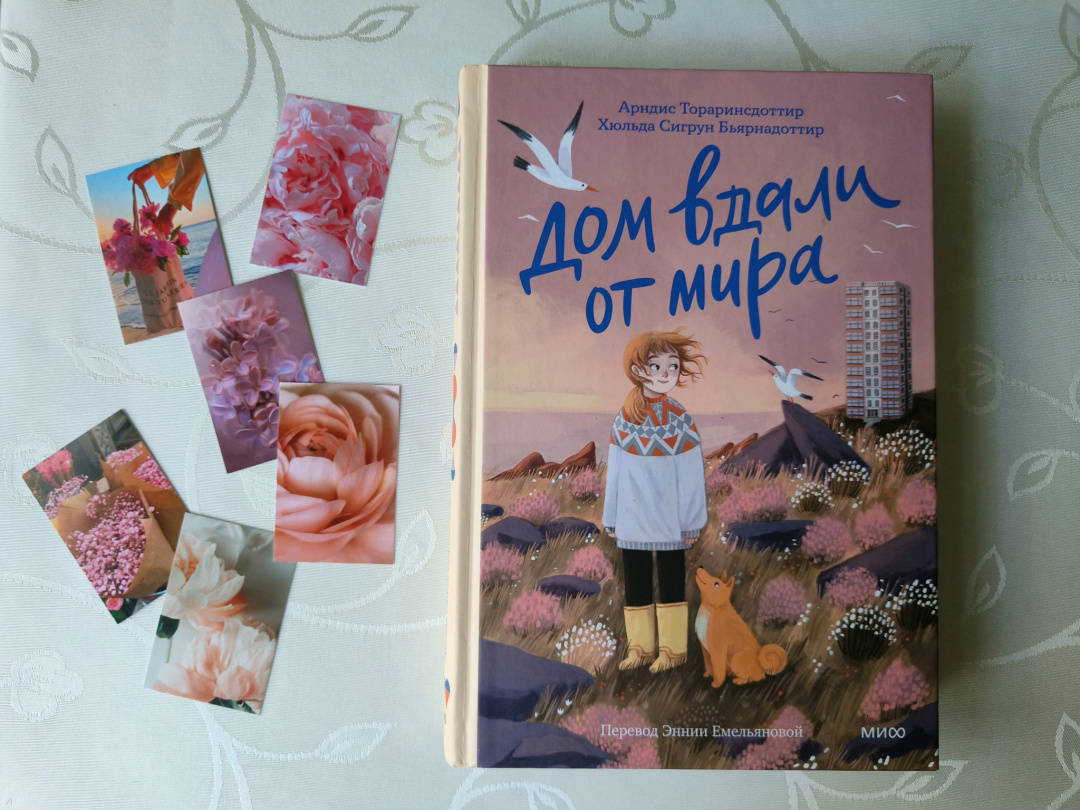
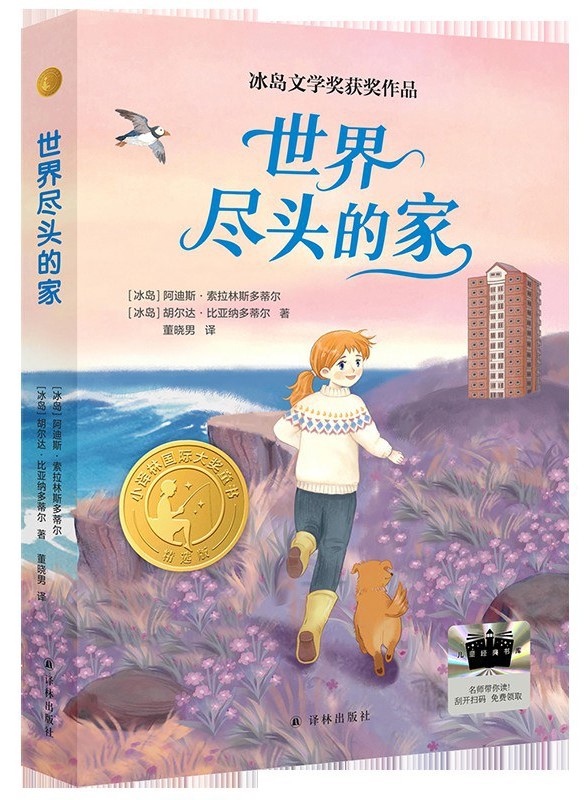
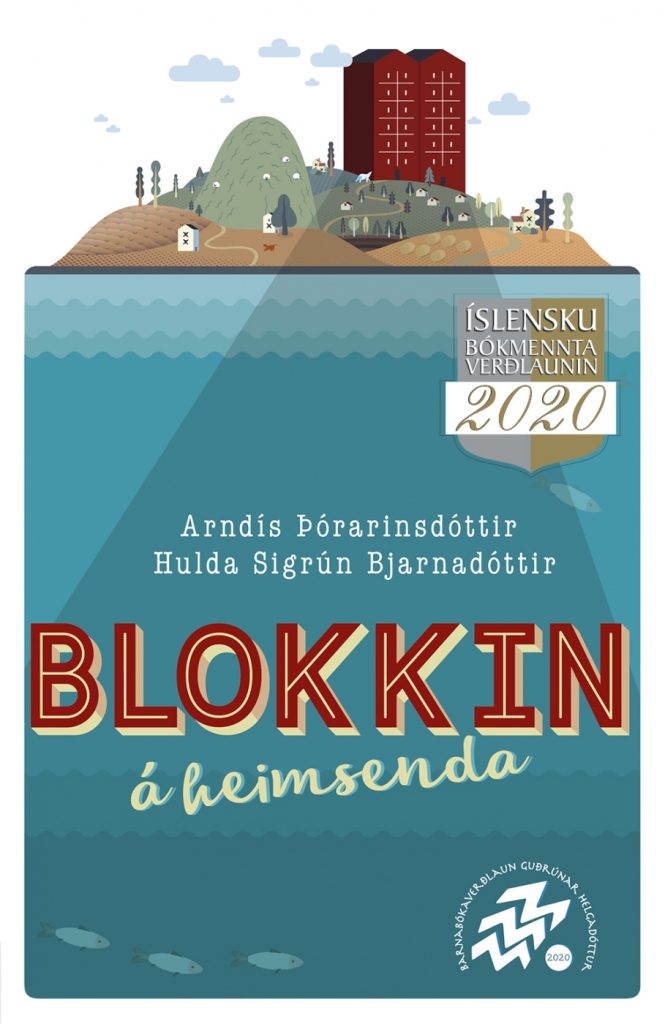
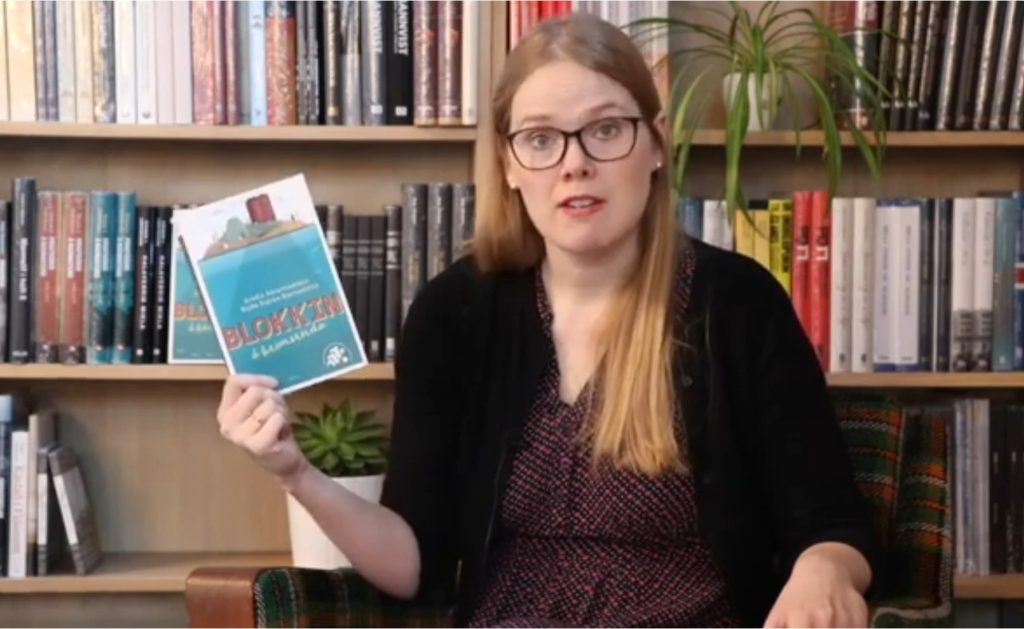
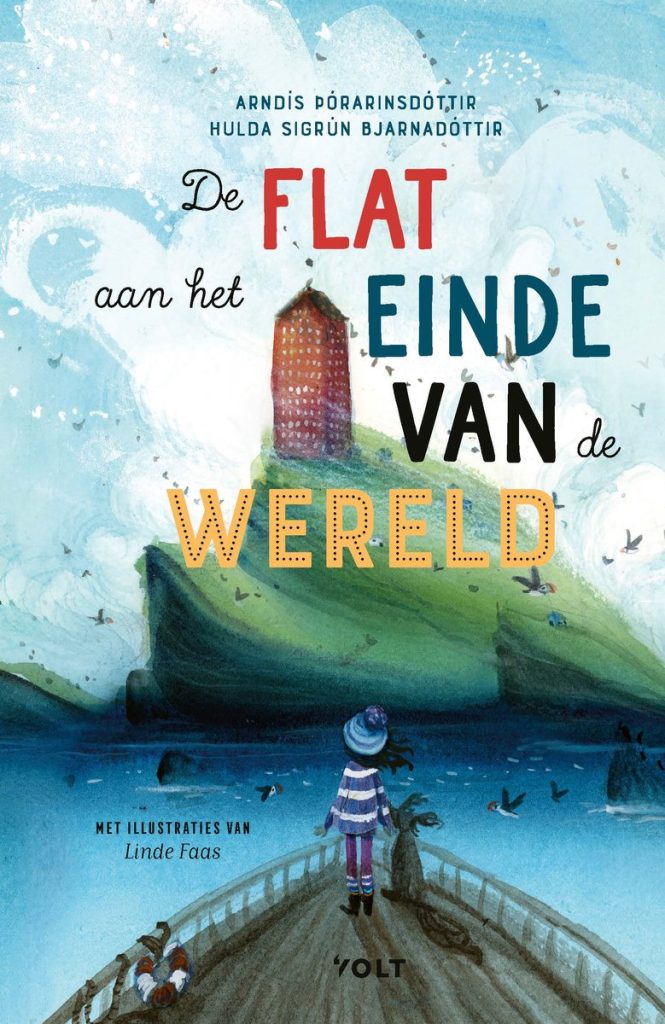
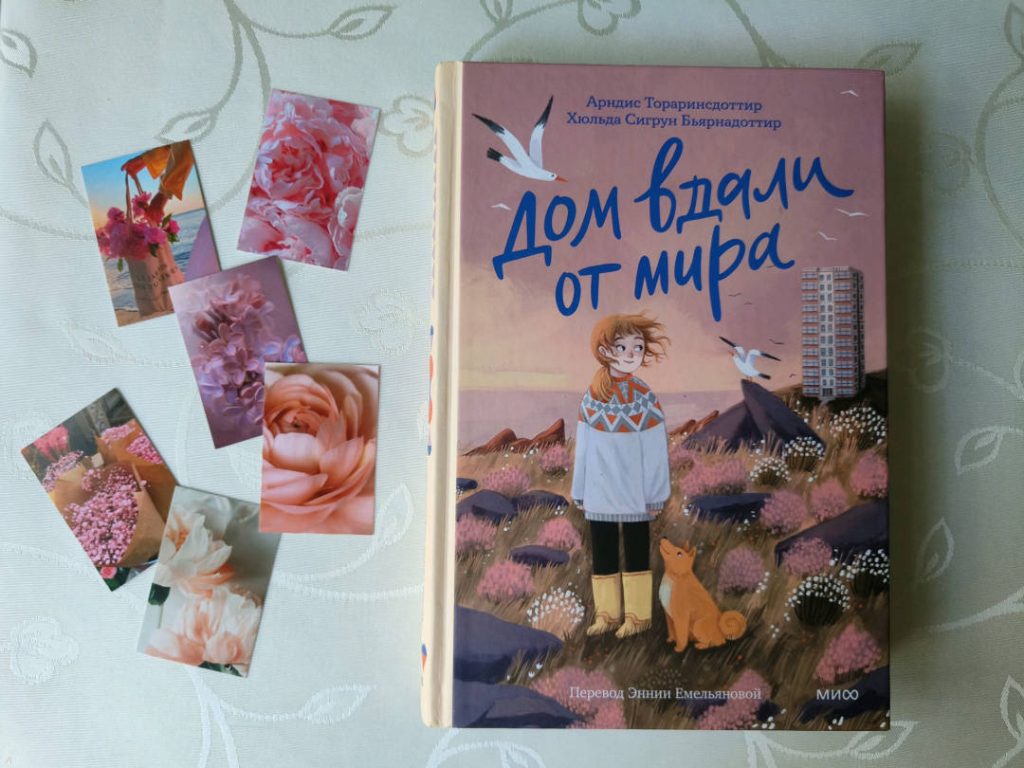
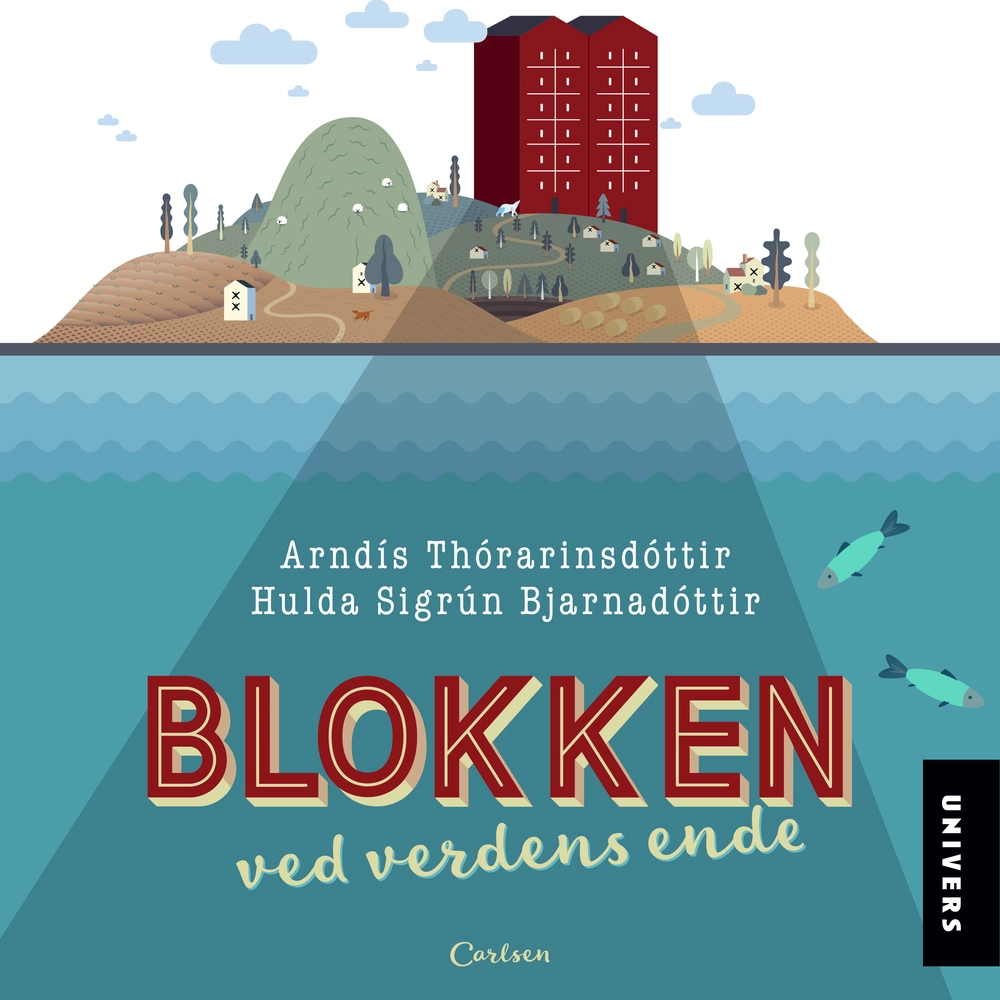
The children’s novel I have here, *Home at the End of the World*, published in 2020, can be said to originate from “the end of the world”—Iceland. It’s written by two Icelandic authors, Arndis Thórarinsdóttir and Hulda Sigrún Bjarnadóttir, and won the Icelandic Literature Prize. It’s like a meticulously planned “prank,” but it can also be seen as a profound experiment about love and survival. This “sandbox game” on paper uproots a modern girl accustomed to surfing the flood of electronic data and airdrops her into a giant, real “concrete block” building on a remote island at the end of the world.
This is a “reverse” version of Minecraft. Here, there are no player guides, no unlimited resources, and certainly no universal crafting recipes. How will the player (protagonist or reader) survive?
Accidentally stumbling upon a “reverse server”: When the electronic cube collapses into concrete
The story opens with a Roald Dahl-esque dark humor and absurdity. Our protagonist, 12-year-old Diane, wearing a Minecraft T‑shirt, embarks on a journey full of anticipation for the start of the school year. She believes it’s just a routine family visit to her grandmother, whom she’s never met and who is said to have broken her hip. Accompanying her is her 15-year-old brother, Indy, a teenager who dreams of becoming an internet celebrity and is obsessed with his phone.
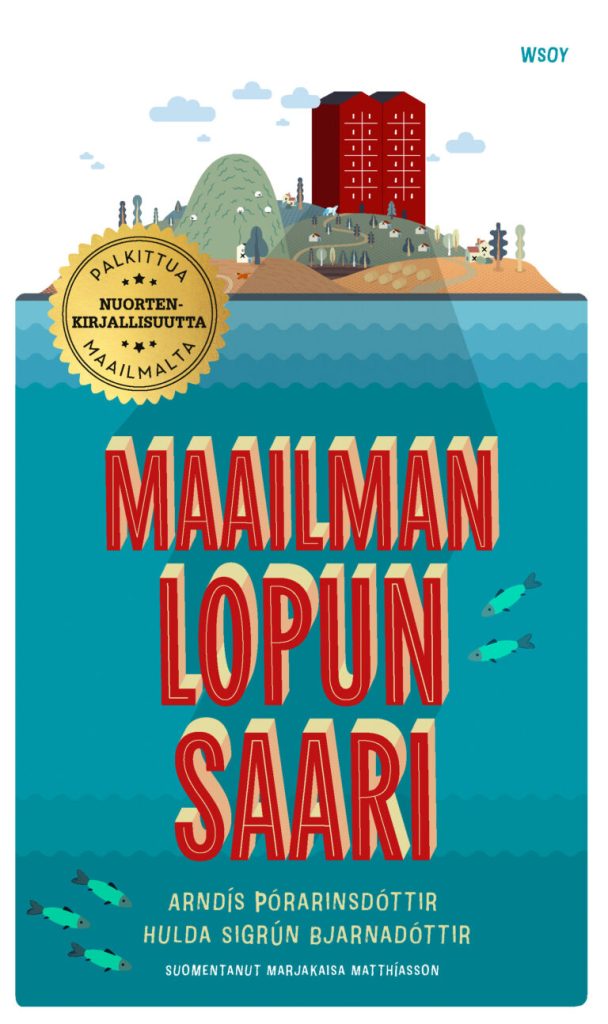
However, when the ferry docked, reality dealt the siblings a heavy blow. This was no vacation spot. There wasn’t even a village. On this isolated island stood a solitary, red and white twelve-story concrete apartment building. It stood out like a giant monster in the wilderness.
Even worse—there’s no Wi-Fi in the building, and you can’t get a cell phone signal!
For Diane and Indy, it was a complete disaster. They felt like they’d stumbled into a hellishly difficult “reverse server.” In this server, while they also lived within a giant “block,” the rules were entirely different. There were no beautifully rendered landscapes, only biting sea winds; no automatically generated villagers, only a bunch of incredibly strange neighbors; no infinite respawn mechanics, only harsh survival rules.
Waiting for them in a room on the fourth floor (by the way, there was no elevator!), was not a kind old grandmother, but Brigitte, the building’s highest-ranking manager, known as the “distant grandma” or “building manager.” Leaning on a cane, with sharp eyes, she ruled this miniature society like a ruthless mafia godmother.
Interestingly, the two authors, with their deep understanding of psychology, have remarkably captured the pain points of contemporary children’s culture:When children pursue autonomy, competence, and belonging in play, they are often passive and always being directed in reality.This novel, through an extreme “stripping away,” forces the protagonist to rediscover psychological nourishment amidst the mire of reality.
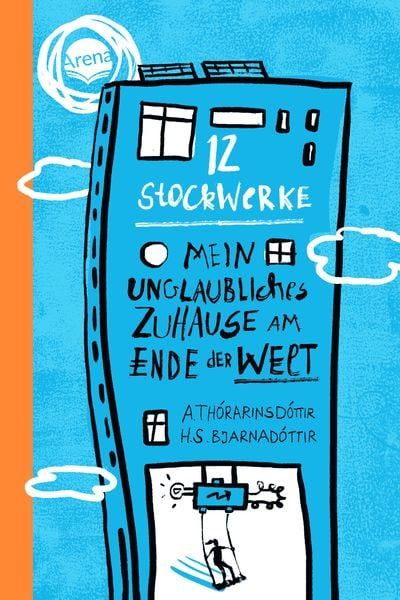
Map Analysis: More Than Just Apartments, They’re Real-World “Concrete Blocks”“
Let’s zoom out and look down at this “map”—that twelve-story building is practically a perfect replica of the first night of “Survival Mode” in Minecraft. In the wilderness, players often hastily build a huge block shelter to protect themselves from the darkness and monsters. This building is that shelter. Outside the building are howling winds, polar nights, polar bears that might drift in with the ice floes, and the unpredictable harshness of nature; inside the building is humanity’s only space for survival.
Within this space, a set of rules operates that would leave modern people speechless—Grandma Bridget is not merely an elder; she is the “administrator” with the highest authority on this server. She sets the rules, allocates resources, and even has the power to “kick people out”—deciding who is qualified to live here. Her rules are simple yet cruel: “He who does not work will not eat, nor will he have a place to live.”
This is a highly collectivist microcosm of society, even bearing a rudimentary socialist flavor. Here, people’s identities are highly “functionalized.” You’ll find that adults almost never call each other by name, but rather by their titles: “Cook” Carol, “Farmer” Dora, “Dentist” Sigmund, “Meteorologist” Anne, “Entertainment Manager” Bernie Bingo… It’s very much like an NPC (non-player character) in a game; everyone has a specific script of duties, and no one is superfluous or idle.
For the Dane family, it was a hilarious yet heartbreaking “class fall.” In the civilized world of the continent, Alexander, the father, was a psychologist, and Faith, the mother, a computer programmer. They were respected members of the middle class. But this value system collapsed instantly at the “end of the world,” where the primitive survival system did not recognize these empty titles.
With a stroke of her pen, Grandma reassigned their roles (Character Class): Alexander was forced to become a “pest control officer,” whose daily job was to use a magnifying glass to check all the residents and livestock in the building for fleas and lice; while Faith, who originally wanted to teach yoga, was thrown into the basement and became an “assistant farmer,” responsible for shoveling fresh, hot animal manure every day!
This is a survival game without any filters. There’s no automatically generated village trading system, no harvesting that can be done with just a click of the mouse. Here, electricity isn’t a free background resource; it must be earned through “physical hardship.” Residents must go to the “Energy Center” and ride specially designed exercise bikes to generate electricity. If you want to turn on the lights, get hot water, or charge your phone, you have to pedal. The Dane family must pedal relentlessly to pay off their energy debt. This instant physical feedback of “inputting physical effort -> producing energy” is more realistic and more demanding than any hunger bar in any game.
Player Guide: When Virtual Experience Meets Reality’s “No Crafting Recipe”“
Why are children so addicted to Minecraft? Psychological research tells us it’s because it provides a sense of certainty and competence.
The game features clear crafting recipes. Three iron ingots and two sticks can be crafted into an iron pickaxe; placing obsidian and lighting it will inevitably open a portal to the Nether. This is a definite and secure cause-and-effect relationship. As long as you master the recipes, you can control the world.
Diane’s initial confusion and frustration stemmed from the fact that this “synthesis chart” did not exist in real life.
Wearing a MINECRAFT-branded T‑shirt, she considered herself a master world-builder. But on the island, she found herself utterly useless. She didn’t know how to harvest potatoes, and she couldn’t bear to witness the bloody scene of pigs being slaughtered and made into sausages. Facing her difficult grandmother Bridget and her diverse neighbors, there were no guides to tell her which dialogue options would increase her favorability, and no formulas to help her defuse awkward situations.
Her sense of competence has dropped to zero.
But the magic of growth happens at this moment. Dane is forced to throw away her virtual crutch and begin groping her way through the fog of reality. Her grandmother appoints her as the community’s “messenger.” It’s a beautiful metaphor—in places without internet signal, she becomes a “human broadband” connecting people. She shuttles between twelve floors, delivering messages and observing the residents.
She began to improvise. She discovered that the seemingly aloof and eccentric dentist, Sigmund, actually longed for companionship, and that the stern, tyrannical grandmother also had a soft side. Instead of using a mouse and keyboard, Dane employed her observation skills, empathy, and courage. She orchestrated an awkward yet heartwarming candlelight dinner, which surprisingly brought the dentist and grandmother together. You see, in a world without a formula, she “synthesized” her own recipe for interpersonal relationships through trial and error.
Meanwhile, the older brother, Indi, put on a wonderful performance.“Minecraft: Live-Action”.
This boy, who aspired to become an internet celebrity, unleashed astonishing creativity in the real world in order to connect to the virtual world of the internet. On the only cape on the island with a weak signal, he scavenged discarded planks and rusty nails (real-world “dropped items”), much like “Steve” in a video game. Braving the cold wind, he built a sheltered shed by hand, and even modified an old bicycle to generate electricity inside the shed to charge his phone.
Even to connect with the virtual world, he had to conquer reality first. He transformed from an observer in front of the screen into a builder of the physical world. Even the “distant grandmother” who looked down on modern children had to admit that the child possessed an amazing survival instinct and “demonstrated valuable abilities and independence.”
Of course, there’s also the gloomy young Val. In the game’s context, he’s a typical “Griefer.” Val hates this isolated island; he sees it as a prison. To force everyone to move out—that is, to force a “server reset”—he steals spoons, lets bulls run free, and even goes so far as to make explosives to destroy the water source. His behavior is extreme, like a troublemaker planting TNT everywhere in the game.
But in this true story, the author doesn’t simply define him as a villain. We see the deeper motivation behind Val’s destructive desires—an extreme yearning for the wider world, a suffocating feeling of being trapped in a small world. And the reason Dane’s father, Alexander, is willing to take the blame for Val is because he sees his younger self in Val. This cross-generational empathy and redemption imbues this “destroyer” character with a profound sense of real pain.
Emotional core: Reconnecting after a network outage
When the false prosperity brought about by technology recedes, the true nature of human relationships will be revealed like rocks after the tide goes out. What touched me most in the book was the “metamorphosis” of Dane’s parents. After shedding the glamorous labels of “psychologist” and “programmer,” they found an absurd yet solid sense of fulfillment in this primitive community.
Alexander, the father, surprisingly regained his long-lost confidence while imprisoned (to take the blame for Val’s crime). His mother, Faith, a former computer programmer, completely fell in love with the physical labor of shoveling manure in the cowshed. She felt that caring for living animals made her feel more “self-aware” than dealing with invisible code. This sounds comical, but it reveals a truth of modern society: we often fail to see the results of our labor due to overly specialized roles, but on the island, every contribution you make—even shoveling manure—directly sustains the community.
Among all the descriptions of interpersonal interactions, there is a passage about “New Year’s gifts” that is so beautiful it touches the heart and is enough to become a classic moment in the history of children’s literature.
It was New Year’s Eve, and the library was packed. Dane’s friend Taylor told her about an island tradition: people would go to the library before the New Year to choose a book for someone else, carefully wrap it in a homemade bag, and give it as a gift. After reading it, the book would be returned to the library.
At first, Dane couldn’t believe it: how could a borrowed book be considered a gift? Wasn’t that absurd? But when she pressed her grandmother for an explanation, her grandmother gave the most philosophical explanation in the entire book:
“We’re not giving away paper, children,” she said. “We’re giving away stories. Stories carefully selected for our loved ones. They may return the books, but those stories will stay in their hearts forever.”
Having read this far, I had to stop and take a deep breath. As the New Year of 2026 approaches, I couldn’t resist sharing this story with my fellow book lovers on Weibo as a New Year’s gift.
On that isolated island where resources were relatively scarce, and there was no online shopping or delivery services, people’s definition of “gift” returned to its purest essence. The value of a gift lies not in the possession of a material carrier (paper), but in the transmission of emotions and the shared memory. I take the time to choose a story for you; this story enters your life and becomes a part of you. The richness of this spiritual connection far surpasses any expensive electronic product, far surpasses any likes and shares on social networks.
This is the reward after “disconnecting.” When we are no longer overwhelmed by a deluge of information, we can hear each other’s heartbeats; when we no longer look at each other through a screen, we can truly see the light in each other’s eyes.
Redefining “Home” at the End of the World“
From a reading perspective, I feel this is a masterpiece that inherits the vibrant life force of Astrid Lindgren (Pippi Longstocking, Emil the Naughty Boy) while also possessing Roald Dahl’s dark humor. Instead of condescendingly lecturing children to “play fewer video games,” the author invites them into a vast, electronic-free social laboratory.
The story’s ending is intriguing. Spring arrived, and the first ferry finally resumed service. Indi’s video unexpectedly made this forgotten island a viral sensation, turning it into a popular tourist destination known as “Indi Island.”
The Diane family, who had originally wanted to escape, now face a final choice.
Thankfully, they didn’t run away. Indi developed new ambitions, using the traffic to plan the transformation of the abandoned village into guesthouses, galleries, and cafes for tourists, and even the former vandal, Val, became his ally. The parents, in addition to catching lice and shoveling poop, expanded their social activities and rediscovered professional dignity.
And Dane, the girl who had once been engrossed in the world of games, stood by the window watching the bustling tourists, watching her friends—the enthusiastic Taylor, the book-loving Cyril, and the twin sisters Eleanor and Abigail who had taught her to communicate in sign language. She realized that she no longer needed to seek a sense of belonging in that virtual, blocky world. Because she had already found her place in this real, flawed, yet incredibly vibrant “end of the world.”
In this new world besieged by algorithms, this novel from the ends of the earth, this “sandbox game” on paper, offers children (and us adults) an extremely valuable survival strategy:
The true “survival mode” doesn’t require faster internet speeds, but rather, like Dane, learning to coexist with difficult neighbors, understanding the warmth behind strictness, and building one’s own “home” with genuine sweat and sincerity in a world without “synthesis charts.”
Sometimes, we can only truly connect when we disconnect from the network.
Written by A‑Jia on January 20, 2026 in Beijing
Leave a Reply