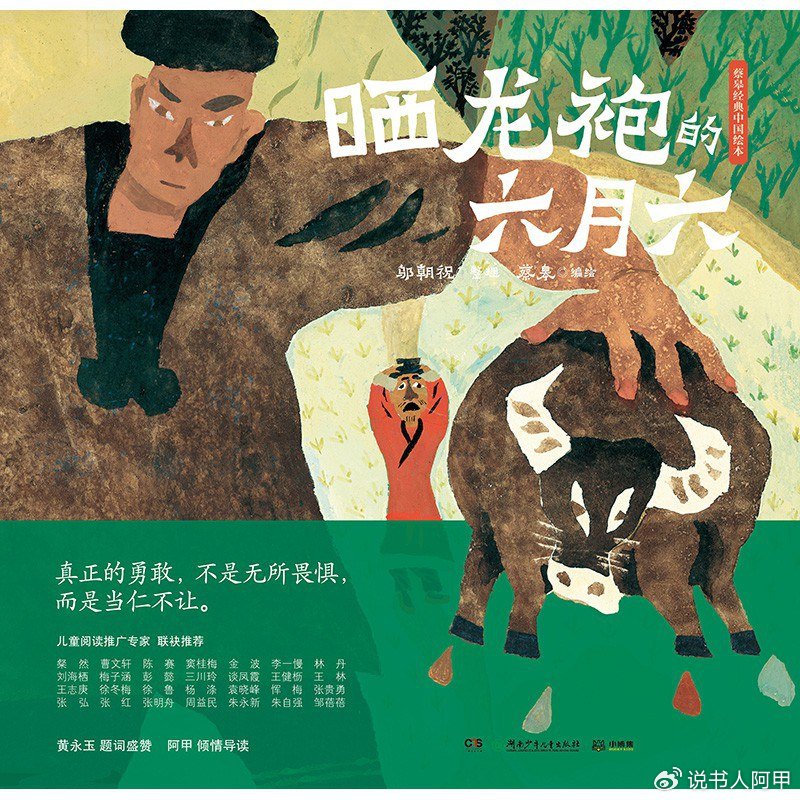
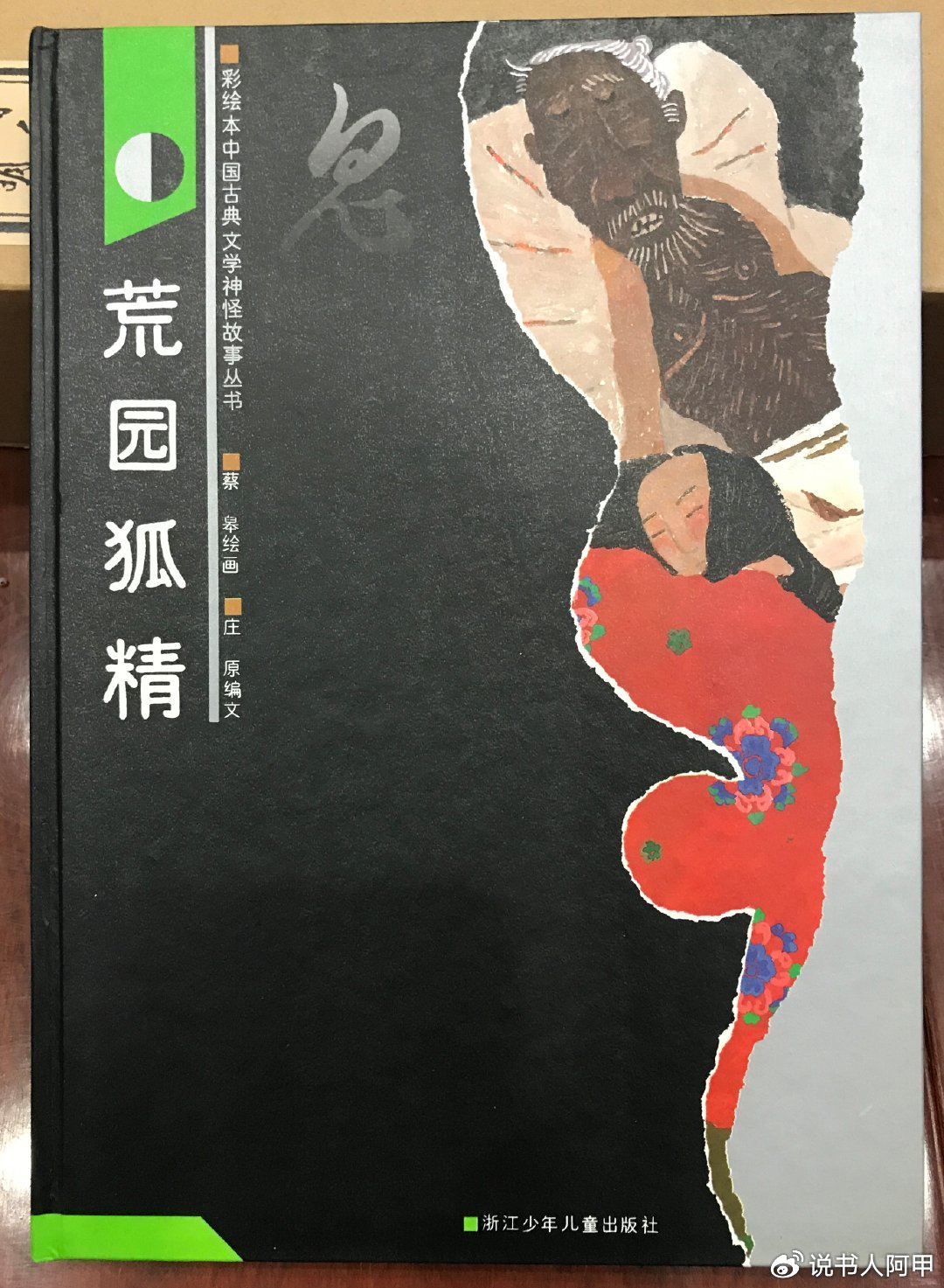
The book before us, *The Sixth Day of the Sixth Lunar Month for Drying Dragon Robes* (2025 edition), was first created in 1989. It is likely one of the earliest picture books of Chinese folk tales created by Cai Gao, even predating *The Fox Spirit in the Wasteland* (also known as *Bao’er*), which won the BIB Golden Apple Award. In April 1989, Mr. Huang Yongyu saw this book and its illustrations, and happily inscribed a message, praising, “It’s so well drawn! Hunan is blessed!” This became a widely circulated anecdote.
To be honest, I wholeheartedly agree with the first statement, but as someone who isn’t from Hunan, I’ve never truly grasped the meaning of the second. Is Mr. Huang trying to say that Hunan is “blessed” because it has produced such an outstanding local artist, or because this painting style and the way it presents folk tales so aptly showcase the local culture and customs? Or perhaps both?
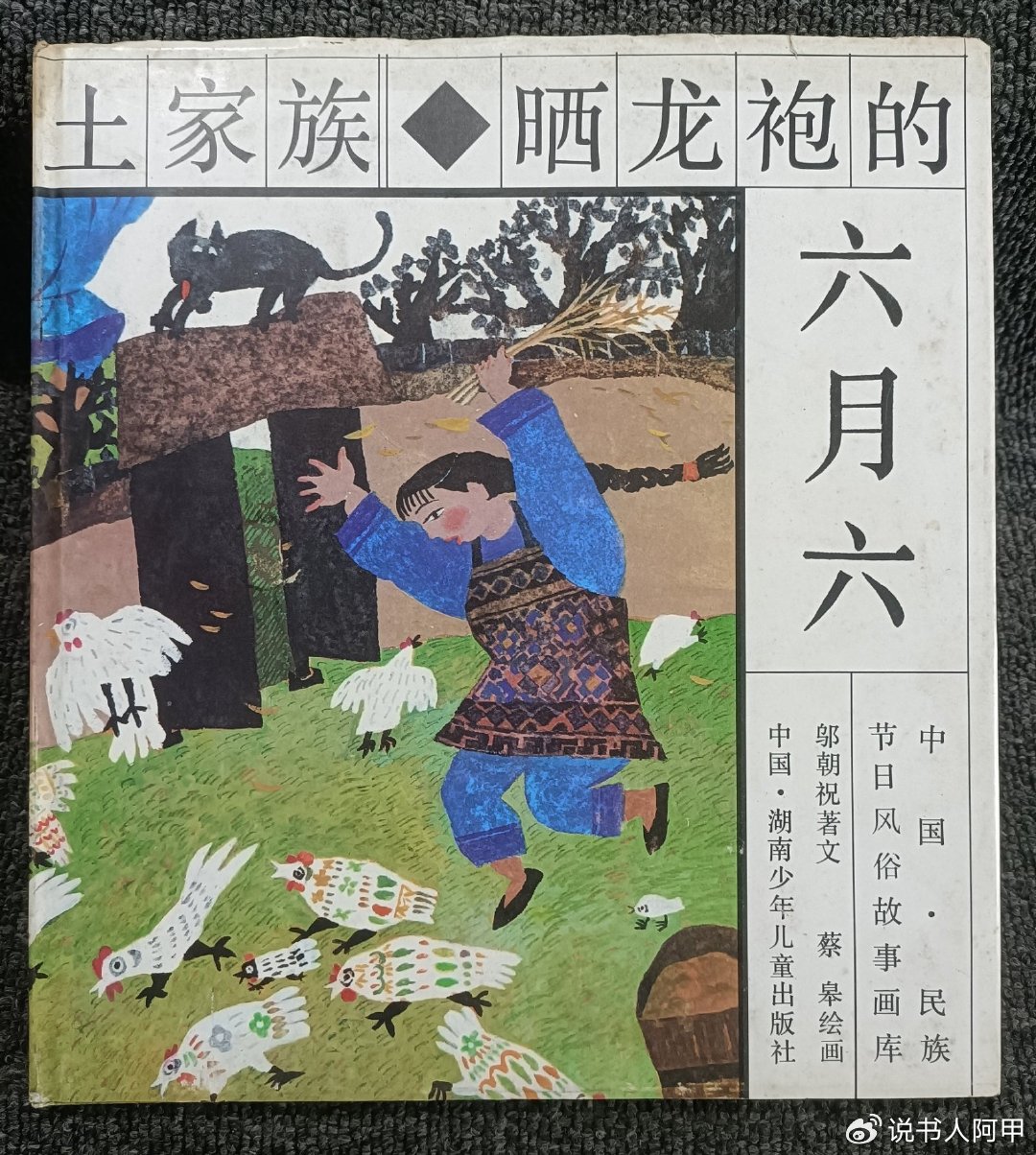
Initially, this book was part of the “Illustrated Collection of Chinese Ethnic Festivals and Customs Stories” series, telling the story of the Tujia people’s June 6th Festival customs. The series preface states: “The collection selects festivals from various ethnic groups as its subject matter, deliberately depicting the origins, stories, customs, and traditions of each festival…” In other words, the initial intention was primarily to help readers understand the diversity and vibrant folk customs of different ethnic groups. However, upon deeper reading, one can feel a profound depth far exceeding that.
First, what hits you is a pure folk tale with a strong local flavor and supernatural power. Three years of pregnancy (in the original version), three golden dragons, three bamboo poles, three divine arrows, three years and six months, and three days short… In folk tales all over the world, we can feel the power of “three”; then, a red ball in the sky, a room full of golden light, a newborn baby growing in the wind, jumping into the water and quickly growing into adulthood… This inevitably reminds one of the story of “Nezha Conquers the Dragon King”.
Then, the story introduces intense conflict and opposition. The omen of the golden dragon offends the imperial court, sparking a feud over the murder of one’s parents. This personal hatred then spreads to the oppressed villagers, gradually escalating into divinely inspired assassinations, uprisings, and great battles, culminating in the hero’s sacrifice, a dramatic shift in political landscape, and the forced submission of the most powerful. Although the story seems to ultimately settle on the folk custom of “drying the dragon robe on the sixth day of the sixth lunar month,” what leaves a deeper impression is the tragic story of the Tujia ethnic hero, Qin Hou. If you’ve seen the film *Seediq Bale*, you might share a similar powerful feeling.
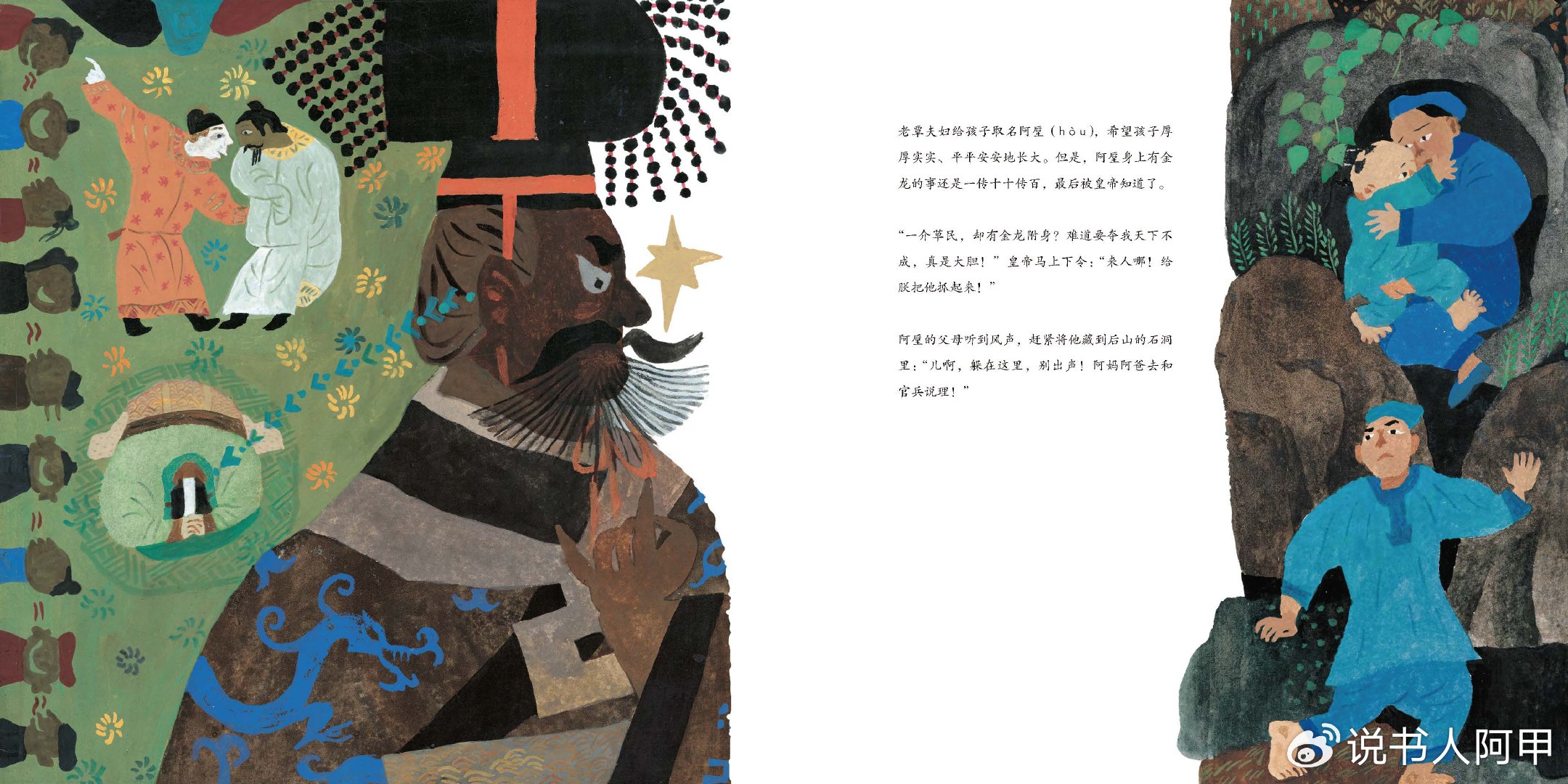
Interestingly, Cai Gao’s use of folk customs and childlike charm in her narrative softens the story’s inherent tragedy. When she first painted this festival story, she felt “the colors were beautiful, the painting was lively, and the festival represented an affirmation of life.” The initial version opened with a vibrant, joyous dragon dance scene. The scenes depicting everyday life and driving the story forward primarily employ the flat perspective of folk painting, resembling both children’s drawings and murals. The colors and figures in the paintings do indeed evoke Tujia brocade and murals—vibrant colors and rich patterns. The strong contrast of red, yellow, blue, and green creates a passionate and unrestrained feeling; the figures and patterns in the paintings carry a strong symbolic quality, conveying a close connection to nature and expressing a longing for a simple life and beautiful things.
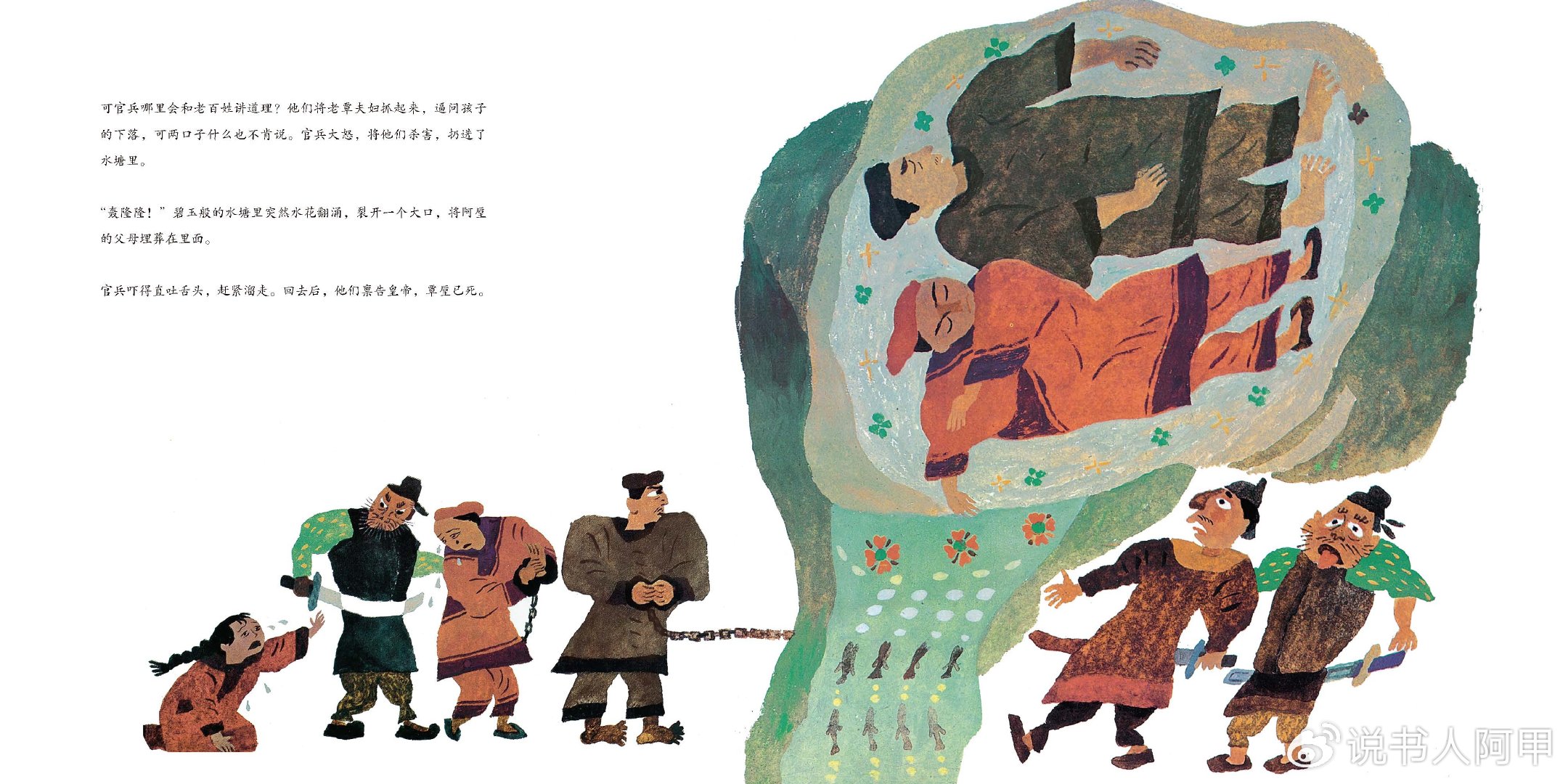
The most tragic part of the first half of the story is perhaps the murder of Qin Hou’s parents. Yet, we see them buried peacefully in the pond; the jade-green water reflects their unyielding and noble spirit. The fish, pebbles, and flowers in the pond are arranged in neat patterns, their floral designs surrounding the sleeping couple, as if heaven and earth have specially arranged a grand burial for them. This also explains why the soldiers who committed the murder fled out of fear and lied to the emperor, claiming they had completed their mission of killing Qin Hou. I think the artist is perhaps evoking a sense of awe in the reader in her unique way.
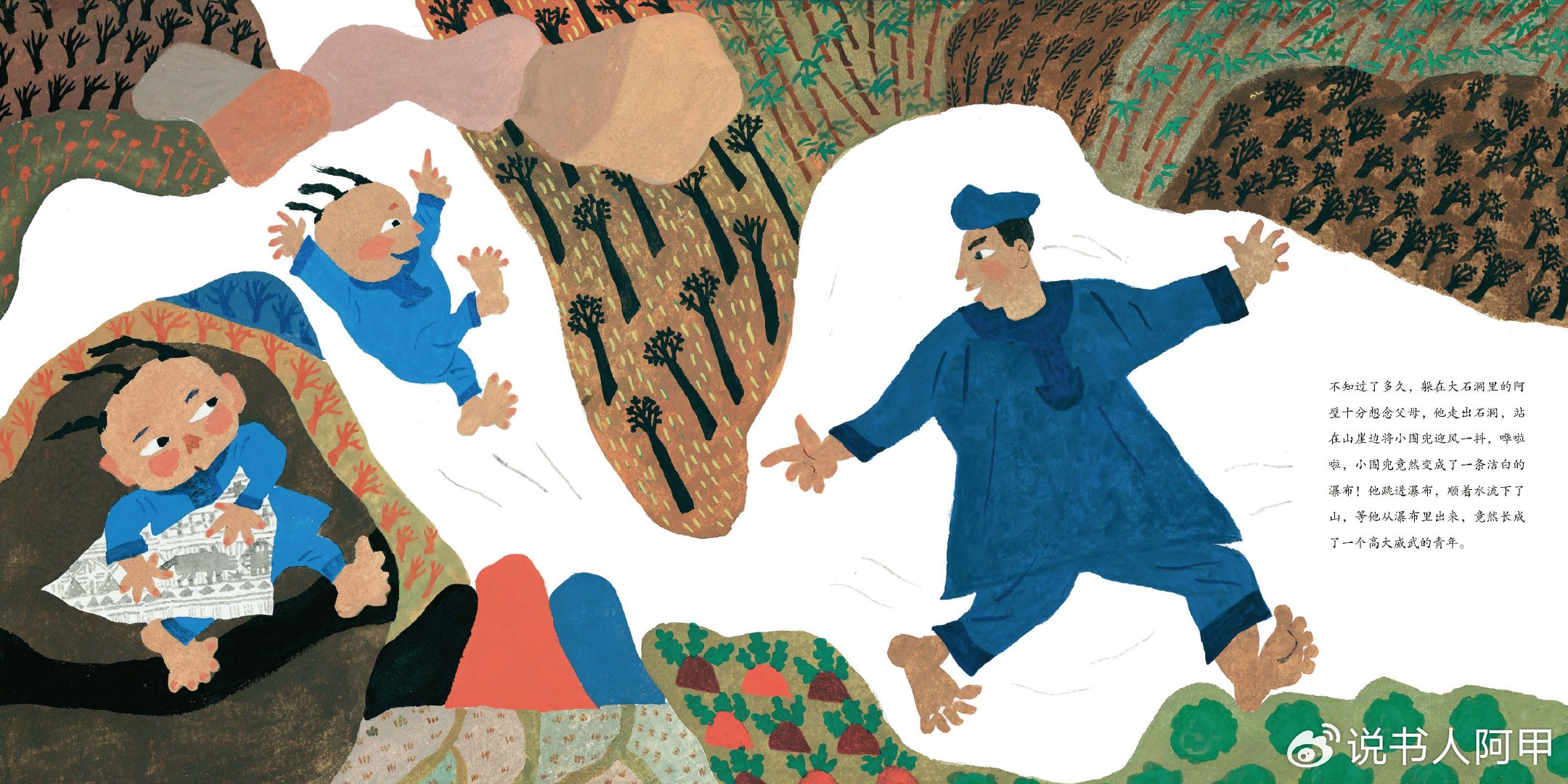
Looking back at Cai Gao’s work from 36 years ago, one is quite amazed by her bold exploration in integrating folk art with picture book narrative. For example, she repeatedly used the narrative technique of “parachronic isomorphism” throughout the book, concentrating events or states that occurred at different times into the same picture. This is common in Chinese folk and traditional painting, and it seems very natural in “The Sixth Day of the Sixth Month for Drying Dragon Robes.” Little Qin Hou runs out of the house naked, followed by his cheerful father. On the right side of the picture is a close-up of Qin Hou happily bathing in the mountain spring. Meanwhile, the doll hiding in the cave jumps into the waterfall formed by his bib and emerges as a “tall and majestic young man.” This series of events is also presented naturally in the same picture.
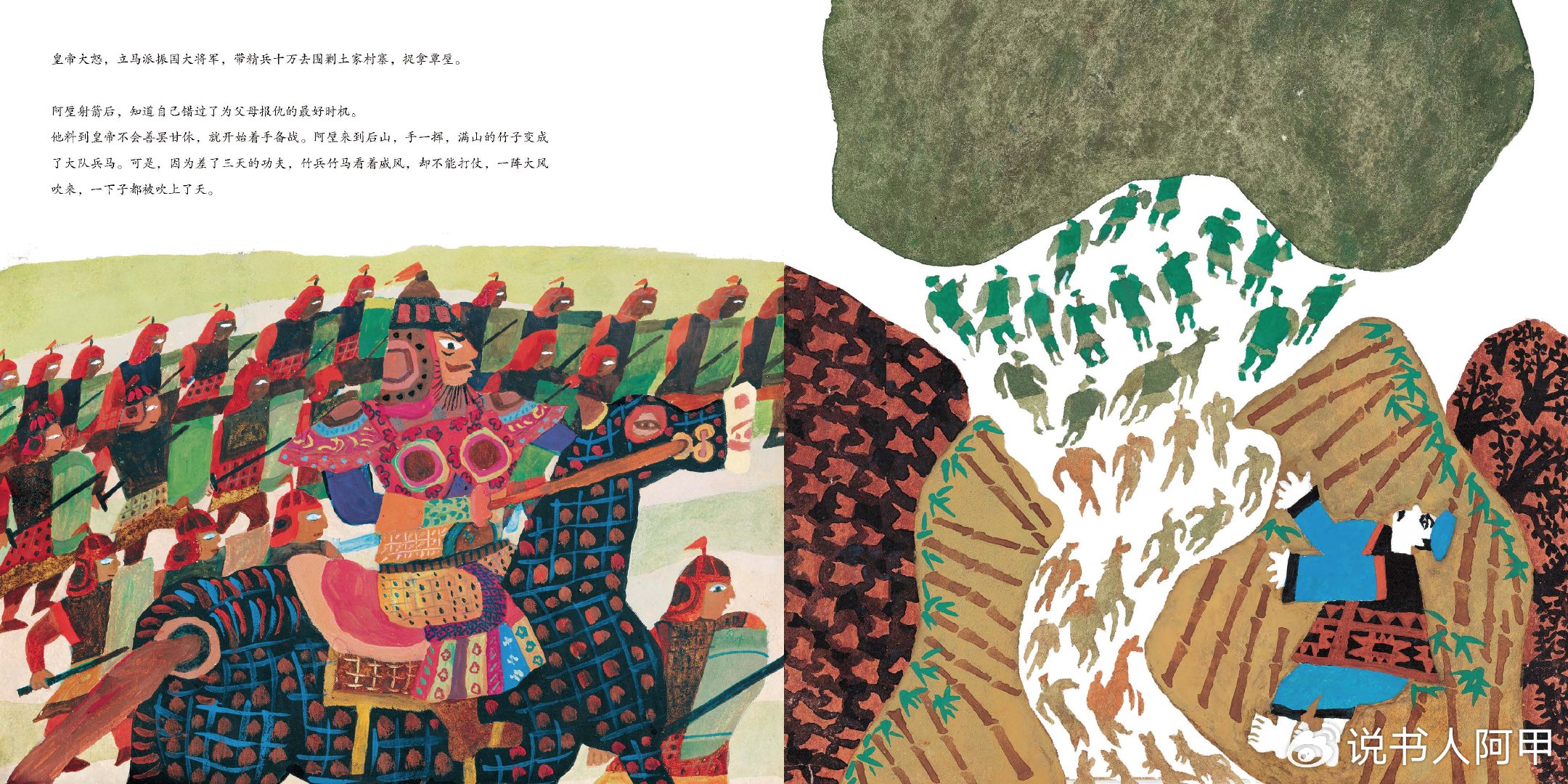
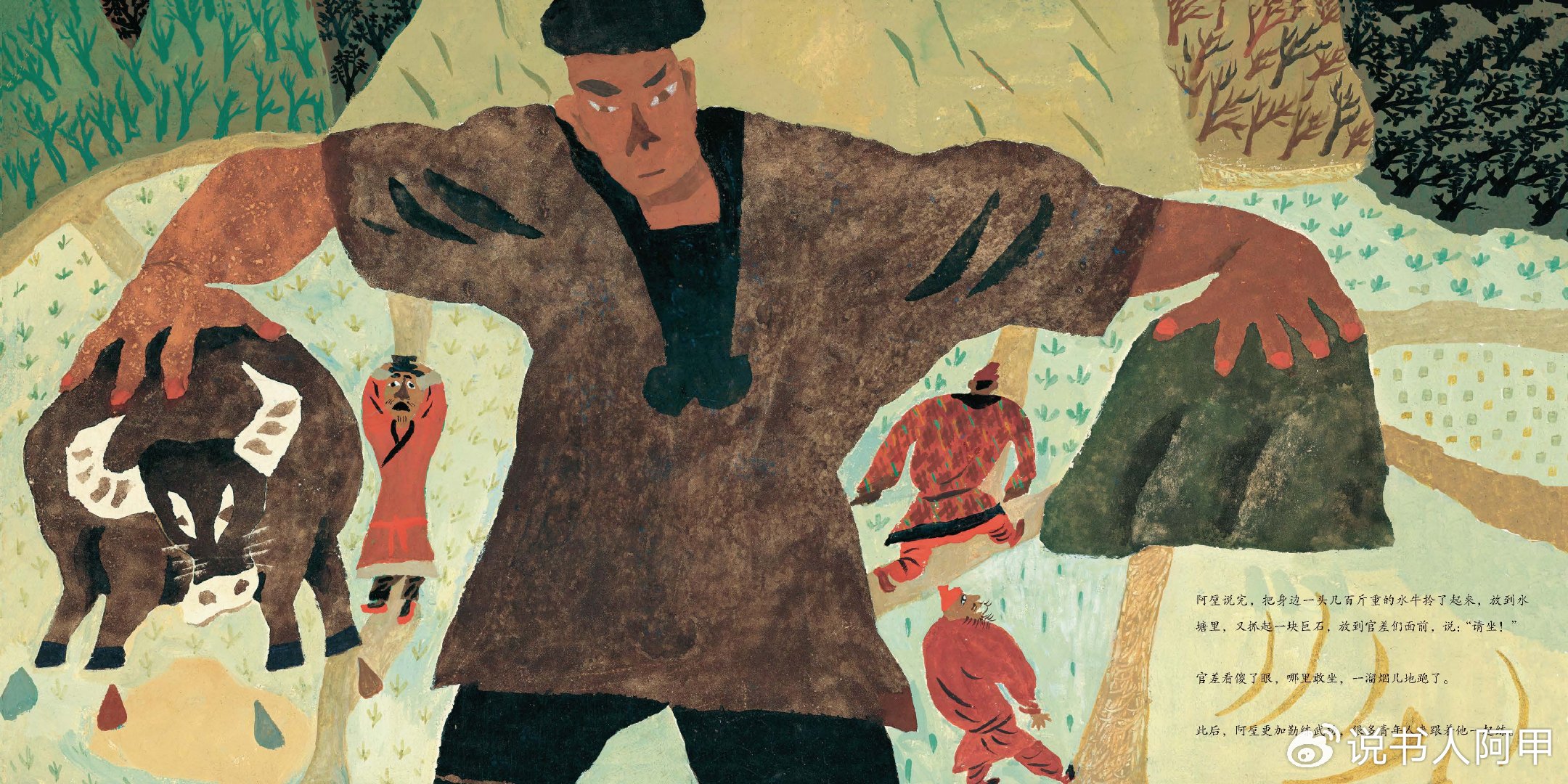
In terms of narrative and character development, Cai Gao both absorbed and developed traditional painting techniques. Regarding the density and arrangement of elements in the composition, she could bring many elements together densely while simultaneously allowing others to unfold sparsely, purely for the sake of storytelling. For example, in the scene of A Hou leading the Tu family youth in a fierce battle against the government troops, the left side of the double-page spread depicts a dense battle scene, while the right side shows a large carp thrown down from the mountain. Below the mountain are scattered tents and tiny, stunned government soldiers, highlighting the psychological impact of the large carp. As for the contrast in size between elements, the most striking is probably the scene of Tan Hou carrying a water buffalo in one hand and a huge rock in the other. The hero, with his superhuman strength, is so large that he almost overflows the frame, making the water buffalo look like a kitten in his hands, and the government officials appear pitifully small. Children would not only fully understand such illustrations but would also enjoy them immensely.
However, although I read this story many years ago, I never delved into the story behind it. This time, reading this new edition with its significant changes to both the text and the image layout, I couldn’t resist getting to the bottom of it. And what I found quite surprising was…The hero Qin Hou in this folk tale is actually a real person in Chinese history!He was originally a Tujia chieftain during the late Yuan and early Ming dynasties. There are differing accounts of his birth year, such as 1309 or 1311, but his death date is generally accepted as June 6th of the lunar calendar in 1372 (the fifth year of the Hongwu reign). His deeds are recorded in local chronicles and genealogies, and are also mentioned in the *History of Ming*, and even in *The Book of the Advantages and Disadvantages of the Counties and States Under Heaven*, a political geography treatise by the late Ming and early Qing scholar Gu Yanwu.
Leaving aside the exaggerated and mythologized aspects of later legends, focusing on a relatively objective narrative, Qin Hou, whose original name was “Wen Jin,” was born into a Tujia peasant family in Maogang (present-day Cili County, Zhangjiajie, Hunan Province) at the end of the Yuan Dynasty. He later led a Tujia uprising against the Yuan Dynasty, changing his name to “Hou” (an alternate form of “Hou”), meaning “Earth God,” a term of reverence for the land. Interestingly, Qin Hou’s Tujia rebel army joined forces with the rebel armies of Chen Youliang and Zhu Yuanzhang, jointly overthrowing the tyrannical Yuan Dynasty. Qin Hou also submitted to Zhu Yuanzhang and became the “Cili Pacification Commissioner.” However, after Zhu Yuanzhang established the Ming Dynasty, the court’s oppressive taxation of the Tujia people seemed to intensify. Thus, Qin Hou led the Tujia people in another uprising, which eventually escalated into a protracted, life-or-death local war lasting several years.
Gu Yanwu summarized in his book: “During the Hongwu reign, the mountain chieftain Qin Hou conspired with various villages to rebel…”—From this Han scholar’s perspective, Qin Hou could be considered a “mountain bandit” of a minority ethnic group, and the resistance he led was of a rebellious nature. However, in the eyes of the local Tujia people, Qin Hou could be considered a “god,” and they jointly wove a near-mythical story, celebrating this hero for generations to come during the festival on the sixth day of the sixth lunar month. In reality, after Qin Hou was executed by slow slicing, the local Tujia people did not give up their resistance. Ultimately, the imperial court had to choose a degree of appeasement and compromise, allowing Qin Hou’s descendants to permanently reside in Maogang and exempting the local villagers from exorbitant taxes. The Qin clan chieftainship in Maogang lasted for over four hundred years until it was abolished during the Yongzheng reign of the Qing Dynasty. From this perspective, Qin Hou’s resistance and sacrifice were still worthwhile.
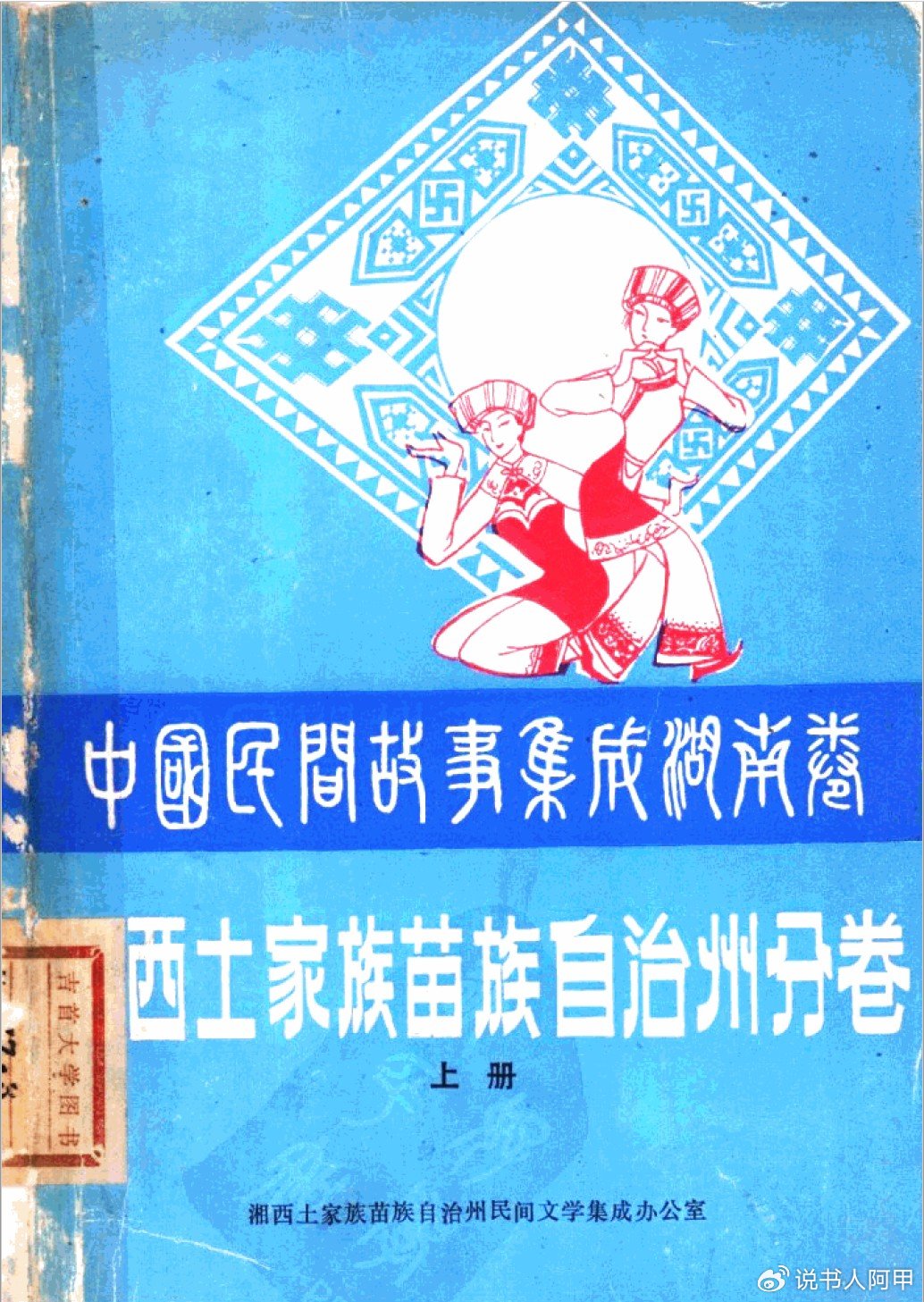
So, where does the story we’re reading today come from? In the “Collection of Chinese Folk Tales, Hunan Volume, Xiangxi Tujia and Miao Autonomous Prefecture Section,” which I found, there is a folk tale called “King Qinhou,” collected in December 1962 in Dayong City, Hunan (now Zhangjiajie City). It has more than nine narrators, and it’s estimated that there are different versions in various parts of Dayong. After being compiled and edited by collectors Chen Ziwen and Jin Kejian, it reads like a short heroic legend. Almost all the story elements we see in picture books can be found in this piece. It’s estimated that the 1989 picture book edition was an adaptation of this type of story, greatly reducing the verbose details of the oral narration and also making necessary adjustments for children.
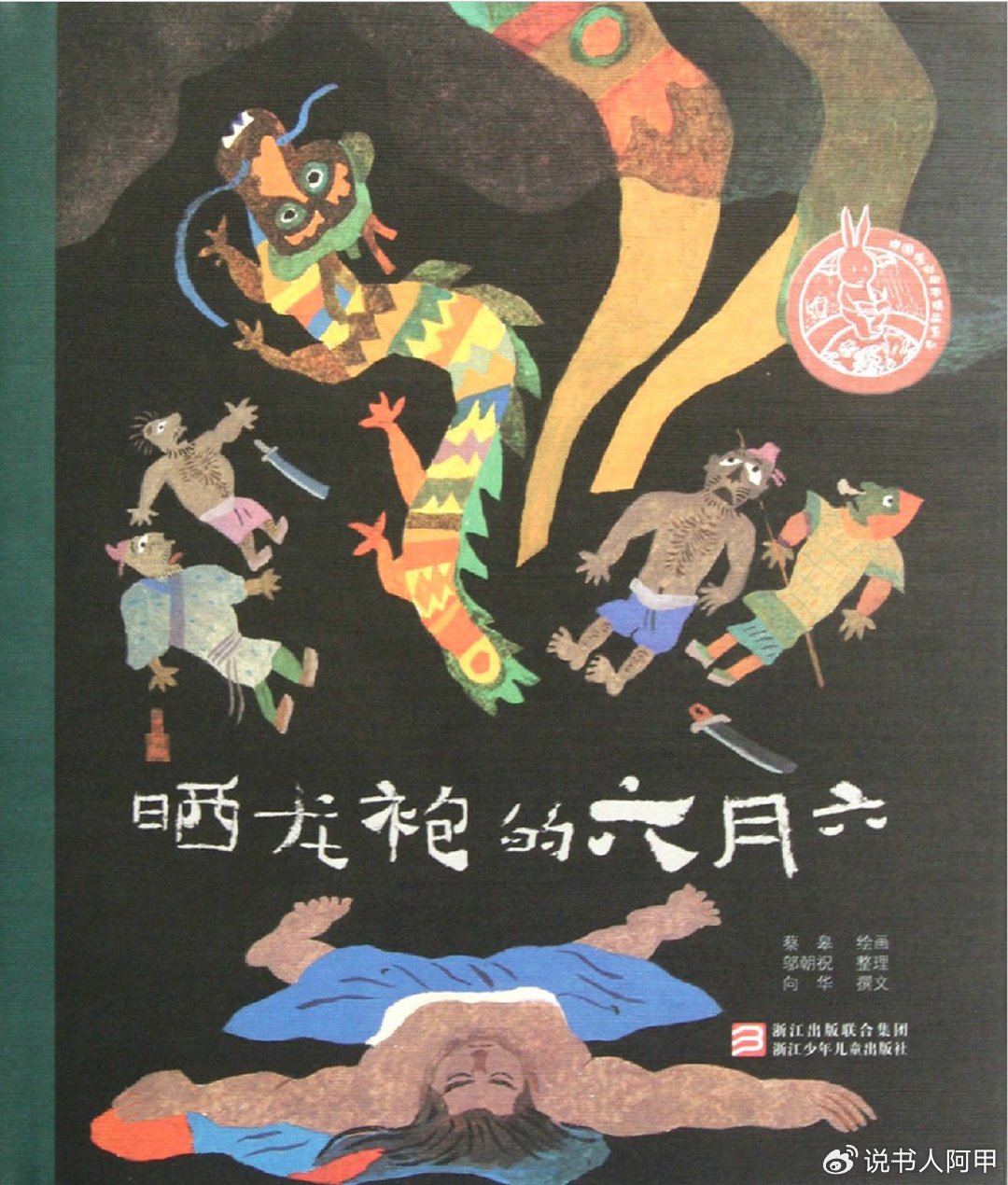
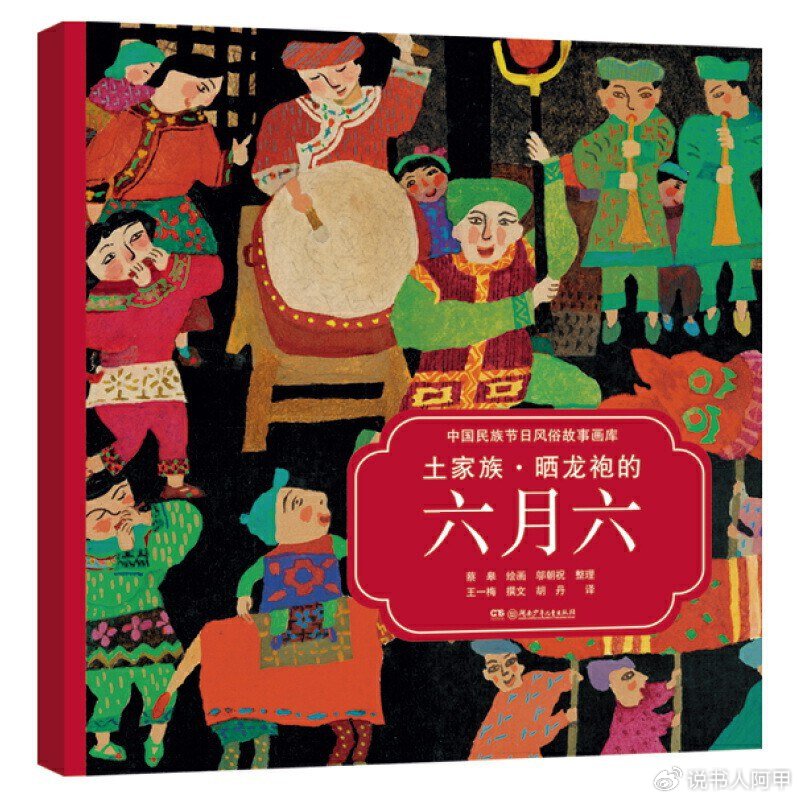
As far as I know, at least three children’s literature authors have participated in the relay adaptation of this story. The initial adaptation was by Hunan writer Wu Chaozhu, followed by further adaptations by Wang Yimei and Xiang Hua, each in a different direction. It would be very interesting to compare and study multiple versions. However, I want to focus on the new version adapted by Cai Gao himself, which should be the version with the closest integration of text and illustrations.
I noticed that the new version places the section on festival customs after the main text, as a supplementary page, so that omitting it doesn’t affect the overall story. I think this means the story returns to the focus on “Hero Qin Hou,” although not “King Qin Hou.” Interestingly, Qin Hou was born to his mother after a ten-month pregnancy (not three years), adding a touch of realism to the story. Qin Hou’s older sister, A Xiu, becomes involved in the story earlier. Furthermore, the text is more concise, removing more details and leaving more space for visual imagery; the dialogue has also been simplified, removing traces of Hunan dialect from the original story.
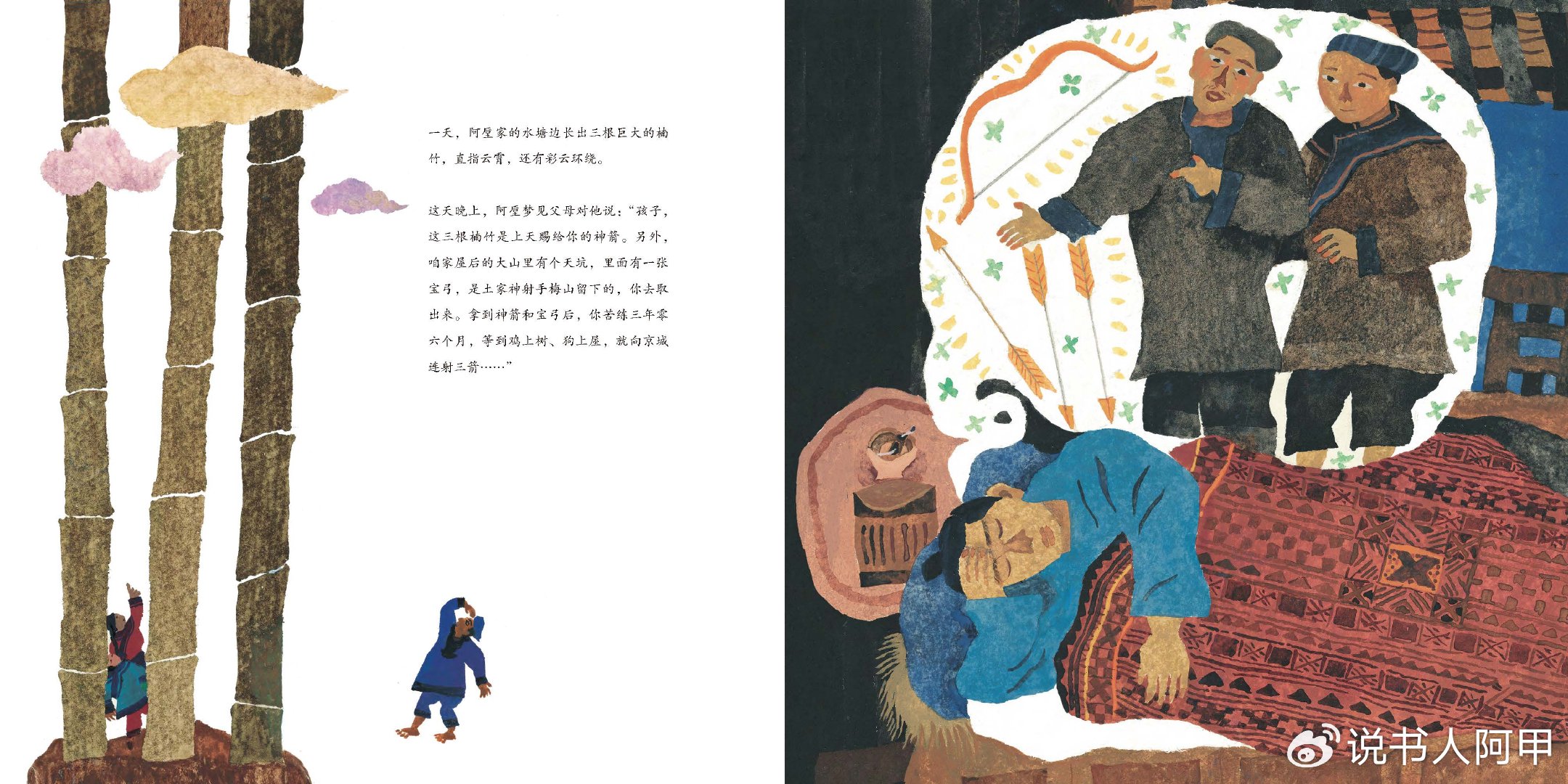
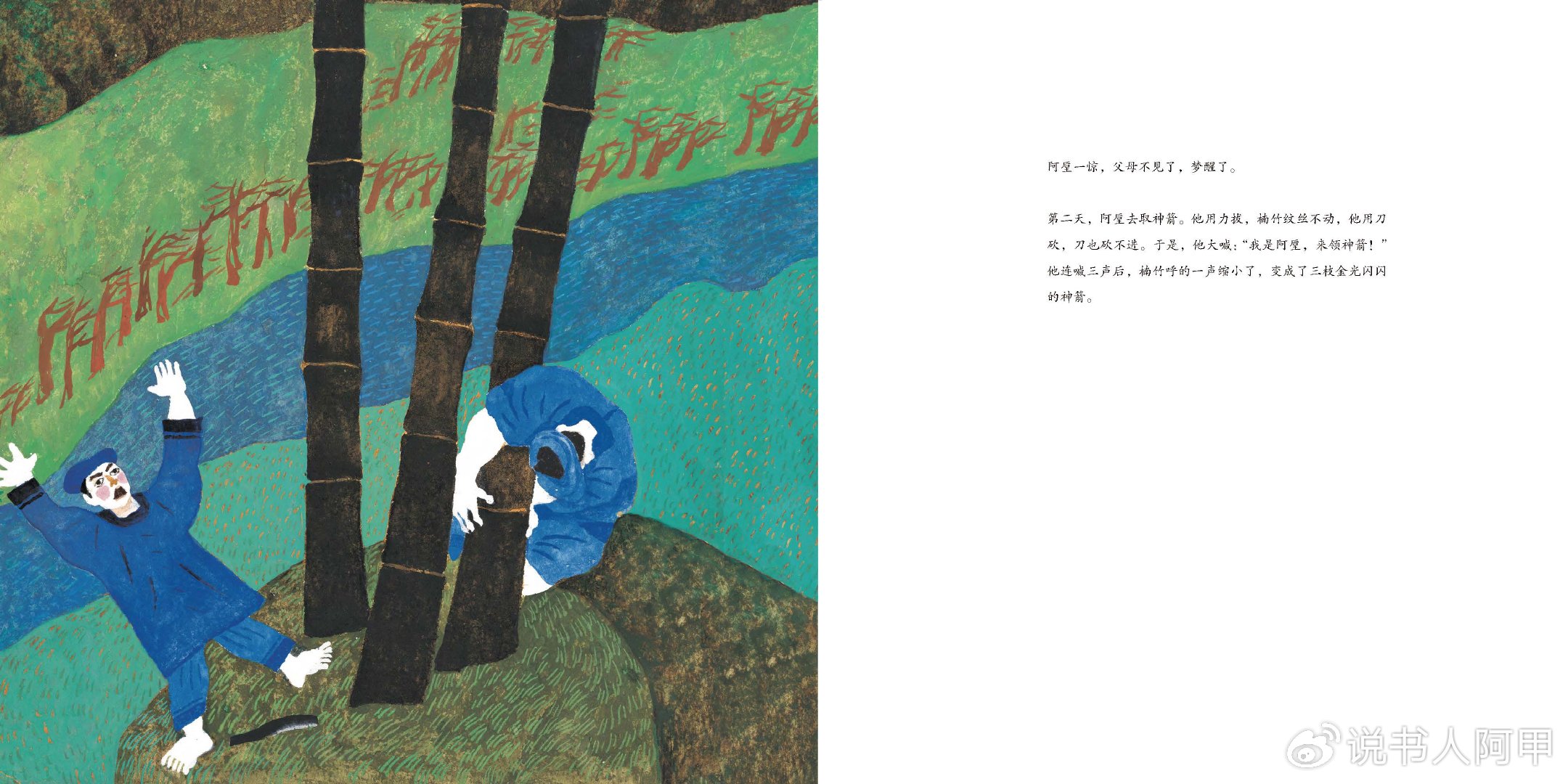
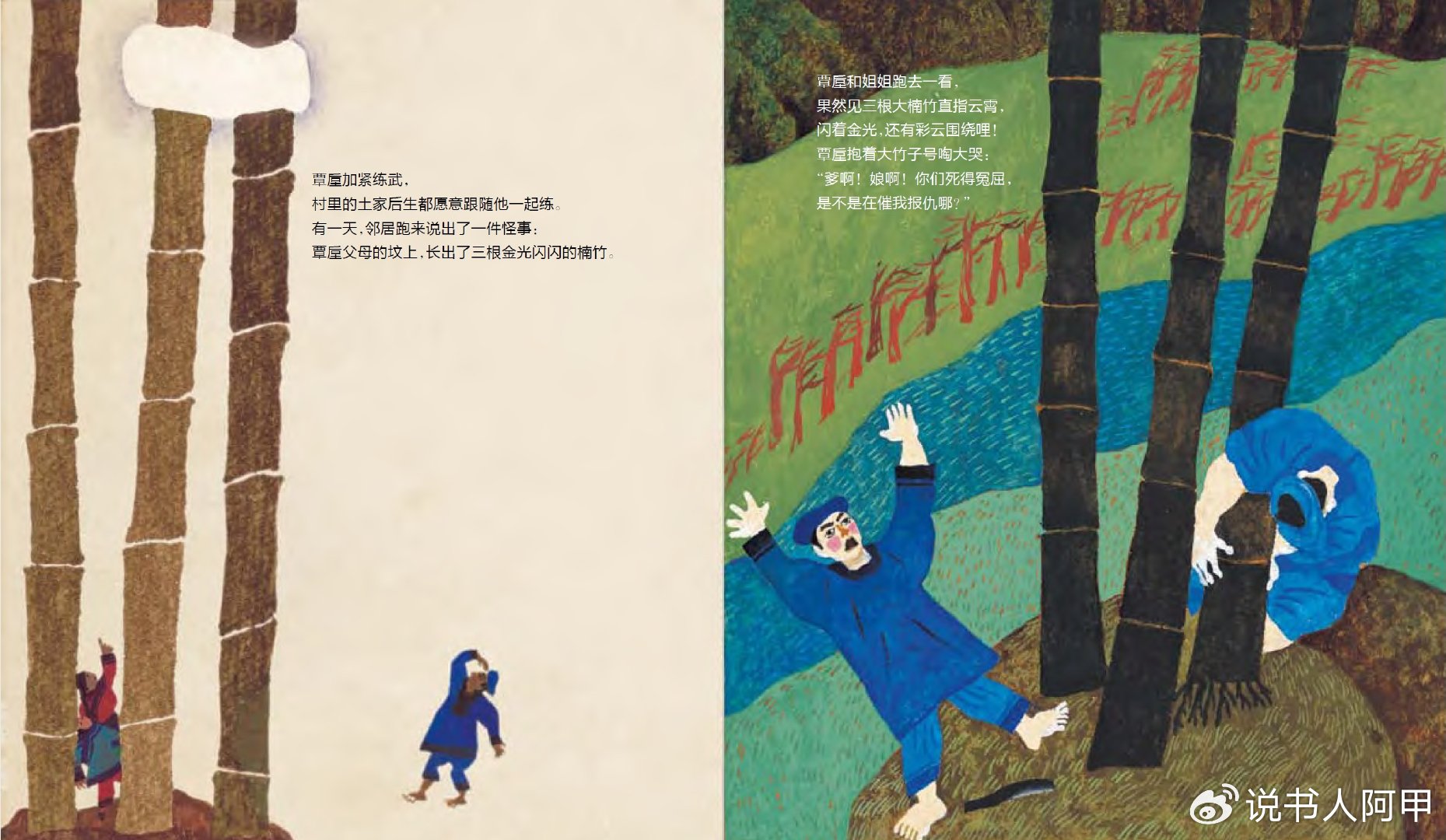
The new edition has also made many adjustments to the layout, pacing, image color scheme, and details. For example, the first two double-page spreads, which originally focused the images on a single page, are now arranged in a 50/50 split, making the opening narrative more relaxed and engaging. In the later pages where the parents appear in a dream and Ah Hou retrieves the magic arrow and finds the treasure bow, the pacing has been slowed down, and the order of the images has been subtly adjusted, making the relationship between text and images clearer and more logical. I also noticed that in the old version, in the scene where Ah Hou struggles to pull up the bamboo, he had actually pulled out the root of a large bamboo stalk, but this conflicted with the narrative’s description of it “not moving an inch.” In the new version, the bamboo roots are no longer visible in the images!
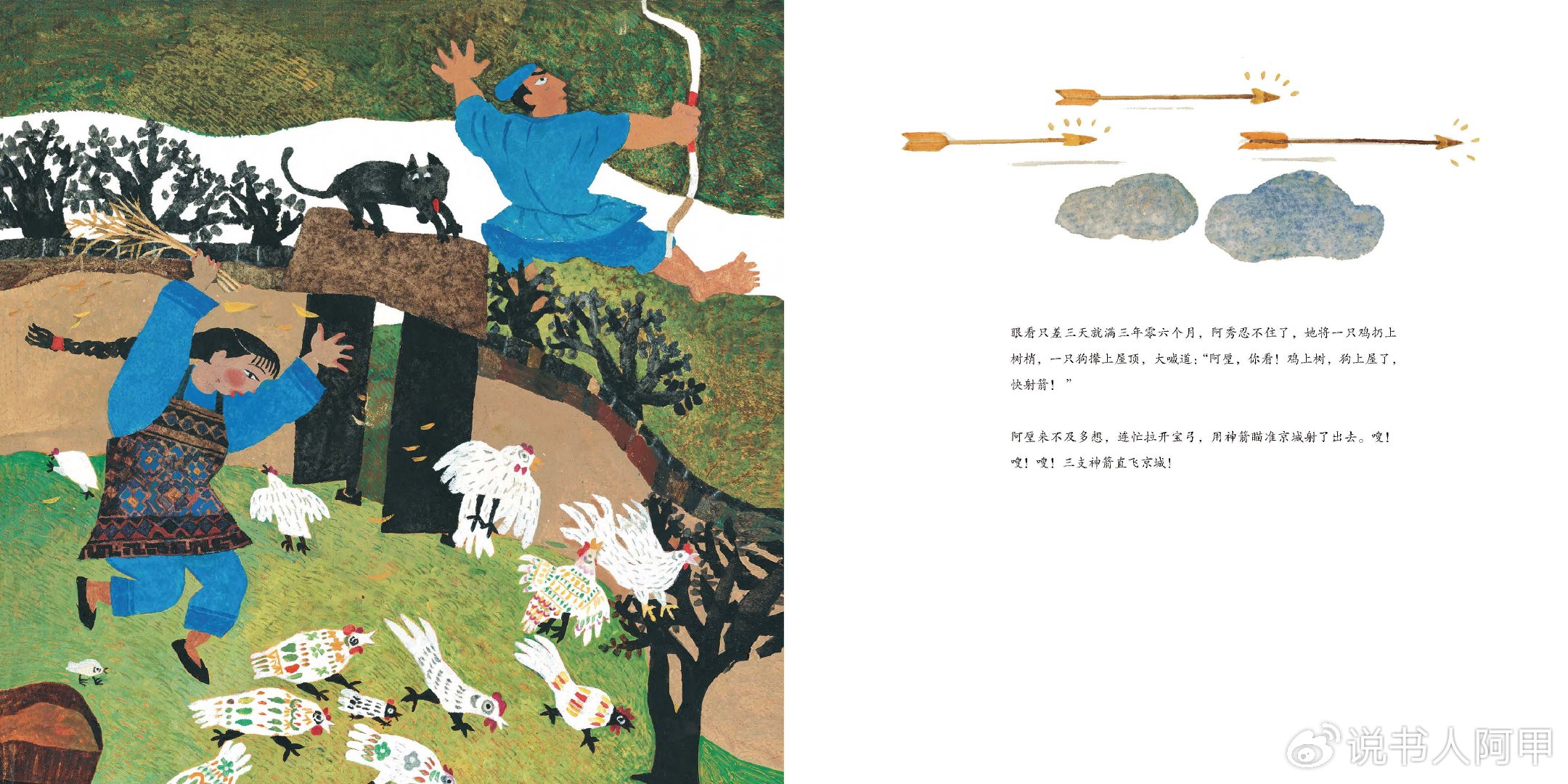
The most commendable revision is the dramatic and iconic scene where the older sister, Ah Xiu, throws the chicken up a tree and chases the dog onto the roof. Originally, Ah Hou’s three magic arrows flew from right to left, but on the next page, the arrows flew from left to right to the palace. Now, Ah Hou’s arrows fly in the opposite direction, making it seem as if the three arrows flew continuously to the capital! This better suits the page-turning effect required for a picture book.
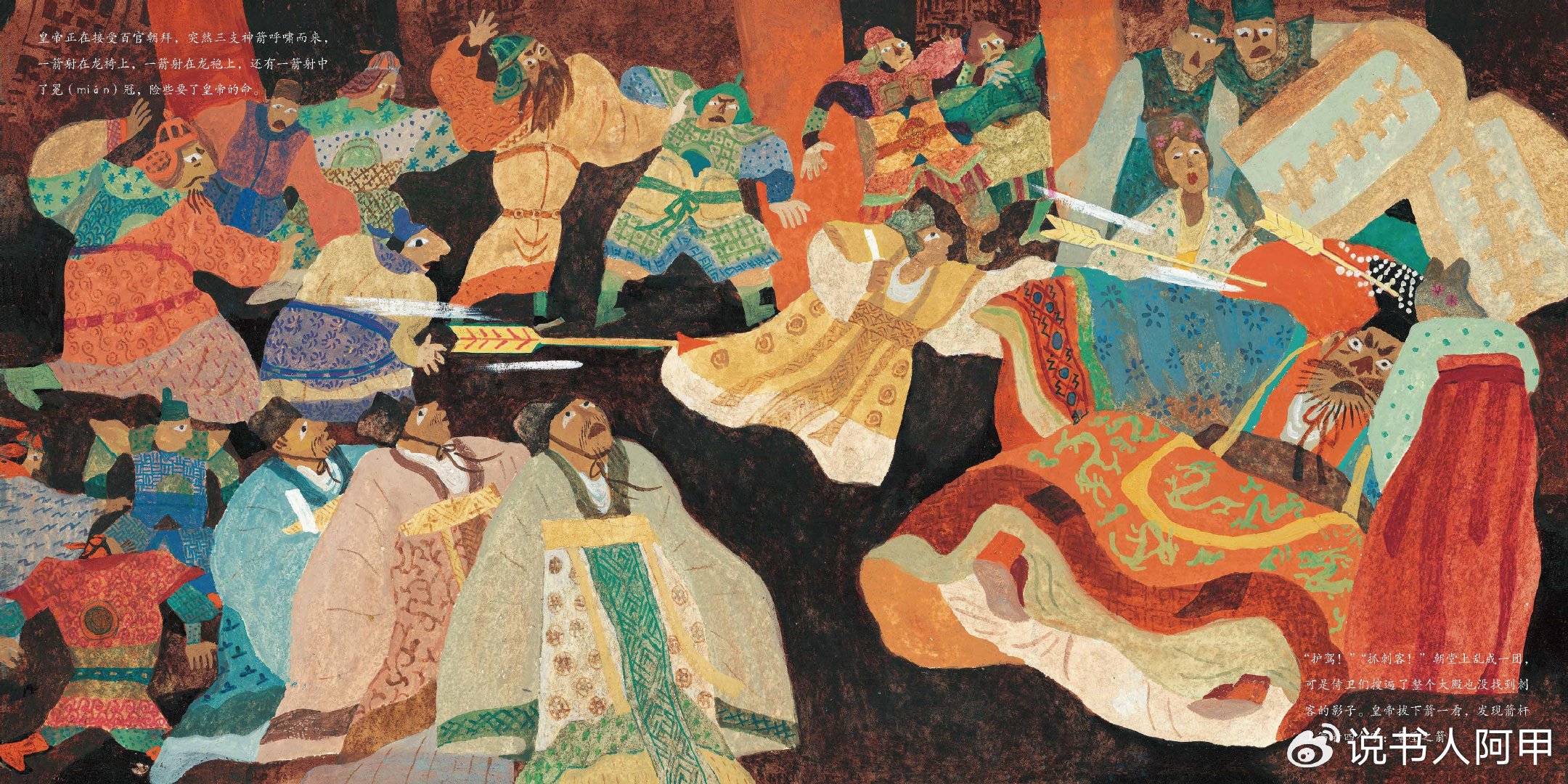
In conclusion, the new edition of “The Sixth Day of the Sixth Lunar Month for Drying Dragon Robes” is more aligned with the reading needs of contemporary picture books in terms of text and illustrations, offering greater flexibility for both parent-child and group reading. So, let’s return to the basics: what kind of story does this folk tale, adapted and passed down through so many generations in a picture book, actually tell? What do the three golden dragons on Ahou’s body represent? Why do people commemorate him with a festival?
I believe the answer should be open-ended for readers, allowing for different interpretations. However, for the artist constantly retelling this story, there are still some noteworthy clues hidden within the imagery. As mentioned earlier, Qin Hou’s name is derived from “Houtu,” the corresponding term being “Huangtian” (Emperor’s Heaven), the former referring to earth and the latter to heaven. In this book, the emperor’s first appearance is always accompanied by symbols of heaven—stars and dragons—while Qin Hou, in contrast, is always depicted with soil, fields, rocks, and streams. The emperor wanted to eliminate Qin Hou because he feared that the golden dragon would usurp his position as “the representative of heaven,” but wasn’t the Hongwu Emperor of the real world also of humble origins? Therefore, this relationship between earth and heaven is actually relative and fluid. The emperor, who captured Qin Hou through cunning and force, could execute him, but he also had to bow before the golden dragon that Qin Hou transformed into after his death. At that moment, earth and heaven switched places!
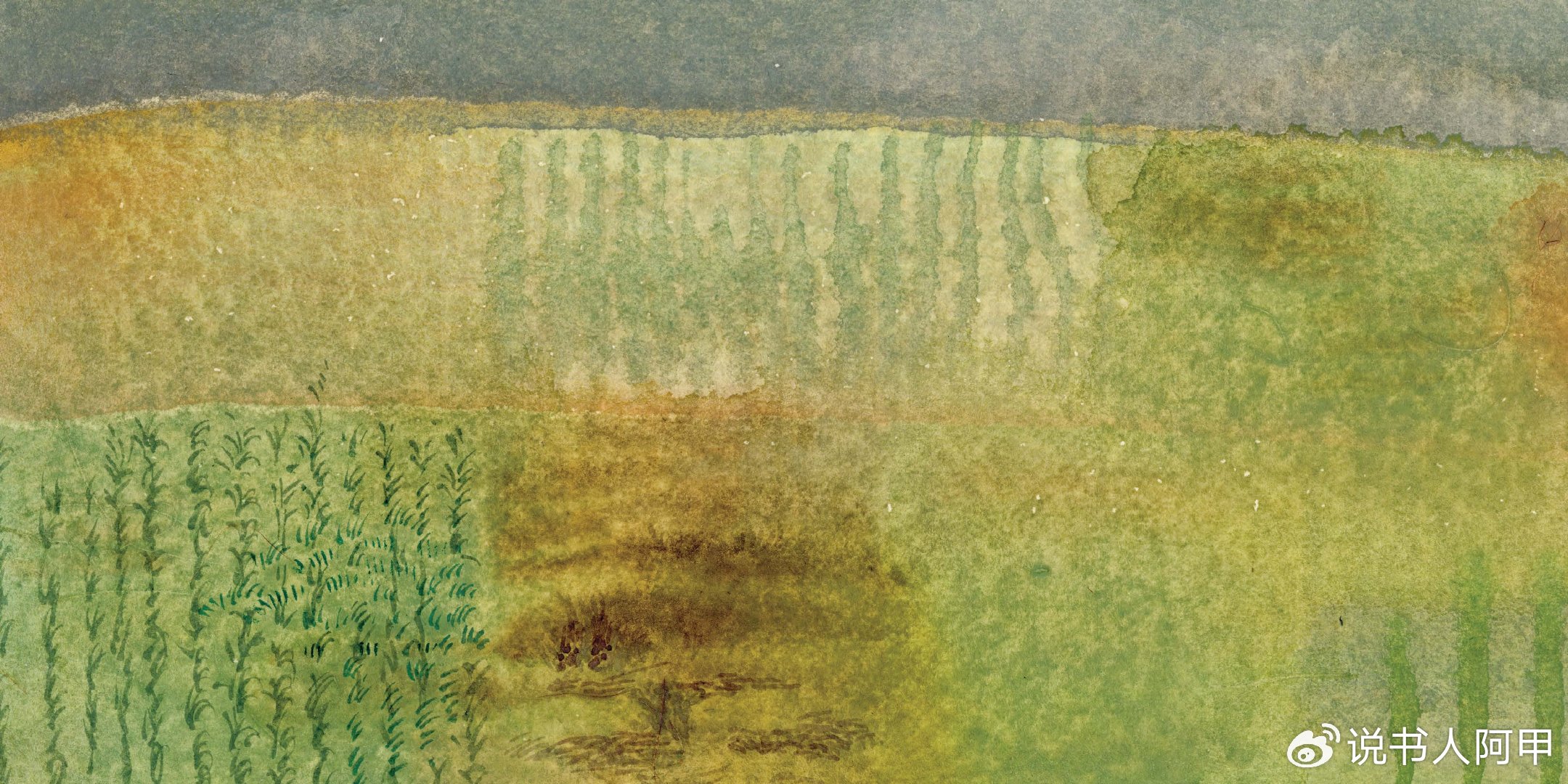
The newly added endpapers in the new edition are quite intriguing: the entire page is dominated by green, interspersed with earthy brown, depicting field ridges, grassy slopes, and muddy ground, with rising moisture and brimming with life; however, the area above, perhaps representing the sky, is narrow and leaden gray, giving a somewhat oppressive feeling. Perhaps this is a new clue left by the artist for the reader.
Written by A‑Jia on June 21, 2025 in Beijing