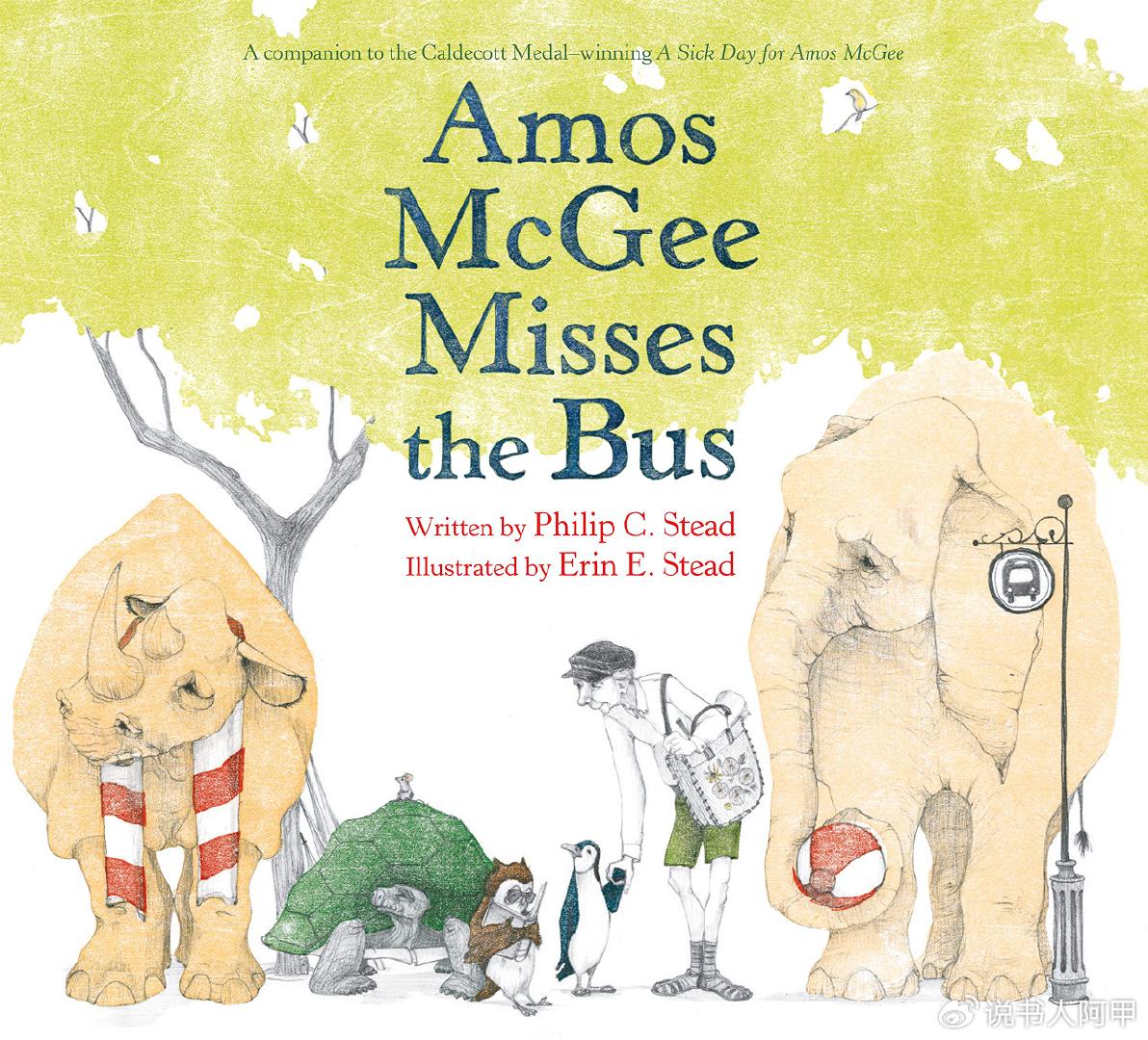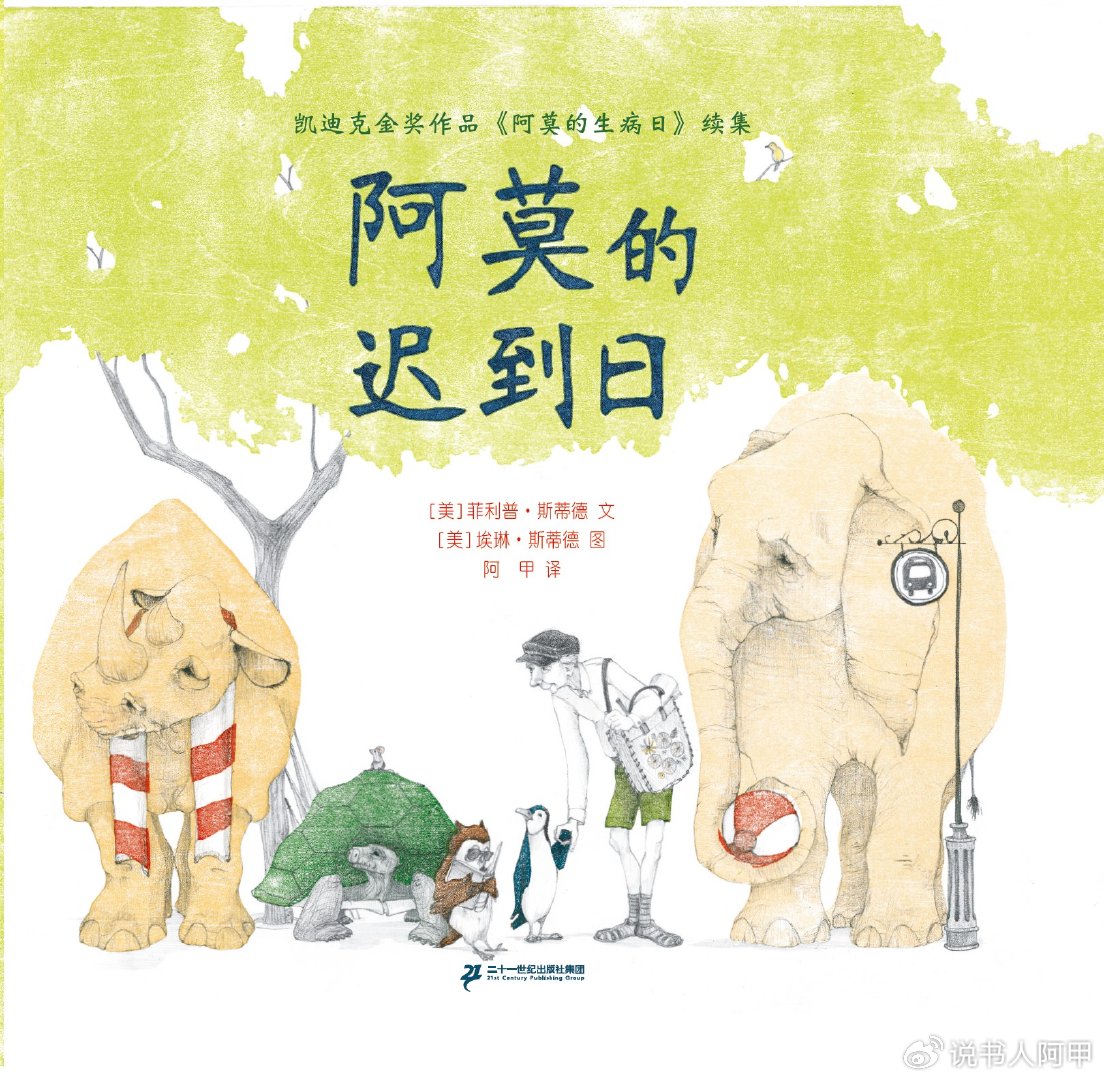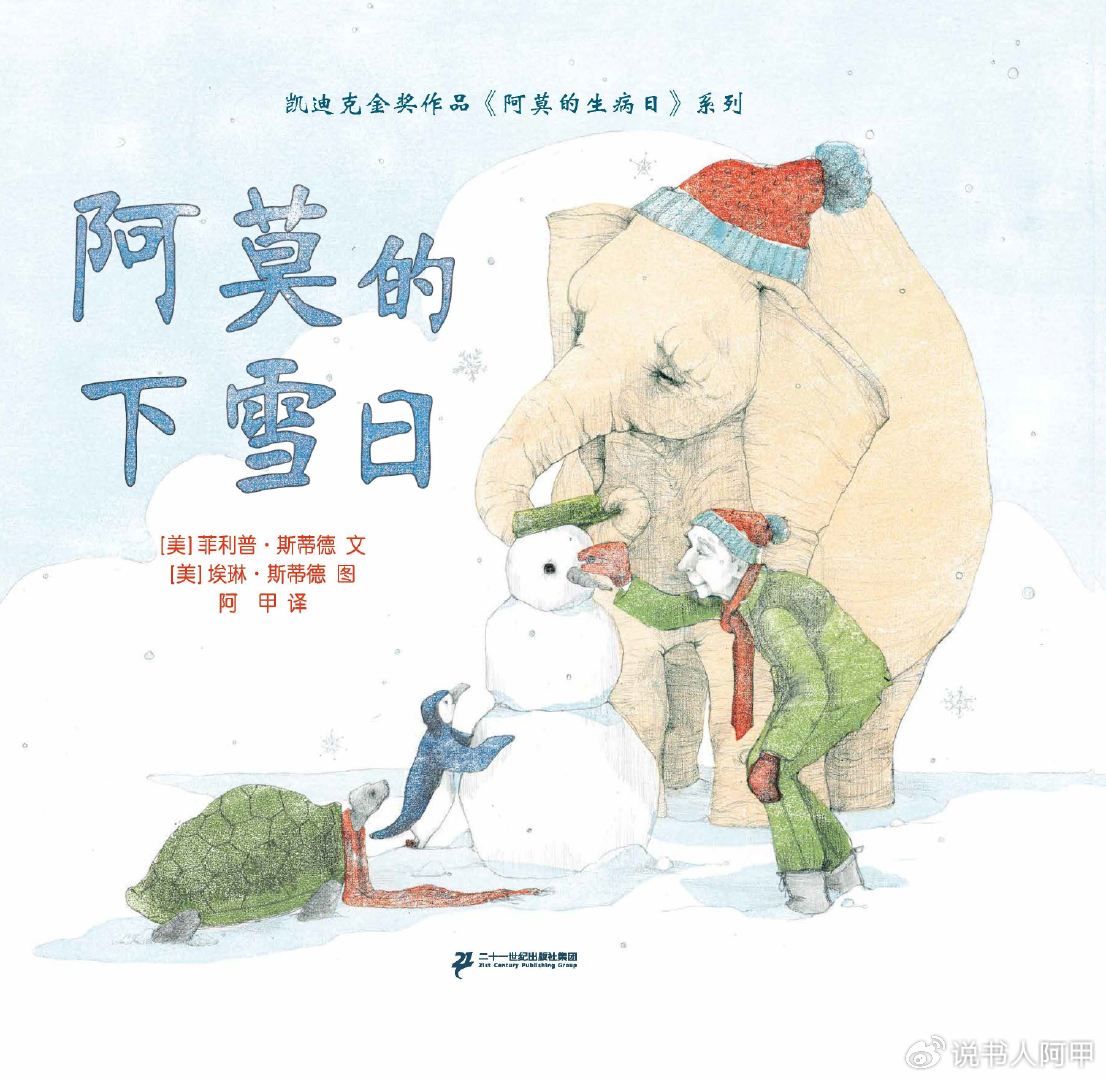
If I do the math, it’s been a full fourteen years since I first introduced the zookeeper named Amos McGee to Chinese children.
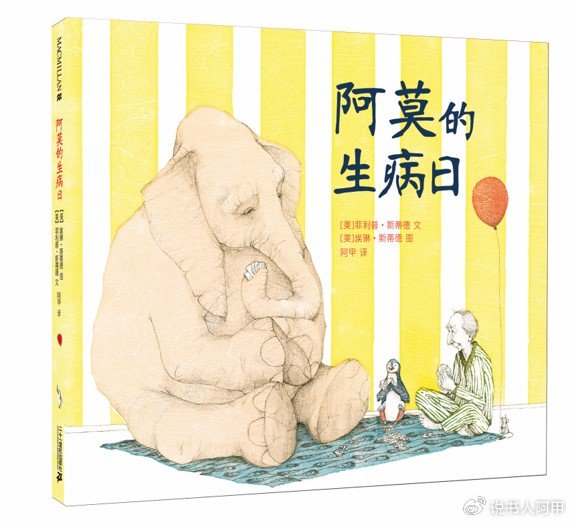
Fourteen years is enough for a toddler who just fell asleep listening to “Amos’ Sick Day” to grow into a college student; it is also enough for the young creative couple, Philip and Erin, who were just starting out and struggling in Brooklyn, to become parents who now live in a century-old barn in Michigan and raise their own children.
However, when I opened this latest book, *Amo’s Snowy Day* (A Snow Day for Amos McGeeWhen I read this, a wonderful feeling welled up in my heart, and I couldn’t help but announce to my fellow readers on Weibo: “This is a new chapter that follows ‘Amo’s Sick Day’ and ‘Amo’s Late Day.’ Unlike the second book, the third book feels closer to the original flavor of the first book.”“
Yes, the original flavor, still the one we’ve been longing for—quiet, slow, and joyful, plus a touch of anticipation and the surprise that comes with waiting.
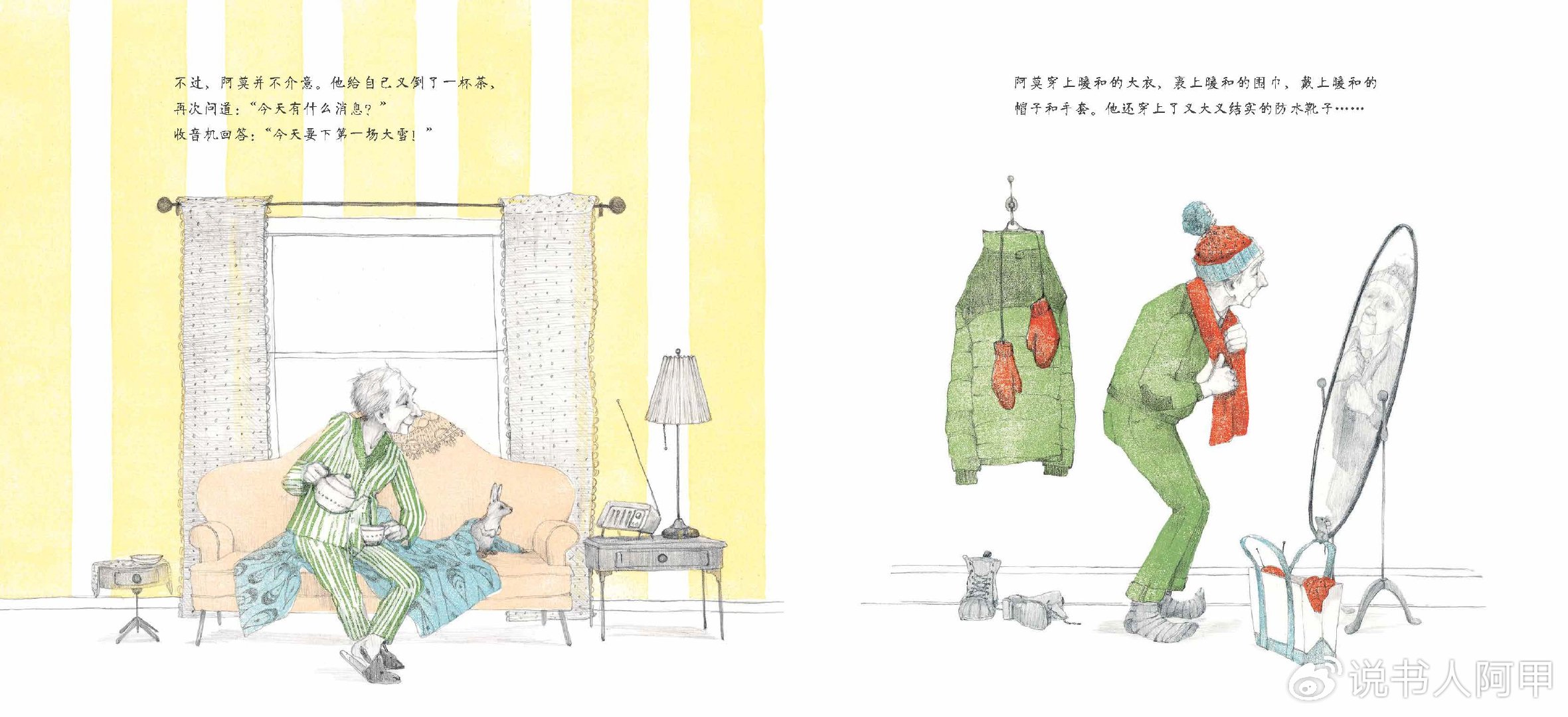
In the previous book, *Amo’s Late Day*, Amo, whose life was as precise as clockwork, was so excited about surprising his friends that he couldn’t sleep, resulting in a minor “late” mishap. That occasional lapse in judgment was endearing, but it always made you worry for this old-fashioned gentleman. This time, however, Amo is back, with his signature composure.
The story begins even “slower” than the first book. For half the entire book, Amo does one thing—wait.
Look at how Amo “waits”—as winter approaches, unlike us who stare at our phone screens checking the weather forecast, he wraps himself in his familiar warm blanket and sits by his old-fashioned radio. The book says, “Amo likes to imagine the radio as a crackling fireplace. Every day, he warms himself with the various possible good news coming from the radio.”“
What a wonderful philosophy of life! In this chaotic era, we seem to have forgotten how to wait gracefully. We are always urging, always anxious. But Amo tells us that “waiting” itself is part of life, even a joyful part. When the radio says it’s just raining or windy, he doesn’t get annoyed, he just pours himself another cup of tea. And when he hears it’s going to snow, he doesn’t rush out, but picks up his knitting sticks instead.
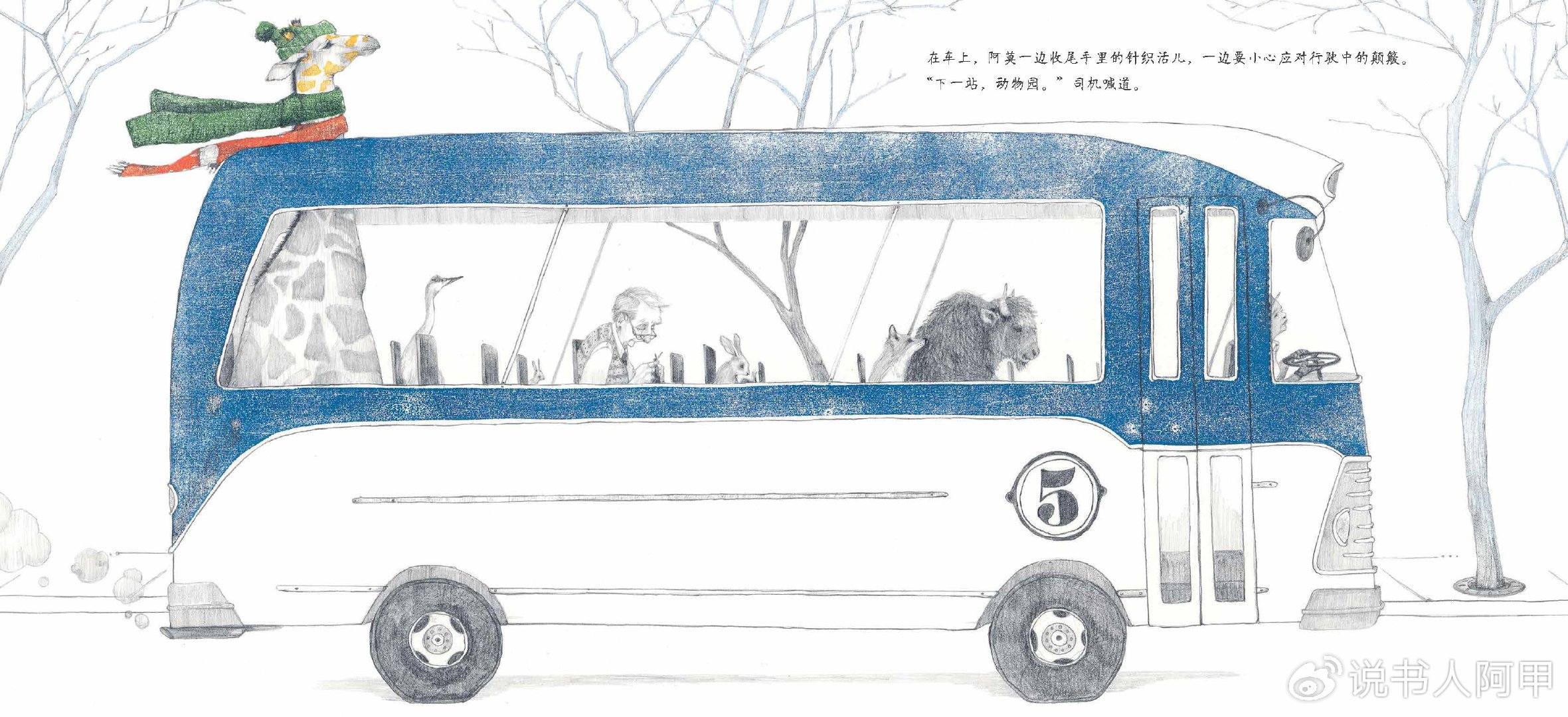
Amo still took the No. 5 bus to the zoo, but this time, unlike the first and second times, he wasn’t busy “going to work.” Instead, he brought a bag full of good wishes to “visit the set.”
Please pay close attention to the red gifts in the book. Against the backdrop of Erin E. Stead’s signature woodcut prints and cool, understated blue and white winter hues, the reds woven by Amo—pom-pom hats for elephants, thick socks for penguins, scarves for rhinos—stand out brilliantly. This reminds me of Ezra Jack Keats’ Caldecott Medal-winning *Snowy Day*.The Snowy Day(And then there’s) Little Peter, dressed head to toe in a red snowsuit. This might be Erin’s subtle way of paying homage to her predecessors’ classic works, but it’s also a visual representation of the warmth of friendship.
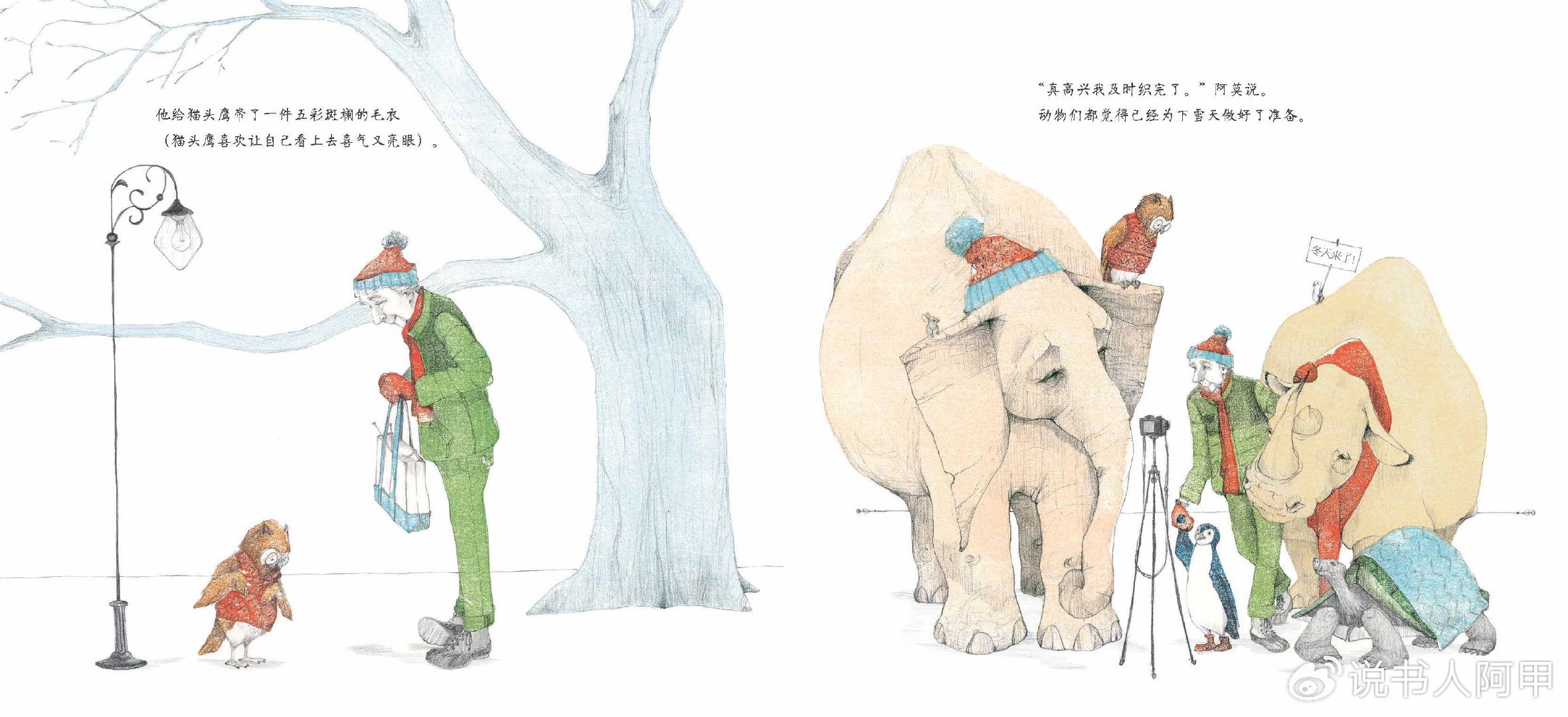
In Erin’s writing, every movement of Amo is worth savoring. In a recent interview, she mentioned that she pays close attention to Amo’s movements in space, especially how his “skinny body” bends his back and leans towards others. She said that these body languages are telling a secret:““I’m trying to empathize with you.“Yes, empathy. Philip C. Stead believes it’s the only language humans and animals can truly share. And Erin says, “I want to tell readers: Amo is a person who always tries his best and is full of goodwill.”“
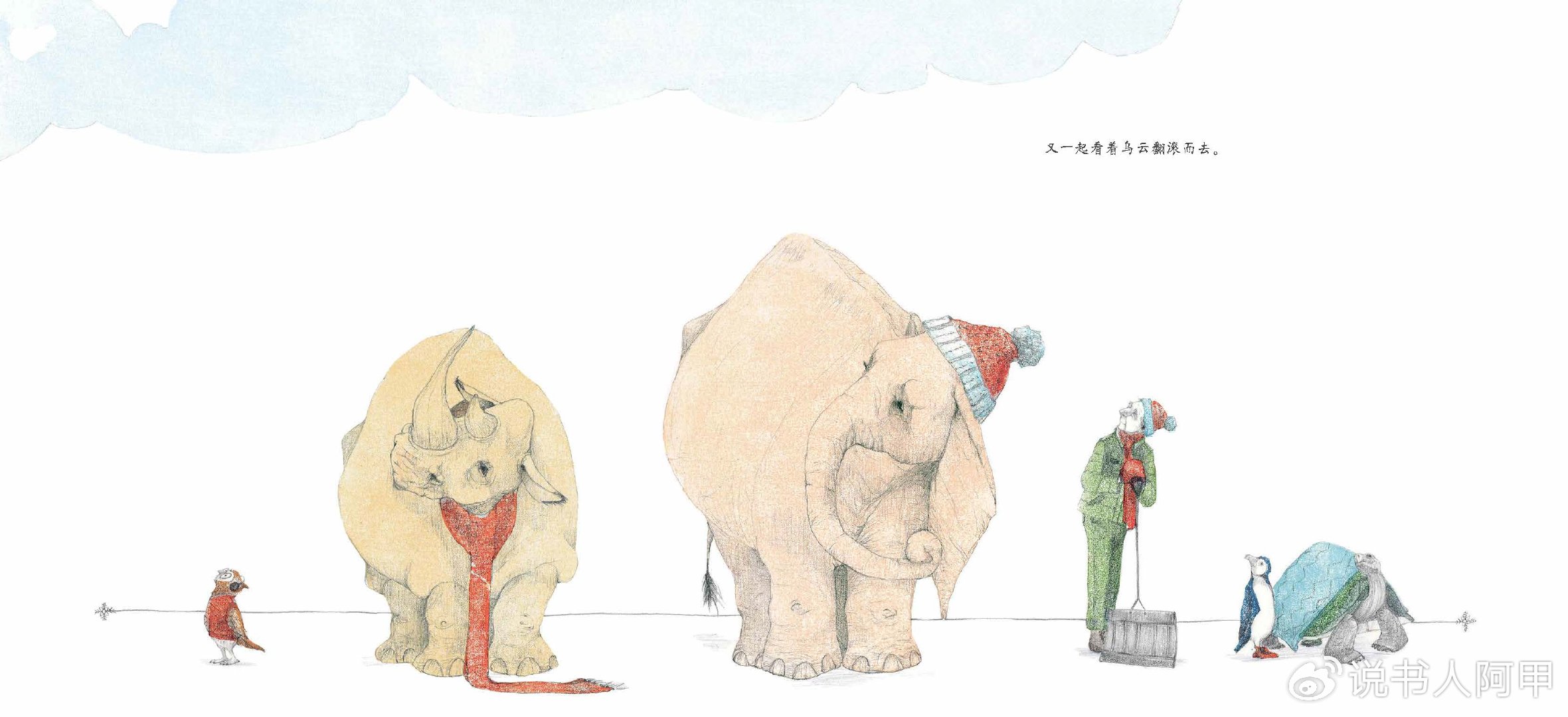
This explains why, when the snow didn’t arrive as expected, and Amo, though somewhat disappointed, still peacefully returned home, the animals once again did something that warmed our hearts. In “Amo’s Sick Day,” they took a car to care for the sick Amo; in “Amo’s Snowy Day,” they left their comfortable den, shoveling snow all the way to Amo’s door. It wasn’t because they needed Amo, but because they knew that Amo needed them too.
Behind this return to creative work lies a significant shift in the creator’s mindset.
You might recall that I mentioned their somewhat legendary creative and award-winning experiences in the first translator’s afterword. Their debut novel, Erin’s first major work, *Amos’s Sick Day*, won the Caldecott Medal, but that weighty award brought Erin immense pressure. She even had to hide the medal, afraid to look at it too often, lest she feel burdened (afraid it would become her “last book”).
So many years have passed, and Erin can now look at her medals with ease. She says the role of Amo brought her a kind of…““A beautiful burden”—Because such a kind character has been created, readers often expect the creator to be kind and gentle themselves. What a precious expectation that is!
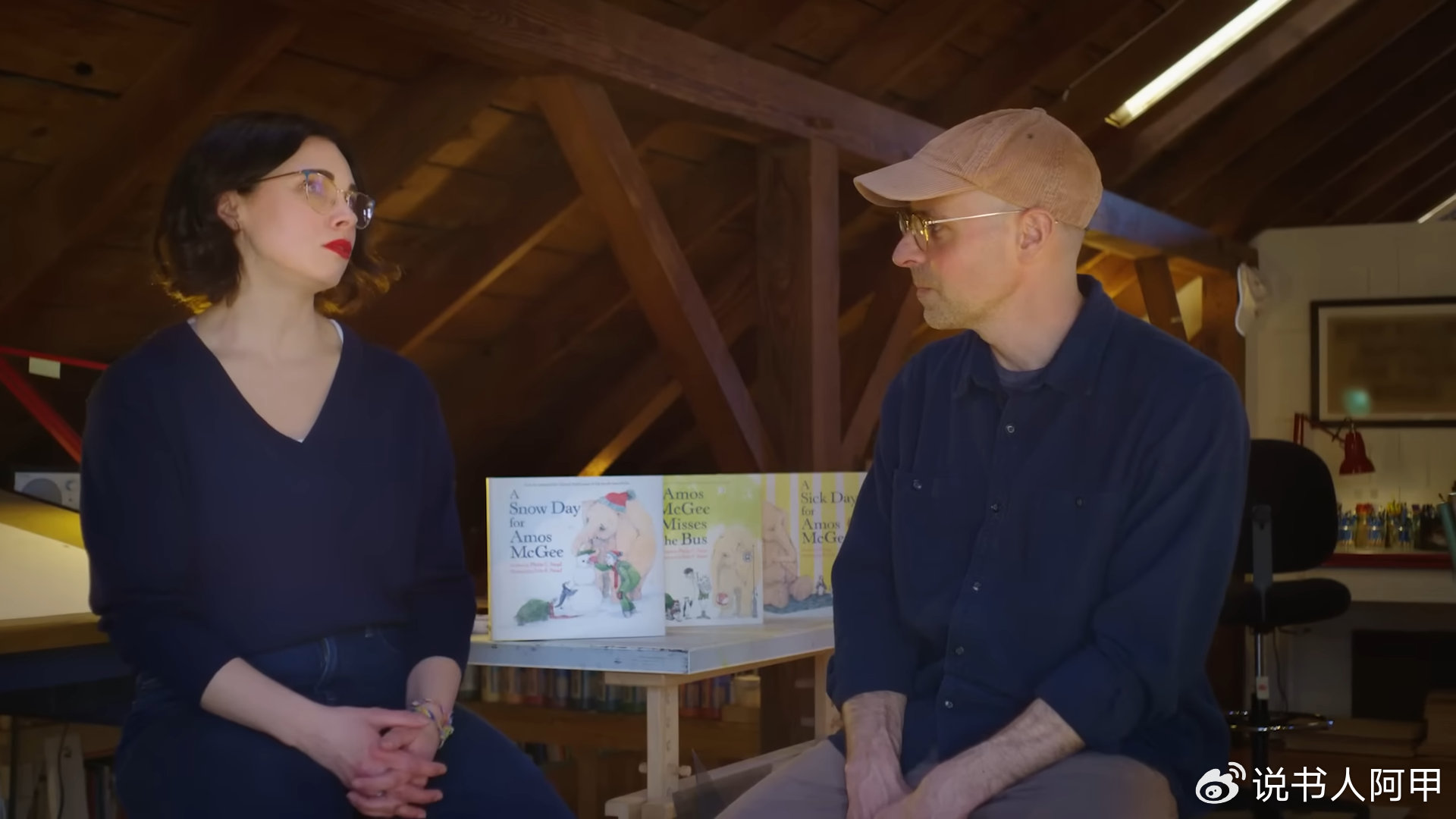
Now that Philip and Erin are parents themselves, they have a deeper understanding of “Amo’s world.” In a recent video conversation, Philip said something that particularly touched me. He said that for adults, “waiting for snow” might just be a trivial matter in life, even a bit of a hassle;But for children, this is their whole life..
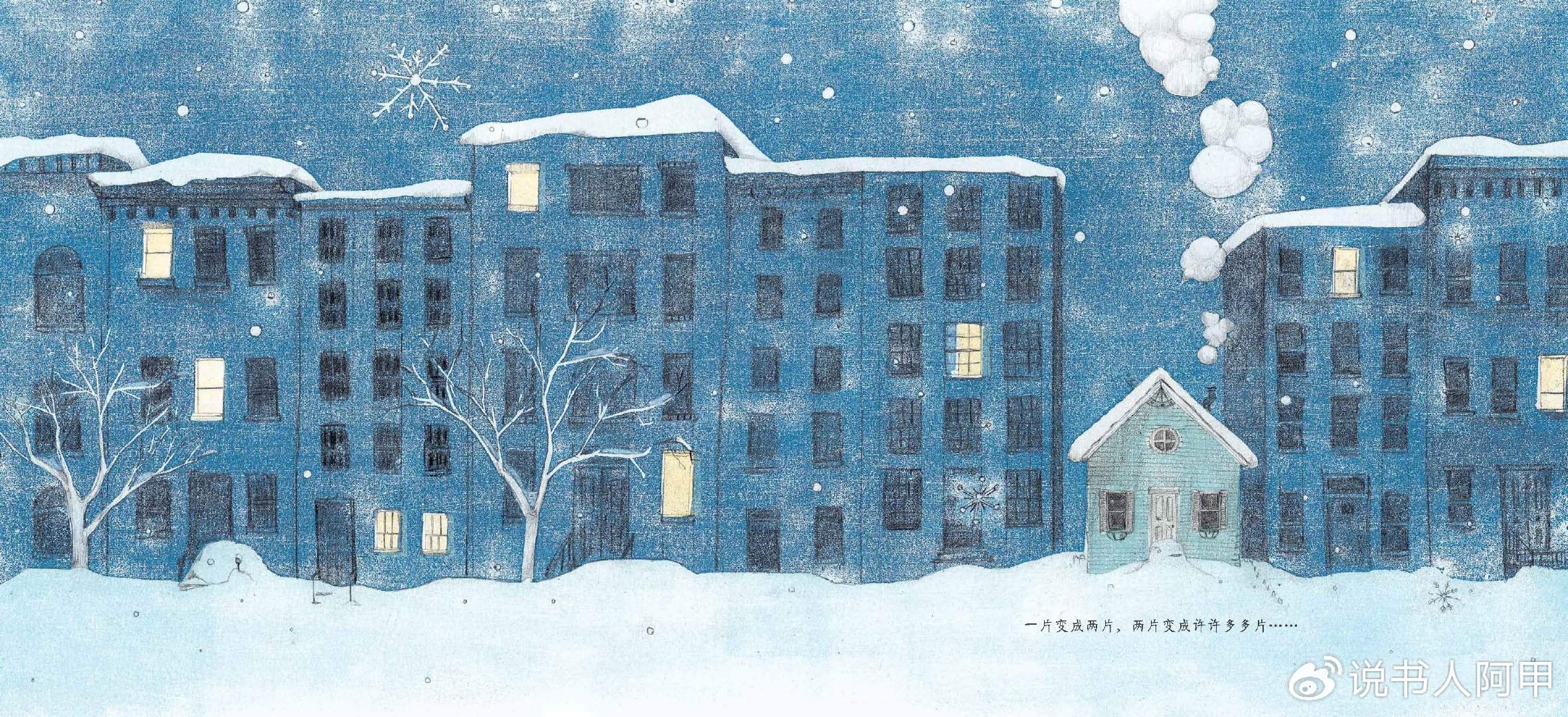
So they decided to reopen the doors of the Amo family home in this noisy, turbulent, and uncertain world. Philip said, “Amo’s story…”““Not trying to drown out the noise in the room””(It doesn’t try to talk above the volume of the room); it just stays there quietly, inviting you to come in.
This “invitation” is vividly portrayed in the climax of the book.
When the snow finally fell silently during the night (note the breathtakingly beautiful snowscapes on those pages), the next morning, all the waiting was rewarded. A wordless double-page illustration appeared in the book: Amo and his friends were speeding through the snow. Penguins glided on their bellies, turtles somersaulted (or were they being used as sleds?), elephants clumsily and joyfully trudged through the snow… There were no words here, but you could almost hear their clear laughter piercing through the pages.
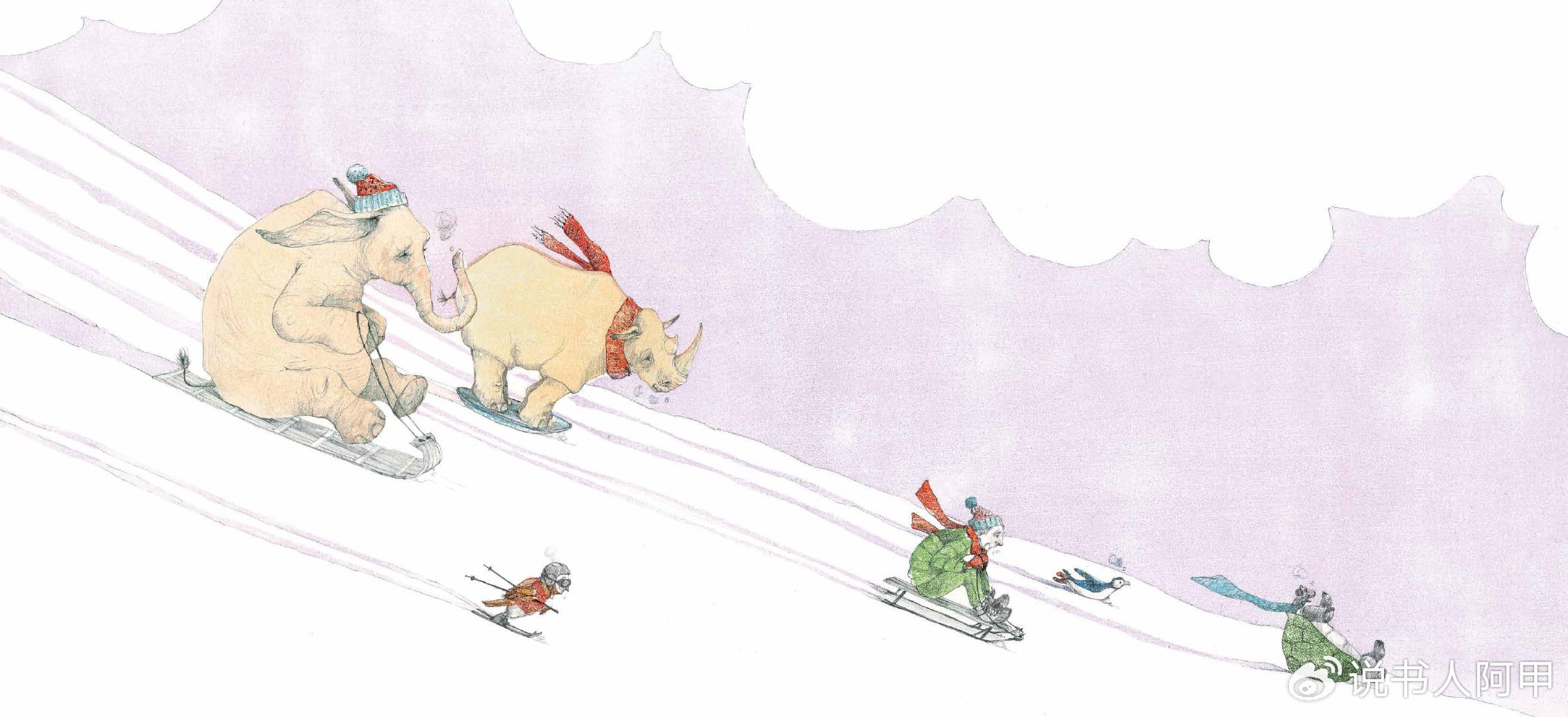
At this moment, all the “slowness” transforms into “joy”.
When the editor asked me to write a recommendation for this book, I almost blurted out:““For someone whose life is nearly complete, every day that brings change (whether ‘good’ or ‘bad’) is a holiday.”‘This is also a recommendation for the “Amos Trilogy” as a whole.
Isn’t this exactly what Amo’s life is like? Being sick is a holiday of mutual help; being late is a holiday of surprise; snow is a holiday of revelry. Even if it doesn’t snow, that quiet afternoon of weaving and embracing hope is itself a celebration.
At the end of the story, the tired friends squeezed into Amo’s small house with yellow striped wallpaper. Erin once joked that getting big guys like elephants and rhinos to squeeze into Amo’s little house was her favorite challenge, because although it didn’t make sense physically, it made perfect sense emotionally—As long as hearts are together, even the smallest house can hold the greatest friends.
Everyone sat together drinking hot chocolate. Amo said, “I’ll make the hot chocolate.” Then, the book reads:“Before anyone could even speak, Amo added an extra marshmallow to each cup.”
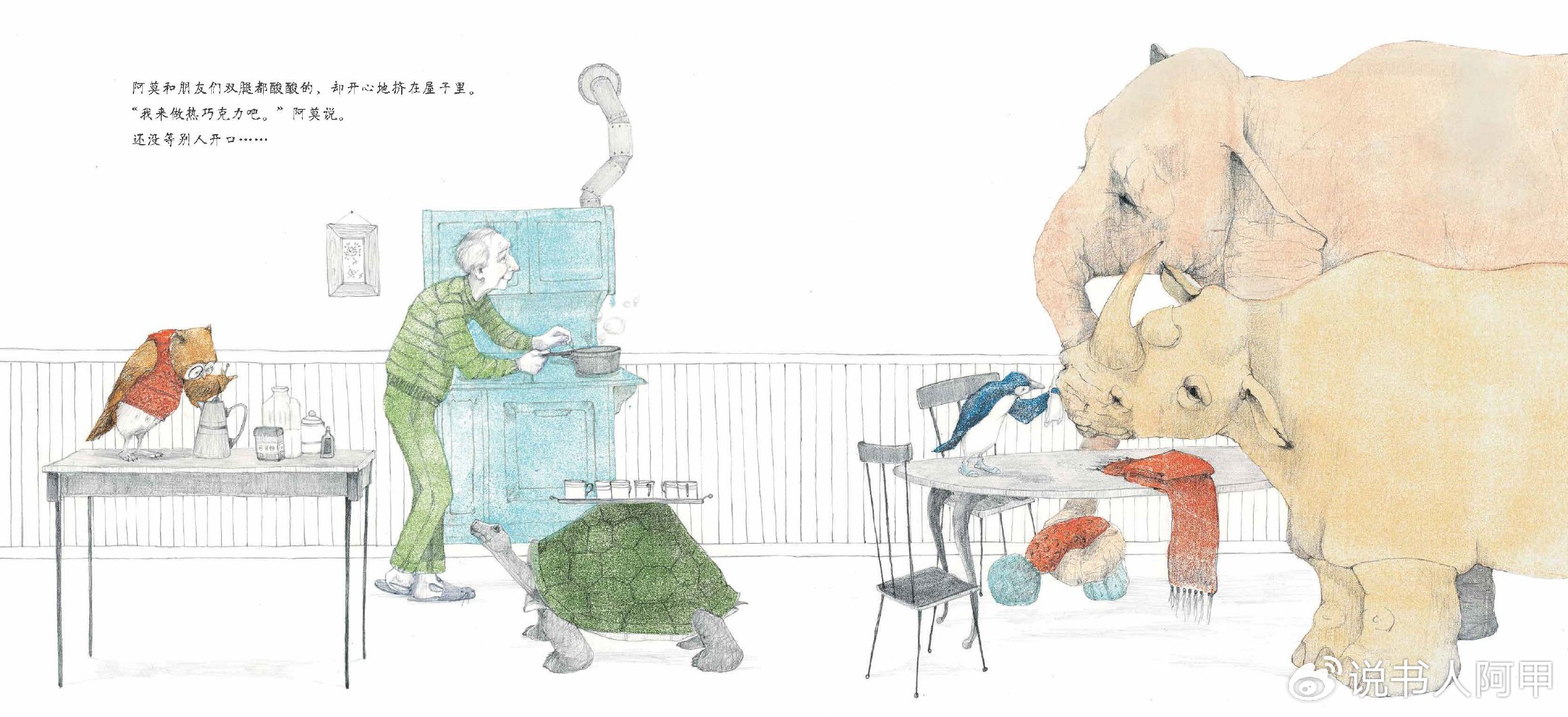
Reading this, I couldn’t help but smile. This is Amo, this is that quiet, composed, yet always charming old man who finds joy in every moment. That extra marshmallow represents his overflowing love for life and his friends.
In this perhaps cold and anxious winter, may this book, “Amo’s Snowy Day,” warm your and your child’s hearts like a cup of hot chocolate with extra marshmallows.
May we, every day, whether facing “good” or “bad” changes, turn around and gently say to those around us and to the world:
happy holidays!
Written by A‑Jia on December 29, 2025
Beijing, where the first snow had not yet melted
»»»