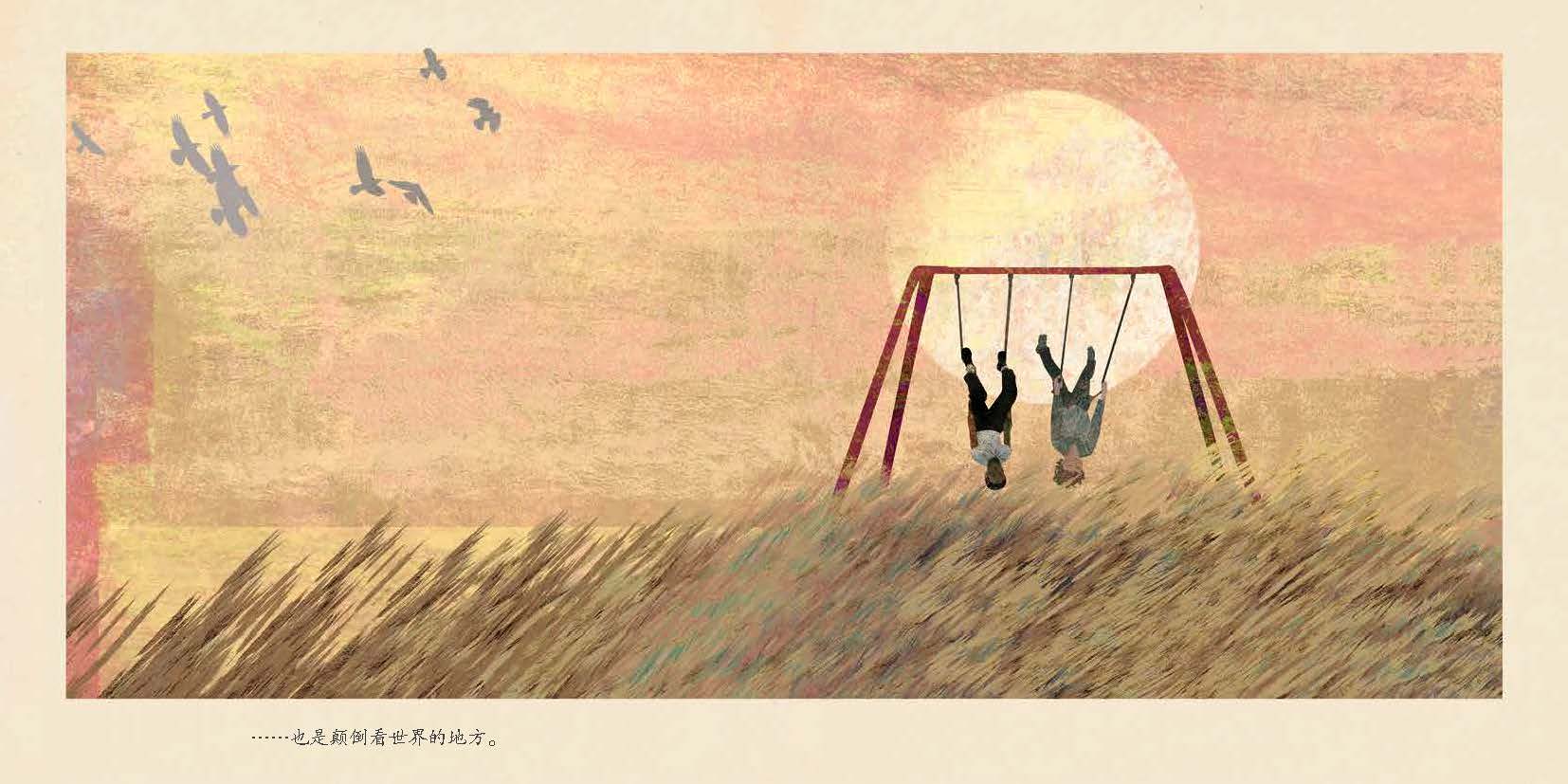
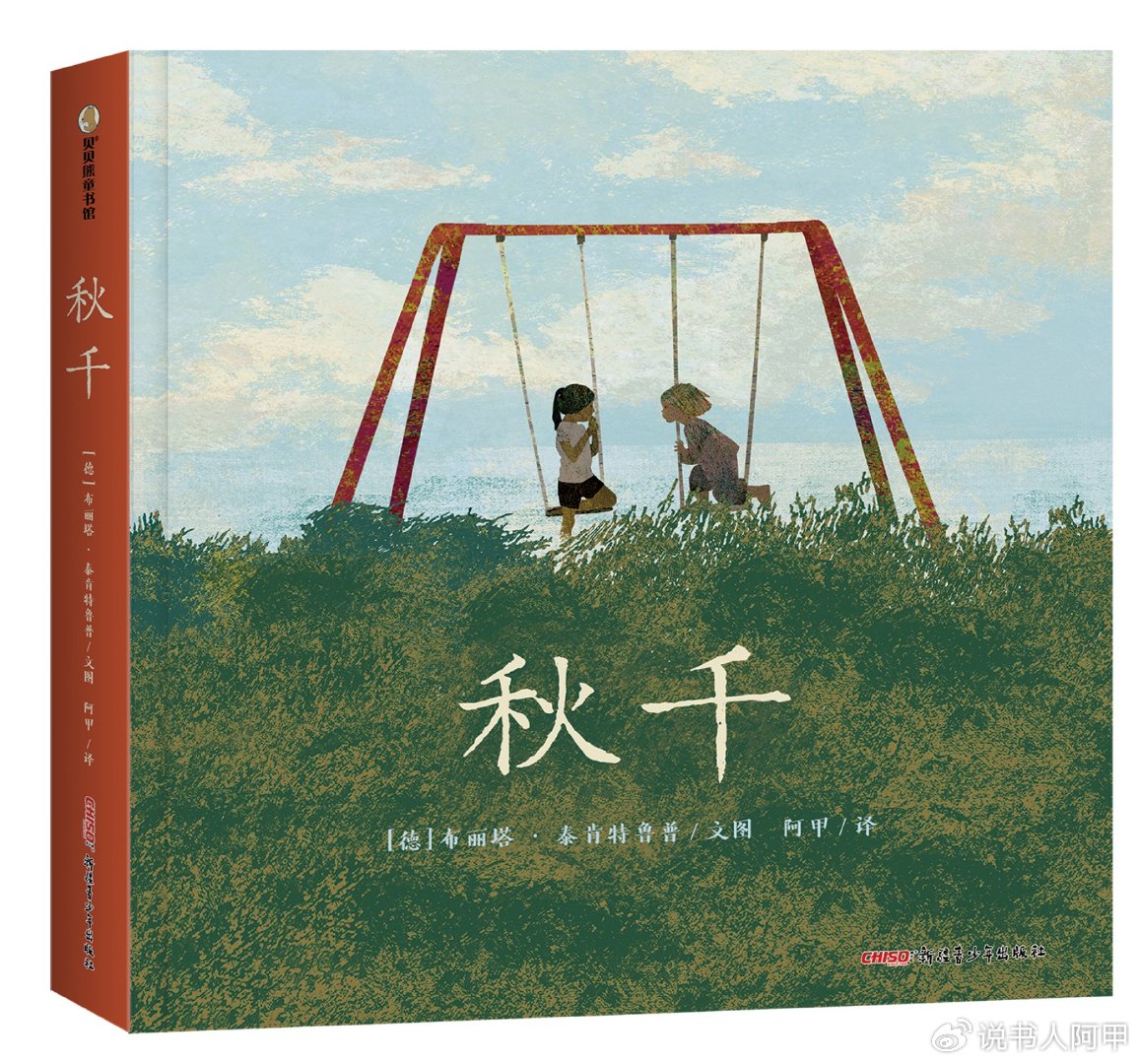
- Core evaluation: Philosophical, existentialist, minimalist narrative
- Mainstream media feedback:
- Frankfurter Allgemeine Zeitung (FAZ) Book critic Lena Bopp gave it high praise, calling it “a small place of great significance.” The review points out that the book is not just for children, but more like a “miniature model of prose,” exploring themes grander than individual lives with minimalist strokes—its very existence is a silent witness to the passage of time.
- Reader feedback: German readers generally consider this a suitable bookAll age groupsA gift book (especially from adults to adults). Many reviews mention that “every page of illustrations is worth framing” and praise its text for its “unpretentious profundity”.
- Keywords: Philosophisch(Philosophical), Zeitlos(Eternal), Lebenszyklus(life cycle).
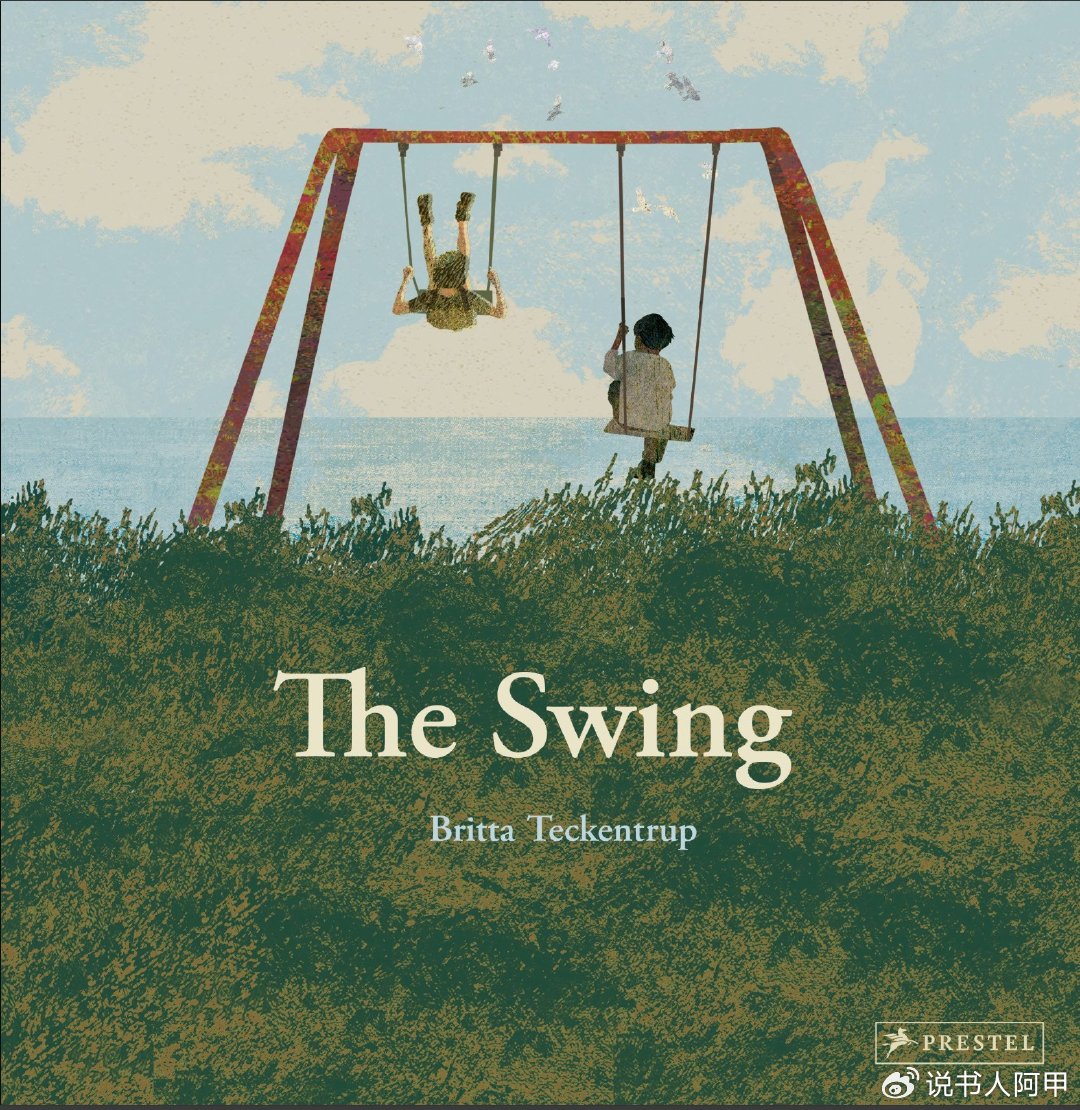
2. 🇬🇧 🇺🇸 English version (The Swing) — “A book of life filled with truth and sorrow”
- Core evaluation: Emotional resonance, poetry, life education
- Professional book review:
- Kirkus Reviews Institutions such as [names of institutions] praised its “dreamy mixed-media collages,” believing that it captures “the ethereal essence of time and circumstance.”
- Simon Smith (renowned children’s book promoter) One review is very representative: “This is a truly extraordinary book. The combination of art and words creates multiple stories that are both joyful and sorrowful, full of truth and pathos.”“
- Reader feedback: On Goodreads and Amazon, English-speaking readers frequently mention that this book brought them to tears. It is widely used in classroom discussions about empathy and perspective, or as a comforting gift to those who have lost loved ones.
- Keywords: Poetic(Poetic), Pathos(Sentimental/Infectious), Masterpiece(masterpiece).
3. 🇮🇹 Italian version (L’altalena) — “Pure poetry and a hymn to life”“
- Core evaluation: Inclusivity, emotional tension, visual art
- Cultural background: publishing house Uovonero Known for its focus on reading disabilities and inclusivity, this version was given a more humanistic touch in Italy.
- Media feedback: Famous Italian book review blogs (such as…) Zebuk, Teste FioriteIt has been hailed as an “inno alla vita” (hymn to life). At 160 pages, it is considered a luxurious reading experience, described as a “picture novel-like picture book.” Critics have specifically noted the blurred facial features of the characters…Every reader can see themselves in it..
- Keywords: Commovente(Touching), Inclusivo(Inclusive), Arte(Art).
4. 🇰🇷 Korean version (그네) — “Where life pauses, moments of healing”
- Core evaluation: Memories of healing, comfort, and growth
- Market reaction: The South Korean picture book market is very mature and tends to favor “healing” works. Reader reviews (such as at Aladin bookstores) often focus on the word “comfort” (위로).
- Reader feedback: Many South Korean bloggers describe it as “a picture book for tired adults.” One comment reads, “On that swaying swing, we find a moment of rest and comfort.” It is seen as a bridge connecting childhood memories with adult reality.
- Keywords: 위로(comfort), 추억(recall), 힐링(Healing).
5. 🇯🇵 Japanese version (Blanco) — “The Garden of Memories as Depicted by Master Translators”“
- Core evaluation: Literary quality, nostalgia, and the beauty of mono no aware (the pathos of things)
- Unique selling points: The biggest highlight is the translator. Limu Xiangpao(Representative work: The Death of the West Witch). As a renowned Japanese author of healing/naturalistic literature, her translations are a guarantee of quality.
- Early feedback: Although it won’t be published until November 2025, the publisher (Iwanami Shoten) is focusing its promotion on the author’s “creative inspiration”—namely, the old photograph of her grandmother’s garden. This aligns perfectly with the Japanese cultural emphasis on “family bonds.”“and“The aesthetic preference for “nostalgia” is expected to make this a long-selling “literary picture book” in the Japanese market.
- Keywords: Memory(memory), Grandmother’s Court(Grandmother’s Courtyard), Limu Xiangpao(Blessed by a renowned expert).
Summary: The Relay of Publication for Each Version“
| Serial Number | Version | Core qualities | Reader impression keywords |
|---|---|---|---|
| 1 | 🇬🇧/🇩🇪 UK/Germany | Origins of Philosophy | Existentialism, the passage of time, a microcosm of life |
| 2 | US version (🇺🇸) | Emotional resonance | Tears, empathy, community and connection |
| 3 | Italian version (🇮🇹) | Artistic Inclusivity | Visual poetry, everyone can find themselves |
| 4 | 🇰🇷 Korean version | Healing the soul | Comfort, rest, fairy tales for adults |
| 5 | 🇯🇵 Japanese version | Literary nostalgia | Pearwood Ayumi, Memories of My Grandmother, Mono no Aware (The Aesthetic of Things) |