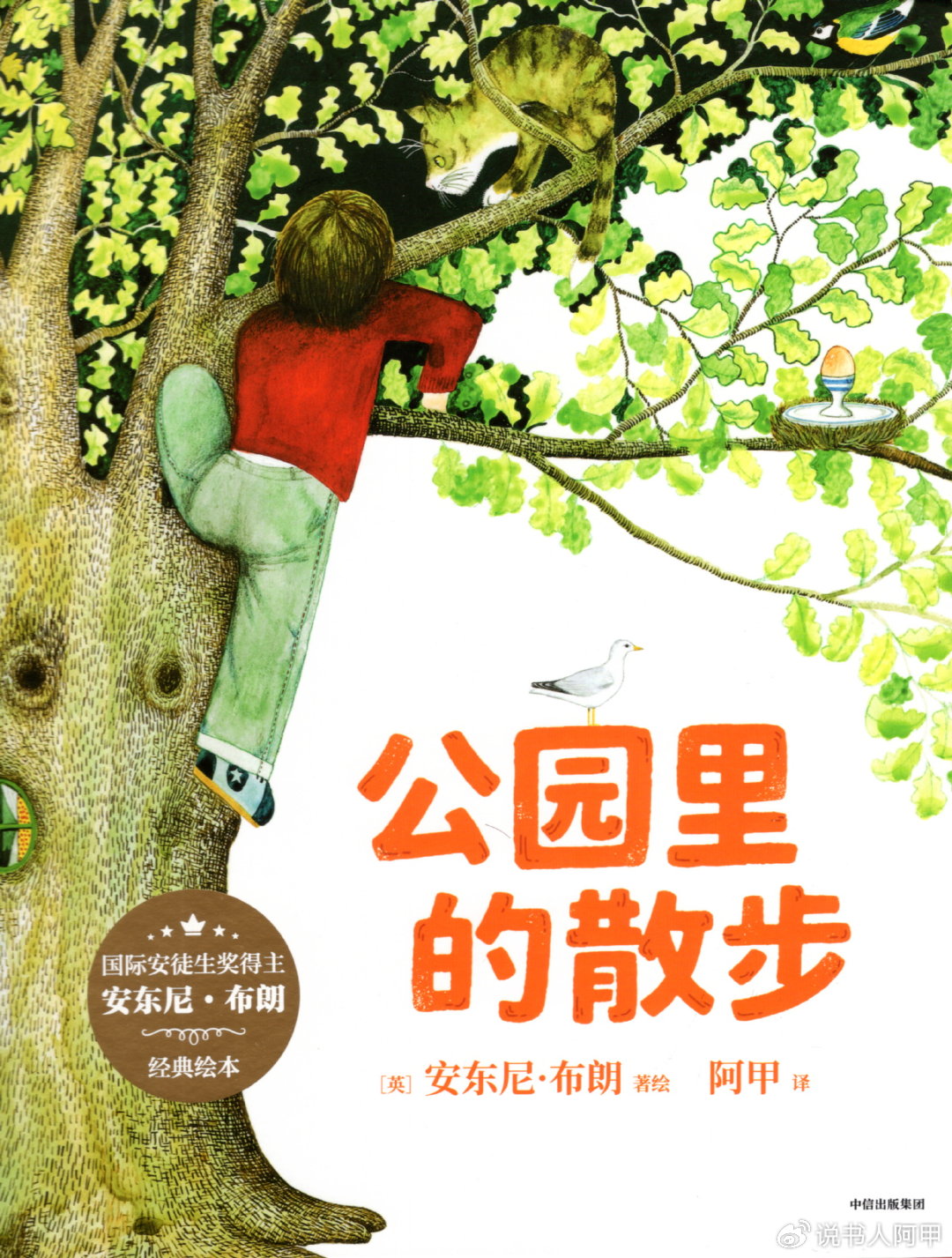
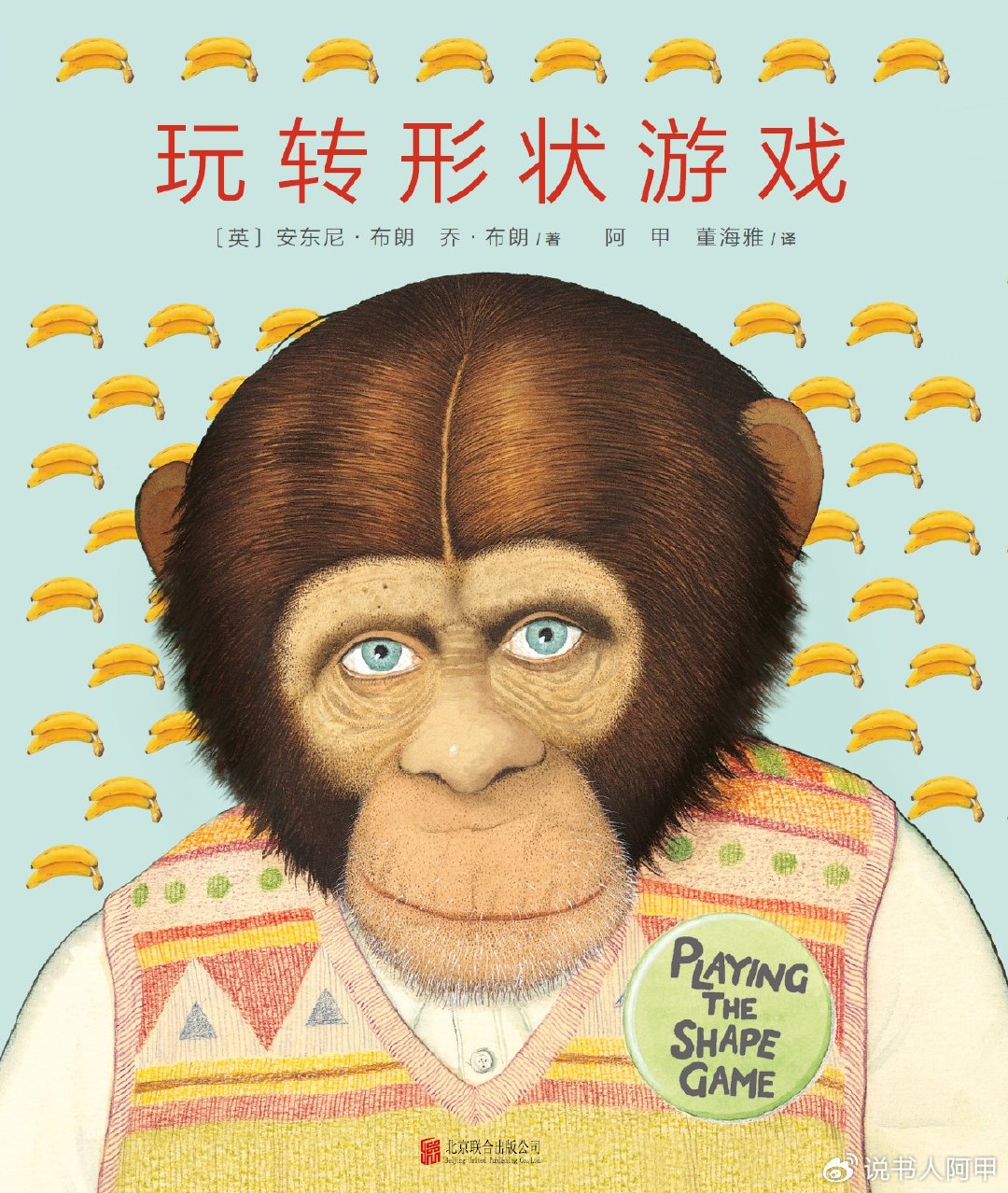
Anthony Browne, the beloved picture book master (winner of the 2000 Hans Christian Andersen Award for Illustration), has countless fans in China, including myself. I have been fortunate enough to translate 22 of his works, including his autobiography, *Playing with Shapes*, co-authored with his son. Here, I would like to highly recommend one of his early works, *A Walk in the Park*, a particularly special story among his more than 50 picture books. He told the same story three times over 35 years! And *A Walk in the Park* is the second time he told it. You must be wondering, what kind of story could be worth telling three times in a lifetime by this picture book master?
First presentation: University assignment
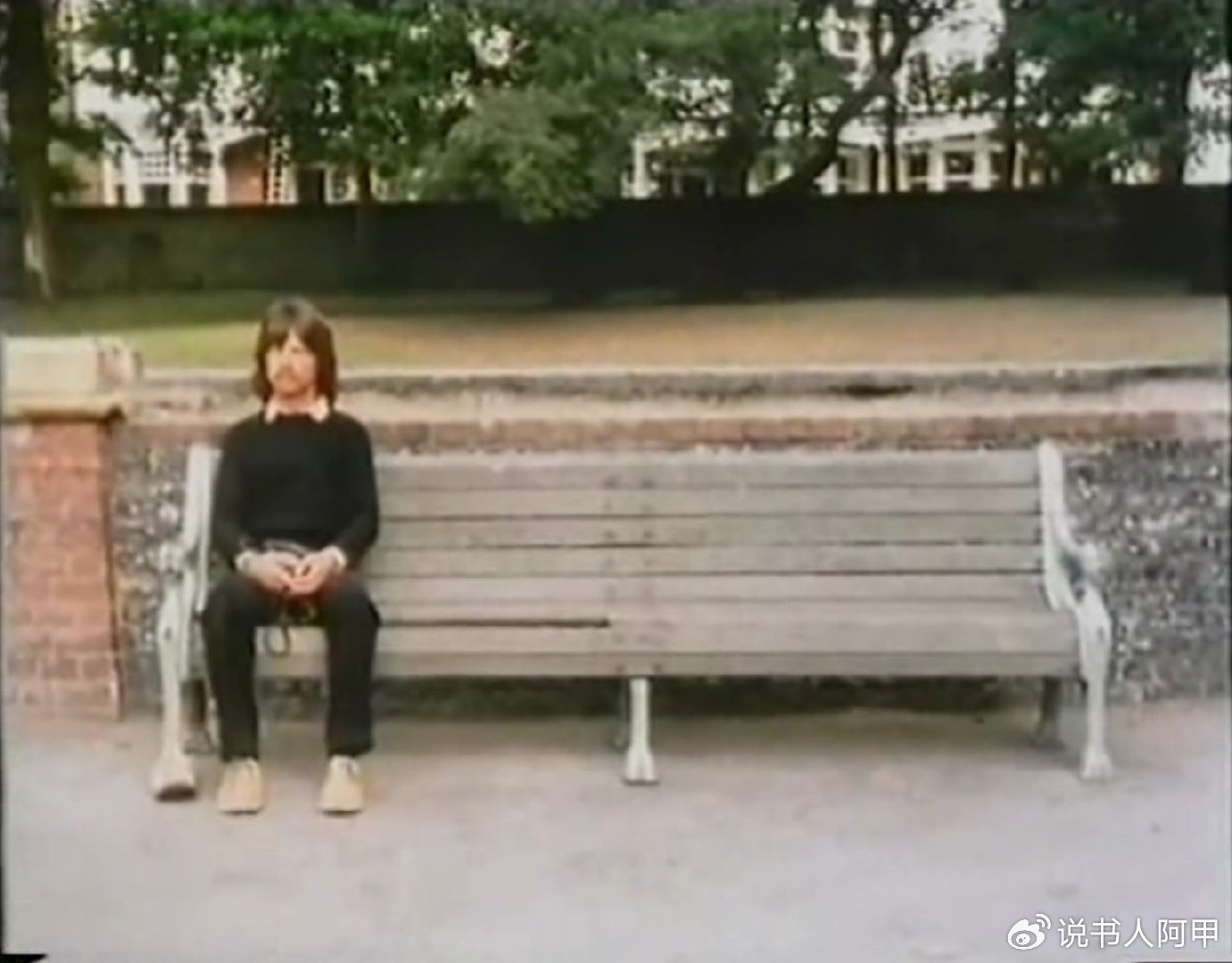
Imagine this scene: a seventeen or eighteen-year-old boy, with the physique of a professional football player, but with the long hair of an art student and a slovenly hippie look; he’s walking a small, obviously not-so-expensive dog in the park; the somewhat dirty mongrel is very active, running off to play with other dogs as soon as it’s let go, completely unconcerned about how expensive they are; while the dogs are happily and uninhibitedly mingling together, this boy is busy apologizing to the other well-dressed dog owners for his dog’s rude overstepping of boundaries… This is a rather embarrassing yet memorable experience that Anthony Browne once had.
In 1963, seventeen-year-old Anthony entered art school. He skipped a grade in primary school and completed his pre-university course a year early, so he was generally two years younger than his classmates when he entered university. He was already a key player for the Old Broadway rugby club, but his fashion sense leaned towards the then-popular hippie style. He didn’t own a dog himself, but for a period he had to walk his mother’s dog every day. Walking dogs in the park, acting as a temporary dog owner, allowed him to observe things he hadn’t noticed before: the British were quite particular about the clothing of the person walking the dog and the breed of the dog. There was no hierarchy among the dogs, but a peculiar barrier existed between people; often the dogs were happily gathered together, but people didn’t interact at all!
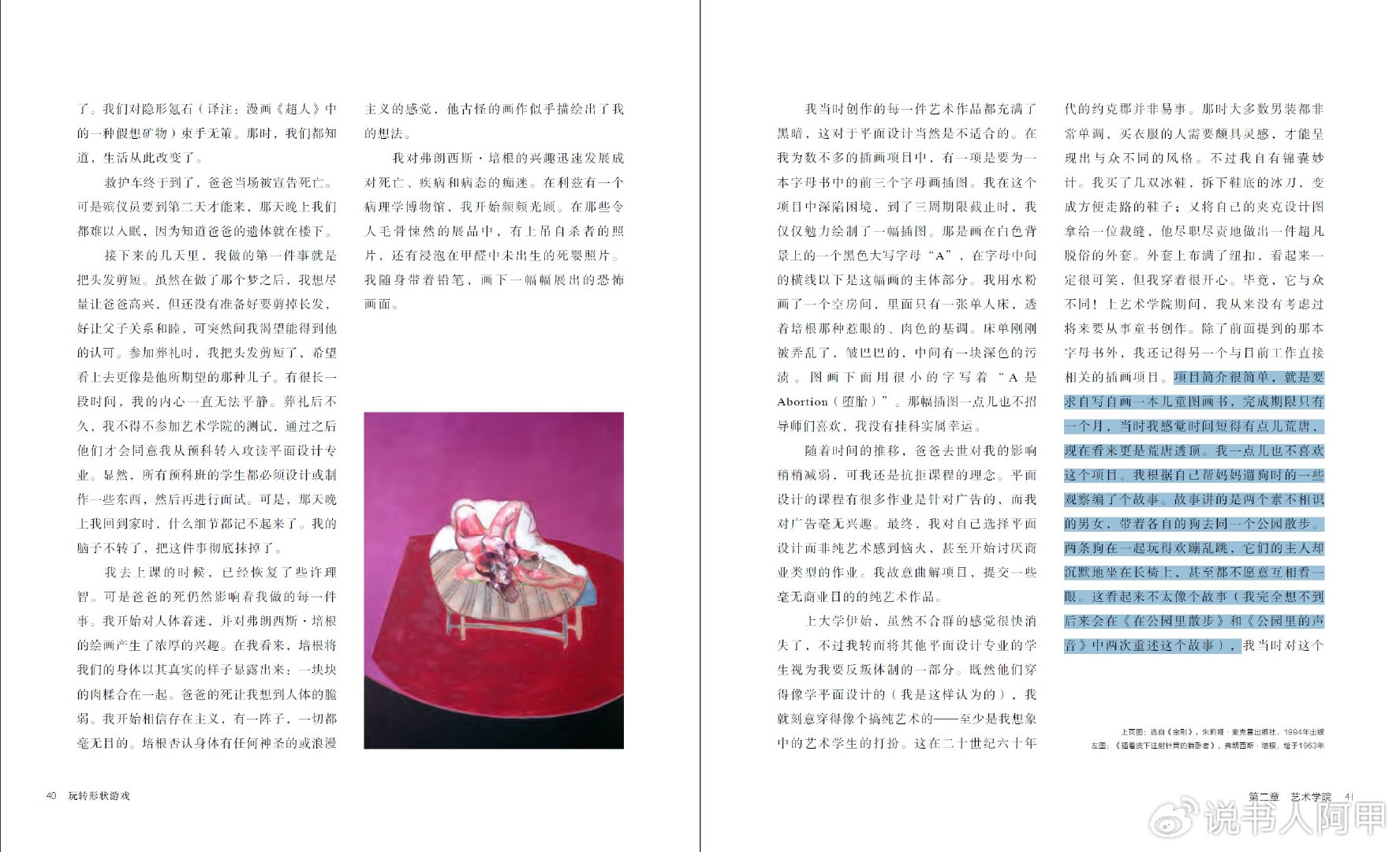
At the art academy, there happened to be an assignment, or rather a course project, requiring them to create a children’s picture book within a month. Anthony had no interest in picture books at the time, but to submit the assignment, he turned his observation into a story.““It tells the story of a man and a woman who are complete strangers, each taking their dog for a walk in the same park. The two dogs play happily together, while their owners sit silently on a bench, not even willing to look at each other.””(Quoted from his autobiography, *Playing with Shapes*, hereinafter the same) This was the first time he told this story with both text and illustrations. Because he was deeply troubled by his father’s death at the time, and also fascinated by the decadent and misanthropic style of the painter Francis Bacon, he…““The dog drawn looks like a ferocious, giant-eyed monster, which would scare even the bravest child.””
Although his initial narratives were far from being true picture books, they were crucial for this growing young man, as he was attempting to re-examine humanity from a different perspective. For example, from a canine point of view, are human behaviors more “uncivilized,” or at least a kind of “confused behavior showcase”? Anthony Browne’s graduation project at art school was “Man is an Animal,” a perspective that continued into his later picture book creations. His depictions of gorillas seem more human, while in masterpieces like *The Zoo* (a 1993 Greenaway Medal winner), it’s difficult to clearly distinguish the boundaries between animals and humans. As he grew older and gained more experience, Anthony’s thinking matured and became richer, prompting him to express it again and again. Of course, he later became more adept at using the “shape play” of picture books.
Second retelling: The real picture book
In 1977, 31-year-old Anthony told the story for the second time with text and illustrations. The reason was that his first picture book, “Through the Magic Mirror,” in 1976 was refreshing and proved that he was capable of establishing himself in this new field. So he decided to create a real picture book, a story that is logically coherent from beginning to end.
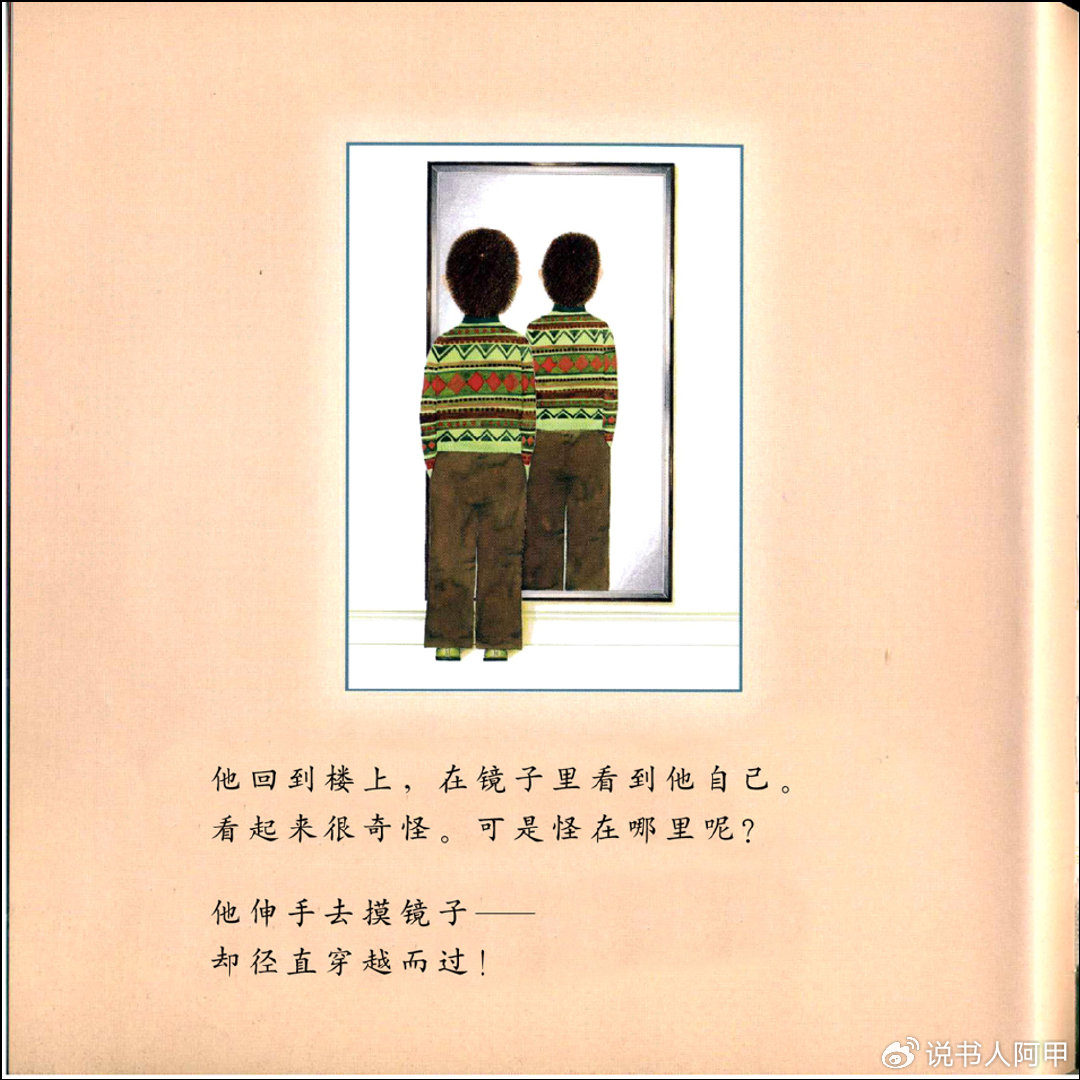
Strictly speaking, *Through the Magic Mirror* can only be considered a practice piece. The entire book consists of a series of surrealistic images, bearing a distinct Magritte style. Initially, they resembled scattered, exquisite postcards. Thanks to the mentor-like editor Julia McCrae, who suggested that the boy in the book, on a boring afternoon, travels through the magic mirror, completing a walk beyond time and space. The “postcards” were successfully strung together, and the incredible images sparked the imagination, largely presenting a romantic and unrestrained imaginative world of children trying to transcend the mundane daily life.
But truly engaging picture books need to return to the story itself. So, when deciding to work on his second book, Anthony naturally thought of the dog-walking project he did at art school. When he submitted his pencil sketches of this idea to the editor for discussion, Julia once again offered a wonderful suggestion: since the book is aimed at young readers, why not add children’s characters to the story? —Think about it carefully, wouldn’t the story’s layers of meaning suddenly become much richer when two children are involved? And, of course, child readers want to see “themselves” in the story, right?
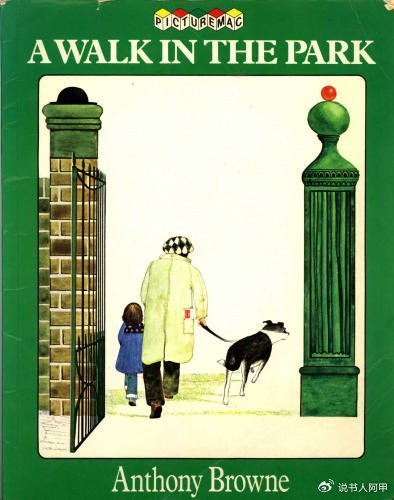
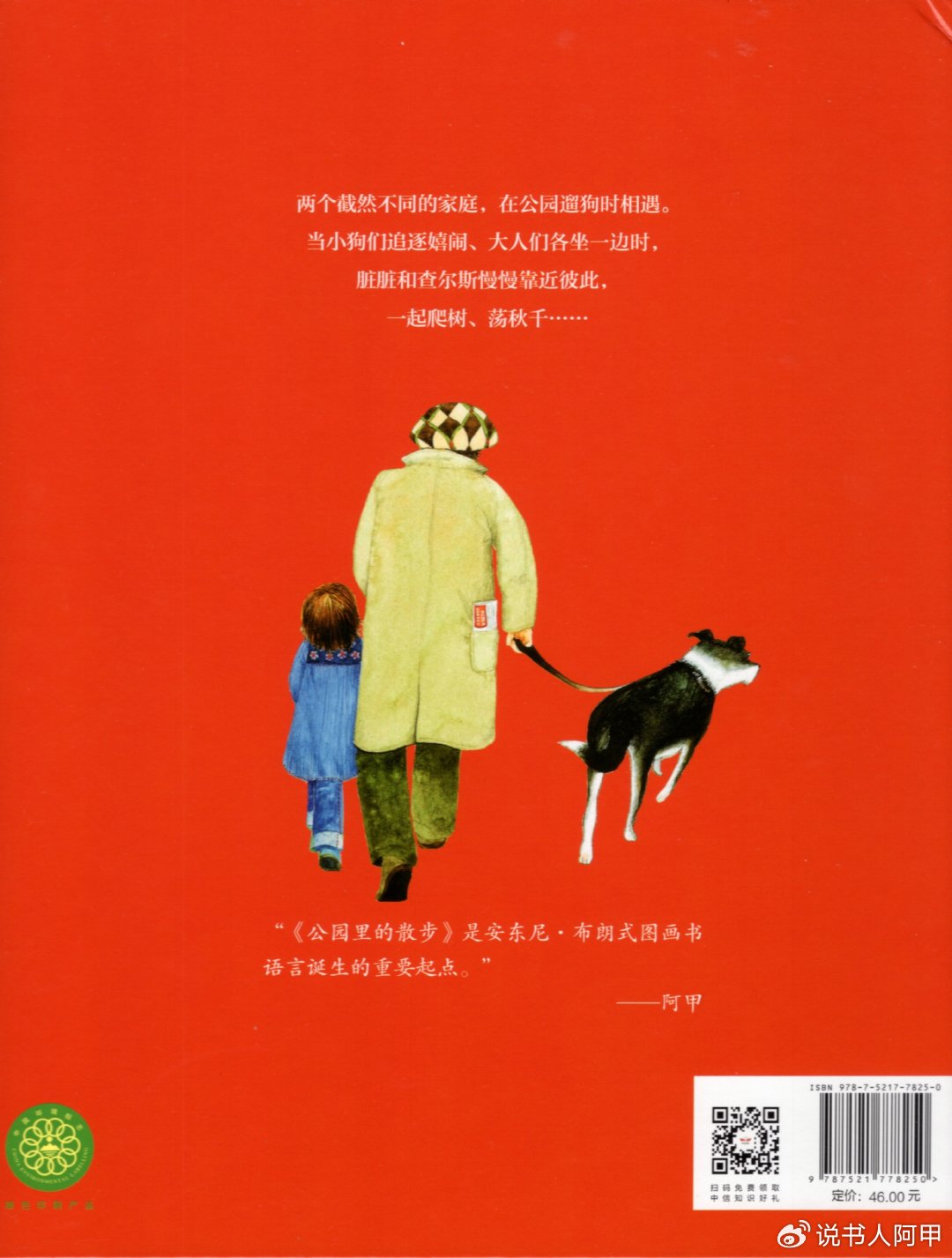
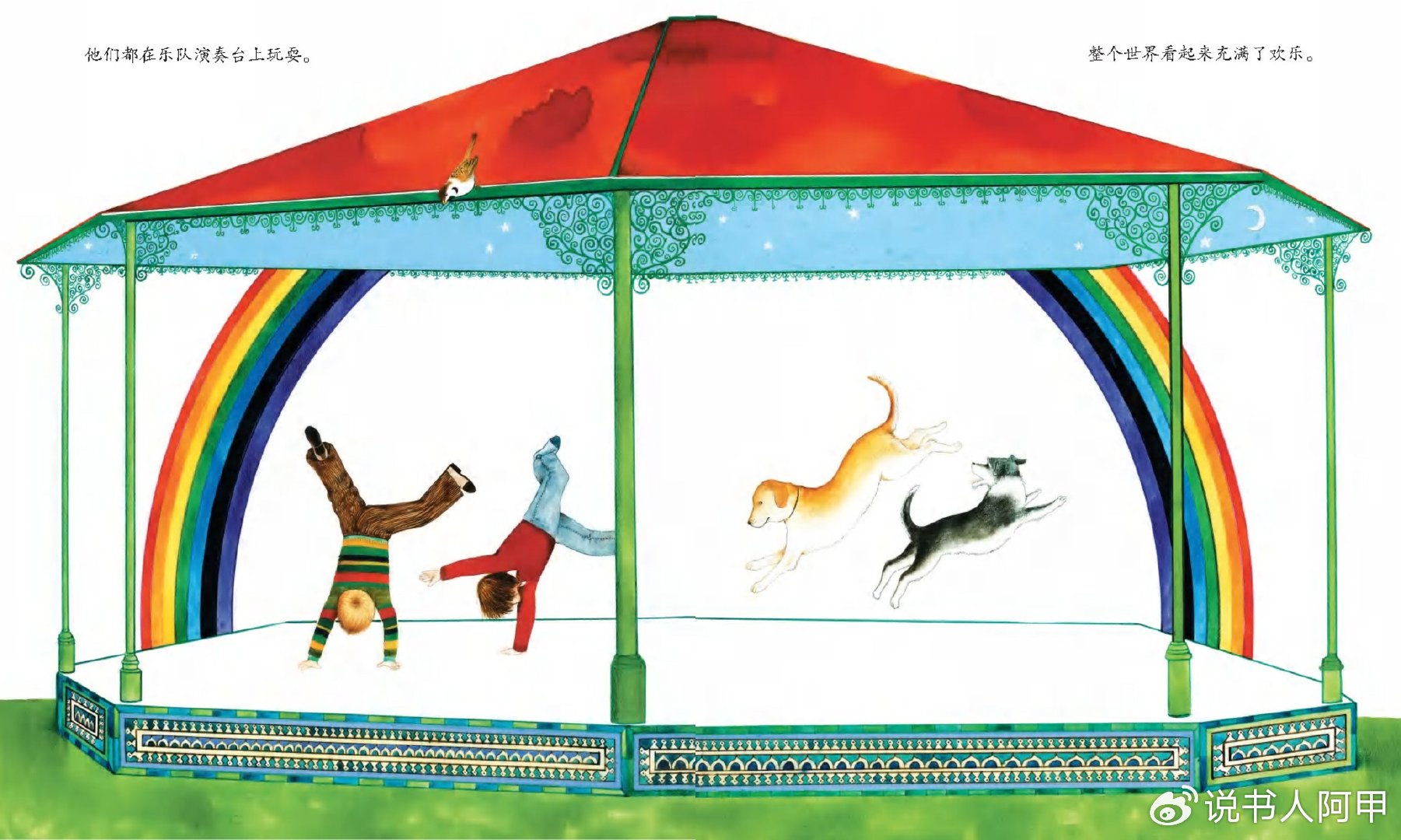
What we are reading now is the 1977 version of the story, which is quite complete in its structure: a father and daughter go to the park to walk their dogs and encounter a mother and son who are also walking their dogs; the two dogs almost immediately become friends, but the two adults do not interact or communicate at all, which continues the original story concept; but surprisingly, the two children, inspired and influenced by the dogs, gradually begin to interact; as the children become close with the dogs, the boy and girl become good friends, and in the end, the girl keeps the flowers the boy gave her and keeps them in a vase, as a testament to their friendship. It is a warm and hopeful story. Although the adults are still at the level of “a collection of baffling behaviors,” the children have made a leap forward, showing us the possibility and joy of breaking down barriers. This can perhaps be considered a kind of “power of childhood.”
Now in his thirties, Anthony has added many elements to the book, incorporating his insights from life’s ups and downs, while also attempting to explore a path to reconnect with childhood. The former relies more on realism, while the latter playfully revisits surrealism. We can try to examine this book from these two perspectives.
Realism and Slight Satire
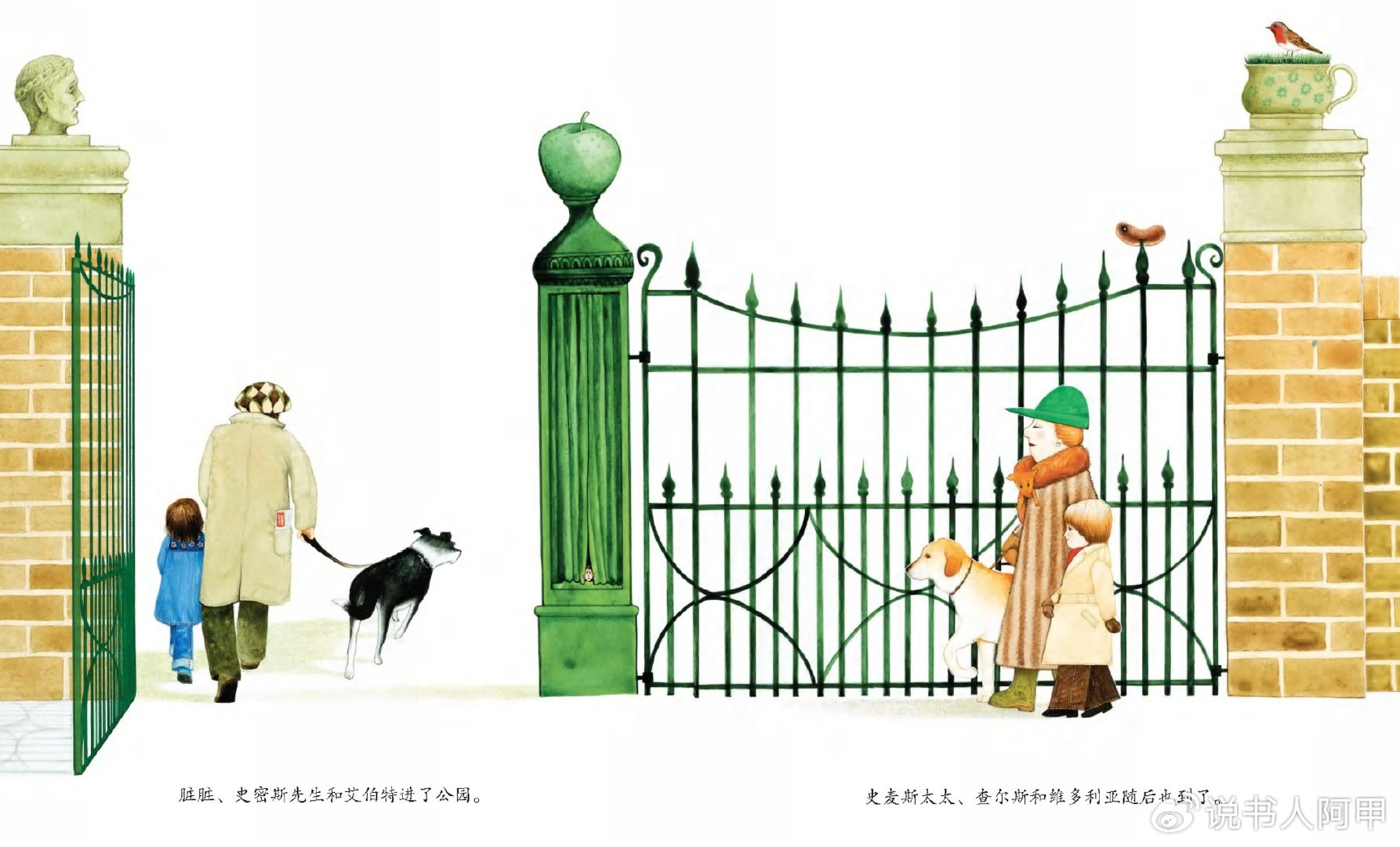
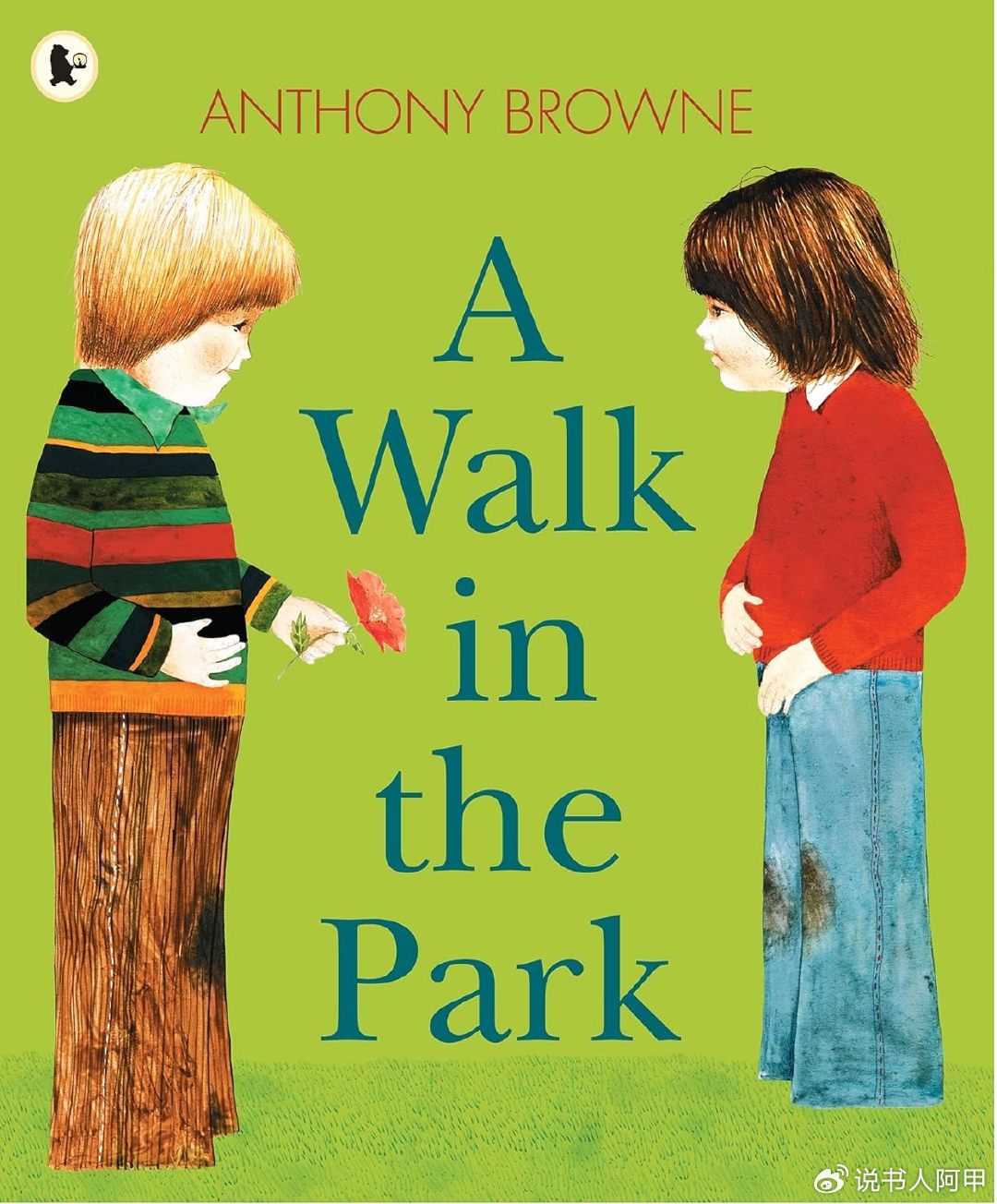
From a realistic perspective, the father and daughter in the book—Mr. Smith and his daughter Dirty—clearly come from a working-class family with limited economic means, as they live in a relatively simple, low-rise townhouse in a neighborhood filled with high-rise buildings; while the mother and son—Mrs. Smyth and her son Charles—live in a neighborhood of sparsely populated detached houses. This class difference is also evident in their clothing and the breeds of their two dogs (a mixed-breed and a Labrador). However, the moment the two children take off their coats, this difference becomes irrelevant—a particularly symbolic gesture, as Anthony himself commented:““This is a gesture, symbolizing that they are shedding the armor that signifies social status, or taking off the robes that symbolize opposition.”
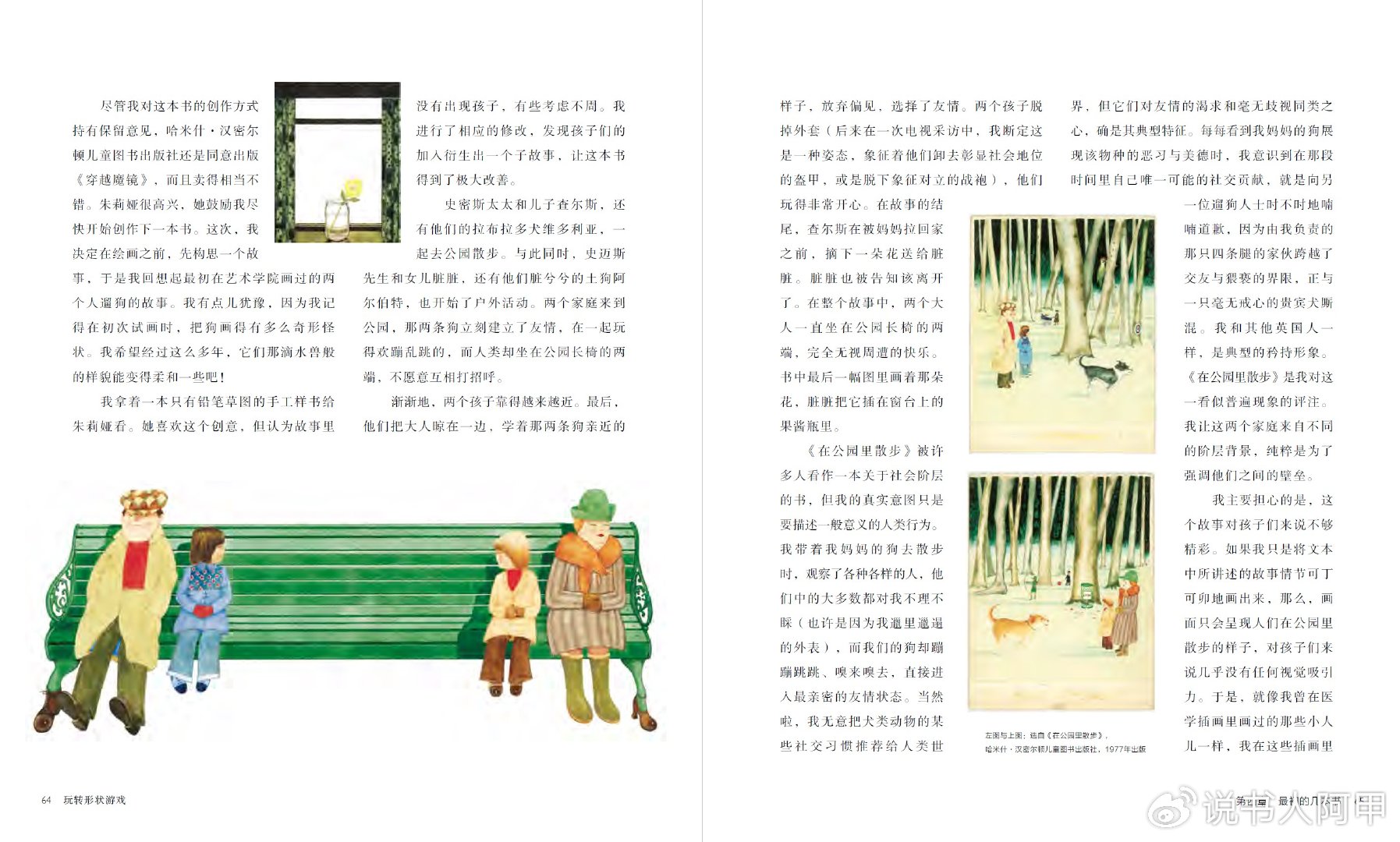
In naming the characters in the story, Anthony employed the characteristic British dry humor with a touch of irony. The two dogs, a male and a female, are named Albert and Victoria, after the beloved Queen Victoria and her husband. This royal couple was deeply in love; after her husband’s death, she renamed an arts and crafts museum the “Victoria & Albert Museum,” further enhancing the couple’s international fame. Interestingly, in Britain, naming a pair of dogs after such animals is not offensive; rather, it evokes a sense of familiarity among readers of all ages. In contrast, the names of the two adults are somewhat unusual: Mr. Smith and Mrs. Smythe. While they share the same name, the latter is a rarer variation of the former, carrying a deliberate and affected distinction, while the former derives from “smith.” This likely subtly mocks Mrs. Smythe’s affected airs.
However, what’s most unusual are the children’s names. The boy, Charles, is a name favored by the royal family; the current Charles III (formerly Prince Charles) is two years younger than Anthony Browne. The girl’s name, “Smudge,” is rarely used in English, especially for girls. Its literal meaning is “stain, smudge,” making it seem more like a strange nickname. Charles later remarked in *Sounds in the Park* (1998) that “the name is a little funny.” However, a closer examination reveals that the word also means “to blur or smear,” so the author may have intended to use the name to metaphorically imply “erasing differences.”
Surrealist elements
Because of its realistic style and satirical humor, this work was initially categorized as a rather unique picture book after its publication, often used to discuss topics related to social class with young readers. However, Anthony’s original intention was simply to “describe human behavior in a general sense.” He knew that a purely realistic presentation might bore young readers, so he couldn’t resist adding many seemingly strange elements, which became a hallmark of his later picture books.
For example, when the two families set off for the park, various strange shapes and figures were hidden on the brick walls, in the windowpanes, on the chimneys, and in the bushes; when they arrived at the park entrance, strange objects also appeared on the gateposts (including inside the gateposts) and on the iron railings; the most detailed scenes were the two scenes in the park: a woman was pushing a stroller with a dog in it, a man was walking a tomato, Robin Hood was practicing archery against a tree, a woodpecker had its beak stuck in a tree trunk and couldn’t pull it out, a man in a top hat was walking a pig, Tarzan was swinging on a book, and Santa Claus was kicking a red ball!
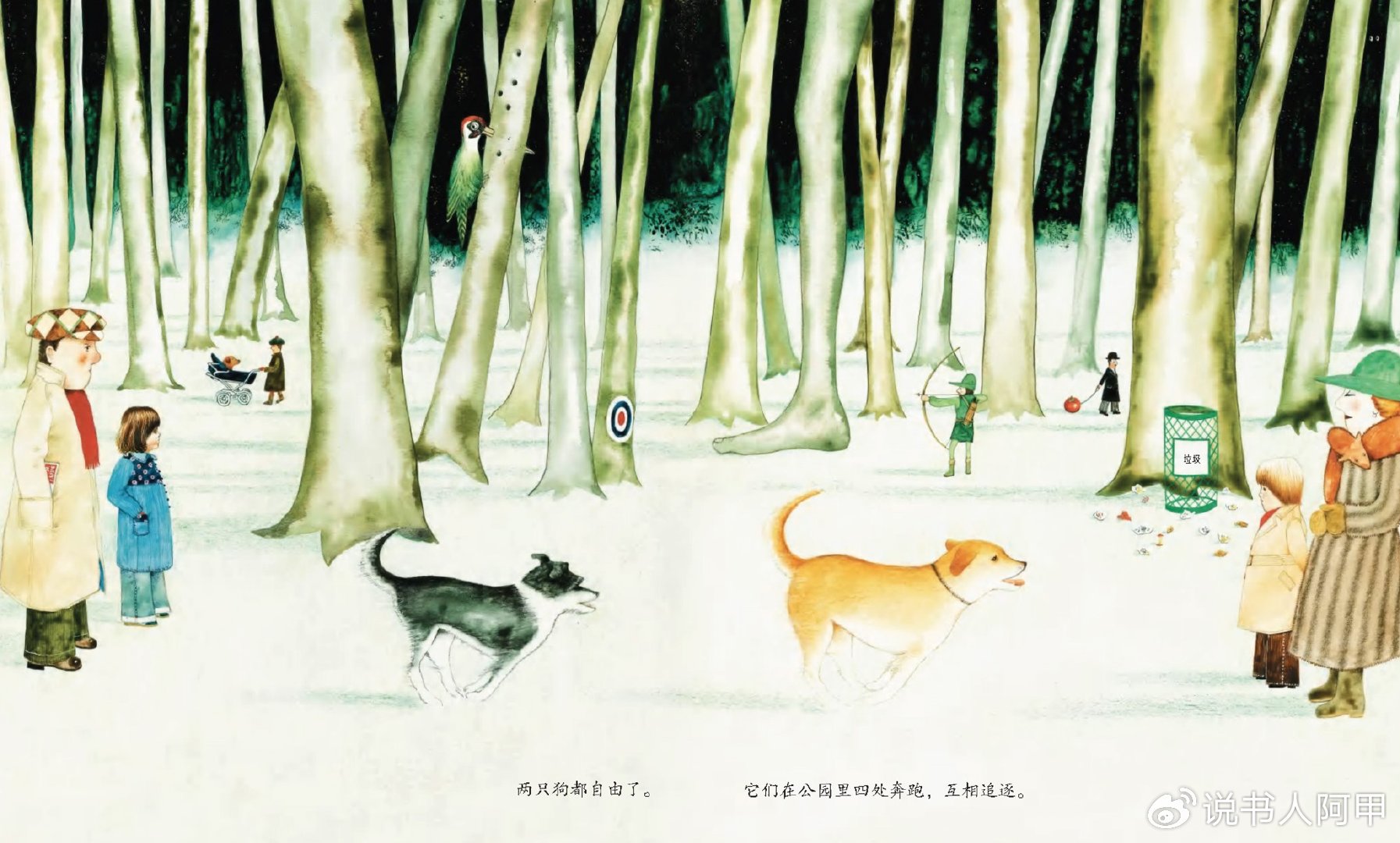
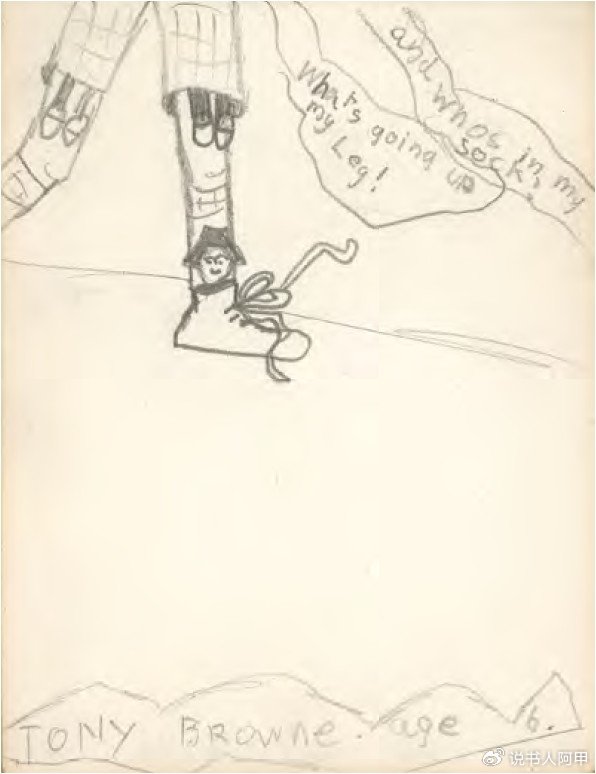
Frankly, these details are largely unrelated to the main storyline; Anthony added them simply to amuse himself and because he thought children would enjoy them. However, these details do indeed captivate young readers, and they also stem from Anthony’s innate, almost untrained, sense of humor from a young age. In one of his surviving doodles from when he was six, he drew a pair of legs, but instead of legs, he depicted two pirates hiding in the shoes, climbing up the “mast” (legs). This self-amusing enjoyment of adding details to drawings extended to his early career drawing anatomical diagrams for medical treatises. Because this interest indeed contradicted the spirit of science, he was forced to abandon that lucrative profession.
The question of meaning
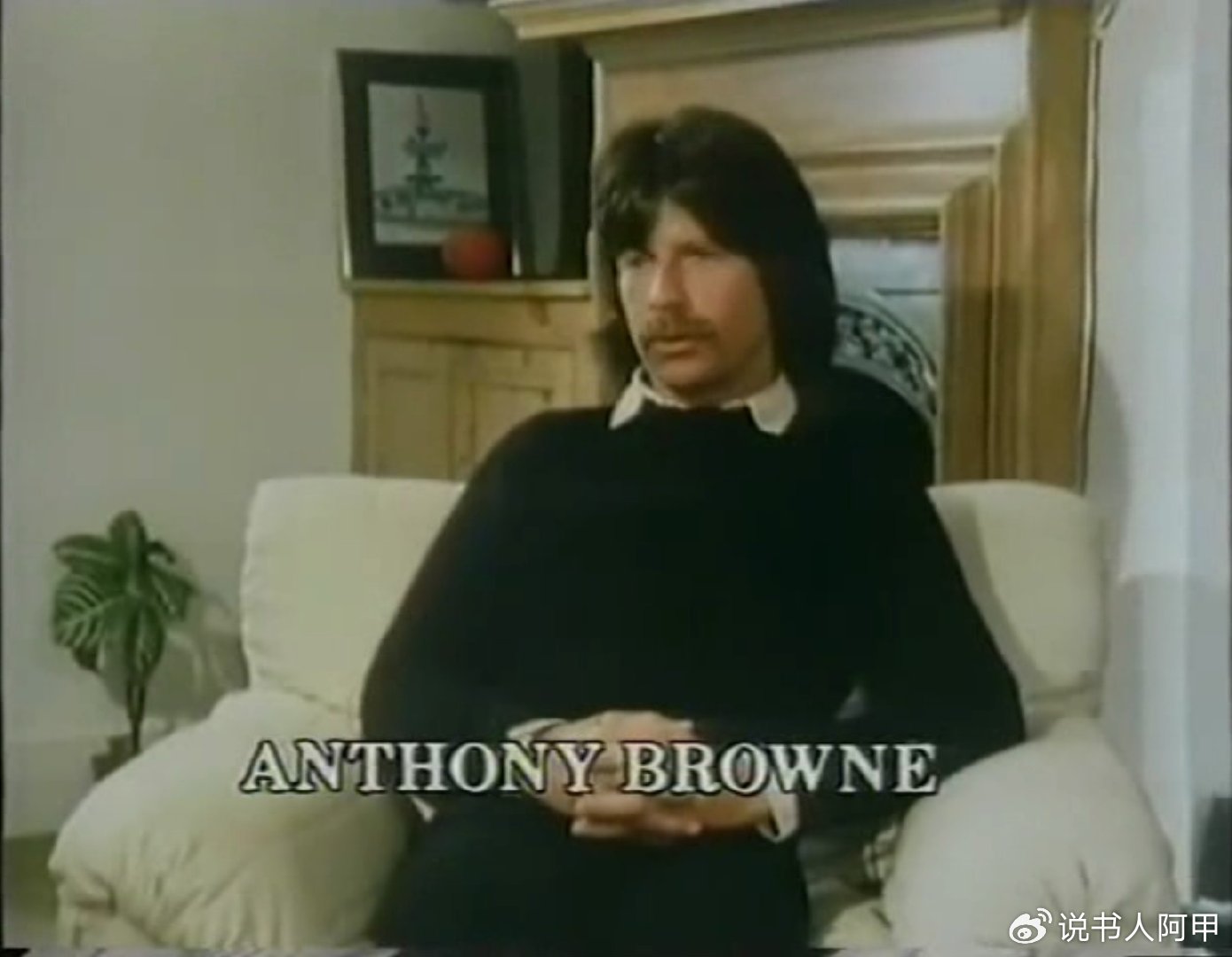
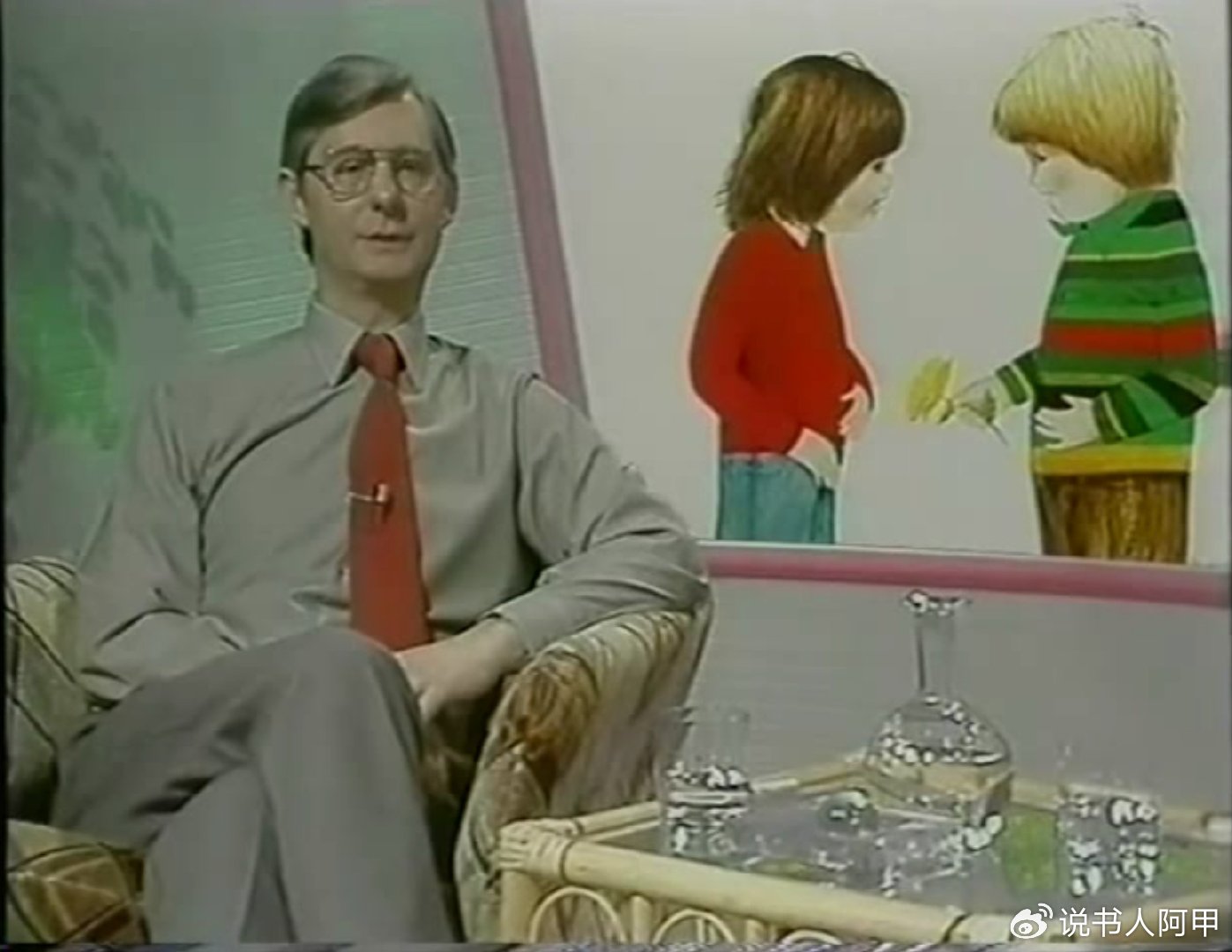
The childlike fun, combined with his fascination with surrealism, made *A Walk in the Park* an instant hit with readers of all ages upon publication. At the time, Aiden Chambers (winner of the 2002 Hans Christian Andersen Award for Best Author), a renowned British children’s author and reading promoter, was hosting a reading program on BBC Two. Chambers dedicated a special episode to the book and conducted an interview with the author. He asked Anthony why he included those hidden details in the illustrations. Anthony, embarrassed to answer “just to make myself happy” or “to make the illustrations look more interesting,” racked his brains and gave a more witty answer. I said…Those hidden details reflect how children see the world, because they see things for the first time. Their highly coordinated imaginations make ordinary things seem fresh and strange.”“And years later, he found this answer quite reasonable, because…”““This is exactly what surrealists want to do: return to the wonder a child feels when seeing the world for the first time.””
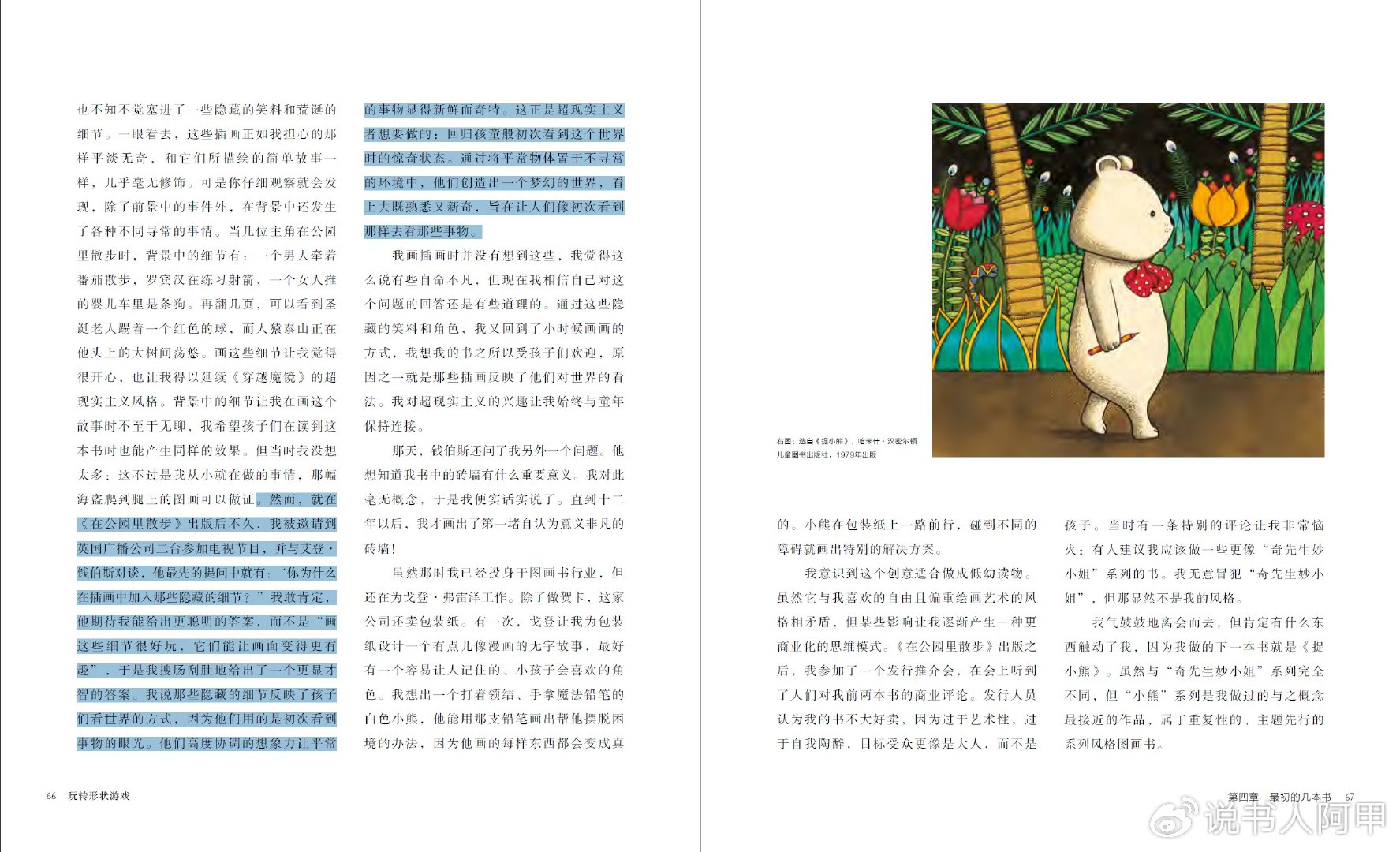
However, another question Chambers posed at the time, “What is the significance of the brick wall in the book?”—Anthony couldn’t immediately come up with an answer. This was likely because his work was largely unconscious; it wasn’t until 12 years later, in *The Tunnel* (1989), that he consciously depicted the brick wall and wallpaper to represent the character and preferences of the brother and sister in the book. In other words, Chambers’ question prompted Anthony to think more deeply, continuing to question himself: could the details in the illustrations possibly hold a more profound meaning?
The Birth of a Unique Picture Book Language
It was this constant questioning and continuous exploration that ultimately made Anthony Browne a master of picture books. I once wrote a long article about it.The Birth of Anthony Browne’s Picture Book LanguageThis section introduces the formation process of his unique illustrated narrative style. Simply put, *A Walk in the Park* was a crucial starting point. In *Look What I Have*, published in 1980, the “hidden details,” originally used primarily to lighten the mood, gradually became integrated into the main body of the story. In *Hansel and Greta*, published in 1981, he was already quite adept at using surrealist shape games to narrate the main plot. And *The Gorilla*, published in 1983, is considered a milestone in the maturity of his picture book language, rightfully earning him his first Greenaway Medal.
But it was precisely this relentless pursuit of self-improvement that led Anthony to a sense of confusion about his creative career after winning the Greenaway Medal for the second time (for *The Zoo*). Perhaps he felt a vague dissatisfaction, yet didn’t know how to continue improving. Then, the story of walking his dog in the park resurfaced in his mind. Perhaps, when we feel confused, we should all go for a walk in the park.
Third retelling: A culmination of all efforts
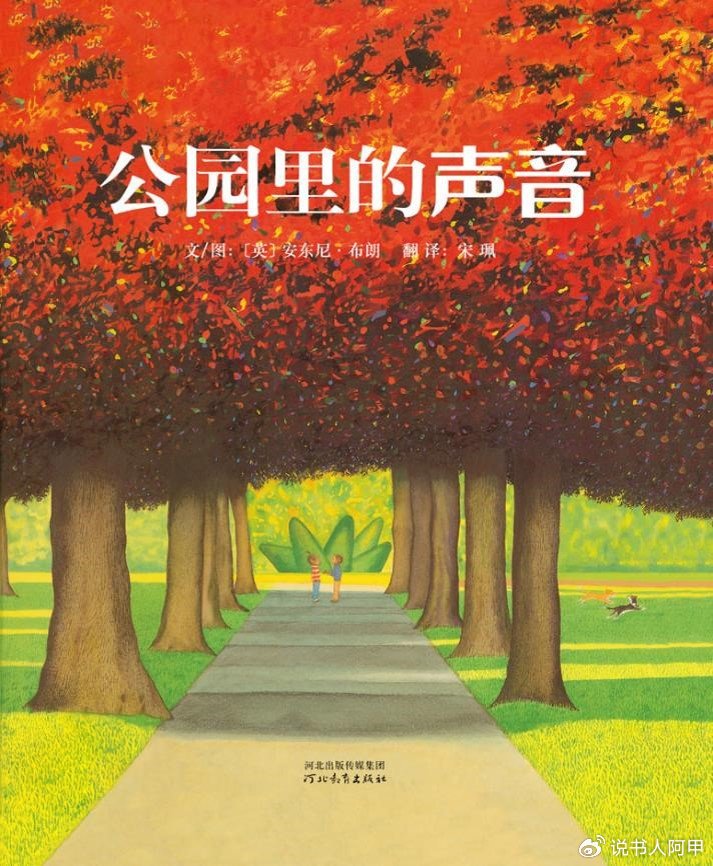
In 1998, Anthony Browne retells the story for the third time with text and illustrations. *Sounds in the Park* can be considered the culmination of Anthony Browne’s picture book language, representing, in my opinion, the pinnacle of his picture book creation. This time, Browne doesn’t change the core of the story, but unlike the third-person narration of *A Walk in the Park*, *Sounds in the Park* uses the first-person narration of the four characters (mother, son, father, and daughter). From the perspective of an omnipotent narrator, all four are “unreliable narrators.” Four “unreliable” textual narratives, paired with correspondingly styled visual narratives, often with significant differences between text and illustration, plus the author’s detached narrative in the cover illustrations, mean that the entire book actually tells nine stories! This provides readers with almost limitless interpretive possibilities.
In 2015, I personally consulted Anthony, who was visiting Beijing, about the source of the narrative inspiration for *The Sounds in the Park*. He said it was mainly influenced by the famous Japanese director Akira Kurosawa’s film *Rashomon*. In fact, this film is adapted from Ryunosuke Akutagawa’s short stories *Rashomon* and *In a Bamboo Grove*, and similar narratives can be found in William Faulkner’s *The Sound and the Fury*. In other words, *The Sounds in the Park* has a higher pursuit of literary appeal.
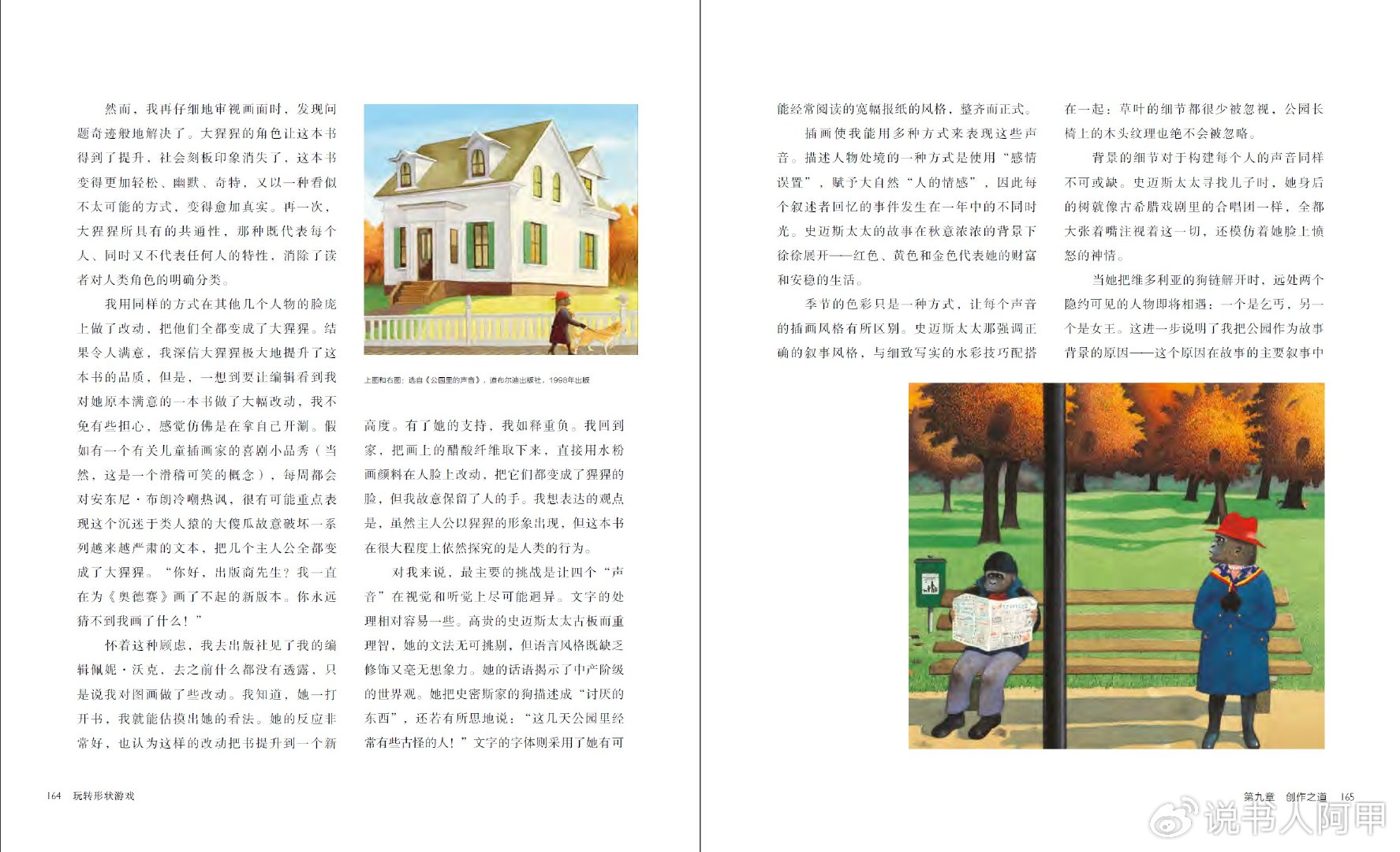
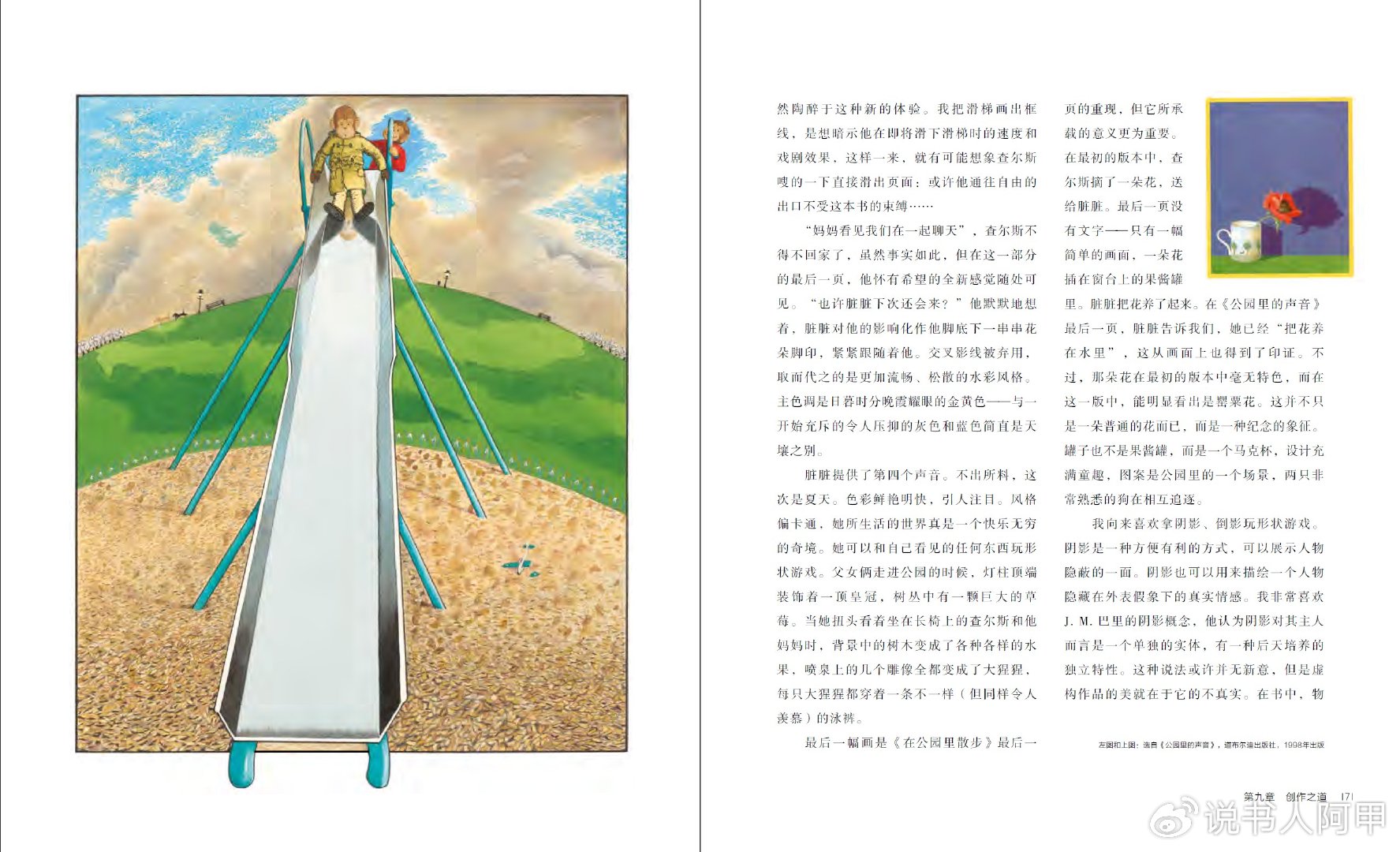
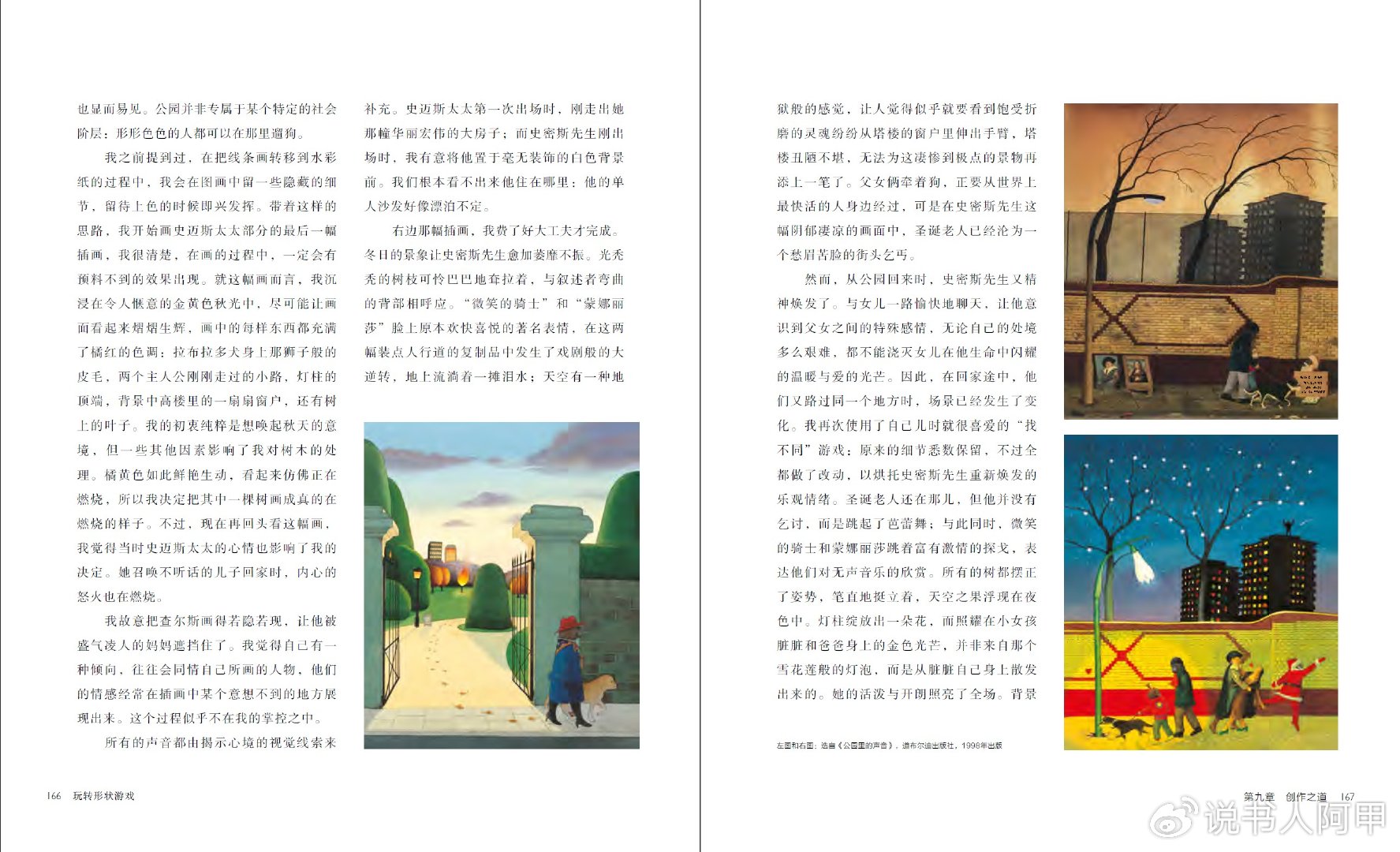
A careful comparison of “A Walk in the Park” and “Sounds in the Park” will reveal many more interesting similarities and differences. For example, the original cover image of the former, depicting a father and daughter walking their dog into a park, is similar to the image on the first page of the latter’s “The Fourth Voice.” The former is realistic yet contains hidden details, while the latter perfectly matches the girl’s quirky and cheerful cartoon style. For example, the former features Santa Claus playing football in the park, while Santa Claus also appears in the latter’s “The Second Voice,” but is integrated into the story, successfully reflecting the feelings of the unemployed blue-collar father. For example, the scene of two dogs chasing each other in the park; in “A Walk in the Park,” there is an image where the tree trunk is not fully obscured, with Victoria’s front half visible on the right side of the trunk and Albert’s hind half on the left, making them appear as if they are combined into one dog. “The Sounds in the Park” continues this idea, using a lamppost to divide the image into two parts in “The Third Voice,” with the girl’s part under a clear blue sky and the boy’s part under a gloomy sky. In the center of the image, Albert’s front half is visible on the right side of the lamppost, and Victoria’s hind half is visible on the left side.
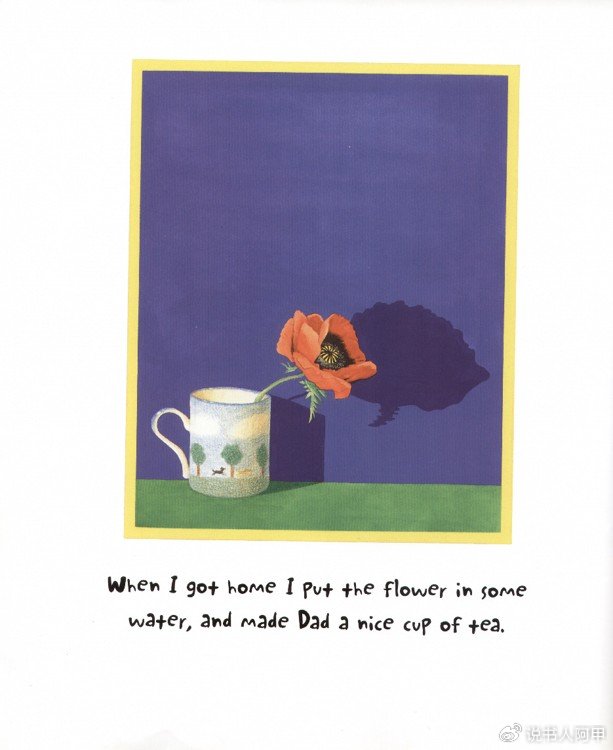
In short, *Sounds in the Park* is an upgraded version after years of rethinking. To emphasize that the story is merely an observation and reflection on “human behavior in a general sense,” Anthony Browne deliberately drew all the human characters as gorillas (even Santa Claus wasn’t spared). Furthermore, he significantly enhanced the emotional intensity of the story. The flower Charles gave Dirty was initially just an ordinary flower, kept in a regular jam jar after being taken back to his apartment. In the upgraded version, that flower becomes a vibrant, fiery poppy, kept in a commemorative mug, its shadow cast on the wall resembling a conversation bubble, suggesting that this friendship has more to offer, something to look forward to…
The significance of two versions coexisting
Logically, since this story of walking a dog in the park, spanning 35 years, has finally reached its final, upgraded version, shouldn’t the earlier versions become obsolete or obsolete? Quite the opposite. Because the gorilla version of *Sounds in the Park* is gaining increasing popularity, the earlier live-action version of *A Walk in the Park* has actually received more attention. For picture book enthusiasts, these are two stylistically different interpretations of the same story. Comparing their similarities and differences, and experiencing the magic of different narrative methods, can be extremely enjoyable and helps improve one’s appreciation of picture books. At the same time, it also allows one to witness the remarkable growth of a picture book master.
To continuously improve yourself, keep asking questions and exploring. And of course, don’t forget to take regular walks in the park!
Written by A‑Jia on December 5, 2024, by Erhai Lake in Dali.