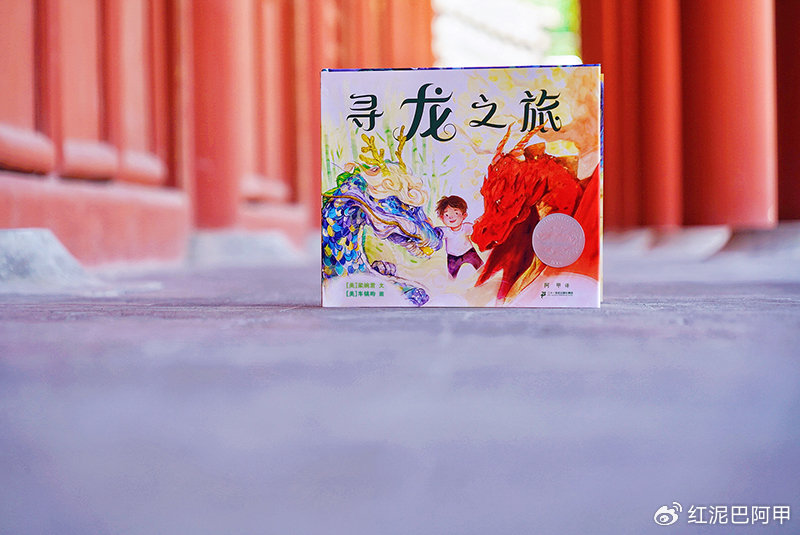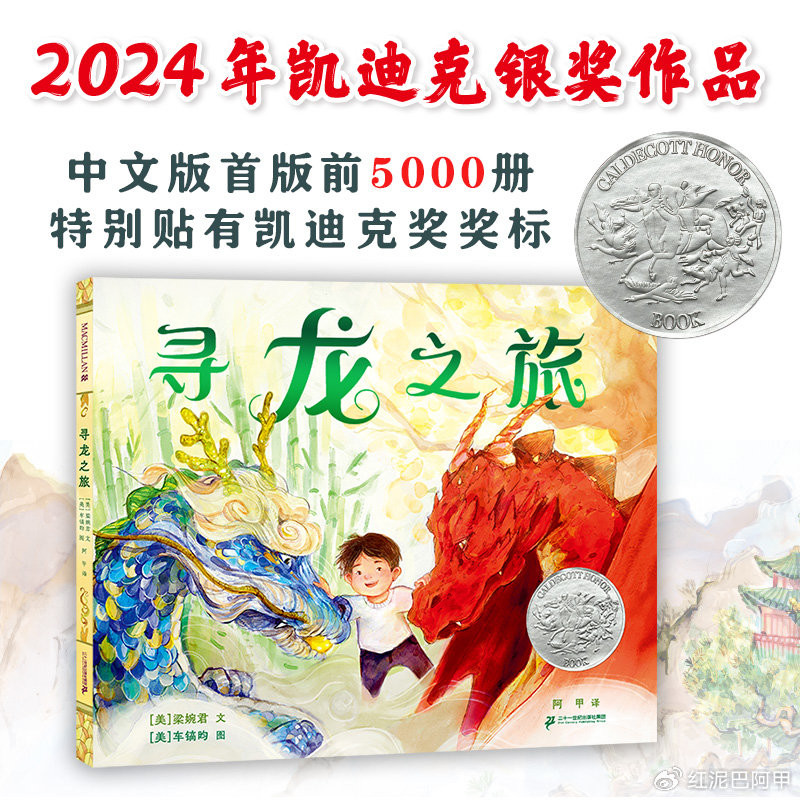
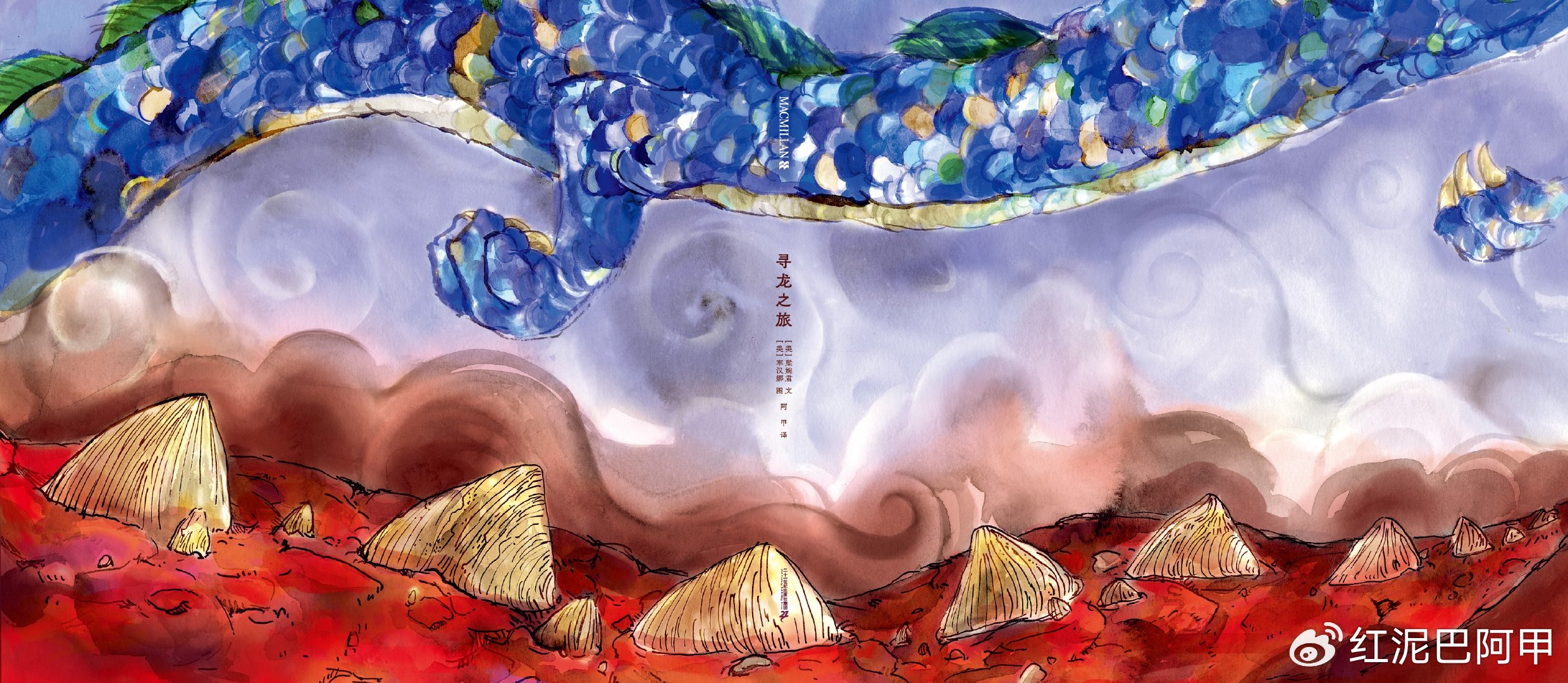
Like many traditional myths and fairy tales, the protagonist begins the story by embarking on a journey to fulfill their destiny. While these quests are often intense, with knights slaying dragons or subduing tigers, ultimately leading to the emergence of a skilled and combative hero. However, the “epic adventure” in “Dragon Quest” begins with a bedtime conversation in a child’s bedroom. The rich palette of warm colors and soft watercolor effects immerse the mother and child in a tranquil and warm atmosphere. The “most precious secret” shared by the mother at this moment offers a sense of security, even if it requires a relentless adventure.
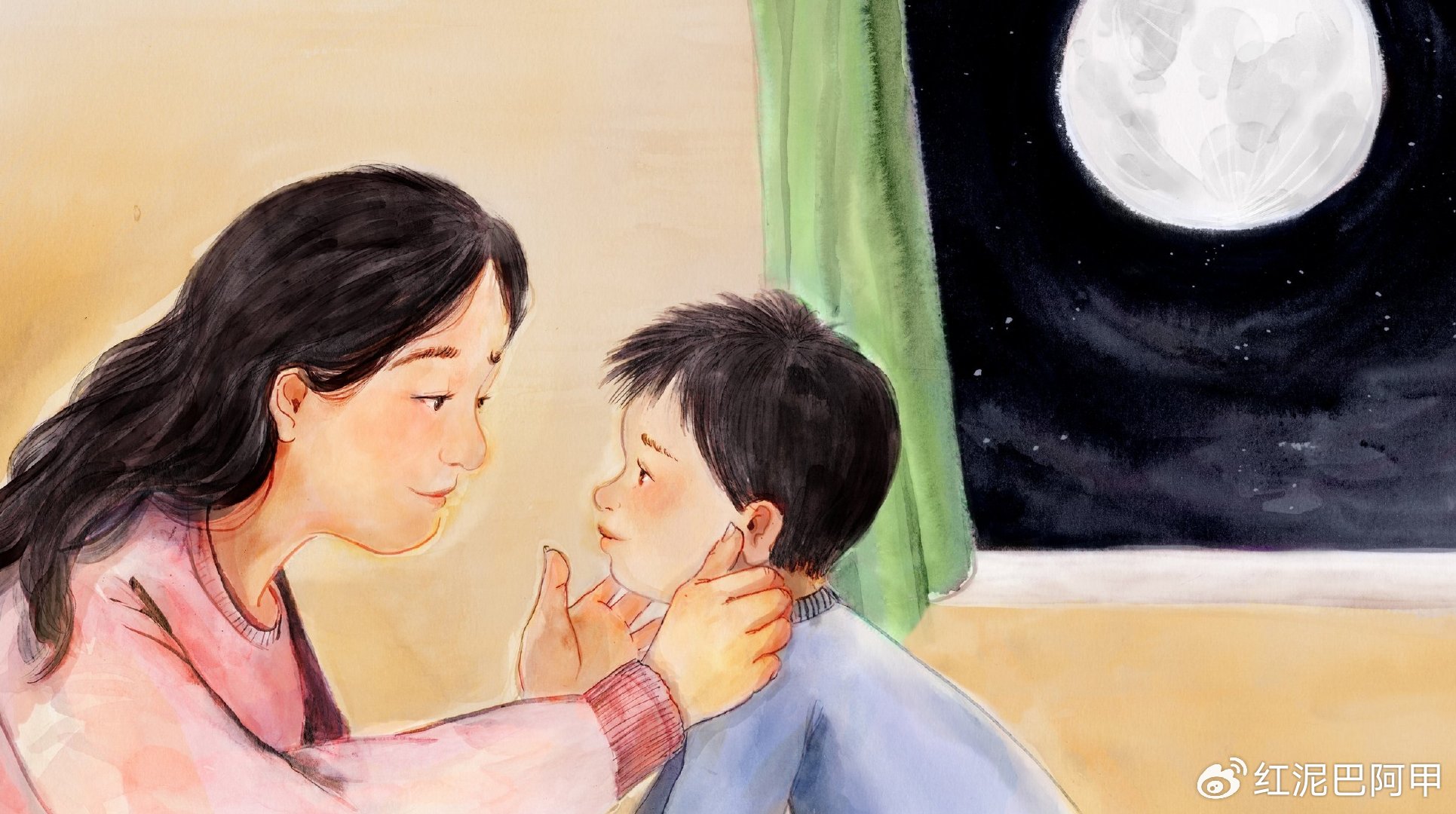
The boy’s (baby’s) mission is not to engage in a conflict or confrontation, to slay monsters, save princesses in distress, or suffer the suffering of the people. Instead, it is to discover the powerful magic within his own heart. His mission is to discover the truth about dragons—what exactly are dragons? And what does dragon have to do with us?
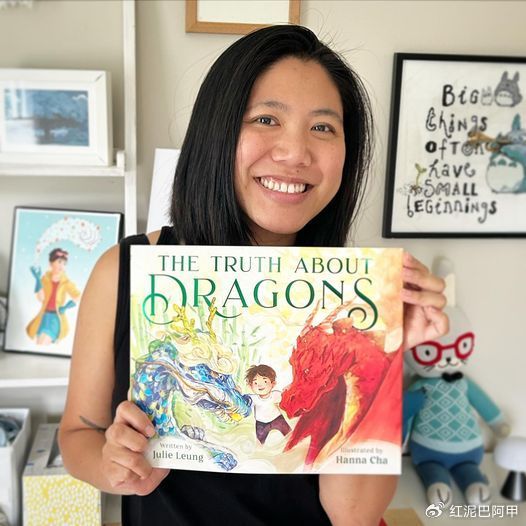
You know, 2024 is the Year of the Dragon in China, and the author, Liang Wanjun, happens to be Chinese. For the Chinese people, we are proud to call ourselves descendants of the dragon. So, what exactly does the dragon mean? However, the author currently lives in the United States, and her two children are of mixed race, born from marriages with Western parents. In traditional Western culture, the dragon is often seen as the embodiment of evil and destruction. So, how can “descendants of the dragon” navigate such a cultural landscape? You see, this is a truly profound question, one that touches upon identity and cultural integration, and touches upon the most fundamental aspect of growth: knowing yourself.
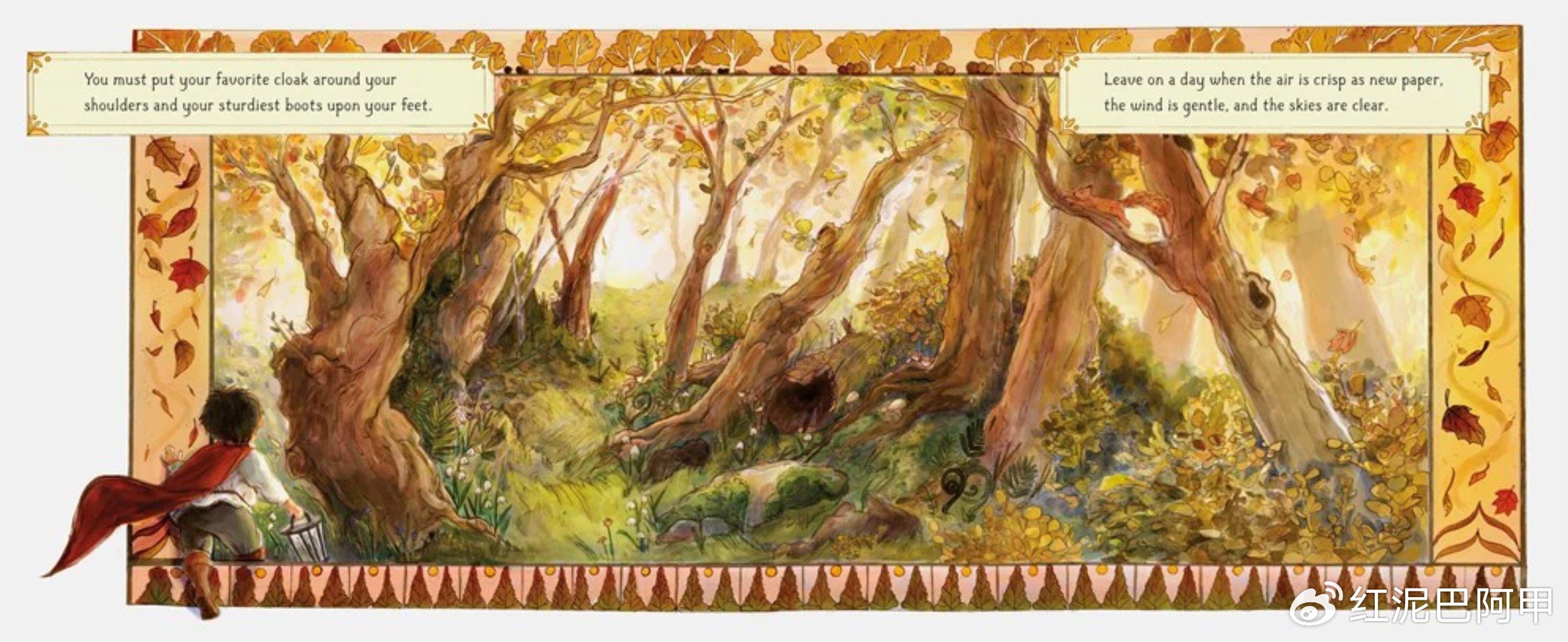
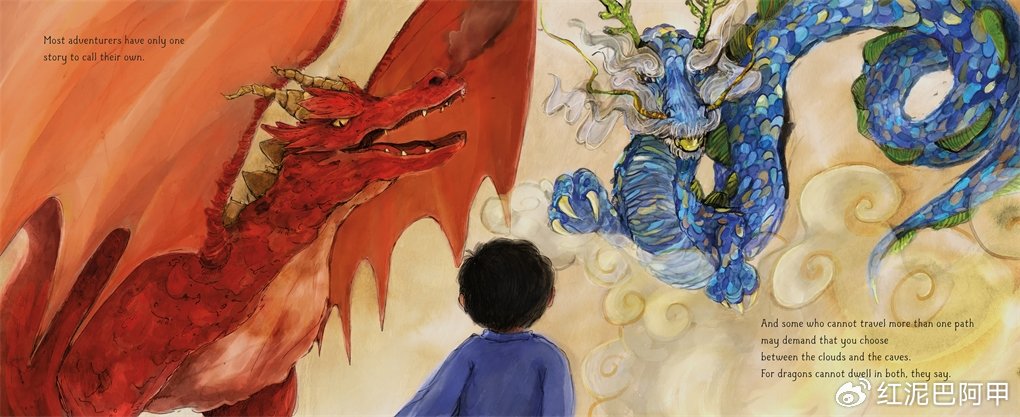
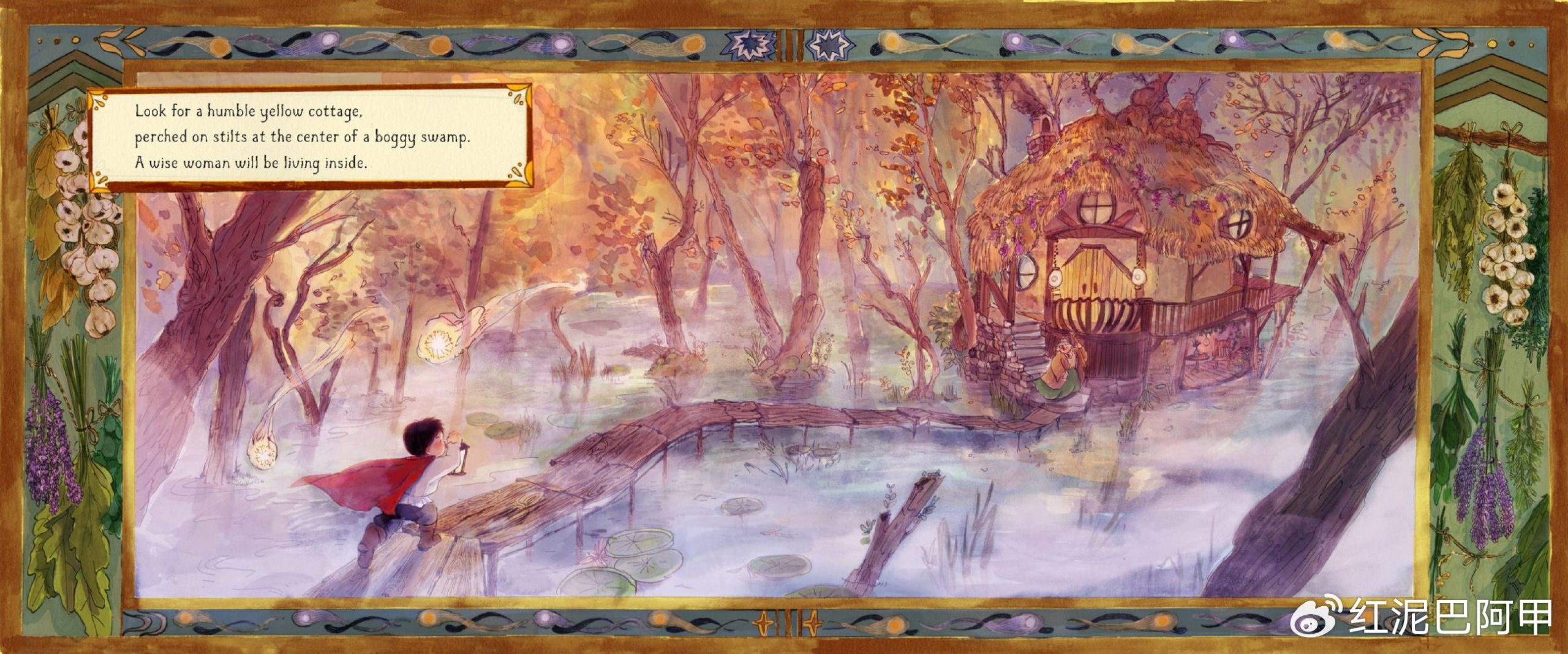
This bedtime legend revolves around a boy who, inspired and encouraged by his mother, embarks on a remarkable journey of self-discovery and understanding the world. In the story, he journeys into two distinct forests, each inhabited by a grandmother, representing his Eastern and Western heritage. Each grandmother presents him with two distinct images of a dragon: the Western dragon, symbolizing strength and bravery, and the Eastern dragon, representing wisdom and tolerance.
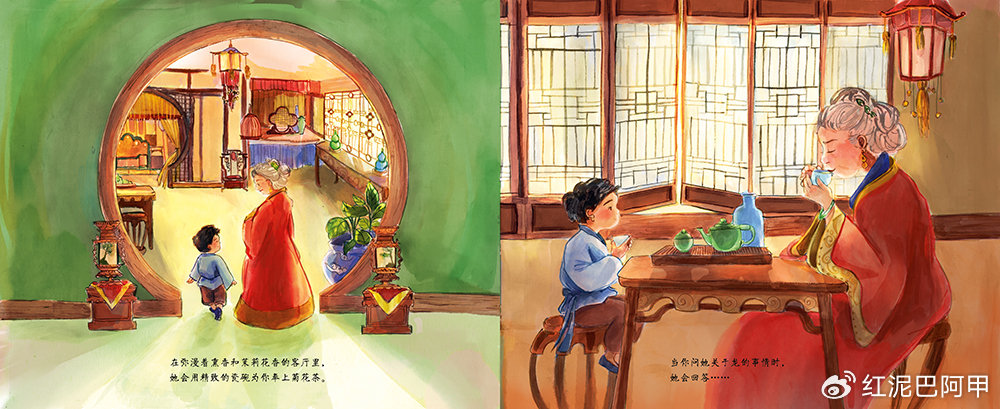
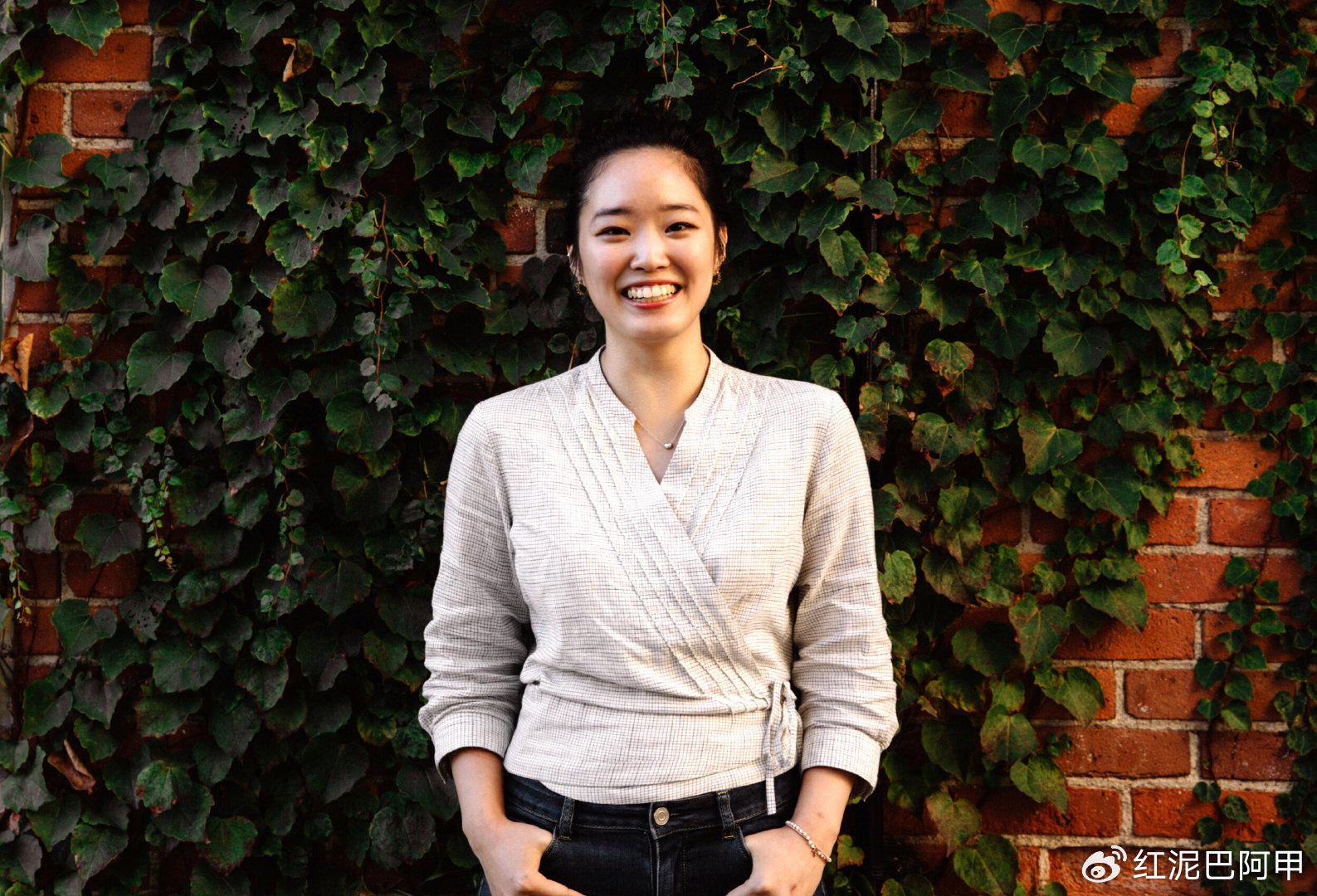
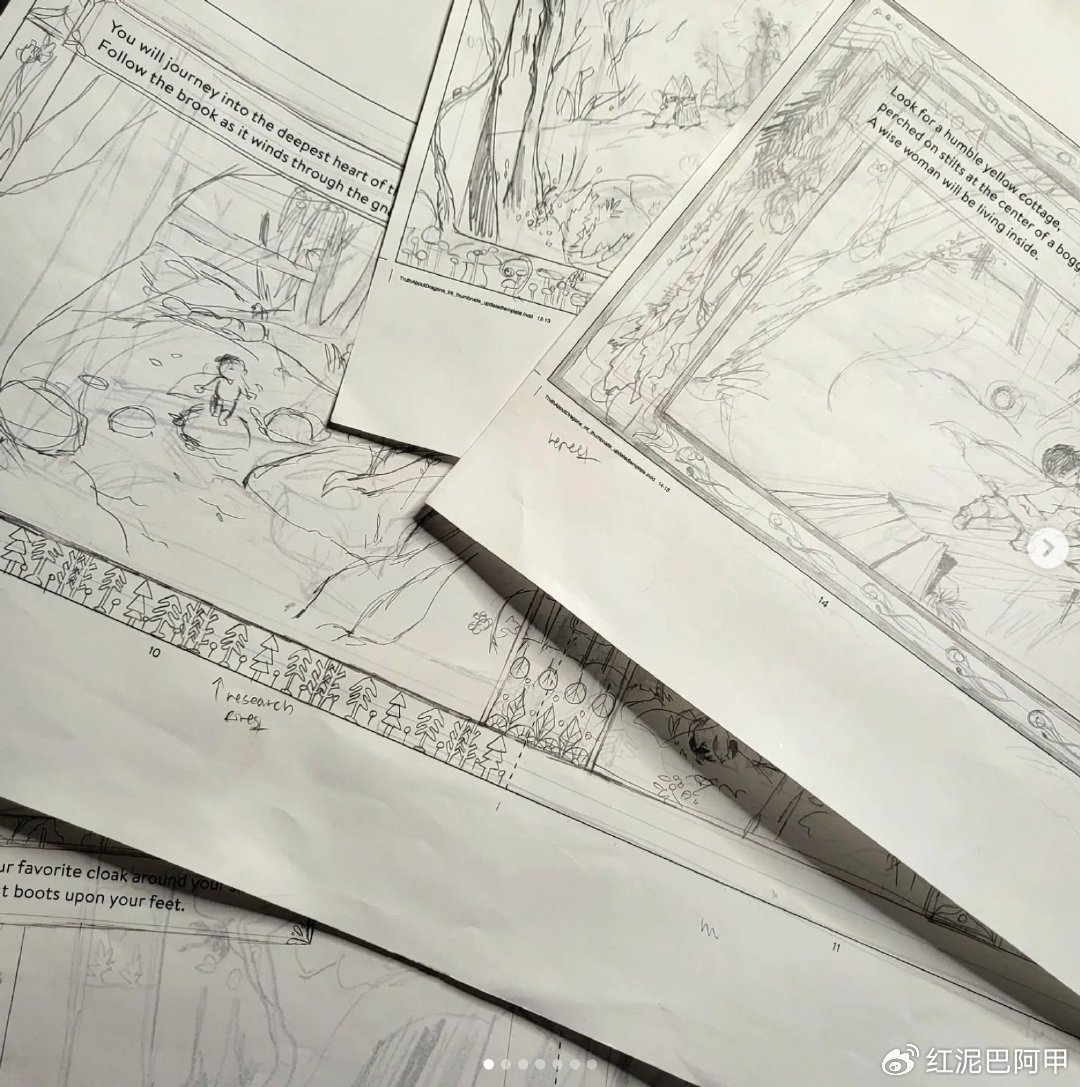
Cha Ho-yun’s illustrations are exceptionally skillful, employing striking contrasts of color and detail to vividly depict the differences between these two cultures and explore the possibility of harmonious coexistence. Born and raised in the United States, this Korean-American illustrator, a graduate of the Rhode Island School of Design, is well-versed in both Western artistic techniques and traditional Eastern painting. Beyond the cozy bedtime scene in a child’s bedroom, she employs two other distinct artistic approaches to depict a boy’s journey to find a dragon in different forests.
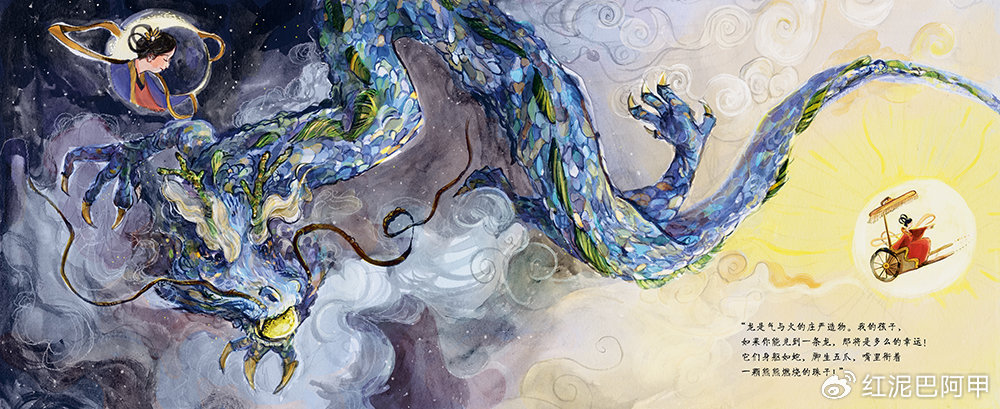
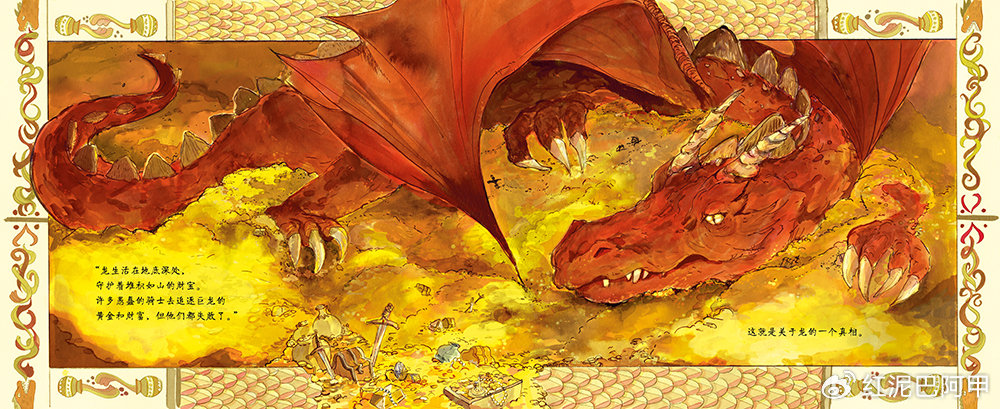
When searching for Western dragons, she primarily drew on medieval or Gothic visual elements associated with Western dragons. Frames with intricate lines and patterns, the decorative and symbolic patterns further enhance the mystical and legendary atmosphere. Elements resembling shields, swords, and other knightly accoutrements echo the traditional tale of knights slaying dragons. In contrast, when searching for Eastern dragons, the canvases are more spacious and open, incorporating elements of Chinese ink painting. The delicate, flowing lines and cooler tones of blue and green highlight the divinity and elegance of Eastern dragons. In fact, in this story, the Western dragon is not the embodiment of evil. Its primary colors, fiery red and gold, emphasize its might and massive size, as well as its relatively positive image as a guardian of treasure (against foolish knights). Through these meticulously designed illustrations, Che Haoyun not only demonstrates the outward differences between the two dragons but also explores the deeper differences in their cultural symbolism.
In addition to winning the Caldecott Silver Medal, “Quest for the Dragon” also won the Asian Pacific American Literature Award, which recognizes outstanding literary works that depict the life experiences of Asian Pacific Americans, enhances the visibility of these works in mainstream society, and promotes the understanding and respect of the culture and history of the Asian Pacific community in the whole society.
The award citation for this book reads:“Stunning imagery and a captivating storyline skillfully pave a path for exploring identity and a child’s own mixed cultural heritage.” Author Liang Wanjun skillfully presents the complexity of identity and cultural heritage through the story of a family, with the wise guidance of two grandmothers. Through the perspective of the little boy in the book, we witness the exploration of cultural identity, a process that is not one-way but multidimensional, full of intersections and interactions.
The deeper theme of the story is about inner strength -“The powerful magic that lives within you“This magic draws from both the wisdom and tolerance of the Eastern dragon and the strength and courage of the Western dragon—either dragon represents the true spirit of the dragon. Through the fusion of these two powerful forces, the boy learns to accept his dual identity and how to use this inner strength to face life’s challenges.
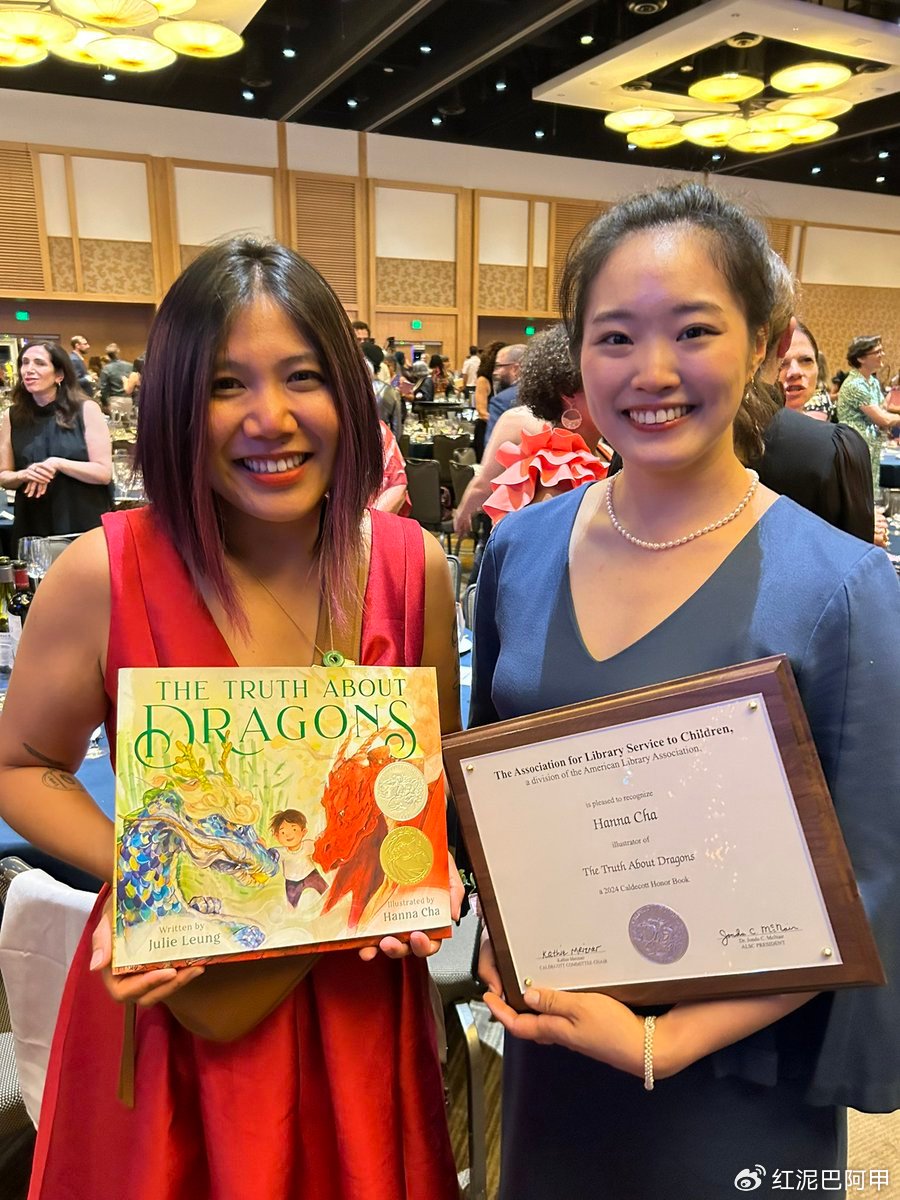
“Dragon Journey” isn’t just a story comparing Eastern and Western dragon culture; it’s also a story about growing up, self-discovery, and cultural identity. With profound cultural insights, it offers young readers a valuable perspective on how to understand and cherish their own diverse cultural backgrounds. Think about it: everyone has a dragon within them. By understanding and accepting this dragon, we can discover our truest strength.
Written in Beijing on May 10, 2024
【About the illustrator’s Chinese name】
Korean illustrator Hanna Cha (차호윤) only wrote her English name in the English version.Her official websiteHannacha.com lists the Korean name “차호윤” but not the Chinese name! However, I know that the Korean name is phonetic, so there must be a Chinese name. Judging by the pronunciation, the last name is most likely “Che,” but there are so many possibilities for the first name that it’s impossible to guess.
As a rule, we don’t contact creators directly, so we asked our publisher to inquire. However, after repeated inquiries, the American side was adamant that “she doesn’t have a Chinese name,” so any translation would be acceptable. In desperation, I initially resorted to translating it as “Che Hanna.” But that name is just too strange! Furthermore, it seems disrespectful.
Unable to accept this, I tried to contact her personally. I left messages explaining the situation via social media and email. In the email, I specifically mentioned my great admiration for the Korean illustrator Baek Hee-na (백희나). Initially, due to irresponsible publishing agents, we translated her name as “Bai Xi Na,” a practice only corrected ten years later. I didn’t want such a regrettable situation to happen again.
I was particularly happy to hear Hanna quickly reply to my email, but she explained she wasn’t sure how to write the Chinese characters for her name and needed to ask her parents! Funny enough, she actually got the name wrong the first time she sent me. Luckily, she quickly realized it and emailed back to correct it to “車鎬昀” (Car 鎬昀). Since she rarely uses it, she had to talk to her parents before finally confirming it.
Finally figured it out! I was so happy and incredibly grateful to her! I even looked it up in the dictionary. Honestly, we rarely use the two Chinese characters for “镐昀.” It turns out that “镐” can be pronounced the same as “皓,” meaning bright, while “昀” means sunlight. So, the two-character phrase should be understood as “bright sunshine.”
So, I sent her another email to tell her that judging from the meaning of the Chinese characters, this is a very beautiful name, representing the special blessing of the person who gave it the name. In English, it should be“very bright sunlight”.
Gaoyun happily wrote back, saying she was overjoyed to learn that her name in Chinese had such a beautiful meaning. “It’s a name that my grandpa has given to me, so the fact that part of his influence will be in this book is now extra meaningful to me.”“It’s the name my grandfather gave me, so it means a lot to me that some of his influence will remain in this book.”
Yes, isn’t this what “translation” is all about?
Argentine Primera División on August 15, 2024